Energy
Tesla and Walmart address lawsuit in joint statement

After a wake of headlines quick to paint Tesla Energy as an irresponsible solar power company proliferated, it appears there’s more to the story of Walmart’s lawsuit against the all-electric car maker, particularly with regard to Tesla’s attempts to resolve the issues involved. A joint statement released this morning indicates the two parties will be working together to resolve their legal disputes amicably; however, after further review of the parties’ case history and Walmart’s conduct throughout, their statement seems to merely reiterate a problem that has been unresolved since the start of the two companies’ problems with one another.
Walmart and Tesla Joint Statement
“Walmart and Tesla look forward to addressing all issues and re-energizing Tesla solar installations at Walmart stores, once all parties are certain that all concerns have been addressed.”
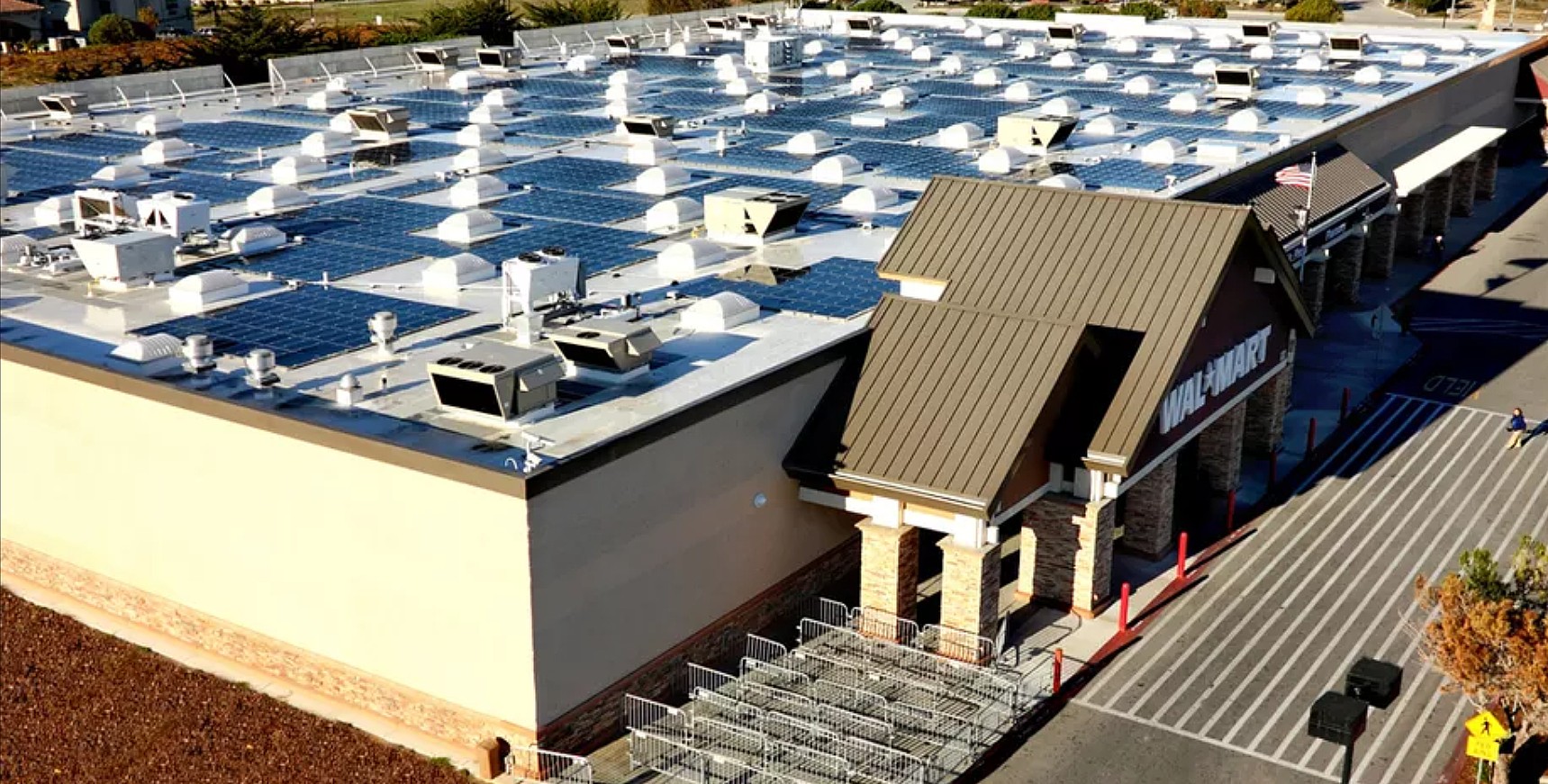
Tesla’s solar installations currently occupy 248 Walmart locations across the United States, and seven have been the subject of roof fires: One each in 2012, 2016, and 2017; three between March and May of 2018; and one in November 2018. Walmart’s lawsuit involving these instances claims serious negligence and makes damning assertions against Tesla, as to be expected by the plaintiff any lawsuit. Their claims against Tesla include, among many things, that millions of damages have resulted from the fires, that their private inspections of the solar systems reveal widespread negligence and shoddy installations, and that Tesla has refused to provide them with a final ‘root cause’ of the fires.
Seven fires are certainly a cause for concern, and Walmart is justified in some of its remediation requests from Tesla as a result: All of the systems were de-energized while inspections were ongoing, for one, and Tesla agreed to pay for the damages resulting from the fires. From Tesla’s own inspections, there were definitely issues with whichever employees – Tesla’s directly or contractors – were in charge of the installations and maintenance which, unfortunately, did not receive the attention they needed until after major events occurred.
A joint statement from Tesla & Walmart. Looking forward to see some positive outcome. $TSLA #Tesla #Walmart https://t.co/Bq1HIVTlb4 pic.twitter.com/R360RnsORw
— vincent (@vincent13031925) August 23, 2019
However, what’s been left out of the discussion about Walmart’s lawsuit is the role Tesla played throughout the two companies’ ongoing efforts to resolve the issues and Walmart’s lack of willingness to cooperate even after agreeing to certain remediations. Exhibit 249 of the suit, containing a letter from Tesla’s legal counselors to their Walmart counterparts written on July 29, 2019, indicate that even after both Tesla’s and Walmart’s independent inspections of several sites determined their safety and suitability for re-energizing, Walmart still would not agree to return them to service. Instead, Walmart demanded that all of their solar agreements be amended to make Tesla liable for issues that could, for example, be the fault of Walmart’s own negligence or misconduct. If Tesla did not agree to the ‘take it or leave it’ agreement, Walmart would prevent Tesla from re-energizing any of the systems in their previously signed contracts.
Further written in Tesla’s letter was the detailed recount of how ongoing negotiations were continuously stalled by Walmart, how further inspections continued alongside Walmart’s independent inspectors, and how dozens of sites were approved for re-energizing, all without Walmart budging on its position that Tesla accept its terms ‘or else.’ At one point, Tesla wasn’t able to review Walmart’s inspector’s reviews because the company had stopped paying their salary and thus both the inspector and Walmart were ‘unable to release them’ to Tesla. As a final note, although not the final conclusion made in Tesla’s letter, was that at no point did Walmart ask Tesla for a ‘root cause’ of the original fires which prompted the entire issue to begin with. Further, Walmart’s inspectors had provided their final conclusions, though they were not shared with Tesla.
Here are two quotes from the letter expressing Tesla’s frustration with the process:
“My client has had enough. Walmart cannot negotiate (and renegotiate) a protocol for inspection; then try to impose new, extra-contractual conditions on the exercise of Tesla’s contractual rights; then invite negotiation over those improper, unreasonable conditions; and then refuse to negotiate. Walmart has unfortunately wasted time and diverted resources while undermining the goodwill that Tesla had sought to preserve throughout this process.” (p. 8)
“We also disagree with Walmart’s contention that its consultants have ‘confirm[ed] Tesla’s systemic, widespread breaches and negligence.’ The parties’ Agreements anticipate that the systems will require periodic maintenance and repair in a manner that is entirely customary within the solar power industry. The fact that some sites in fact need maintenance and repair – especially sites that have been idle for a year now – is neither surprising nor a breach of any Agreement. The fact that thorough, comprehensive inspections have identified areas for improvement and opportunities for error correction is equally unsurprising. Tesla welcomes the chance to improve its processes, tools, and monitoring, but that too is not evidence of any breach.” (pp. 11-12)
From reviewing both the lawsuit and Tesla’s letter addressing it, it seems that at the core of Walmart’s litigation is the desire to a) break its financial ties with Tesla, which included paying Tesla for the power its solar systems generated; b) recover the damages the fires caused to Walmart’s stores, which Tesla already agreed to; and c) force Tesla to remove all of its solar installations rather than allow for previously agreed to repairs and stringent inspections involving private consultants of Walmart’s choosing.
There are certainly instances where Tesla needed to take action in these cases, and it appears they have and are continually willing to do so under very stringent and expensive conditions. It is hard, though, to see where Walmart’s reaction isn’t overblown considering the risks of anything involving electrical installations or in industry in general. Tesla’s letter cited ten instances of Walmart fires that were completely unrelated to their solar installations to make this point.
Whatever Walmart’s intentions, there is a message forming for any future would-be solar power companies wanting to do business with the enterprise in the future: Beware. If the opportunity to renege on an agreement comes up, no matter how willing the other party is to cooperate, Walmart money and power will decide the new terms no matter what.
Read Tesla’s notice of breach of contract to Walmart below.
Walmart Inc v Tesla Energy … by Simon Alvarez on Scribd


Energy
Tesla Model 3 and Model Y can now do what only Cybertruck could
Tesla Model 3 and Model Y can power your home with Powerwall 3 during outages.

Tesla has turned its two top sellers into backup batteries for the house.
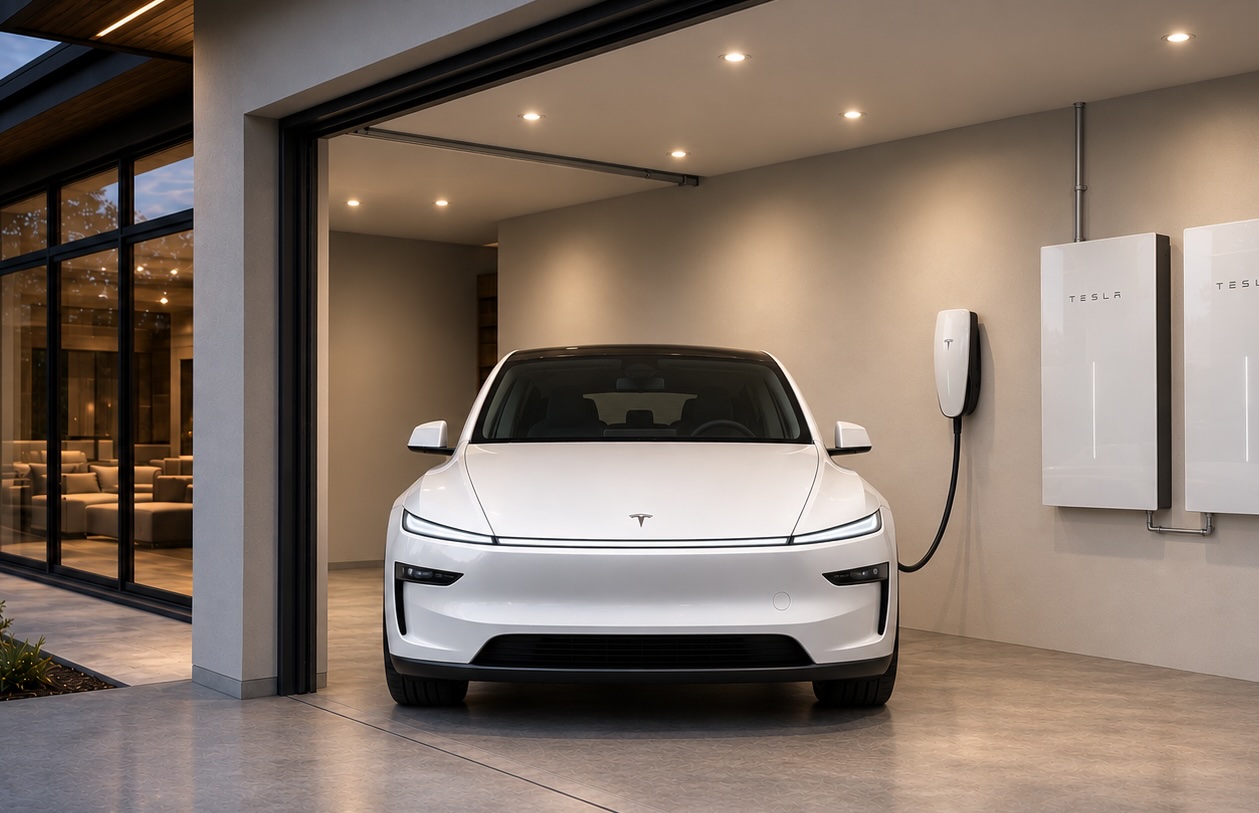
Tesla Energy announced on Tuesday that Powershare Home Backup is now available for new Model 3 and Model Y vehicles paired with a Powerwall 3, saying the car can “extend your home backup by over 2 days.” Minutes later, Tesla’s main account quoted the post with a broader pitch: “With Powerwall 3, every Tesla can now serve as your home’s backup battery.”
Until this week, the Cybertruck was the only Tesla that could send power back into a home, and that capability only began working alongside Powerwall 3 last month, after years of ambitious targets.
Tesla’s updated Powershare page says every Model 3 and Model Y ordered in the U.S. or Puerto Rico on or after October 1, 2026 can use the feature. Some, but not all, earlier cars also qualify. Owners can check on the touchscreen under Software, then Additional Vehicle Information, where a capable car shows “Powershare Support: Enabled.” As Electrek reported, bidirectional power on the two cars runs through an inverter Tesla calls PCS2 Lite, and the company has not said when that part entered production on each trim.
The home side is simpler. A house that already has a Powerwall 3 and either a Wall Connector 3 or Universal Wall Connector needs no additional equipment, and Tesla says compatibility is enabled through a software update. When the grid drops, the Powerwall and the car work together, with up to 11.52 kW of continuous power available. Tesla’s “over two days” estimate assumes a home using 30 kWh per day and a car starting at a 90 percent charge. Standard trims are rated for up to two days, while the Cybertruck adds more than three.
There are limits. Powerwall 2 and Powerwall+ support is listed as “coming soon.” Model S and Model X are not included, and Grid Support, the program that lets Cybertruck owners in Texas send power back to the grid during demand spikes for bill credits, is not available for Model 3 or Model Y.
The rollout also lines up with something Elon Musk said more than three years ago. At Tesla’s March 2023 Investor Day, Musk said, “I don’t think very many people are going to want to use bidirectional charging, unless you have a Powerwall.” Tesla has now shipped the feature for its volume cars with exactly that requirement attached.
The Powerwall pairing was the hard part on Cybertruck. Tesla told owners in December 2025 that Powershare with Powerwall had been pushed to mid 2026, and lead engineer Wes Morrill explained that two devices capable of forming a home’s grid have to negotiate which one leads during an outage, across multiple generations of hardware. With that work done for the truck, Tesla was able to extend it to the Model 3 and Model Y within a month.
Ford and GM have offered home backup from their EVs for several years, but both require a separate inverter and backup hardware. Tesla’s version leans on equipment many Powerwall 3 owners already have on the wall. Powershare for the two cars also ships as part of software update 2026.38.3, the same release that began delivering Halloween Mode on Tuesday.
Elon Musk
Google just picked SpaceX for its first step into orbital AI
Google will launch its first Project Suncatcher AI satellite on SpaceX’s Transporter-18 rideshare next week.
Google is about to put its own AI chips into orbit for the first time, and it is paying SpaceX to get them there.
The company said Thursday that the first in-orbit test of Project Suncatcher, its research effort to find out whether space can host large-scale AI computing, will fly next week on SpaceX’s Transporter-18 rideshare mission.
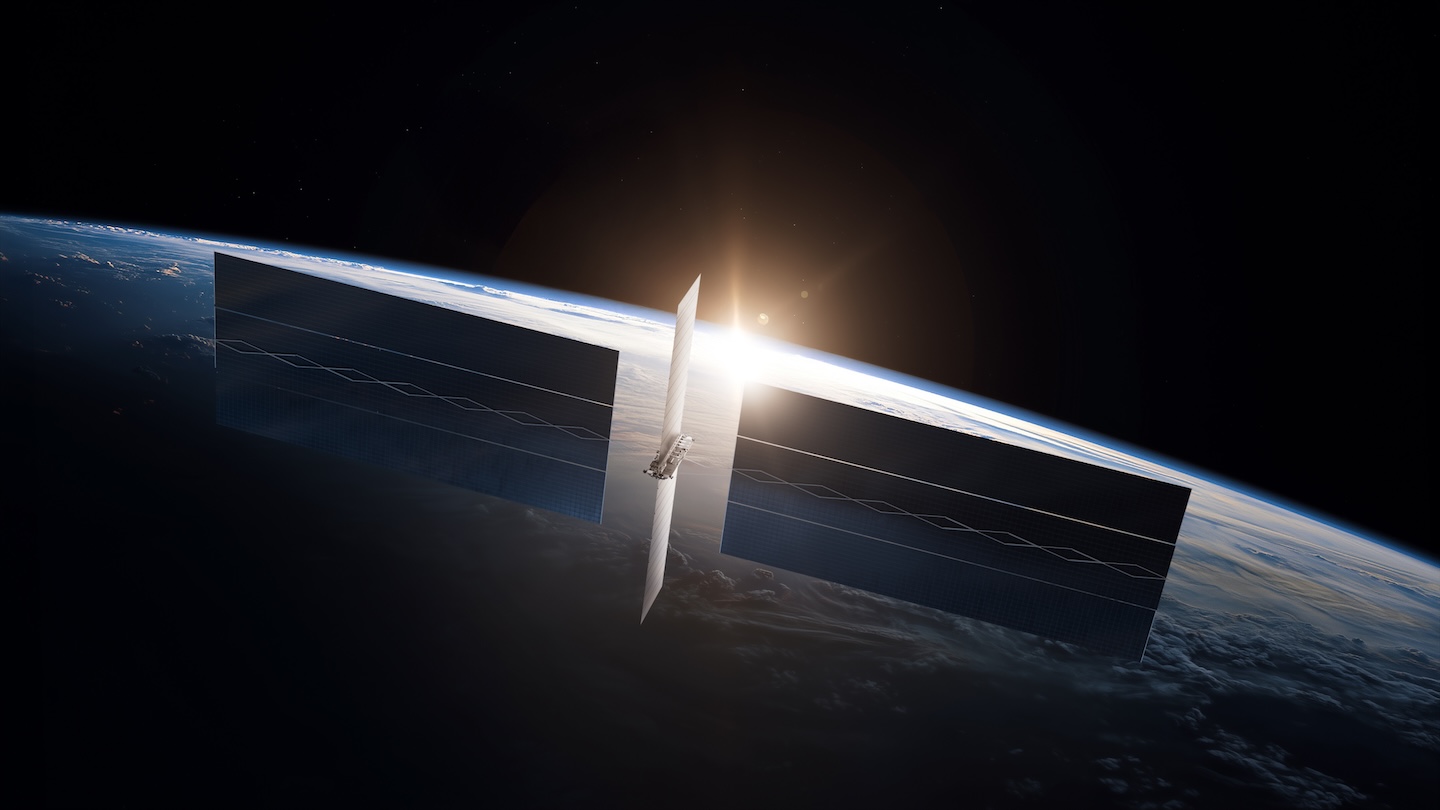
The satellite, called MVP, is about the size of a refrigerator and carries four of Google’s Tensor Processing Units, the same chips Google runs in its ground data centers. Google originally planned to launch two custom satellites in 2027, but chose to move faster by integrating its chips into a satellite.
MVP’s solar panels supply about one kilowatt of power, and Google will run Gemini models on the TPUs only in bursts of roughly 15 minutes before the chips shut down so the radiators can shed heat. In a blog post, Google said its Trillium TPUs survived vibration testing that mimicked sustained launch loads of up to 10g, with individual components seeing 50 to 100g, and handled a radiation dose greater than a five year mission would deliver.
SpaceX and Google mull massive partnership on Musk’s orbital data dream: report
Next week’s flight, slated for October 1, follows a relationship that became public in May, when Teslarati reported that Google was in talks with SpaceX for a launch deal tied to orbital data centers. Google also holds a stake of roughly 6% in SpaceX.
The two companies are chasing the same idea from very different starting points. SpaceX’s own orbital compute program is built around the AI1 satellite, a roughly 70 meter structure derived from Starlink V3 hardware that is designed for 150 kW of peak compute, about 150 times the power MVP will draw. Elon Musk has brushed off concerns about crowding orbit with those satellites, and SpaceX is building its Gigasat factory in Bastrop, Texas, to produce them, targeting an annualized rate of about 1 GW of space compute by the end of 2027.
Musk also posted on X on Thursday that “the amount of compute in space will obviously round up to 100% of all compute.”
Google has been more cautious in public. Its research estimates that launch prices need to fall below about $200 per kilogram before an orbital data center can compete with a ground facility on energy cost, a threshold the company believes could be reached around the mid 2030s. The Suncatcher team has said it expects the effort to remain a project rather than a product for years, which leaves the first real test of its hardware riding on a rocket from the company with the most aggressive timeline in the field.
Energy
Tesla Semi factory is getting a celebration nobody expected
Tesla will inaugurate its Nevada Semi factory September 24, five months after production quietly began ramping.
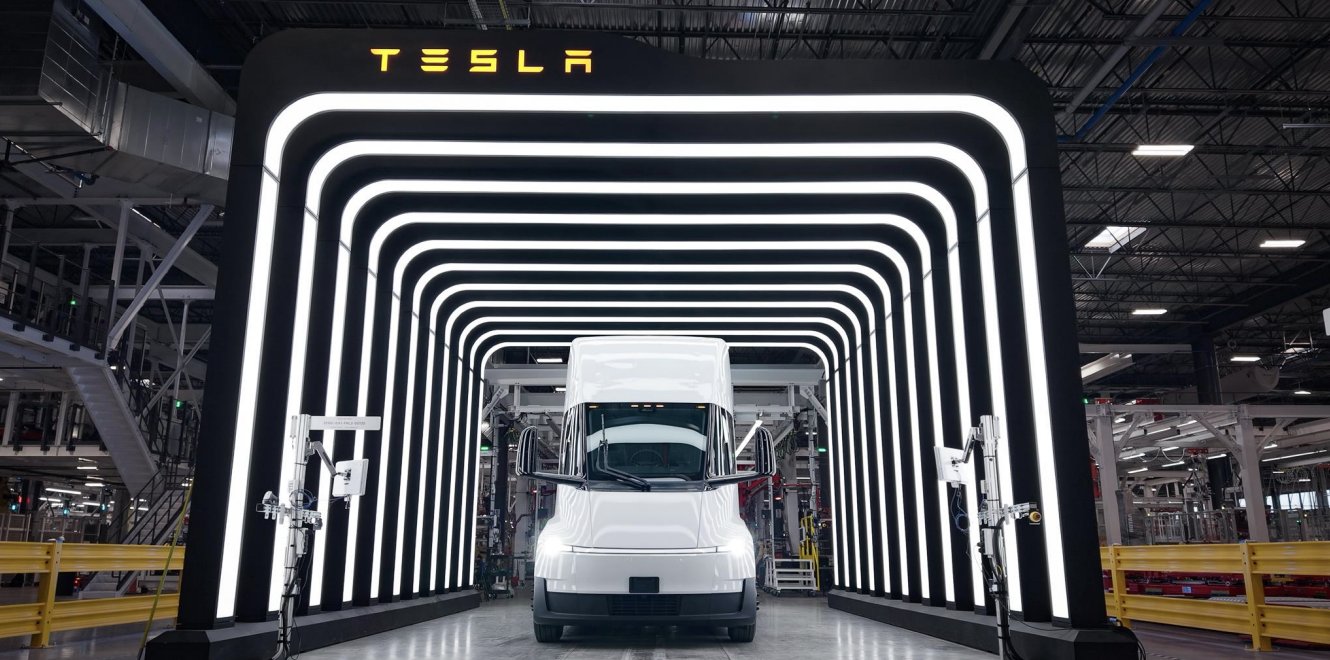
Tesla says it will officially inaugurate its new Semi factory in Nevada next month. The Tesla Semi account posted the announcement on X, sharing a graphic titled “Semi Rollout” with a date of September 24. No further details were given about the format of the event or who would attend.
While Tesla’s dedicated Semi plant in Sparks, adjacent to Gigafactory Nevada, opened back in April, with the first trucks rolling off the high volume line on April 29, the timing for the factory inauguration comes at a surprise. The ribbon cutting event five months into production is a break from how Tesla has usually handled its other factories, where the first truck or car off the line typically served as the milestone moment.
Inauguration of new Semi factory in Nevada next month pic.twitter.com/a8kAlxrOOn
— Tesla Semi (@tesla_semi) August 24, 2026
The 1.7 million square foot factory was built as part of a $3.6 billion expansion Tesla announced in early 2023, and it shares a site with the battery cell lines that feed the Semi’s structural pack, a decision meant to remove the supply bottleneck that delayed the truck for years. The plant is designed for 50,000 trucks a year at full ramp. Semi program director Dan Priestley has said production “is now ramping” rather than claiming it has reached scale.
Nine years passed between the Semi’s 2017 unveiling and this stage of production, with the truck slipping from an original 2019 target through hand built pilot units for PepsiCo and a slow build out of the Nevada plant. An inauguration event now gives Tesla a stage to talk up that ramp and reset expectations for how many trucks it can begin delivering at scale.
The September date also lines up with the Semi’s next milestone. Tesla confirmed the truck is heading to Europe with a full unveiling at the IAA Transportation trade show in Hannover, Germany, running September 15 through 20. Between the Nevada event and the Hannover reveal, Tesla has roughly a week and a half in September to make the case that the Semi is now a truck being built and sold on two continents rather than tested in a handful of fleets.

Tesla Cybercab and Robotaxi’s real advantage won’t be the ride service

Why Elon Musk’s target date for buying an Optimus robot is harder than it sounds

Elon Musk drops a Thanksgiving hint about Starship’s biggest test yet

The Pentagon taps Elon Musk to design the battlefield of the future

Tesla Roadster’s new patent preps white-knuckle speeds, keeping it grounded


