Lifestyle
Ticket to Ride: The Tesla Model S Limousine

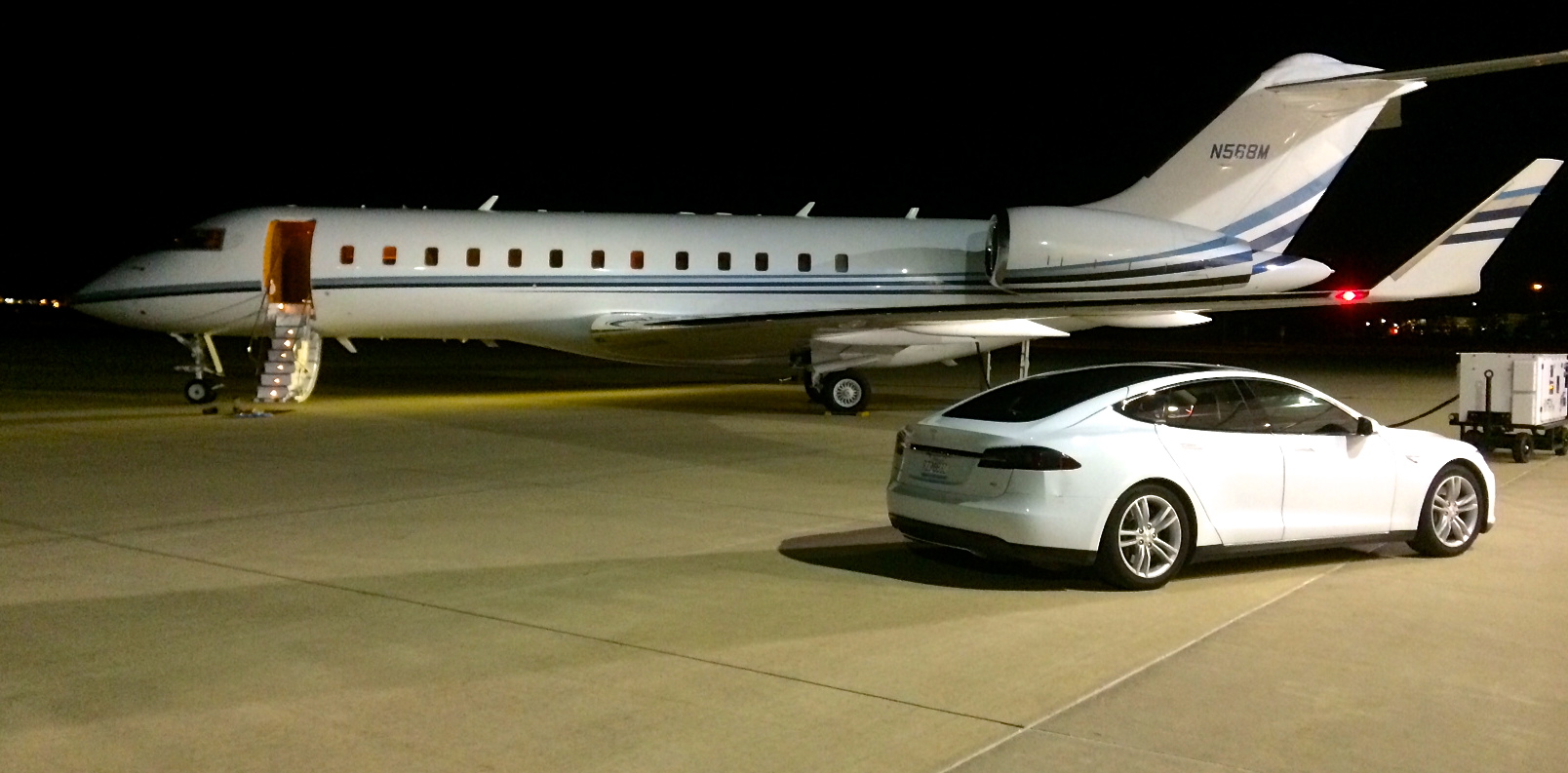
Gino’s Model S on the tarmac waiting for a VIP
Gino Bernardi owns and operates Watts on Wheels, a personal limousine service that picks you up and squires you to your destination in a Model S.
You’re probably envisioning Gino driving up to some Silicon Valley executive’s home and driving her to SFO for a first class flight to close another billion dollar deal. Wrong. Watts on Wheels is in Chicago. Gino holds the unique distinction of being the lone chauffeur in the city of Chicago that drives a Tesla on the job. He’s one out of 9000+ registered livery and taxi drivers listed in the public database. Gino is definitely a pioneer with his EV, but we need to give credit where it’s due. The horse-drawn carriage, still in use today on the streets of Chicago, is the original gasoline free livery.
Watts on Wheels is the sole act of a Tesla enthusiast whose dream is to increase awareness of electric vehicles through building a livery business. I see this type of thought leadership in many Tesla owners. We are not just comfortable with change, we welcome and enjoy it. The green aspects of Tesla are naturally attractive, but there’s a thrill in knowing we are driving the future of personal transportation today.
Gino’s dream is to expand his business to ten or fifteen Teslas someday. To always have a Model S on the road providing transportation to the residents and visitors of Chicago. He has tagged himself an Eco Driver and wants to stimulate more discussion about reducing emissions and remind everyone that Chicago is a leading edge city. We are home to 1871 an entrepreneurial hub for digital start-ups and Built in Chicago, a community that enables inventors, founders, creators and investors to connect online.
I recently sat down with Gino to get more insight into how things are going and a glimpse into the future.
How long have you been a livery driver? How many cars do you have?
I became a livery driver because of Tesla. I received my Chicago license in May 2013, the same month my car arrived. Right now I have one car and I’m the only driver.
What sparked the idea? How does this experience mesh with your existing lifestyle?
I am a big fan of clean, renewable energy, but my intent all along was to build a business. I was working full time as a civil engineer, so at first I was a part time driver while continuing on my engineering career. Driving the Model S as a livery helps me pay for the car and has given me a ton of experience. Just last week I quit my job and am now driving full time.
Since you’re in your car for hours, how do you manage battery life?
I drive the 60 kwh battery pack and didn’t buy the supercharger, so I’m at the base for range. The reason for this is I wanted to start slow and see how it would work out. Spring through fall I had no issues at all with battery life or range. I charge it at home every night to about 85% which takes me through the morning shift. I charge over lunch which keeps me juiced for afternoon and early evening runs. Winter was quite different. This was the worst season in Chicago in 40 years. I would charge the battery to full capacity daily. There were days I wish I had the 85 kwh.
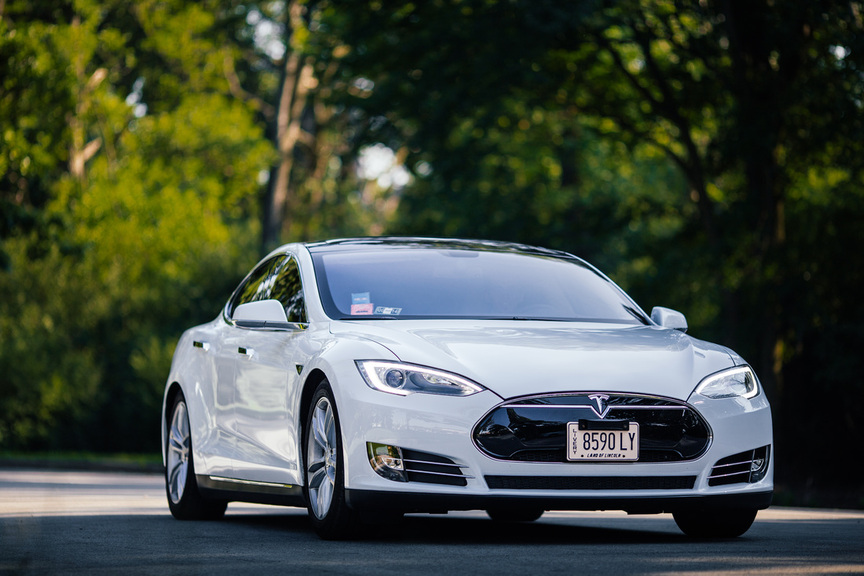
How do people react when you pull up in your Tesla? Do they recognize it?
I drive for Uber Black so if you order me through their app you will know a Tesla is coming. It’s interesting. My Model S is white, so some people get confused when a non black car arrives. When I first got the car last spring I’d say about 95% of my clients had no idea what kind of car it was. Now, almost a year later, that has dropped to probably about 5%. The awareness of the car has grown quickly.
Does any one trip stand out?
It was the end of the day and I was taking some clients to an event at Chicago Stadium. Upon arrival I was informed that I would have to take a passenger to Sugar Grove, then make the drive back to my then home in Highland Park. Total round trip over 100 miles. I didn’t have the range. While they watched the game I went to the Grand Avenue Tesla Service Center. They let me borrow an adapter so I could plug in and charge until pick-up time. It was a tough night and I pulled into my drive with one mile left on the battery.
Obviously a livery vehicle is put through the paces. How has the car held up?
Overall I’d give it high marks. I have had some minor problems. The rear curbside door handle got stuck in the extended position at one point and the door couldn’t be opened. That’s the door my clients use all day long, so it became a problem quickly. Tesla service has been very good. They fixed the problem in one day and I was back on the road. But if I can’t drive I don’t make money. I don’t treat my Model S any differently than any other car I’ve driven. It has normal wear and tear just like any other car.
How many miles are on your Model S? Do you drive livery every day?
I’ve just reached 33,000 miles in eleven months, so that’s a lot of road time. I livery drive five or six days a week, depending on what my clients need. Early on I was in the car up to ten hours a day. Now it’s closer to eight, maybe even a bit below that.
How do people find out about you? Do you have repeat clients?
Most people find out about me through word of mouth. My web site Watts on Wheels shows contact information right up front; phone, text and email. That’s another way I get business. If you do a Google search for Gino Tesla or Watts on Wheels, I index at the very top. I definitely have repeat customers. Chicago is a big city and so rides to and from O’Hare are common. I also have connections to entertainment companies who schedule me to transport their clients to events at United Center, Soldier Field, etc.
Are your rates competitive?
My pricing benchmark is Uber SUV. Usually I match their rates, but lately I’ve been charging a bit more. A Model S is not the usual ride to the airport. It’s definitely a unique experience and clients are frequently over the top satisfied. When I’m in the limo holding area at the airport the other drivers swarm the car with questions and big smiles.
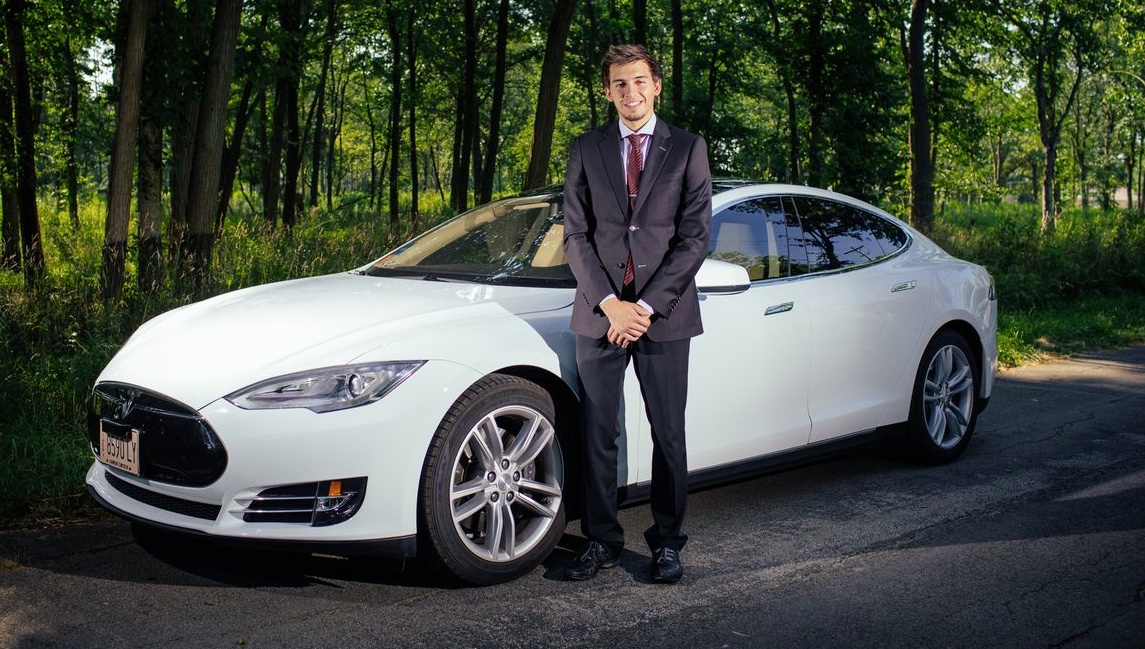
The envy of all chauffeurs in Chicago
As we were wrapping up I asked Gino to share a bit about what’s on the horizon. He feels that there is pent up demand for drivers who would love to switch to a Tesla. The price of the car is obviously a barrier for many wanna be Tesla Chauffeurs, but a growing used Model S market may help. Gino obviously knows the financials by now and claims it is possible to turn profit as a Model S livery driver. The key of course is no gas charges and very low regular maintenance.
With an eye on the future Gino and a colleague are working on a mobile app that would allow people to request a Tesla ride right from their phone. It will be “Uber-like,” allowing a driver to accept the request and complete the monetary transaction all through the app. Ultimately he wants to make it available to Tesla drivers all over the world. Stay tuned for more on this.
The Tesla is built to seamlessly fold into everyday life. It’s not a weekend or show car. It’s the new form of Personal Transportation. When you visit Chicago and need a ride from the airport, give WattsOnWheels a call.
Photo Credits: Gino Bernardi, Tuan Bul.


Elon Musk
Tesla ditches India after years of broken promises
Tesla has ditched its plans to build a factory in India after years of failed negotiations.

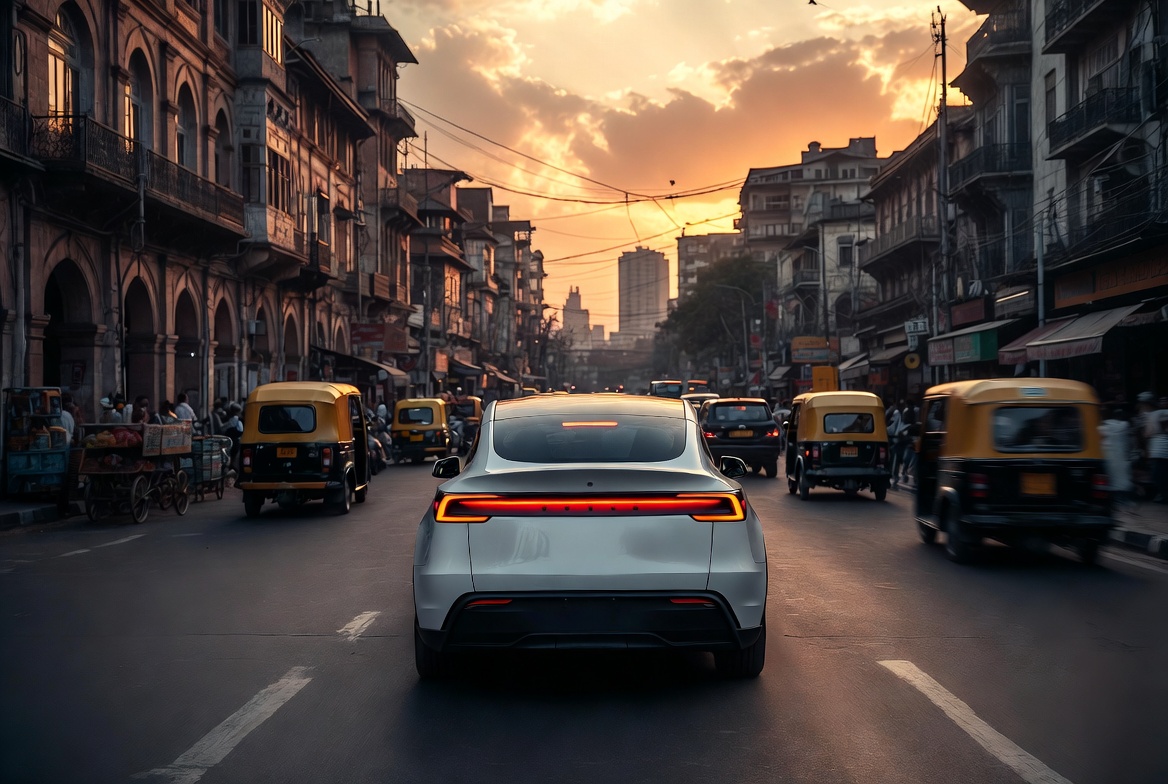
Tesla’s long-running effort to establish a manufacturing presence in India is officially over. India’s Minister of Heavy Industries H.D. Kumaraswamy confirmed on May 19, 2026 that Tesla has informed authorities it will not proceed with a manufacturing facility in the country.
Tesla first signaled serious interest in India around 2021, when it began hiring local staff and lobbying the Indian government for lower import tariffs. The ask was straightforward: reduce duties enough for Tesla to test the market with imported vehicles before committing capital to a local factory. India’s position was equally firm, with an ask of Tesla to commit to manufacturing first, then receive tariff relief. Neither side moved, and the talks quietly collapsed.
Tesla to open first India experience center in Mumbai on July 15
India had offered a policy that would reduce import duties from 110% down to 15% on EVs priced above $35,000, provided companies committed at least $500 million toward local manufacturing investment within three years. Tesla declined to participate. The tariff standoff was only part of the problem. Analysts pointed to significant gaps in India’s local supply chain, inadequate industrial infrastructure, and a mismatch between Tesla’s premium pricing and the purchasing power of India’s automotive market as additional factors that made the investment difficult to justify.
First signs of an unraveling relationship came in April 2024, when Musk abruptly cancelled a planned trip to India where he was set to meet Prime Minister Modi and announce Tesla’s market entry. By July 2024, Fortune reported that Tesla executives had stopped contacting Indian government officials entirely. The government at that point understood Tesla had capital constraints and no plans to invest.
The more fundamental issue is that Tesla’s existing factories are currently operating at approximately 60% capacity, making a commitment to building new manufacturing capacity in a new market difficult to defend to investors. Tesla will continue selling imported Model Y vehicles through its existing showrooms in Mumbai, Delhi, Gurugram, and Bengaluru, but local production is no longer part of the plan.
Elon Musk
Trump’s invite for Elon just reshuffled Tesla’s big Signature Delivery Event
Tesla rescheduled its final Model S farewell to May 20 after Musk joined Trump in China.
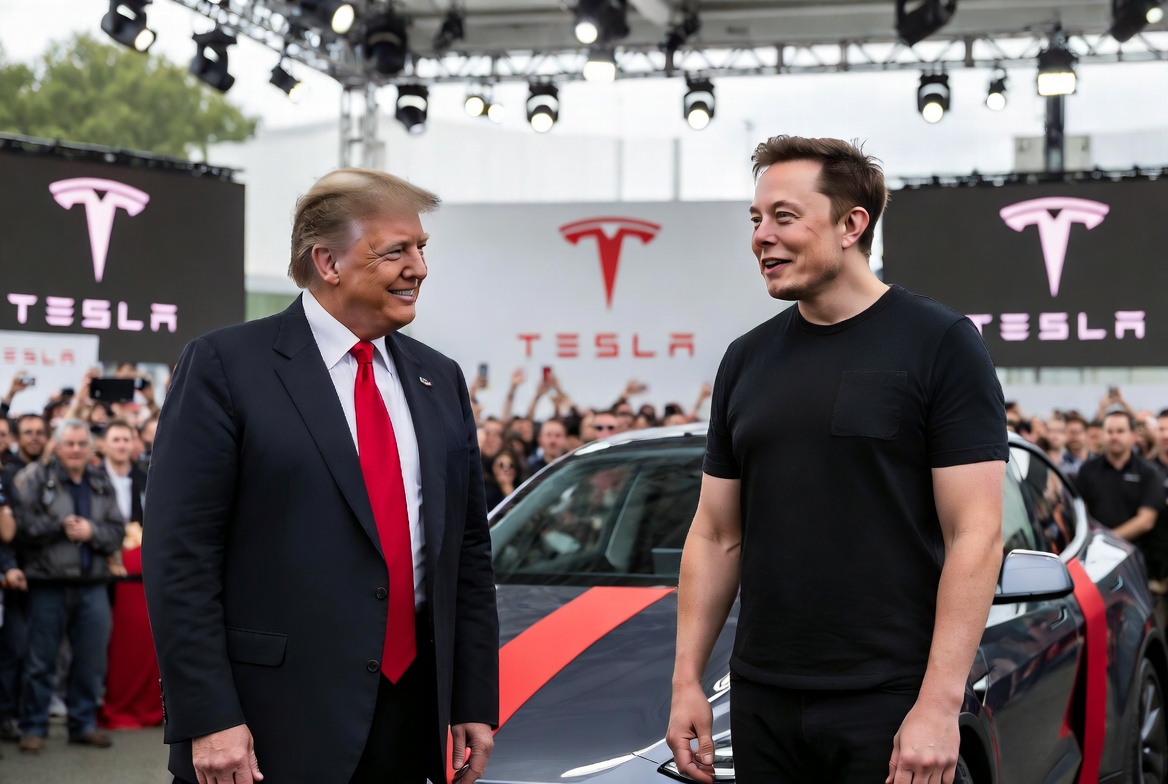
Tesla has rescheduled its Model S and Model X Signature Edition delivery event to Wednesday, May 20, 2026, after abruptly calling off the original May 12 celebration. The event will take place at Tesla’s factory at 45500 Fremont Boulevard in Fremont, California, the same location where the Model S first rolled off the line in 2012. Invitees received a follow-up email asking them to reconfirm attendance and download a new QR code ticket, with Tesla noting that all travel and accommodation expenses remain the buyer’s responsibility.
The reason behind the original cancellation came into focus the same day it was announced. President Trump invited Elon Musk, Apple’s Tim Cook, BlackRock’s Larry Fink, Boeing’s Kelly Ortberg, and executives from Goldman Sachs, Blackstone, Citigroup, and Meta to join his trip to China this week for a summit with President Xi Jinping. The agenda covers trade, artificial intelligence, export controls, Taiwan, and the Iran war, following weeks of escalating friction between Washington and Beijing over AI technology, sanctions, and rare earth exports. Trump wrote on Truth Social, “I am very much looking forward to my trip to China, an amazing Country, with a Leader, President Xi, respected by all.”
Tesla launches 200mph Model S “Gold” Signature in invite-only purchase
The vehicles at the center of all this are the last Model S and Model X units Tesla will ever build. Priced at $159,420 each, the 250 Model S and 100 Model X Signature Edition units come finished in Garnet Red with a one-year no-resale agreement, giving Tesla right of first refusal if the owner decides to sell. As Teslarati reported, the Model S defined Tesla’s early identity as a serious luxury automaker, and the Fremont factory line that built it is now being converted to manufacture Optimus humanoid robots.
Musk’s inclusion in the China delegation drew attention given his very public relationship with Trump, and the invitation signals the two have moved past and past grievances. Trump originally brought Musk on to lead the Department of Government Efficiency following his inauguration, and despite a sharp public dispute in mid-2025, the two have appeared together repeatedly in recent months. A seat on the China trip, the most diplomatically consequential visit of Trump’s current term, puts Musk back at the table on U.S. economic policy at a moment when Tesla’s China revenue remains one of the company’s most important financial pillars.
Lifestyle
Tesla Semi hauls fresh Cybercab batch as Robotaxi era takes hold
A Tesla Semi was filmed hauling Cybercab units out of Giga Texas for the first time.
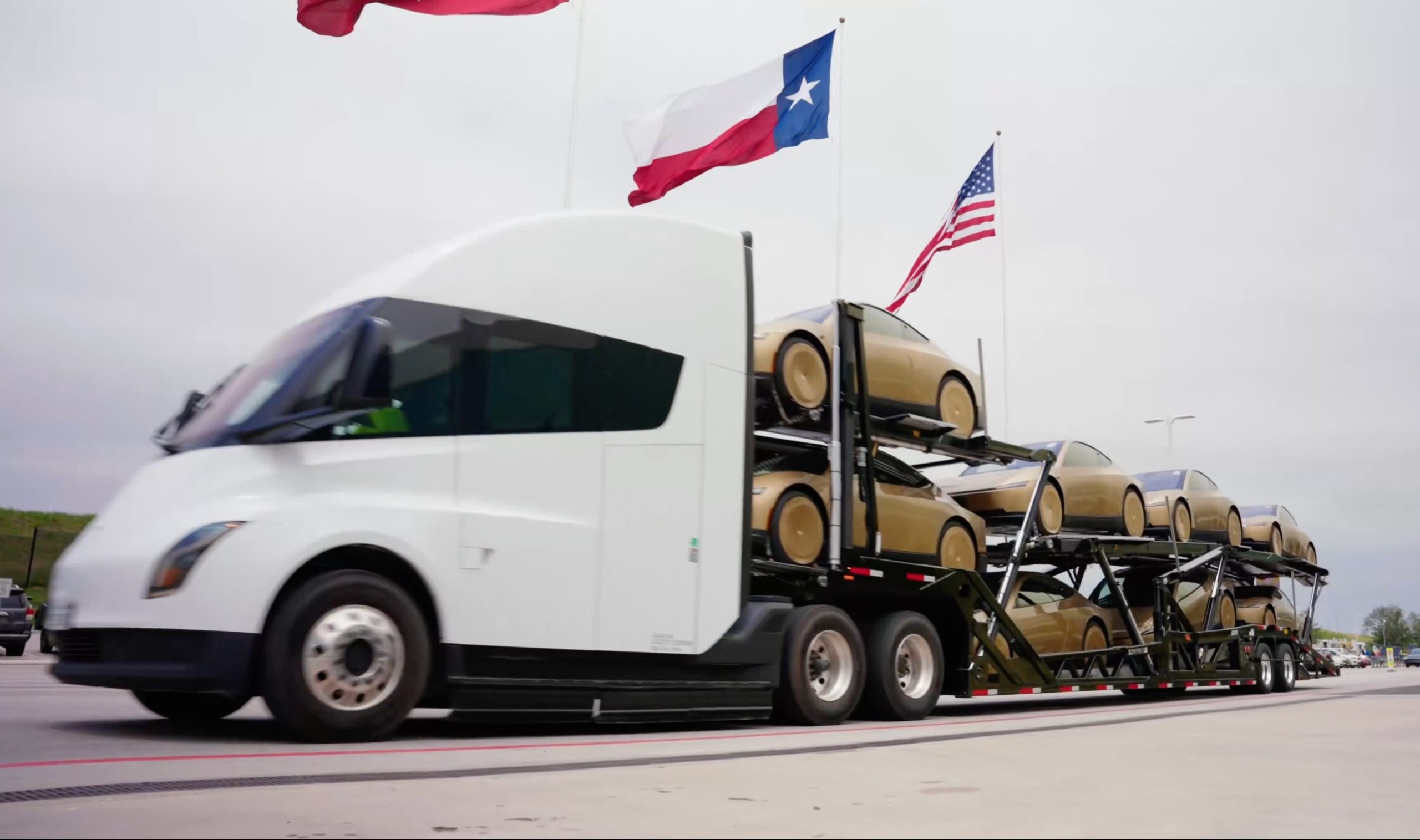
A Tesla Semi loaded with Cybercab units was recently filmed leaving Gigafactory Texas, marking what appears to be the first documented delivery run of Tesla’s autonomous two-seater. The footage shows multiple Cybercabs secured on a flatbed trailer being hauled by a production Tesla Semi, a truck rated for a gross combination weight of 82,000 lbs. The location is consistent with Giga Texas in Austin, where Cybercab production has been ramping since February 2026.
The sighting follows a wave of Cybercab activity at the Austin facility. In late April, drone operator Joe Tegtmeyer spotted approximately 60 Cybercabs parked in two organized groups in the factory’s outbound lot, the largest concentration observed to date. Units being staged in an outbound lot is a standard pre-delivery step, and the Semi footage is the logical next frame in that sequence.
En route with @tesla_semi pic.twitter.com/ZfuOjaeLH1
— Tesla Robotaxi (@robotaxi) May 7, 2026
This is not the first time Tesla has used its own Semi to move Tesla products. When the Semi was unveiled in 2017, Musk noted it would be used for Tesla’s own operations, and over the years Semi prototypes were spotted carrying cargo ranging from concrete weights to Tesla vehicles being delivered to consumers. In 2023, a Semi was photographed transporting a Cybertruck on a trailer ahead of that vehicle’s delivery launch.
The Cybercab itself was first revealed publicly at Tesla’s “We, Robot” event on October 10, 2024, at Warner Bros. Studios in Burbank, where 20 pre-production units gave attendees rides around the studio lot. Musk stated at the event that Tesla intends to produce the Cybercab before 2027. The first production unit rolled off the Giga Texas line on February 17, 2026, with Musk posting on X: “Congratulations to the Tesla team on making the first production Cybercab.”
Tesla’s annual production goal is 2 million Cybercabs per year once multiple factories reach full design capacity, with the company targeting a price under $30,000 per unit. Tesla has confirmed plans to expand its robotaxi service to seven cities in the first half of 2026, including Dallas, Houston, Phoenix, Miami, Orlando, Tampa, and Las Vegas, building on the unsupervised service already running in Austin. Musk has said he expects robotaxis to cover between a quarter and half of the United States by end of year.

NASA just gave SpaceX more crew missions because Boeing can’t certify

Elon Musk called it Epic: The full story of SpaceX’s Starship Flight 12


