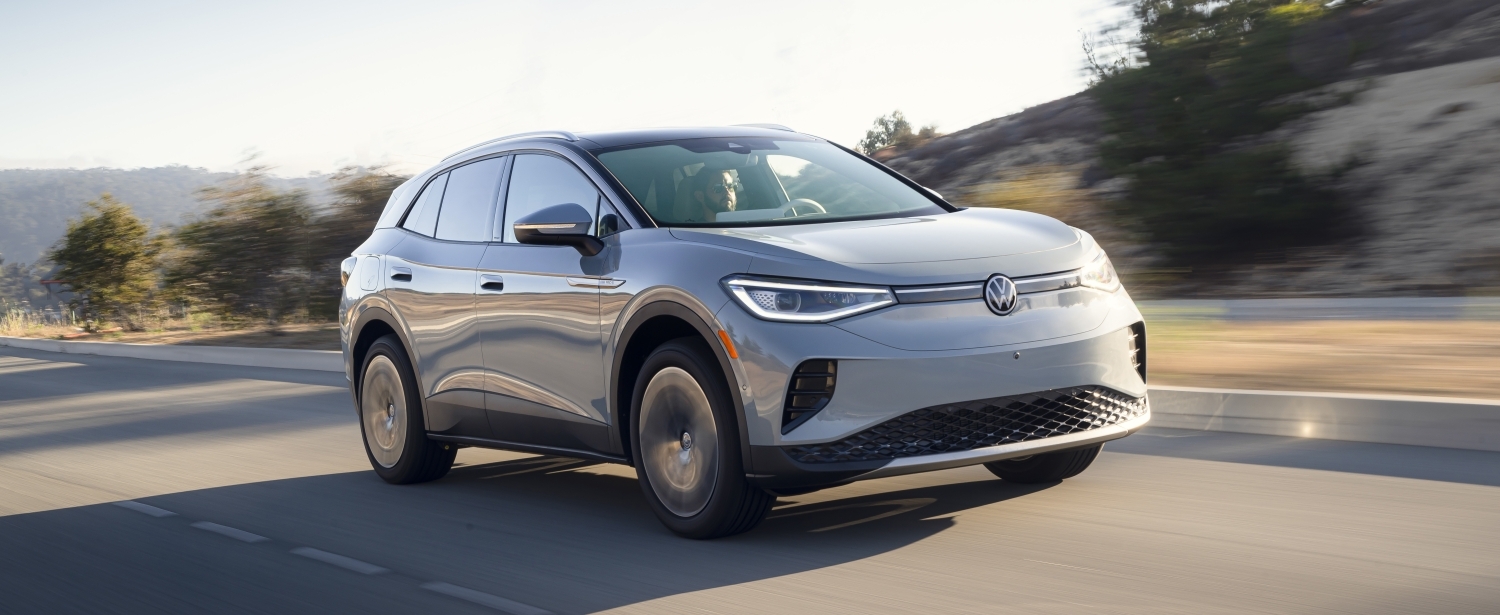

Volkswagen (VW) CEO Thomas Schafer believes that the automaker’s autonomous cars will be globally mainstream by 2030. In an interview with AutoCar, he said that the automaker was “consolidating its development partnerships.”
“Our goal is to offer our customers the most powerful functions at the earliest possible time and to set up our development as cost-effectively as possible,” he added. Its software company, Cariad, will focus on autonomous development in China, and Bosch will be its partner for the rest of the world. Schafer added that the company was driving autonomously in Hamburg and Munich.
“The technology is available, and we are driving in Hamburg and Munich autonomously. The cost of the car is still prohibitive because so little of it gets manufactured. And there’s always the need to prove that the system drives better than a human. The legislation for it is enormous. It’s totally different from country to country.”
“You have to put focus on [autonomous driving], and that is why we are pushing so hard in the CV division, because once it happens, it opens up profit pools and opportunities. I wouldn’t say winner takes it all but it’s a game that you need to be in early. You can not wait and then fast forward so that’s why we’re totally focusing on it,” he said.
Schafter also spoke of some of VW’s problems with rolling out self-driving vehicles. “It’s the legislation, the camera systems, the chips, the energy consumption and the speed of calculation. The car will be the biggest data collection device there is. It’s really complex.”
Your feedback is welcome. If you have any comments or concerns or see a typo, you can email me at johnna@teslarati.com. You can also reach me on Twitter at @JohnnaCrider1.
Teslarati is now on TikTok. Follow us for interactive news & more. Teslarati is now on TikTok. Follow us for interactive news & more. You can also follow Teslarati on LinkedIn, Twitter, Instagram, and Facebook.


Elon Musk
Elon Musk’s $10 Trillion robot: Inside Tesla’s push to mass produce Optimus
Tesla’s surging Optimus job listings reveal a company sprinting from prototype to one million robot production.

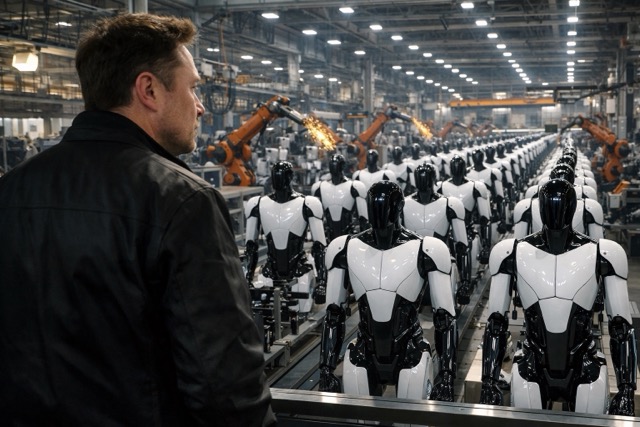
Tesla is accelerating its push to bring the Optimus humanoid robot to high volume production, and its recent job listings tells the story as clearly as any earnings call.
With well over 100 Optimus related job openings now posted across its U.S. facilities, Tesla is signaling a critical pivot for the program, moving it from a captivating tech demo to a serious manufacturing endeavor. Roles span the full spectrum of the product lifecycle, from Robotics Software Engineers and Manufacturing Engineers to Mechanical Integration Engineers and AI Engineers focused on world modeling and video generation. One active listing for a Software Engineer on the Optimus team asks candidates to build scalable and reliable data pipelines for Optimus manufacturing lines and develop automation tools that accelerate analysis and visualization for mass manufacturing.
Tesla is racing toward a one million unit annual production target. The clearest signal yet that Tesla is treating Optimus as its primary business came on January 28, 2026, during the company’s Q4 2025 earnings call. Musk announced that Tesla is ending production of the Model S and Model X, and will repurpose those lines at its Fremont, California factory to build Optimus humanoid robots.
A production intent prototype of Optimus Version 3 is planned to be ready in early 2026, after which Tesla intends to build a one million unit production line with a targeted production start by the end of 2026. To support that ramp, Tesla broke ground on a massive new Optimus manufacturing facility at Gigafactory Texas in late 2025, with ambitions to eventually reach 10 million units per year.
Tesla Giga Texas to feature massive Optimus V4 production line
The business case for scaling this aggressively is rooted in labor economics. Musk has stated that “Optimus has the potential to be the biggest product of all time,” reasoning that if Tesla can produce capable humanoid robots at scale and reasonable cost, every task currently performed by human labor becomes a potential application. In a separate statement, Musk framed Optimus’s long term importance even more bluntly, saying it could surpass Tesla’s vehicle business in scale with the potential to generate $10 trillion in revenue.
The industries Tesla is targeting first are those most burdened by repetitive physical labor. Early applications include manufacturing assembly, material handling and quality inspection, as well as logistics tasks like loading, unloading, sorting, and transporting goods in warehouses and distribution centers. Longer term, Tesla’s vision is for Optimus to penetrate household, medical, and logistics scenarios at the scale of a smartphone rollout.
News
Tesla officially begins sunset of Model S and Model X
In the latest move to show Tesla is planning to eliminate the Model S and Model X from production, the company’s Korean arm has officially set a firm cutoff date of March 31, 2026, for new orders of both models.

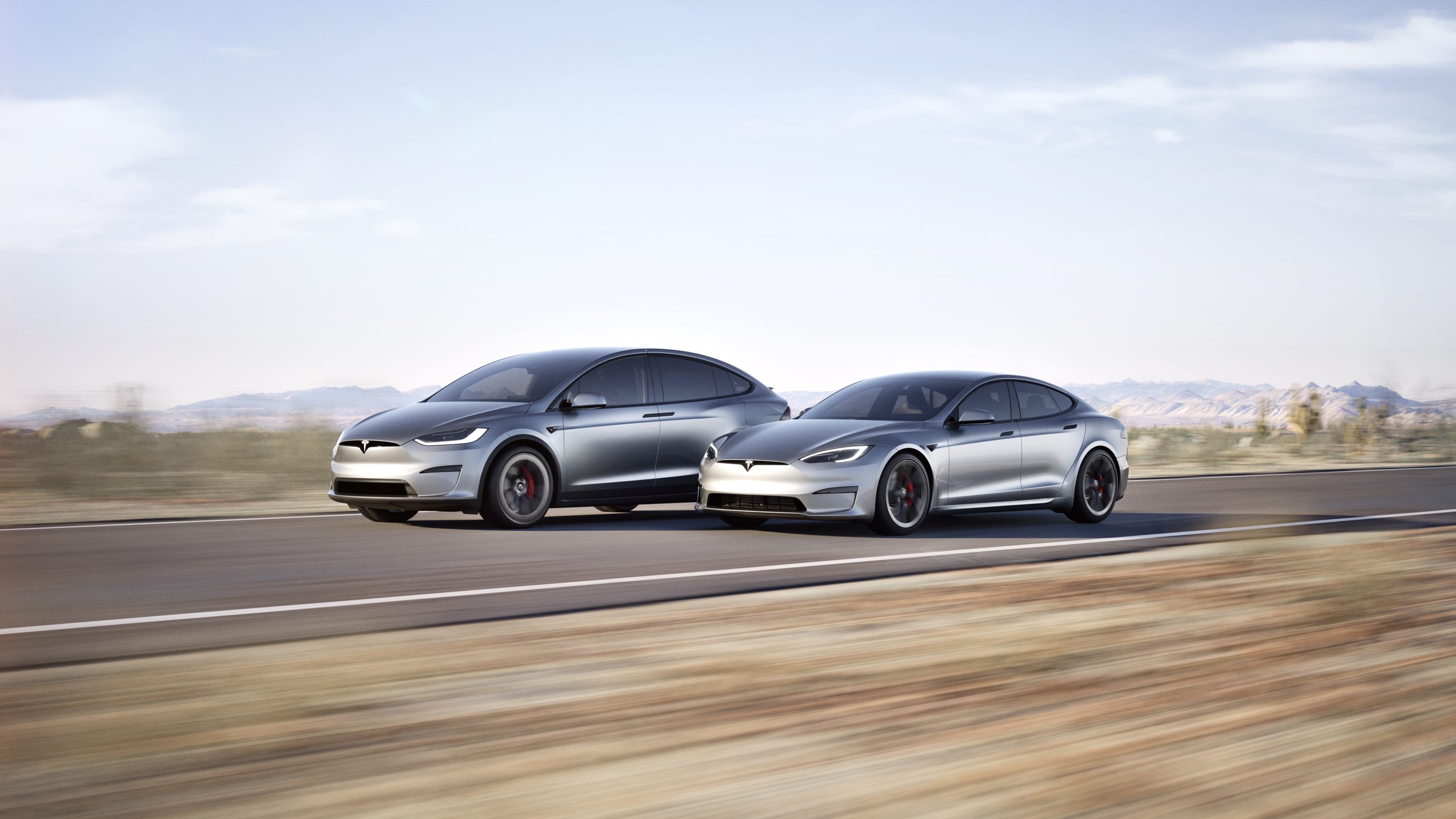
Tesla has officially started its process of sunsetting the Model S and Model X just months after the company confirmed it would stop producing the two flagship vehicles in 2026.
This step marks the end of an era for the vehicles that helped establish not only Tesla’s prowess as an automaker but also its status as a disruptor in the entire car industry. While these two cars have done a tremendous amount for Tesla, the signal that it is time to wind down their production has evidently arrived.
In the latest move to show Tesla is planning to eliminate the Model S and Model X from production, the company’s Korean arm has officially set a firm cutoff date of March 31, 2026, for new orders of both models.
This is the first time Tesla has announced a hard global deadline for the Model S and X, as after that date, only existing inventory will be available in South Korea.
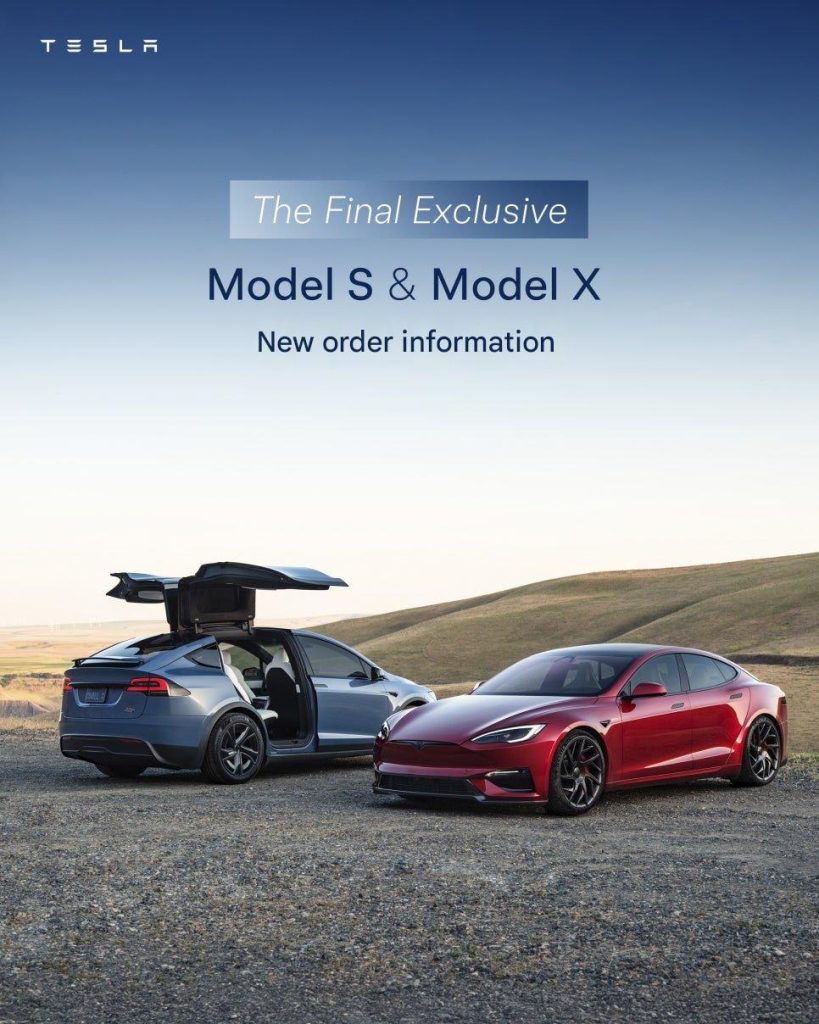
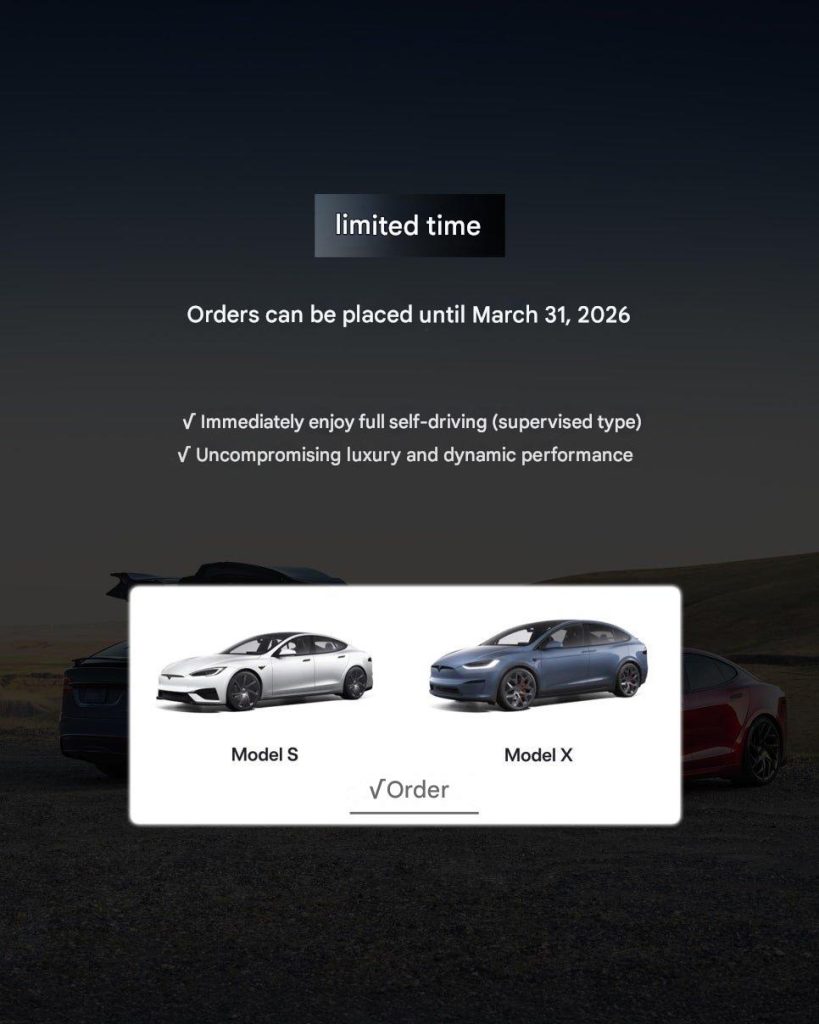
The move to bring closure to the Model S and Model X aligns with CEO Elon Musk’s plans for Tesla moving forward. During the Q4 2025 Earnings Call in January, Musk said the two cars deserved an “honorable discharge” for what they have done for the company.
The long-running programs are primarily being removed so that manufacturing lines can be repurposed for high-volume manufacturing of the Optimus humanoid robot. Tesla is targeting a production rate of up to one million units each year.
The Model S and Model X being removed from Tesla’s plans is a tough choice, but it was one that was written on the wall. Sales of these premium models have declined sharply in recent years, and even with Plaid configurations that are performance-forward, the company still has had trouble getting them sold.
In 2025, the Model S and Model X together accounted for roughly 3 percent of Tesla’s global deliveries, down significantly from prior periods as competition intensified in the luxury EV segment and buyers shifted toward more affordable options like the Model 3 and Model Y.
The Model S saw sales drop over 50 percent year-over-year in some quarters, while the Model X faced similar pressures from rivals, including the Rivian R1S and BMW iX.
Despite their dwindling volume, the Model S and Model X remain technological showcases. The Plaid variants deliver blistering acceleration, advanced Full Self-Driving capability, and luxurious interiors.
The phase-out paves the way for Tesla’s strategic pivot toward autonomy, robotics, and higher-volume vehicles.
Tesla brings closure to flagship ‘sentimental’ models, Musk confirms
Fremont will continue producing the refreshed Model 3 and Model Y, ensuring the factory remains a key automotive hub while expanding into robotics. Tesla has stated that the shift is not expected to result in job losses and could increase headcount as Optimus production ramps up.
For Tesla fans, the sunset represents a bittersweet moment. The Model S, introduced in 2012, proved EVs could compete with luxury sedans, while the Falcon-wing-door Model X set new standards for family haulers. Owners can expect continued software support and service for years to come.
Many fans have pushed for the Model X to hang around due to its appeal for families.
With the two cars heading out, Tesla’s priority now becomes its future products, especially that of the Optimus robot, which is the main reason for the S/X platform’s conclusion.
News
Tesla shows off mysterious vehicle at Giga Texas
The mysterious structure, partially unboxed amid construction materials, has sparked widespread speculation among Tesla enthusiasts and analysts. Many are convinced it is the long-rumored Model Y L, the extended-wheelbase variant already popular in China, now arriving in Texas for potential U.S. production.
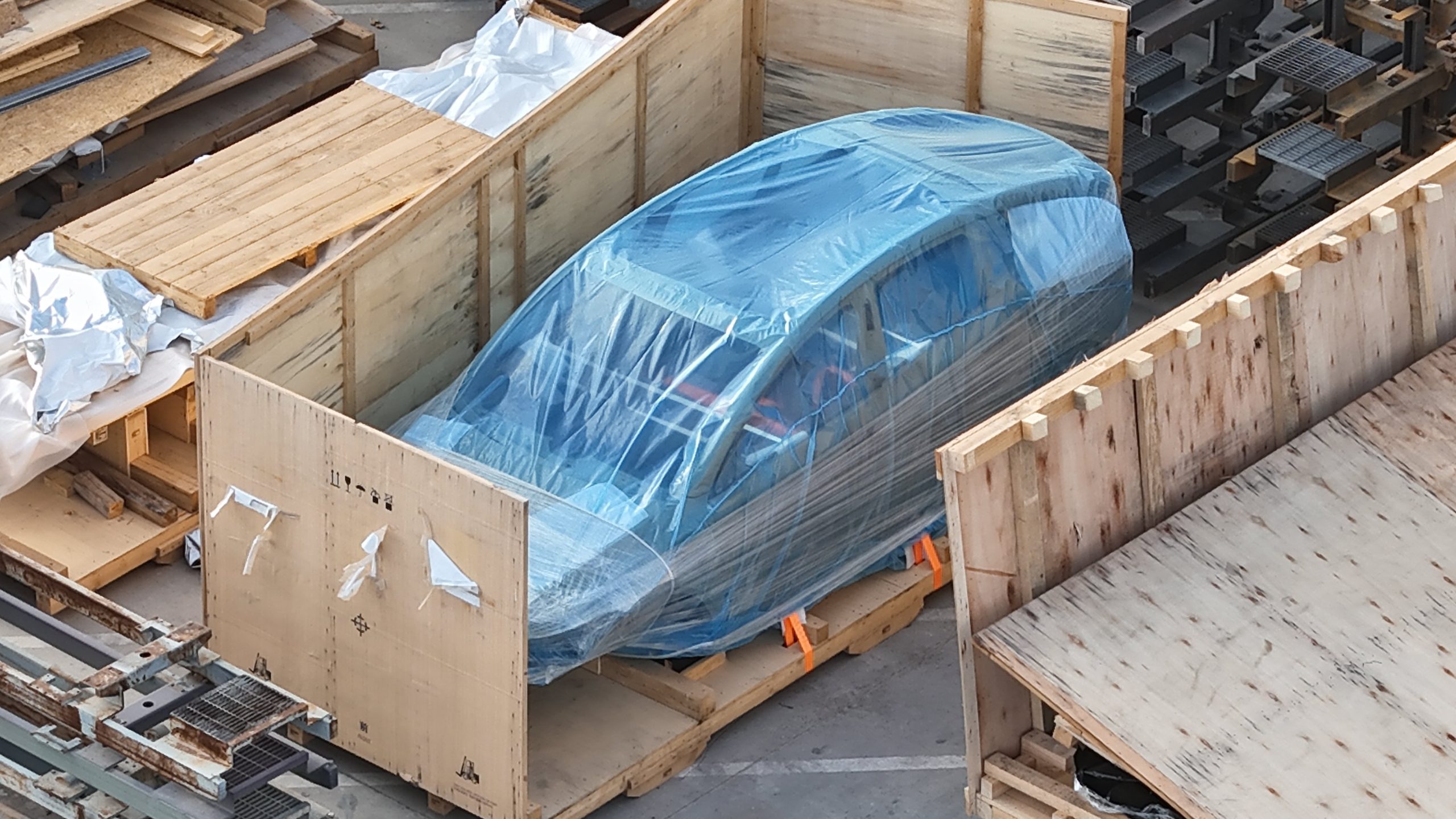
Tesla seemingly showed off a mysterious vehicle at Giga Texas, one that seems to be completely different than anything the company currently makes for the U.S. market.
The vehicle, which was spotted on the plant’s property, appears to be similar to the Model Y L that has not yet launched in North America, and is currently built at Gigafactory Shanghai in China.
Drone pilot Joe Tegtmeyer captured intriguing footage at Tesla’s Giga Texas on March 23, 2026, revealing what appears to be a large, blue plastic-wrapped vehicle body resting inside a wooden shipping crate outdoors.
Well this is interesting at Giga Texas today … what do YOU think this is? 🤔😎 pic.twitter.com/U9pLvqbf7L
— Joe Tegtmeyer 🚀 🤠🛸😎 (@JoeTegtmeyer) March 23, 2026
The mysterious structure, partially unboxed amid construction materials, has sparked widespread speculation among Tesla enthusiasts and analysts. Many are convinced it is the long-rumored Model Y L, the extended-wheelbase variant already popular in China, now arriving in Texas for potential U.S. production.
The images show an elongated silhouette that stands out from standard Model Y bodies. Side-by-side comparisons shared in replies to Tegtmeyer’s post highlight key differences: the rear door extends farther over the wheel arch than on a regular Model Y, and the rear glass appears to run all the way to the spoiler lip without the metal trim seen on shorter versions.
One overlay analysis noted that the visible proportions align precisely with the Chinese-market Model Y L, which measures approximately 4.98 meters long with a 3.04-meter wheelbase, which is about seven inches longer overall than the standard Model Y sold in the U.S.
Model Y L, with a support structure on top, likely for shipping. pic.twitter.com/ET3w46DjpJ
— Owen Sparks (@OwenSparks) March 23, 2026
The vehicle is a bare “body-in-white” shell, typical of prototypes sent abroad for tooling validation and local manufacturing ramp-up. Tesla has already launched the six- and seven-seat Model Y L in China and other markets, where it offers roughly 10% more cargo space and greater family-friendly versatility.
This sighting fits Tesla’s broader strategy. Industry observers expect the company to localize Model Y L production at Giga Texas by mid-2026 to serve American families seeking extra room without stepping up to the larger Cybertruck or a future full-size SUV.
Bringing the design stateside could add tens of thousands of annual deliveries while leveraging existing Model Y lines. People have been adamant that they want the Model Y L in the U.S., especially as Tesla plans to fade the Model X, the company’s most ideal vehicle for large families, out of production in the near future.
Tesla Model Y lineup expansion signals an uncomfortable reality for consumers
While Tesla has made no official comment, the timing, amid Giga Texas expansion and steady Model Y output, suggests the mysterious crate is more than a random prototype.
If confirmed as the Model Y L, it marks another step in Tesla’s effort to refresh its bestselling SUV for global demand. The vehicle would perform exceptionally well in the U.S., and despite the company’s rather mute stance on bringing it to America, this might be the biggest hint to date that it could be on the way.

Elon Musk’s $10 Trillion robot: Inside Tesla’s push to mass produce Optimus

Tesla officially begins sunset of Model S and Model X

Tesla shows off mysterious vehicle at Giga Texas

What is Digital Optimus? The new Tesla and xAI project explained

Elon Musk’s Boring Co. Tunnel Vision Challenge ends with a surprise for Louisiana, Maryland and Dallas


