News
Xpeng is set to follow Tesla in this massive self-driving strategy

Xpeng is reportedly set to follow Tesla’s footsteps in terms of its strategy for self-driving, at least with one model that the Chinese company will release later this year.
It now seems that Xpeng is planning to launch the F57, a new all-electric vehicle that will completely ditch LiDAR and utilize only cameras, similar to Tesla’s Pure Vision approach that it adopted several years ago.
CEO Elon Musk has always called LiDAR a “fool’s errand,” and he eventually took it a step further by eliminating ultrasonic sensors from its vehicles two at a time starting in 2022.
Now, Xpeng is reportedly planning to dip its toe in the strategy, as CnEV Post reported.
Xpeng has long relied on LiDAR for its vehicles. First utilizing the technology on the P5 in 2021, it seems the company is starting to believe it can obtain more accurate self-driving programs with the use of other tech.
Additionally, CEO He Xiaopeng visited the United States last month and rode on public streets using Tesla’s Full Self-Driving suite, which uses only cameras for its operation. He noted he was extremely impressed by its performance, especially on highways:
“In the past couple of days, I had the chance to experience FSD version 12.3.6 in California, and I also took a ride in a Waymo vehicle. Overall, Waymo performed better in downtown San Francisco, while FSD excelled in Silicon Valley and on the highways, achieving very high scores and handling various road conditions smoothly…I’m truly impressed by the significant progress FSD has made in just a few months. We plan to learn from FSD’s excellent features and user experience. I believe 2025 will be the Chat GPT moment for fully autonomous driving!”
Xpeng CEO bullish on autonomy in Tesla FSD (Supervised) review
The decision to ditch LiDAR altogether could help bring an unlikely alliance to both Tesla and Xpeng.
Xpeng could consider adopting more Tesla tech for its vehicles and utilizing the company’s expertise for its development of self-driving technology.
I’d love to hear from you! If you have any comments, concerns, or questions, please email me at joey@teslarati.com. You can also reach me on Twitter @KlenderJoey, or if you have news tips, you can email us at tips@teslarati.com.


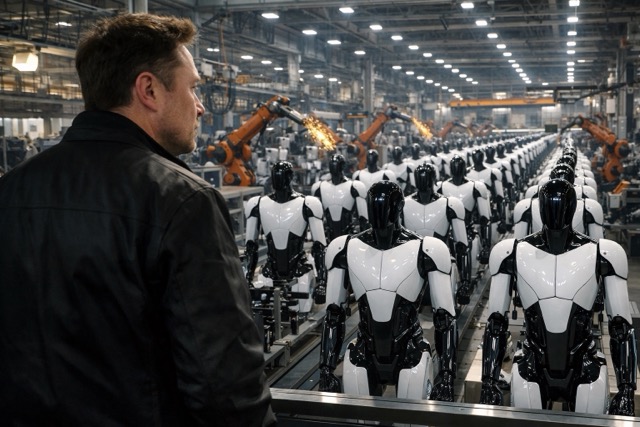
Tesla CEO Elon Musk has tempered expectations for the company’s humanoid robot Optimus, emphasizing that initial production will ramp up slowly despite recent progress on the manufacturing line. In a July 1 reply on X, Musk responded to optimistic community speculation by stating, “No, Optimus production will be extremely slow at first, as everything is new. This is not like making a car.”
No, Optimus production will be extremely slow at first, as everything is new. This is not like making a car.
— Elon Musk (@elonmusk) July 1, 2026
The comment came in response to a post theorizing that Tesla had accelerated Optimus V3 development and might soon unveil an impressive demonstration with multiple units already in meaningful production. Musk’s clarification highlights the fundamental differences between scaling a novel humanoid robot and Tesla’s established automotive operations, which benefit from over a century of refined supply chains, tooling, and processes.
Recent updates show tangible advancement. Musk shared a photo of himself walking the Optimus production line at Fremont, where Tesla is converting former Model S/X manufacturing space. According to Q1 2026 earnings commentary, limited production is slated to begin in late July or August 2026 on this converted line.
Tesla Optimus project fires up as Musk sees production line progress
Musk previously noted that Optimus features roughly 10,000 unique parts, making early output rates “literally impossible to predict” and describing them as “quite slow.” A larger dedicated factory at Giga Texas is under construction, targeting higher-volume production around summer 2027 with long-term annual capacity potentially reaching millions of units.
Some experts point out that pioneering humanoid robotics demands inventing new automation techniques, actuator supply chains, and quality-control standards in real time. Unlike vehicles, where components and assembly methods are mature, every element of Optimus—from dexterous hands to AI-integrated movement—requires fresh engineering solutions. Early units are expected to handle simple factory tasks before expanding to more complex roles.
This cautious approach aligns with Tesla’s history of under-promising and over-delivering on complex technologies. While enthusiasts hoped for rapid deployment, Musk’s message underscores a deliberate strategy: prioritize reliability and iterative improvement over rushed volume.
Analysts suggest the S-curve ramp typical of new manufacturing will eventually accelerate once foundational issues are resolved, positioning Optimus as a potential trillion-dollar product line.
Musk has long envisioned Optimus transforming labor markets, assisting in homes, factories, and hazardous environments. By setting realistic timelines, Tesla aims to build sustainable momentum rather than risk disappointment. As the Fremont line comes online this summer, investors and fans will watch closely for the first production metrics and capability demonstrations.
Tesla has officially launched the Model Y L in the United States and Puerto Rico for $61,990. It is the longer-wheelbase version of the Model Y, and has been available in China since last year.
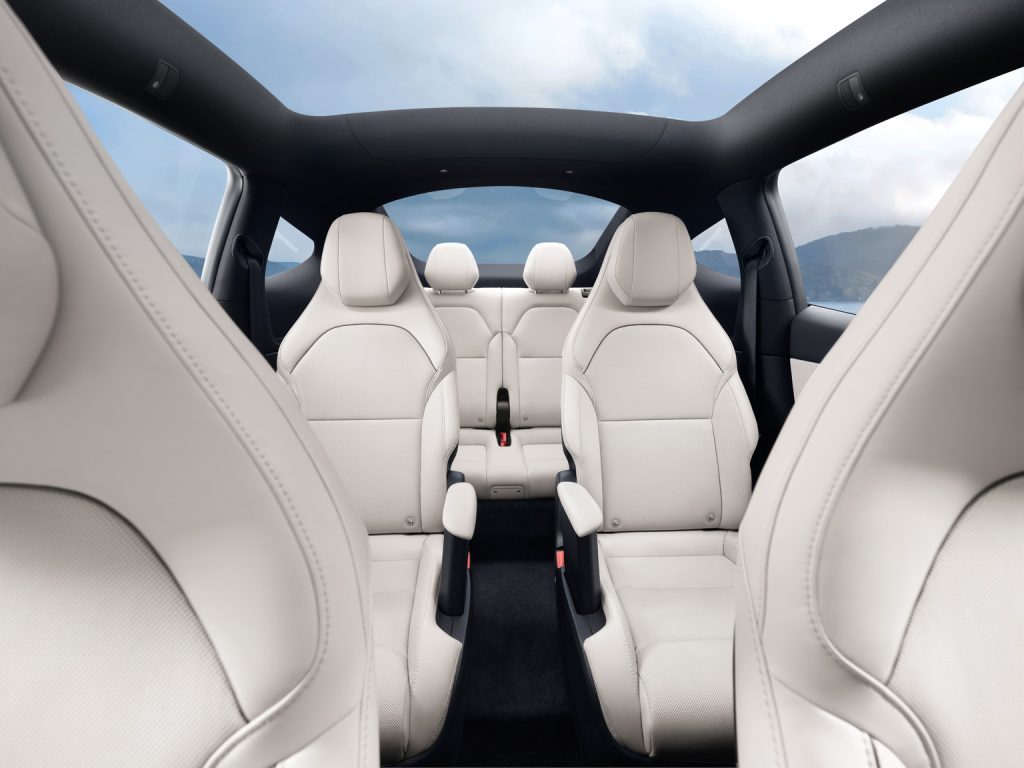
Tesla brings the Model Y L to the U.S. just months after it phased out the only pure SUV in its lineup, the Model X. It is slightly longer than the Model Y configurations that are already available in the U.S., and features a three-row, six-seat setup with Captain’s Chairs being among the many features that make this a truly fantastic offering.
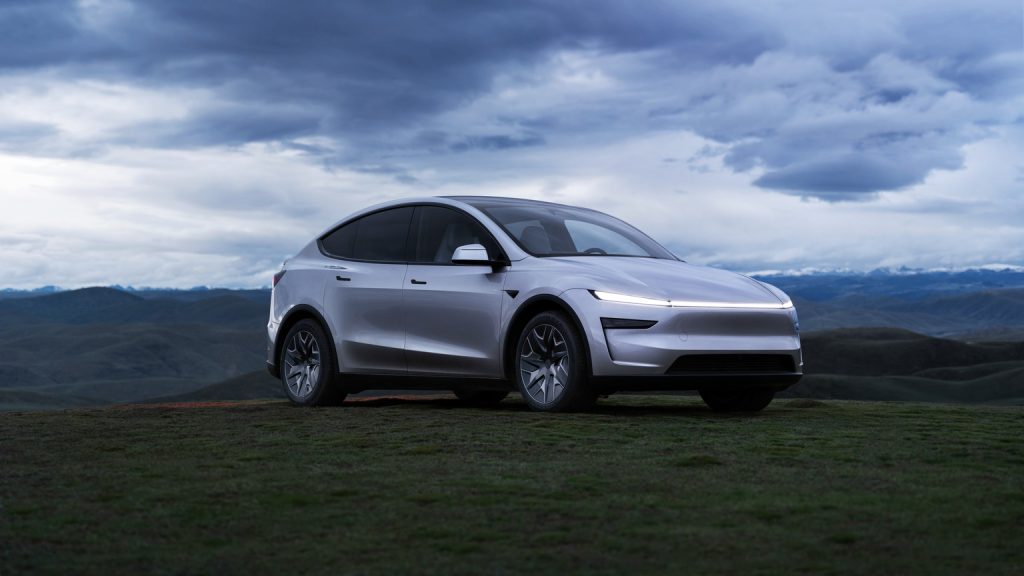
The Model Y L is priced competitively at $61,990, and features 325 miles of range and a 0-60 MPH in just 4.4 seconds.
Tesla also added a handful of new features that are not available in even the Premium Model Y. Here’s a full list of its features:
- Heated/Ventilated Front Seats with Powered Thigh Cushion
- Heated/Ventilated Captain’s Seats in Second Row with Powered Armrests & One-Touch Fold
- Heated Third-Row Seats with Power Recline, One-Touch Fold & Child Seat Anchors
- Improved Airflow, Increased Efficiency, More Range
- 89 cubic feet of trunk space
- Upgraded Acoustic Glass and Suspension to Minimize Road Noise
- Adaptive Damping for a Smooth, Stable Ride
- Staggered Tires for Enhanced Grip
- Larger Tailgate for Better Rear Visibility and Bigger Windows Overall
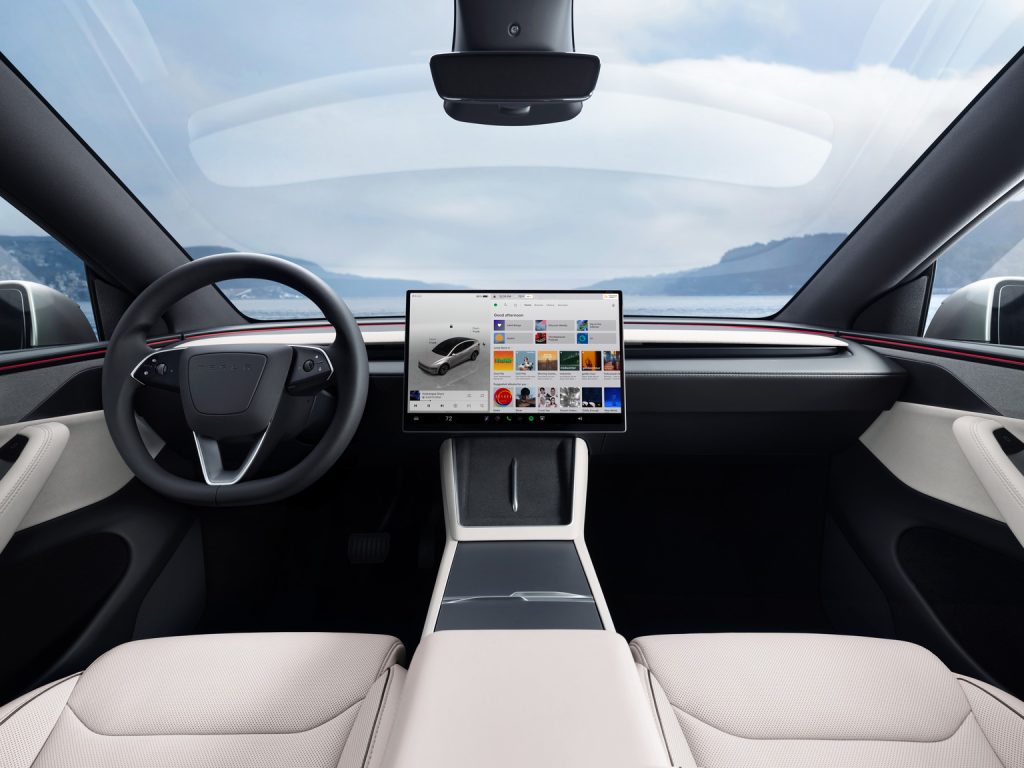
- 16″ First Row and 8″ Second Row Touchscreens
- 19-Speaker Immersive Tesla Audio
- 50W Wireless Charging Pads with Active Cooling and Charging Ports for All Other Seats
- FSD Supervised and Integrated Grok AI
Tesla is also delivering these first units as a “Launch Series,” which comes with additional features, such as:
- Door Trim Puddle Lights
- Suede Dashboard Wing
- Exterior and Interior Badging
- Floor Mats
- Sill Plates
The launch of the Model Y L in the U.S. marks a huge offering from Tesla to U.S. consumers. People have been calling for Tesla to bring a larger car to the U.S., and it needed it more than ever now that the Model X is gone.
-
- Credit: Tesla
-
- Credit: Tesla
It is a huge accomplishment for Tesla to get the Model Y L to the U.S., and after reporting strong deliveries today, it will be interesting to see how this car impacts future quarterly delivery reports.
Deliveries for the Model Y L “Launch Series” are slated for September or October of this year.
Tesla just told us twice that the Model Y L is coming to the U.S., and two social media posts definitely just tipped the company’s hand, as if they wanted it to be any other way.
The two social media posts basically confirm that the slightly longer version of the Model Y will be heading to the United States soon, and many have speculated that the company could launch the vehicle as soon as this weekend.
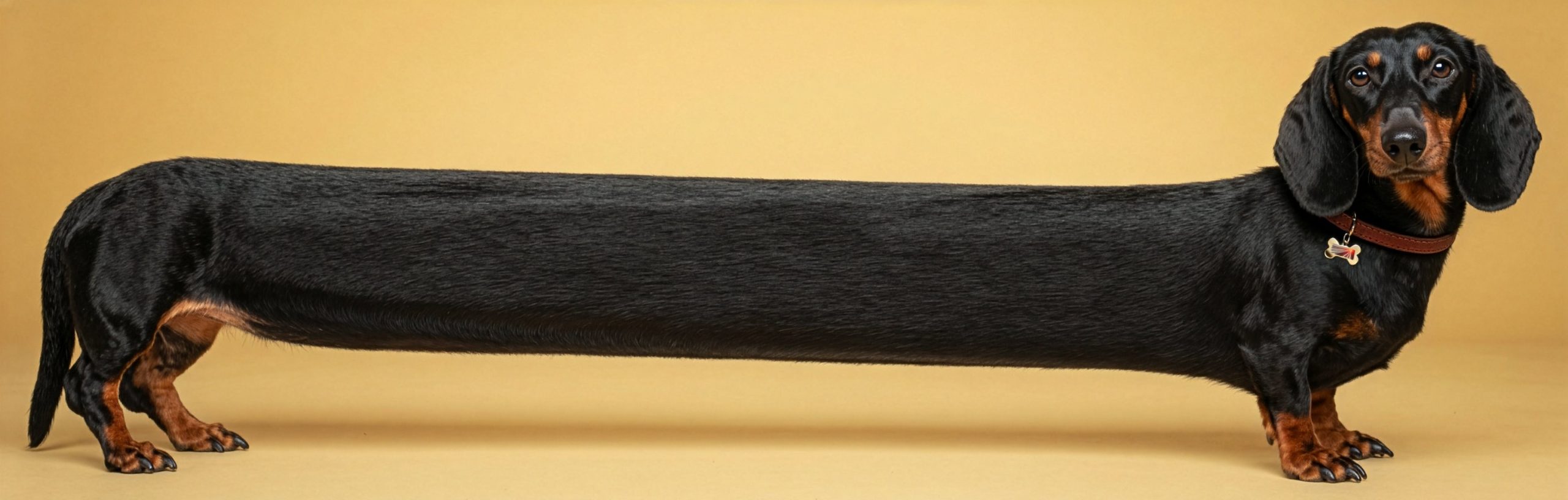
The first post was directly from Tesla, and it showed an incredibly long Dachshund, with words above that said, “Looking forward to the long weekend.”
Looking forward to the long weekend pic.twitter.com/URzH6zOUdn
— Tesla (@Tesla) July 1, 2026
Anyone who knows Tesla knows the company loves to troll its fans and have fun, and this is a perfect example of that. While not a direct acknowledgement, Tesla is very involved on social media, especially CEO Elon Musk’s platform X, and the company is well aware of what is being discussed within the community.
With recent sightings of Model Y L test mules in California, peeks of the vehicle at Giga Texas, and a large call for the car to come to the U.S., Tesla is simply stoking conversation with this.
However, the company also made another move that was recognized on social media. Tesla has a large gallery that includes photos of its products so media and others can use them. This gallery applies to the U.S. market specifically, unless otherwise specified.
Tesla uploaded a Model Y L to the Gallery last night:
This looks like a Model Y L https://t.co/TpnBwrLmH9
— TESLARATI (@Teslarati) July 2, 2026
This seems to be another indication that the Model Y L is coming to the United States.
Musk said last year that the Model Y L could make its way to the United States late this year, but it was not something that was set in stone by Tesla. The company definitely needs to establish something in the SUV market that is larger than the Model Y, and the Model Y L might be the answer.
Even still, there are consumers out there who would love Tesla to develop something even larger, like a competitor to the Tahoe or Expedition. Tesla has not really given much of an indication that it will go in that direction.

Elon Musk outlines Tesla Optimus production expectations
Tesla brings Model Y L ‘Launch Series’ to the U.S. at $61,990


