Lifestyle
Bringing a Tesla to a Car Show

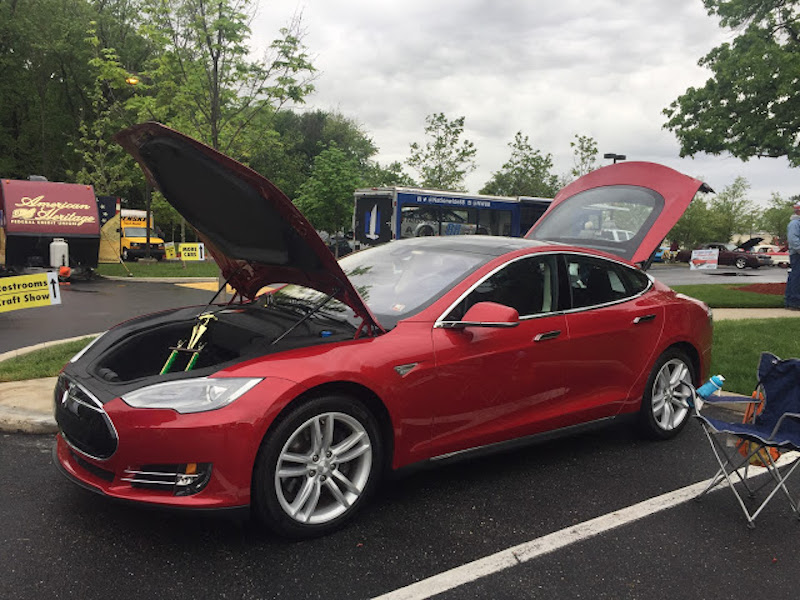
Northeast Philadelphia is perhaps the most perfect example of a classic, blue-collar town in America. With a population of 300,000 in this section of the city alone, it certainly has enough size to qualify as its own town. Filled with trademark row homes, it is densely populated and tight-knit, with many families choosing to settle mere blocks from where one or both adults grew up.
If Americans of all ages and backgrounds can agree on one thing, it’s that we love our cars! Specifically, we love American Muscle. There were no fewer than two dozen mustangs at this year’s Car Show, sponsored by a local oldies radio station (WOGL) and the credit union whose property it was held on. In fact, the gentleman who was parked beside me had one of the most beautiful mustangs I’ve ever seen. So it’s almost sad that he spent the entire day watching lines of people waiting to talk to me about my Tesla.
“Make no mistake about it, the shift has happened.”
In May of 2015, I decided to participate in this Car Show. It was the first time I had ever done so, but with our Model S all shined up and ready to be shown, I went home with a beautiful trophy. I spent all day fielding questions and several times being told that “I need gas” or “I’d miss the sound” or “it’s just not the same.” This from traditional gear heads, so I was always gracious. Overall people were positive and pleasant – plus very curious – but most hadn’t ever heard of Tesla.
368 days later? I estimate that more than 75% of the people I spoke with had heard of the car. A solid 50% knew exactly what it was and knew at least one thing about it. Unlike the few that thought they knew something about it last year, almost every fact I overheard someone claiming was true. “This car technically scored over 5 stars in safety,” “They’re making one that starts at $35,000 soon,” and “It’s both designed and built right here in America!” were some of things I was happy to hear.
As of today, it is still true that Tesla has not spent any money on placement or advertising in traditional mediums. There are no billboards, no glossy magazine spreads and certainly no commercials during the Super Bowl. Tesla has relied on word of mouth, social media and a really nice boost from the local news (overheard today: “I saw it on Channel 6, people were lining up!”) to get more and more Americans familiar with this idea of an electric car.
For this reason, I urge every owner, if you have the chance, to bring your Tesla to a local car show.
This year, I opened not to technically register my car for judgement. I was there just for the simple joy of getting to talk about it all day, as well as doing my duty to spread the word about the car.
Here are some of my favorite memories:
- Jay from near Hamilton New Jersey was well versed on the Superchargers in town. He knows someone with a Tesla and had a “curious story” to tell me. That acquaintance got a letter from Tesla that he was using that charger too much. Jay was there with a wood-sided station wagon from the 1970s, but also owns a 1980s Ford Escort that had been modified and converted into a replica Batmobile from the 1960s TV show version. He was a charmer, and guessed me a PR professional with a future in broadcasting.
- Two very short and very mature ladies (better than 70 I’d guess) were at the show together. They had not heard of the car but had a ton of questions. They were all very good, intelligent questions. Very quickly, one mentally calculated that the maintenance costs (or lack thereof) make this car totally worth it. I happen to agree.
- An electrician could not wait to ask me some specific questions about the amps/volts required to power this car. He made a very interesting observation. He likened this shift in technology to the advent and popular adoption of central air conditioning at home. He wanted to stay up-to-date knowing that all new homes built should probably be done with the ability to easily add a car charger in the garage, just like the accommodation of central air.
- Several folks who have already looked into or knew someone who was looking into buying this car. Remember, Northeast Philadelphia is a very traditional area, with modest wages and home values.
- Hundreds of men, women and children excitedly asking questions to understand what it’s like to live, drive and road trip with a Tesla. Some of whom stuck around for 10 minutes solid and really wanted to know everything.
I am so thrilled, if a little exhausted, at how differently the conversations today were framed compared to this time last year. Sure I had to tell people the same things we’re all used to repeating – around 250 miles; well it depends on the source of electricity but 1-2 hours per night; they invented these super fast chargers along major routes that are free – but this time they had heard of the car and wanted to know more.
Ford, Chevy and GM, be afraid. Be very afraid. Your key demographic has now heard of this not-so-little start up in California.
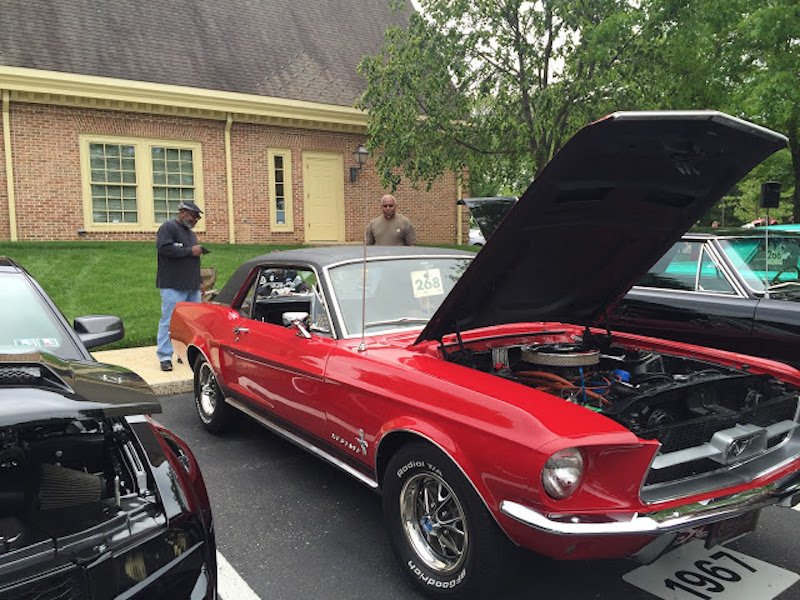
Here’s a Mustang, just for good measure.


Elon Musk
NASA sends humans to the Moon for the first time since 1972 – Here’s what’s next
NASA’s Artemis II launched four astronauts toward the Moon on the first crewed lunar mission since 1972.

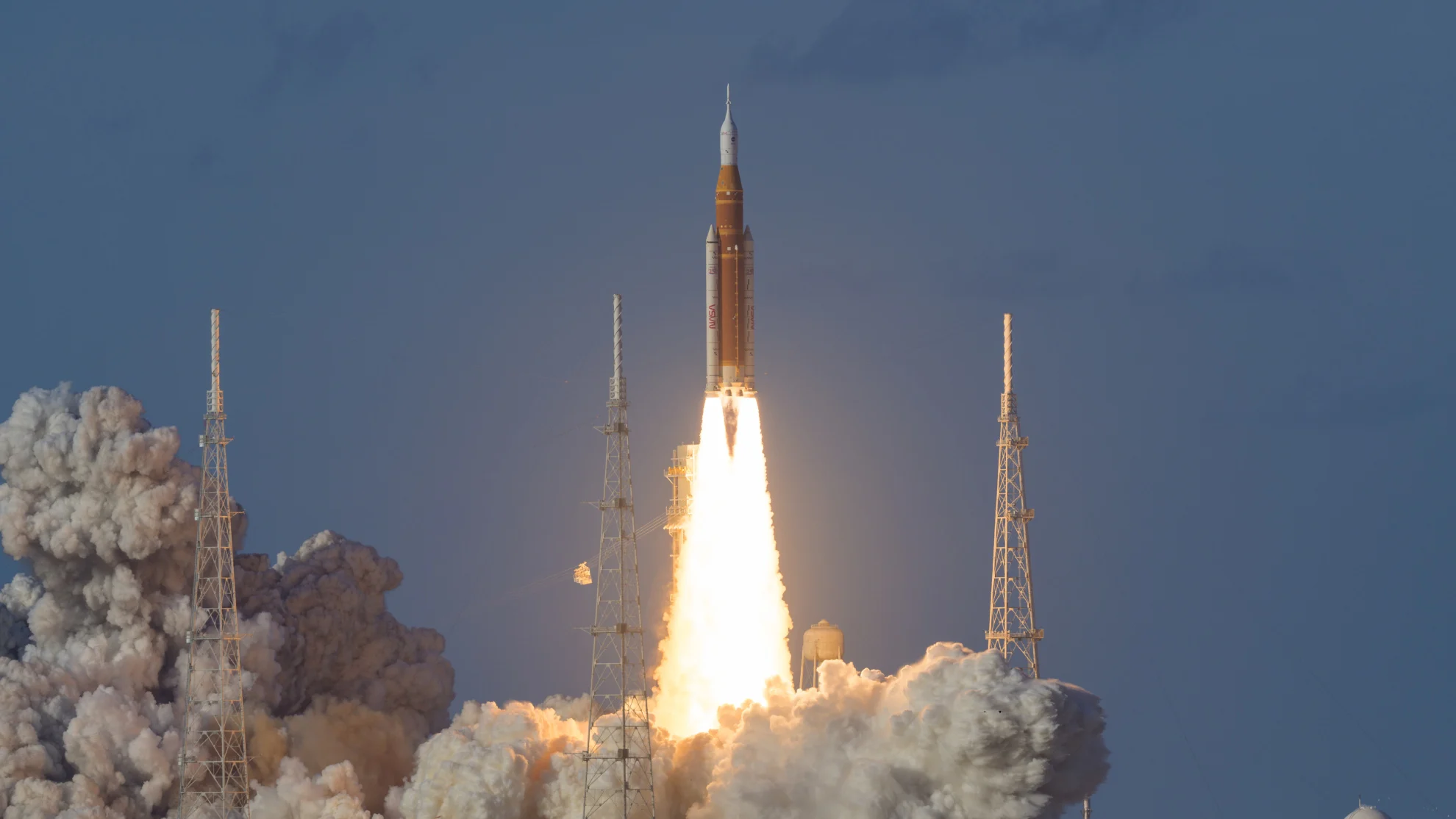
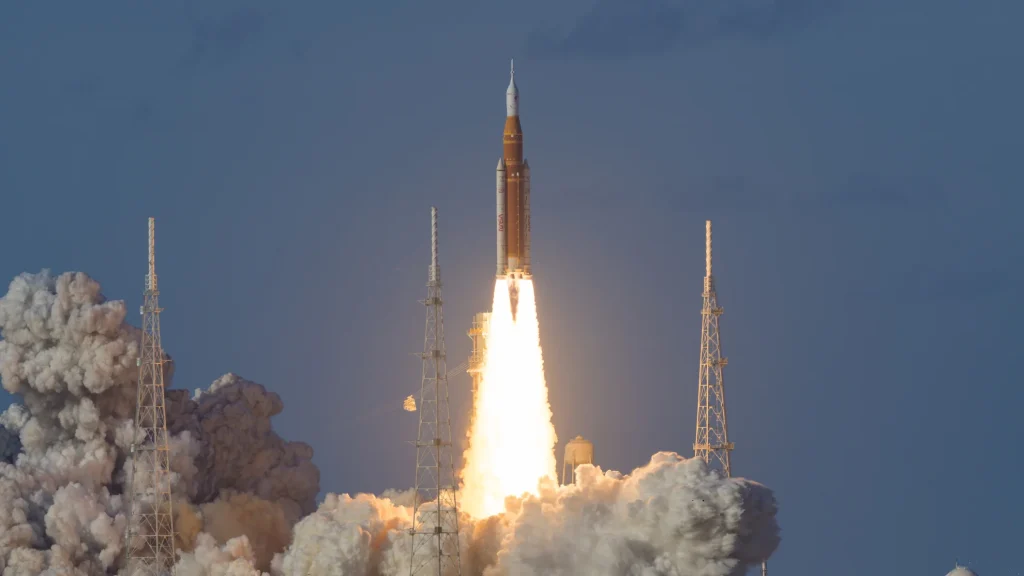
NASA’s Space Launch System rocket launches carrying the Orion spacecraft with NASA astronauts Reid Wiseman, commander; Victor Glover, pilot; Christina Koch, mission specialist; and CSA (Canadian Space Agency) astronaut Jeremy Hansen, mission specialist on NASA’s Artemis II mission, Wednesday, April 1, 2026, from Operations and Support Building II at NASA’s Kennedy Space Center in Florida. NASA’s Artemis II mission will take Wiseman, Glover, Koch, and Hansen on a 10-day journey around the Moon and back aboard SLS rocket and Orion spacecraft launched at 6:35pm EDT from Launch Complex 39B. (NASA/Bill Ingalls)
NASA launched four astronauts toward the Moon on April 1, 2026, marking the first crewed lunar mission since Apollo 17 in December 1972. The Artemis II mission lifted off from Kennedy Space Center aboard the Space Launch System rocket at 6:35 p.m. EDT, sending commander Reid Wiseman, pilot Victor Glover, mission specialist Christina Koch, and Canadian astronaut Jeremy Hansen on a 10-day journey around the far side of the Moon and back.
The mission does not include a lunar landing. It is a test flight designed to validate the Orion spacecraft’s life support systems, navigation, and communications in deep space with a crew aboard for the first time. If the crew reaches the planned distance of 252,000 miles from Earth, they will set a new record for the farthest any human has ever traveled, surpassing even the Apollo 13 distance record.
As Teslarati reported, SpaceX holds a central role in what comes next. The Starship Human Landing System is under contract to carry astronauts to the lunar surface for Artemis IV, now targeting 2028, after NASA restructured its mission sequence due to delays in Starship’s orbital refueling demonstration. Before any Moon landing happens, SpaceX must prove it can transfer propellant between two Starships in orbit, something no rocket program has done at this scale.
The last time humans left Earth’s orbit was 53 years ago. Gene Cernan and Harrison Schmitt of Apollo 17 were the final people to walk on the Moon, a record that stands to this day. Elon Musk has long argued that returning is not optional. “It’s been now almost half a century since humans were last on the Moon,” Musk said. “That’s too long, we need to get back there and have a permanent base on the Moon.”
The Artemis program involves 60 countries signed onto the Artemis Accords, and this mission sets several firsts beyond distance. Glover becomes the first person of color to travel beyond low Earth orbit, Koch the first woman, and Hansen the first non-American astronaut to reach the Moon’s vicinity. According to NASA’s live mission updates, the spacecraft’s solar arrays deployed successfully after liftoff and the crew completed a proximity operations demonstration within the first hours of flight.
Artemis II is step one. The Moon landing and the permanent lunar base come later. But after more than five decades, humans are heading back.
Elon Musk
Tesla Optimus Gen 3 is coming to the Tesla Diner with new ambitions
Tesla’s Optimus robot left the Hollywood Diner within months of opening. Now Musk is planning its return with a bigger role and a major Gen 3 upgrade underway.
![Tesla Optimus Gen 3 [Credit: Tesla]](https://www.teslarati.com/wp-content/uploads/2026/03/tesla-optimus-gen3-diner.jpg)
Tesla’s Optimus robot was one of the most talked-about features when the Tesla Diner opened on Santa Monica Boulevard in Hollywood on July 21, 2025. Dubbed “Poptimus” by Tesla fans, the Gen 2 robot stood upstairs at the retro-futuristic, drive-in theater and Tesla Supercharging station, scooping popcorn into bags and handing them to guests with a wave.
The diner itself had been years in the making. Elon Musk first floated the idea in 2018 with a tweet about building an “old-school drive-in, roller skates & rock restaurant” at a Hollywood Supercharger. What eventually opened was a unique two-story neon-lit space, with 80 EV charging stalls, and Optimus serving as a live demonstration of where Tesla’s ambitions were headed.
If our retro-futuristic diner turns out well, which I think it will, @Tesla will establish these in major cities around the world, as well as at Supercharger sites on long distance routes.
An island of good food, good vibes & entertainment, all while Supercharging! https://t.co/zmbv6GfqKf
— Elon Musk (@elonmusk) July 21, 2025
But Optimus did not stay long, and was gone by December 2025.
Now, the robot is set to return with a more demanding job. Musk has ambitions for Optimus to take on a food runner role in 2026, delivering meals directly to cars at the Supercharger stalls. While the latest Gen 3 Optimus is likely to initially take on its previous popcorn-serving role, it wouldn’t be out of the question for Optimus to see a quick promotion. With improved hand dexterity that features 50 total actuators and 22 degrees of freedom per hand, and significantly more powerful processing through Tesla’s latest AI5 chip that includes Grok-powered voice interaction, Musk described Optimus at the Abundance Summit on March 12, 2026, as “by far the most advanced robot in the world, Nothing’s even close.”
Back to work
See you at Tesla Diner tomorrow pic.twitter.com/H3tTajrUbu
— Tesla Optimus (@Tesla_Optimus) March 30, 2026
That confidence is backed by a major manufacturing shift. At the Q4 2025 earnings call in January, Musk announced Tesla would discontinue the Model S and Model X and convert those Fremont production lines to build Optimus. “It’s time to basically bring the Model S and X programs to an end,” he said, calling for a pivot that reflects where the Tesla’s future lies.
Elon Musk
The Boring Company clears final Nashville hurdle: Music City loop is full speed ahead
The Boring Company has cleared its final Nashville hurdles, putting the Music City Loop on track for 2026.
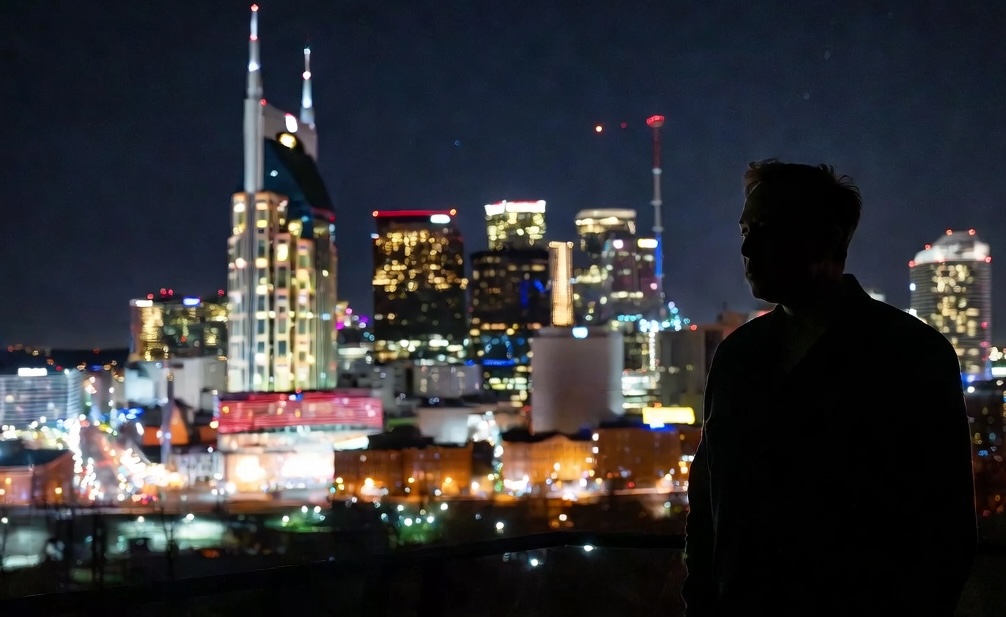
The Boring Company has cleared one of its most significant regulatory milestones yet, securing a key easement from the Music City Center in Nashville just days ago, the latest in a series of approvals that have pushed the Music City Loop project firmly into construction reality.
On March 24, 2026, the Convention Center Authority voted to grant The Boring Company access to an easement along the west side of the Music City Center property, allowing tunneling beneath the privately owned venue. The move follows a unanimous 7-0 vote by the Metro Nashville Airport Authority on February 18, and a joint state and federal approval from the Tennessee Department of Transportation and the Federal Highway Administration on February 25. Together, these green lights have cleared the path for a roughly 10-mile underground tunnel connecting downtown Nashville to Nashville International Airport, with potential extensions into midtown along West End Avenue.
Music City Loop could highlight The Boring Company’s real disruption
Nashville was selected by The Boring Company largely because of its rapid population growth and the strain that growth has placed on surface infrastructure. Traffic has become a persistent problem for residents, convention visitors, and airport travelers alike. The Music City Loop promises an approximately 8-minute underground transit time between downtown and the Nashville International Airport (BNA), removing thousands of vehicles from surface roads daily while operating as a fully electric, zero-emissions system at no cost to taxpayers.
The project fits squarely within a broader vision Musk has championed for years. In responding to a breakdown of the Loop’s construction costs, Musk posted on X: “Tunnels are so underrated.” The comment reflected a longstanding belief that underground transit represents one of the most cost-effective and scalable infrastructure solutions available. The Boring Company has claimed it can build 13 miles of twin tunnels in Nashville for between $240 million and $300 million total, a fraction of what comparable projects cost elsewhere in the country.
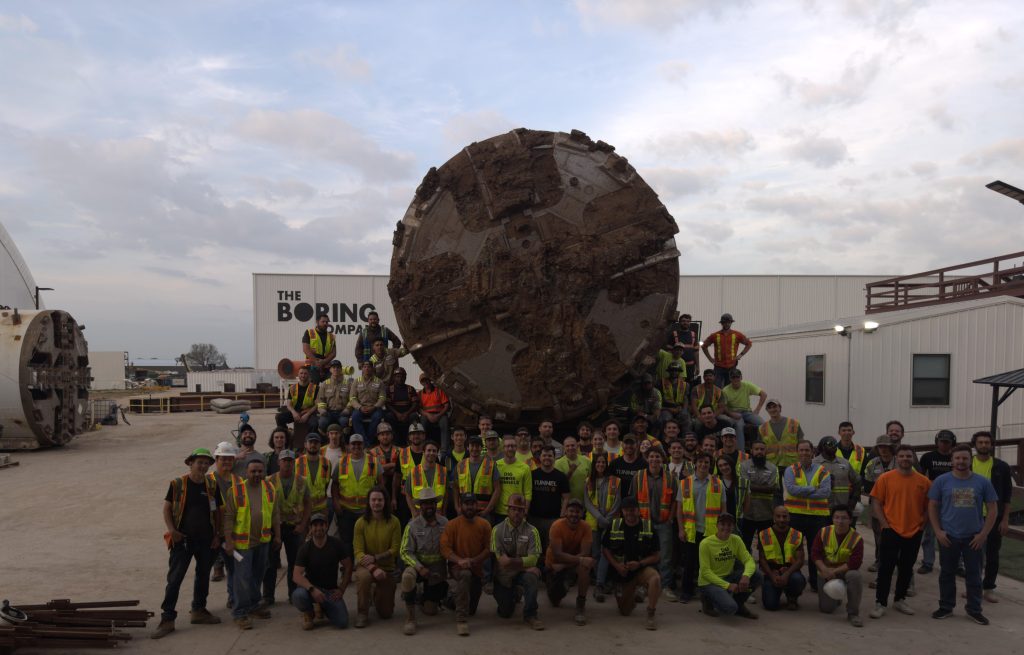
Image Credit: The Boring Company/Twitter
The Las Vegas Loop, The Boring Company’s first operational system, has served as a proof of concept. During the CONEXPO trade show in March 2026, the Vegas Loop transported approximately 82,000 passengers over five days at the Las Vegas Convention Center, demonstrating the system’s capacity during large-scale events. Nashville draws millions of convention visitors and tourists each year, and local business leaders have pointed to that same capacity as a major draw for supporting the project.
The Music City Loop was first announced in July 2025. Construction began within hours of the February 25 state approval, with The Boring Company’s Prufrock tunneling machine already in the ground the same evening. The first operational segment is targeted for late 2026, with the full route expected to be complete by 2029. The project represents one of the largest privately funded infrastructure efforts currently underway in the United States.

Tesla reports Q1 deliveries, missing expectations slightly

NASA sends humans to the Moon for the first time since 1972 – Here’s what’s next

Tesla removes Model S and X custom orders as sunset officially begins

Elon Musk says Tesla is developing a new vehicle: ‘Way cooler than a minivan’

Elon Musk launches TERAFAB: The $25B Tesla-SpaceXAI chip factory that will rewire the AI industry


