Investor's Corner
Tesla attracts large crowds of applicants for Gigafactory 3 in special job fair

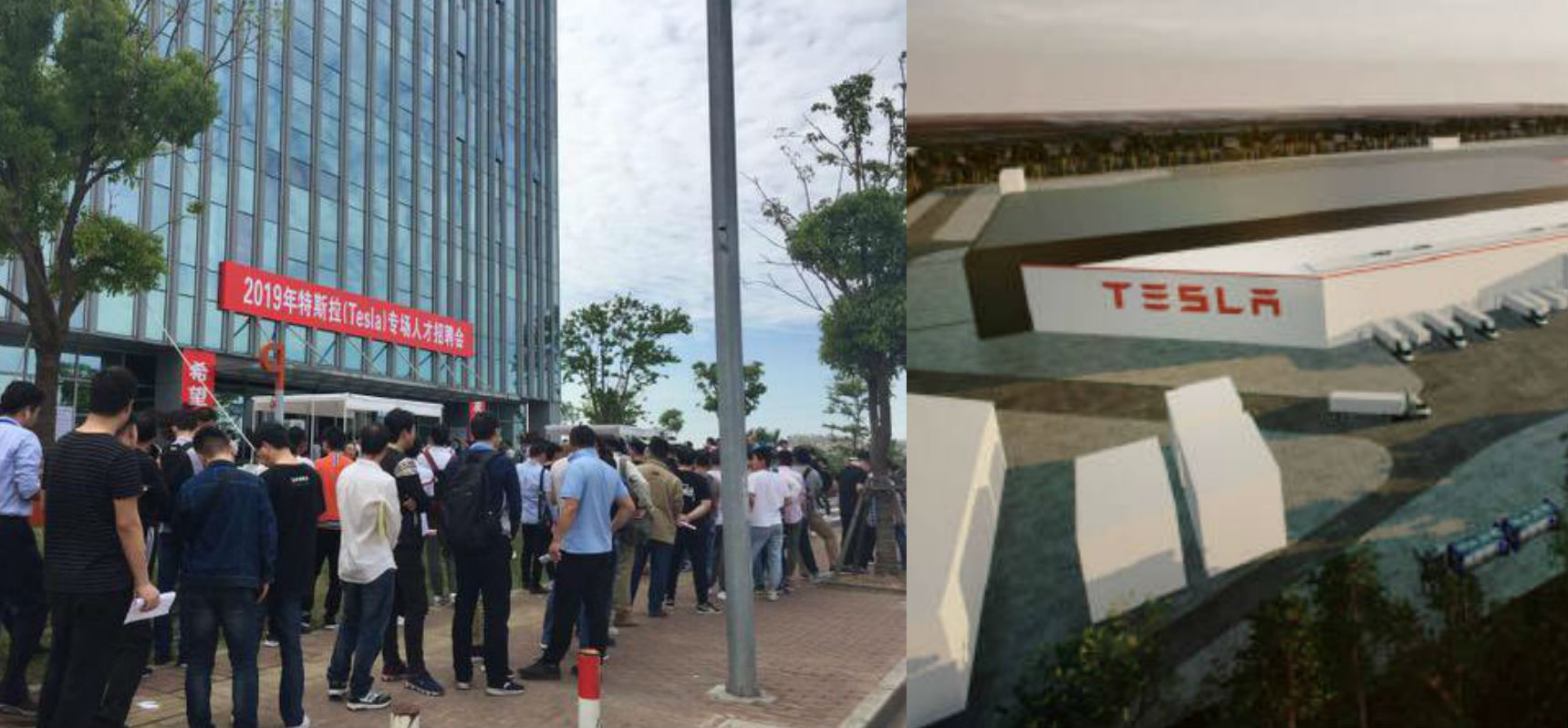
Tesla recently held a special job fair in Lingang China, to hire the first wave of frontline employees of Gigafactory 3. The job fair, which was aimed at hiring employees for 25 different positions under six departments, was a huge success, with Tesla receiving a massive number of applications from interested job-seekers.
Posts from Chinese social media showed that Tesla seemed to have received far too many applications for its open job listings. The electric car maker initially scheduled the special Gigafactory 3 job fair to conclude at 4 p.m. local time, but due to the number of job-seekers, Tesla ended up accepting applications until three hours after the expected deadline, at 7 p.m. local time.
Reports from electric car enthusiasts in China have noted that Tesla is recently experiencing what appears to be a smear campaign in Chinese social media, similar to what the company is experiencing in the United States. Despite this, Tesla’s name and brand appear to be intact among China’s job-seekers, as indicated by the massive turnout of the company’s special job fair.
The initial posts that were opened for Gigafactory 3 suggest that the company is about to start setting up the factory for Model 3 production later this year. This was hinted at by the departments that Tesla was filling in with the job fair, which includes the stamping workshop, welding shop, paint shop, and vehicle assembly. Job listings for posts such as squad leaders and equipment repair technicians further add to the idea that the company is poised to start fitting Gigafactory 3 with electric car manufacturing equipment soon.
This week has seen Tesla introduce a string of clever teasers in China, each one being designed to raise awareness and excitement for the impending arrival of the locally-made Model 3, which will be produced in Gigafactory 3. Following a cryptic teaser on Monday, a price guessing game on Tuesday, and the announcement of Model 3 pre-orders on Wednesday, Tesla has rolled out yet another social media teaser on Thursday, which seems to be an encore to Tuesday’s guessing game.
Tesla’s Gigafactory 3 has risen in Shanghai at an unprecedented pace. When Elon Musk attended the event’s groundbreaking ceremony last January, the entire Gigafactory 3 site was but a muddy field, attracting mockery from the company’s critics. By mid-March, construction workers inaugurated the electric car production facility’s first pillar. Thanks to 24/7 work and the capability of China’s workforce to operate in an almost surgical manner, a nearly complete factory shell now stands in the Gigafactory 3 site, just two and a half months after the first pillar was set up.


Featured
Tesla Cybercab is coming to Asia this month as US service officially begins
Tesla Asia says Cybercab will be on display in Hong Kong, Tokyo, Beijing and Shanghai this month.

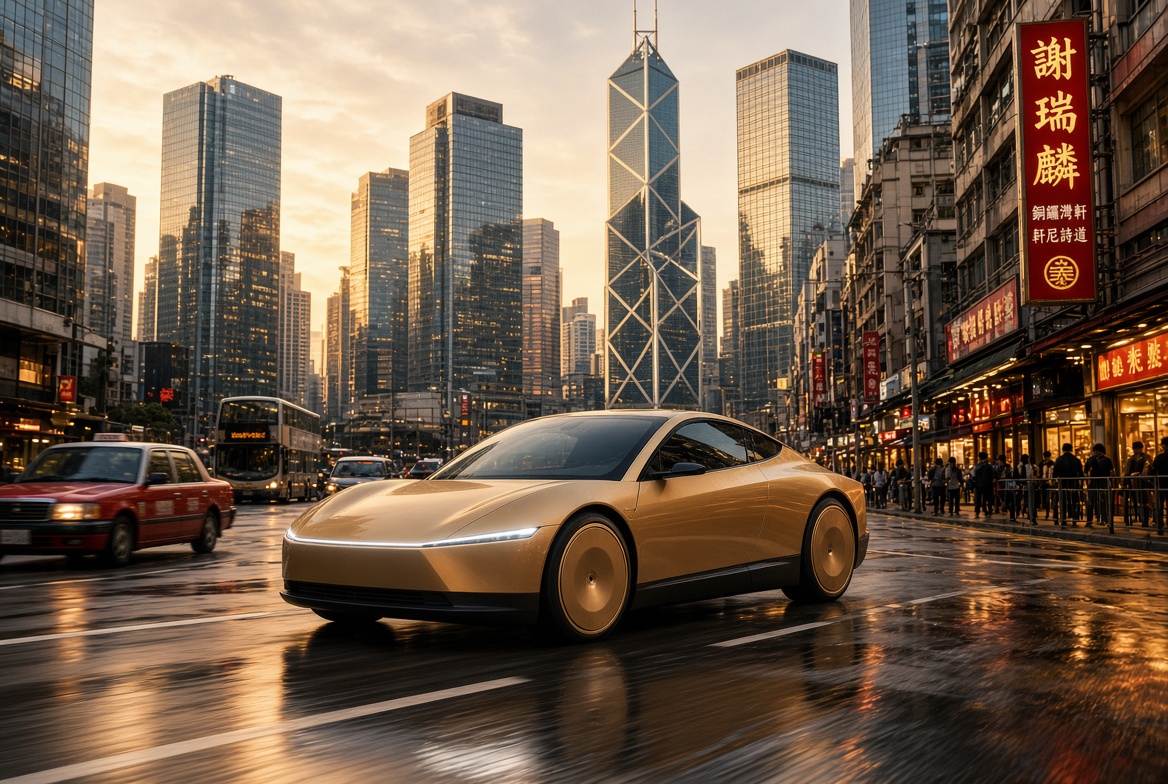
Tesla’s Cybercab is heading to Asia. The official Tesla Asia account posted on X Thursday, inviting Cybercab fans to “Come experience the future of autonomy in Hong Kong, Tokyo, Beijing & Shanghai.” The post went up within hours of Tesla’s own Cybercab milestone in Texas, where the company said Thursday it had begun offering rides in across Austin.
Exact dates and venues for the Asia tour haven’t been released yet, though Tesla Hong Kong replied to the announcement with “Cybercab will be on display in Hong Kong soon,” while Tesla Japan’s response pointed fans to a sign up page for updates. Neither post mentions test rides or a service area, and nothing so far suggests Tesla is launching Robotaxi operations in any of the four cities. Based on how Tesla has run past Cybercab tours, in Europe in late 2024 and at US shopping centers that same December, the Asia stops are almost certainly static displays at Tesla stores or public venues as a means to stimulate buzz for its future driverless ride-hailing service in the big cities.
Cybercab will be on display in Asia this month!
Come experience the future of autonomy in Hong Kong, Tokyo, Beijing & Shanghai. pic.twitter.com/wGmmEastfX— Tesla Asia (@Tesla_Asia) September 4, 2026
The timing lines up with Tesla’s only prior Cybercab appearance in the region, a booth at the China International Import Expo in Shanghai last November, which Teslarati covered at the time. At that event, Tesla’s regional general manager for Shanghai framed the car as evidence of the company’s broader mission, a message Tesla has since formalized in its Master Plan Part IV, which states that “autonomous vehicles have the capacity to dramatically improve the affordability, availability and safety of transportation while reducing pollution, particularly in our increasingly dense global cities.” The same document is where Tesla lays out its “sustainable abundance” framing for Cybercab and Optimus alike, describing the two as the hardware behind an AI driven push to cut the cost of transportation and labor at scale.
Whether Cybercab actually operates as a robotaxi anywhere in Asia remains an open question, considering China has already pushed an autonomous ride-hailing market that’s run on homegrown players like Baidu’s Apollo Go and Pony AI. For now, the four city tour reads as a marketing push timed to Austin’s momentum.
Elon Musk
OpenAI cites distrust of SpaceX in decision to drop Cursor partnership
OpenAI will cut SpaceX-owned Cursor’s model access in November, citing Musk’s history of broken contracts.
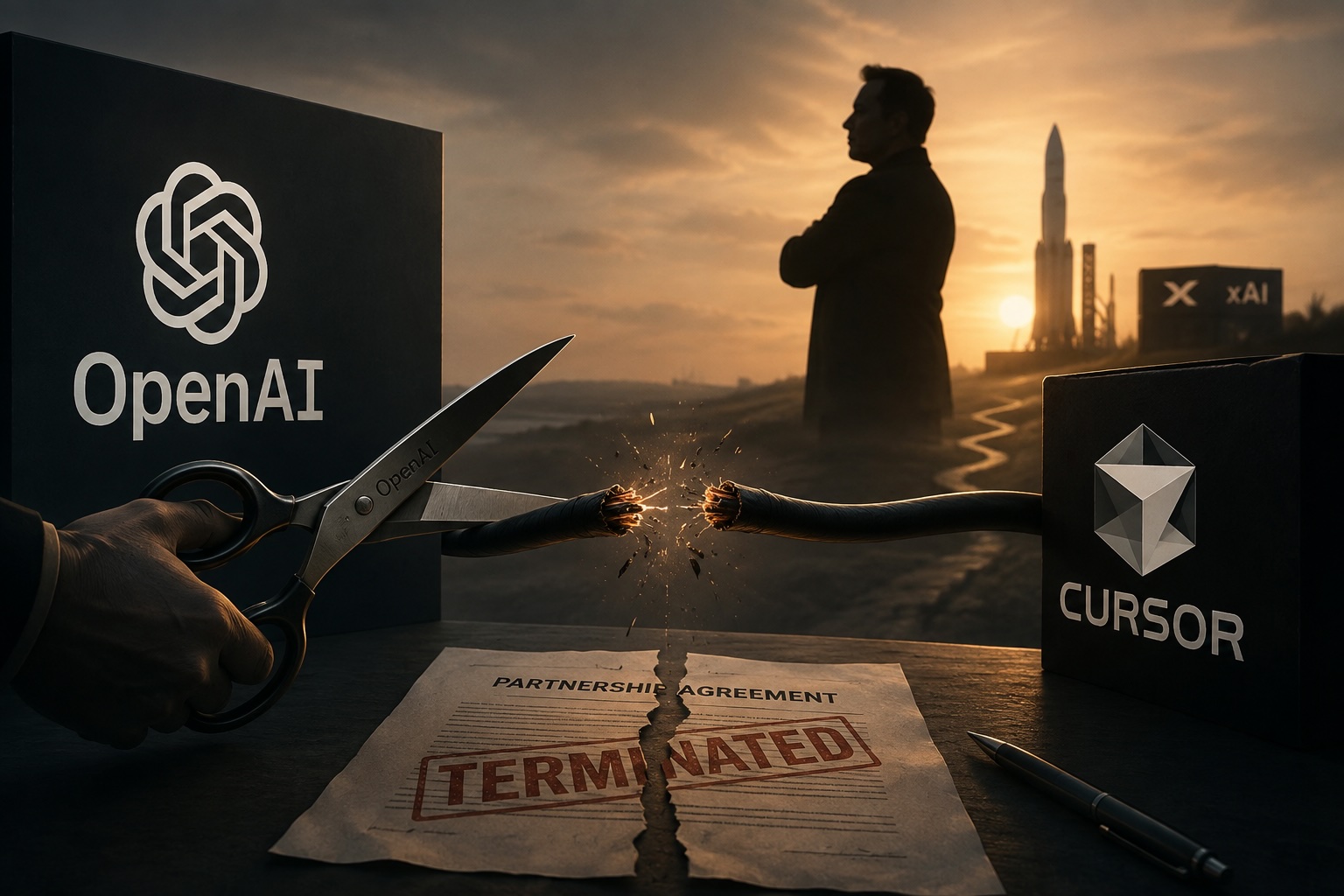
OpenAI, the company behind ChatGPT, announced late Friday that it is ending its partnership with Cursor, cutting off the coding tool’s access to its models on November 12. The move comes two weeks after SpaceX completed its $60 billion acquisition of Cursor’s parent company, Anysphere, folding the popular AI coding assistant into Elon Musk’s growing SpaceXAI division.
In a post on its website, OpenAI said the decision came down to trust, not technology. “We cannot be confident that SpaceX will use our technology within our terms of service, based on our experience with Elon Musk’s companies violating contracts,” the company wrote. OpenAI pointed to two specific incidents: X, now part of SpaceX, allegedly breaking the terms of an existing OpenAI contract after Musk bought Twitter.
That lawsuit is the backdrop for all of this. Musk cofounded OpenAI in 2015, left the board in 2018, and sued Sam Altman and Greg Brockman in 2024, arguing they abandoned the company’s nonprofit mission for profit. A federal jury sided with OpenAI in May, finding Musk waited too long to sue rather than ruling on the merits of his claims. Musk said at the time he would appeal to the Ninth Circuit, calling the outcome a “calendar technicality” rather than a real judgment.
SpaceX’s interest in Cursor predates that verdict by weeks. The company first struck a deal with Cursor in April, securing an option to acquire it for $60 billion or pay $10 billion for joint development work instead. As Teslarati reported at the time, the logic was straightforward: Cursor was paying retail prices to Anthropic and OpenAI, two of its most direct competitors, every time a developer used its product, while SpaceX had idle capacity on its Colossus supercomputer, roughly the equivalent of a million Nvidia H100 GPUs, that Cursor could use to train its own models instead. SpaceX exercised the option in June, days after its own IPO, and the deal closed in mid-August.
Once it closed, Musk moved fast. On an all-hands call with more than 1,000 Cursor employees, he reportedly told staff that SpaceXAI’s Grok was playing catchup in the AI race, unlike Tesla and SpaceX in their own markets, and singled out Anthropic as the company to catch. Cursor CEO Michael Truell now reports directly to Musk inside SpaceXAI.
Losing OpenAI’s models leaves Cursor leaning harder on Anthropic’s Claude, which has its own compute agreement with SpaceX, and on Cursor’s in-house Composer model, the one SpaceX’s compute was supposed to accelerate in the first place. OpenAI framed the November deadline as maximum notice under its contract, and said it wants to “go above and beyond” to help developers through the transition. Whether Anthropic makes the same call is now the open question in AI coding.
Investor's Corner
Tesla Robotaxi gets a massive upgrade in Nevada
Nevada regulators just approved a massive expansion of Tesla’s robotaxi fleet across the entire county.
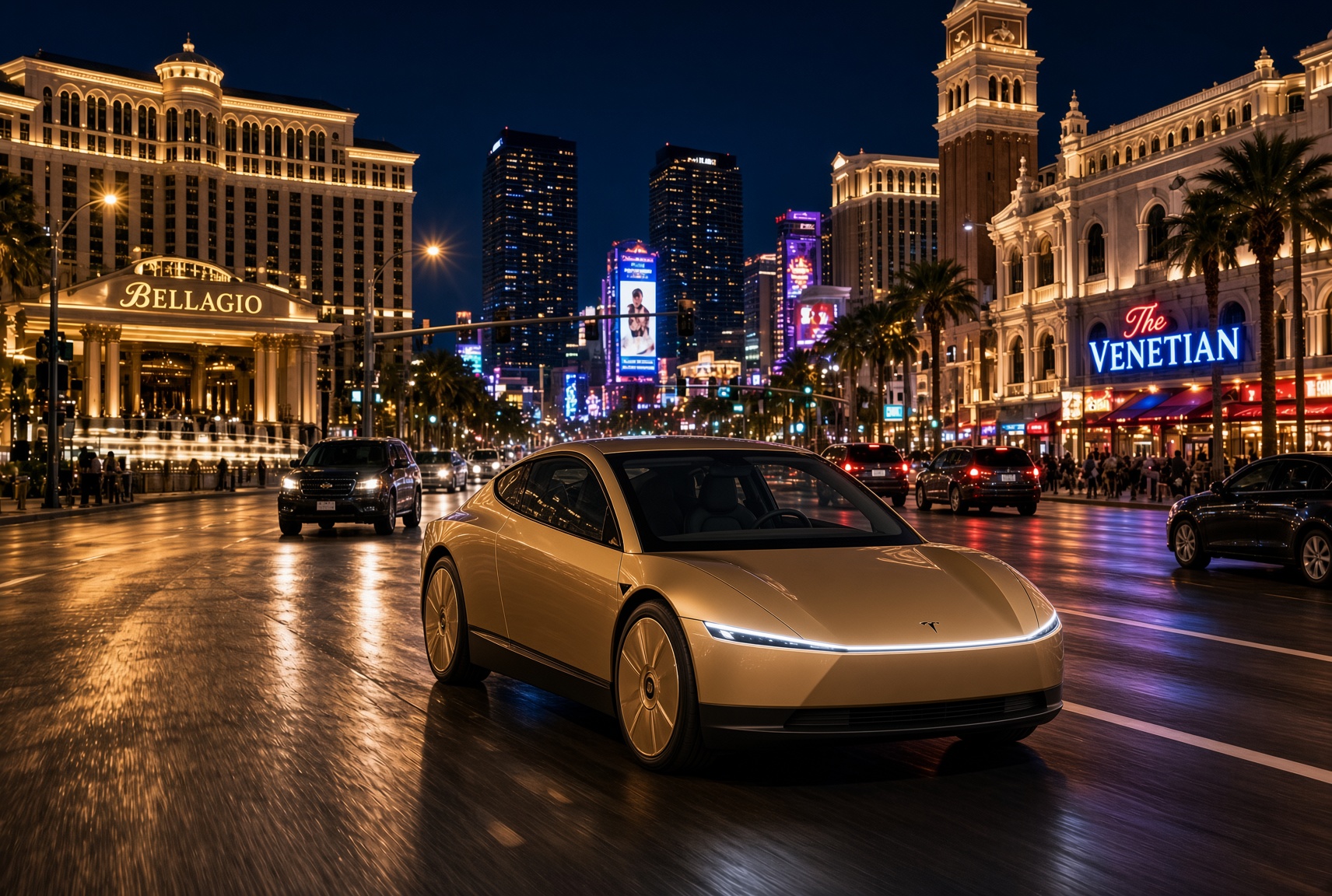
Tesla’s robotaxi footprint in Nevada just grew by roughly 500 times in a single regulatory vote.
The Nevada Transportation Authority approved Tesla’s full Autonomous Vehicle Network Company permit on Thursday, clearing the way for the company to deploy up to 5,000 driverless vehicles across Clark County over the next 12 months. The decision came during a four hour general session meeting that Tesla investor Sawyer Merritt watched live and reported on X, noting the vote replaces the interim order that had limited Tesla to just 10 robotaxis on a narrow stretch of the Las Vegas Strip.
EXCLUSIVE: Tesla has just officially received approval for its full Autonomous Vehicle Network Company permit in Nevada, clearing the way for Tesla to launch a paid public Robotaxi service in Las Vegas.
This officially allows @Tesla to deploy up to 5,000 robotaxis over the next… pic.twitter.com/DPs5UtUlrE
— Sawyer Merritt (@SawyerMerritt) August 20, 2026
That earlier cap, covered here after it surfaced on August 13, came with restrictions that looked stricter than what Tesla runs in Austin: a 45 mph speed ceiling, no airport pickups, and a geofence confined to the Strip corridor. The new approval extends Tesla’s operating authority to all of Clark County, with room to request an even wider geofence across the state.
Tesla representatives at the meeting said they have no intention of putting 5,000 cars on the road right away. Commercial rides are expected to start within 30 days, pending vehicle inspections, insurance filings, and fare approval, the standard steps every robotaxi operator in Nevada has had to clear.
Tesla’s own Robotaxi account replied to the news with a short line, The golden future is upon us.
The timing lines up with Tesla’s broader robotaxi push this month. The company is preparing to open Cybercab rides to the public in Austin as soon as this month, and it opened a sweepstakes for riders to win a seat at the launch event. Tesla filed its original application for a 5,000 vehicle Nevada fleet back in June, a request regulators trimmed to 10 vehicles when they issued the interim order in July. Thursday’s vote effectively grants the number Tesla asked for from the start.
Zoox, the Amazon owned robotaxi operator, has run in Nevada since 2025 and was capped at 100 vehicles before Thursday’s decision. Tesla’s new ceiling puts it well ahead of that comparison on paper, though the company has said its actual fleet size will depend on how quickly FSD v15 rolls out, the software update executives have called the gateway to scaling unsupervised robotaxi operations nationwide.

Tesla crosses major Unsupervised Self-Driving milestone

Tesla Robotaxi will be a 24/7 service: here’s when


