News
Rivian’s R1T electric truck kitchen set was made with sustainable materials

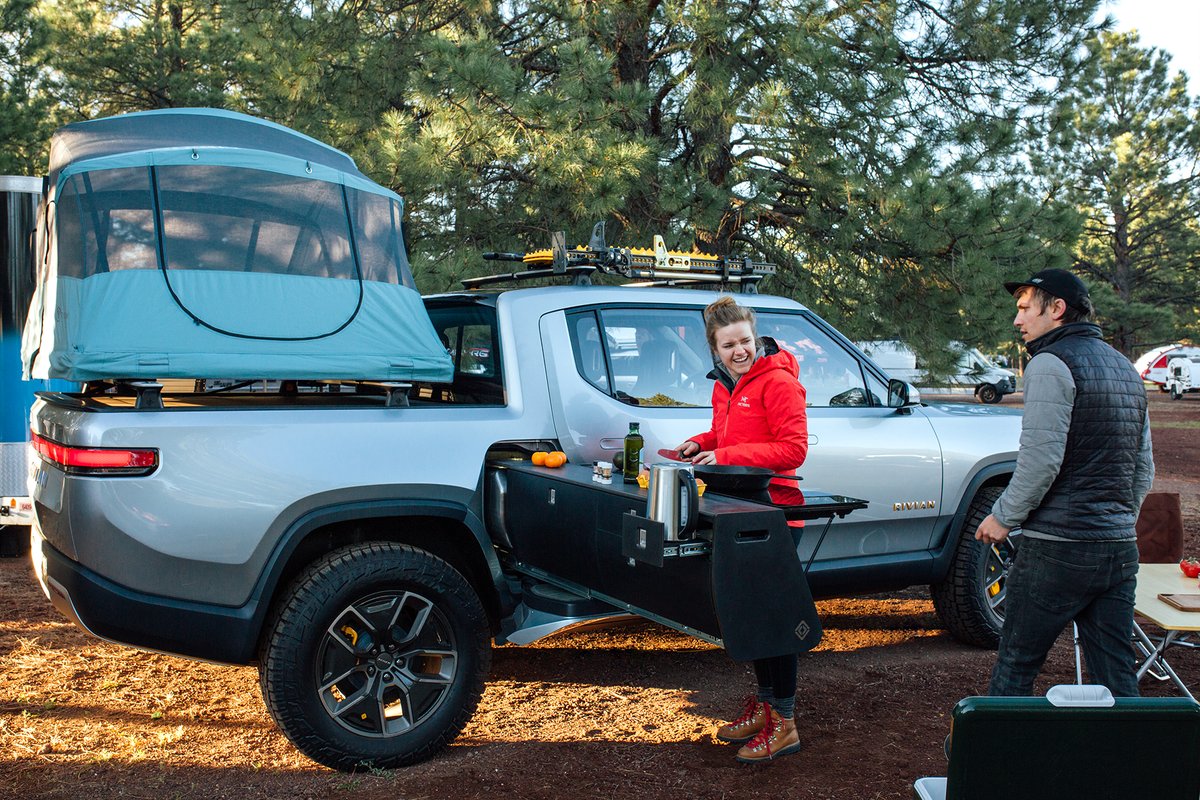
Rivian has a lot of excitement built up for its outdoor adventure brand, and alongside the launch of its all-electric R1T pickup truck and R1S SUV, the company also has plans to launch must-have accessories for new vehicle owners. The most notable of these is the extendable kitchen set designed for the R1T gear tunnel which is constructed with environmentally friendly materials that align with Rivian’s sustainability mission.
A close-up look at Rivian’s portable kitchen was recently published by Tech Crunch from their attendance at the Overland Expo West in Flagstaff, Arizona this past May. The car maker had unveiled the cooking companion at the event, and team members were demonstrating the module’s functionality. Part of Rivian’s branding is centered around being part of a sustainable future as an electric vehicle car manufacturer, and with that in mind, the gear tunnel kitchen uses recycled materials in its frame and work surfaces, specifically the brand Richlite, as revealed in the recent video. Richlite is an ultra-durable, heat-resistant blend of recycled paper and resin that has received several sustainability certifications, including Greenguard Certification for low emissions, Rainforest Alliance Certification, and Forest Stewardship Council Certification, per the company’s website.
Another interesting part of Rivian’s portable kitchen is its induction stovetop and electric kettle; both were designed to tuck away into the kitchen’s frame for maximum usability with minimum storage requirements. Drawers with cork inserts that stabilize utensils and cooking supplies while driving are also included in the design. The kitchen set additionally includes a dish drying rack made from bamboo that folds out of a built-in sink. Finally, there’s a 5-gallon water tank to supply any drinking, cooking, or cleaning needs.
-

- Rivian’s R1T gear tunnel kitchen set. | Image: Rivian/Twitter
-
- Rivian’s R1T gear tunnel kitchen set. | Image: Rivian/Twitter
-

- The Rivian R1T with tent attachment. | Image: Rivian/Instagram
After unveiling its kitchen set, Rivian’s social media focused on promoting the accessory to help jog potential customers’ imaginations and inspire trips of their own with food at the forefront. Two company team members documented a trip to Sedona with the R1T truck over Memorial Day weekend highlighting the kitchen specifically along with a tent that attaches to the truck bed. While this newest gear tunnel addition was only meant to be a prototype to interact with the overlanding community and gain feedback for Rivian’s products, its popularity has convinced the company to offer it as a standard accessory available for purchase when the company fully launches its production vehicles.
The Rivian team is currently hard at work bringing the company up to a high-volume manufacturing level for the R1T and R1S. In the meantime, CEO RJ Scaringe has teased a few other environmentally-focused projects underway. At the company’s manufacturing facility in Normal, Illinois, Rivian is planning an on-site food farm for employees in collaboration with local universities. Also, the car maker recently announced an expansion of its partnership with rock climber Alex Honnold via an energy storage project using the company’s expended car batteries for a micro solar grid in Puerto Rico.
Deliveries of the first customer R1T pickup trucks and R1S SUVs are expected to happen at the end of 2020. Scaringe recently estimated that in 2021, Rivian’s estimated first full year of rolling vehicles through the assembly line, approximately 20,000 to 40,000 cars will be made. Until then, preorders are still open on their website.


Elon Musk
Elon Musk’s next Uranium in Uranus merch is Boring Company’s weirdest tease yet
Elon Musk teased a glowing new Boring Company merch idea, complete with a Geiger counter.

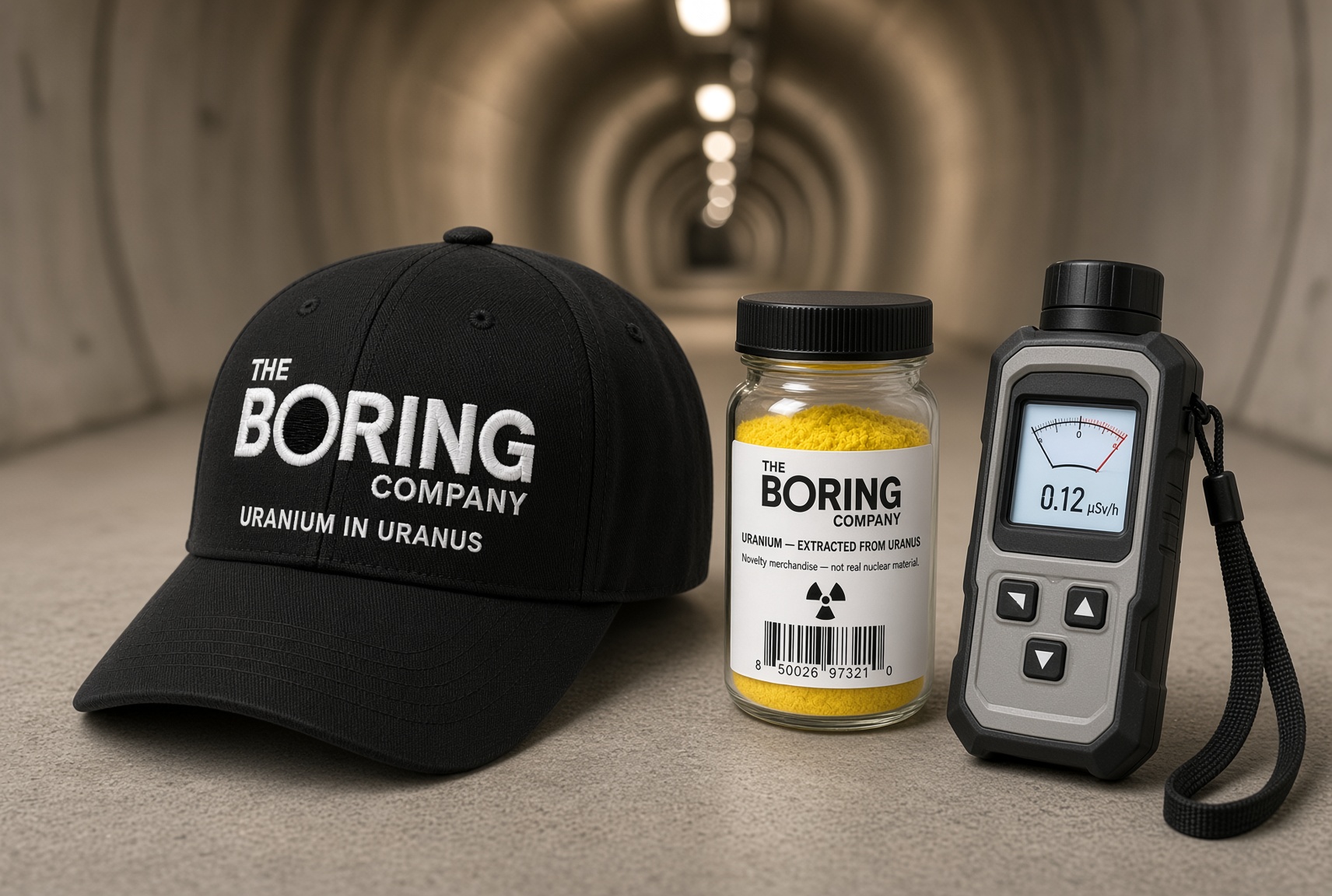
Elon Musk teased the next piece of Boring Company merchandise on X Saturday, and it is exactly as unserious as fans of the company’s product history have come to expect. “The next @boringcompany merch will put Uranium in Uranus,” Musk wrote in a thread posted early Saturday morning. He followed up by explaining that the item would glow in the dark, “because otherwise how could you find it,” and that a Geiger counter would be sold separately as “an optional strap-on.”
Musk closed the thread with a line that doubles as a mission statement for the tunneling company’s merchandise arm: “It’s not easy coming up with something that is both outrageously unsellable and yet extremely popular.”
The Boring Company has built a small but consistent side business out of novelty items that start as jokes and end up selling out. The company’s Not-a-Flamethrower raised roughly $10 million in a few days back in 2018, moving all 20,000 units it produced. Its Burnt Hair perfume, priced around $100 a bottle, sold out fast enough that scalpers were flipping units on eBay for ten times the retail price. Boring Bricks, made from tunneling spoil, followed the same playbook of teasing a product on X months before it became real.
Musk has not said what the actual item will be, only that it involves uranium and glows in the dark. Given the pattern, that vagueness is probably intentional. Past merch announcements have started as one-line jokes and taken weeks or months to turn into an actual product listing on the company’s site, and there is no guarantee this one follows through at all.
The timing lines up with a period of real momentum for the Boring Company outside of the joke merchandise. The company said last week it plans to double the number of operational stations on its Vegas Loop by the end of the year, a target tied to a hiring push for drivers and operations managers. Prufrock-5, one of the company’s tunnel boring machines, also just wrapped a test tunnel in Bastrop, Texas, and is expected to relaunch on its next assignment in November.
Whether the uranium joke turns into an actual product remains to be seen. Musk’s post did not include a price, a shipping date, or even a name for the item, which has historically meant a Boring Company website page goes up quietly, password protected, sometime before an announcement.
News
NASA taps SpaceX for more astronaut missions as Boeing Starliner remains grounded
NASA just gave SpaceX a $946 million contract for three more astronaut missions through 2030.
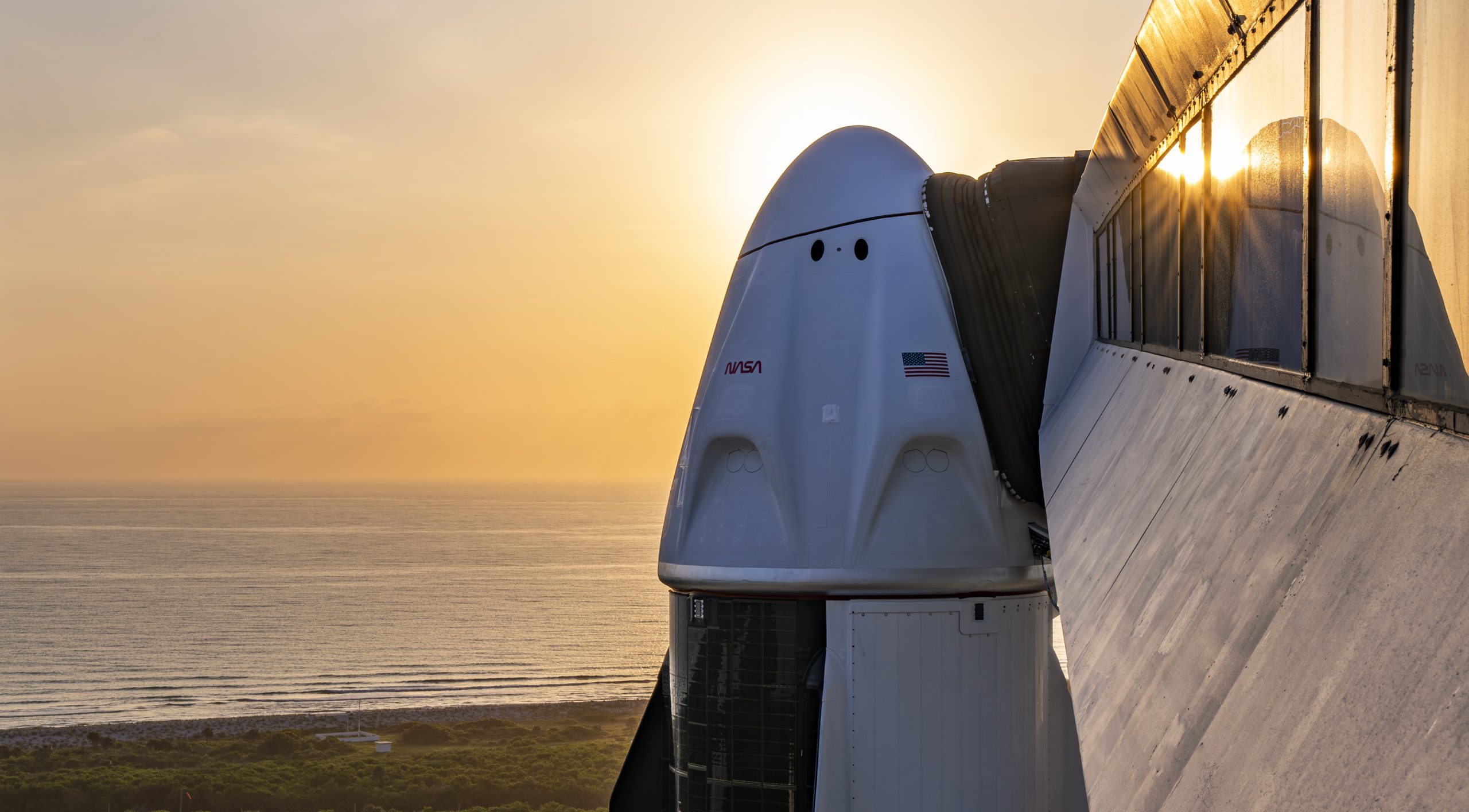
NASA has awarded SpaceX a $946 million contract modification covering three more astronaut missions to the International Space Station, according to an announcement the agency published Friday. The award adds Crew-15, Crew-16, and Crew-17 to SpaceX’s existing Commercial Crew Transportation Capability contract, bringing the agreement’s total value to $5.92 billion across 17 flights.
SpaceX confirmed the award on X, writing that it was excited for Falcon 9 and Dragon to launch NASA’s Crew-15, 16, and 17 missions to the Space Station from Florida. The new missions cover ground, launch, in orbit, and return operations, along with cargo transport and a lifeboat capability while docked at the station, and the period of performance runs through 2030.
We’re excited for Falcon 9 and Dragon to launch @NASA’s Crew-15, 16, and 17 missions to the @Space_Station from Florida https://t.co/Qm16vVK9F3 pic.twitter.com/drg3s7GtuM
— SpaceX (@SpaceX) September 18, 2026
The award follows a notice of intent NASA issued in May, when the agency first signaled it would purchase up to six additional post certification missions from SpaceX. Teslarati covered that filing at the time, noting NASA cited technical issues and schedule delays encountered by Boeing as a driving factor. Friday’s contract modification locks in three of those six missions, with the remaining three left open for NASA to award later, potentially to Boeing if Starliner clears certification.
Boeing’s CST-100 Starliner has still not flown an operational crew rotation mission for NASA. The spacecraft’s most recent crewed test flight in 2024 ended without the astronauts returning aboard Starliner, and the company has spent the time since working through thruster problems. SpaceX President Gwynne Shotwell said this week that SpaceX is not retiring Crew Dragon today, for sure, while stopping short of committing to fly it past 2030.
Crew-12 is currently docked at the space station, and NASA has said Crew-13 is targeting a launch in the coming weeks. The newly awarded Crew-15 through Crew-17 missions extend SpaceX’s role as NASA’s primary way of getting astronauts to and from orbit well into the back half of the decade, regardless of what happens with Starliner or Starship in the meantime.
Investor's Corner
New drone video shows Tesla’s Optimus Factory reaching a turning point
New drone footage shows Tesla’s dedicated Optimus factory steel frame nearing completion at Giga Texas.
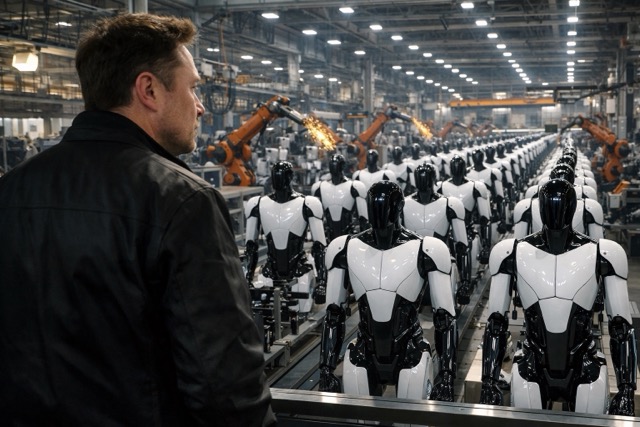
Tesla’s dedicated Optimus factory at Gigafactory Texas is closing in on a finished steel frame, according to drone footage posted Thursday afternoon by longtime site observer Joe Tegtmeyer. In the video, Tegtmeyer said structural steel assembly is now about five column grids away from reaching the building’s north perimeter beam, putting the primary skeleton in its final stretch roughly six months after Tesla broke ground on the North Campus site in late March.
The Giga Texas Optimus Factory latest update … construction keeps moving fast!
Steel assembly is now only about 5 column grids from the north perimeter beam. Concrete is going in on the three upper floors, rebar is still being laid for more pours, and footing / grade-beam work… pic.twitter.com/qvFPvwnYzW
— Joe Tegtmeyer 🚀 🤠🛸😎 (@JoeTegtmeyer) September 17, 2026
Tegtmeyer’s footage shows concrete already going in on three upper floors while crews continue laying rebar and pouring grade beam footings at ground level. That kind of parallel work, steel rising at one end of the site while concrete sets at the other, is a scheduling approach Tesla used at the original Giga Texas building and appears to be repeating here to save time before the plant’s targeted 2027 production start.
Teslarati has tracked the building’s progress since Tesla confirmed construction was officially underway in May, when the first steel structure went up on what was then bare, reclaimed land. The facility is part of a more than 5.2 million square foot expansion of Giga Texas’s North Campus that Tesla has said will eventually run nearly the length of the existing vehicle factory, over 4,000 feet, while sitting somewhat narrower. Musk has pegged the long term output target at 10 million Optimus units a year once the line is running at full capacity, a volume that would dwarf the one million unit pilot line Tesla is standing up separately at its Fremont, California factory.
Tesla Giga Texas to feature massive Optimus V4 production line
The Texas facility sits alongside another major buildout on the same campus. Terafab, the joint Tesla and SpaceX chip fabrication plant that will eventually supply the silicon running Optimus units in the field. Housing robot assembly and chip production on the same grounds is a deliberate supply chain decision, cutting down on the shipping and lead time that would otherwise sit between the two.
Tesla has not given an updated timeline beyond its previously stated goal of bringing high volume Optimus production online at the site in the summer of 2027. Fremont’s smaller pilot line began mass producing the current Gen 3 robot in January, with that plant expected to build tens of thousands of units this year primarily to generate the real world data Tesla needs to refine the robot’s software before Giga Texas ramps up. Six months of visible construction progress, tracked almost entirely through Tegtmeyer’s recurring drone flights, gives the clearest outside look yet at how seriously Tesla is treating that 2027 deadline.

Elon Musk’s next Uranium in Uranus merch is Boring Company’s weirdest tease yet

NASA taps SpaceX for more astronaut missions as Boeing Starliner remains grounded


