Energy
Tesla’s big battery in South Australia is a ‘complete waste of resources,’ claims Nissan

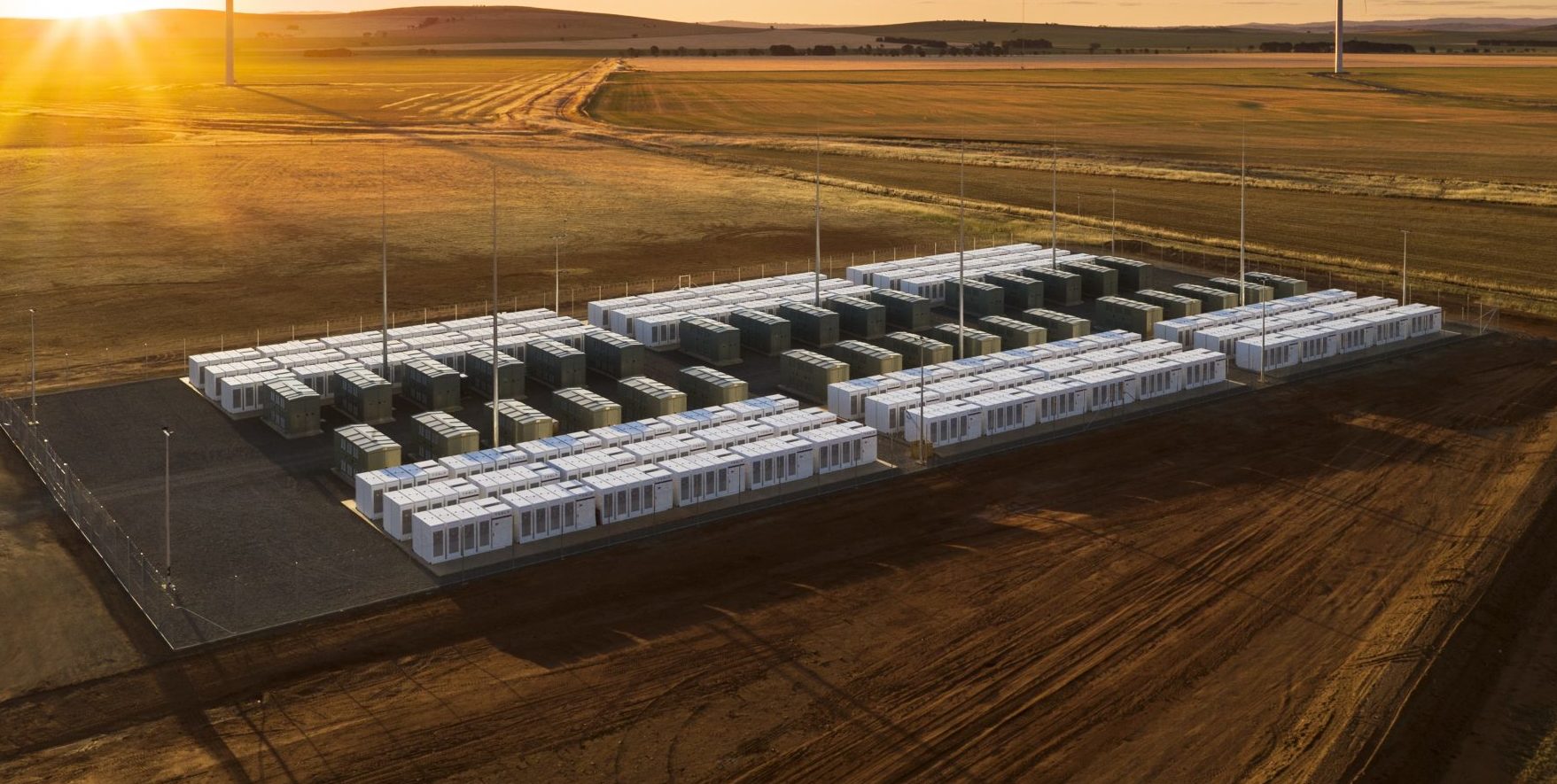
In a recent interview with Australian auto publication The Driven, Nissan’s global head of electric vehicles Nic Thomas shared a rather surprising view of Tesla’s big battery installation in South Australia, which is widely credited for helping residents reduce their dependence from gas cartels operating in the region.
During the launch of a new version of its popular all-electric 40 kWh Leaf in Melbourne, the Nissan executive boldly declared that Tesla’s Powerpack Farm in South Australia is a waste of resources. “It’s a complete waste of resources because what we can do is have cars that are also batteries and those cars are parked most of the time,” Thomas said.
Thomas’ statement comes as he was discussing the new Leaf’s vehicle-to-grid/vehicle-to-home (V2G/V2H) system, which will allow the all-electric car to serve as a home battery unit. With the system in place, the Leaf will not only store energy by plugging into a home or business; the vehicle could also serve the energy back when needed. V2H is already in use in countries such as Japan, and a release in Australia is expected within six months.
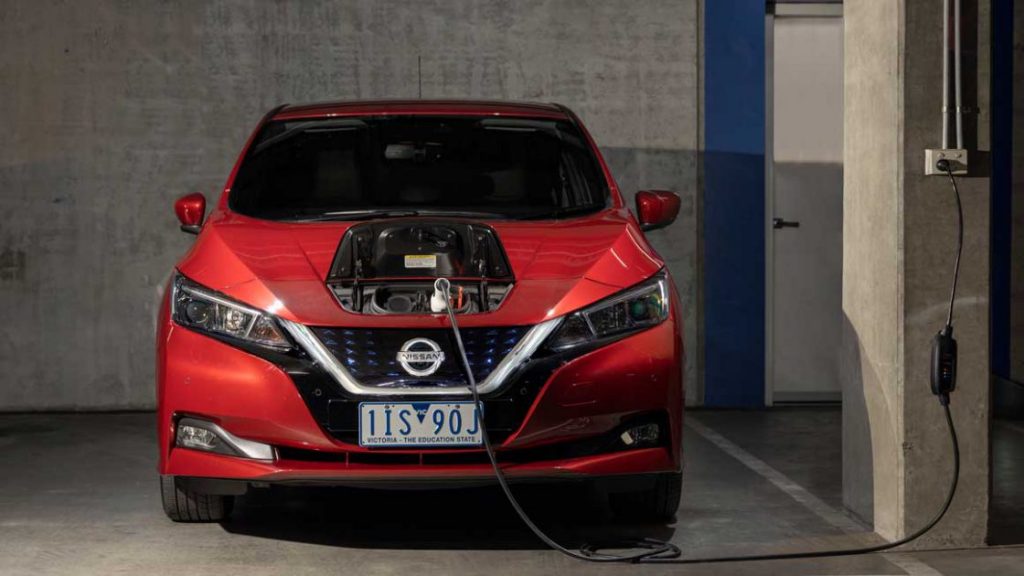
The Nissan executive noted that the Leaf’s V2G system has the potential to help homeowners save money, especially if the vehicle charges through a rooftop solar system during the day, and uses its stored energy to power appliances and lights at night.
“The way we distribute and consume energy is fundamentally inefficient … what we need is flexibility in the system. It’s great that we’ve invested all this money in renewable energy, but fundamentally we’re wasting most of that energy because it’s all being generated in the middle of the day when we don’t really need it,” he said.
Tim Washington, CEO of charging solutions provider Jetcharge, noted that Nissan V2H technology has a lot of potential, considering that vehicles spend much of their time just parked, or in the case of electric cars, plugged in.
“Cars will be an energy asset first, and a mobility asset second. What I mean by that is you are going to use your cars probably more as batteries than as vehicles. As we know, vehicles are parked 90% of the time – that is one of the criticism leveled at cars. But what if they are the most efficient asset that you have because it’s doing work even when it’s parked? That’s when bidirectional charging comes into play,” he said.
While V2G technology has a lot of potential that even Tesla CEO Elon Musk recognizes, the Nissan executive’s casual dismissal of the 100MW/129MWh Hornsdale Power Reserve in South Australia seems misinformed at best. Since coming online, after all, the Powerpack farm, whose size is equal to around 2,500 40 kWh Nissan Leafs, has seen widespread acclaim for its speed and sophistication.
Even before it was officially activated, the big battery was called into action, injecting 70 MW of stored wind energy into the market; and just two weeks after it went online, it stepped in to support the grid when a coal generator in the region failed. This rapid response, which has pretty much changed the energy game in South Australia, would likely be pretty challenging to match with a fleet of Nissan Leafs. V2G definitely has its uses, and it will be beneficial to Nissan Leaf owners; but ultimately, big batteries like the Hornsdale Power Reserve are on a completely different level of energy storage.


Energy
Taiwan power firm bets big on Tesla Megapacks as AI data center thirst grows
Taiwan’s Apollo Power orders 260 Tesla Megapacks, betting AI data centers will need more electricity.

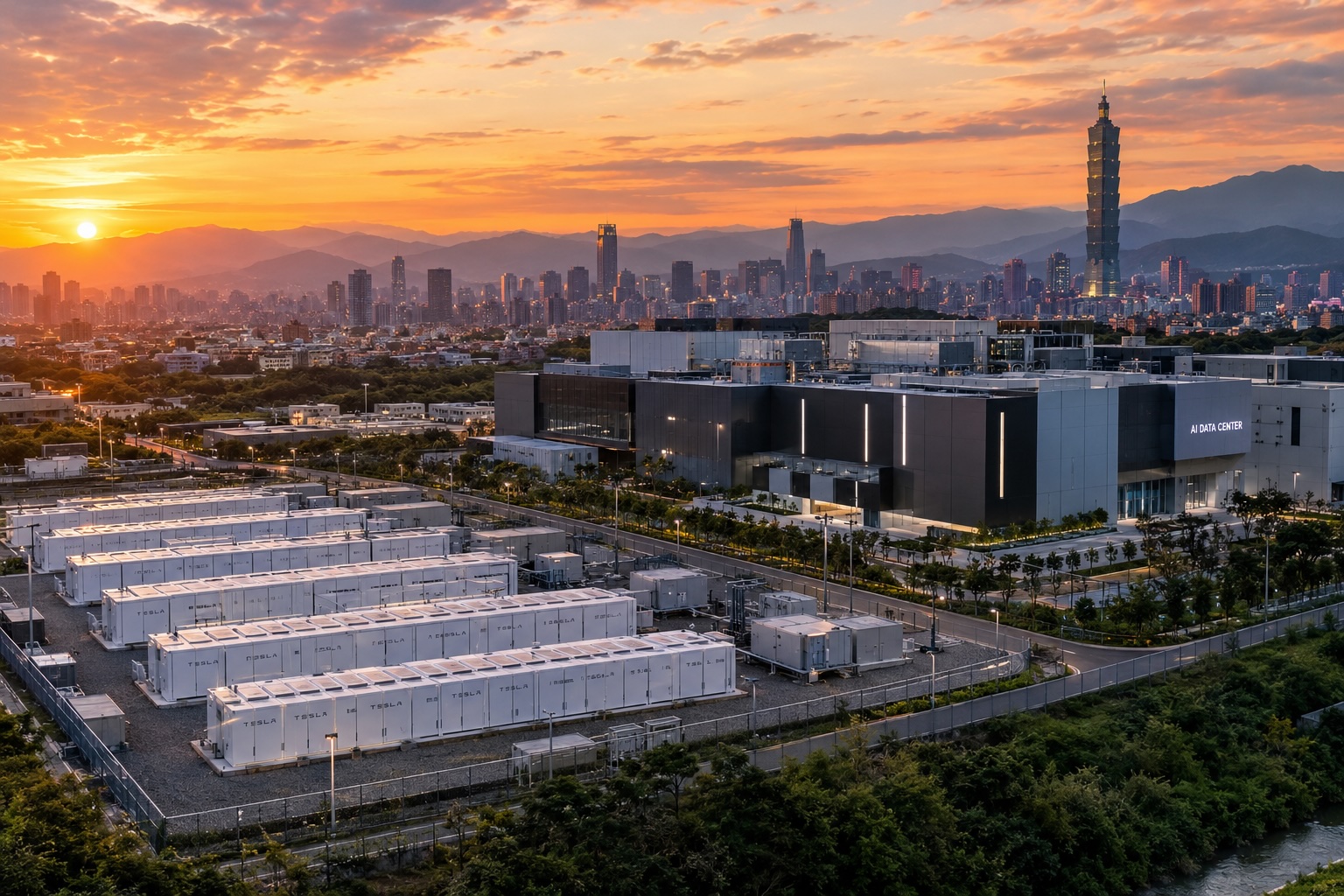
A Taiwanese power company has ordered 260 Tesla Megapack 2XL units, roughly 1GWh of storage, betting that electricity rather than chips will decide how fast AI data centers come online. Apollo Power signed the contract with Tesla’s Taiwan energy arm on October 8, according to the company’s filing with the Taiwan stock exchange.
The filing says the units are meant for behind the meter storage and resilient grid projects, with delivery in batches from the end of 2027 and sites operating in 2028. Apollo and Tesla did not disclose a price, citing a confidentiality agreement. Apollo plans to pay for the equipment through a cash capital increase and bank financing, and it noted the purchase is not revenue and does not mean it holds firm orders from its partners.
Biggo reported that only about 33 units are under signed customer contracts, with roughly 150 more in negotiation. The same report put total project investment near NT$130 billion, but that figure includes installation work, with the equipment itself making up about 40 to 50 percent. In other words, a large share of this order is Apollo reserving supply ahead of demand. Apollo’s chairman told local media global large storage supply is tight, which is why the company locked in the units early, according to Yahoo Taiwan Finance.
Apollo also launched an AI data center and grid resilience alliance with Phison, Gigabyte and Shihlin Electric. The pitch rests on a pilot at Phison’s Zhunan plant, where Apollo and Tesla Energy Taiwan installed grid forming Megapack 2XLs in June. Tesla Energy Taiwan general manager Sun Hsiao-Han said the project went from demo to 1GWh in four months, and that Tesla Energy has deployed more than 50GWh worldwide.
Taiwan’s cabinet has approved amendments that would require large energy users to install their own generation and storage, which gives enterprise storage a regulatory tailwind.
The deal fits a pattern Teslarati has tracked. Tesla’s Megablock targets 1GWh commissioned in 20 business days, a pitch aimed squarely at fast moving data center builds. Megapacks already back xAI’s Colossus in Memphis and a 400MW AI campus in Brazil. Sun Media adds that Megapack 2XL was named among the first products in Nvidia’s DSX Ready qualification for battery storage in AI factories.
Deliveries are more than a year away, so the real test is how much of that 260 unit order turns into signed customer contracts.
Energy
Tesla Model 3 and Model Y can now do what only Cybertruck could
Tesla Model 3 and Model Y can power your home with Powerwall 3 during outages.
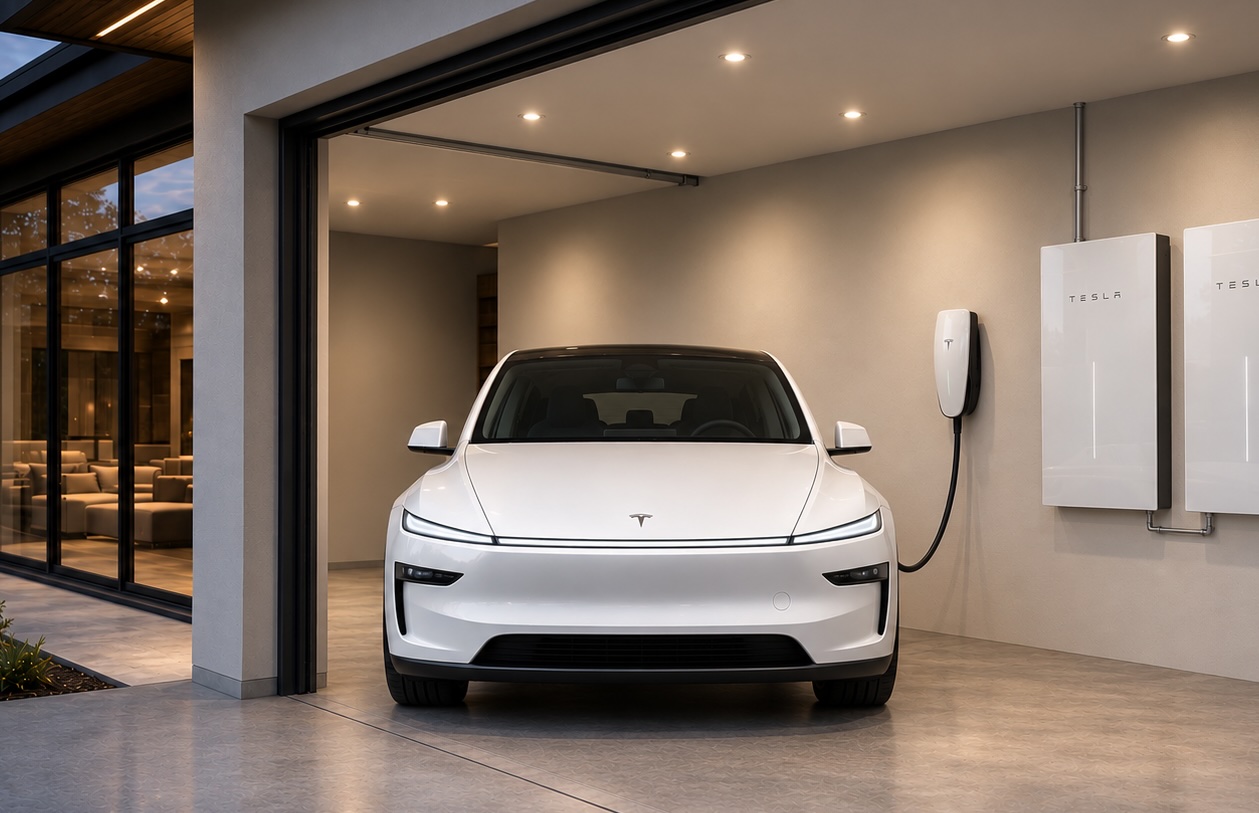
Tesla has turned its two top sellers into backup batteries for the house.
Tesla Energy announced on Tuesday that Powershare Home Backup is now available for new Model 3 and Model Y vehicles paired with a Powerwall 3, saying the car can “extend your home backup by over 2 days.” Minutes later, Tesla’s main account quoted the post with a broader pitch: “With Powerwall 3, every Tesla can now serve as your home’s backup battery.”
Until this week, the Cybertruck was the only Tesla that could send power back into a home, and that capability only began working alongside Powerwall 3 last month, after years of ambitious targets.
Tesla’s updated Powershare page says every Model 3 and Model Y ordered in the U.S. or Puerto Rico on or after October 1, 2026 can use the feature. Some, but not all, earlier cars also qualify. Owners can check on the touchscreen under Software, then Additional Vehicle Information, where a capable car shows “Powershare Support: Enabled.” As Electrek reported, bidirectional power on the two cars runs through an inverter Tesla calls PCS2 Lite, and the company has not said when that part entered production on each trim.
The home side is simpler. A house that already has a Powerwall 3 and either a Wall Connector 3 or Universal Wall Connector needs no additional equipment, and Tesla says compatibility is enabled through a software update. When the grid drops, the Powerwall and the car work together, with up to 11.52 kW of continuous power available. Tesla’s “over two days” estimate assumes a home using 30 kWh per day and a car starting at a 90 percent charge. Standard trims are rated for up to two days, while the Cybertruck adds more than three.
There are limits. Powerwall 2 and Powerwall+ support is listed as “coming soon.” Model S and Model X are not included, and Grid Support, the program that lets Cybertruck owners in Texas send power back to the grid during demand spikes for bill credits, is not available for Model 3 or Model Y.
The rollout also lines up with something Elon Musk said more than three years ago. At Tesla’s March 2023 Investor Day, Musk said, “I don’t think very many people are going to want to use bidirectional charging, unless you have a Powerwall.” Tesla has now shipped the feature for its volume cars with exactly that requirement attached.
The Powerwall pairing was the hard part on Cybertruck. Tesla told owners in December 2025 that Powershare with Powerwall had been pushed to mid 2026, and lead engineer Wes Morrill explained that two devices capable of forming a home’s grid have to negotiate which one leads during an outage, across multiple generations of hardware. With that work done for the truck, Tesla was able to extend it to the Model 3 and Model Y within a month.
Ford and GM have offered home backup from their EVs for several years, but both require a separate inverter and backup hardware. Tesla’s version leans on equipment many Powerwall 3 owners already have on the wall. Powershare for the two cars also ships as part of software update 2026.38.3, the same release that began delivering Halloween Mode on Tuesday.
Elon Musk
Google just picked SpaceX for its first step into orbital AI
Google will launch its first Project Suncatcher AI satellite on SpaceX’s Transporter-18 rideshare next week.
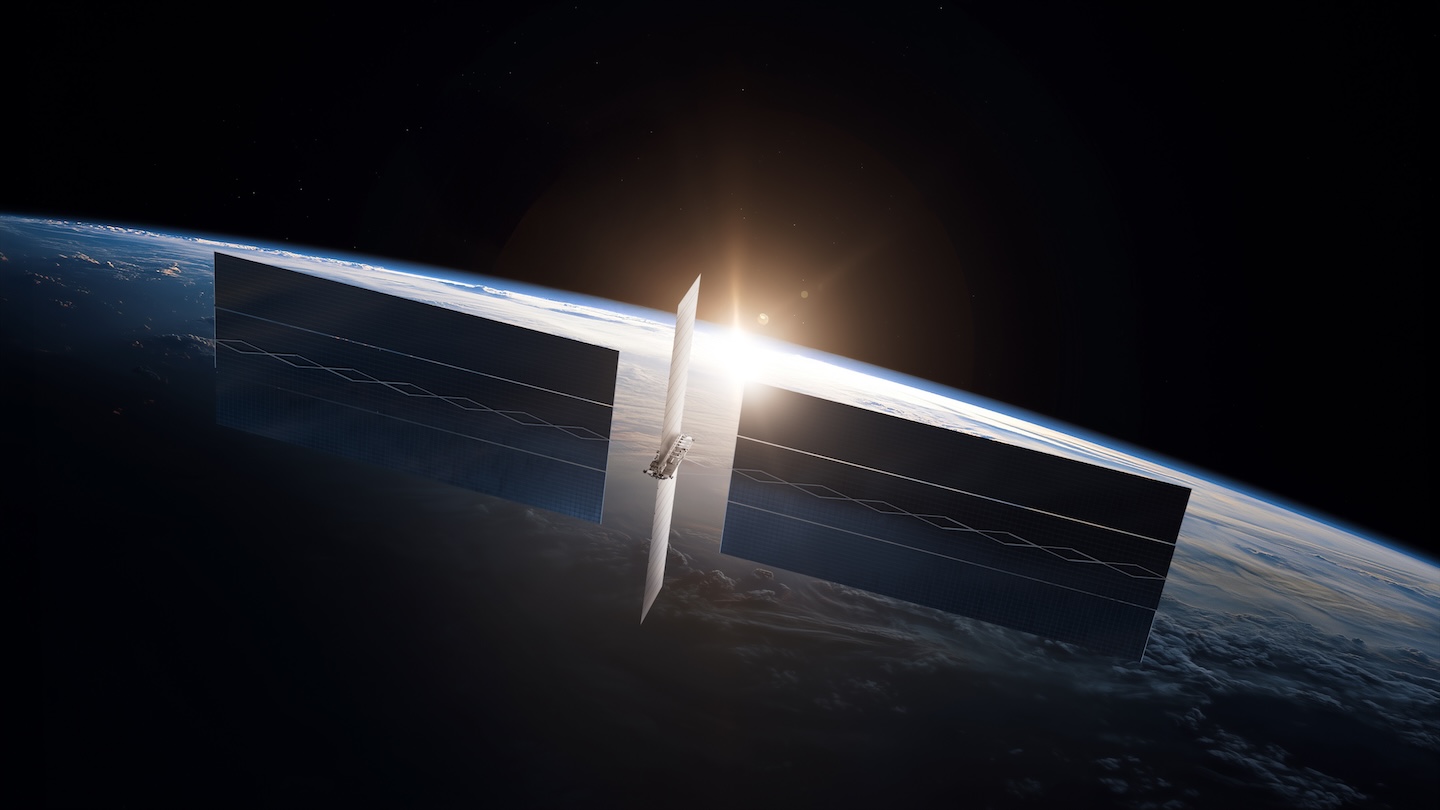
Google is about to put its own AI chips into orbit for the first time, and it is paying SpaceX to get them there.
The company said Thursday that the first in-orbit test of Project Suncatcher, its research effort to find out whether space can host large-scale AI computing, will fly next week on SpaceX’s Transporter-18 rideshare mission.
The satellite, called MVP, is about the size of a refrigerator and carries four of Google’s Tensor Processing Units, the same chips Google runs in its ground data centers. Google originally planned to launch two custom satellites in 2027, but chose to move faster by integrating its chips into a satellite.
MVP’s solar panels supply about one kilowatt of power, and Google will run Gemini models on the TPUs only in bursts of roughly 15 minutes before the chips shut down so the radiators can shed heat. In a blog post, Google said its Trillium TPUs survived vibration testing that mimicked sustained launch loads of up to 10g, with individual components seeing 50 to 100g, and handled a radiation dose greater than a five year mission would deliver.
SpaceX and Google mull massive partnership on Musk’s orbital data dream: report
Next week’s flight, slated for October 1, follows a relationship that became public in May, when Teslarati reported that Google was in talks with SpaceX for a launch deal tied to orbital data centers. Google also holds a stake of roughly 6% in SpaceX.
The two companies are chasing the same idea from very different starting points. SpaceX’s own orbital compute program is built around the AI1 satellite, a roughly 70 meter structure derived from Starlink V3 hardware that is designed for 150 kW of peak compute, about 150 times the power MVP will draw. Elon Musk has brushed off concerns about crowding orbit with those satellites, and SpaceX is building its Gigasat factory in Bastrop, Texas, to produce them, targeting an annualized rate of about 1 GW of space compute by the end of 2027.
Musk also posted on X on Thursday that “the amount of compute in space will obviously round up to 100% of all compute.”
Google has been more cautious in public. Its research estimates that launch prices need to fall below about $200 per kilogram before an orbital data center can compete with a ground facility on energy cost, a threshold the company believes could be reached around the mid 2030s. The Suncatcher team has said it expects the effort to remain a project rather than a product for years, which leaves the first real test of its hardware riding on a rocket from the company with the most aggressive timeline in the field.

Tesla’s secretive “Project Crystal Sun” gets a big green light in Texas

Tesla is building its own maps to fix Navigation issues


