News
Tesla CEO Elon Musk gives VW CEO kind words amid automaker’s massive EV push

Tesla CEO Elon Musk gave some support to embattled Volkswagen Chief Executive Herbert Diess on Tuesday, despite the German automaker’s legal troubles relating to its high-profile Dieselgate scandal.
Despite allegations made by the EPA regarding the German automaker, Musk gave Diess his support as a response to an article written by Bloomberg‘s Chris Bryant, who said that the VW executive should win an award for “Worst Sense of Timing.” This comes just a few weeks after the Tesla CEO trolled Volkswagen for cheating on emissions testing.
“Herbert Diess is doing more than any big carmaker to go electric. The good of the world should come first. For what it’s worth, he has my support,” Musk said on Twitter.
Herbert Diess is doing more than any big carmaker to go electric. The good of the world should come first. For what it’s worth, he has my support.
— Elon Musk (@elonmusk) September 24, 2019
The scandal came to light in September 2015 when the United States EPA found that the German automaker was using “cheat devices” in its cars in order to pass emissions testing. The company had knowingly programmed its Turbocharged Direct Injection (TDI) diesel vehicles to only use emissions controls during laboratory testing, thus violating the EPA’s Clean Air Act. Volkswagen has paid close to $33 billion in penalties since the scandal began.
News regarding Musk’s support of Diess comes just a day after Teslarati reported that Volkswagen would begin the development and production of its own lithium-ion battery cells for future electric vehicles. The company has already taken steps to begin the project as they have hired some 300 additional workers for the project, and they anticipate that the initiative will create an additional 700 jobs.
The company anticipates that the new warehouse that will be located in Salzgitter, Germany will be completed in either 2023 or 2024. The 900 million euro ($991.72 million) project is a joint affair, as Volkswagen has decided to work with Swedish battery manufacturer Northvolt. Volkswagen also plans to utilize its own recycling plant in order to make its batteries even more environmentally-friendly.

Diess left his post at fellow German automaker BMW after he was not given the CEO position and joined VW about two months prior to the Dieselgate scandal breaking. Diess is the conductor in Volkswagen’s massive $33 billion plan to begin producing electric vehicles, as he announced the company’s new battery-powered ID.3 on September 9.
Unfortunately, this campaign may come to a screeching halt as Diess, along with other VW frontmen, are currently facing stock market manipulation charges. But it remains to be seen whether or not the men will have their day in court.
While Volkswagen has been found to have purposefully and intentionally placed devices in its vehicles that have hurt the environment, Musk’s kind words toward Diess are an indication that the company is taking the necessary steps to move toward a more sustainable option of transportation. Volkswagen has put its money where its mouth is, pledging nearly a billion Euros toward producing electric vehicle batteries.


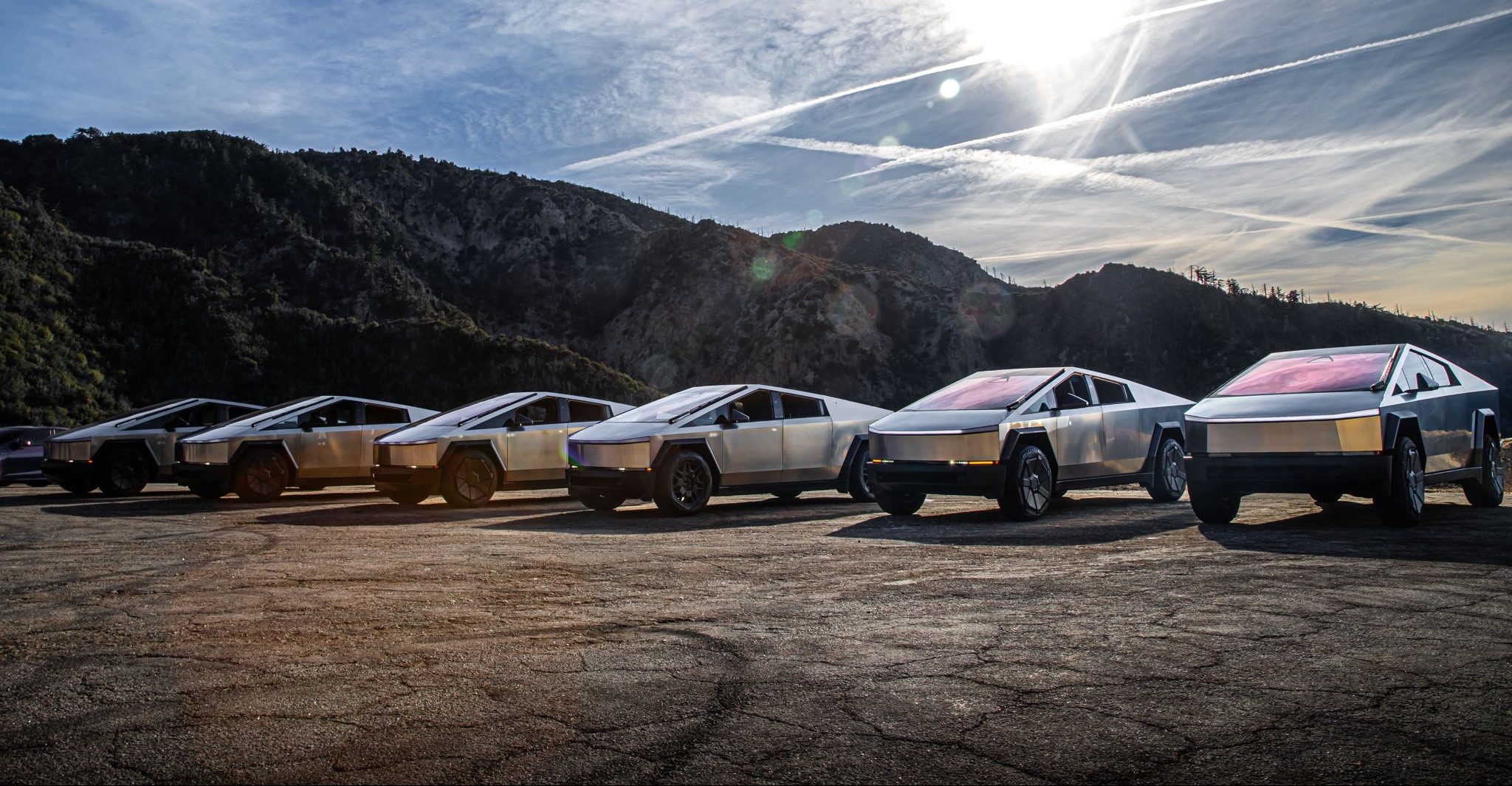
Tesla is ending Cybertruck production sometime in mid-2027, according to CEO Elon Musk.
Musk made the announcement on X last night, which came as a shock to many. He said that the Cybertruck will end production “to make room for increased Cybercab production” at Gigafactory Texas.
It is a huge blow to the fans of Tesla who have come to love the Cybertruck and identify with it as a symbol of their fandom. It has been the best-selling electric pickup, but it has had an underwhelming sales performance in terms of what was expected. This is mostly due to Tesla not meeting the prices it planned to offer the Cybertruck, as its unveiling and actual release were four years apart.
Tesla will be winding down production of the Cybertruck at Gigafactory Texas around the middle of next year to make room for increased Cybercab production
— Elon Musk (@elonmusk) November 6, 2026
Overall, the responses were mixed. Some fans understood the move toward Cybercab production, especially as Tesla is truly pushing the autonomous future through its Robotaxi platform. However, others did not understand it.
“Damn, how many Cybercabs do you guys need?” one response read. Another said it was “Sad but understandable.”Even analyst Gary Black had responded to the news, stating he hoped Tesla planned to replace it with a traditional pickup design.
It doesn’t seem like that will be the case.
Tesla is so hell-bent on delivering autonomy and eventually providing a driverless service that owning a car seems like an arbitrary idea, according to their thesis. Instead, Cybercabs will be available to pick you up and drop you off on demand, safely, without any human help.
As a result, Tesla has thinned its lineup considerably, and one can only ask where the vehicle lineup goes from here. Eventually, it seems like Cybercab could be the only vehicle that Tesla will sell.
Elon Musk
SpaceX’s next Starship flight set to make history on Friday the 13th
SpaceX is targeting Friday, November 13 for Starship Flight 15 and its first ship catch.

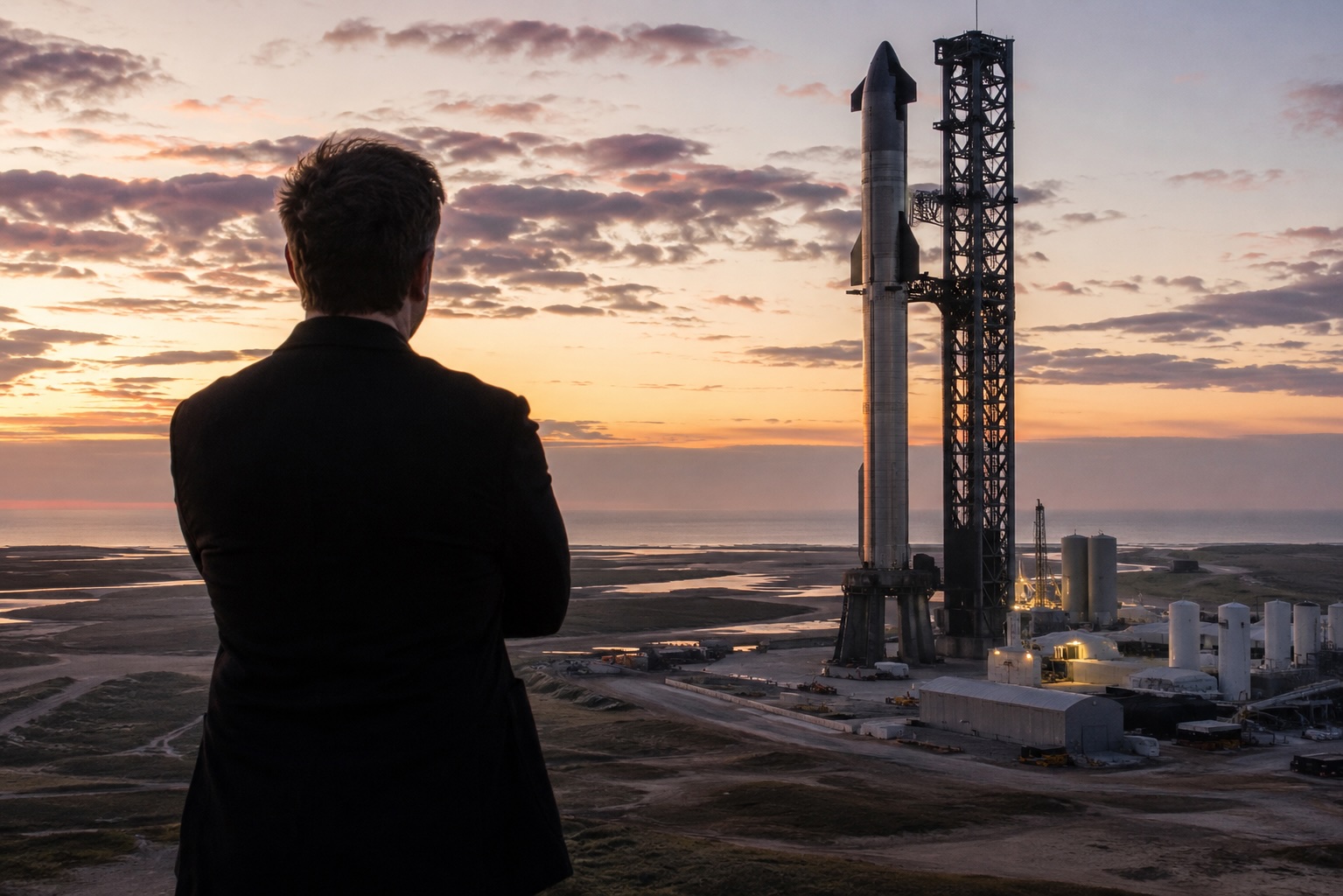
SpaceX is targeting Friday, November 13 for Starship Flight 15, the mission the company plans to use for its first attempt at catching the ship itself with the launch tower.
SpaceX Vice President of Launch Kiko Dontchev shared the date on stage at the UP.Summit on Thursday, according to Ars Technica’s Eric Berger, who was in attendance. It is the first launch target to come directly from a SpaceX executive. Until now, the public schedule had relied on FAA air traffic planning slides, which listed Flight 15 for no earlier than November 8 and later November 12. SpaceX has not posted an official mission page yet, and no launch time has been shared.
The date lands inside the window Elon Musk sketched out last month. Speaking at Giga Texas on October 10, Musk said the flight would “probably launch a little bit before Thanksgiving,” as Teslarati reported. On SpaceX’s third quarter earnings call ten days later, he confirmed that Flight 15 would try to catch both the Super Heavy booster and the ship, and put the odds of a successful ship catch at “more likely than not.” SpaceX also aired an animation of the maneuver during that webcast, showing the ship swinging vertical over Starbase before dropping into the tower’s chopsticks.
The hardware is ready. Booster 22 fired all 33 of its Raptor engines for a full duration static fire at Pad 2 on October 25. Ship 42 followed with a single engine burn simulating a deorbit maneuver on October 26 and a 60 second firing of all six engines the next day, according to NASASpaceflight. Ship 42 had already rehearsed the catch in September, when the Pad 2 arms lifted it into position and crews connected the quick disconnect arm while the vehicle hung from the tower.
The remaining hurdle is regulatory. The FAA’s Starship page does not yet list a Flight 15 license. SpaceX President Gwynne Shotwell said in October that, after “significant constructive engagement with the FAA,” she expects the license to cover a return to the launch site and a tower catch for both stages. Bringing the ship home means a reentry path that heads toward land, rather than ending over open ocean as every Starship flight so far has.
SpaceX has caught Super Heavy three times, on Flights 5, 7 and 8, but the ship comes back from orbital velocity and has never been caught. Flight 14 on September 28 was the first Starship to reach orbit, deploying 26 Starlink V3 satellites before splashing down despite an early engine shutdown that Musk blamed on engine computer software.
Musk has called a successful ship catch “the first time that there’s been full recovery of an orbital class rocket,” and he has already named the step after it: a Flight 16 where both the booster and the ship fly again. NASASpaceflight reports that Ship 43, the next vehicle in line, is set for static fire testing in December.
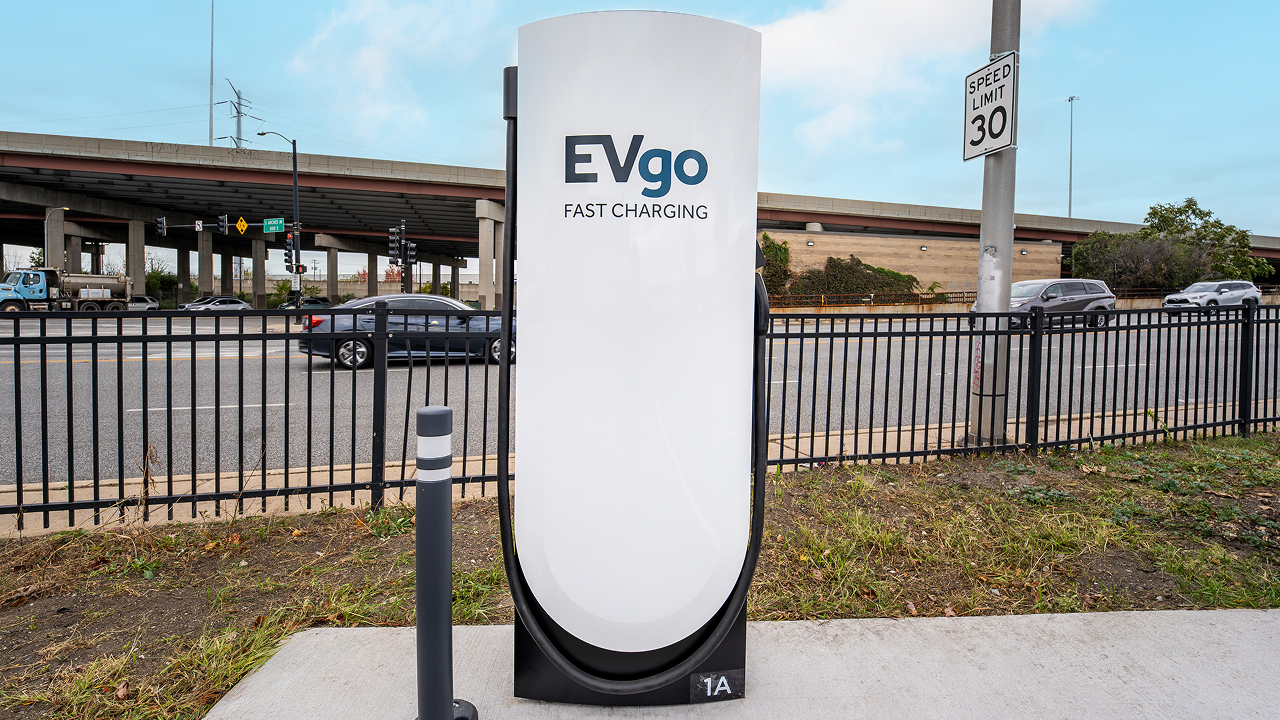
EVgo has tapped Tesla Superchargers for its most recent efforts to expand its charging presence in the United States, a move that seems logical based on the effectiveness of the automaker’s own infrastructure.
EVgo opened its first Supercharger site in Illinois, a 12-stall station near downtown Chicago at 3145 South Ashland Avenue in the Riverside Square & River’s Edge center, right beside a grocery store. This marks the start of the company’s plan to deploy hundreds of Supercharger stalls across the United States, primarily at grocery-anchored Regency Centers properties where drivers can shop, eat, or run errands while they charge.
We’ve opened our first EVgo Supercharger location in Illinois, marking the start of our plan to add hundreds of Supercharger stalls across the U.S.
Designed for both NACS and CCS vehicles with Magic Dock technology, these new sites help make fast charging more accessible and convenient for all EV drivers. Learn more: https://t.co/V92t5FDryQ
— EVgo Fast Charging Network (@evgonetwork) November 5, 2026
The new location uses Tesla’s Magic Dock technology so both NACS and CCS vehicles can plug in natively without drivers needing to carry their own adapters. Peak power reaches 325 kW at this site, with pricing set between $0.25 and $0.35 per kWh depending on the hour—the same rate for Tesla and non-Tesla drivers.
The stalls also appear in Tesla’s in-car navigation and Trip Planner, making them easy for Tesla owners to find and route to. Illinois has seen EV registrations rise nearly 60 percent over the past two years, and EVgo’s broader network has experienced more than 700 percent growth in charging demand over three years, so the timing fits the market’s trajectory.
Choosing Tesla hardware through the Supercharger for Business program turns out to have been a smart, practical move.
Tesla’s V4 stalls and cabinets deliver high, reliable power with a proven track record of strong uptime, while Magic Dock delivers true dual-standard compatibility in one package. Because the sites show up in Tesla’s navigation tools, EVgo instantly gains visibility among millions of existing Tesla drivers, which should raise utilization and help the company double its addressable market as more vehicles adopt NACS. EVgo still owns the stations and sets pricing, yet benefits from Tesla’s established hardware, longer cables, and operational support.
The result is faster, lower-risk infrastructure expansion that serves every EV driver—Tesla or otherwise—with convenient, high-power charging at everyday retail locations. For drivers, that means fewer adapters, more predictable stops, and a denser network just as electric vehicles become everyday transportation.

Tesla is ending Cybertruck production

SpaceX’s next Starship flight set to make history on Friday the 13th


