News
Tesla finds support as Bay Area Council urges Alameda County to reopen Fremont factory

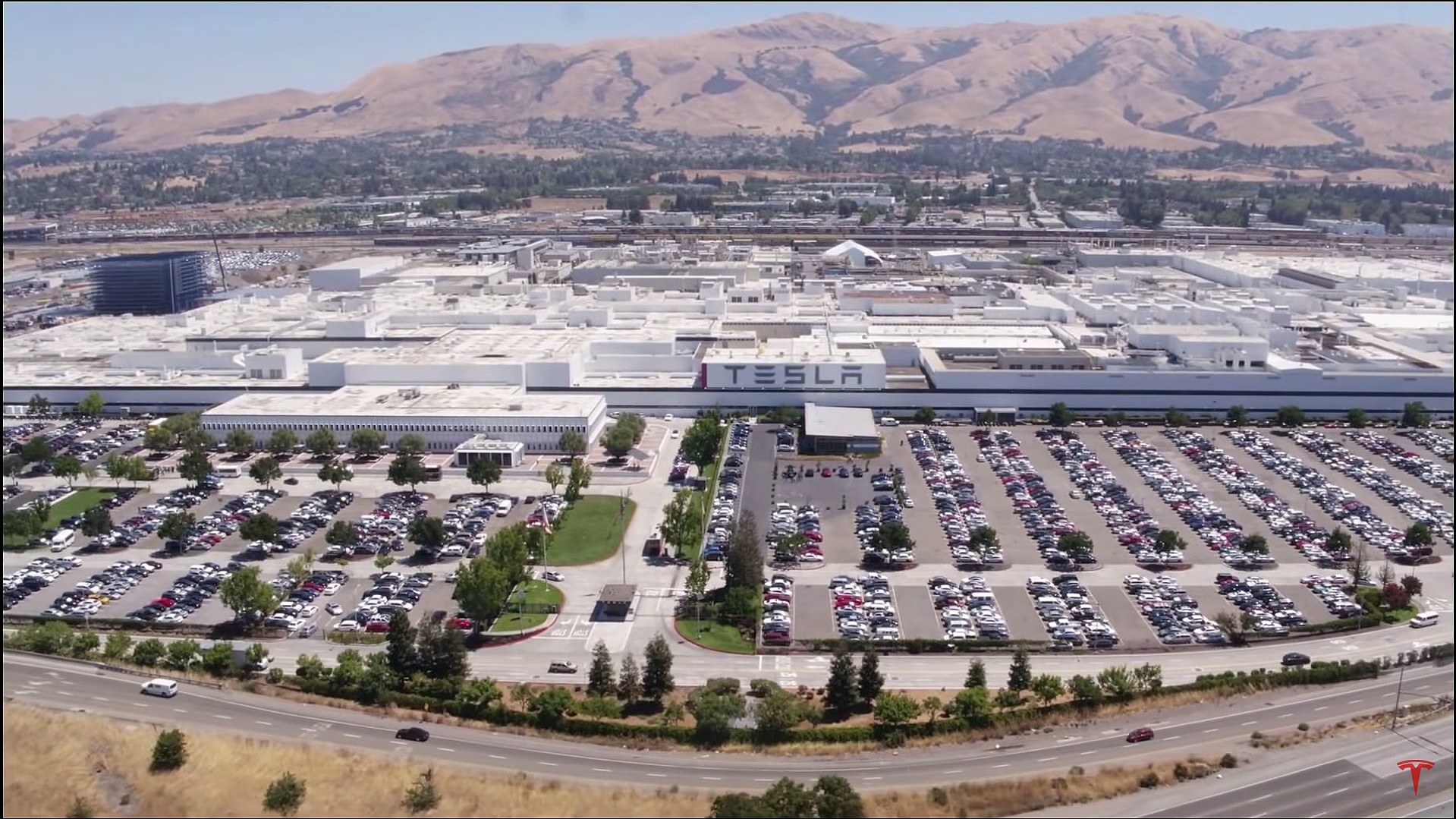
Tesla and CEO Elon Musk’s efforts to reopen the Fremont factory as soon as possible has received some support from the Bay Area Council. In a recent press release, the Council urged Alameda County’s health officials to work with Tesla to ensure that the Fremont factory can resume its operations in a manner that is safe and efficient.
The Bay Area Council’s press release was issued following Elon Musk’s tweets over the weekend, which included a lawsuit against Alameda County for allegedly blocking Tesla’s efforts to reopen the Fremont factory, the company’s lone vehicle production plant in the US. This was despite Tesla’s intentions to adopt stringent safety procedures that are modeled after its successful anti-COVID-19 strategies in Gigafactory Shanghai.
The Bay Area Council’s press release highlighted that the decision of Alameda’s health officials to keep the Fremont factory shut down came after the State of California moved to Stage 2 of its COVID-19 response, which allowed businesses such as manufacturers to resume operations, provided that they adopt strict safety standards. Tesla has discussed its stringent safety initiatives in a Return-to-Work Playbook.
President and CEO of the Bay Area Council Jim Wunderman shared his insights on Tesla’s electric vehicle production facility and its ongoing struggles against the Alameda County health officials. Wunderman explained that a strong signal must be sent to businesses and the millions of workers affected by the shutdown that the Bay Area and the state are eager to return to work, especially considering the historic economic pain that will be brought about by the pandemic.
“California and the Bay Area are demonstrating every day that we can protect public health and reopen our economy at the same time. We strongly urge Alameda County public health officials to work with Tesla and other employers in figuring out a plan that can allow them to safely resume operations sooner rather than later. We must send a strong signal to businesses and the millions of workers who have lost their jobs that the Bay Area and California are just as eager to restart our economy and get people back to work as we are to stamp out this pandemic.
“The economic pain from this shutdown is historic, profound and intense, and is taking a huge toll on state and local government budgets that is going to reverberate for years to come. California has already signaled by moving to Stage 2 that the difficult actions we’ve taken to combat COVID-19 are working, and we’re confident that Alameda County can follow the same path,” the Bay Area Council President and CEO said.
Tesla’s intentions to resume operations at the Fremont factory has received varied responses. Apart from the Bay Area Council, the mayors of the City of Fremont and the City of Palo Alto have extended their support for Tesla. On the other hand, other politicians such as CA Assemblywoman Lorena S. Gonzales have opted for a much more negative response, saying “F*ck Elon Musk” on Twitter.



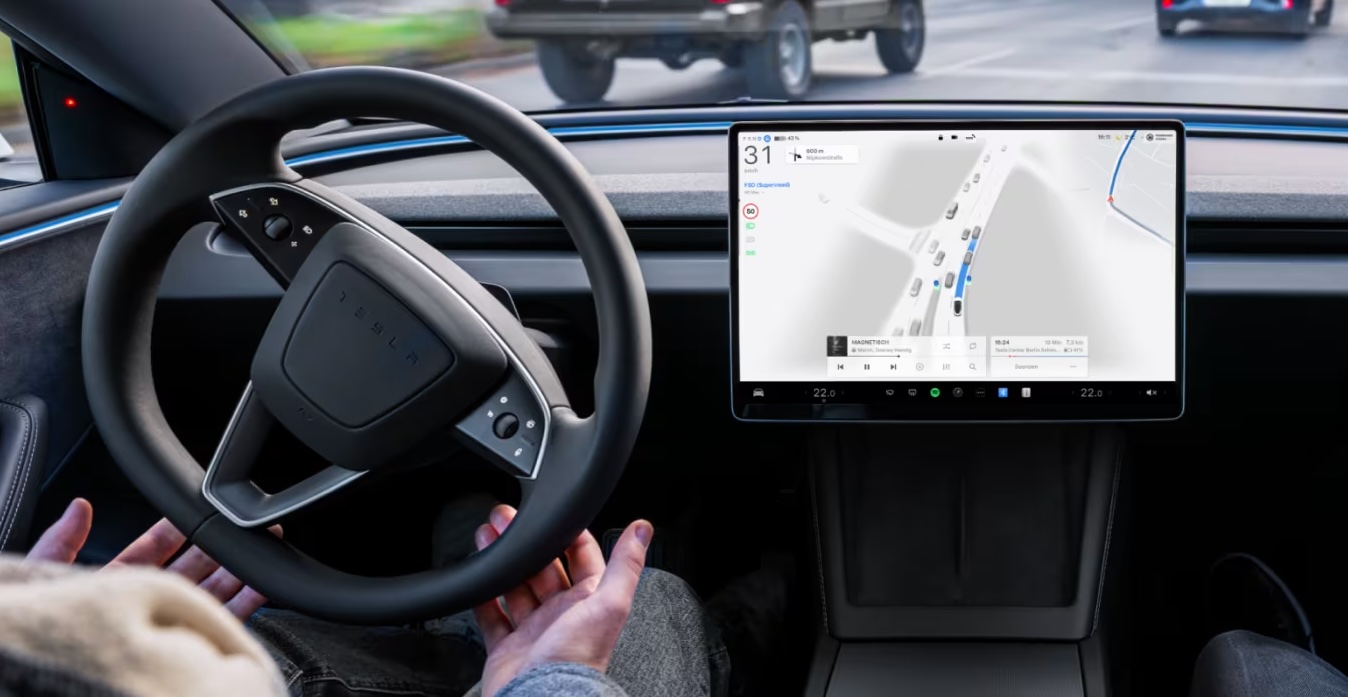
Tesla is planning to roll out some pretty significant safety and accident avoidance features with Full Self-Driving version 15, which will be the next major FSD deployment from the company.
Tesla AI lead Ashok Elluswamy used a near-miss this week to preview what the company says is the next leap in Full Self-Driving.
In response to a driver whose car had swerved away from another vehicle pulling out of a parking lot, Elluswamy wrote that he was glad the owner was safe and that “even earlier prediction of hazards, even faster reaction time and overall significantly better safety and collision avoidance” would arrive with FSD v15.
Glad you are safe. Even earlier prediction of hazards, even faster reaction time and overall significantly better safety and collision avoidance coming as part of the next big upgrade (v15).
— Ashok Elluswamy (@aelluswamy) September 11, 2026
The comment landed as Tesla continues to treat software as the primary safety upgrade path. v15 is described internally as a larger architectural step, with a much bigger neural network and tighter coupling between prediction and control.
The company has already begun using early v15 software in some robotaxi operations while rolling out safety features such as Automatic Collision Evasion into current customer cars, allowing the driving stack to intervene even when the driver is in manual control.
Tesla is rolling out a new FSD version with a massive safety addition
Tesla’s published telemetry is the backbone of its safety argument. In recent North American Vehicle Safety Report data, vehicles with FSD (Supervised) engaged traveled roughly 5.1 million to 5.7 million miles between major collisions, defined as airbag-deployment events.
Tesla’s estimate of the U.S. average over the same period is about 699,000 miles per comparable crash. That is the comparison Tesla often frames as roughly seven times fewer major collisions.
A tighter comparison uses the same Tesla fleet. Cars driven manually with active safety features such as automatic emergency braking still recorded a major collision about every 2.1 million miles. Against that baseline, FSD’s advantage shrinks to roughly 2.4 to 2.7 times fewer severe crashes, which independent researchers argue is the more apples-to-apples figure.
European data released in 2026 pointed in the same direction: Tesla reported FSD as 3.5 times safer than manual driving in the Netherlands and 4.1 times fewer collisions than manually driven Teslas with active safety across more than 100 million kilometers in five approved countries.
Those numbers do not settle every debate. NHTSA’s Standing General Order still shows Tesla accounting for the large majority of U.S. Level 2 driver-assist crash reports, in part because the fleet logs far more assisted miles than rivals. Critics also note that Tesla’s “U.S. average” mixes crash definitions and driving mix.
Even so, Tesla’s own same-car comparisons, plus lower rates of automatic emergency braking and harsh maneuvers when FSD is engaged, are the evidence Elluswamy is pointing to when he says v15 will push prediction and collision avoidance further. The claim is not that software already eliminates risk. It is that each major version is meant to widen the gap between the system and an unaided human driver.
Cybertruck
Tesla’s most delayed Cybertruck feature is finally here
Tesla finally links Cybertruck Powershare with Powerwall 3 for extended home backup after years overdue.


Tesla’s Cybertruck can now pair with a Powerwall 3 to keep a house running longer during an outage, a feature the company first promised when the truck launched in November 2023.
The official Cybertruck account posted the update on X Thursday: “Powerwall 3 & I can now power your house together. This extends your home backup by over 3 days, equivalent to 9 additional Powerwalls,” Cybertruck lead engineer Wes Morrill confirmed the rollout separately, calling it the first time a vehicle and a home battery have worked together this way. Powerwall 2 and Powerwall+ compatibility is still coming later this year, per both the Cybertruck account and Morrill.
Powerwall 3 & I can now power your house together⁰ ⁰This extends your home backup by over 3 days, equivalent to 9 additional Powerwalls pic.twitter.com/8G2twIm6AN
— Cybertruck (@cybertruck) September 10, 2026
Powershare itself is not new. Tesla enabled the version that lets Cybertruck power tools, appliances or another EV through its bed outlets when the truck launched in 2023. Home backup through a Powershare Gateway and Universal Wall Connector arrived in 2024, and Tesla extended that support to homes with solar the following year. What has been missing until now is Powershare working alongside an existing Powerwall, instead of functioning as a separate backup source competing for the same job.
The pairing matters because a single Powerwall home battery typically covers a home for about a day, less if usage is heavy or the outage stretches into a heat wave or freeze. A second Powerwall for more backup storage costs several thousand dollars installed. A Cybertruck instead uses a battery the owner already has, one large enough here to add roughly three more days of backup without mounting another unit or booking an installer visit. For households in wildfire, hurricane or winter storm regions where outages run past a day, that keeps the refrigerator and medical equipment running instead of shutting down.
The company told owners in October 2024 that Powerwall integration was coming sometime in 2025. That date passed, and in December 2025 Tesla pushed the target to mid-2026, with Morrill explaining at the time that two grid-forming devices need to negotiate which one manages a home during an outage, and that certifying the process across multiple generations of Powerwall took longer than expected.
For owners who bought Powershare hardware expecting it to work with whatever battery setup they already had, Thursday’s update closes a gap that has shown up repeatedly in owner complaints since Cybertruck deliveries began. Tesla has also rolled out a separate Powershare grid support program in Texas, letting Cybertrucks send power back to the grid during high demand events, so the truck’s role in a home’s energy setup keeps expanding even as individual pieces of it arrive later than promised.
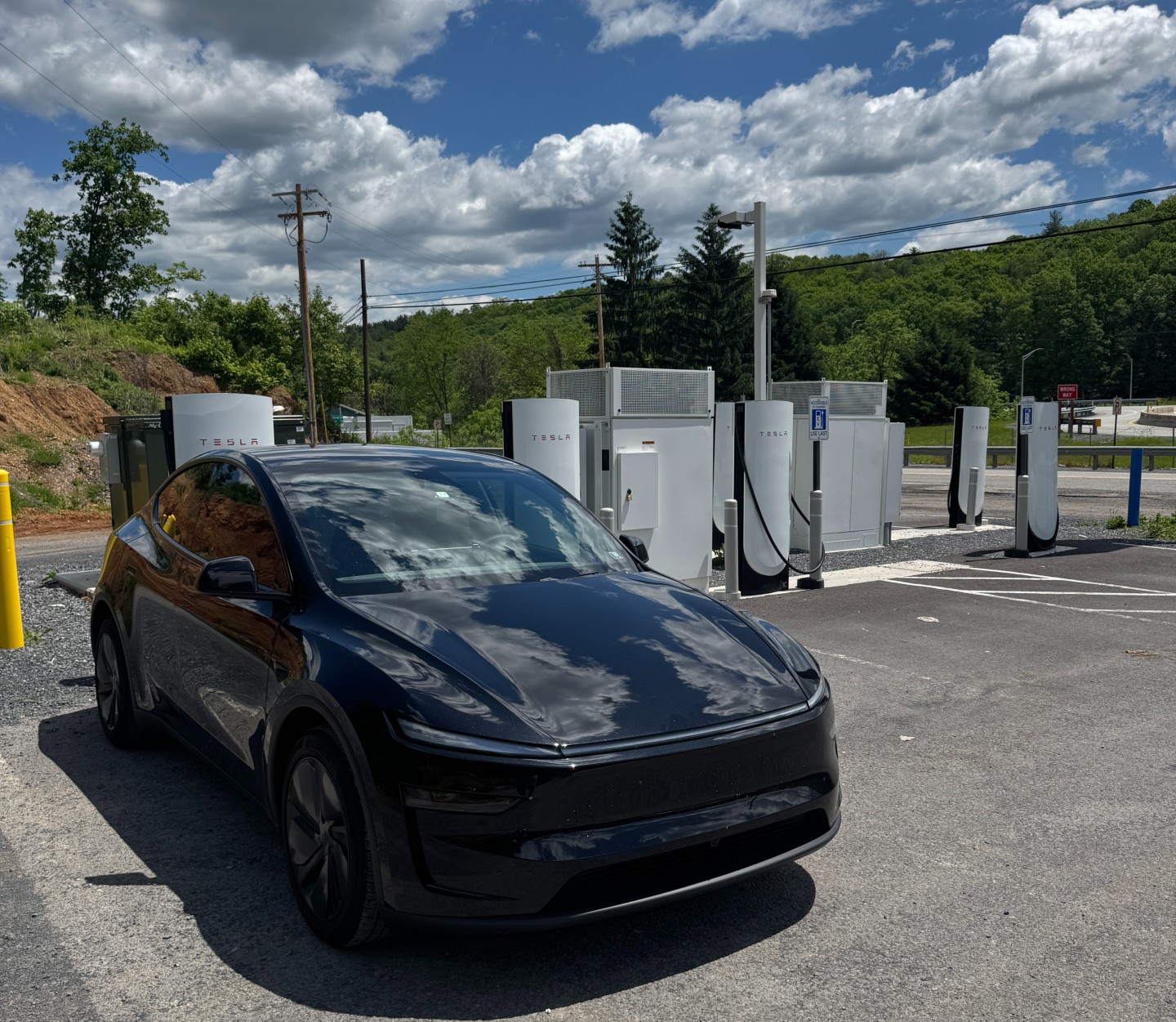
I picked up my Tesla Model Y one year ago, on August 30, and for roughly a year, I have had this vehicle prove to me that any other carmaker’s product is ruined for me forever.
One year and over 16,000 miles later, the Tesla Model Y is easily the best car I’ve ever had. Of course, everyone always says that about the car they currently drive, but for the longest time, I truly believed some of the other cars I drove — my 1998 Volkswagen Jetta K2, or my 2008 Ford Escape Hybrid — would never be topped.
Most of this was due to nostalgia, but dependability also played a role.
My Tesla has taken over the number one spot. Everyone I talk to about my car always has a lot of questions, and they’re usually the same ones that someone else asked me: “Is it really so cheap to drive?” “How much does it cost to charge?” “Does it really drive itself?” “How long is the warranty on your battery?”
I never mind answering those questions because it is an opportunity to educate someone on EVs. There are a lot of things about EVs that I hear from people, and I can’t help but chuckle at times. However, I hope this review clears some of those things up, because I truly want everyone to know how great this vehicle really is.
My brand new ride! Thank you @tesla @elonmusk for building one badass car
Officially a battery boy pic.twitter.com/jzpMawmTZs— Joey Klender (@KlenderJoey) August 30, 2025
How my Tesla has changed my life
I was in two car accidents in high school, and I was a passenger in both. I am very happy I went through those as a teenager, because if I didn’t, I think I’d probably be much less aware of the road, how other drivers are so unbelievably unaware of others, and how inconsiderate most drivers are.
I’ve always considered myself a good driver because I was always taught to be defensive. Because of those two accidents, I am a tad jumpy in passenger seats, even with people like my parents, who drove me around for 16 years before I got my Learner’s Permit. On a drive home from Florida to Pennsylvania with my Dad two years ago, he actually told me at one point to “stop being so jumpy.”
Truth is, I trust my Dad behind the wheel more than anyone. But the older I’ve gotten, the more I just prefer to drive myself.
That is, until I met my Tesla and Full Self-Driving. I still remember the first drive I took after taking delivery: I immediately typed in my Fiancèe’s (my wife in 30 days!!!) favorite lunch spot, picked up her favorite meal, and pulled into the hospital where she delivers babies. I can remember thinking after 15 minutes, “Okay, that’s enough for me; I’ll drive manually now.”
Over the next 2-3 weeks, that length of time slowly but steadily increased. Every passing week, I got a tad more comfortable with the car driving me. Now, I have had FSD log 75% of my 13,000 miles since v14. I barely drive my car manually, and that’s exactly how I like it.
My Tesla has changed the way I drive and how I choose to travel.
🚨 Guys this is why you all NEED to stay vigilant behind the wheel, even on Tesla Full Self-Driving
Human drivers are UNHINGED and have no idea what they’re doing anymore. This was a kid obviously younger than 20 years old with zero awareness.
First drive with v14.3.7 https://t.co/1vTbCMpCn8 pic.twitter.com/lz7KKEF6bj
— TESLARATI (@Teslarati) August 2, 2026
In the past, I was always one of those anxious drivers, overly concerned about the parking situation, never wanting to drive in cities, and avoiding anything that made me a little uncomfortable when on the road. FSD has changed that completely.
Took my Fiancè and her friends to the airport this morning and my Model Y chose to bring me through the Inner Harbor during the morning commute
At least I got to see some fun stuff on my way homeI handled the city driving manually, FSD took care of the rest pic.twitter.com/7wcswtTUB0
— Joey Klender (@KlenderJoey) September 18, 2025
It has made traveling fun, driving less stressful, and parking a non-issue. I truly love this car and what it has done for me and my driving anxiety.
Maintenance and Cost Savings
A buddy of mine who took delivery of a Model Y right after me, also his first EV, texted me yesterday and said, “When do I take this thing for service? I don’t even know what it needs.”
This year I have spent $67.41 on service for my car:
- Free Front Camera Housing Cleaning
- $65 for a Tire Rotation at home from Tesla (easily avoidable if I just would have gone to a tire place or did it myself, but it was less than 20 degrees outside and the Service Tech did it at 7 am while I was asleep)
- $2.41 on a jug of Windshield Washer Fluid at Sheetz with my reward points
No spark plugs, no oil changes, no anything. Combine it with what you save on charging at home, and my ownership experience overall has been relatively cheap. I pay no more than I did for my Bronco for the car payment (around $400 per month), and my insurance went up about $60, but within the first four months I was given a safe driving discount by my agent. This brought it to about a $40 increase.
Now let’s factor in what I’ve saved in gas for the year:
Writing my 1 year Model Y ownership review and here’s my charging states for the year. April is when I started charging at home. Crazy to think how much I would have saved on charging if I would have been doing that all along pic.twitter.com/cpuSNop63G
— TESLARATI (@Teslarati) September 10, 2026
According to my Charge Stats in the Tesla App, I’ve saved $836 over the course of the year by driving a Tesla over an ICE vehicle. If you look at the graph, you’ll notice my Supercharger utilization dropped significantly in April, which makes sense.
This is when I started charging at home. Those savings would likely be closer to $1,500 if I had been charging at home all along.
Real-World Range
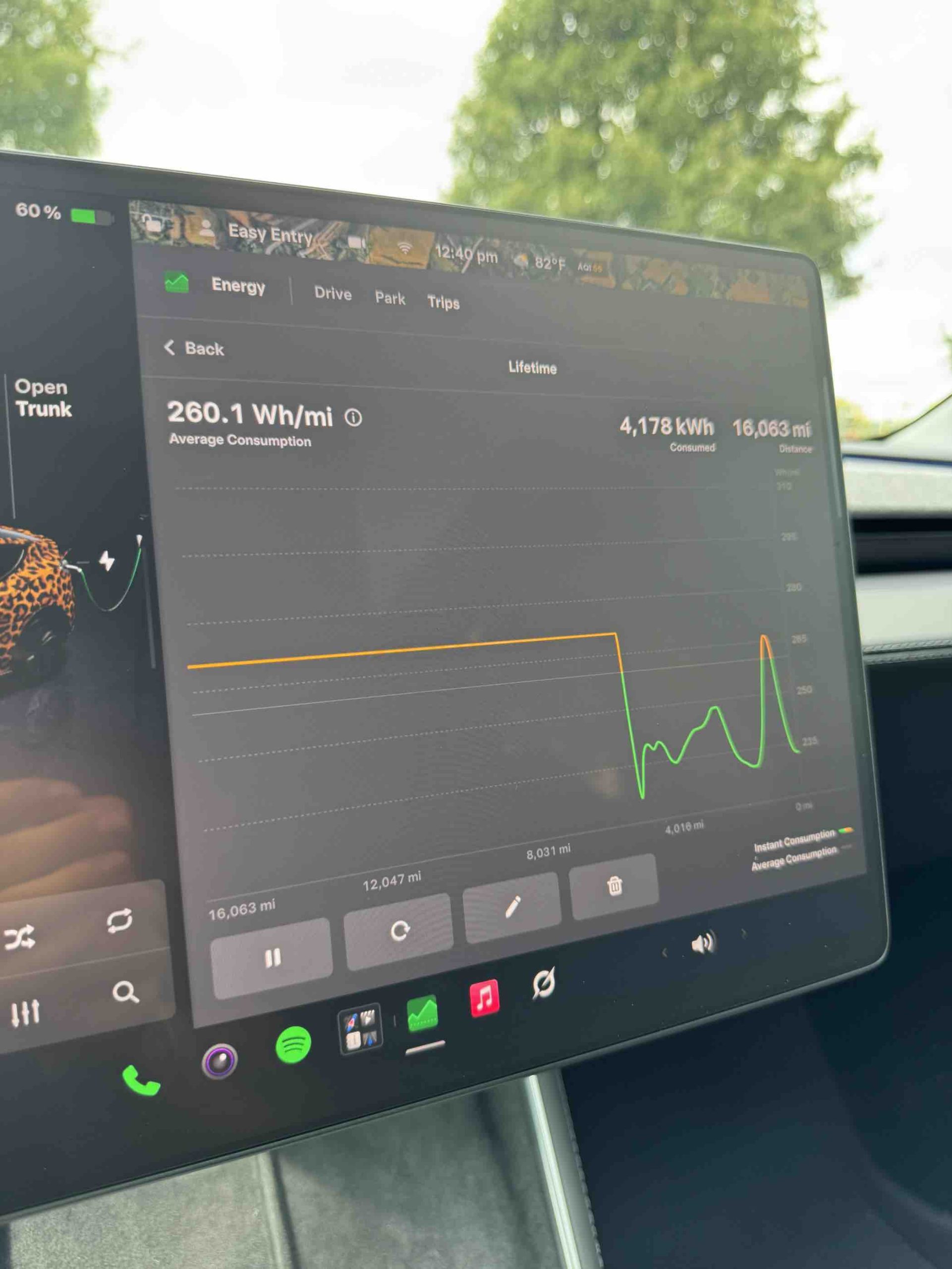
I never reset any Trip on my Tesla when I bought it, so all of these efficiency stats are for the life of the vehicle thus far through 16,063 miles.
My Tesla has a lifetime average of 260.1 Wh/mi (watt-hours per mile), which equates to 3.84 mi/kWh (miles per kilowatt-hour). This is pretty average, and I know I could be more efficient, but I use climate control liberally (it’s always on, even if the windows are down), and I love to let FSD drive me around in Hurry Mode.
Even when I’m driving manually, it’s because I’m on a dry, windy road and I want to take advantage of the awesome suspension and damping that the Model offers. Driving that car on a back road with some twists is one of the most fun things to do.
To achieve really excellent range and efficiency ratings, you really have to be more conservative with some things, and those are sacrifices I’m personally not willing to make. I want the A/C or Heat on, and I occasionally will increase drag by driving with the windows down.
I prefer Hurry mode on FSD, and I’m willing to sacrifice a few miles of range for that certain style of driving.
Interior, Visibility, Accessories, and More
My Favorite Interior Ever
The Model Y interior, like every Tesla interior, is not for everyone. Personally, I was never a fan of the minimalistic approach prior to ownership. As ridiculous as it is, I liked a simple knob for adjusting the temperature and fan speed. Even so, to this day, it takes me longer to pull up the climate settings to adjust things in my Tesla than it ever did in cars with a million knobs and buttons.
I can’t tell you how many times my finger has missed the On/Off button on the climate screen in the Model Y because of dips, bumps, turns, and just normal movement during operation. Do I like the way things are controlled in my Tesla? Yes, of course. Plus, Grok is so integrated into the car now that I could truly never have to touch the screen again for anything other than starting Self-Driving.
🚨 Using Grok to control the cabin temperature and turn on headlights in 2026 Model Y on FSD v14.3.8 and 2026.26.6.5 pic.twitter.com/7clgQkGABk
— TESLARATI (@Teslarati) August 27, 2026
However, I still find that there are valid arguments for people who like knobs and buttons. As ugly as it might be to me now, I think it is a tad more intuitive because it’s much harder to miss and much easier to make a quick adjustment than with a touchscreen.
With that being said, the touchscreen is great. It is so responsive and is as good as using an iPhone. There is no delay like most automotive touchscreens, where it feels sort of clunky for 2026.
I love to watch TV and Movies or YouTube on it when I’m parked anywhere. My Fiancèe and I have made it a date night several times over the past year: we’ll pick a spot to eat, get it to go, and enjoy it in the car while watching something. It’s great in the Fall when the leaves are turning orange.
The interior is, overall, a great part of the car. It’s very easy to keep clean, and when it’s clean, it truly feels like you’re in a spacecraft. It is one of the coolest interiors out there, maybe not as luxurious as some high-end Mercedes-Benz or BMW models, but it has a clean and simple feel that is better than many cars in its weight class.
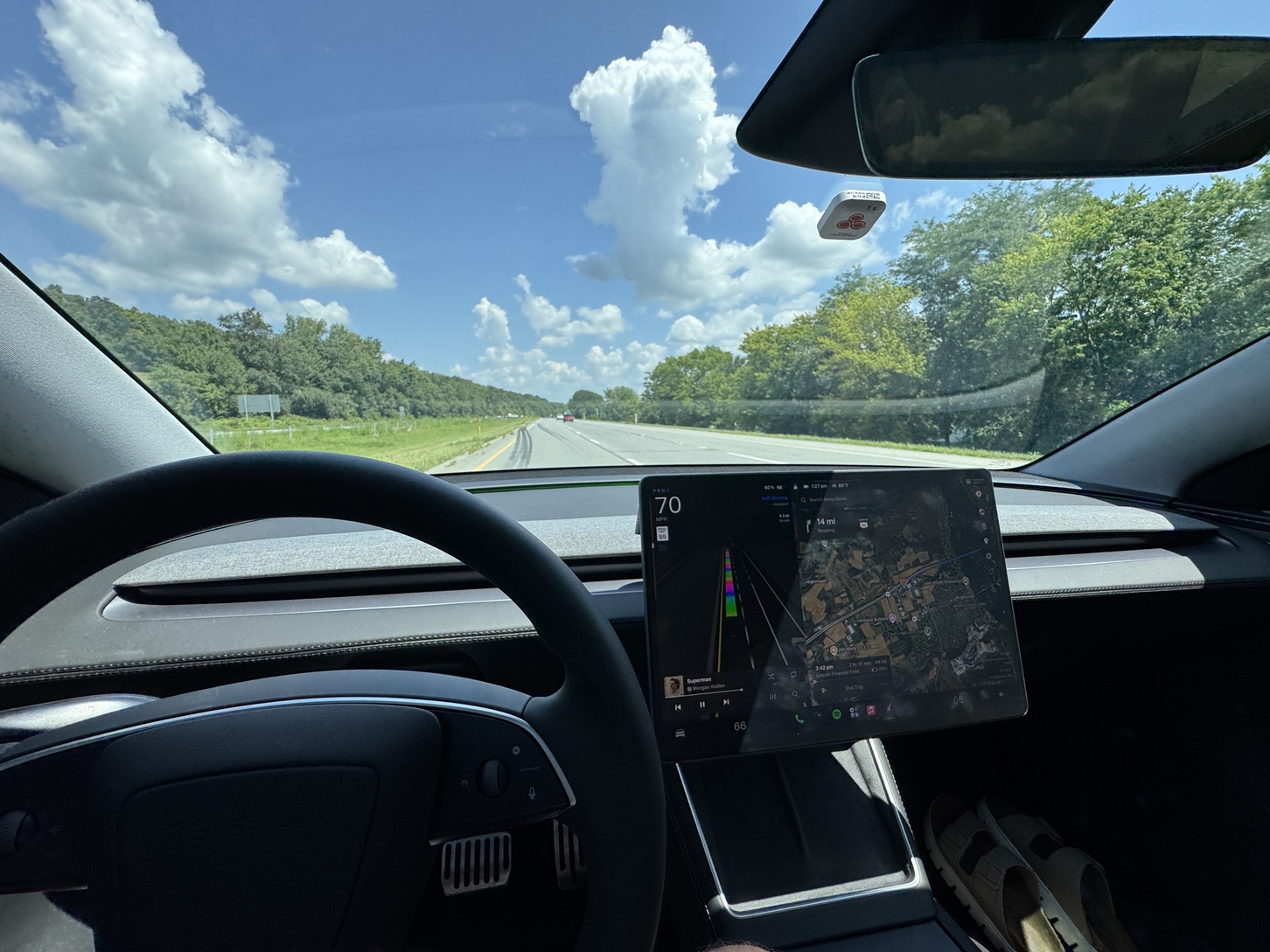
I will say I do miss the Textile seats of the Model Y Standard, but I do not miss them when I am hot. I would still take the Vegan Leather because of the ventilated seats.
Rear Window Visibility is Pointless
If you like a rear windshield, just be aware of the fact that the Model Y basically does not have one. It almost feels pointless to be there, and the Model Y L has something that is much more “standard” in terms of rear windshields in a crossover/SUV:
This is a drastic difference. https://t.co/wTdhitD5aA pic.twitter.com/z6hFs0Jkss
— TESLARATI (@Teslarati) July 30, 2026
It doesn’t mean much to me because the rear camera is great. However, I have found myself just annoyed with the fact that it’s even there to begin with.
Accessories I Bought
I went for 3D MaxPider car mats throughout, some center console storage, trunk storage, and matching window tint on the front windows. I also bought Tesla’s Pet Liner, which is great because it comes with door coverage and a bit of a barrier. My pup, Finn, climbs right over it and prefers the front seat, so I fold it in half, and it still covers the passenger seat very well:
🚨 Something’s different about my best friend Finn in this video compared to the last…🐾🐶
Watch our full ride home from Finn’s haircut on Tesla FSD v14.3.8 https://t.co/eyrj1QefAj pic.twitter.com/f04jVIBgMV— TESLARATI (@Teslarati) September 8, 2026
They’re all pretty standard accessories, but the one thing I use the most is actually this phone mount from Amazon.
It’s great for making FSD content for TikTok or throwing my phone on it just to hold. I never use it to watch anything (I’m wildly against that concept), and I usually use the wireless charging mat that comes standard. It is really great and convenient, and the magnet is super strong.
Cabin Noise, Sound System Quality
The Model Y Premium comes with acoustic-lined glass, which really dampens a lot of the road noise. My car has one of the quieter cabins I’ve ever been in. I can still remember my 2008 Escape Hybrid and how loud it was in there; I thought my Tesla would be that way, but boy was I wrong.
It is such a peaceful ride that even sitting at stoplights behind loud, obnoxious Hondas with shopping cart handles as spoilers does not bother me. A buddy of mine in a 2021 Model Y said upon his first ride in my car that it was a “night and day” difference between the two.
As far as the sound system goes, two of the more outgoing people in my life who love loud music and concerts recently said to me that “the Tesla is quite a time” because of how immersive the listening experience is. The bass is excellent; the ambient lighting truly rounds out the experience.
Even my Dad, who is somewhat of a speaker snob (I can remember going to Tweeter as a boy with him to look at receivers, and he’s always had massive speakers in the house for cranking up some music) has commented on how good the sound quality is. I remember when I bought a Honda Civic a few years ago- his first ride in it- he said, “Damn, the speakers in here suck.”
He wasn’t wrong. They were awful. But in the Tesla, they’re damn good.
Should you buy a Model Y?
Look, I will recommend this car to anyone who asks. I tell my friends constantly that I love my Model Y so much, especially because it just gets better and better over time.
But I also understand the skepticism. I’ll admit one of the most disappointing things about this car is how much range I lose in the winter. In a 40-mile round-trip drive to get wings with some friends in January, I lost 120 miles of range. This is something that would not deter me from buying this car, but at the time, I also didn’t have home charging. Ownership, at that point, was a bit of a pain in the butt.
The thing is, to me, it’s still better than driving a gas car. I just have more fun in a Tesla.
A friend of mine recently bought a new car, and she said she went with a Chevy Equinox because it was a larger vehicle and she has a child. I told her, “I don’t think I’ll ever buy anything other than a Tesla. Once you go Tesla, you never go back.”
“I cannot afford a Tesla,” she said. We all know the ridiculous narrative around Tesla pricing by now, and after she found out how much I pay for my car and the fact that it has the IIHS Top Safety Pick+ rating, she admitted she probably would have done the same if she had known. I wish she would have asked.
The only car I would take over mine is the Cybertruck. And right now, I just can’t afford a Cybertruck, so I’ll stick with the Model Y. I am so satisfied with my pick, and I would buy this car time and time again.

Tesla plans big safety improvements for Full Self-Driving v15

Tesla’s most delayed Cybertruck feature is finally here


