News
SpaceX reschedules Starship static fire amid deadly Texas cold snap, power grid failure

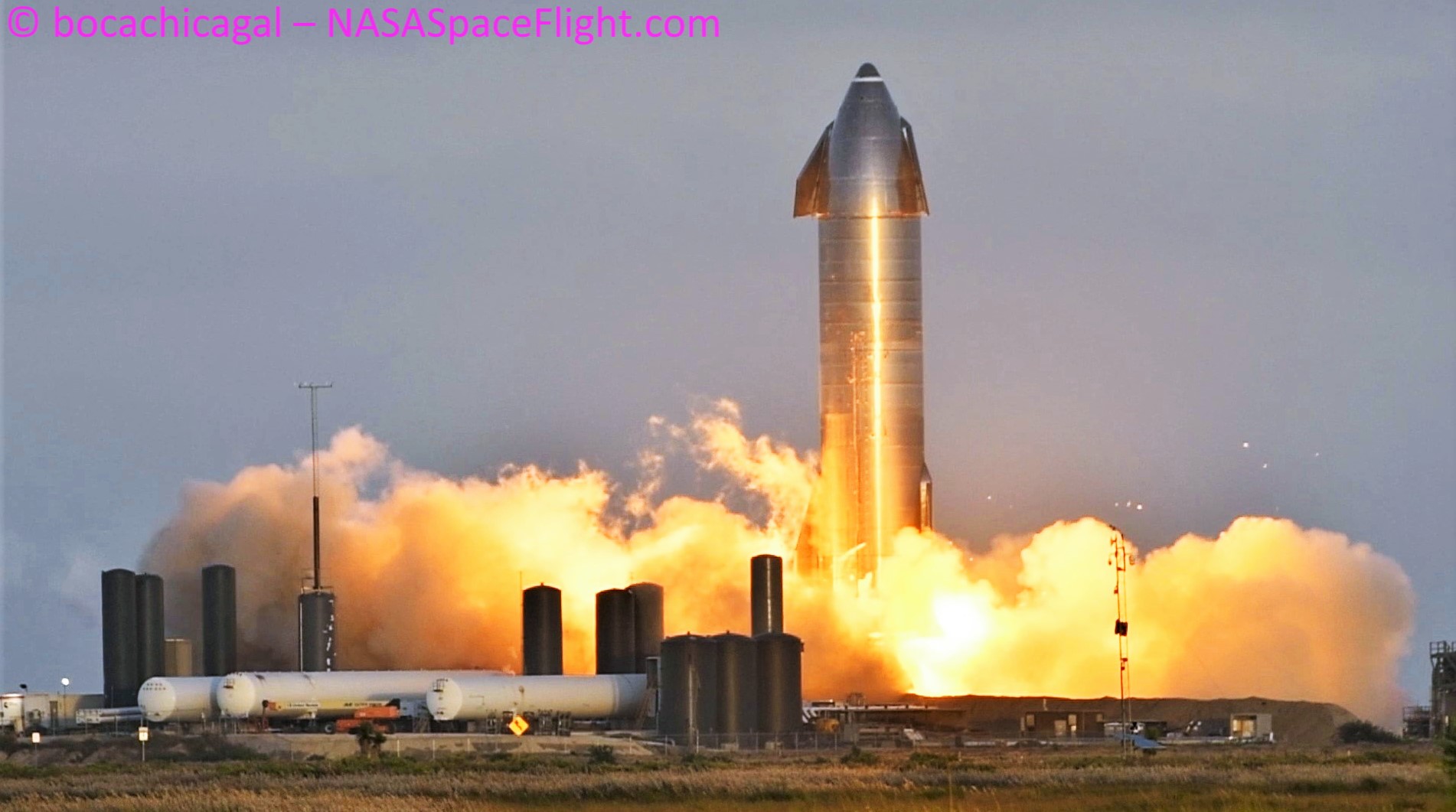
After extreme weather and a once-in-a-decade cold snap ground SpaceX’s Starship launch preparations to a halt, the company’s next critical preflight test is back on the calendar.
SpaceX received permission to close Boca Chica Boulevard from 9 am to 6 pm CST (UTC-6) on Monday, February 22nd, with identical backup windows available on Tuesday and Wednesday. An agreement with Cameron County currently requires SpaceX to avoid road closures (and thus testing) on weekends – a compromise to preserve some level of access to Boca Chica’s public beaches for local residents.
Over the last several days, Texas has been in the throes of an unusual – but far from unprecedented – cold snap. With temperatures well below freezing in many regions and snow building up for the first time in years, the state’s systematically dysfunctional power grid – intentionally separated from the rest of the US grid and effectively left to the “free market” wolves – almost instantly collapsed. Effectively unregulated, patchwork utilities and power companies left to their own devices unsurprisingly chose to save money and maximize profits in the short term by deploying non-winterized powerlines, substations, and power plants.
It’s a ‘mistake’ – really more of an intentional design flaw – that’s been repeated twice before and as recently as 2011. Once again, power outages have mostly been caused by a lack of winterization at natural gas and coal-fired power plants throughout Texas, which forced the state’s so-called Electric Reliability Council (ERCOT) to enforce systematic rolling blackouts. The state inexplicably went as far as allowing the same utilities and power companies whose conscious failures caused the outages to then raise gas and electricity prices to astronomic levels, resulting in bills on the order of thousands, tens of thousands, and even hundreds of thousands of dollars in a handful of days.
Additionally, the cold has shocked other Texan infrastructure, throwing no less than 1/50th of the entire American population into darkness and without running or potable water. SpaceX hasn’t been spared by any means and both Boca Chica and greater Brownsville have been subjected to multi-day power outages. SpaceX, however, has built up an extensive footprint for its growing Starship factory, including an installation of Tesla solar panels and Powerpack batteries that have likely helped keep the lights on, for the most part. SpaceX is even doing its best to save cold-stunned sea turtles, performing hundreds of rescues on its own and providing generators and help wherever possible.
“Like a ray from heaven, yesterday at 7:30 p.m. the site director and operations manager for SpaceX Boca Chica and two electricians and engineers from SpaceX showed up on our property with the largest generator I’ve ever seen,” Knight said. “And at 1:30 a.m. this morning, we turned the lights and the power on.”
(Trained SpaceX employees have also rescued some 850 of the turtles, Knight said, initially storing them in their gymnasium while coordinating transportation. SpaceX did not respond to a request for comment in time for publication.)
NPR – Rachel Treisman – February 17th, 2021
High winds, cold temperatures, and no guarantee that employees will be in a condition to work have meant that SpaceX’s rocket factory and latest Starship test campaign have both slowed considerably. Thankfully, weather-wise, next week is looking somewhat more positive as forecasts show winds dropping and temperatures rising well above freezing. With a little luck, SpaceX will be able to put Starship serial number 10 (SN10) through its first triple-Raptor static fire(s) and qualify the rocket for flight between Monday and Wednesday, potentially opening the door for a third high-altitude launch and landing attempt as early as the end of the week.




SpaceX announced today that it would expand its launch capabilities into a new U.S. state: Louisiana.
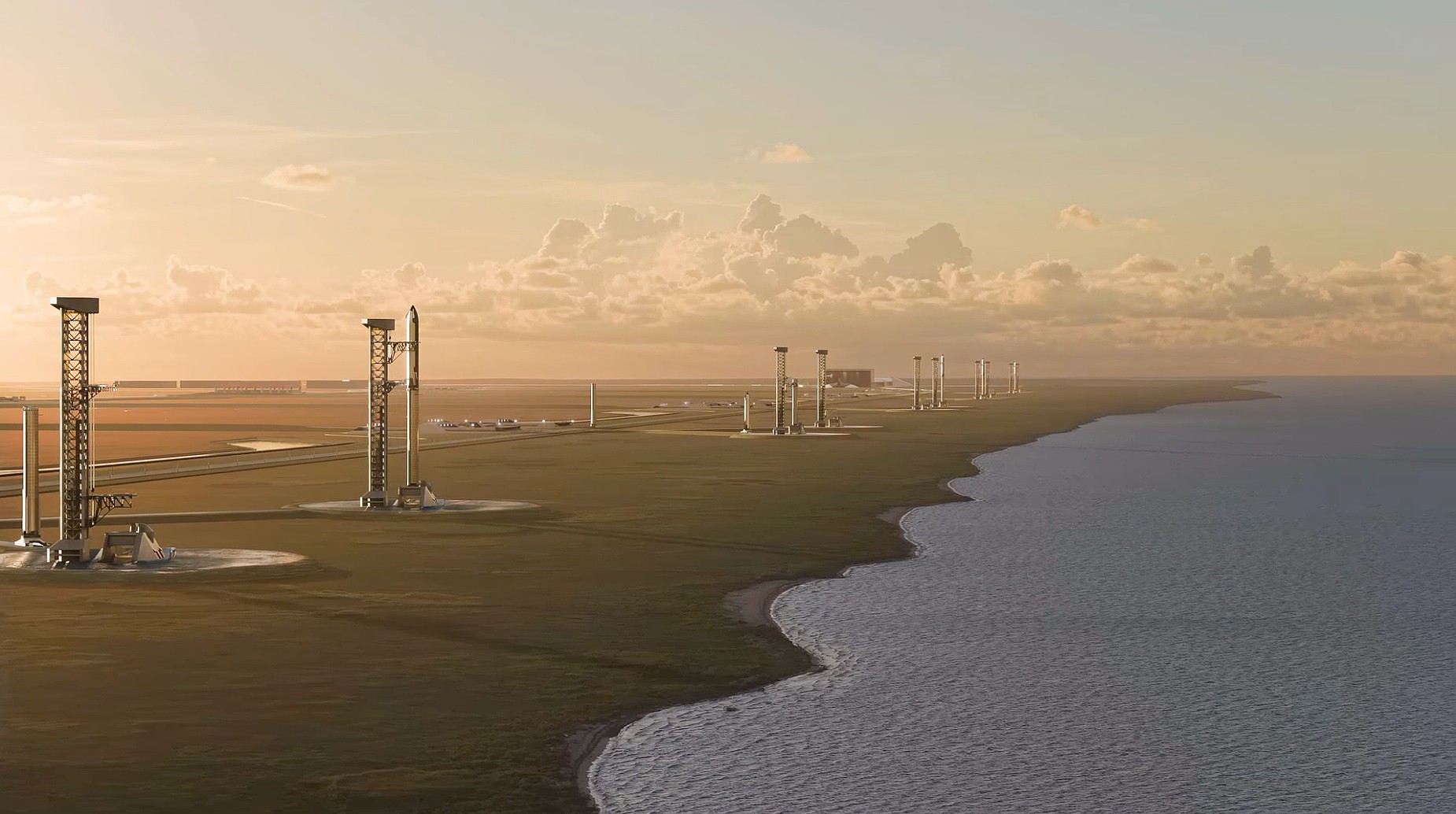
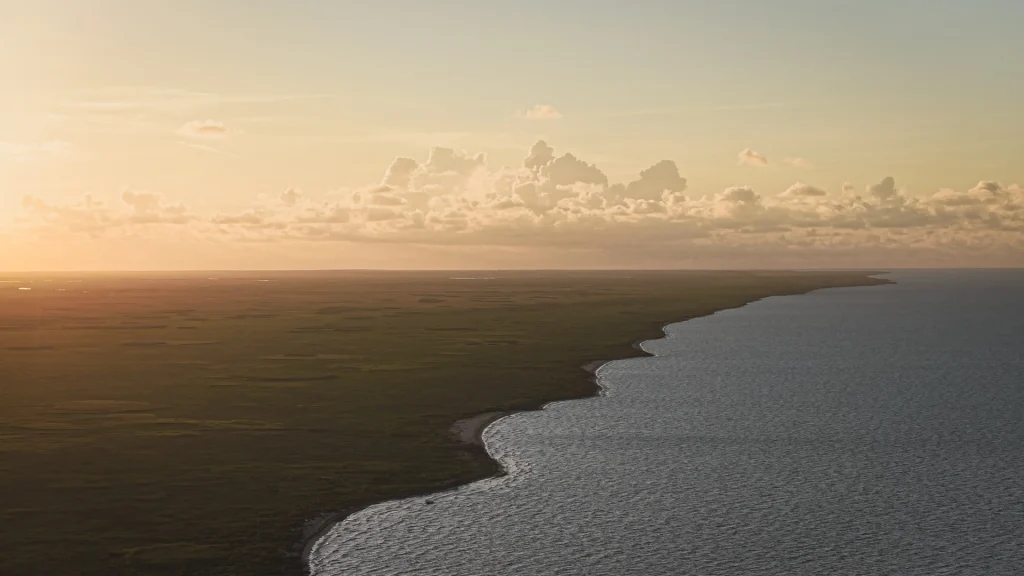
Today, SpaceX, in conjunction with the Louisiana Economic Development Office, said that it will establish a new launch facility, which it will call Starbase, Louisiana. It will be located near Vermilion Parish, supporting thousands of launches each year, at least eventually.
CEO Elon Musk commented by stating, “Starbase Louisiana will ultimately have over a dozen launch towers, enabling more than 30 Starship flights per day and making it the biggest launch site on Earth!”

Starbase Louisiana will ultimately have over a dozen launch towers, enabling more than 30 Starship flights per day and making it the biggest launch site on Earth!
SpaceX makes sci-fi real. https://t.co/C7Ht0U12ba
— Elon Musk (@elonmusk) August 25, 2026
The expansion is SpaceX’s latest move to push its launch cadence to be more frequent than ever. SpaceX said that Starbase, Louisiana, will be built to “support thousands of Starship flights a year,” with the first coming in 2029.
SpaceX announced the new facility in partnership with the Louisiana Economic Development Office as it will bring a major influx of jobs and investments into the area. Currently, it will produce more than 3,000 new jobs in Louisiana, and SpaceX plans to invest at least $100 billion into the entire facility, ensuring that many jobs are created as a result.
Environmental Responsibility
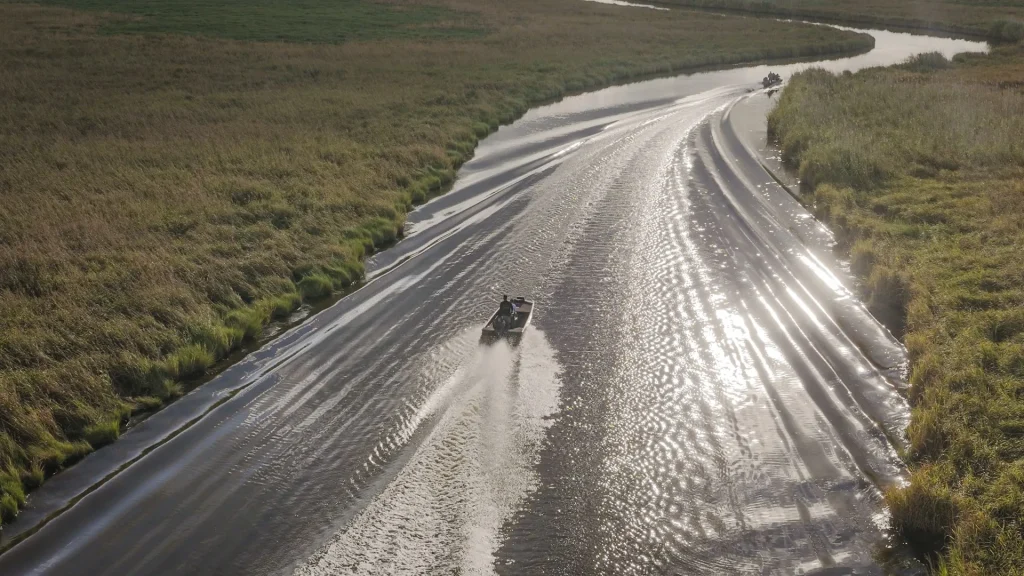
SpaceX acknowledges the impact launches could have on marshlands, local wildlife, and water sources. Here’s how the company plans to help with the issues in Vermilion Parish:
- Restoring the Shoreline: “In Vermilion Parish, the shoreline is eroding between 3.3 and 23 feet per year. We’re partnering with state and federal agencies to expand Louisiana’s Coastal Master Plan and Coastal Wetlands Planning, Protection and Restoration Act projects, including Gulf shoreline protection breakwaters designed to reduce wave energy and slow loss along the Gulf edge.”
- Rebuilding the Marshlands: “In working with the state, we’re planning thousands of acres of marsh creation using beneficial-use placement of dredged material and offshore sediment sources. Restoration will also include interior marsh bank stabilization and rebuilding marsh in remnant canals. These projects can reconnect fragmented wetlands, restore natural buffers against storms, and return habitat that has been lost to erosion and historic canalization.”
- Preserving Coastal Wildlife: “Pecan Island and nearby wetlands are high-value habitat for migratory waterfowl, shorebirds, wading birds, and other coastal wildlife. SpaceX is not developing the full footprint of the land and will preserve wetlands and wildlife habitat. At existing launch sites, waterfowl and other birds continue to use nearby habitat during operations. Working with wildlife agencies, landowners, and conservation groups, SpaceX will support monitoring and management so this habitat stays productive and hunting, fishing, birding, and other recreational activities that are part of this coast’s culture can continue.”
SpaceX shares rose about 2.5 percent on the news.
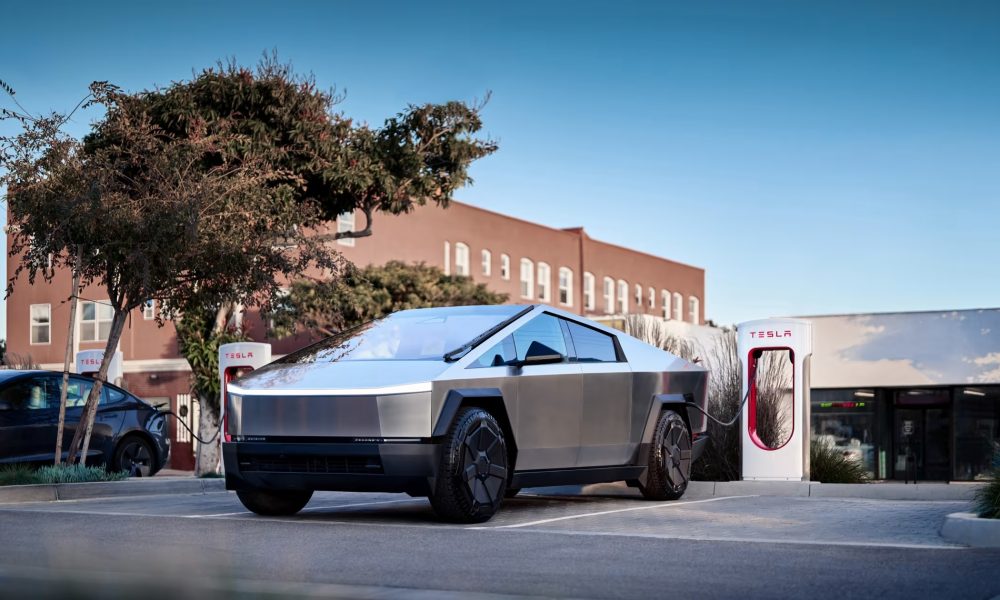
Tesla Cybertruck trims saw a big price change, at least on two of the three available to consumers, as demand for the all-electric pickup appears to be increasing.
Tesla bumped up its Base All-Wheel-Drive trim level up to $74,990 from $69,990 and the Premium All-Wheel-Drive configuration from $79,990 to $84,990. The Cyberbeast price remains unchanged at $99,990.
🚨 Cybertruck prices went up as Tesla bumped them 7%
– Tesla Cybertruck AWD is now $74,990
– Tesla Cybertruck Premium AWD now $84,990
– Tesla Cyberbeast now $99,990 https://t.co/MYJbaw56GL— TESLARATI (@Teslarati) August 25, 2026

Despite questions of demand for the truck, Tesla is bumping its two least expensive trims up $5,000 to signal that there are plenty of buyers. Although SpaceX has been buying Tesla Cybertruck units to utilize as company vehicles, it is no secret that the Cybertruck is among the most sought-after Tesla models out there.
The issue has always been pricing, at least for the most part. When Tesla initially launched the Cybertruck AWD at $59,990 a few months back, the company stated that price would remain intact for just ten days due to the influx of orders it received.
Cybertruck Sales: Is It the Product or Pricing?
Depending on who you ask, you will likely hear one of two explanations for relatively low Cybertruck sales: either the product itself or the pricing.
Yes, this is the best-selling all-electric pickup on the market. However, there are people who simply hate the look of it, which I understand, but do not agree with. Look is totally subjective, and I love the look of the Cybertruck.
Some people will not buy the Cybertruck because of the look, but I am under the impression that sales would be much better if this truck were priced lower; something that might not be possible considering Tesla’s need to make money on its products. When it was unveiled in 2019, its most expensive trim level was $69,990. Now, the cheapest trim level is more expensive than that.
I would be in a Cybertruck if it were more affordable. I LOVE my Model Y, but Cybertruck is the best vehicle Tesla makes, and it’s not particularly close. Even in the base model, the steer-by-wire, the space, storage, and performance make it more desirable than the Model Y to me. I cannot be the only Tesla owner without a Cybertruck who feels this way.
If you’re interested in buying a Tesla vehicle, use my referral link.
Energy
Tesla Semi factory is getting a celebration nobody expected
Tesla will inaugurate its Nevada Semi factory September 24, five months after production quietly began ramping.

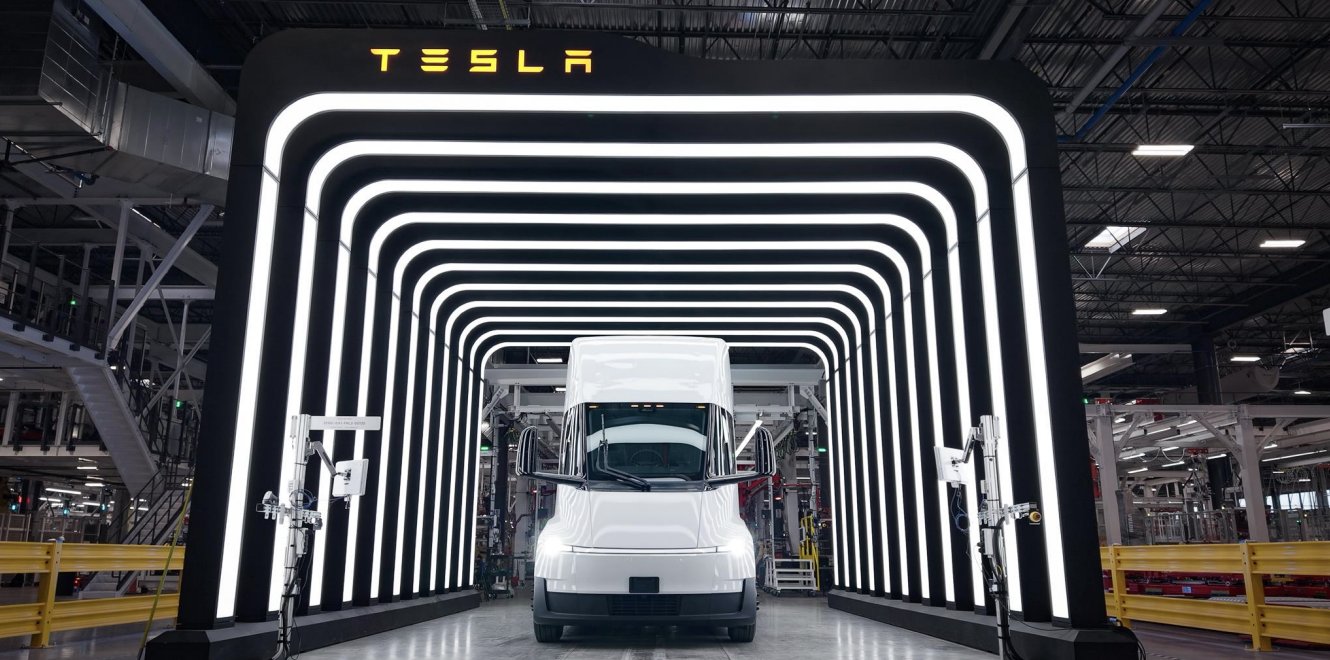
Tesla says it will officially inaugurate its new Semi factory in Nevada next month. The Tesla Semi account posted the announcement on X, sharing a graphic titled “Semi Rollout” with a date of September 24. No further details were given about the format of the event or who would attend.
While Tesla’s dedicated Semi plant in Sparks, adjacent to Gigafactory Nevada, opened back in April, with the first trucks rolling off the high volume line on April 29, the timing for the factory inauguration comes at a surprise. The ribbon cutting event five months into production is a break from how Tesla has usually handled its other factories, where the first truck or car off the line typically served as the milestone moment.
Inauguration of new Semi factory in Nevada next month pic.twitter.com/a8kAlxrOOn
— Tesla Semi (@tesla_semi) August 24, 2026

The 1.7 million square foot factory was built as part of a $3.6 billion expansion Tesla announced in early 2023, and it shares a site with the battery cell lines that feed the Semi’s structural pack, a decision meant to remove the supply bottleneck that delayed the truck for years. The plant is designed for 50,000 trucks a year at full ramp. Semi program director Dan Priestley has said production “is now ramping” rather than claiming it has reached scale.
Nine years passed between the Semi’s 2017 unveiling and this stage of production, with the truck slipping from an original 2019 target through hand built pilot units for PepsiCo and a slow build out of the Nevada plant. An inauguration event now gives Tesla a stage to talk up that ramp and reset expectations for how many trucks it can begin delivering at scale.
The September date also lines up with the Semi’s next milestone. Tesla confirmed the truck is heading to Europe with a full unveiling at the IAA Transportation trade show in Hannover, Germany, running September 15 through 20. Between the Nevada event and the Hannover reveal, Tesla has roughly a week and a half in September to make the case that the Semi is now a truck being built and sold on two continents rather than tested in a handful of fleets.

SpaceX announces new Starbase for ‘thousands of Starship launches annually’

Tesla just made Cybertruck more expensive


