
News
Lucid Motors CEO predicts “significant growth” in 2022, but won’t commit to 20,000 EV target

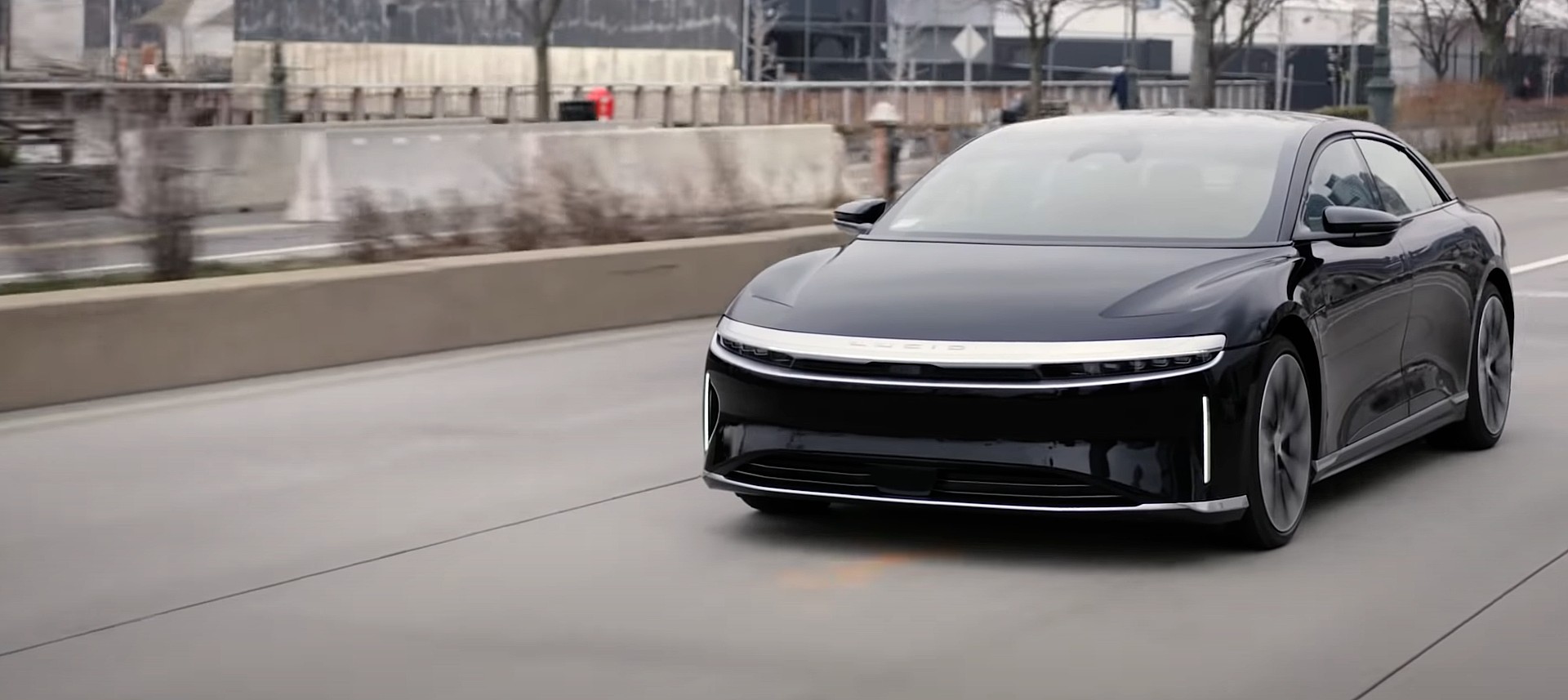
Lucid Motors CEO Peter Rawlinson appeared on CNBC recently and talked about the EV company’s goals for 2021 leading up to next year. Rawlinson shared some details about Lucid Air production and the company’s target for this year.
Rawlinson seemed confident that Lucid Motors would start producing the company’s luxury sedan, the Air, in late 2021.
“Well, we’re on track to put Lucid Air—the car behind me—into production in the second half of this year. And we’re really making great progress here on three fronts,” Rawlinson told CNBC.
“The factory is ready and up and running. The car is getting higher quality, getting closer to start of production on a daily basis. And we’re rolling out our sales and service network. We’ve got six stores open across the country with four more to come in the very near future,” he elaborated.
He reiterated that Lucid Motors was “very much on track” to start production this year and shared that the company aims to produce over 577 vehicles in 2021. When asked if Lucid Motors could make 20,000 electric vehicles in 2022, Rawlinson did not seem to readily commit to the goal. He stated that Lucid Motors plans to see “significant growth” next year.
Production can be a difficult stage for most automakers. Even Tesla faced production issues with its first vehicle, the Roadster, then with volume production of the Model X, and again with the Model 3.
Tesla still continues to experience production hurdles to this day. During the Q1 2021 earnings call, Elon Musk talked about how the global chip shortage affected Tesla’s production plans for the Plaid Model S and Model X. Lucid Motors may be experiencing similar issues.
Lucid Motors is preparing to produce the Air Dream Edition in the second half of 2021. In March, the EV company showed the Air Dream Edition’s production process, revealing how meticulous it is during the building stage. Lucid seems to be working really hard to make an excellent first impression by aiming to deliver a pristinely built vehicle.
Check out Lucid Motors’ SNL commercial below!
The Teslarati team would appreciate hearing from you. If you have any tips, email us at tips@teslarati.com or reach out to me at maria@teslarati.com.


Elon Musk
Tesla’s Roadster appearance at SpaceX has merger watchers talking
Tesla’s next generation Roadster was spotted at SpaceX’s Hawthorne headquarters, two weeks after its unveiling.

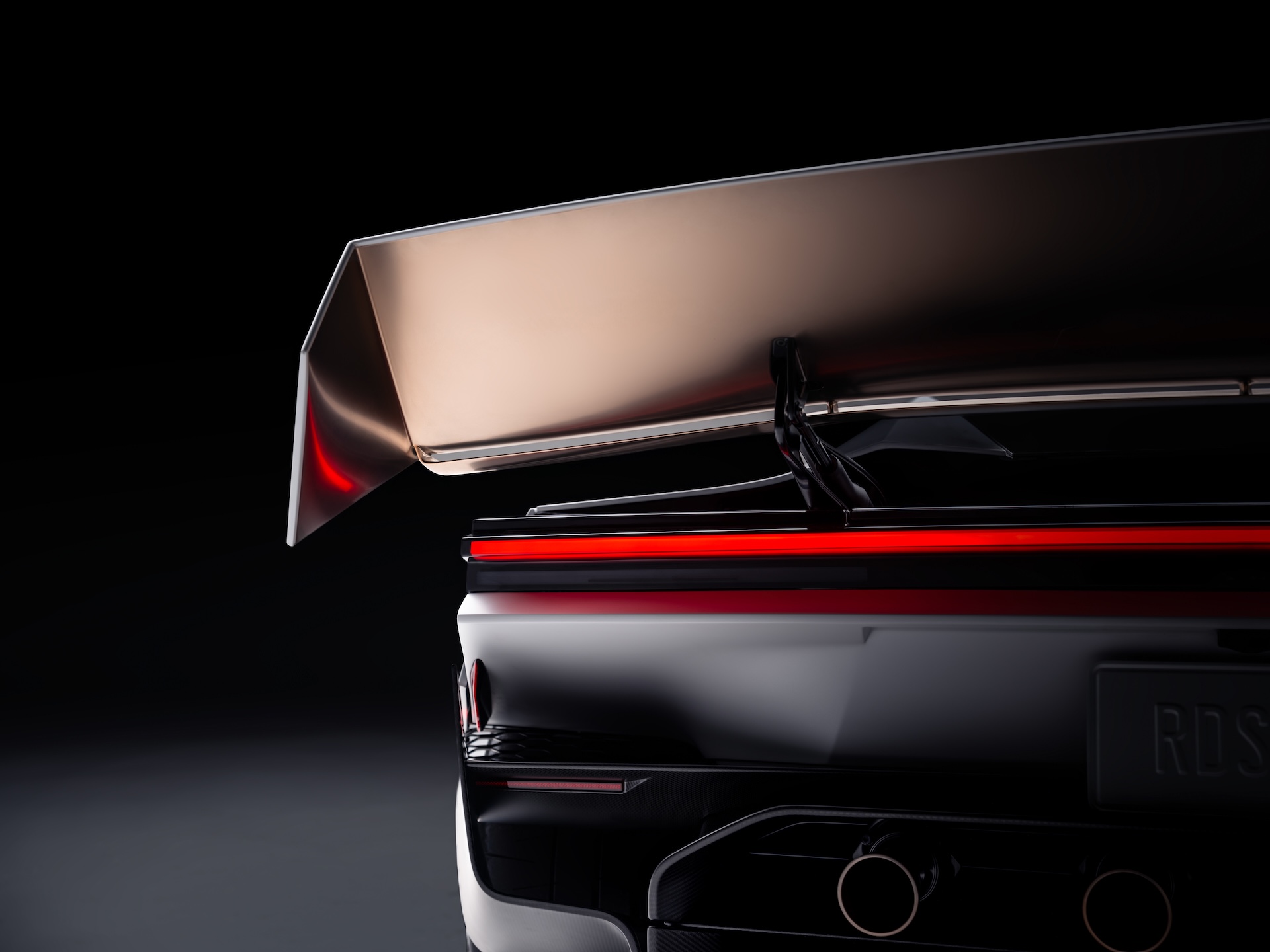
Tesla’s next generation Roadster turned up at SpaceX’s headquarters in Hawthorne, California on Wednesday, less than two weeks after the car flew off a ramp at its unveiling in Texas.
Photos shared on X by SpaceX Engineer (@DeannaRiceSPCX) show the new Roadster parked outdoors beside the famed Falcon 9 that stands outside company headquarters at the corner of Crenshaw Boulevard and Jack Northrop Avenue. Rocket B1019 was the first orbital-class booster ever to land after a launch on December 21, 2015 after it sent 11 Orbcomm satellites to orbit and then flew back to Landing Zone 1 at Cape Canaveral, which would be the first landing in what became SpaceX’s reusable rocket program. SpaceX chose not to fly it again. After a test fire in Florida, the booster was shipped to Hawthorne and raised upright as a permanent monument in August 2016, as Teslarati reported at the time. Putting the Roadster, which flies on SpaceX cold gas thrusters, next to the rocket that started SpaceX’s landings is symbolic in itself.
Small car, big rocket ambitions 🚀🚗 #roadster #falcon9 #spacex #tesla https://t.co/H32xUSXoCl
— Deanna Rice (@DeannaRiceSPCX) October 29, 2026
The Thrust and Rocket versions of the Roadster use cold gas thrusters fed by composite overwrapped pressure vessels, the same type of tank SpaceX flies on Falcon 9, and Elon Musk described the car as the work of Tesla and SpaceX engineers working together. Tesla lists 0 to 60 mph in under 0.9 seconds for Thrust and under 0.59 seconds for Rocket, while the base Performance model relies on a fan and ground sealing system for grip, as Teslarati detailed in its breakdown of the three Roadster configurations.
Tesla has kept the car in the spotlight since the October 15 event near Waco. Last week, the company posted a video of the Roadster’s fighter jet inspired cockpit, including a Track Mode screen with a “Thruster · 5,500 PSI” readout, which we covered in our look at the Roadster’s center display. Musk also said owners will be able to ask the car to perform the stunts autonomously, and promised a looping track at Tesla’s Texas headquarters.
The visit comes as special committees at Tesla and SpaceX weigh a possible merger, a step Musk confirmed on SpaceX’s third quarter earnings call. The Roadster, built on SpaceX hardware, has become one of the clearest examples of the two companies already building products together.
Musk said at the unveiling that Roadster production will begin in 2028. Reservations are open with a $50,000 payment, Thrust is listed as a limited release and Rocket is invite only. Tesla says the car is not approved for public road use.
News
Verizon, AT&T and T-Mobile are trying to shut Starlink out before FCC vote
AT&T, Verizon and T-Mobile want 290 MHz cut from an FCC satellite plan before Thursday.
AT&T, Verizon and T-Mobile are asking the Federal Communications Commission to pull nearly 300 MHz of spectrum out of a proposal that would let satellite companies like SpaceX offer cell service directly to ordinary phones. The request lands one day before the agency votes on it.
The FCC will vote Thursday, October 29, on a notice of proposed rulemaking that would make an additional 482 MHz available for direct to device service, expanding the number of eligible bands from five to 13, according to the FCC fact sheet. It would also scrap the rule requiring a satellite operator to lease spectrum from carriers, replacing it with a certification that the operator has coexistence agreements in place or holds the terrestrial license itself.
That second path matters for SpaceX. As Teslarati reported earlier this month, SpaceX agreed to buy Grain Management’s nationwide 800 MHz portfolio to turn Starlink Mobile into a full US carrier, adding to the spectrum it already bought from EchoStar.
The carriers want two bands removed, 2.5 GHz and 3.45 GHz, which make up 290 MHz of the 482 MHz on the table. Through industry group CTIA, they argued that about 300 million users depend on those bands and that satellite operations in them are not technically feasible. T-Mobile, which calls 2.5 GHz the foundation of its Ultra Capacity 5G network, said in its own filing that satellite interference could wipe out up to 96% of a cell site’s uplink coverage area and cut uplink speeds by 88% to 99%.
Executives from all three carriers met with FCC staff on October 20, and T-Mobile CEO Srini Gopalan met separately with FCC Chairman Brendan Carr. T-Mobile’s role stands out because it is still SpaceX’s US launch partner for Starlink Mobile. The three carriers have also teamed up on their own satellite joint venture to pool spectrum, a move widely seen as a response to Starlink.
SpaceX is asking for the opposite. In an October 23 filing after meetings with FCC staff and commissioners’ offices, the company asked regulators to add the 902 to 928 MHz band to the proposal. “Doing so now saves time later,” SpaceX wrote. The company also asked the FCC to modernize interference rules and align satellite deployment requirements with those for terrestrial cell networks, saying the goal is to let satellite and ground networks work together so Americans stay connected wherever they are.
The carriers have not been shy about how they view SpaceX as a competitor. On Verizon’s third quarter earnings call Monday, its chief executive said Starlink Mobile “just can’t compete with a terrestrial network” and estimated SpaceX would need four to six years and $300 billion to $500 billion to build a full US carrier network.
Thursday’s vote will not settle which bands survive. Adopting the notice opens a public comment period, with final rules to come later in the proceeding. The FCC already considered and rejected 2.5 GHz for satellite coverage once, in 2024. SpaceX also is not the only satellite player watching: the FCC approved Amazon’s $11.6 billion acquisition of Globalstar on October 27, giving its planned direct to device fleet its own mobile satellite spectrum.

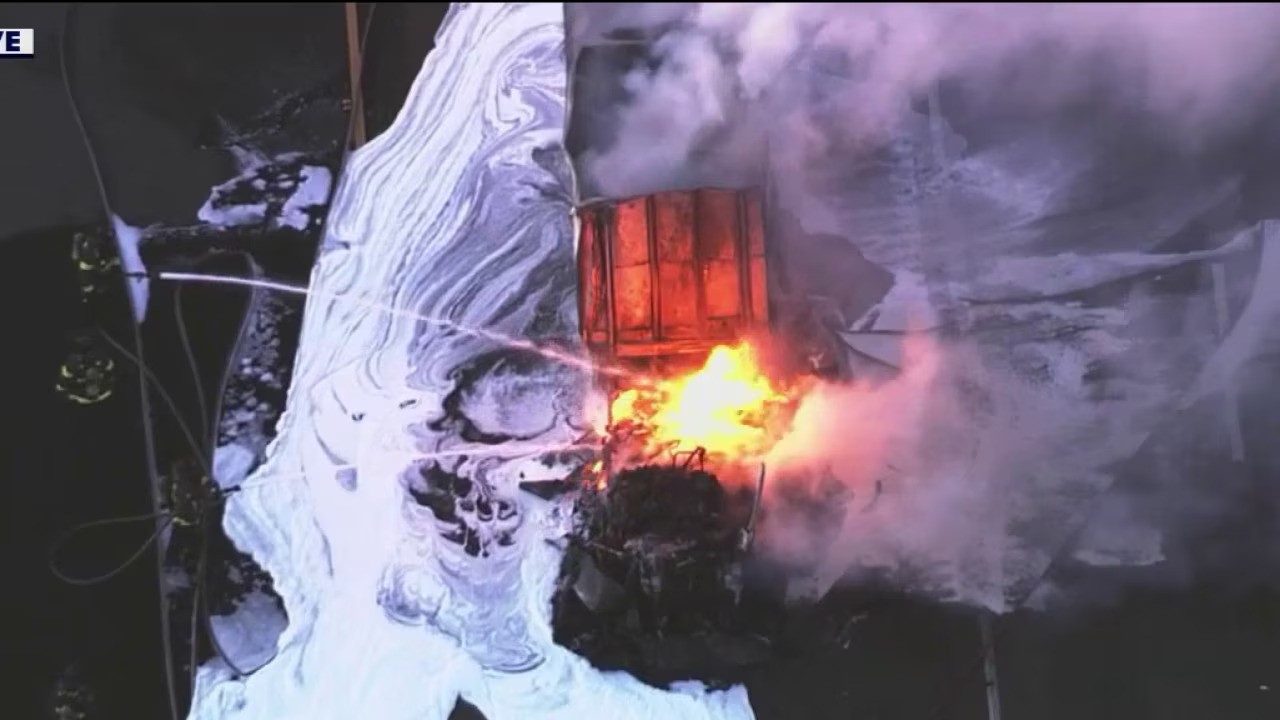
A Tesla Semi caught fire in Hayward, California, which caused both directions of traffic to shut down for hours before being completely reopened early on Wednesday, the California Highway Patrol said.
The fire occurred just after 5:30 local time in Hayward on Tuesday, as the Semi caught fire in the southbound lanes of I-880 before CHP officials made the decision to shut down both lanes of traffic due to potential risks from hazardous chemical smoke.
There were no injuries reported.
🚨 A Tesla Semi reportedly caught fire, with California Highway Patrol confirming. The Semi was on I-880 SB
An estimated 5,000 to 7,000 semi-truck and large commercial vehicle fires occur on U.S. roadways every year
— TESLARATI (@Teslarati) October 28, 2026
The cause of the fire is currently unknown, as neither Tesla nor the CHP have not determined a cause.
However, some images taken before the Semi was completely destroyed by the fire seem to indicate this might have been an older unit, as it appears to be one of the designs that Tesla shipped as part of its pilot program, before revising it and starting mass production just a month ago.
@Tslachan From on of the videos looks like it’s an old Semi (not the refresh version that recently started production) https://t.co/KzwmR2kXow
— Area Under The Curve 🎗️ (@AreaUnderCurve) October 28, 2026
At the time of publication, CHP had not returned our request for a comment for additional details, including the Semi involved and any potential collaboration on an investigation between the CHP and Tesla. We will update this story when we hear back from them.
The southbound lanes were reopened at 3:30 a.m. on Wednesday, with the northbound lanes opening last night a few hours after the fire began. The CHP did state that the lithium batteries were “incredibly difficult to extinguish,” according to NBC Bay Area.
The truck’s driver said that the Semi caught fire, but he did not have an explanation.
An estimated 5,000 to 7,000 semi-truck and large commercial vehicle fires occur on U.S. roadways every year.

Tesla’s Roadster appearance at SpaceX has merger watchers talking

Verizon, AT&T and T-Mobile are trying to shut Starlink out before FCC vote


