News
Tesla FSD visualizations poised for rollout on non-FSD Beta cars next month

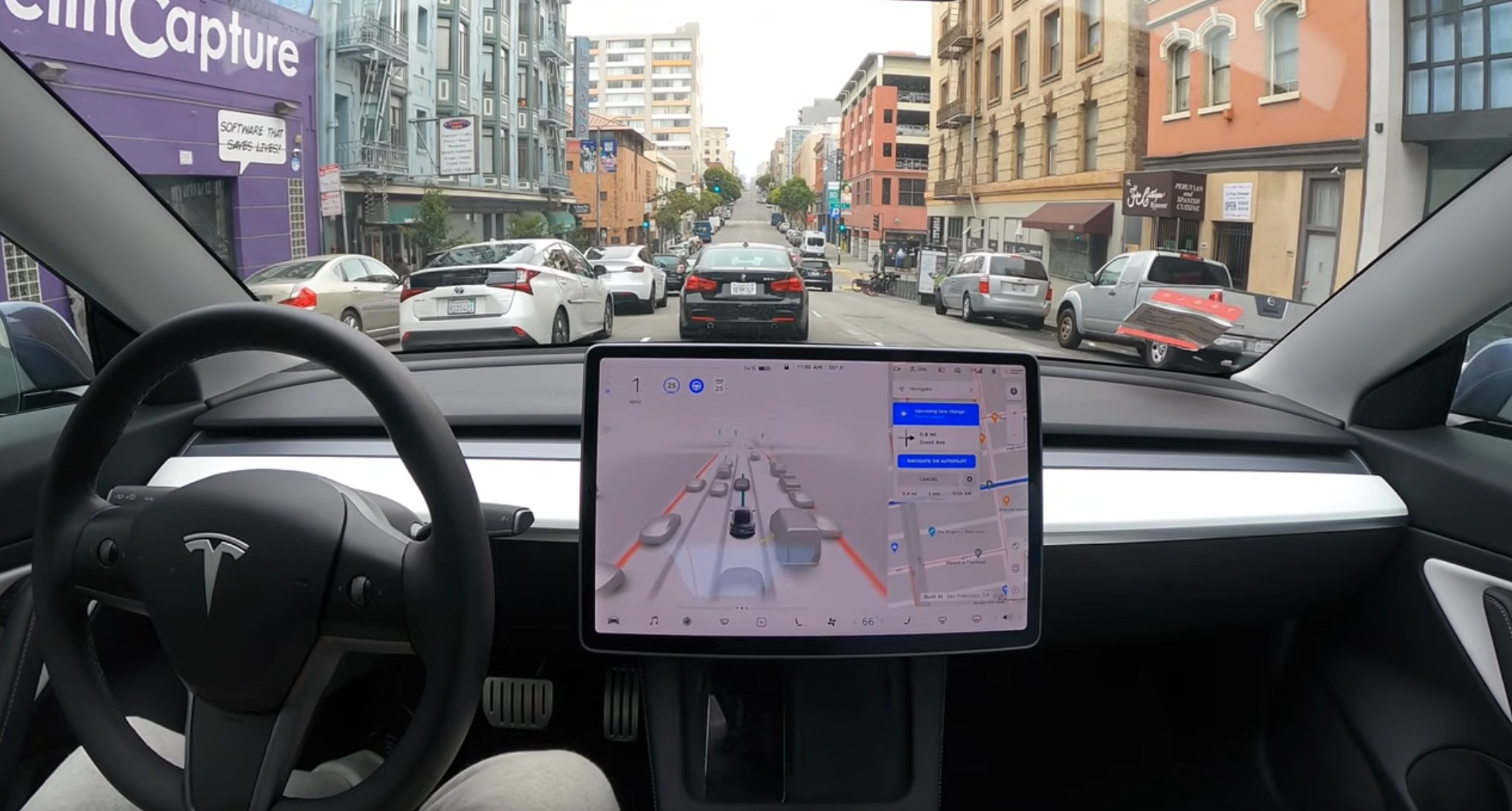
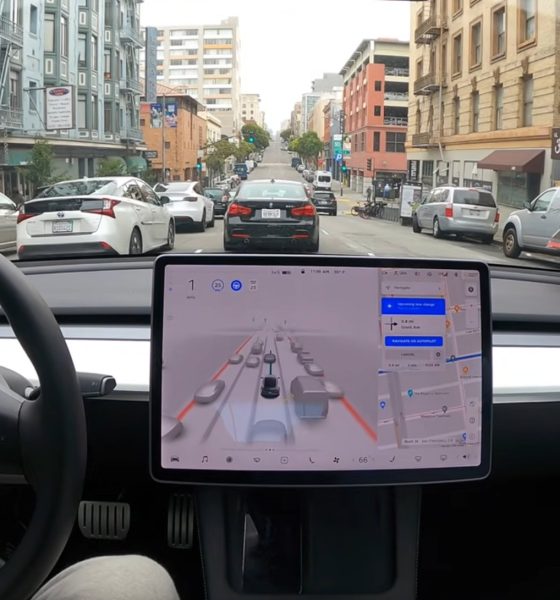
Tesla Full Self Driving visualizations are coming to non-FSD vehicles soon, as per recent comments by CEO Elon Musk on Twitter. According to the CEO, the option to activate FSD visualizations may be rolled out to drivers in areas such as Europe around next month.
Musk’s comments came as a response to a question from Tesla owner @ElectricRaph, who inquired if the noted Full Self Driving graphics enjoyed by the company’s FSD Beta testers would also be made available to non-testers in other territories. Musk was quite welcoming of the idea, stating that such an option would likely be rolled out in the near future.
“Good point, we could enable visualization before control. Will enable that option hopefully next month,” Musk said.
The CEO’s recent statements make quite a lot of sense, especially considering that Tesla is likely looking to increase the rate of FSD adoption among its customers. Showing drivers how their cars are seeing the road ahead would likely help encourage more owners to at least try out FSD, even for just a few months through a monthly subscription.
Tesla’s most advanced FSD visualizations have so far been limited to members of the company’s exclusive group of ~2,000 testers. And since the start of the FSD Beta program last October, Tesla has rolled out some improvements to its testers’ Full Self-Driving visualizations.
With the release of FSD Beta 9, for example, Tesla introduced a “mind of car” view that showed images being detected by a car’s suite of cameras. This view was a lot more refined than the raw visuals adopted in FSD Beta vehicles prior to the V9 update. Interestingly enough, Musk mentioned then that the updated UI and visuals should be rolled out to more vehicles as FSD sees a wider release.
Don’t hesitate to contact us with account tips. Just send a message to tips@teslarati.com to give us a heads up.


News
Why SpaceX is finishing another space-internet system that isn’t Starlink
SpaceX launched three final O3b mPower satellites Sunday, finishing a lesser known SES satellite network.

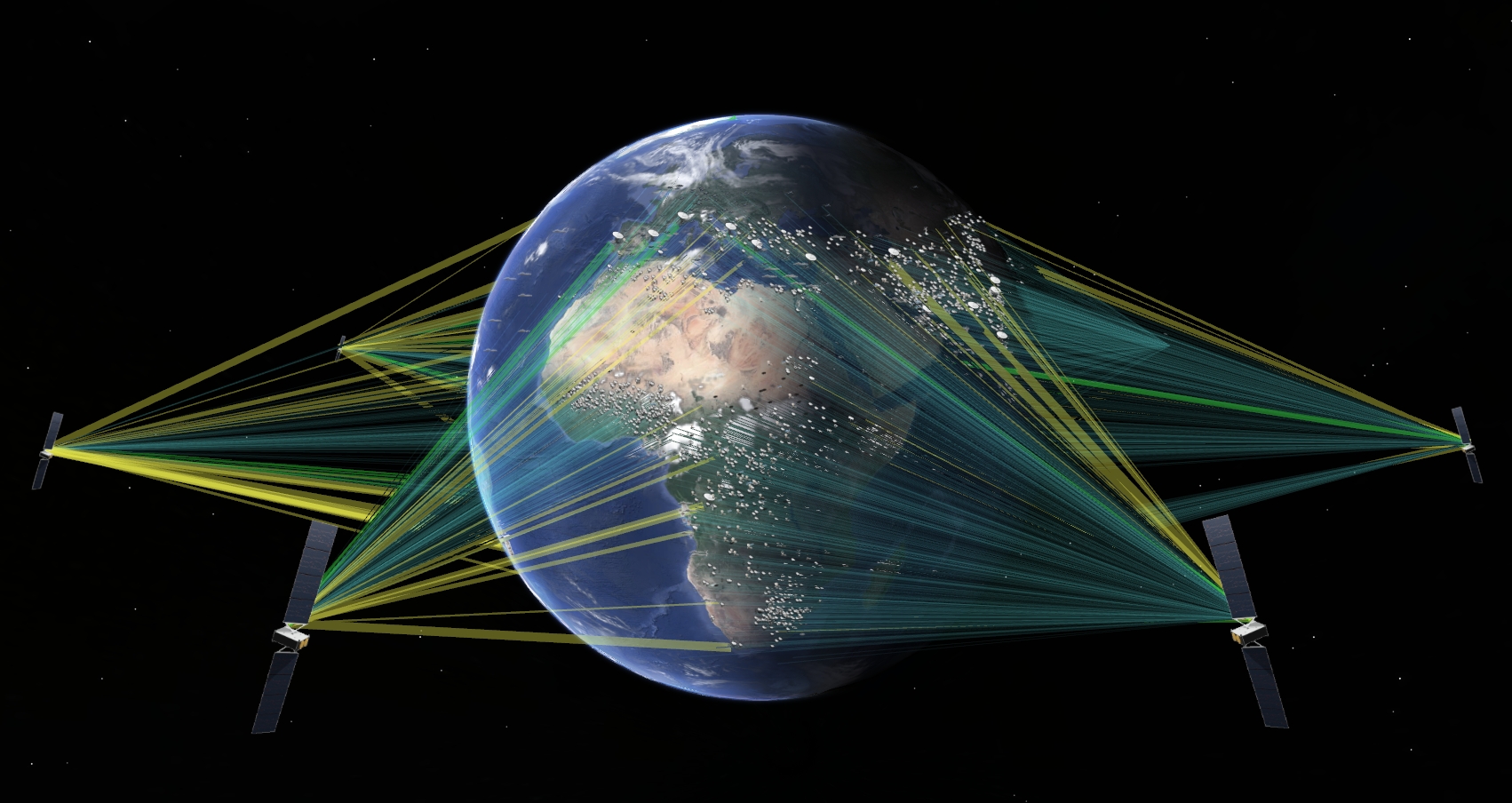
SpaceX had an 87 minute window opening at 2:49 p.m. Eastern on Sunday to fly a Falcon 9 out of Cape Canaveral carrying the final three satellites for SES’s O3b mPower constellation, a project that has taken more than a decade to finish since Boeing and SES first signed SpaceX on for the work.
Unlike the thousands of Starlink satellites SpaceX has stacked into orbit over the years, O3b mPower flies in a different neighborhood entirely. The three new satellites, tagged F11, F12 and F13, are headed for medium Earth orbit at roughly 5,000 miles up, more than ten times higher than Starlink’s shell around 340 miles but still a small fraction of the 22,000 miles where old school geostationary satellites sit. That middle position is the whole point, because a satellite that far out needs far fewer siblings to blanket the globe than a low orbit constellation does. Essentially, SES only needed 13 satellites total to build a network offering quick, steady service that used to require thousands of spacecraft.
With most people having heard plenty about Starlink and almost nothing about O3b mPower, SES and SpaceX already blend the two networks for some customers. Both SpaceX and SES sell satellite broadband, but they’re aimed at different buyers. Starlink is built for volume, direct to consumers, RVs, homes, small businesses, plus a growing aviation and maritime business. O3b mPower skips consumers entirely and sells enterprise grade connectivity to airlines, cruise lines, offshore energy operators, telecoms needing backhaul, and governments, priced and provisioned more like a dedicated circuit.
A 2023 partnership lets cruise ships combine Starlink’s speed with O3b mPower’s steady capacity depending on what a ship needs at a given moment. Sunday’s completed 13 satellite constellation effectively finishes the medium orbit half of that pairing, years after.
Sunday’s mission was already a something on SpaceX’s manifest well before O3b mPower entered the picture. This flight marked its 29th trip to orbit, a history that includes two crewed Axiom missions, the European Space Agency’s Euclid telescope and 22 separate Starlink batches. SpaceX has landed boosters on the droneship A Shortfall of Gravitas so often that Sunday’s touchdown attempt, if it went as planned, was set to be the 661st successful Falcon booster landing to date.
For a company that pushed the Starlink constellation past 11,000 satellites back in August, almost entirely through bulk launches from California, Sunday’s flight was a reminder that SpaceX’s schedule still has room for someone else’s satellites too. SES gets a finished network built for a narrower set of customers, and Falcon 9 gets one more line on an already long resume.
Elon Musk
Tesla gives the Roadster an official “Go for launch” demonstration date
Tesla teased an October 1 Roadster reveal, reviving years of delayed SpaceX thruster hover promises.
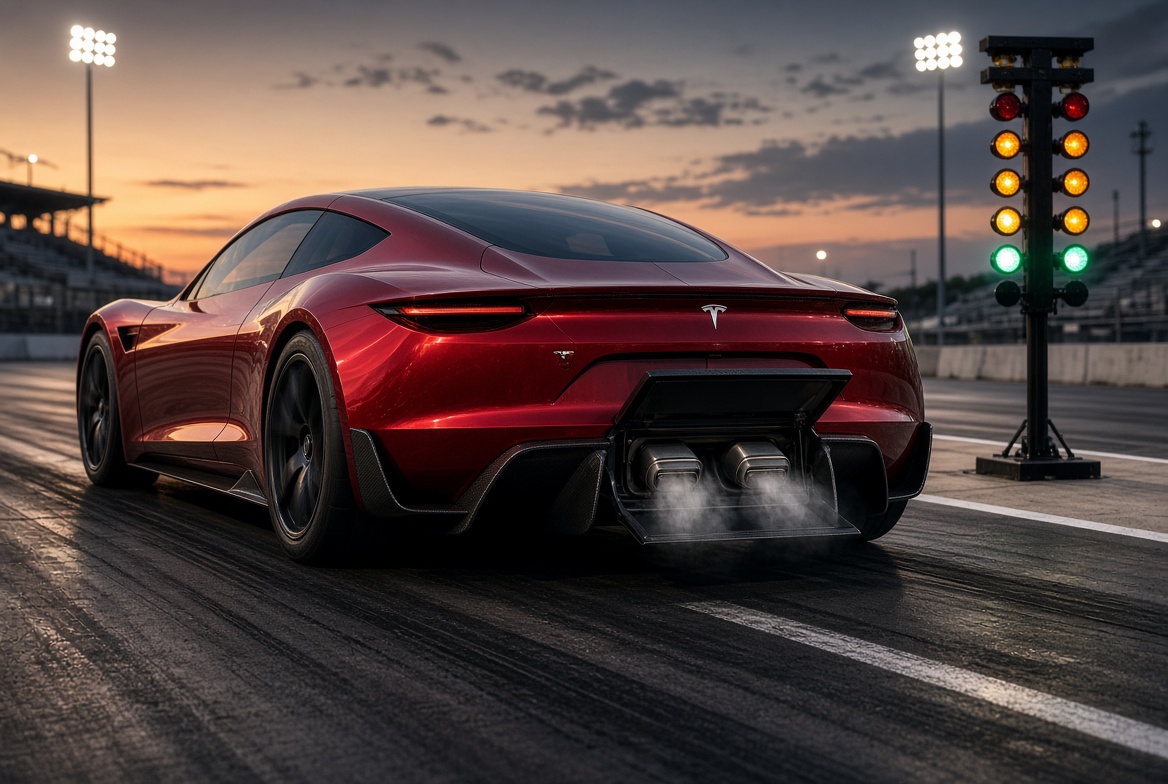
Tesla teased an October 1 event date for its next generation Roadster, posting an image on X Saturday that shows the car lit up like it is sitting on a launch pad, with the date “10.01” stamped across the bottom and the caption “Go for launch.” A countdown clock on Tesla’s Roadster order page now points to the same date, which falls on a Thursday. The company has not said where the event will happen or whether it will be streamed at the moment. Stay with us @Teslarati for live updates.
Go for launch pic.twitter.com/Khu03eiZ04
— Tesla (@Tesla) September 12, 2026
Tesla has since sent formal invitations to reservation holders confirming the event will take place in Waco, Texas, about 90 minutes north of its Austin headquarters, based on a digital ticket shared on X by Sawyer Merritt. Tesla did not name the exact venue, though Waco sits close to SpaceX’s McGregor, Texas, rocket test site, previously reported as the planned location for a Roadster thruster demonstration. The invite sets the reveal for 8:30 p.m. Eastern on October 1, requires RSVPs by midnight on September 16, and limits entry to guests 21 and older. Invitations are non-transferable.
The tease follows nine years of a project defined by unimaginable specs along with slipped dates. Musk first showed the second generation Roadster in November 2017 as a surprise reveal at the end of the Tesla Semi event, promising a 0 to 60 mph time under two seconds, a top speed above 250 mph, 620 miles of range from a 200 kWh battery, and production starting in 2020. At last November’s shareholder meeting, Musk set an April 1 demo date and joked the choice gave him “deniability” if it slipped again, which it did, moving first to late April, then to “a month or so,” then to August.
Tesla Roadster SpaceX Package’s 1.1-second 0-60 mph launch visualized in concept video
Whatever Tesla shows on October 1 is expected to center on the SpaceX developed thruster package Musk has described since 2018. Internally code named A71, a nod to the Lockheed SR-71 Blackbird, the system reportedly uses cold gas thrusters fed by a composite overwrapped pressure vessel, the same tank design SpaceX uses on Falcon 9. Musk has said a thruster equipped Roadster could hit 60 mph in about 1.1 seconds under roughly 2.75 g of launch force, well past the 1.9 second figure quoted for the standard car. That version reportedly will not be street legal and has reportedly been discussed as a limited run sold through a track only program.
The standard Roadster is still expected to carry the original $200,000 base price and $250,000 Founders Series tier, both set when Tesla opened $50,000 and $250,000 reservations in 2017. Tesla VP of Vehicle Engineering Lars Moravy has confirmed production will happen at Gigafactory Texas, with Musk targeting 2027 or 2028, 12 to 18 months after whatever the company demonstrates next month.

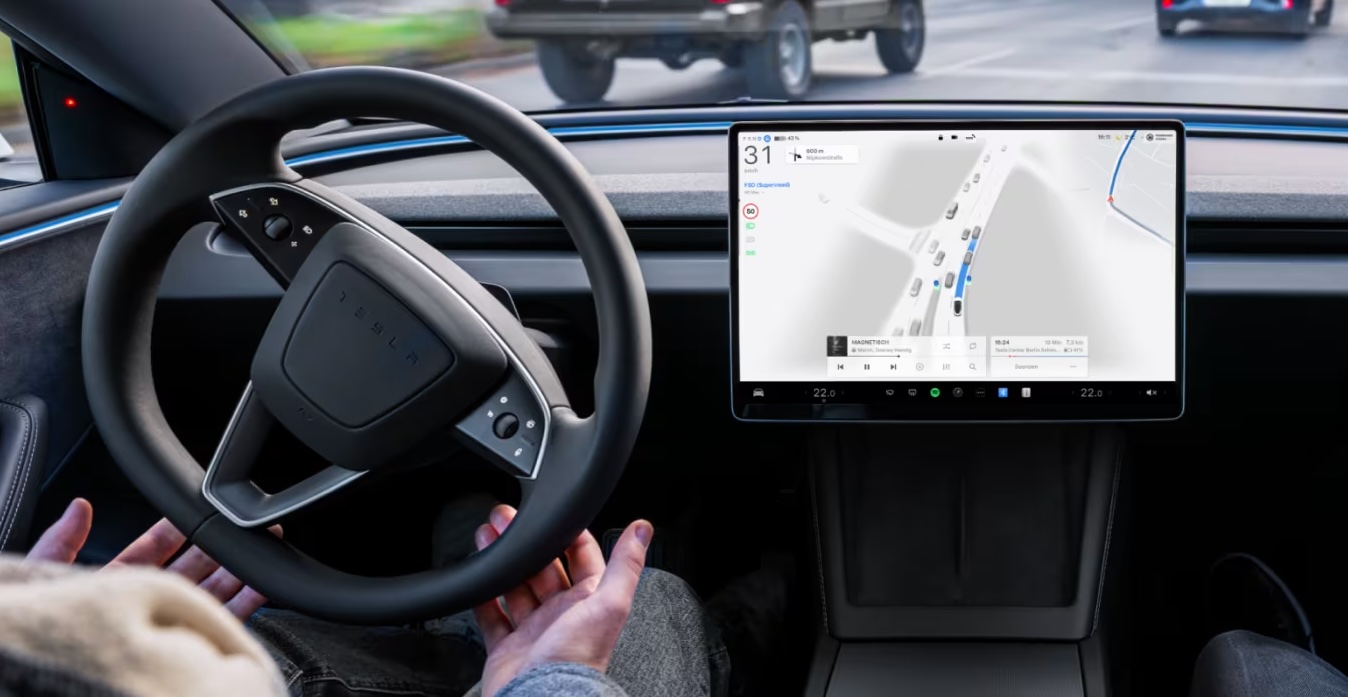
Tesla is planning to roll out some pretty significant safety and accident avoidance features with Full Self-Driving version 15, which will be the next major FSD deployment from the company.
Tesla AI lead Ashok Elluswamy used a near-miss this week to preview what the company says is the next leap in Full Self-Driving.
In response to a driver whose car had swerved away from another vehicle pulling out of a parking lot, Elluswamy wrote that he was glad the owner was safe and that “even earlier prediction of hazards, even faster reaction time and overall significantly better safety and collision avoidance” would arrive with FSD v15.
Glad you are safe. Even earlier prediction of hazards, even faster reaction time and overall significantly better safety and collision avoidance coming as part of the next big upgrade (v15).
— Ashok Elluswamy (@aelluswamy) September 11, 2026
The comment landed as Tesla continues to treat software as the primary safety upgrade path. v15 is described internally as a larger architectural step, with a much bigger neural network and tighter coupling between prediction and control.
The company has already begun using early v15 software in some robotaxi operations while rolling out safety features such as Automatic Collision Evasion into current customer cars, allowing the driving stack to intervene even when the driver is in manual control.
Tesla is rolling out a new FSD version with a massive safety addition
Tesla’s published telemetry is the backbone of its safety argument. In recent North American Vehicle Safety Report data, vehicles with FSD (Supervised) engaged traveled roughly 5.1 million to 5.7 million miles between major collisions, defined as airbag-deployment events.
Tesla’s estimate of the U.S. average over the same period is about 699,000 miles per comparable crash. That is the comparison Tesla often frames as roughly seven times fewer major collisions.
A tighter comparison uses the same Tesla fleet. Cars driven manually with active safety features such as automatic emergency braking still recorded a major collision about every 2.1 million miles. Against that baseline, FSD’s advantage shrinks to roughly 2.4 to 2.7 times fewer severe crashes, which independent researchers argue is the more apples-to-apples figure.
European data released in 2026 pointed in the same direction: Tesla reported FSD as 3.5 times safer than manual driving in the Netherlands and 4.1 times fewer collisions than manually driven Teslas with active safety across more than 100 million kilometers in five approved countries.
Those numbers do not settle every debate. NHTSA’s Standing General Order still shows Tesla accounting for the large majority of U.S. Level 2 driver-assist crash reports, in part because the fleet logs far more assisted miles than rivals. Critics also note that Tesla’s “U.S. average” mixes crash definitions and driving mix.
Even so, Tesla’s own same-car comparisons, plus lower rates of automatic emergency braking and harsh maneuvers when FSD is engaged, are the evidence Elluswamy is pointing to when he says v15 will push prediction and collision avoidance further. The claim is not that software already eliminates risk. It is that each major version is meant to widen the gap between the system and an unaided human driver.

Why SpaceX is finishing another space-internet system that isn’t Starlink

Tesla gives the Roadster an official “Go for launch” demonstration date


