
The UK’s fuel crisis is encouraging car owners to make the switch from fossil fuel cars to electric vehicles. Even though UK Prime Minister Boris Johnson says the fuel shortage is starting to ease, the interest in EVs has already seeped into the minds of drivers.
Car dealers have been seeing interest in EVs soar as the UK fuel crisis continues. Auto Trader Group Plc told Bloomberg that it received direct inquiries for electric cars every 1.8 minutes over the weekend, about twice the average compared to August. EV interest increased 36% last week already, before the weekend.
Martin Miller, who owns a car dealership in Guildford, Surrey, recently saw a similar spike in EV interest. Miller noted that his company’s EV experts experienced their busiest day ever last Friday, and the interest in electric vehicles doesn’t seem to be dying down. Many people have scheduled test drives in an electric vehicle in the coming week, creating somewhat of a good dilemma for Miller’s company since it is low on stock.
“People buy electric cars for environmental reasons, for cost-saving reasons, and because the technology’s great,” Miller told The Guardian. “But Friday was one of those moments where people said, ‘Do you know what, this is a sign that we need to go electric.’ I’ve now got trade-in cars with no petrol to move them.”
UK Fuel Crisis Background
British officials stated that the ports and refineries have plenty of fuel. It’s the gas stations that don’t have enough to service drivers. There is a lack of truck drivers to deliver fuel to stations, causing the UK fuel crisis. Prime Minister Johnson already put British army troops “on standby” to work as truck drivers to haul the fuel to gas stations.
However, the fuel shortage in the UK may have already shown drivers that the need to transition to electric vehicles is now. Besides the current fuel crisis, a few low emission zones have started popping up in the UK. Councils across Briton have restricted certain vehicles or charged specific cars entering low emission zones. There are low emission zones in London, Glasgow, Bath, and Birmingham, with more cities planning to add similar areas in the future.
The fuel crisis and designated low emission zones are encouraging Britons to start transitioning to electric vehicles.
The Tesla Advantage
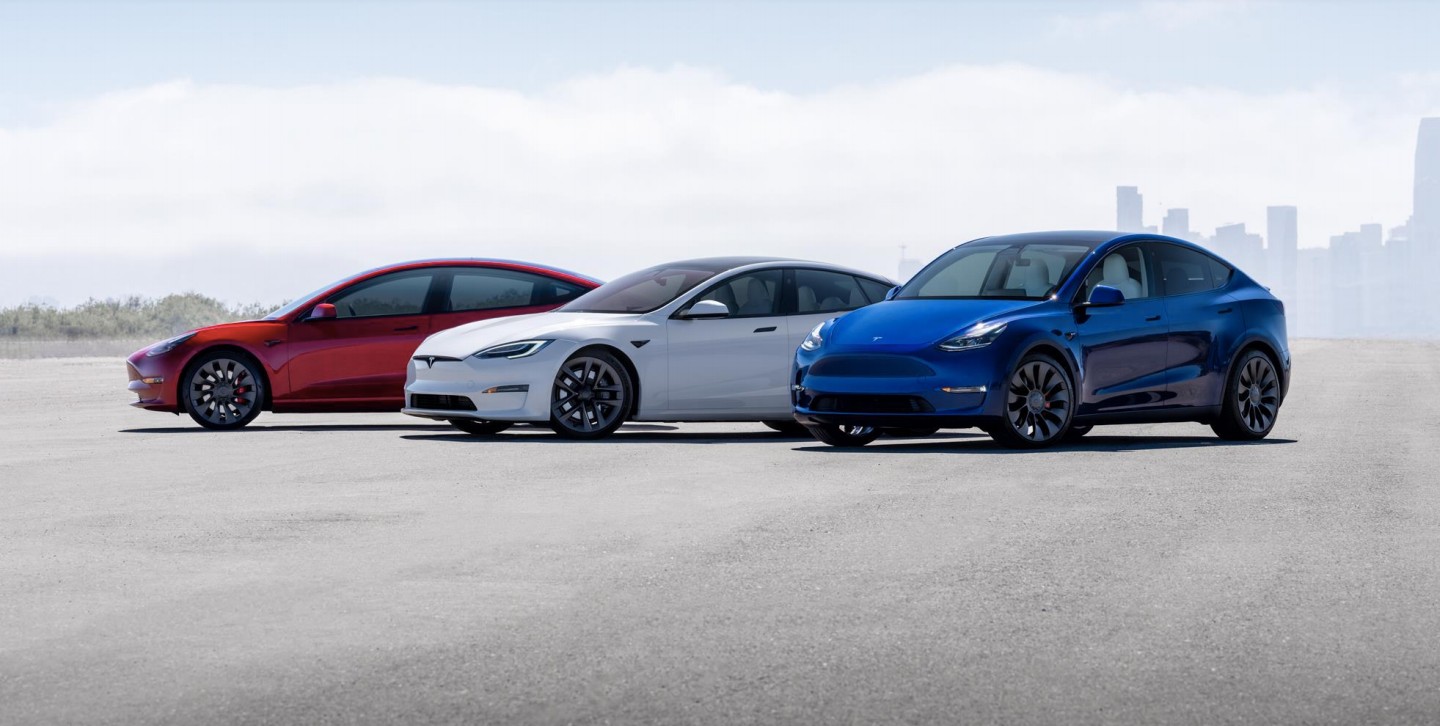
While the UK fuel crisis is nothing to celebrate, Tesla is in an excellent position to benefit from the soaring interest in EVs. The Tesla Model 3 became the most popular all-electric vehicle in the UK in June 2021. The Tesla Model Y just started selling in Europe and has proven popular in other EU countries.
Then there is the Tesla Semi. Tesla has not provided any updates about its Class-8 heavy-duty truck as of late. However, the Tesla Semi may help solve the UK’s truck driver shortage when released into the market. The Tesla Semi has a unique feature called Convoy Mode that allows one driver to control a fleet of trucks, which could effectively increase the load a single driver can transport.
The Teslarati team would appreciate hearing from you. If you have any tips, reach out to me at maria@teslarati.com or via Twitter @Writer_01001101.



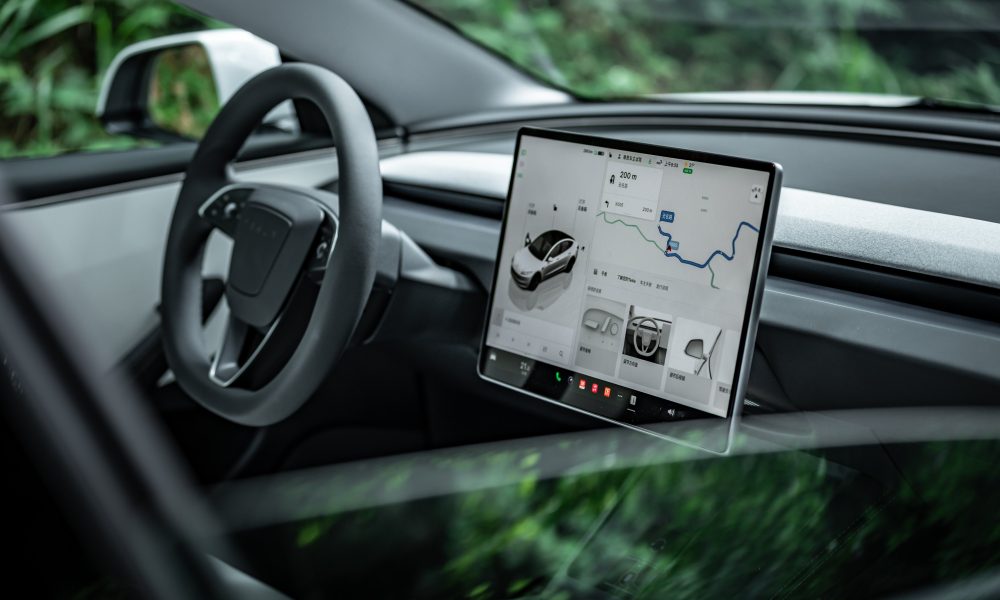
Tesla Full Self-Driving, which is now referred to in Europe as “Tesla Assisted Driving” (TAD), is getting hit with a handful of new changes at the hands of the Netherlands’ vehicle authority, the RDW (Rijksdienst voor het Wegverkeer).
On 3 November, the RDW announced that it has assessed and approved a set of changes to Tesla’s FSD Supervised driver-assistance system. The updates introduce the official European name TAD and impose stricter controls on the system’s speed behaviour.
The new name will appear on the in-car display, in the owner’s manual, and in all other driver-facing information. The change applies to Tesla models equipped with Tesla Assisted Driving and hardware version 4.0 (HW4) or later.
Importantly, the RDW stressed that the name change does not alter the system’s fundamental operation: it remains a supervised driver-assistance feature that supports the driver in performing driving tasks. The driver stays fully responsible for controlling the vehicle at all times.
Beyond the rebranding, the most significant functional adjustments concern speed settings. Drivers will still be able to set a speed margin, a percentage by which the system may exceed the applicable speed limit when necessary for safety or traffic flow. However, the maximum allowable margin has been reduced from +50% to a maximum of +10%.
In addition, every time the vehicle is started, the speed-margin setting will default to 0% deviation, and other speed-related functions will be disabled by default. These changes will be delivered through an over-the-air (OTA) software update from Tesla.
Tesla requested the RDW’s review of these “minor changes.” After evaluating how the modifications were implemented and how the system behaves, the authority found no adverse or unintended effects on the system’s operation or the vehicle’s driving behaviour. Consequently, the existing type approval remains valid under the same conditions and for the same use; no amendment or extension of the approval is required.
The RDW has informed the nine EU member states that have already accepted its type approval—Belgium, Denmark, Estonia, Croatia, Latvia, Lithuania, Slovenia, Slovakia and Czechia—about the updates. Broader EU-wide approval is still under discussion within the European Technical Committee on Motor Vehicles (TCMV). Those proceedings remain confidential, and the RDW has declined to comment on them.
The approved changes align with earlier discussions involving German authorities, which had advocated both for clearer naming to avoid misleading drivers and for a tighter speed offset.
By formally incorporating these adjustments while leaving the core type approval intact, the RDW has cleared the way for Tesla to roll out the updated TAD software via OTA to eligible vehicles in the Netherlands and the other countries that recognise the Dutch approval. The system continues to function strictly as supervised driver assistance, with the human driver remaining the responsible party.
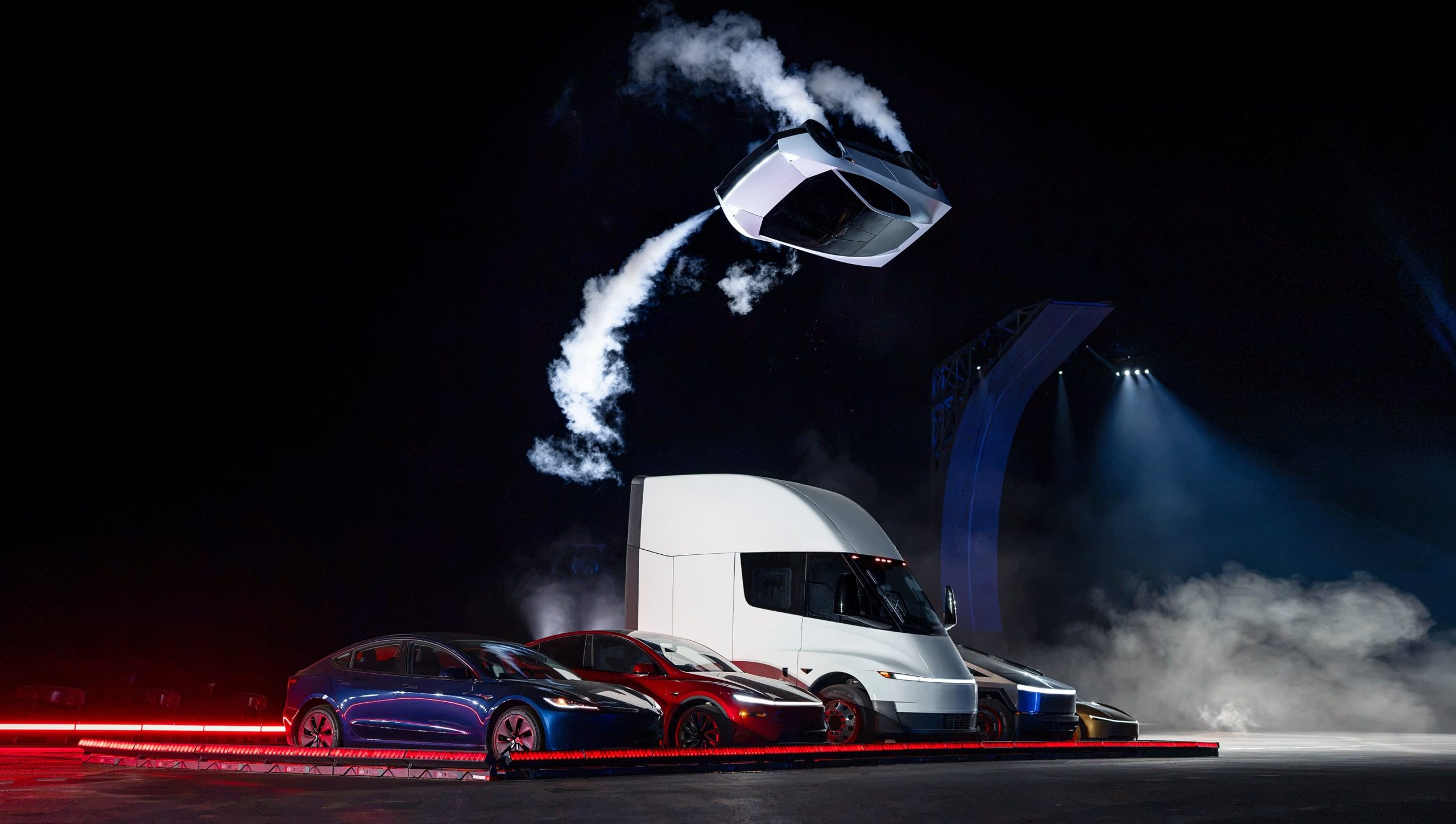
Tesla has released a fresh point-of-view video capturing the next-generation Roadster’s headline stunt from its October 15 unveiling, giving fans a visceral look at the car as it jumps and rotates over its siblings within the company’s vehicle lineup.
Tesla posted the video on X today with the caption “POV you’re a flying car,” and the roughly 30-second clip reveals never-before-seen angles directly attached to the Roadster. It’s really unbelievable:
The sequence reveals the uncrewed prototype firing its cold-gas thrusters, lifting off the ground, and barrel-rolling fully inverted while sailing over a staged lineup that includes a Model 3, Model Y, Cybercab, Cybertruck, and Tesla Semi.
Here’s an image of it that Tesla shared right after the unveiling event for a better perspective of what you’re looking at:
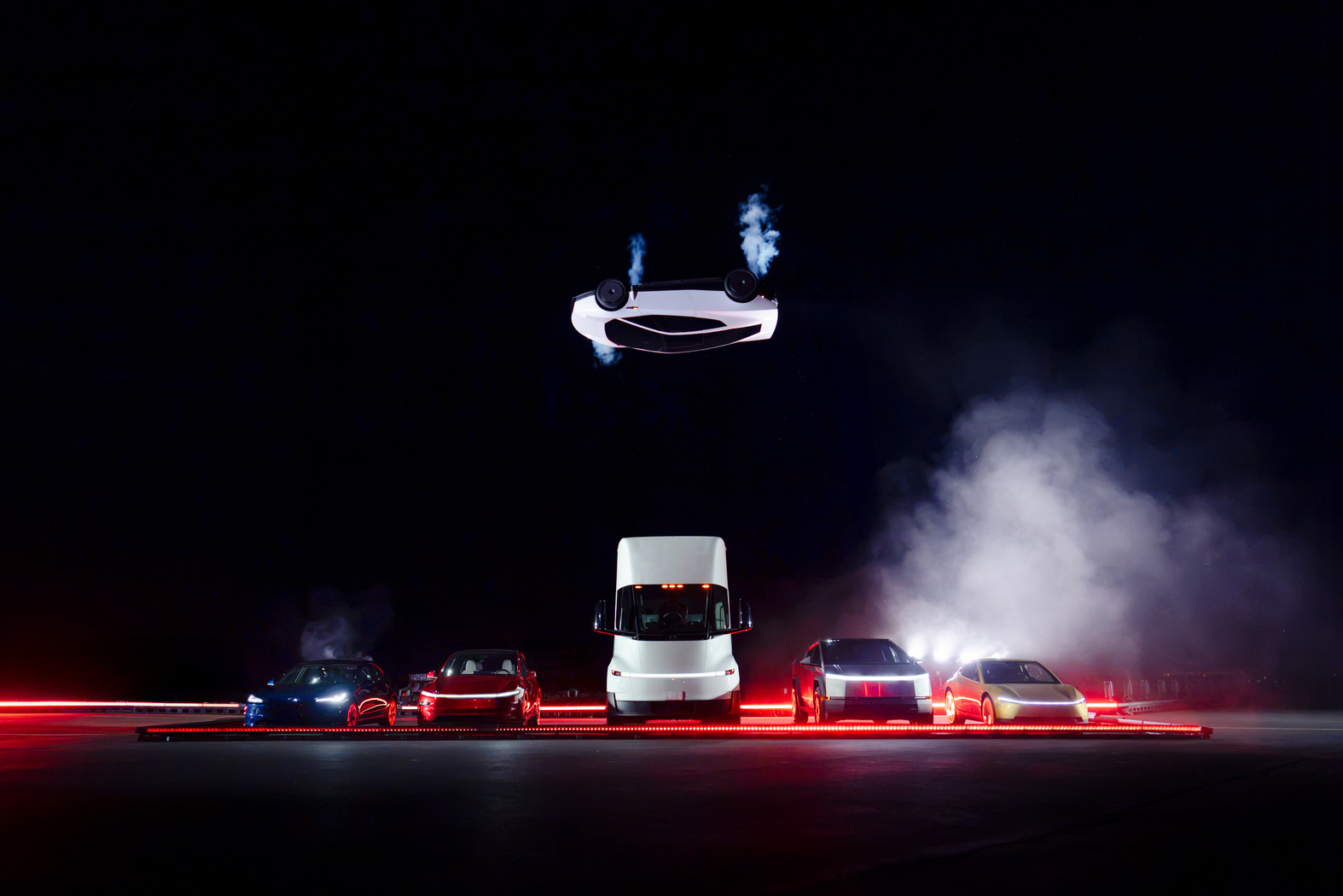
Credit: Tesla
There are also some other cool takeaways from the video, including the shift to the inverted-ramp demonstration. The Roadster uses its underbody suction-fan system to climb, then lock itself upside down on the ramp.
This generates multiple Gs of downforce, which then translates into the Roadster releasing these systems to enable a mid-air roll. The car then settles on its wheels gently as thruster vapor provides a perfect cushion.
All of the runs at SpaceX’s McGregor, Texas, test site, which is where the unveiling took place, were autonomous. Elon Musk stated this was a safety measure.
Tesla shows what Roadster drivers will see on screen before thruster activation
Tesla’s vehicle-engineering chief Lars Moravy dubbed the mid-air roll the “kickflip,” prompting Musk to quip that Tony Hawk would be proud and that the car could clear even more of the fleet. The thrusters, which use high-pressure compressed air and fast electric actuators, provide the precise, short-duration force needed for both the launch and the controlled rotation; the same hardware is intended for production versions of the higher-end Thrust and Rocket trims.
The second-generation Roadster, first teased in 2017, has been delayed repeatedly. Musk has indicated production is targeted for 2028.
While the company has yet to publish full pricing or independent performance verification, the combination of extreme acceleration, ground-effect suction, and limited flight capability has already positioned the car as one of the most theatrical EV reveals in years.
Musk has also said Tesla plans a dedicated Texas test track so future owners can experience the maneuvers themselves, far from public roads. The new POV clip simply lets everyone else feel a fraction of that experience from the car’s own cameras.
News
SpaceX’s Starfall just went from secret to storefront
SpaceX now pitches Starfall missions with 1,000 kg payloads, weeks of microgravity, and Starlink connectivity.

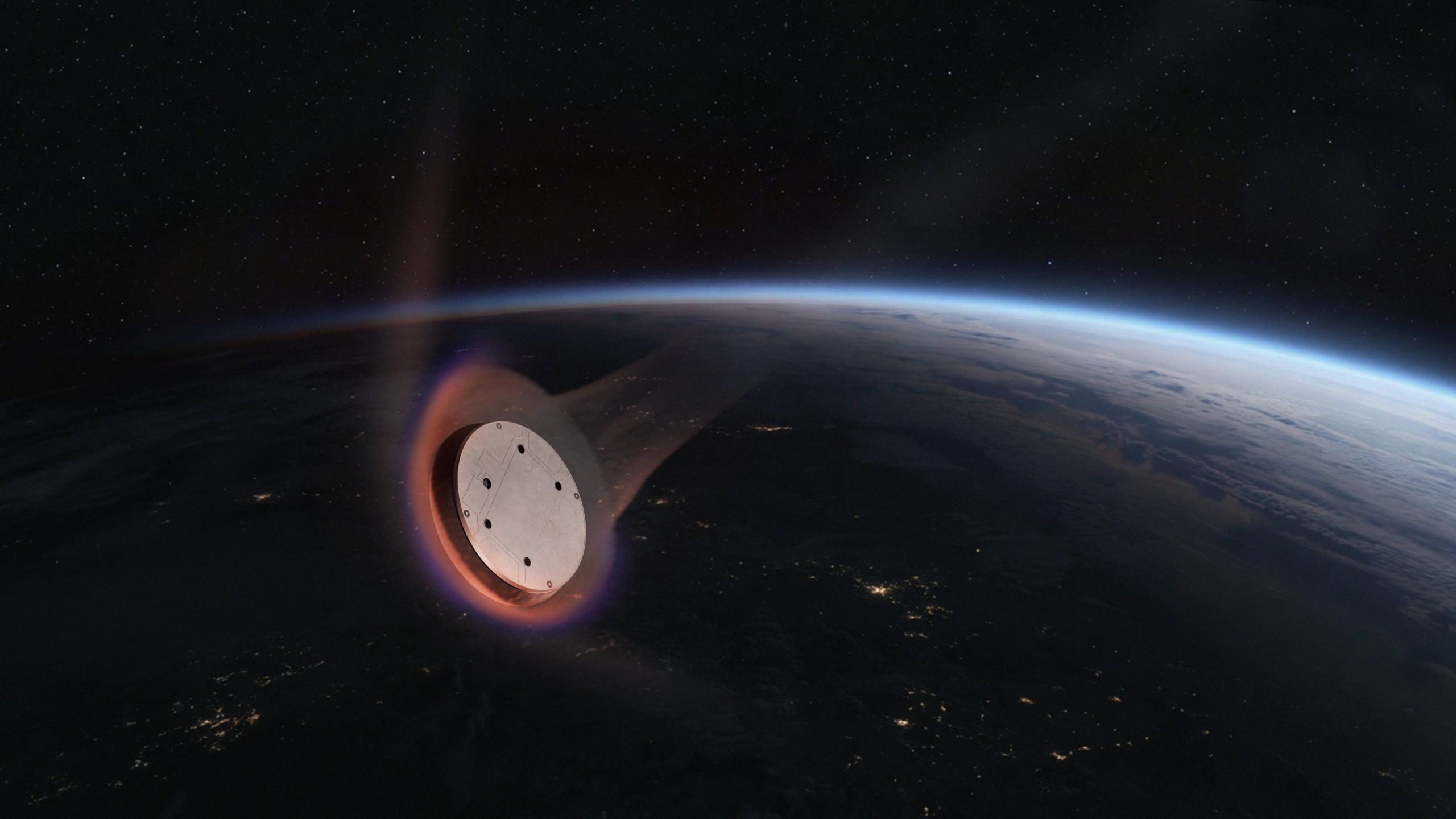
SpaceX has put up a dedicated commercial page for Starfall, its disk shaped reentry capsule, laying out for the first time what customers actually get when they book a flight. The page, live at spacex.com/starfall, pitches “affordable, routine access to microgravity” and invites companies to get in touch about flying manufacturing, research or testing payloads.
The specs are short and specific. Each Starfall mission carries up to 1,000 kg of payload, supplies 1 kW of power and connects through an Ethernet interface. Mission length is tailored to the customer, and the payload stays online the entire time through Starlink, which means researchers can pull data from an experiment while it is still in orbit instead of waiting for splashdown.
SpaceX is launching a secret spacecraft that could change how things are made in space
SpaceX is aiming the service at three markets. Biomedical customers are told they can grow stem cell organoids, replacement tissue and layered biomaterials. Pharmaceutical companies are pitched on protein and small molecule drug crystals, which form smaller and more uniform shapes without gravity driven convection. Materials science rounds out the list, with semiconductors and other next generation materials grown in vacuum and microgravity.
The page also makes clear which rocket SpaceX is counting on. “By launching on Starship, Starfall brings a reliable and scalable cadence previously unavailable to the market,” the company wrote, contrasting weeks of continuous microgravity with the seconds offered by drop towers and parabolic flights. No price or first operational flight date is listed.
The commercial push is a sharp turn from how Starfall started. SpaceX said almost nothing about the capsule ahead of its first flight in June, and nearly everything known came from FAA and FCC filings describing a disk about 10.2 feet wide and 2.5 feet tall that can return 2,200 pounds of cargo. By its second flight on the Bandwagon-5 rideshare in October, Starfall was listed by name on the mission page, though SpaceX still did not say what it carried.
Customers appear to be lining up. SpaceX said in its third quarter results that it signed three commercial Starfall missions during the quarter. On the earnings call, President Gwynne Shotwell described the capsule as providing “routine relatively low cost access to microgravity environments for scientific research, including improving our understanding of diseases like cancer and diabetes,” and said the three new missions would fly on Starship.
The branding effort extends past the website. SpaceX added a Starfall T-shirt to its online store on Monday as part of a batch of new merchandise, giving the program a place next to Starship, Starlink and Starshield in the company’s lineup.
The move also puts SpaceX in more direct competition with companies it launches. Varda Space Industries, which has built much of the in-space manufacturing market so far, flew its W-Series 7 capsule on the same Bandwagon-5 mission as Starfall in October. Varda’s capsules are roughly three times smaller than Starfall, and SpaceX controls the ride to orbit for both.
Starfall’s near term cadence depends on Starship. SpaceX is preparing for Flight 15 after completing static fires of Ship 42 and its Super Heavy booster in late October, and is aiming to catch both stages with the launch tower on that flight.

Tesla Full Self-Driving gets hit with some adjustments in Europe

Tesla shows off Roadster ‘kickflip’ over vehicle lineup in crazy new POV video


