News
Car Wars: Tesla will be overtaken by Ford, GM because Elon Musk “didn’t move fast enough”

Tesla is a lot of things. Slow-moving is definitely not one of them.
But for John Murphy, senior auto analyst for Bank of America, Tesla is actually not moving fast enough. In fact, the Texas-based electric car company could soon see itself being overtaken by veteran automakers such as General Motors and Ford.
In its annual Car Wars study, Bank of America predicted that Ford and General Motors would surpass Tesla’s electric vehicle sales by 2025. According to Murphy, Tesla’s current 70% market share in electric vehicles could drop to closer to 11% in the next three years.
Meanwhile, Murphy expects Ford and GM to approach 15% thanks to their new electric car offerings. The analyst noted that the issue with Tesla lies in its lack of product portfolio and the fact that Elon Musk is introducing products at a slow rate.
“He’s introducing product at a slower rate. He doesn’t have a full product portfolio, so there’s huge opportunity for manufacturers to shoot the gap and catch up a bit,” Murphy said.
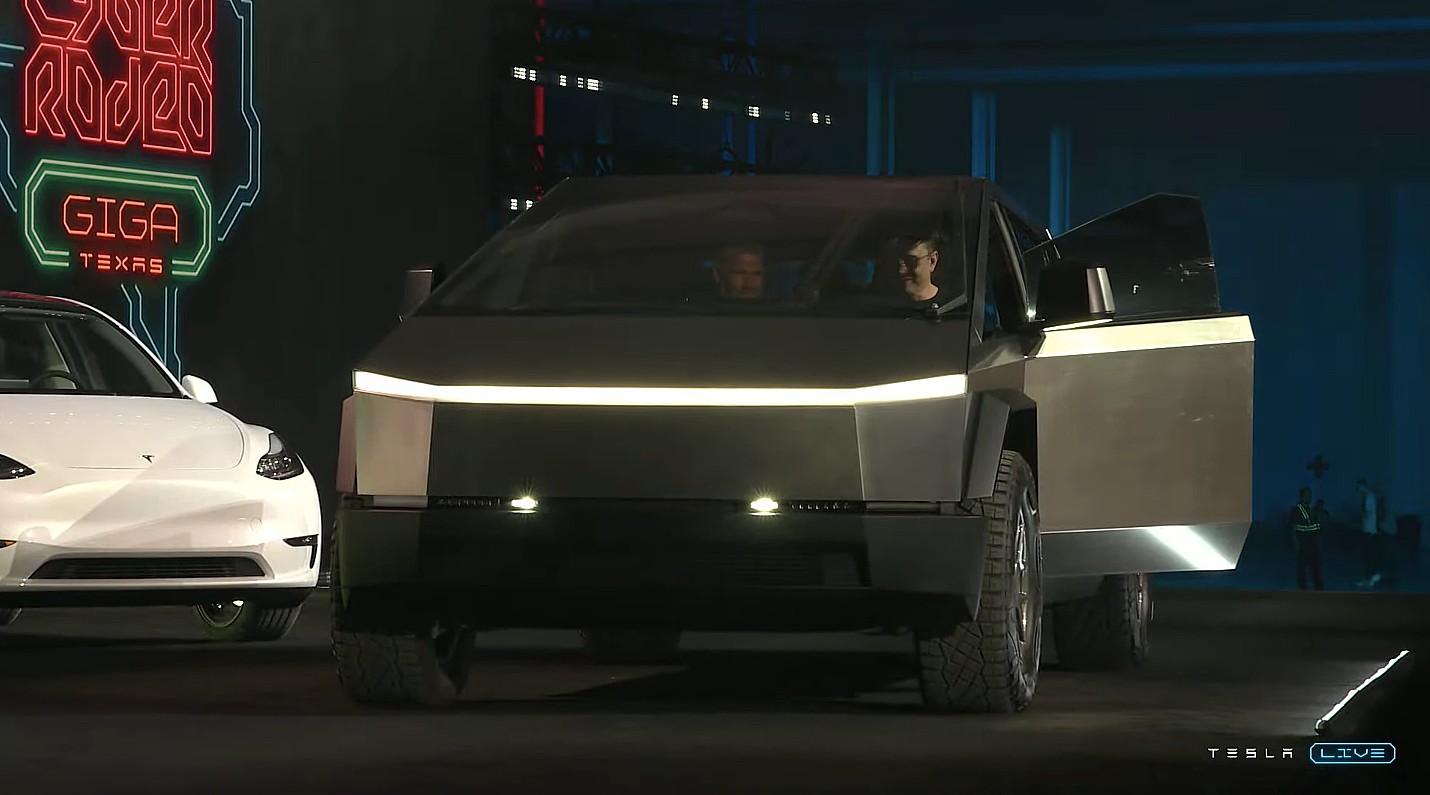
Tesla has seen its own fair share of delays, and apart from vehicles like the Model Y, which started deliveries earlier than expected, the company’s projects like the Cybertruck have been pushed back several times. This, according to Murphy, could lead to Tesla falling behind in the coming years.
“One of the biggest mistakes that whenever they look back at this in five to 10 years, is that Tesla didn’t take greater advantage of the free money it could have gotten, raise much more, open capacity faster, grow much faster and shut the door.
“He (Musk) didn’t. He didn’t move fast enough. He didn’t recognize what was going on in the market. He had tremendous hubris that they would never catch him, they would never be able to do what he’s doing, and they’re doing it,” Murphy said.
Murphy’s conclusions are quite interesting because Tesla has been supply constrained for the past several years. Today, the company is essentially holding back a wave of competitors with only two vehicles — the Model 3 sedan and the Model Y crossover — and it is still winning. It should also be noted that Tesla’s vehicles are in a constant state of improvements, which are typically rolled out through free over-the-air software updates.
In a way, the Bank of America analyst’s conclusions about Tesla and Elon Musk’s “hubris” seem quite off base. With the Cybertruck and the Semi entering the market and the Model Y seemingly on track to become one of the world’s best-selling cars, Tesla’s EV market share does not seem to be in danger.
Don’t hesitate to contact us with news tips. Just send a message to simon@teslarati.com to give us a heads up.



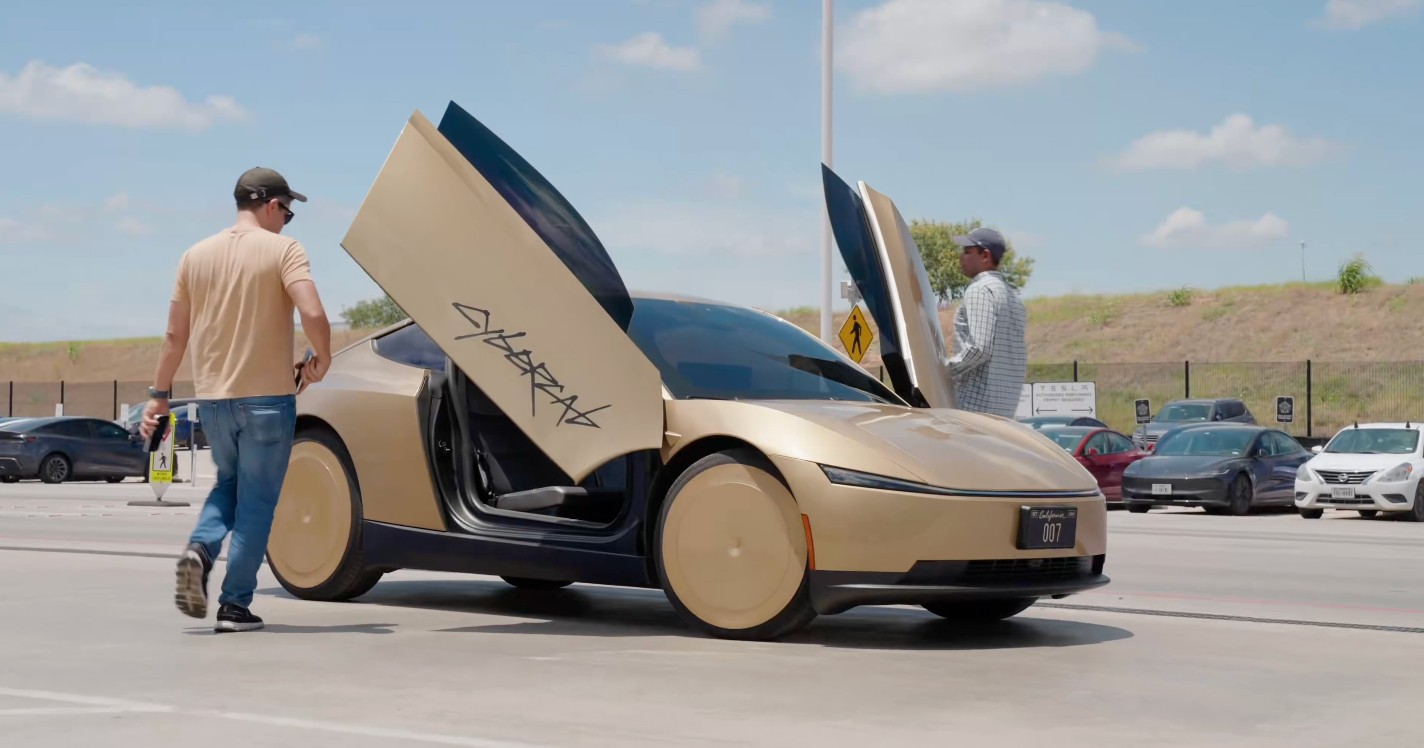
Tesla weirdly confirmed that its steering wheel-less and pedal-less Cybercab vehicle is now in the process of giving employees rides, a huge milestone for the vehicle program.
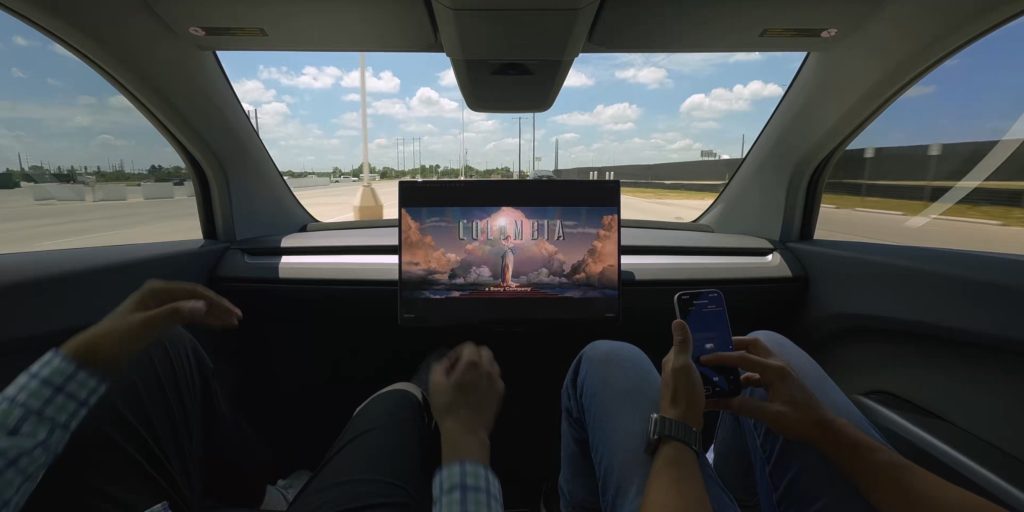
But the entire thing was super strange. On Friday, Tesla released a video stating that there was “Cool news from Giga Texas” and that employees were now taking rides in Cybercabs that have no manual controls. The units seen on public roads are engineering vehicles that have manual controls inside, a necessity as Tesla moved through the testing phase.
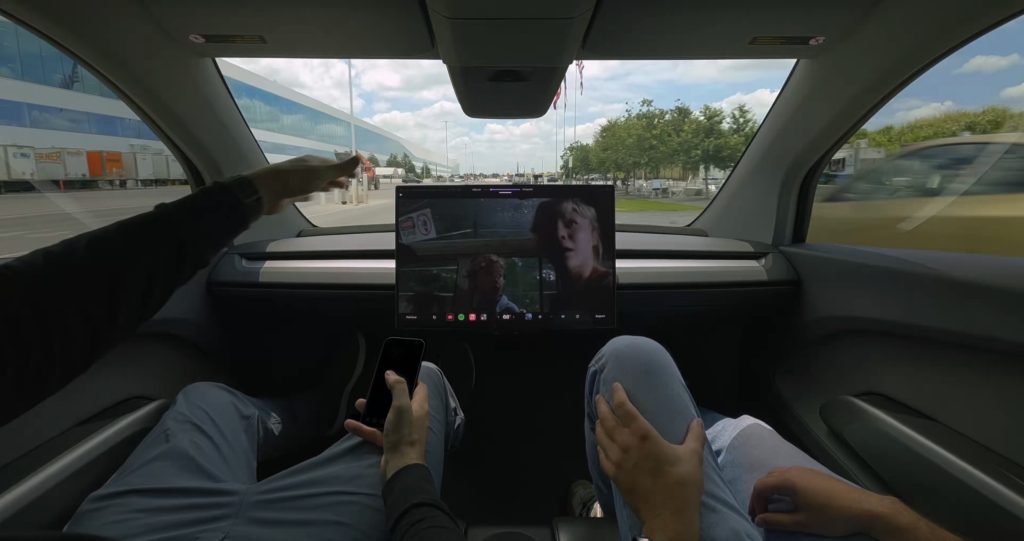
However, Tesla removed the video and reposted it shortly after with a more vague title. It seems like the employee rides are still going, but the video was adjusted slightly. The initial upload showed employees doing things like watching movies and adjusting the climate, but these snippets were removed in the second upload.
Cool news from Giga Texas pic.twitter.com/gvbG456Tzw
— Tesla Robotaxi (@robotaxi) July 11, 2026
Both images below were uploaded with the first video, but were removed after Tesla re-uploaded the announcement. These are not available in the second upload
Credit: Tesla
Credit: Tesla
Nevertheless, the announcement from Tesla is that the Cybercab is operating with employees inside who can control the vehicle’s audio, video, climate, and destination settings through their smartphone app.
Tesla has already been testing Cybercab engineering units, but last month, it was able to self-certify for SAE Level 4, which would enable unsupervised self-driving in Texas. The company is moving toward that, and the plans have always been to launch Cybercab rides this year.
The Cybercab is potentially looked at as the next generation of Tesla’s mobility leg. For the past 15 years, the company has been known as somewhat of an automaker, among many other things. However, these passenger vehicles that Tesla has manufactured are now moving into a new realm, as they will eventually drive themselves with no supervision thanks to the Full Self-Driving suite.
The Cybercab is just the next step of that: a true vehicle developed for the sole purpose of ride-hailing. It has no human controls, it has only two seats, and it will get passengers from Point A to Point B with no awkward driver, no need for manual inputs, and with no stress.
Tesla is moving forward with other developments related to the Cybercab project as well. However, the big announcement will come when Tesla finally announces that it is launching Cybercab rides to the general public, something that it plans to launch either late this year or early 2027.
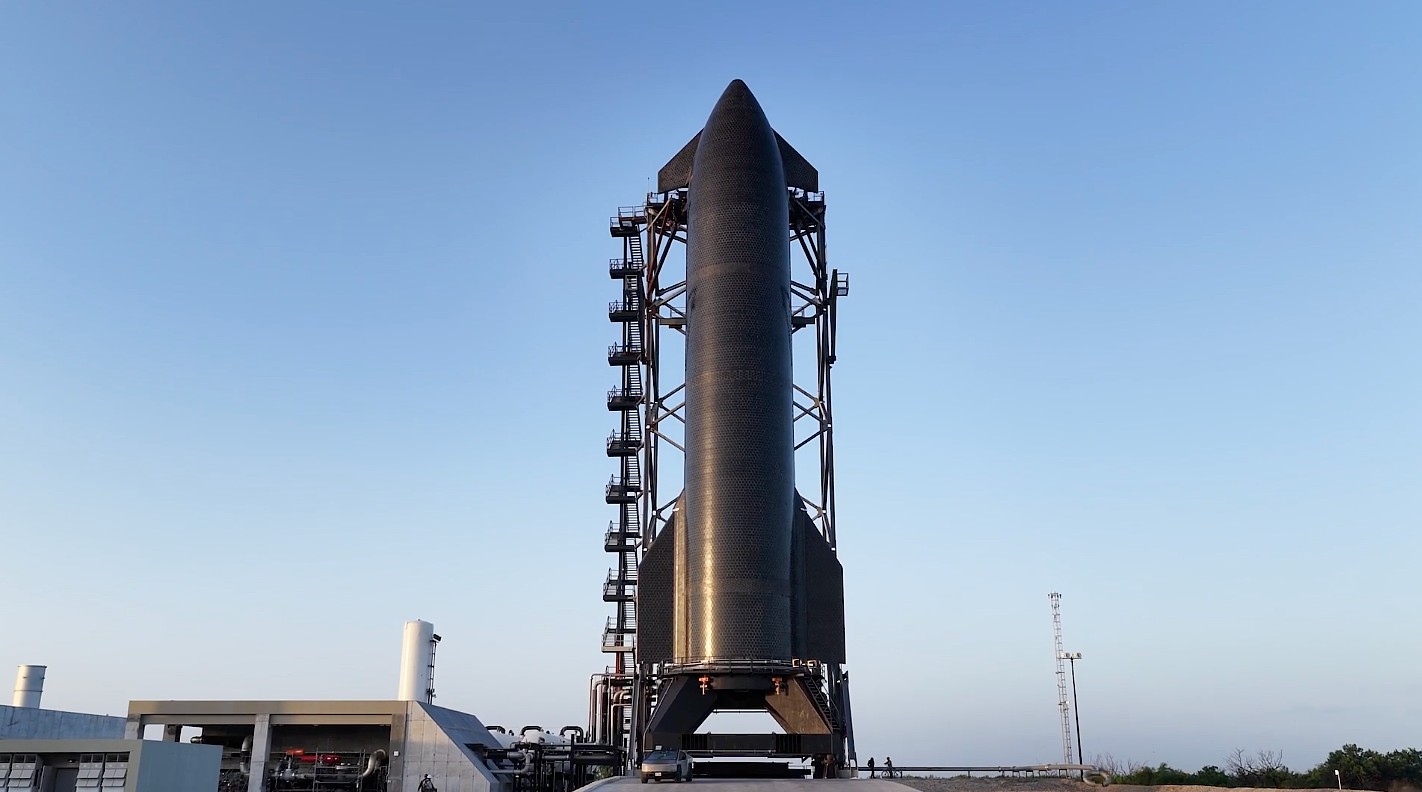
SpaceX is gearing up for the 13th Starship integrated flight test, which is currently scheduled for Thursday, July 16, with the launch window opening up at 6:30 PM E.T. from Starbase in South Texas.
This mission, the second with the V3 Starship and Super Heavy vehicles, builds directly on the foundation of Flight 12 while introducing ambitious new objectives, including the debut deployment of next-generation Starlink V3 satellites.
The rapid iteration between flights underscores SpaceX’s “fail fast, learn faster” philosophy, with engineers addressing specific anomalies from the previous test to push reusability and payload capabilities further.
Starship’s thirteenth flight test is preparing to launch as early as Thursday, July 16 → https://t.co/Rp7VwBzpWx pic.twitter.com/jdpFlQUEpF
— SpaceX (@SpaceX) July 11, 2026
Flight 12 occurred earlier in 2026 and encountered notable challenges that became catalysts for Flight 13’s improvements. Issues included booster course deviations during the flip maneuver after stage separation, reusability problems with Super Heavy’s Raptor engine relights for the boostback burn, and an engine-out event on the Starship upper stage during its propulsion phase.
These hiccups, while they did not prevent overall mission success, highlighted areas needing refinement for more consistent performance and higher safety margins in future operational flights.
Elon Musk called it Epic: The full story of SpaceX’s Starship Flight 12
In response, SpaceX implemented a comprehensive suite of both hardware and software upgrades.
For the booster, engineers developed a more robust stage separation flip sequence to maintain stable orientation and prevent off-course rotation. Hardware modifications have enhanced Raptor re-light reliability during the boostback burn, complemented by updated engine alarms and abort logic tailored for multi-engine operations. On the Starship side, propulsion system changes directly tackle the Flight 12 engine-out scenario, improving redundancy and operational resilience.
Another major focus of SpaceX for Flight 13 was the advancements in the heat shield. New tile designs and attachment mechanisms, including tests of aft flaps and skirts, aim to boost durability.
Load-sensing tiles will measure real-time stresses during atmospheric entry, while white-painted tiles simulate missing ones as imaging targets. Six of the 20 Starlink V3 satellites carried aboard will feature specialized cameras to scan and transmit heat shield imagery back to ground teams, providing critical data for future return-to-launch-site attempts.
The mission profile also includes a higher dynamic pressure ascent to stress-test the thermal protection system and increase payload potential, alongside a planned in-space Raptor engine relight demonstration.
The V3 Starlink satellites themselves mark a leap forward, equipped with laser links, deployable solar arrays, and improved antennas to expand network capacity and speeds.
The company wrote:
“For the first time, Starship will carry V3 Starlink satellites to space, which aim to greatly expand the network’s capacity and user speeds. As part of this initial test, Starship is planned to deploy 20 satellites which will extend solar arrays and antennas and will attempt to connect with ground stations in South Africa and the larger Starlink constellation via high-capacity lasers. Six of the satellites have been modified with a suite of cameras to scan Starship’s heat shield and transmit imagery down to operators to continue testing methods of analyzing Starship’s heat shield readiness for return to launch site on future missions. Several tiles on Starship have been painted white to simulate missing tiles and serve as imaging targets in the test.”
This dual-purpose flight tests both vehicle reliability and satellite tech in one integrated operation.
These iterative changes, catalyzed by Flight 12’s data, position Starship closer to rapid reusability goals essential for ambitious programs like Artemis lunar missions and global Starlink coverage.
As SpaceX continues its aggressive test cadence, Flight 13 exemplifies how targeted engineering responses to real-flight anomalies accelerate progress toward fully operational, high-cadence launches. Success here could mark another milestone in the Starship program for SpaceX.
Tesla received a price target upgrade just on the heels of what was a crazy successful quarter for its automotive business, as the company reported a delivery beat of over 15 percent for Q2.
Jefferies analysts are upping Tesla’s price target (NASDAQ: TSLA) to $400 from $375, while maintaining their “Hold” rating on shares, and the strong automotive deliveries from Q2 is a big reason. However, there are some other catalysts that Jefferies believes position Tesla for a strong position in the second half of the year.
Strong Deliveries
Tesla reported 480,000 deliveries for Q2, while Wall Street was between 395,000 and 405,000, as an overall consensus. It was an incredibly strong quarter from a delivery perspective, and Tesla sold well more than it produced during the three months.
Tesla crushes Wall Street expectations, beats delivery estimates by over 15 percent
While vehicle deliveries are not necessarily looked at in the light that they used to be, Tesla still maintains a lot of advantages for keeping deliveries strong. With the loss of the $7,500 EV Tax Credit last year, Tesla still maintains a strong demand case for its EVs.
Robotaxi Performance
Tesla has been operating Robotaxi for over a year now, as it launched in Austin in mid-2025. That program has expanded to Houston and Dallas, the San Francisco Bay Area, and, most recently, Miami, Florida, the suite’s first appearance in the Sunshine State.
While the Robotaxi suite is still in its early phases and Tesla is working through things like fleet size and wait times, the company has been able to undercut the pricing of its competitors and has a great safety record.
Merger Speculation with Tesla and SpaceX
This is perhaps the biggest topic that many are speaking about with Tesla and SpaceX, and it is the one thing that seems to be on the mind of every investor.
Jefferies warns that growing talk of a Tesla-SpaceX merger could cause Tesla stock to trade more like a SpaceX proxy, which may disconnect it from underlying automotive fundamentals. SpaceX has a lot going for it, especially its compute deals that have been widely publicized as of late.
Profitability in New Projects Could Take Some Time
Tesla has a few long-term ventures in the pipeline, most notably the Optimus project and Robotaxi, which is launched but will take several years to expand to a meaningful level that resonates with everyday people.
This is something that investors need to be careful of. Tesla’s projects could take some time to round out, so Jefferies advises that these may carry initial losses, rather than immediate profit. Seasoned Tesla investors have echoed something like this for a long time; they knew going in it would not be an open-and-shut strategy. It was going to take time.
These new projects are no different.

Tesla weirdly confirms Cybercab employee rides, a huge milestone

SpaceX comes with a slew of changes for Starship Flight 13


