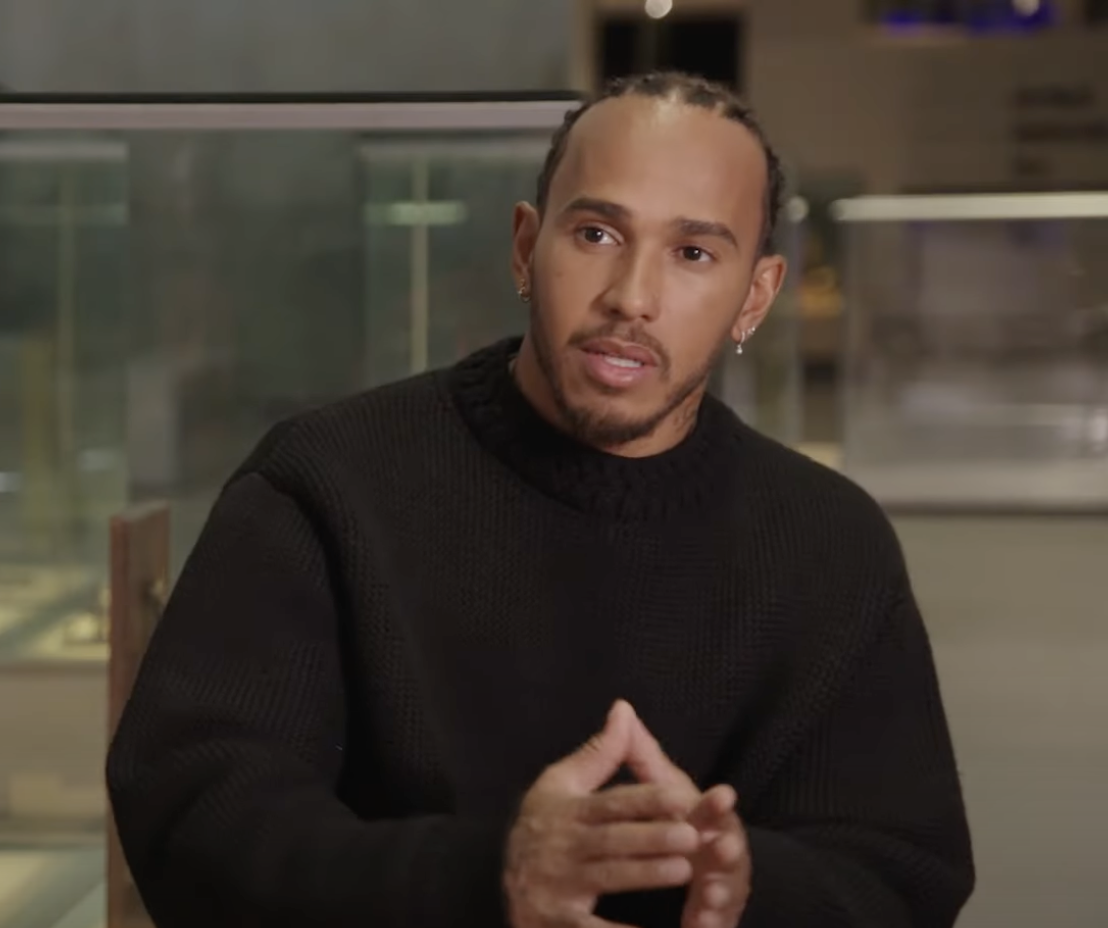

F1 drivers, such as Lewis Hamilton and Sergio Perez, are dumping millions into electric motorsports, and viewership numbers show fans are enjoying it.
Formula 1 has long been the world’s largest and most successful motorsports series. No other series has garnered international attention and world-renowned names like the historic open-wheel racing series. But now, drivers from the sport, both past and present, are looking to invest in a new kind of racing; electric motorsports.
The world of electric racing has been growing for many years. Since the introduction of Formula E and its subsequent viewership success, new electric variants of other racing series have also sprung up. The same investors in Formula E have also created an electric motorsport series for rally enthusiasts; Extreme E, and next year, the group will be starting the world’s first all-electric boat racing series; E1. Even the historic World Rallycross Championship has recently switched to all-electric drivetrains.
Extreme E has attracted the most number of F1 investors. Lewis Hamilton, one of the most successful F1 drivers of all time who currently drives for Mercedes-AMG Petronas, has started the X44 Extreme E team. Recently retired F1 driver Nico Rosberg has also created a team, Rosberg X Racing. While the most recent investor in Extreme E is retired Formula 1 driver Jenson Button, starting the JBXE team, which he also drives for.
Older F1 drivers have found a home at Formula E instead. Mario Andretti’s Andretti Autosport continues to run its own Formula E team. Similarly, historic Formula 1 drivers Aguri Suzuki and Jarno Trulli previously ran teams under their names as well, but have since pulled out of the racing series.
On the water side of motorsports, current Redbull Racing F1 driver Sergio “Checo” Perez has started his E1 team that will participate in the inaugural year of the boat racing series.
Along with these drivers, fans have also been moving to watch these new forms of motorsports. Formula E recently reported its best viewership numbers ever. And with the introduction of significantly faster/more powerful next-generation cars and a series of notable rule changes, they are poised to beat that record again.
Recent interviews with Nico Rosberg and Lewis Hamilton indicate why these drivers are so interested in starting teams in the electric motorsports series. The lessened environmental impact of the races is cited by both drivers as a motivator to get involved in Extreme E. Yet beyond the ecological impact; these new series are working on hosting and displaying motorsports more sustainably and perhaps in a way that can allow more people to enjoy motorsports in the future.
It is clear that motorsports will have to change in the near future, perhaps most notably as carmakers move away from investing in ICE vehicle technology, but how that future looks is still very much in the air. Luckily, with so many of the world’s favorite racing drivers behind the wheel, the quality of racing certainly isn’t in jeopardy.
What do you think of the article? Do you have any comments, questions, or concerns? Shoot me an email at william@teslarati.com. You can also reach me on Twitter @WilliamWritin. If you have news tips, email us at tips@teslarati.com!


News
Tesla Semi lands the biggest electric truck deal in U.S. history
Tesla leads a record 2,500 truck order, but not every truck will be a Semi.

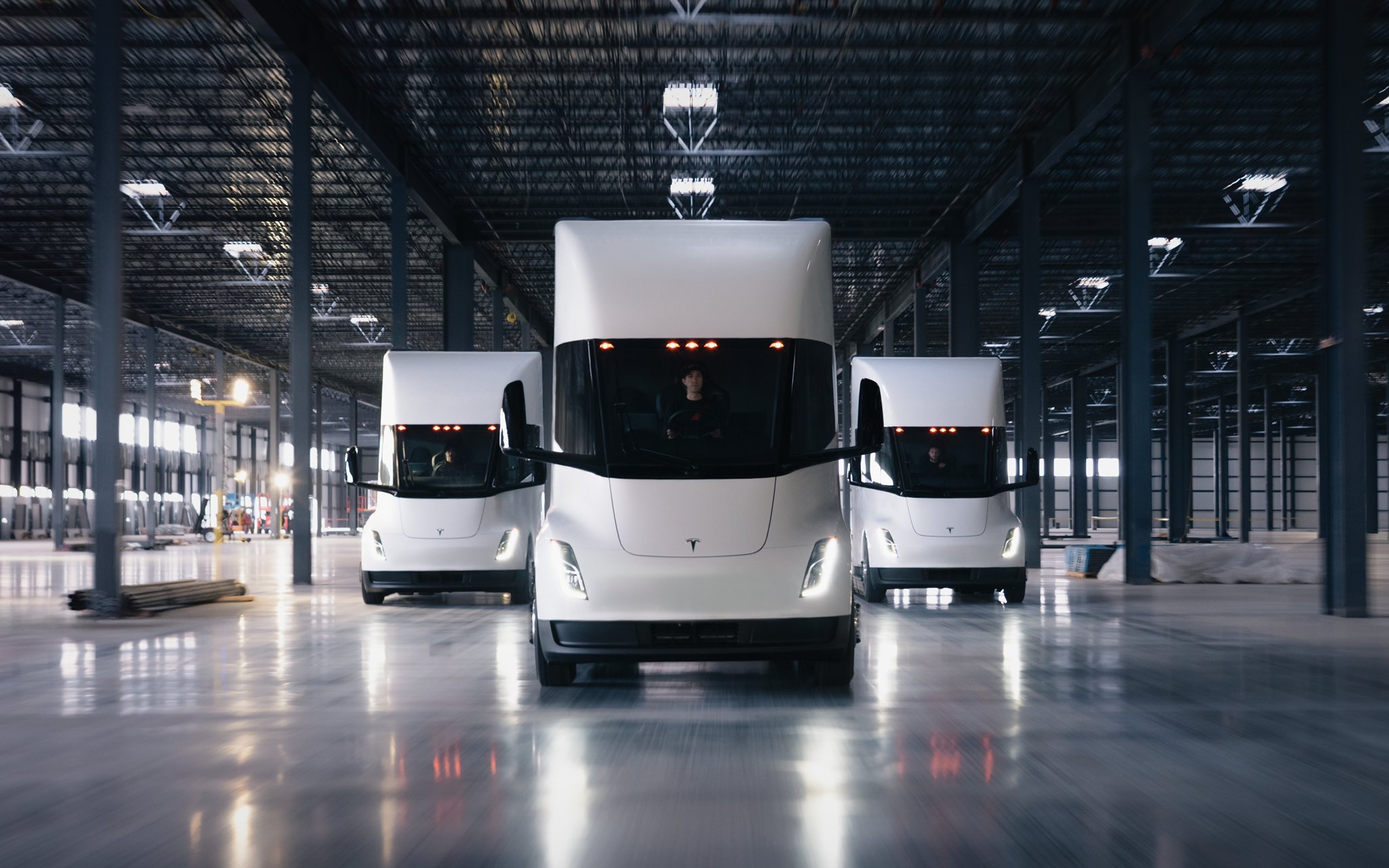
Tesla has landed the largest electric truck order in U.S. history. ZET SCALE, a new alliance of shippers and carriers, named Tesla its primary manufacturer on Tuesday for an initial order of 2,500 electric Class 8 trucks. The deal alone would nearly double the number of electric heavy trucks operating in the country.
According to the press release from Catalyst Mobility, the nonprofit formerly known as CALSTART, Kenworth, RIDE and Volvo were also selected as secondary manufacturers that carriers can pick if their operations call for it. No split between the four brands has been published, so the exact number of Semis in the order is not yet known.
Tesla was selected as the primary OEM for the largest electric Class 8 order in the US by ZET SCALE, a new shippers’ alliance
With 2,500 Semis on order, this will double the entire US electric Class 8 fleet
We’re serious about scale, and ZET SCALE is too!… pic.twitter.com/IiTAdzgken
— Tesla Semi (@tesla_semi) September 22, 2026
Tesla won the top slot through a competitive request for proposals. The alliance, which Catalyst Mobility runs with the Smart Freight Centre, scored bidders on price, range, charging capability and production capacity. Pooling freight demand from founding shippers, including Microsoft and PepsiCo, let every truck maker bid lower than it would for a single fleet. “The Tesla Semi is designed for lower cost per mile operations than diesel,” said Dan Priestley, director of the Tesla Semi program, as noted in the press release.
The financing is built to pull in carriers who have avoided electric trucks. ZET Financial is issuing the purchase order for all 2,500 units and will place them with fleets through a fair market value lease. The trucks will be deployed over the next few years across 10 freight hubs in Los Angeles, Stockton, Bakersfield, Seattle and Tacoma, Houston, Dallas, San Antonio, Chicago, Atlanta, and the Newark and New York area. ZET SCALE says the first order is only the opening round, with a longer term goal of 10,000 trucks or more.
Even if Tesla ends up with only a majority share, it would still be the biggest Semi deal to date. Einride’s 500 unit order in August was the previous record, and WattEV’s 370 truck order in May was the largest California deal at the time. Einride’s CEO has since said he expects all 500 trucks delivered by the end of 2027.
The announcement lands two days before Tesla formally inaugurates its Semi factory in Nevada on September 24. The 1.7 million square foot plant sits next to Gigafactory Nevada’s 4680 cell lines and is designed for 50,000 trucks a year.

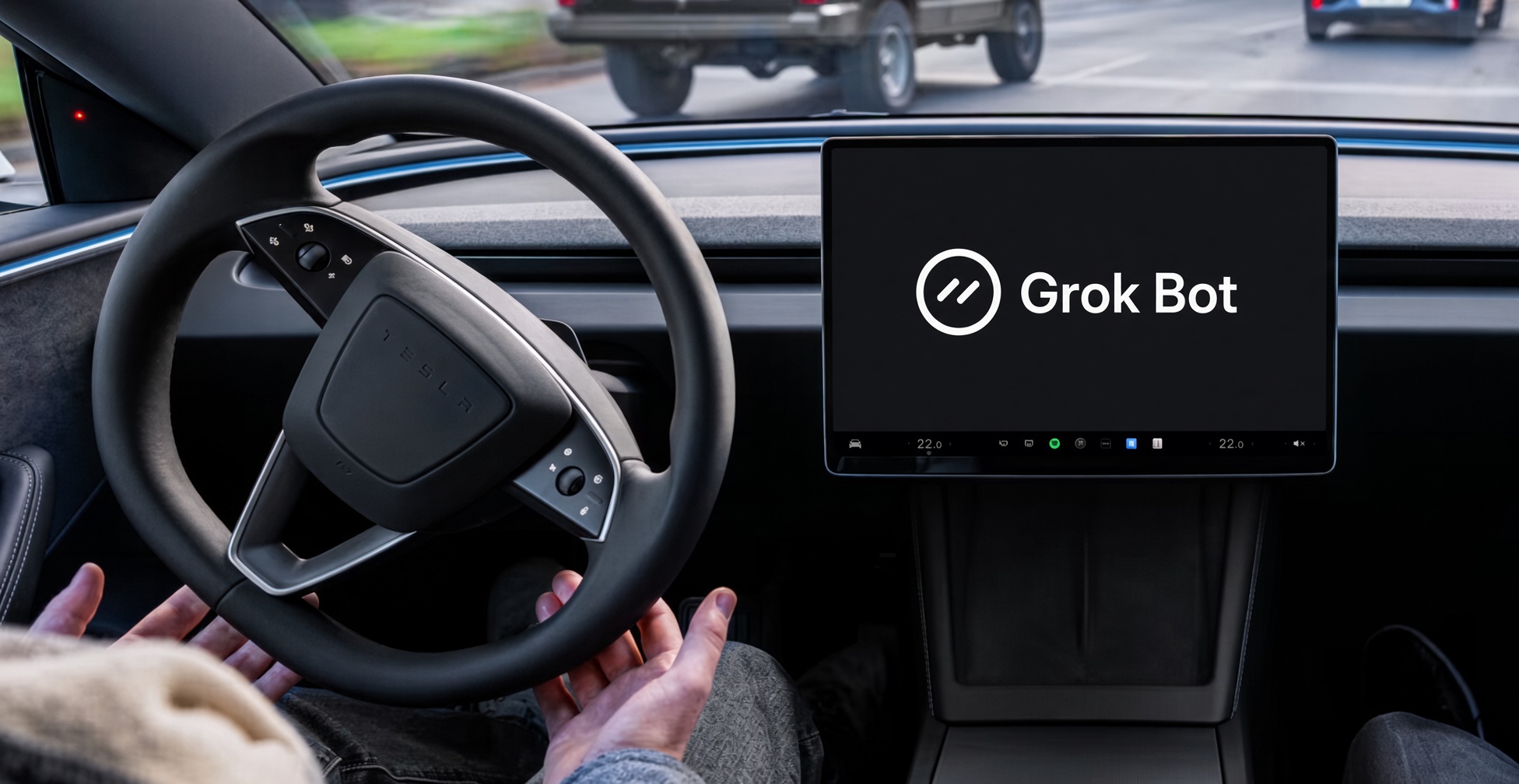
Tesla has expanded Grok from an in-car chatbot into a hands-free work assistant. On September 22, Tesla officially launched Grok Bot capability, confirming that drivers can now manage email, calendars, files, chats, and tasks by voice and then hand more ambitious errands to the AI-fueled productivity cheat code.
Grok itself is built by xAI. The new car features split into two layers: Connectors link Grok to outside accounts. Grok Bot, currently limited to SuperGrok Heavy subscribers, can complete multi-step tasks such as placing a usual coffee order, booking a reservation, or scheduling an appointment. It truly puts the driver in a nearly complete hands-free driving and productivity setting, with ironically the only task truly requiring your hands being to touch the “Start Self-Driving” button.
We were granted access to Grok Bot’s Tesla integration a few weeks back, and we’ve been able to do a handful of things with it. On a handful of occasions, we’ve used it to order food and have it ready for pickup slightly later into the evening; we’ve managed to pick up groceries after a day of errands with Grok Bot, and outside of the car, it’s helped with budgeting and even my fantasy football draft.
We’ve been using @Grok Bot in Tesla for a few weeks after gaining Early Access, which we thank the awesome engineers for
Grok Bot makes things much easier across your entire life. From the Tesla, I’ve used it to place pickup orders for my Fiancée and I, we’ve ordered groceries… https://t.co/ZJSLieG1s5
— TESLARATI (@Teslarati) September 22, 2026
Tesla shows another way to utilize it: in their demo, a driver says “Hey Grok,” asks the assistant to check an inbox, and hears that a message concerns a weekend reservation. Grok then scans the calendar, reports no conflicts, and confirms the Tahoe trip is clear. It can also add check-in details to a road-trip itinerary. The point is not novelty chat. It is keeping eyes on the road, or on Full Self-Driving, while the car handles the paperwork of a trip:
.@Grok in your Tesla can now do meaningful work for you
With Connectors, you can manage your inbox, clean up your calendar, or talk through existing files/chat/tasks – all hands-free pic.twitter.com/W1LuybQh0P
— Tesla (@Tesla) September 22, 2026
This Grok rollout is not a gadget add-on as much as it is Tesla’s thesis in software form: the car should stop being a machine you operate and start being a room you occupy.
Connectors and Grok Bot treat the cabin as an office that happens to move, and that has truly been Tesla’s intention for years now. The car has slowly become an extension of a home more than a vehicle. Inbox, calendar, groceries, takeout, and reservations become voice work, not dashboard chores that you need to do before you get in your car.
Responsibility shifts from the driver to the stack, and as many Tesla owners rely on FSD for travel, Grok Bot now handles the monotony of dinner reservations or appointments.
Elon Musk
X changed how everyone gets paid, and this lawsuit shows why
X sued a Bitcoin account network over fake payouts as its creator pay model shifts
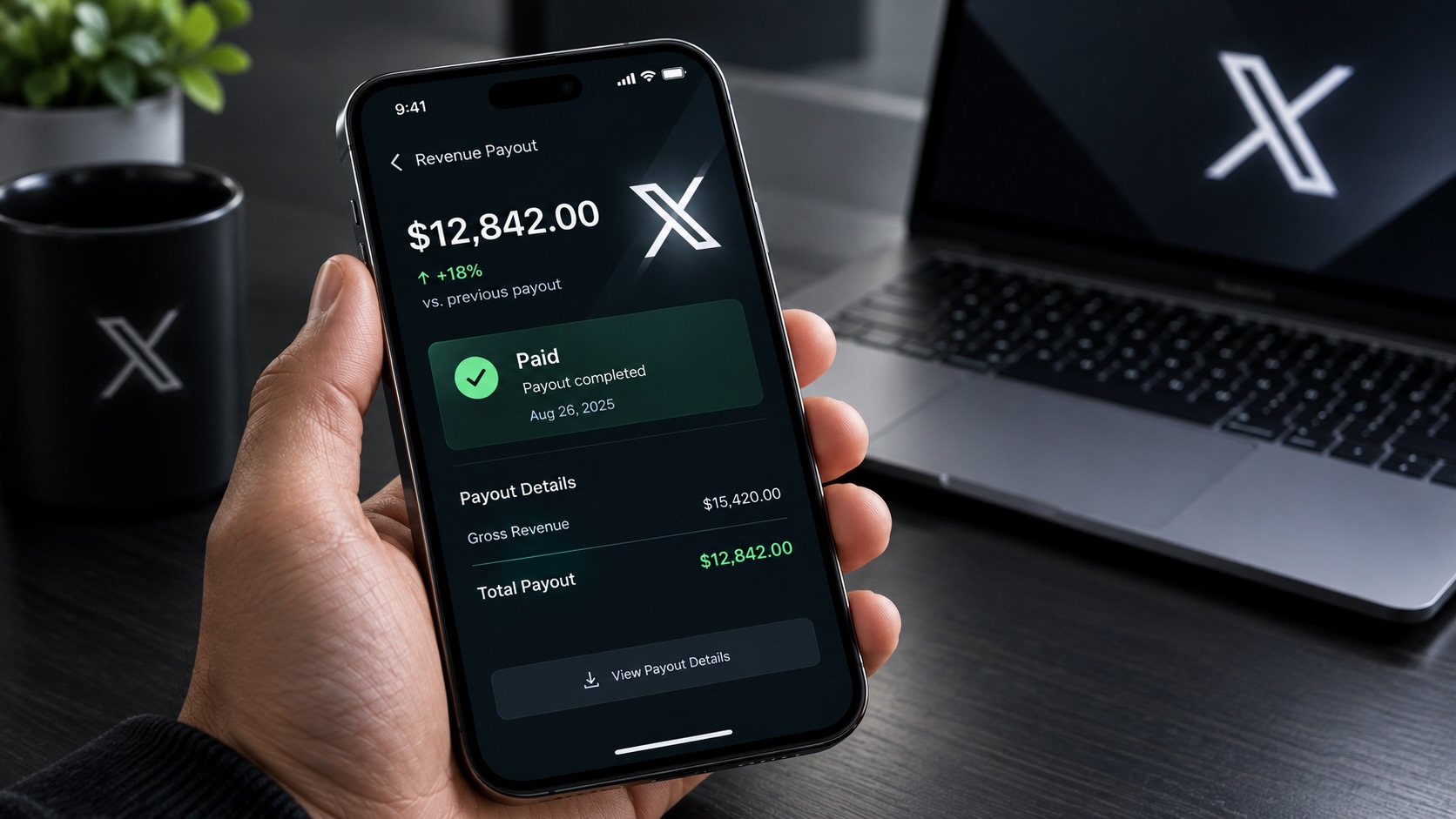
Elon Musk’s X has taken a Bitcoin-focused engagement ring to court, and the case doubles as a receipt for how differently the platform pays creators today. The company filed suit in the High Court of England and Wales against Vivek Kumar Sen and Zamyang Sherpa, alleging the pair ran six accounts, including @Vivek4real_, @Bitcoin_Teddy and @TrendingBitcoin, as one coordinated operation to fake the kind of engagement that used to translate directly into money.
According to the filing, first reported by Gizmodo, the accounts posted near identical “BREAKING” crypto headlines seconds apart, in one case 11 seconds, then had three more handles like, reply to and repost the material to manufacture what X called “a false appearance of genuine, human communication and interaction.” X says the scheme pulled in at least £207,384, about $278,000, and pegs its own investigation and remediation costs at another £75,000. The accounts were suspended August 18. X general counsel James Burnham announced the case on X last weekend, writing that the company “will act forcefully to protect our platform and the earnings of genuine creators.” Musk’s own reaction, posted shortly after, was three words: “Don’t mess with 𝕏.”
Don’t mess with 𝕏 https://t.co/HSmd5hL6aQ
— Elon Musk (@elonmusk) September 21, 2026
The timing lines up with a a recent update to how X pays its creators. The program these accounts allegedly gamed, Creator Revenue Sharing, launched in mid 2023 and paid out based on how much a post got engaged with. Originality was never part of the formula, which is exactly how the platform ended up flooded with recycled clips, copy pasted “BREAKING” posts and replies engineered purely to farm reactions from paying subscribers.
X tried patching the model more than once, including an April cut to aggregator payouts and a March regional weighting change that Musk personally paused hours after it was announced. X retired Creator Revenue Sharing for good on September 7 and opened its replacement, Original Content Rewards, the next day.
Today, we’re launching Original Content Rewards.
The reality is that Revenue Sharing had reached a point where its incentives were misaligned. Creators should be focused on bringing net new content to the platform instead of maximizing payouts. We could have kept adding more… pic.twitter.com/VJIxqlPrjm
— Allegra Jacchia (@allegrajacchia) August 7, 2026
The new math is stricter. Payouts now come only from qualified impressions, meaning unique Home Timeline views from Premium subscribers where at least half the post is visible, and replies no longer count toward eligibility at all. Copied posts, reuploaded media and reposts without meaningful changes are explicitly excluded. Allegra Jacchia, senior product manager for Creators at SpaceXAI, which now runs X’s product and AI work following xAI’s acquisition of the platform, put it bluntly, saying the goal is to reward creators who bring original ideas and perspective, “not those who have become best at gaming the system.”
Read that way, the lawsuit isn’t really about six crypto accounts. It’s X putting a dollar figure on what the old incentive structure cost, then suing to collect it right as the new one goes live. For live updates on how the case and the new rewards program shake out, follow @Teslarati on X.

Tesla Semi lands the biggest electric truck deal in U.S. history

Tesla integrates Grok Bot into its vehicles for the ultimate personal assistant


