Investor's Corner
Tesla price cuts are under-appreciated, investors should buy shares: Piper Sandler

Tesla (NASDAQ: TSLA) price cuts are being labeled as under-appreciated by analysts at Piper Sandler, who are indicating investors “should be “proactively buying” shares.
Following the announcement of Tesla’s price cuts in mid-January, analysts and others began to speculate that it was a move to combat weakening demand for its vehicles. However, the cuts have helped Tesla cut inventory levels significantly in the United States, and when combined with government-backed incentives, could offer as much as $20,500 in discounts.
Piper Sandler analysts believe the sentiment from consumers behind the price cuts is not being fully recognized. The firm believes the price cuts could open doors for 300,000 additional unit sales for the automaker this year, “if not twice that.”
“We don’t think most investors appreciate the extent to which lower pricing could support Tesla’s market share,” it said.
Tesla garners new addressable market through price cuts, incentives
Recognizing that the price cuts would lower the automaker’s gross margin, which was 27.9 percent in Q3 2022, Piper Sandler adjusted its estimates to 24.7 percent, according to MarketWatch. “We are hopeful that such drastic declines may not materialize, due to deflating raw material costs and better margins in Tesla Energy.”
Although the price cuts effectively reversed last year’s increases, Piper Sandler said the company took “longer than expected” to make the changes. However, the automaker was not in any condition to push prices downward, as demand was healthy, and supply chain bottlenecks that Tesla was continuing to deal with pushed the company to keep its prices high through most of 2022.
“Tesla took longer than expected to cut prices, but now that pricing adjustments have been made, and now that the valuation has reset, we think investors should be proactively buying” shares, Piper Sandler also said in its note.
Piper Sandler cut its price target on Tesla to $300 from $340.
Tesla shares were trading at $127.63 at 2:19 PM on the East Coast, down less than 1 percent.
Disclosure: Joey Klender is a TSLA Shareholder.
I’d love to hear from you! If you have any comments, concerns, or questions, please email me at joey@teslarati.com. You can also reach me on Twitter @KlenderJoey, or if you have news tips, you can email us at tips@teslarati.com.


Elon Musk
OpenAI cites distrust of SpaceX in decision to drop Cursor partnership
OpenAI will cut SpaceX-owned Cursor’s model access in November, citing Musk’s history of broken contracts.

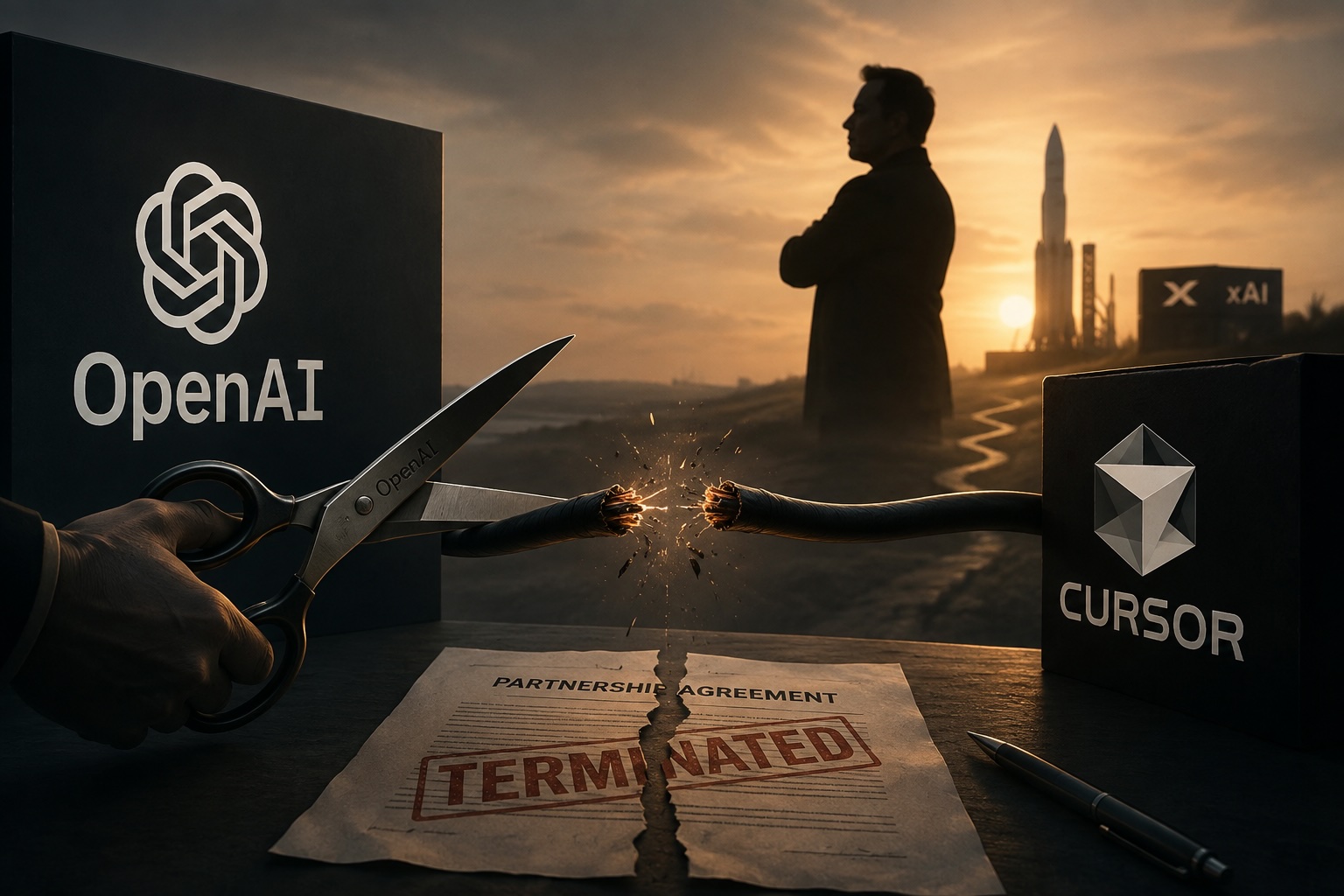
OpenAI, the company behind ChatGPT, announced late Friday that it is ending its partnership with Cursor, cutting off the coding tool’s access to its models on November 12. The move comes two weeks after SpaceX completed its $60 billion acquisition of Cursor’s parent company, Anysphere, folding the popular AI coding assistant into Elon Musk’s growing SpaceXAI division.
In a post on its website, OpenAI said the decision came down to trust, not technology. “We cannot be confident that SpaceX will use our technology within our terms of service, based on our experience with Elon Musk’s companies violating contracts,” the company wrote. OpenAI pointed to two specific incidents: X, now part of SpaceX, allegedly breaking the terms of an existing OpenAI contract after Musk bought Twitter.
That lawsuit is the backdrop for all of this. Musk cofounded OpenAI in 2015, left the board in 2018, and sued Sam Altman and Greg Brockman in 2024, arguing they abandoned the company’s nonprofit mission for profit. A federal jury sided with OpenAI in May, finding Musk waited too long to sue rather than ruling on the merits of his claims. Musk said at the time he would appeal to the Ninth Circuit, calling the outcome a “calendar technicality” rather than a real judgment.
SpaceX’s interest in Cursor predates that verdict by weeks. The company first struck a deal with Cursor in April, securing an option to acquire it for $60 billion or pay $10 billion for joint development work instead. As Teslarati reported at the time, the logic was straightforward: Cursor was paying retail prices to Anthropic and OpenAI, two of its most direct competitors, every time a developer used its product, while SpaceX had idle capacity on its Colossus supercomputer, roughly the equivalent of a million Nvidia H100 GPUs, that Cursor could use to train its own models instead. SpaceX exercised the option in June, days after its own IPO, and the deal closed in mid-August.
Once it closed, Musk moved fast. On an all-hands call with more than 1,000 Cursor employees, he reportedly told staff that SpaceXAI’s Grok was playing catchup in the AI race, unlike Tesla and SpaceX in their own markets, and singled out Anthropic as the company to catch. Cursor CEO Michael Truell now reports directly to Musk inside SpaceXAI.
Losing OpenAI’s models leaves Cursor leaning harder on Anthropic’s Claude, which has its own compute agreement with SpaceX, and on Cursor’s in-house Composer model, the one SpaceX’s compute was supposed to accelerate in the first place. OpenAI framed the November deadline as maximum notice under its contract, and said it wants to “go above and beyond” to help developers through the transition. Whether Anthropic makes the same call is now the open question in AI coding.
Investor's Corner
Tesla Robotaxi gets a massive upgrade in Nevada
Nevada regulators just approved a massive expansion of Tesla’s robotaxi fleet across the entire county.
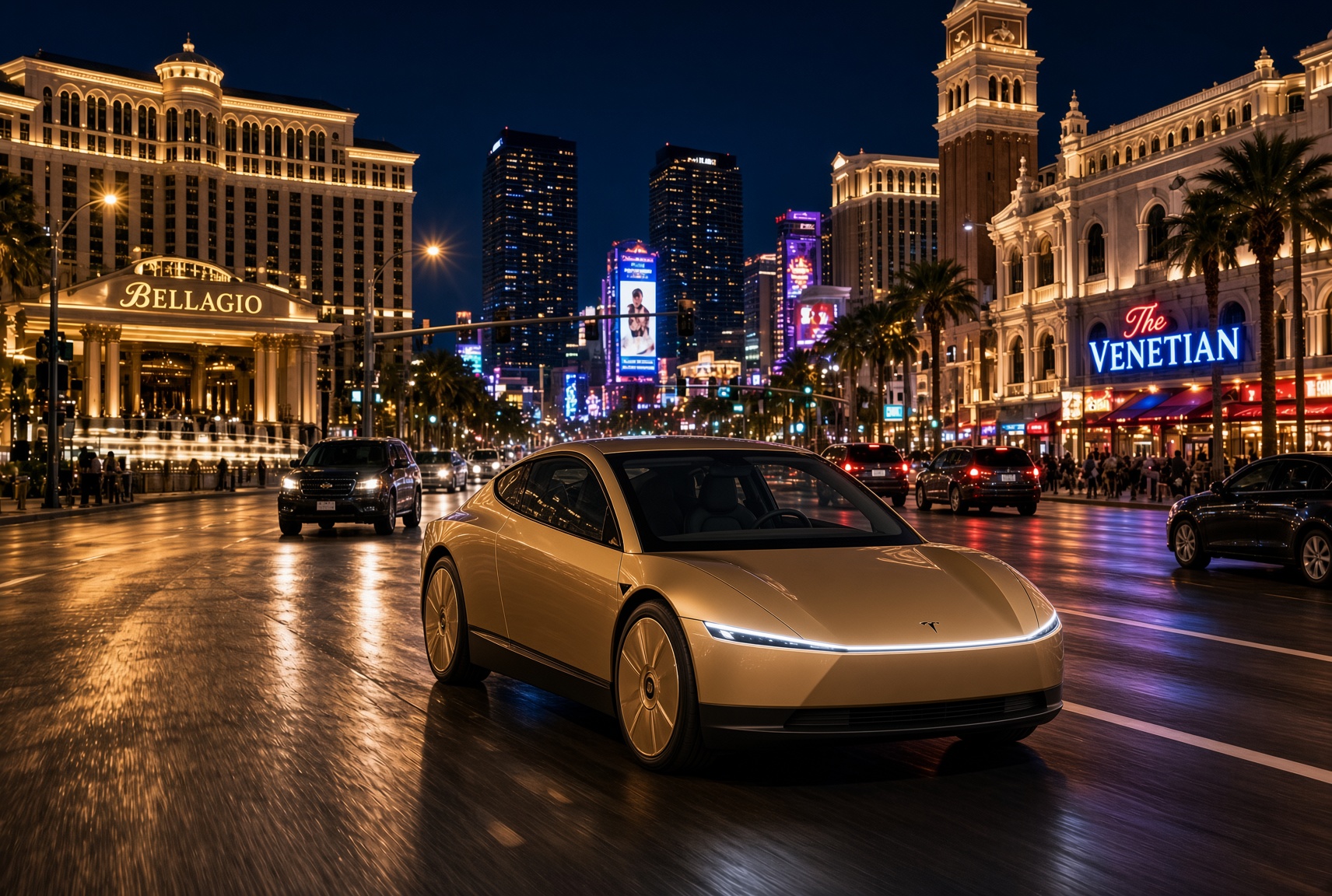
Tesla’s robotaxi footprint in Nevada just grew by roughly 500 times in a single regulatory vote.
The Nevada Transportation Authority approved Tesla’s full Autonomous Vehicle Network Company permit on Thursday, clearing the way for the company to deploy up to 5,000 driverless vehicles across Clark County over the next 12 months. The decision came during a four hour general session meeting that Tesla investor Sawyer Merritt watched live and reported on X, noting the vote replaces the interim order that had limited Tesla to just 10 robotaxis on a narrow stretch of the Las Vegas Strip.
EXCLUSIVE: Tesla has just officially received approval for its full Autonomous Vehicle Network Company permit in Nevada, clearing the way for Tesla to launch a paid public Robotaxi service in Las Vegas.
This officially allows @Tesla to deploy up to 5,000 robotaxis over the next… pic.twitter.com/DPs5UtUlrE
— Sawyer Merritt (@SawyerMerritt) August 20, 2026
That earlier cap, covered here after it surfaced on August 13, came with restrictions that looked stricter than what Tesla runs in Austin: a 45 mph speed ceiling, no airport pickups, and a geofence confined to the Strip corridor. The new approval extends Tesla’s operating authority to all of Clark County, with room to request an even wider geofence across the state.
Tesla representatives at the meeting said they have no intention of putting 5,000 cars on the road right away. Commercial rides are expected to start within 30 days, pending vehicle inspections, insurance filings, and fare approval, the standard steps every robotaxi operator in Nevada has had to clear.
Tesla’s own Robotaxi account replied to the news with a short line, The golden future is upon us.
The timing lines up with Tesla’s broader robotaxi push this month. The company is preparing to open Cybercab rides to the public in Austin as soon as this month, and it opened a sweepstakes for riders to win a seat at the launch event. Tesla filed its original application for a 5,000 vehicle Nevada fleet back in June, a request regulators trimmed to 10 vehicles when they issued the interim order in July. Thursday’s vote effectively grants the number Tesla asked for from the start.
Zoox, the Amazon owned robotaxi operator, has run in Nevada since 2025 and was capped at 100 vehicles before Thursday’s decision. Tesla’s new ceiling puts it well ahead of that comparison on paper, though the company has said its actual fleet size will depend on how quickly FSD v15 rolls out, the software update executives have called the gateway to scaling unsupervised robotaxi operations nationwide.
Elon Musk
SpaceX’s next trillion dollar bet has nothing to do with rockets, Musk tells staff
Elon Musk told SpaceX staff AI revenue will soon dwarf rockets and Starlink combined entirely.
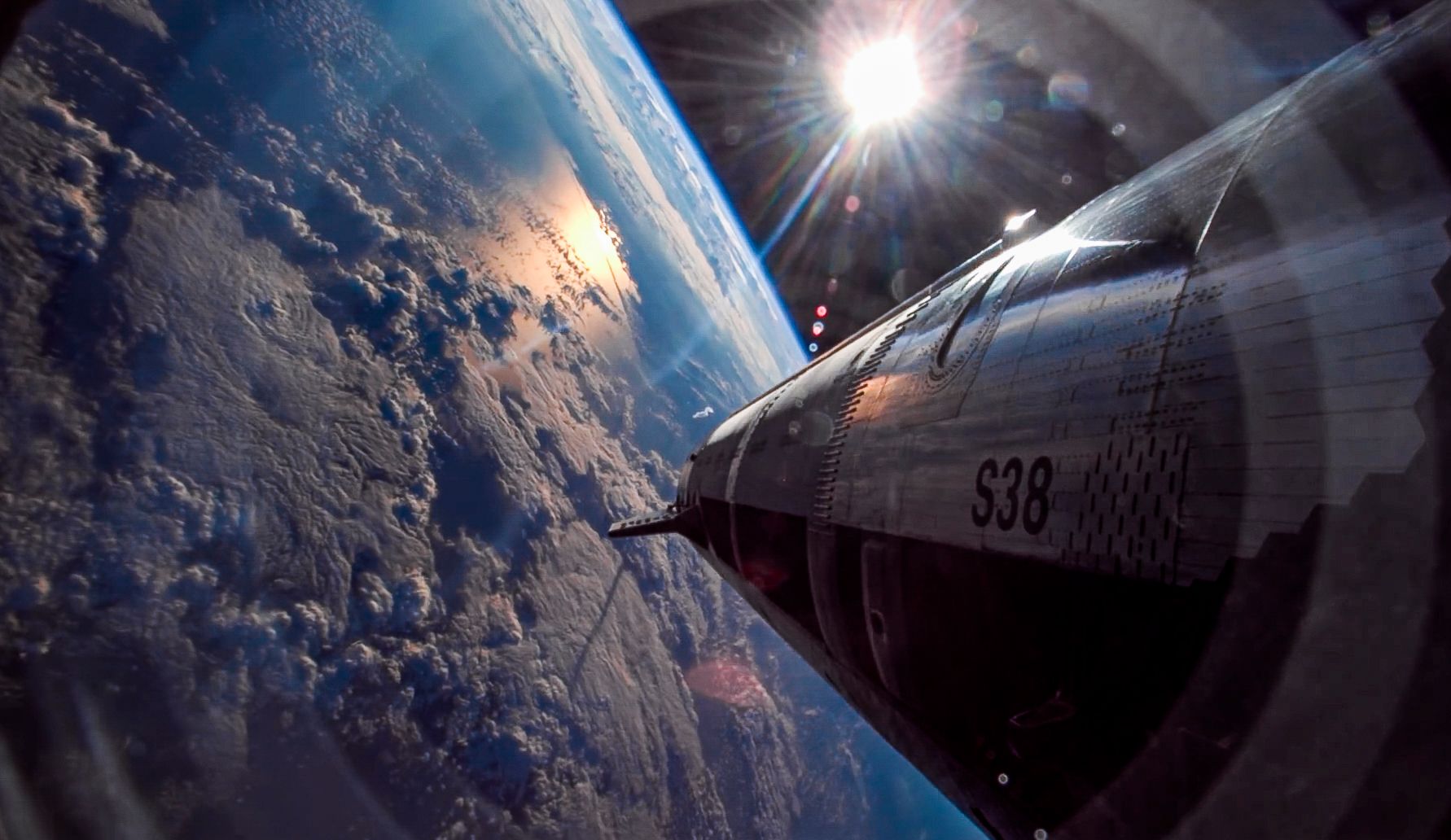
Elon Musk told SpaceX employees this week that artificial intelligence, not rockets, will soon carry the company’s revenue. In a roughly 29 minute internal address posted on SpaceX’s X account on Tuesday, Musk said AI revenue will pass every other line of business at SpaceX “probably in September” and pull further ahead by the fourth quarter.
The numbers he gave are specific. SpaceX currently runs 1.4 gigawatts of AI compute capacity. Musk wants that at 10 gigawatts by the end of 2027, a jump he tied directly to revenue: “if we bring 10GW of AI online by the end of next year, it will be $300 billion to $500 billion a year in revenue.” He called those “big numbers,” which undersells a projection larger than what most countries produce in a year.
We made rockets reusable and are rebuilding the internet in space. The next challenge: making life multiplanetary and understanding the true nature of the universe
Watch @ElonMusk deliver a company update to @SpaceX employees pic.twitter.com/5c8rxoCQfu
— SpaceX (@SpaceX) August 11, 2026
Musk went further on where AI fits into SpaceX’s future. “Probably in four or five years, AI will be 99% of the value of SpaceX,” he told staff, adding that digital intelligence would eventually run “a trillion times” ahead of biological intelligence as computing scales. He tied that growth to the company’s founding mission, telling employees “we must win on AI, because the future is overwhelmingly AI and robots,” with the payoff meant to help fund Starship and a Mars program that increasingly runs through Terafab, the joint Tesla, SpaceX and xAI chip plant.
Elon Musk launches TERAFAB: The $25B Tesla-SpaceXAI chip factory that will rewire the AI industry
None of this is entirely new territory. SpaceX told investors much the same story during its first earnings call as a public company on August 4, where Musk moved the company’s $1 trillion revenue target up a year to 2030 and said Starlink could someday carry a majority of the world’s internet. What the all hands video adds is a hard deadline and a specific power figure Musk had not given publicly before, along with a franker pitch to his own workforce that AI, not launch cadence, is now the thing SpaceX is betting its future on.
The AI revenue itself is not coming from SpaceX training its own models. It is largely Starlink acting as the network layer for xAI’s workloads, plus SpaceX renting out compute capacity directly, the same approach behind the roughly $16 billion the company spent on AI infrastructure in a single quarter.
Musk closed the video with a pitch aimed at recruiting and retention rather than investors, telling employees that anyone who helps SpaceX win the AI race will eventually get the chance to go to the moon or Mars themselves. Whether SpaceX can turn 1.4 gigawatts into 10 in seventeen months is the more immediate question, and one that will show up in quarterly numbers well before anyone leaves Earth.

Tesla Cybertruck targets job site crews with new Tailgate Utility Track and Bed Gear Box accessory

Tesla opens Cybercab rides to the public, with no steering wheel or pedals


