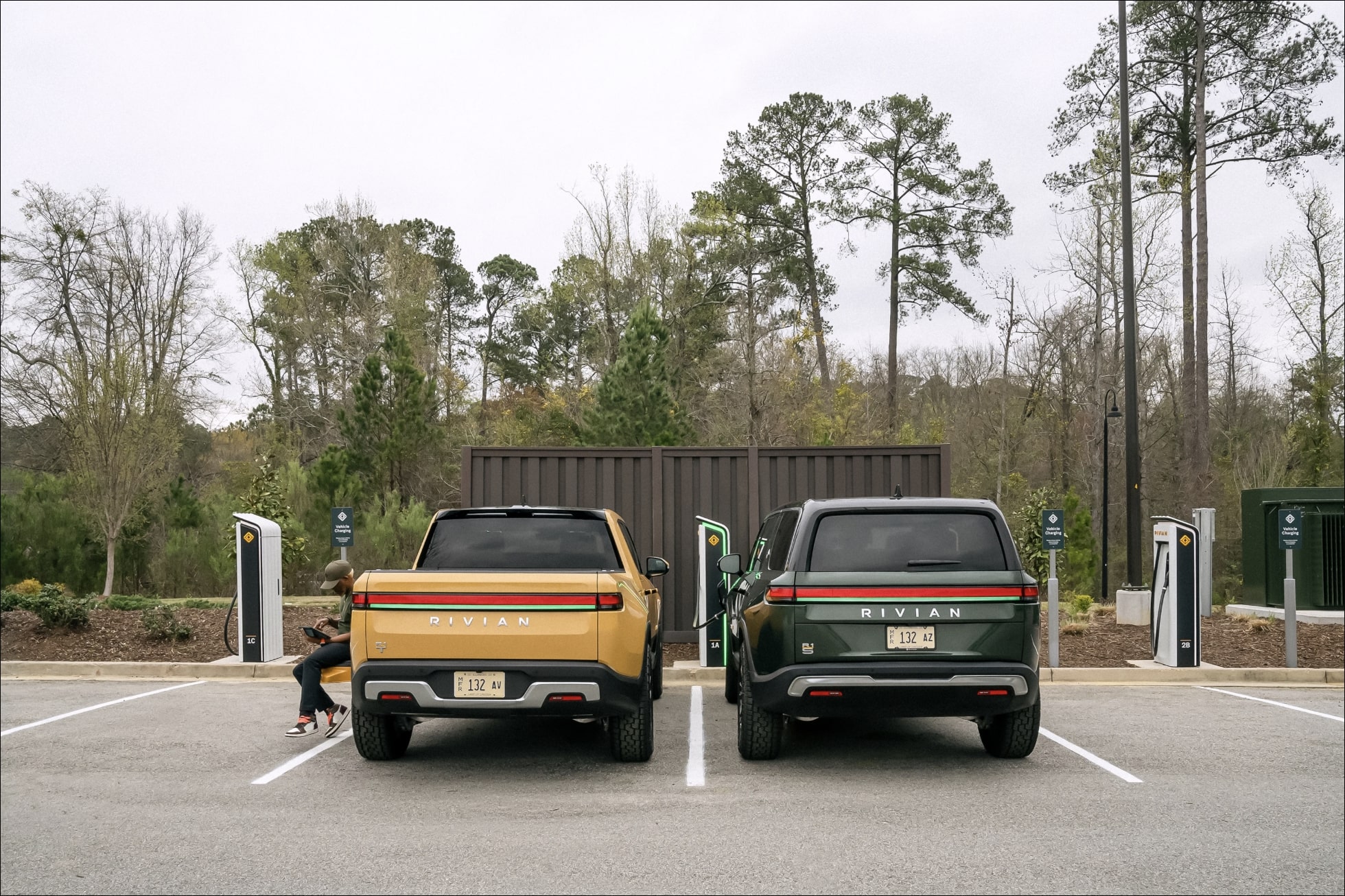

The Rivian CFO has made several announcements at the recent Bank of America Securities Summit, enticing investors and fans alike.
Rivian is finally catching its stride following a successful first quarter of the year, and coming off this excellent production ramp; the automaker is headed toward a whole new set of challenges, relating to everything from its second-generation R2 vehicle to its profitability to its ongoing R1 truck ramp. Luckily, the company’s CFO, Claire Rauh McDonough, released new information covering these points at last week’s Bank of America Securities Summit.
@RivianUpdates initially reported the tsunami of Rivian announcements on Twitter in a lengthy thread covering the numerous statements. Still, they can essentially be boiled down to three main points, R1 production updates, the Van production ramp, and R2 updates, along with a couple of minor updates.
Rivian’s CFO revealed a TON of important information via BofA Securities Summit: $RIVN ?#Rivian @Rivian @RJScaringe
• Rivian anticipates achieving a POSITIVE gross profit by H2 of 2024
• Rivian is aiming to build 85K R1s in 2024.
• R2 production capacity will be 200K units… pic.twitter.com/YZiyz02aUN
— Rivian Updates (@rivianupdates) April 7, 2023
-
-
R1 Production Updates:
Perhaps the most notable announcement from the BofA summit is the news regarding the company’s premier truck offering, the R1 lineup. Foremost, Rivian remains on track to achieve profitability by the second half of 2024, motivated essentially entirely by R1 and van deliveries. Further, while McDonough did not disclose the total number of backlog orders, the company anticipates completing all of its pre-March price increase orders by mid-2023. It has a backlog extending “well into 2024” with orders from after the price increase.
On top of this sales success, Rivian is learning some surprising things about its newest customers, primarily their price point. Rivian’s CFO notes that the automaker has seen the average purchase price of its trucks steadily increase, indicating that more premium buyers are coming to the automaker, who are typically more willing to purchase the optional add-ons. However, following these comments, the company executive noted that Rivian does not currently plan to increase the base price of its R1 vehicles.
Looking to the future of the R1 vehicles, the CFO notes that Rivian plans to produce 85,000 vehicles annually by 2026, a production number that the automaker has previously stayed tight-lipped about.
R2 Design and Production Updates:
As the Rivian R1 vehicles have continued to age, the anticipation for the company’s next generation “R2” trucks has built. And while Rivian CEO RJ Scaringe has noted the business plans to make the upcoming truck a more affordable model, other details have yet to be revealed.
-
Most surprising to investors was the CFO’s bold estimation of R2 production, which is anticipated to begin in the 2025-2026 timeframe. Rivian aims to produce 200,000 R2 trucks during 2026 and will then seek to double that number as its next production goal, though a timeframe for that upgrade was not shared.
Regarding the upcoming truck’s market position, sadly, Rivian remains secretive. However, the CFO noted that the new vehicle would aim to compete with other luxury volume sellers like the Tesla Model Y. With this information, many now anticipate the truck to start at around $40,000.
Finally, Rivian’s CFO pointed out that R2 aims to be both a volume seller and a global vehicle, meaning it will be available in numerous markets. Currently, Rivian has been supply constrained and hence, a strictly North American brand, but that may change in the near future, with Europe likely being the company’s next target.
Electric Delivery Van Announcements:
Despite Amazon’s recent announcement that it would be decreasing the number of vans it would be buying this year, Rivian remains entirely focused on the production ramp of its offering. One of Rivian’s top priorities has been the production of its Electric Delivery Van (EDV), which has been taking the streets of the United States by storm. Highlighting this focus, the company CFO noted that the van takes “enduro-motor” priority over the dual-motor R1 vehicles. Moreover, the van received two notable production upgrades in Q1 of this year, integrating the new motor and Rivian’s new LFP battery pack.
Other Announcements:
Besides these amazing announcements on its most exciting products, Rivian also revealed updates coming to its Adventure Network charging infrastructure. To aid its rapid development, Rivian will now be looking to join the “Federal Charging Fund” in the United States, making it eligible to receive incentives from the federal government to place its charging network. However, as a result, Rivian will be forced to open its network to other EVs. Nonetheless, with the feds willing to put up as much as 80% of the cash required for installation, many would consider Rivian foolhardy to decline the offer.
-
What do you think of the article? Do you have any comments, questions, or concerns? Shoot me an email at william@teslarati.com. You can also reach me on Twitter @WilliamWritin. If you have news tips, email us at tips@teslarati.com!




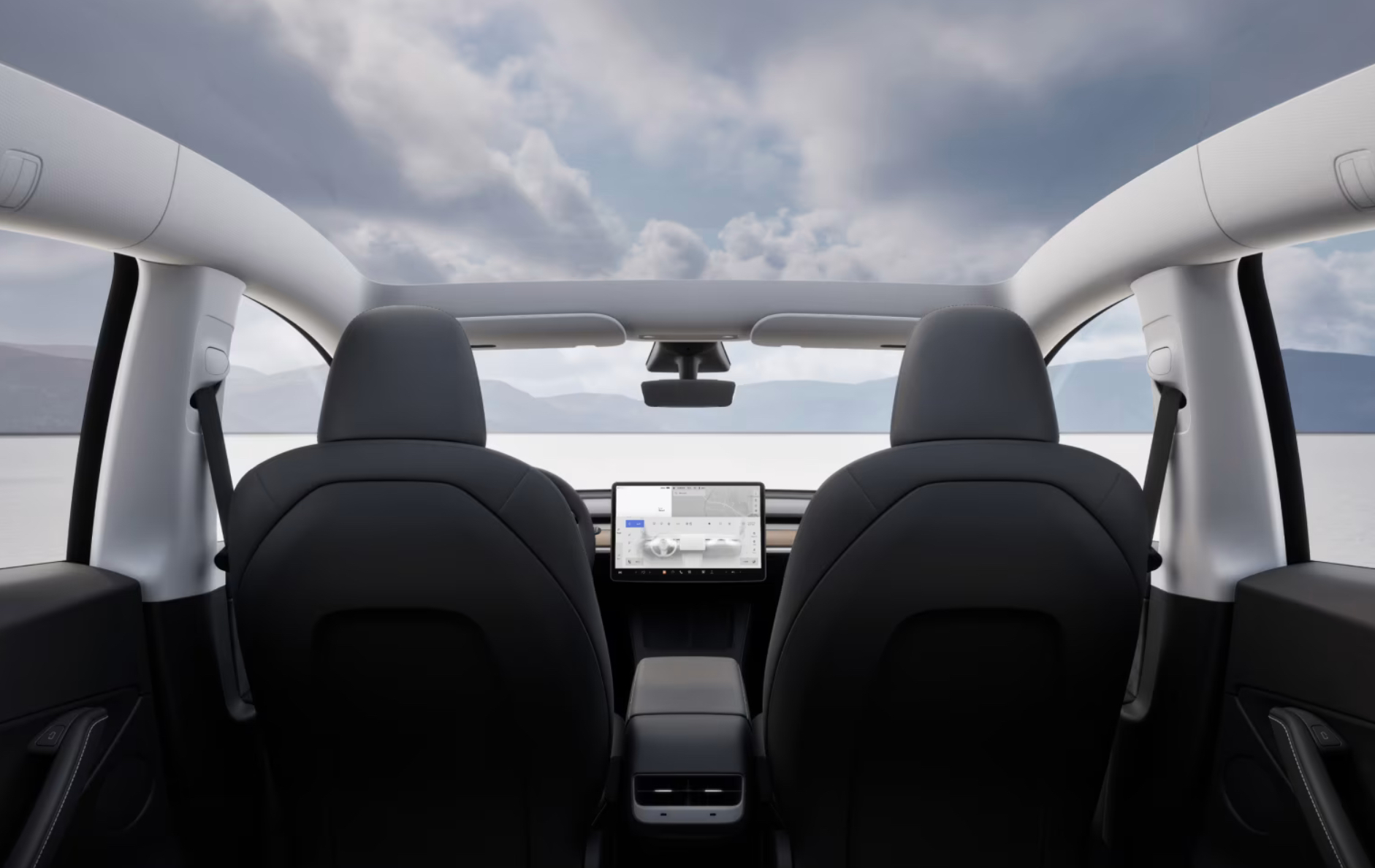
Tesla has started to deploy the 2026 Summer Update to owners across its fleet, and among the biggest changes are improvements to Navigation, a new startup animation for the Model 3 and Model Y, Caraoke scoring, and new capabilities for Grok.
As the update has started making its way to some cars, we can now see a few of the features operating in real-time. We will show you what some of the new features look like in this article, along with some additional details on what changed.
Not all of the new features in the 2026 Summer Update have quite made an appearance, but some of them have, so we’ll show those here:
New Animation Screen for 3/Y
Tesla is rolling out a new startup animation for Tesla Model 3 and Model Y owners. This is present in Launch Edition and Performance Model 3 and Model Y, but other trim levels do not have anything like this.
The new animation screen on Model 3/Y with the 2026 Summer Update
Apparently color will also be customizable: pic.twitter.com/wSdwggtG3S
— TESLARATI (@Teslarati) July 27, 2026
-
Owners can adjust the color associated with the startup animation to suit their preferences. It is a surprise that more automakers do not focus on this animation for their vehicles; it can be a great first impression piece and make the car immediately feel more luxurious.
Tesla has included this on more premium trims, but it is nice to see it on the Model 3 and Model Y.
Grok Improvements
Grok can now adjust more things in the car outside of the Navigation system. Now, drivers can adjust anything from climate to driving settings by simply speaking to the AI assistant in the car:
@Tesla‘s AI assistant (Grok) with its new vehicle commands in action.
Set the climate, your destination and vehicle settings all in one go! pic.twitter.com/0bBTqaAk6G
— Not a Tesla App (@NotATeslaApp) July 28, 2026
You don’t even have to push a button, either. Instead, you can just say “Hey, Grok,” if you have it enabled. That feature rolled out with the 2026 Spring Update just a few months back.
-
This is a great feature, especially pertinent for the Robotaxi platform, as there will be no buttons inside the Cybercab when it eventually starts giving rides to the public. It also broadens Grok’s capabilities, which were relatively limited in terms of vehicle setting adjustments beforehand.
Tesla briefly offered one Robotaxi part in its Parts Catalog for your personal car, only to remove it just a short time after it was first noticed.
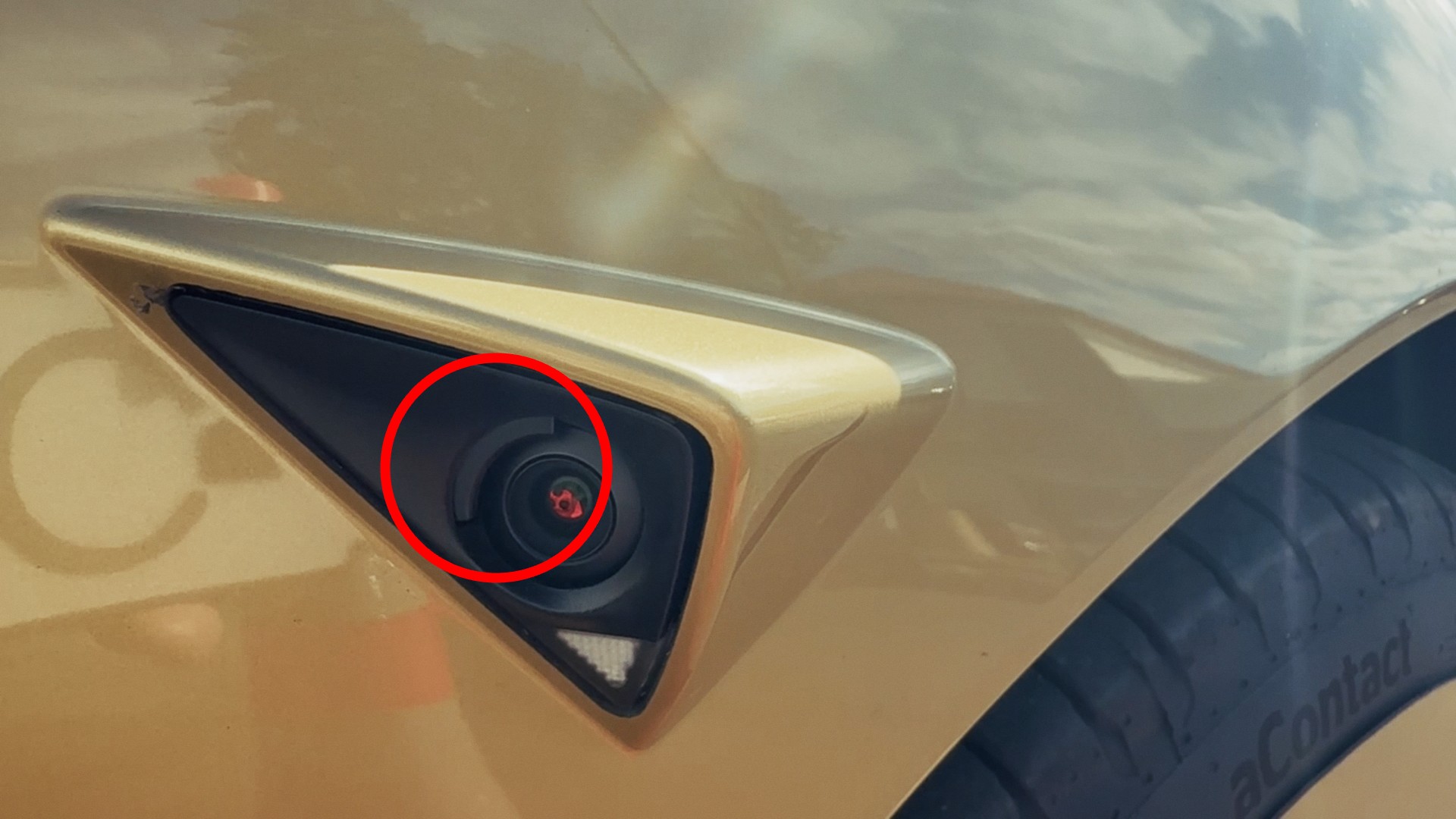
Tesla’s Robotaxi camera washer apparatus was briefly available for purchase on the company’s Online Parts Catalog. The camera washer was first noticed on Model Y Robotaxi vehicles about six months ago in Austin.
🚨 Tesla looks to have installed Camera Washers on the side repeater cameras on Robotaxis in Austin
pic.twitter.com/xemRtDtlRR— TESLARATI (@Teslarati) January 23, 2026
First noticed by Not a Tesla App, the Camera Washer entries appeared for the new “Juniper” Model Y under a category called “Halo,” which has also now disappeared. Interestingly, Halo probably is related to Tesla’s internal “Project Halo,” which was a project that aimed to retrofit customer-owned Model Ys into functional Robotaxis.
This hardware addition would likely be required for the vehicle to operate as a Robotaxi, as the Camera Washer seems to be a non-negotiable part of the vision-based system Tesla utilizes for self-driving efforts.
However, this part has since been removed and is no longer visible on the EPC.
-
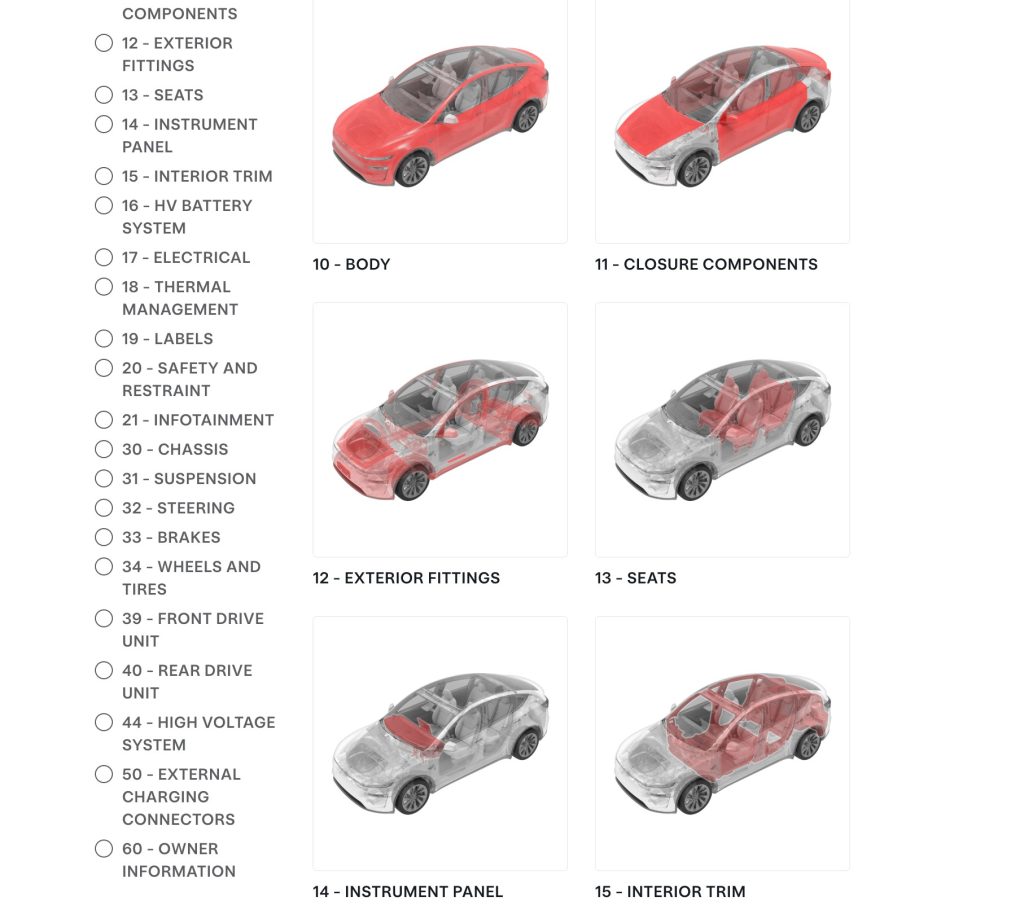
Now the true question lingers: Why would Tesla add this Camera Washer to the Model Y parts catalog? Is it planning to make it available for owners to utilize on their own cars for personal use, or will it become a prerequisite for Robotaxi operation in customer-owned cars?
While discussing the upgrade options for Hardware 3 vehicles during the Q1 Earnings Call, Tesla CEO Elon Musk had said that the company could establish small, satellite shops that would upgrade cameras and self-driving computers. Perhaps this same strategy could be utilized for vehicles that want to be included in Robotaxi but do not have the correct hardware.
AI4 is currently represented as capable of unsupervised self-driving, and the same was said about HW3 at one point, only for Tesla to admit last quarter that it would, unfortunately, not be possible. Perhaps AI4 vehicles might need this camera washer as a prerequisite, just as HW3 cars will need that camera and computer upgrade.
This could be the first hint of that’s where we are headed.
Tesla has started rolling out a broader change to the ride experience for its Robotaxi fleet by silencing turn signals, but the change is certainly polarizing.
Tesla has generally made it clear that its purpose-built ride-hailing platform, Robotaxi, will cater to the rider in nearly every way possible. This includes having climate preferences, music, and other personal settings loaded up in the car as the rider enters.
But Tesla is taking it a step further by muting turn signal chimes altogether, a change that appears to be a way to make the ride more peaceful:
Tesla has finally turned off the blinker/turn signal noises in their Model Y Robotaxis.
This is a small update, but will definitely be noticeable for riders. It didn’t really make much sense to leave the turn signal sound on when it’s Unsupervised. pic.twitter.com/ITwx60PAMO
— Sawyer Merritt (@SawyerMerritt) July 27, 2026
However, there are a handful of people who are not thrilled about this change. Turn signals are a conditioned part of the human mind for those who ride in a car regularly.
-
Taking a turn without one feels strange and odd, and not hearing it click while activated could set off some alarms for riders, who might use the noise as confirmation that other drivers know of their intention to turn.
I kind of like it being on, threw me off when riding with Zoox who has had it disabled
— Dan Burkland (@DBurkland) July 27, 2026
Turn signal noises are still audible in customer cars, so if you use FSD in your personal vehicle, you will still hear the turn signal.
The move is certainly one that is unique, but not one that separates it from other ride-sharing services. In a normal car, the clicking sound confirms to the driver that the blinker is active. In a fully driverless Robotaxi, that feedback serves no purpose for passengers, other than peace of mind.

Tesla Summer Update begins rolling out: a look at the new features

Tesla briefly offered this Robotaxi part for your personal car


