News
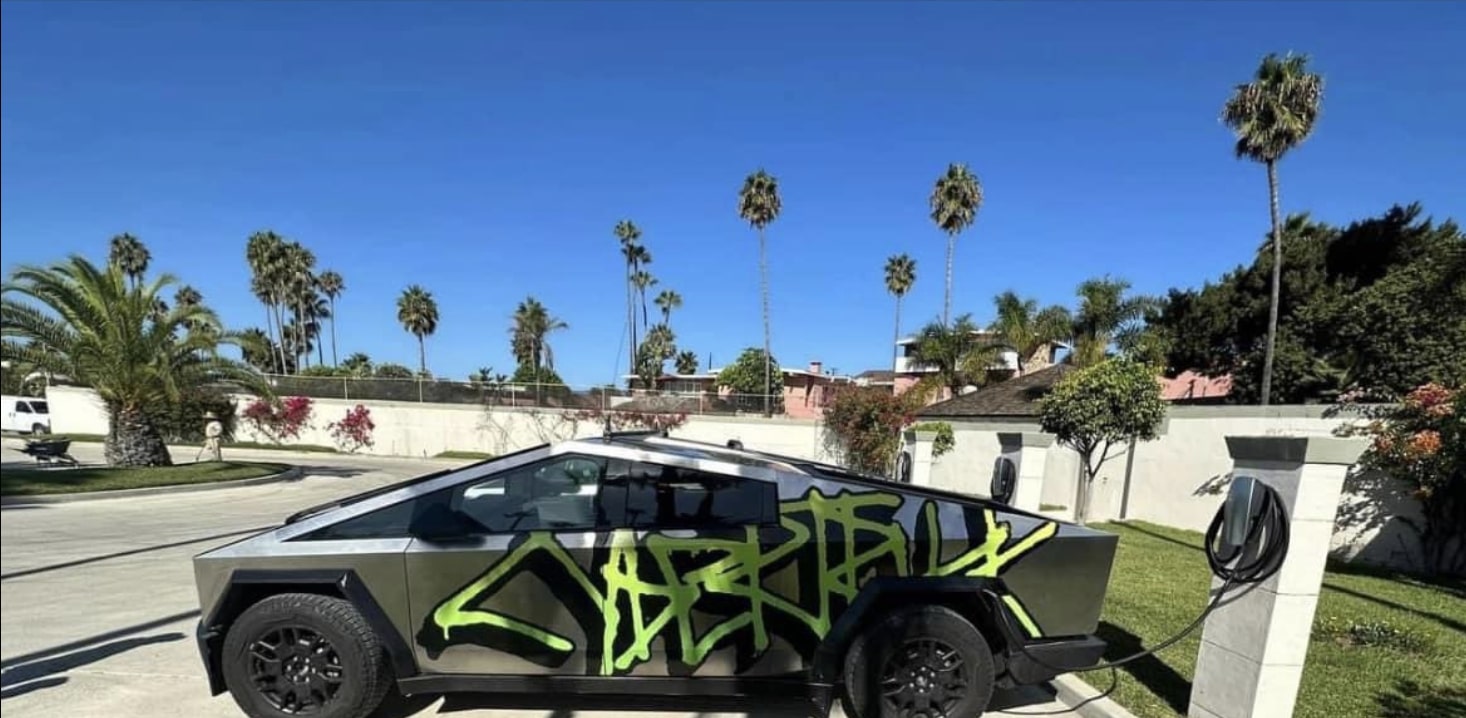
Tesla teases crazy new graffiti wrap for Cybertruck

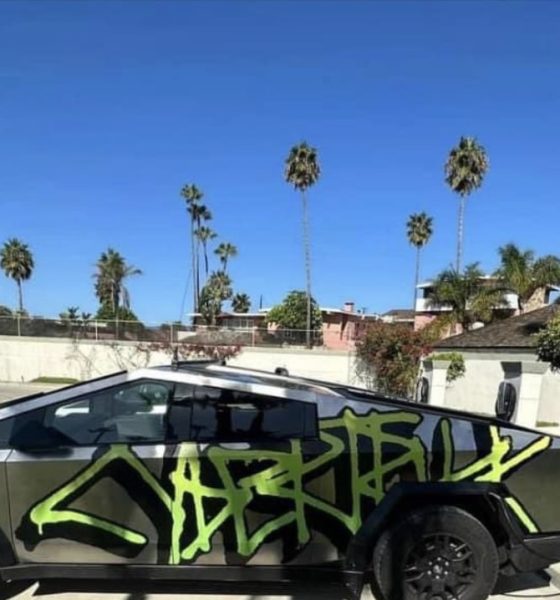
Tesla rolled out its newest wrap for the Cybertruck by teasing a never-before-seen graffiti design on the side of the all-electric pickup, adding to the number of interesting designs we have seen so far on the vehicle.
Tesla has said in the past that owners of the Cybertruck would be able to wrap it in any color or pattern, and while details on whether this will be done in-house or by a third party remain up in the air, we are seeing no shortage of designs.
Initially, Tesla rolled out some different camouflage designs that came in colors like white and black, black and blue, and black and grey. Then, Tesla started poking fun at other automakers by dressing up the Cybertruck in wraps that resembled rival pickups, like the F-150 from Ford and the Toyota Tundra.
Tesla appears to have wrapped a Cybertruck to look like an F-150 Lightning
These designs all but proved that Tesla will allow owners to wrap the Cybertruck in pretty much anything they want. It seems there is no limit to what will be available, just as CEO Elon Musk said some years ago.
Now, the newest wrap has been spotted by Erik Johnson on Facebook, who shared images of the Cybertruck in Mexico sporting a brand new wrap that has not yet been seen on the roads:
-

- Credit: Erik Johnson | Facebook (via Greggertruck on X)
-
- Credit: Erik Johnson | Facebook (via Greggertruck on X)
Why the truck was in Mexico is unknown, but Tesla has been testing release candidate Cybertruck builds for some time as production and initial deliveries are slated to occur soon.
In fact, a note from Wedbush’s Dan Ives yesterday that discussed Tesla’s delivery figures for Q3 noted that the Cybertruck will be delivered by the end of October:
“…we believe Tesla is now set to be entering the next stage of growth for the company globally with the Model 3 refresh front and center in China and Cybertruck production set to kick off beginning around Halloween.”
The EPA has yet to publish any documents indicating that the Cybertruck has been approved with a Certificate of Conformity that would allow it to enter the stream of commerce. The agency could not comment on the status of the Cybertruck’s testing, nor would the agency disclose whether the pickup has been subject to testing yet.
However, it is worth mentioning that Tesla has evidently been crash-testing Cybertruck units for some time, and it is more than likely heading toward its conformity certificate if the automaker is preparing for deliveries by the end of the year.
I’d love to hear from you! If you have any comments, concerns, or questions, please email me at joey@teslarati.com. You can also reach me on Twitter @KlenderJoey, or if you have news tips, you can email us at tips@teslarati.com.


Elon Musk
Ukraine says Starlink is cutting out its military drones as Poland calls out Elon Musk
Ukrainian officials allege SpaceX limited military Starlink speeds, disrupting drone missions; SpaceX has not commented.

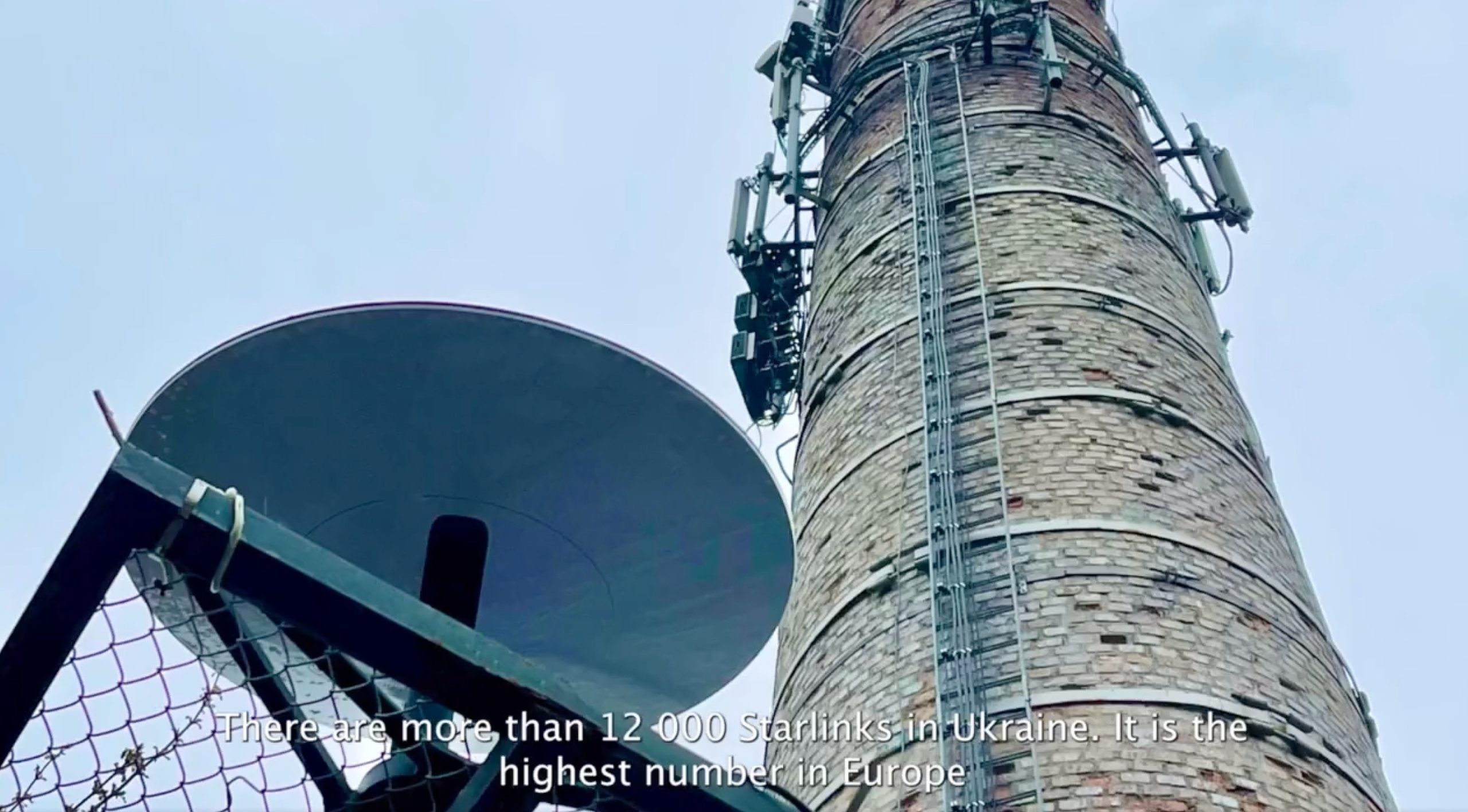
Ukrainian officials are accusing SpaceX of placing a speed limit on the military version of Starlink that their forces use to fly drones, but SpaceX has not confirmed that any change was made. Presidential adviser Serhiy Beskrestnov said in a Telegram post on Wednesday that Starshield terminals have begun losing service when they move faster than about 100 miles per hour, according to a Reuters report. “Our defense forces did not receive a warning about this limitation, and this led to the disruption of several missions,” he wrote.
Ukraine’s 7th Rapid Reaction Corps told Reuters that connections dropped for 10 to 20 seconds at just 68 to 75 mph, which made the drones harder to control. Volunteer Serhiy Sternenko, citing military reports, said the dropouts are now starting at 37 to 43 mph. These accounts come from Ukrainian officials and military sources and have not been independently verified. Regular civilian terminals were reportedly not affected, according to EUalive.
.@POTUS: We told Zelensky, ‘You can do whatever you want to Russia, but don’t hit the refineries because that’s a world problem.’ And what does he do? He goes and hits the diesel fuel. He better damn well stop. https://t.co/CdRlMcPlKr
— Rapid Response 47 (@RapidResponse47) October 10, 2026
SpaceX has not publicly commented or explained what, if anything, changed. Beskrestnov and other Ukrainian officials believe the issue is intentional and point to the timing. Washington has been pressing Kyiv to stop long range strikes on Russian oil refineries after President Trump called for an “energy ceasefire,” and Musk posted on Saturday that “Zelensky has gone too far.” EUalive noted that neither Ukrainian nor Polish officials have presented evidence that the limit was ordered by Washington or by SpaceX, so the link to politics remains an allegation. Other explanations, such as a technical or policy change affecting fast moving terminals, have not been ruled out.
Poland’s foreign minister, Radosław Sikorski, responded on X by quote tweeting a Kyiv Independent report and writing: “Hey, @elonmusk, big man, are you playing politics with your products again? As your European customers, we are watching you.” Poland is the largest funder of Ukraine’s Starlink service, having supplied more than 29,000 terminals and covering operating costs Sikorski has put at roughly $50 million a year. The wording echoes their 2025 clash, when Musk told Sikorski to “be quiet, small man.” At the time of writing, neither Musk nor SpaceX had responded to the claims.
Hey, @elonmusk, big man, are you playing politics with your products again?
As your European customers, we are watching you.— Radosław Sikorski 🇵🇱🇪🇺 (@sikorskiradek) October 14, 2026
The dispute sits on top of a long history. Musk confirmed in February 2022 that Starlink was active in Ukraine after a request from a Ukrainian minister. That October, SpaceX asked the Pentagon to share the bill and Musk said the cost was approaching $20 million a month, before he reversed course and said SpaceX would keep paying. In December 2024 the Pentagon moved some of those terminals onto the Starshield service, the government version now at the center of the complaints.
SpaceX has also changed how its network treats certain terminals in Ukraine before, and that time it was with Kyiv’s cooperation. In February, Ukrainian officials confirmed that terminals believed to be used by Russian troops were disabled after coordination with SpaceX, a step that Ukrainian commanders later said hurt Russian assaults. Whether anything similar is behind the latest reports is unclear, which is why Kyiv is asking for answers.
Ukraine is already looking at backups. Defense tech company Stetman is developing its own satellite system, UASAT-NANO, and officials in Europe have discussed alternatives to Starlink since early 2025, though none match its scale yet.
Elon Musk
FAA kicks off review of SpaceX’s bid to fly Starship nearly every day
FAA is reviewing SpaceX’s plan for 456 Starship launches a year, up from 25 today.
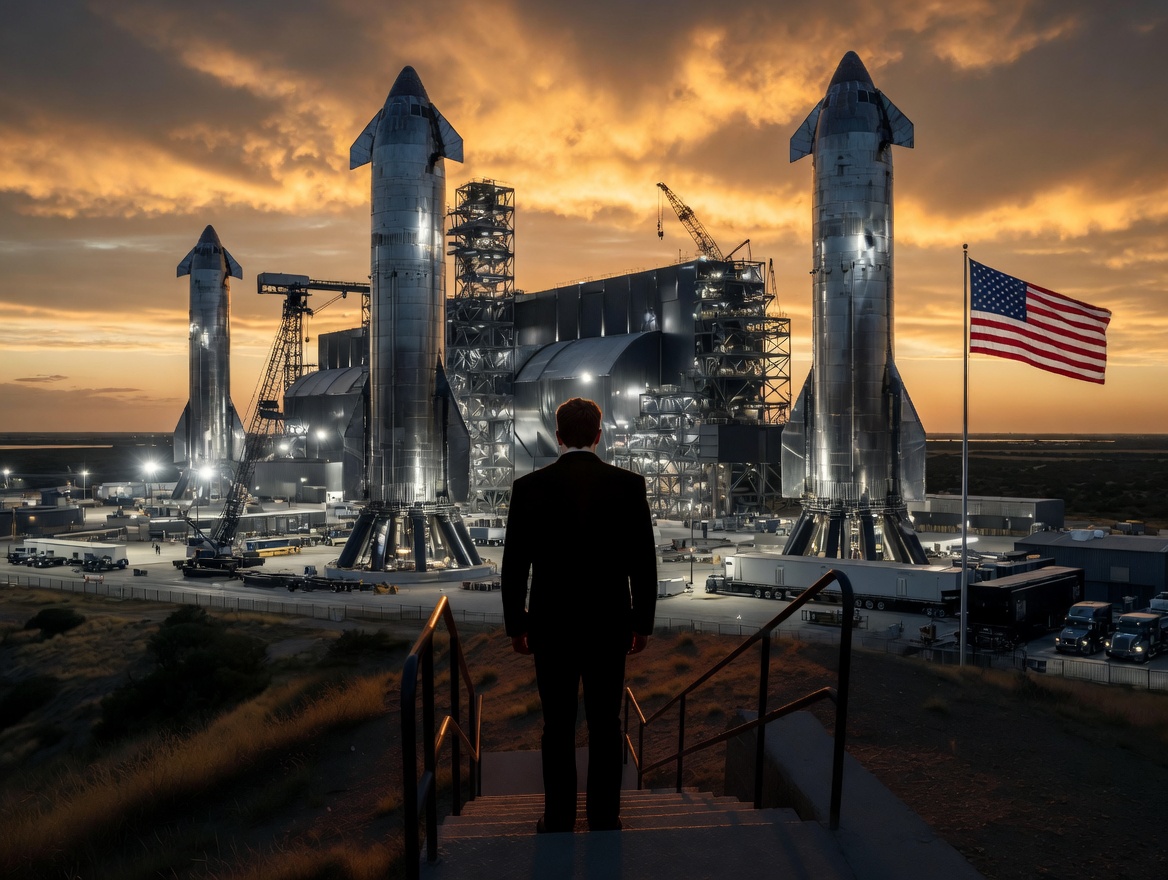
The FAA said Tuesday that it will prepare an environmental impact statement on SpaceX’s proposal to run as many as 456 Starship launches and 912 landings a year from Starbase, Texas. SpaceX is currently authorized for 25 launches and 50 landings annually, which makes the request roughly 18 times the existing ceiling. The notice of intent is set to publish in the Federal Register on Wednesday.
The plan comes in two phases. Phase 1 would allow up to 100 launches and 200 landings a year, on any day and at any hour. Phase 2, which the FAA says could arrive within several years, would raise the limit to the full 456 launches, still at any hour but only on weekdays. The agency noted that 912 landings is the upper limit for the Texas facility no matter where a given mission begins, and that Starship and Super Heavy could come down at the launch site or in the Gulf and open ocean.
A draft statement will be released for public comment at a later date, and the FAA has not said when. According to the Federal Registar, written comments are due November 30 on regulations.gov under docket FAA-2026-12808, with in person scoping meetings on November 17 in Brownsville and November 19 in Port Isabel, plus a virtual session on November 18. The review will weigh air quality, wildlife, coastal resources, water, noise, and aviation, and the FAA said any increase beyond this proposal would need its own separate review.
The numbers look large next to what Starbase has actually done. Starship has flown three times from Texas this year, including Flight 14 on September 28, the first orbital flight, which deployed 26 Starlink V3 satellites. Bloomberg reported that Starbase has never launched more than five times in a calendar year. The current cap of 25 comes from an FAA approval in May 2025. In February, the agency also approved up to 44 Starship launches a year from Launch Complex 39A in Florida, so Phase 1 in Texas alone would more than double that allowance.
Musk has said Starship could eventually fly more than once per hour within less than a decade, per Bloomberg. The nearer term target is Flight 15. Musk said on October 10 that it is hopefully four to six weeks away and will try to catch the ship with the tower, as Teslarati covered. That flight still runs under the existing 25 launch limit, and so would every Starbase launch for as long as the new review takes.
As of mid morning Pacific time on Tuesday, SpaceX had not posted about the filing on its own account.
News
Tesla Roadster livestream: everything Tesla has revealed before Thursday night
Tesla will stream the Roadster event Thursday at 7:55 p.m. Central. Here is what’s known.
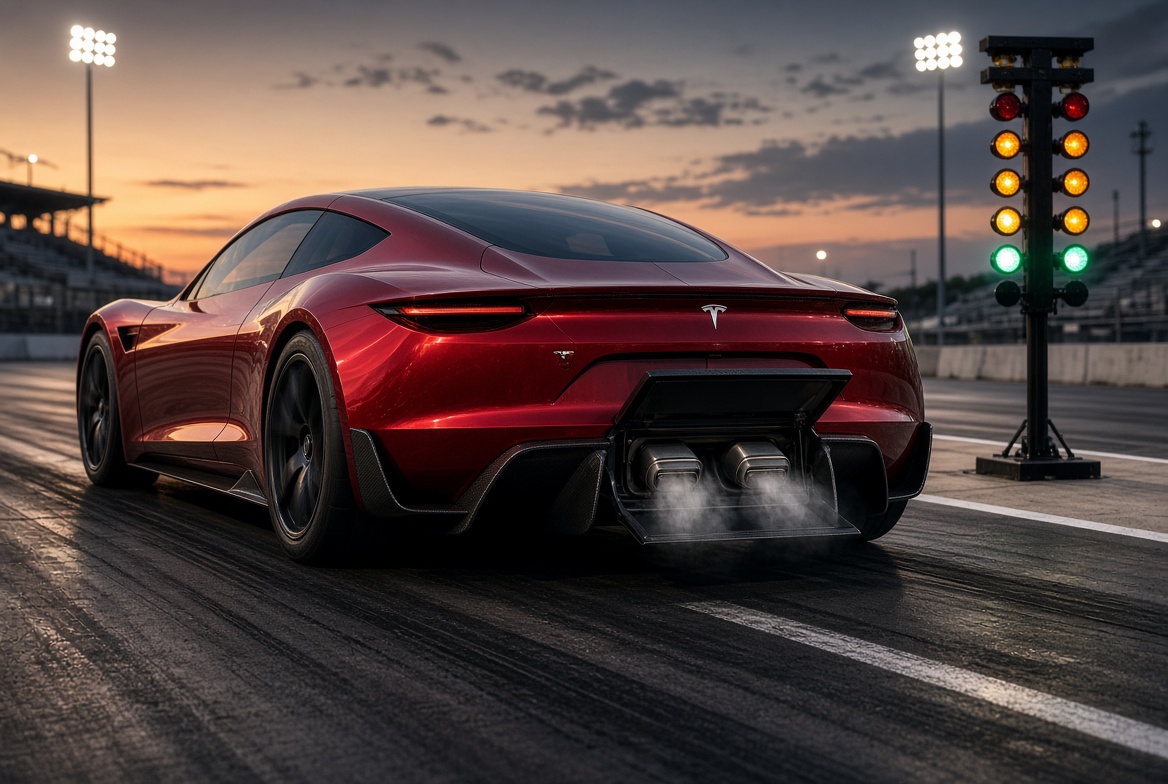
Tesla will stream its next generation Roadster event live this Thursday, October 15, at 7:55 p.m. Central, according to a post from the official Tesla account shared late Monday. Texas is on daylight time, and outlets have read the post as local Central time, which puts the Tesla Roadster livestream at 8:55 p.m. Eastern and 5:55 p.m. Pacific. The stream is expected on Tesla’s X account, where the announcement went up.
This is the second date for the event. Tesla posted a “Go for launch” image on September 12 that set the unveil for October 1, and invitations sent to reservation holders placed it in Waco, Texas, at 8:30 p.m. Eastern, for guests 21 and older with tickets that could not be transferred. Until this week, Tesla had not said the event would be broadcast at all.
Roadster event streaming live this Thursday at 7:55pm CST https://t.co/AbsmpVucui
— Tesla (@Tesla) October 14, 2026
On September 28, Tesla moved the event to October 15, citing severe weather and the fact that the demo can only be held outdoors. Elon Musk then said the cause was high winds, a comment that pushed speculation that the car will leave the ground on stage.
The event will be held in Waco, which sits close to SpaceX’s McGregor rocket test site, where the FAA closed airspace up to 10,000 feet from September 18 through October 2 for the original date. Another restriction covering Wednesday, October 14, has been reported near the site, which could mean a rehearsal, though that is unconfirmed.
What Tesla will actually show comes from speculative reports that the vehicle will be unmanned, and spectators will be kept several hundred yards back for safety. A SpaceX package is reportedly code named A71, and linked to what Musk has hinted at in the past – thrusters that could bring 0 to 60 mph down to about one second, compared with the 1.9 seconds quoted for the base car in 2017. Tesla also closed its Semi event with a Roadster teaser suggesting a design that looks different from the original prototype, and has said the event will include pricing, specifications, and production targets.
The 2017 figures remain the only official ones: 620 miles of range, a top speed above 250 mph, and prices of $200,000 for the base car and $250,000 for the Founders Series. Tesla reopened reservations last month with a $5,000 card payment followed by a $45,000 wire within ten days, and the deposit is refundable. Production is expected at Giga Texas in 2027 or 2028.
Tesla reports third quarter earnings on October 21, six days after the stream, so whatever price or timeline appears Thursday night will land just ahead of that call.

Ukraine says Starlink is cutting out its military drones as Poland calls out Elon Musk

FAA kicks off review of SpaceX’s bid to fly Starship nearly every day

Tesla Roadster livestream: everything Tesla has revealed before Thursday night

The Pentagon taps Elon Musk to design the battlefield of the future

SpaceX reveals how its 1 Million AI satellite network will work and prevent space collisions


