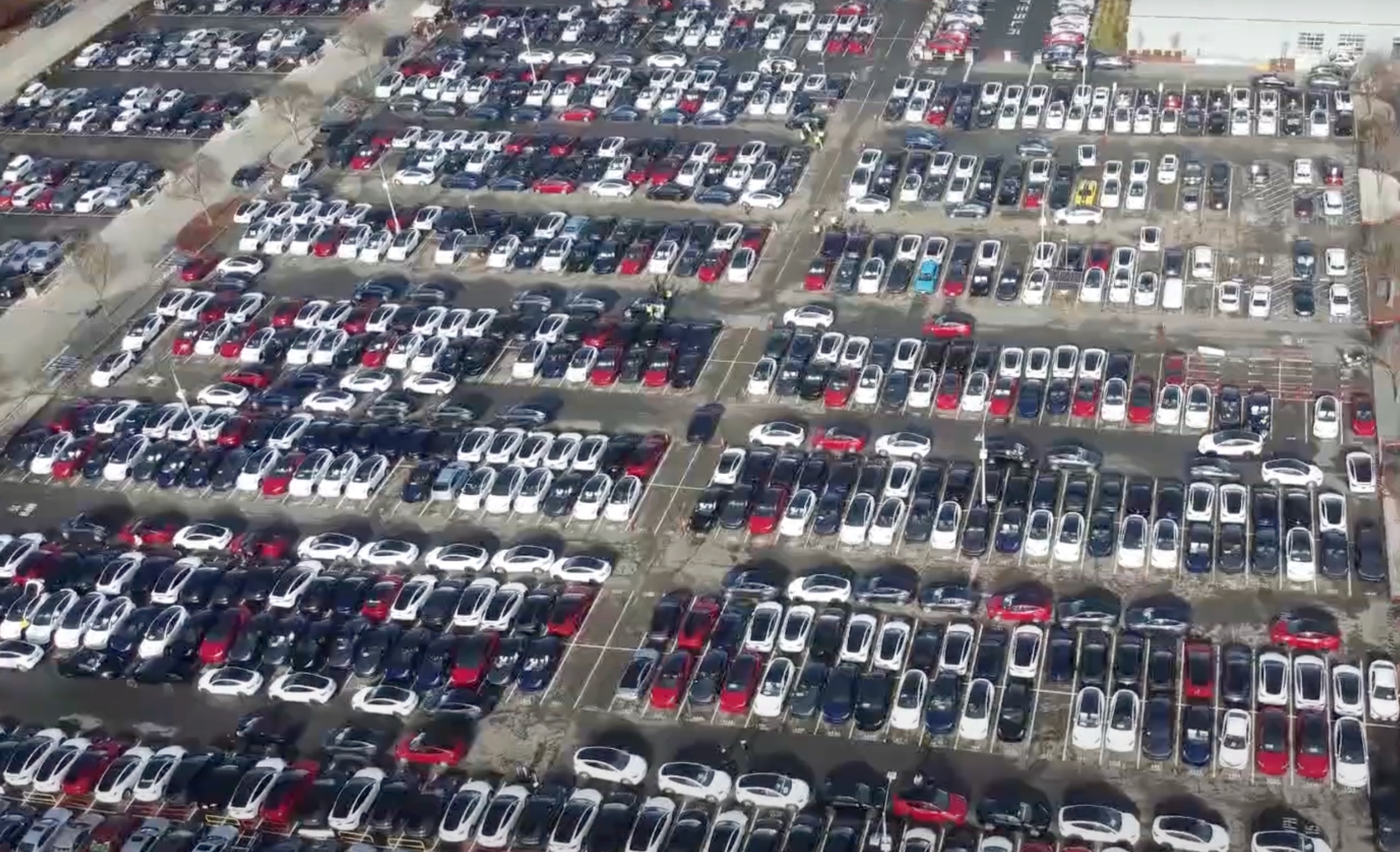

According to the United States (US) Treasury Department, more auto dealers are signing up for the point-of-sale electric vehicle tax credit.
In November 2023, the US Treasury announced that car dealers would receive direct tax credit payments, enabling them to offer customers immediate rebates at the point of sale. The Biden administration believes the initiative will help car dealers grow their business.
“Starting January 1, 2024, consumers will be able to choose to transfer their new clean vehicle credit of up to $7,500 and their previously owned clean vehicle credit of up to $4,000 to a registered car dealer. This provision of the Inflation Reduction Act (IRA) will effectively lower the vehicle’s purchase price by providing consumers with an upfront down payment on their clean vehicle at the point of sale rather than having to wait to claim their credit on their tax return the next year. Only vehicles purchased under the consumer clean vehicle credits are eligible for this benefit,” announced the US Department of Treasury.
In early December 2023, around 7,000 auto dealers signed up for the point-of-sale electric vehicle tax credit. Before the end of December 2023, 400 more dealerships signed up, increasing the number to 7,400. More than 1,000 auto dealers signed up for the initiative after it took effect on January 1, 2024. By Friday, January 5, 2024, the US Treasury reported over 8,700 dealers joined the point-of-sale electric vehicle tax credit initiative, reported The Hill.
The US Treasury and Internal Revenue Service (IRS) opened the IRS Energy Credits Online (ECO) portal to help dealerships implement the immediate rebate initiative and receive direct tax credit payments faster. Auto dealers will have a deadline of three days from the time of sale to submit a time-of-sale report. As of this writing, however, the IRS has extended the deadline for time-of-sale reports until January 16, 2024, to allow dealers to get used to the IRS ECO portal.
Interestingly enough, around the same time, the Biden administration rolled out its direct tax credit payments plan to auto dealers, over 3,000 dealerships signed a letter addressed to President Biden telling him that “enthusiasm has stalled” for electric vehicles.
“Last year, there was a lot of hope and hype about EVs. Early adopters formed an initial line and were ready to buy these vehicles as soon as we had them to sell. But that enthusiasm has stalled. Today, the supply of unsold BEVs is surging, as they are not selling nearly as fast as they are arriving at our dealerships — even with deep price cuts, manufacturer incentives, and generous government incentives,” said the letter.
Despite the letter’s words, auto dealers still seem willing to sell electric vehicles. The direct tax credit payments plan appears to have swayed some dealerships to keep selling electric cars, as it does address one of the main consumer concerns mentioned in the letter. In the letter to President Biden, dealerships claimed consumers thought EVs were not affordable.
If you have any tips, contact me at maria@teslarati.com or via X @Writer_01001101.


Elon Musk
Sean Duffy fires back at Elon Musk over free Starlink
Sean Duffy says the FAA picked a ground network over Starlink, and Musk isn’t impressed.

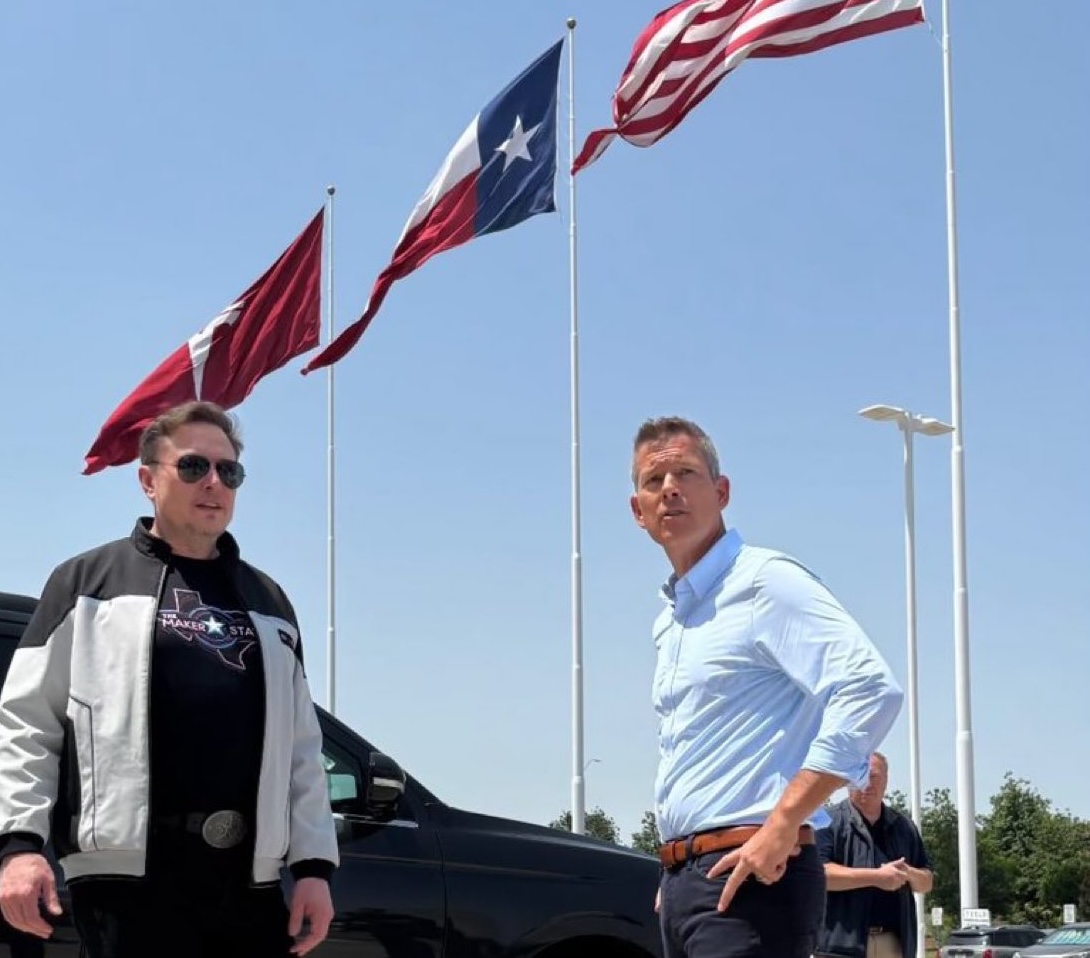
Transportation Secretary Sean Duffy has responded to Elon Musk’s claim that the Federal Aviation Administration turned down free Starlink terminals before last week’s nationwide ground stop, saying the department chose a ground-based network after running into problems with an earlier version of the satellite service. Musk’s reply was a single emoji: “🤦♂️.”
Speaking at a press conference, Duffy said Starlink had been useful in some parts of the system. “I’ve worked well with Elon, and he, Starlink was a great solution for some of our assets in Alaska, but we sent Starlink, in one of its prior iterations, to our tech lab, and, there was some issues that we had to navigate, and we thought that the best method is to have a network that’s based on the ground,” Duffy said, according to a transcript published by ZeroHedge. “Now, I think what he’s doing with Starlink and the speed is remarkable, but, our airspace is very big. We have assets everywhere. And so, again, we used him for different parts of the airspace.”
Duffy did not dispute that the offer was made. He also did not say what problems the FAA found during testing.
The exchange started Monday, when Musk wrote on X, “Free Starlinks for FAA were offered to Sec Duffy, but he said they were not needed. As it turns out, they were,” as Teslarati reported. That post came three days after the FAA grounded departures nationwide on November 13, when its legacy equipment became unstable as data flooded its telecommunications network at 1,000 connection attempts every four to five seconds. The FAA traced the flood to a radar site in Amarillo, Texas, and a radio site in El Dorado, Arkansas, where L3Harris had been installing a new router. Roughly 12,462 flights were canceled that day.
As I was saying …
Free Starlinks for FAA were offered to Sec Duffy, but he said they were not needed. As it turns out, they were.
— Elon Musk (@elonmusk) November 16, 2026
Duffy has also signaled frustration with L3Harris, which runs the FAA’s current network. “I want to get away from L3Harris and get to a new one, but they own the network,” he said. “I can’t cancel the network that they own.” He has asked Congress for $50 billion to modernize air traffic control, arguing against “a patchwork, a fix to a system that’s critical for every single family.”
The FAA’s position on satellite links predates this week. In a July 2025 letter to lawmakers, FAA Administrator Bryan Bedford said the agency “would not use Starlink (or any satellite service) as the sole communications technology” for safety-critical air traffic services. Reuters reported at the time that the FAA was not considering replacing its L3Harris and Verizon contracts with Starlink. Verizon’s FAA Enterprise Network Services contract, awarded in 2023, is valued at up to $2.4 billion over 15 years.
Musk first pressed the issue in February 2025, while he was leading the Department of Government Efficiency, writing that “the Verizon system is not working and so is putting air travelers at serious risk” before correcting himself days later to blame L3Harris. SpaceX said at the time it was supplying Starlink kits to the FAA at no cost and had no intent to take over any existing contract.

Tesla is gearing up Cybercab, its all-electric and fully autonomous ride-hailing vehicle, for a very public debut as it plans to start customer deliveries in December. However, the units that rolled out of Gigafactory Texas this morning seem to differ from what we have seen previously.
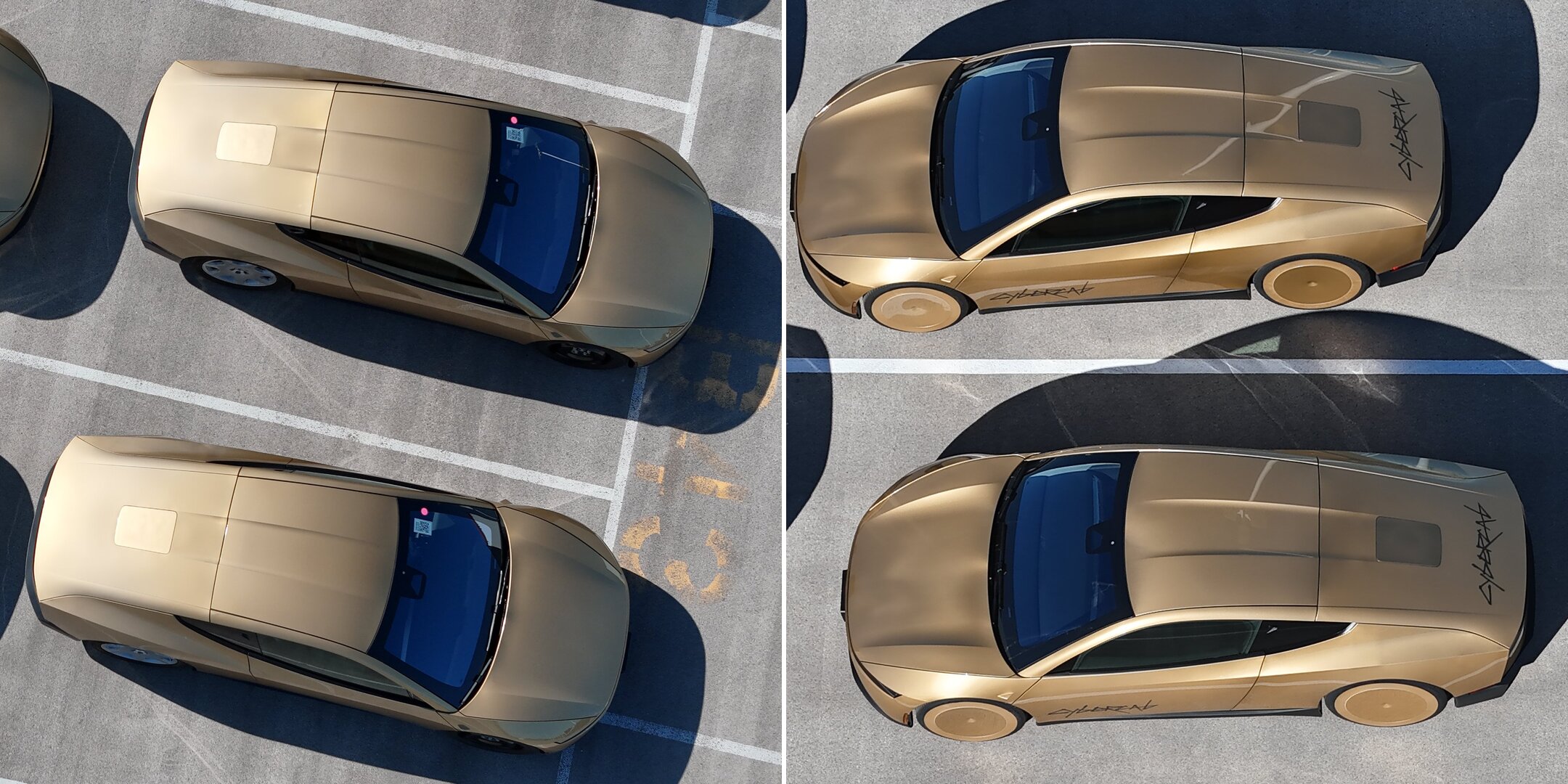
Aerial images captured by drone photographer Joe Tegtmeyer at Giga Texas on November 18 reveal a noticeable update to the appearance of Tesla’s Cybercabs equipped with Starlink. Rows of gold production vehicles sit in the outbound lot, each carrying a flush-mounted Starlink V5 terminal on the rear hatch that looks more refined than the version first shown months earlier.
When Tesla first unveiled the integration in July and displayed a physical example in August, the Starlink hardware appeared as a relatively distinct rectangular panel on the hatch. Later September footage of large numbers of Cybercabs leaving the factory still showed a lighter, more obvious rectangular cover that roughly matched the vehicle’s gold paint:
Images via Joe Tegtmeyer
The newest batch stands out for how cleanly the cover blends into the roof’s character lines. Observers and replies to Tegtmeyer’s post describe the result as tighter and more intentional, sitting flush and following the body contours rather than reading as an added panel.
All of the Cybercabs in the latest images also wear prominent “Cybercab” logos on the doors and rear hatch, confirming these are finished production units rather than early prototypes. They are staged near the factory building, end-of-line areas, and covered transport trailers, with some already lined up for shipment.
The scale and consistency of the installation point to factory tooling rather than retrofit work.
A secondary detail noted in related sightings is a darker tone to the Starlink cover compared with earlier lighter panels. Tegtmeyer himself left open whether the darker finish is deliberate. There are a variety of explanations for it: perhaps for thermal performance, signal characteristics, or simple visual identification—or simply a batch variation still being refined.
Either way, the overall effect is a more integrated, production-ready appearance. For a Robotaxi that relies on Starlink for fleet connectivity, passenger services, and backup data links in areas with weak cellular coverage, the cleaner hatch design is more than cosmetic.
It signals that Tesla is polishing the final visual and hardware details as Cybercab volumes continue to climb at Giga Texas ahead of broader Robotaxi deployment. The vehicles now look to be built with Starlink instead of it being added afterward.
Elon Musk
Tesla’s Powercore could change how data centers get power
Tesla unveiled Powercore, a solid-state transformer that could ease one of the grid’s worst bottlenecks.
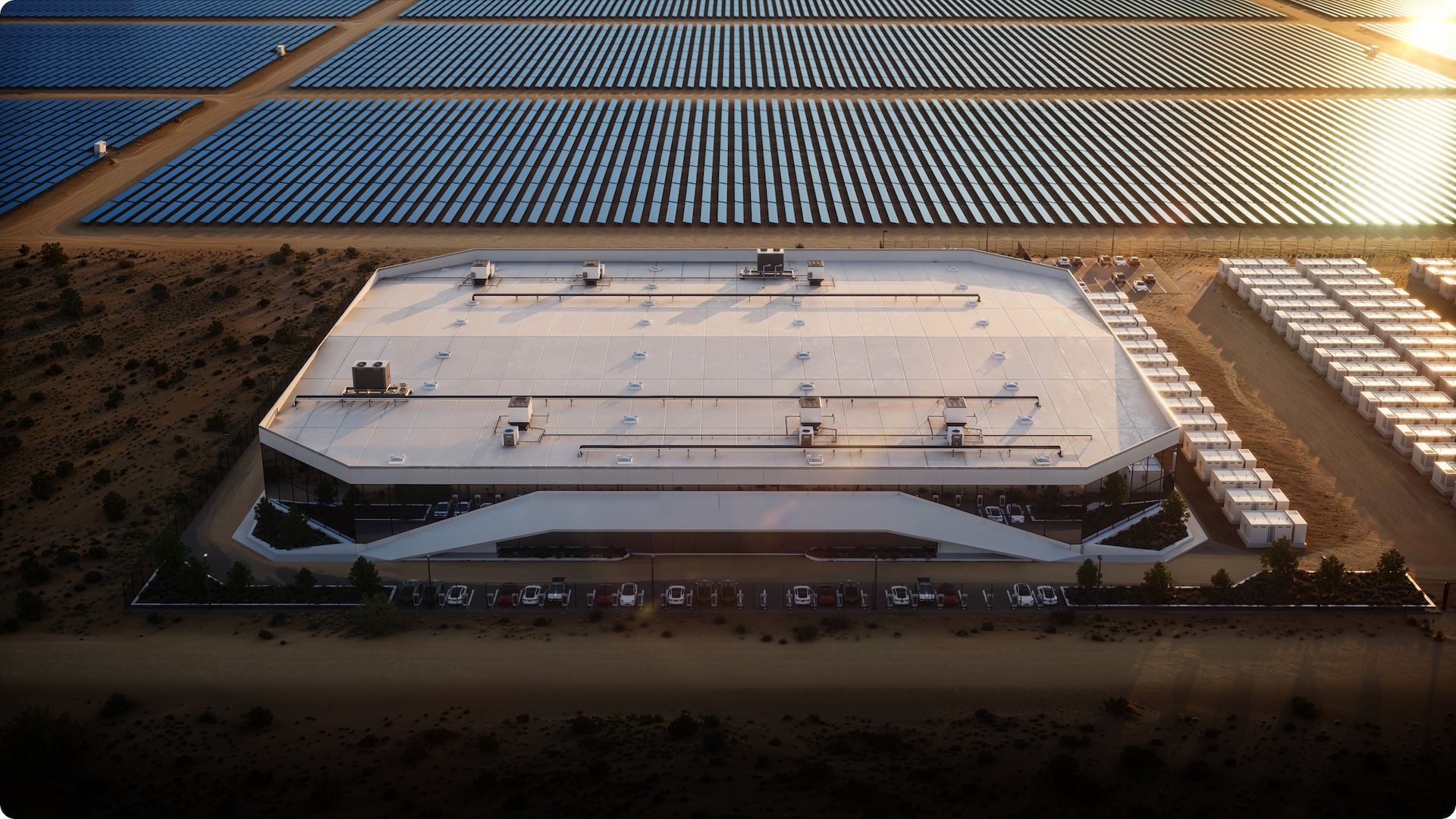
Tesla has unveiled Powercore, a solid-state medium voltage transformer that also handles the jobs of an inverter and a circuit breaker in a single unit. “Solid state medium voltage transformer, inverter and breaker – reliable, safe and secure,” the company’s Tesla Megapack account posted on X Tuesday, adding that the product is “Made in America” and will be “Operating 2027.” Elon Musk followed with his own post: “Advanced solid state transformers at scale from Tesla.”
Tesla rates Powercore at 7.4 MW, or 9 MVA, of continuous output at 34.5 kV AC, with grid-forming support for 10 MVA of peak power. Specs shared by Sawyer Merritt list a peak efficiency of 98.86 percent, a DC range of 800 to 2,000 volts and a built-in solid-state breaker that clears faults in about 100 microseconds. Tesla has not announced pricing, a factory location or a first customer.
The product fills a gap Tesla left open last year. When it introduced Megapack 3 and Megablock in September 2025, Tesla said it would build its own transformers, but shared almost nothing about them. Megablock groups four Megapack 3 units with a transformer and switchgear into a single medium voltage block, as Teslarati reported. Powercore appears to be that missing piece.
A typical battery or solar project today uses low voltage inverters to turn DC into AC, then a large oil-filled transformer to step that power up to grid voltage. A solid-state unit handles both steps with power electronics, which means less equipment, a smaller footprint and no flammable oil. Grid-forming capability lets it actively help hold voltage and frequency steady rather than simply following the grid.
Introducing Powercore Solid state medium voltage transformer, inverter and breaker – reliable, safe and secure 7.4 MW/9 MVA continuously at 34.5 kVac w/ grid-forming support for 10MVA of peak power Made in America. Operating 2027 https://t.co/sHxqnpWJrf — Tesla Megapack (@Tesla_Megapack) November 17, 2026
Timing is a big part of the pitch. Lead times for conventional transformers have stretched into years as AI data centers and renewable projects crowd utility interconnection queues. Tesla energy executive Max de Zegher pointed to the problem in a post Musk shared, noting that “transformers have barely changed since the 1890s: copper coils in a tank of oil,” while batteries, solar and compute all run on DC. Powercore, he wrote, delivers “one conversion and about half the losses.” Tesla has also said its Megapack supply for 2027 is nearly sold out.
Tesla deployed 13.7 GWh of energy storage in the third quarter, its second best quarter on record. On Tuesday, the company also said customer solar systems deployed by Tesla Energy now generate more than twice the electricity its global operations consume each year.

Sean Duffy fires back at Elon Musk over free Starlink

Tesla gears up Cybercab with Starlink for public debut, but with notable changes


