News
Tesla’s Full Self-Driving faces a new hurdle in UK rollout plans
New restrictions could slow the rollout of Tesla’s FSD in the UK.

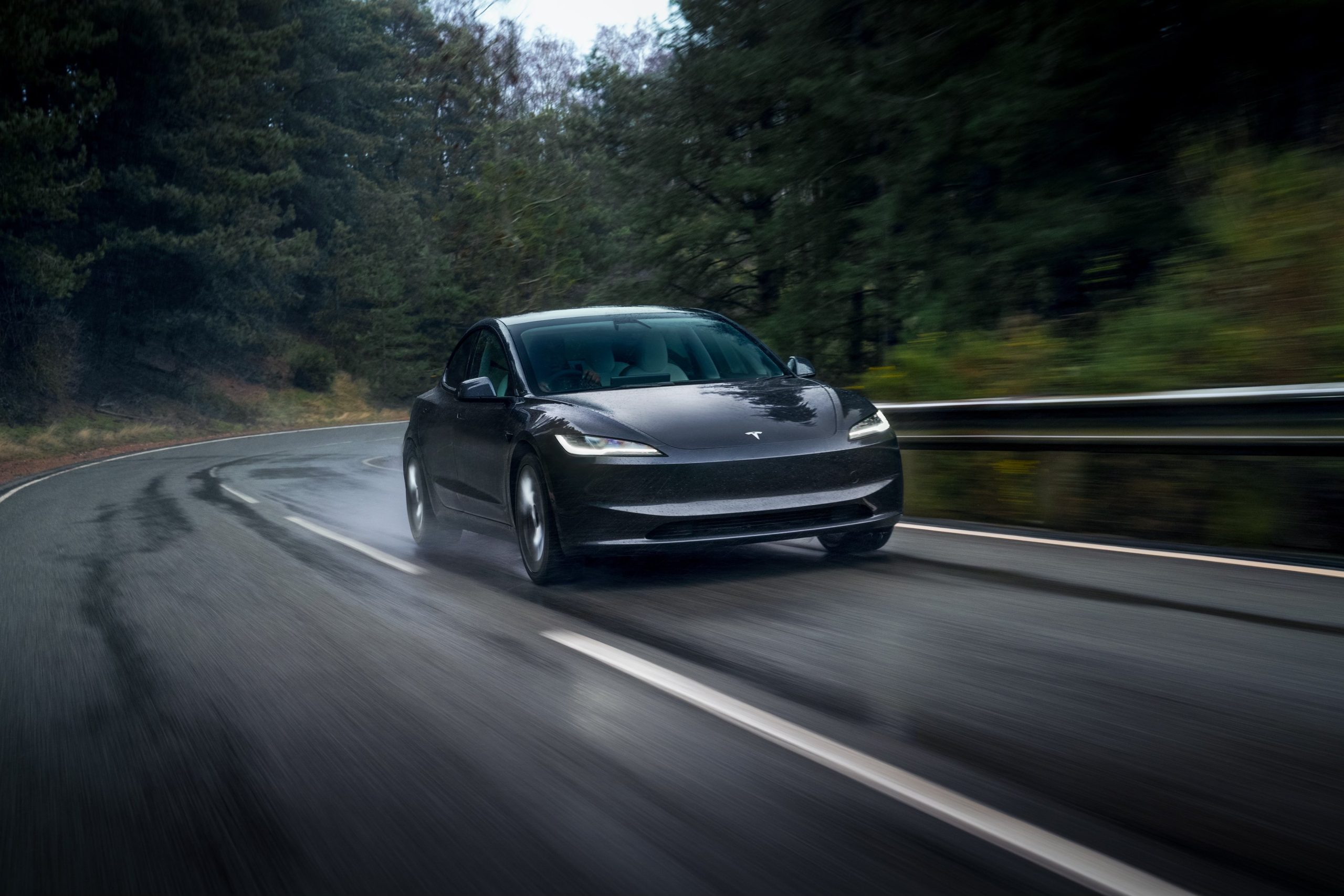
Tesla has been working to start deploying its Supervised Full Self-Driving (FSD) system outside of North America, though as the first waves of the software go out in China and Mexico, regulatory holdups in the United Kingdom (UK) and elsewhere are proving tough to overcome.
The UK’s Department for Transport (DfT) has proposed rules paring back allowances for autonomous driving systems such as Tesla’s Supervised FSD, according to documents seen by Telegraph in a report over the weekend. The delays echo previous statements from Tesla officials highlighting that the system may not be able to roll out in full in Europe until 2028, after recent regulation changes have slowed the deployment of certain automated capabilities.
Although the department’s original draft of safety rules related to self-driving systems allowed vehicles to perform maneuvers such as stopping and starting at traffic lights, turning at intersections, and changing lanes, all while drivers were hands-free, a new draft has diluted these functions to only allow “highway” maneuvers, such as lane changes, while also requiring drivers to keep their hands on the steering wheel.
“Whilst [a driver assistance system] may help in reducing collisions, it may also introduce new safety risks,” said a group of UK officials who helped propose the added restrictions in September.
The group has also suggested that systems like Tesla’s FSD Supervised should be rolled out “in phases,” echoing that safety concerns should be closely evaluated amidst deployment.
“The technological advancements in these systems are promising, but there remain concerns about their impact on driver behaviour, situational awareness and overall safety.”
The changes also come after concerns about deploying automated driving systems were raised in the United Nations Economic Commission for Europe (UNECE) last year, with the UK’s DfT officials speaking out then about concerns for broader approval of the technology.
Tesla FSD vs Xiaomi vs Li Auto inner city driving test.🇨🇳
While FSD was not perfect, it was arguably the smoothest system of the three that were tested. It will be exciting to see just how well FSD evolves as it gets updated in China.pic.twitter.com/19CRkpIiuz
— TESLARATI (@Teslarati) March 10, 2025
READ MORE ON TESLA FSD’S MARKET ROLLOUT: Tesla used this clever workaround to train FSD for China’s roads
Tesla’s launch of FSD Supervised in Europe, elsewhere: what’s causing delays?
Tesla recently launched early FSD-related features in China and Mexico, and the news comes as the company has continued to face tough regulatory barriers to launching the software in markets across Europe and the UK.
As part of his resignation announcement in October, Tesla’s former Global Vehicle Automation and Safety Policy Lead Marc Van Impe warned of major barriers in Europe due to the UN Regulation 171, dubbed DCAS, which could delay the deployment of FSD until 2028.
“This impacts Europe’s competitiveness and it’s clear that the type-approval framework needs to evolve to better and more quickly tackle innovative technologies,” Van Impe said of the delay. “Perhaps temporary certification or deployment through pre-certification can prove a solution.”
Despite this, Tesla went on to launch an introductory version of Actually Smart Summon in Europe and the Middle East in November, after the highly-anticipated software had previously been lumped in with an FSD Supervised update in North America.
During Tesla’s Q4 2024 earnings call in January, CEO Elon Musk also highlighted European regulations as a major barrier to getting FSD approved. He also highlighted an upcoming European Union (EU) committee session in May, which he said is expected to approve the software.
Tesla employees are performing autonomous FSD trials, CEO Elon Musk says



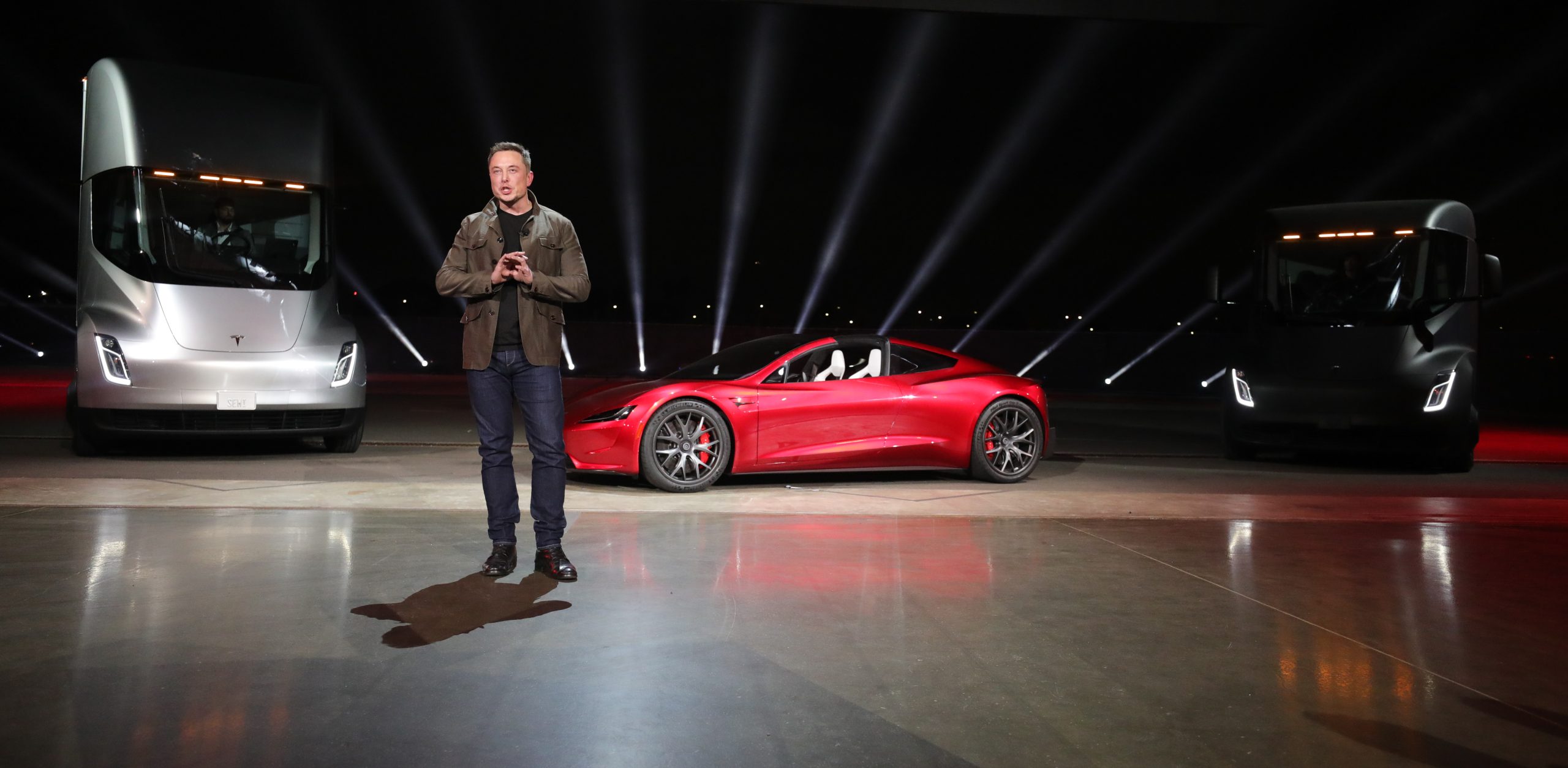
Tesla CEO Elon Musk certainly tipped off some details of the Tesla Roadster event with a broadening of information regarding the company’s decision to delay the unveiling for two weeks.
For years, people have speculated about what the Roadster will be capable of. While there have been plenty of things said about what it *could* do, we have not seen or been told by Tesla what it will actually be capable of.
However, over the past few days, Tesla’s weather updates have truly pushed the speculation into Plaid Mode, basically all but confirming the car will have some sort of aerial capability — whether that would be hovering or fully flying remains to be seen — but it definitely seems that it will be able to leave the ground intentionally.
“Because this event can only be held outdoors…”
Tesla posted on Monday that it would delay the Roadster event until October 15, and it indicated that it had to do this because the event “can only be held outdoors.”
With the potential SpaceX collaboration to develop cold-gas thrusters that will help the vehicle go airborne, doing this indoors is probably not a safe, or even plausible, possibility.
Roadster event update
We’ve been tracking the weather closely with local meteorologists, but given the severe conditions predicted & because this event can only be held outdoors, we’ve made the difficult decision to reschedule.
New date is October 15. Additional details to…
— Tesla (@Tesla) September 28, 2026
FAA Airspace Restriction
The FAA gave Tesla a Temporary Flight Restriction (TFR) for 10,000 feet above ground level, much higher than the typical 2,000-foot restrictions that are usually placed at SpaceX’s McGregor, Texas site.
Tesla Roadster event requires restricted airspace, and the FAA obliges
Some have said that this massive increase is due to Tesla’s need to restrict unauthorized drone use for spying on the event.
Elon Admits High Winds
“Due to high winds, the new Roadster demo is postponed by 2 weeks,” Musk said in a post on X yesterday.
Due to high winds, the new Roadster demo is postponed by 2 weeks https://t.co/dV3ojDh1iT
— Elon Musk (@elonmusk) September 30, 2026
A reply reading, “What’s strong wind got to do with a car demo with four grounded wheels?” was directly below Musk’s post, satirically and sarcastically probing for more details.
All signs are pointing toward an aerial demonstration for the Roadster.
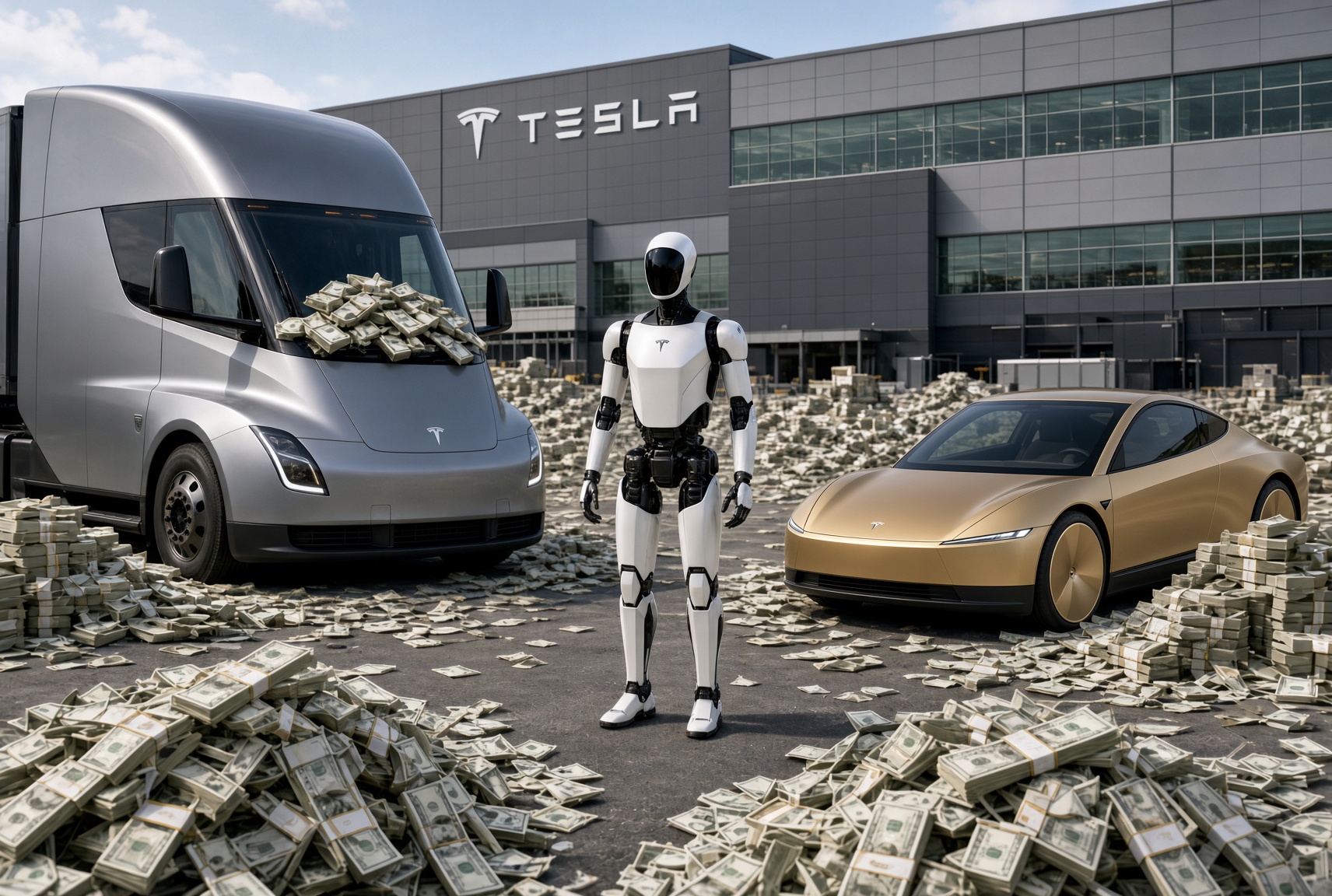
Tesla has secured $30 billion in fresh credit lines from Citibank and Wells Fargo in an effort to scale its biggest current projects.
Tesla agreed to a $20 billion three-year delayed-draw term loan facility from Citibank, it announced on Tuesday. Additionally, it signed a five-year, $8 billion revolving credit facility and a $2 billion, 364-day term credit facility with Wells Fargo.
In a filing with the Securities and Exchange Commission (SEC), that it “may draw” from the $20 billion delayed-draw term “from time to time” and “no more than ten times during the 18 months following the closing date.” This loan matures on September 29, 2029.
The five-year revolving facility from Wells Fargo will also be accessed by Tesla “from time to time,” and will become due and payable on September 29, 2031. Tesla can request two separate one-year extensions.
On the $2 billion, 364-day revolving loan, it becomes due and payable on September 28, 2027. Tesla can also increase its additional commitments to an additional $4 billion across the Revolving Facilities. This would increase the total facilities to $14 billion. Tesla said it does not plan to utilize any of these loans in 2026.
Tesla plans to utilize the money to help prop up its ambitions to scale its biggest products, each of which is either in early launch phases or still in development. Of course, we’re talking about Cybercab and Semi, which have launched, and Optimus, which is still under heavy development and working toward initial release.
All three Tesla products have one thing in common: they’ve all required Tesla to build new manufacturing lines for them.
For the Semi, Tesla built a brand new factory in Sparks, Nevada, adjacent to the Tesla Gigafactory. For Optimus, Tesla sunset Model S and X production at the Fremont Factory, which brought an end to the two flagship models, thus creating manufacturing space for the humanoid robot. Finally, Cybercab is being built at Gigafactory Texas and officially entered production earlier this year.
The cash will help Tesla bolster its finances for the continuing development of these products. Tesla said that it forecasts its CapEx to be over $25 billion, up from just over $8.5 billion last year. These loans surely help with that spending.
Elon Musk
Elon Musk and Trump are closer than ever, and Tesla could be the big winner
Elon Musk sat beside Trump as AI leaders signed a voluntary White House safety accord.

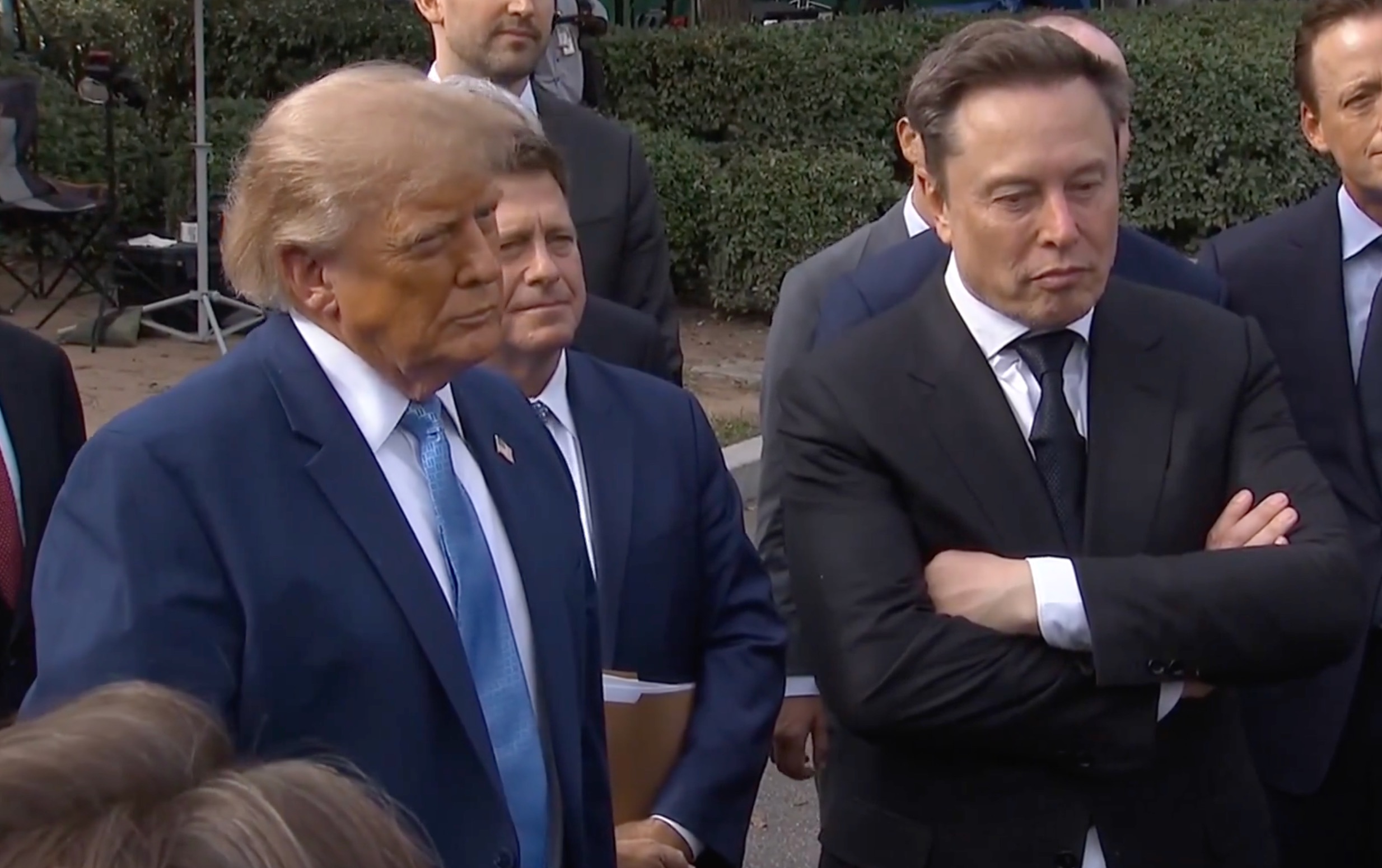
Elon Musk had the seat right next to President Donald Trump on Tuesday as the White House hosted the leaders of America’s biggest artificial intelligence companies for a lunch that ended with a voluntary industry accord on AI safety.
A seating chart Trump posted on Truth Social placed Musk at the president’s left in the East Room, with Nvidia CEO Jensen Huang on his right, according to an Associated Press reporter. Anthropic CEO Dario Amodei, OpenAI President Greg Brockman, Meta’s Mark Zuckerberg, Google’s Sundar Pichai, Microsoft’s Satya Nadella and Amazon founder Jeff Bezos also attended, along with Vice President JD Vance and House Speaker Mike Johnson.
🚨 Elon Musk is currently speaking to the media alongside President Trump after a meeting with AI Leaders in Washington today
Trump says AI is now being called “Super Intelligence” or SI pic.twitter.com/woJJqUVP9B
— TESLARATI (@Teslarati) September 29, 2026
After the lunch, Trump told reporters outside the West Wing that the executives had signed “The White House Accord on Superintelligence: A Joint Commitment on Frontier SI Responsibilities.” Johnson described it as a voluntary statement of principles built on “robust internal controls and layers of internal and external review,” while Zuckerberg said company boards would independently review reports from outside auditors. Trump called the document “morally binding,” said he would name a new AI czar within days, and signed an executive order formally renaming artificial intelligence “super intelligence,” CNBC reported.
Musk was not in the room for Tesla alone. Since SpaceX absorbed xAI, he runs the company behind Grok and one of the largest AI training operations anywhere. On September 25, he said another 220,000 Nvidia GB300 chips would come online at Colossus 2 within a week, with more expected in November and December.
“I think it is worth highlighting the positive benefits of A.I. … S.I., pardon me.”
“Thank you.”@elonmusk catches his own slip after calling the technology “A.I.” while speaking alongside President Trump and other tech leaders, quickly correcting himself to “super… pic.twitter.com/fH7CFileNb
— Fox News (@FoxNews) September 29, 2026
SpaceX confirms third massive compute deal at Colossus data center
Musk also used the trip to restate his energy ambitions. “SpaceX is aiming together with Tesla to do 200 gigawatts of solar production per year,” he said at an event in Washington. It is the same combined target he laid out that feeds directly into Terafab, the Tesla and SpaceX chip venture that will need enormous amounts of power.
The showing between Musk and Trump has come a long way, since the two had the very public split in mid 2025 after Musk opposed the “Big Beautiful Bill” and left DOGE. They reconciled at Charlie Kirk’s memorial that September, and Trump later called their relationship “good”. Since then, Musk has joined Trump’s China delegation in May and attended last week’s White House state dinner for Chinese President Xi Jinping.
For Tesla, that access to government official could pay dividends. As Teslarati noted in January, federal autonomy rules, NHTSA oversight and a single national standard for driverless vehicles all run through an administration Musk can more easily reach directly as Tesla works to scale Robotaxi and Cybercab beyond Texas.

Elon Musk weather update tips Tesla Roadster speculation into Plaid Mode

Tesla snags $30B in fresh credit lines for expanding its biggest projects


