News
Tesla makes big change to Full Self-Driving doghouse that drivers will like
Now, it is changing the timeframe of which strikes will be removed, cutting it in half. The strikes will be removed every 3.5 days, as long as no strikes are received during the time period.

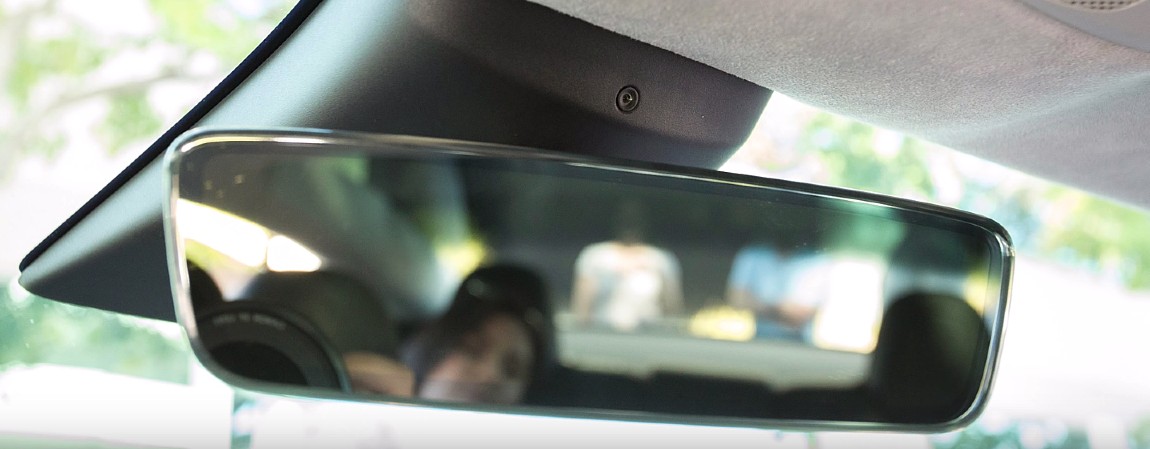
Tesla is making a big change to its Full Self-Driving doghouse that drivers will like.
The doghouse is a hypothetical term used to describe the penalty period that Tesla applies to drivers who receive too many infractions related to distracted driving.
Previously, Tesla implemented a seven-day ban on the use of Full Self-Driving for those who received five strikes in a vehicle equipped with a cabin camera and three strikes for those without a cabin camera.
It also forgave one strike per week of Full Self-Driving use, provided the driver did not receive any additional strikes during the seven-day period.
Now, it is changing the timeframe of which strikes will be removed, cutting it in half. The strikes will be removed every 3.5 days, as long as no strikes are received during the time period.
The change was found by Not a Tesla App, which noticed the adjustment in the Owner’s Manual for the 2025.32 Software Update.
The system undoubtedly helps improve safety as it helps keep drivers honest. However, there are definitely workarounds, which people are using and promoting for monetary gain, and you can find them on basically any online marketplace, including TikTok shop and Amazon:
🚨 Seeing more and more devices like this land on various online marketplaces including TikTok shop and Amazon
These devices are NOT to be used when operating Tesla Full Self-Driving and I’d love to see Tesla take action here.
These “creators” looking to make a quick buck are… pic.twitter.com/VnY25k2mPL
— TESLARATI (@Teslarati) September 17, 2025
People are marketing the product as an FSD cheat device, which the cabin-facing camera will not be able to detect, allowing you to watch something on a phone or look through the windshield at the road.
The safeguards implemented by Tesla are designed to protect drivers from distractions and also protect the company itself from liability. People are still using Full Self-Driving as if it were a fully autonomous product, and it is not.
Tesla even says that the driver must pay attention and be ready to take over in any scenario:
“Yes. Autopilot is a driver assistance system that is intended to be used only with a fully attentive driver. It does not turn a Tesla into a fully autonomous vehicle.
Before enabling Autopilot, you must agree to “keep your hands on the steering wheel at all times” and to always “maintain control and responsibility for your vehicle.” Once engaged, Autopilot will also deliver an escalating series of visual and audio warnings, reminding you to place your hands on the wheel if insufficient torque is applied or your vehicle otherwise detects you may not be attentive enough to the road ahead. If you repeatedly ignore these warnings, you will be locked out from using Autopilot during that trip.
You can override any of Autopilot’s features at any time by steering or applying the accelerator at any time.”
It is good that Tesla is rewarding those who learn from their mistakes with this shorter timeframe to lose the strikes. It won’t be needed forever, though, as eventually, the company will solve autonomy. The question is: when?


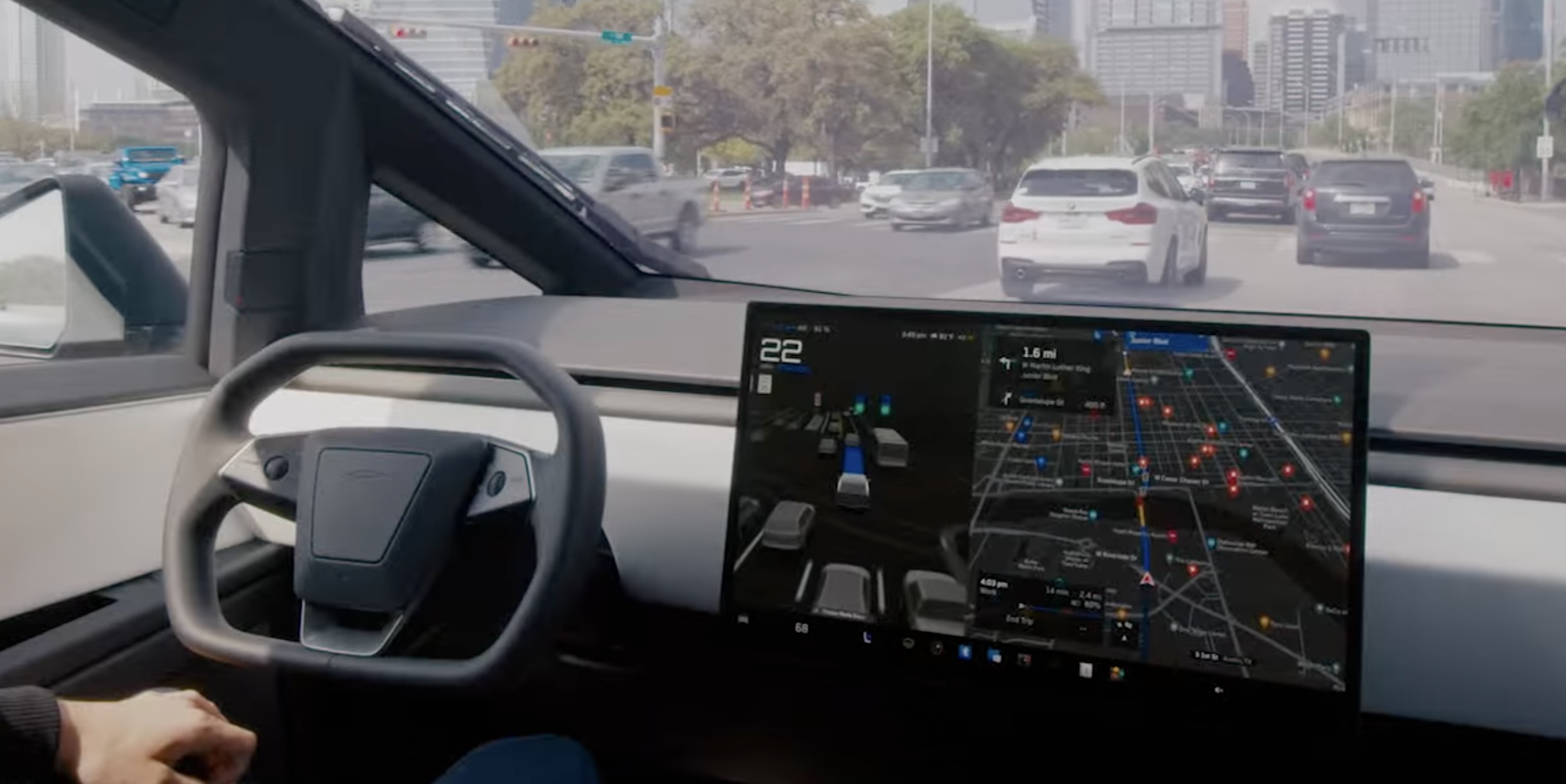
Tesla’s Automatic Collision Evasion feature can be seen in one of the first owner videos of it in action.
Tesla owner Spencer (@scotsrule08) posted on Monday that the feature “worked flawlessly,” saying FSD reengaged itself just as he was about to hit a curb. Ashok Elluswamy, who leads Tesla’s AI team, shared the clip and wrote, “A guardian angel always looking out for you.”
The video arrives in the middle of a staged rollout. Tesla first shipped Automatic Collision Evasion with FSD (Supervised) v14.3.9 in software update 2026.27.6 earlier this month, which Teslarati covered as it reached cars. Update 2026.27.10, which began going out on September 19, carried the feature improvements with FSD v14.3.10, according to release notes tracked by Not a Tesla App. The newer 2026.27.11 build is now reaching another wave of vehicles.
The new Automatic Collision Evasion feature worked flawlessly! FSD reengaged itself just as I was about to hit a curb.
Kudos @Tesla_AI team! 👏 pic.twitter.com/Fbp15HhpL2
— Spencer (@scotsrule08) September 28, 2026
The feature only runs on HW4 vehicles, and it requires an active FSD purchase or subscription with both FSD (Supervised) and Automatic Emergency Braking enabled. HW3 owners receive FSD v14.2 Lite in the same updates, but that build does not include collision evasion.
Tesla’s release notes describe two triggers. The first is an imminent frontal collision that braking alone may not prevent, in which case the car can activate FSD to steer, brake or accelerate around the hazard. That scenario is limited to highways below 85 mph, with no pedestrians or cyclists detected and no slippery road surface. The second covers a driver who appears inattentive, such as reaching into the back seat, or who seems to have switched off FSD by accident. Spencer’s curb clip appears to fall into that second category.
Tesla plans big safety improvements for Full Self-Driving v15
Once the system takes over, the accelerator is muted and light brake input will not cancel the maneuver. Drivers need to apply firm, deliberate steering force to take back control, and the car chimes to hand control back once the danger has passed.
Elluswamy recently noted that earlier hazard prediction, faster reaction time and better collision avoidance would arrive with FSD v15, the next major version.
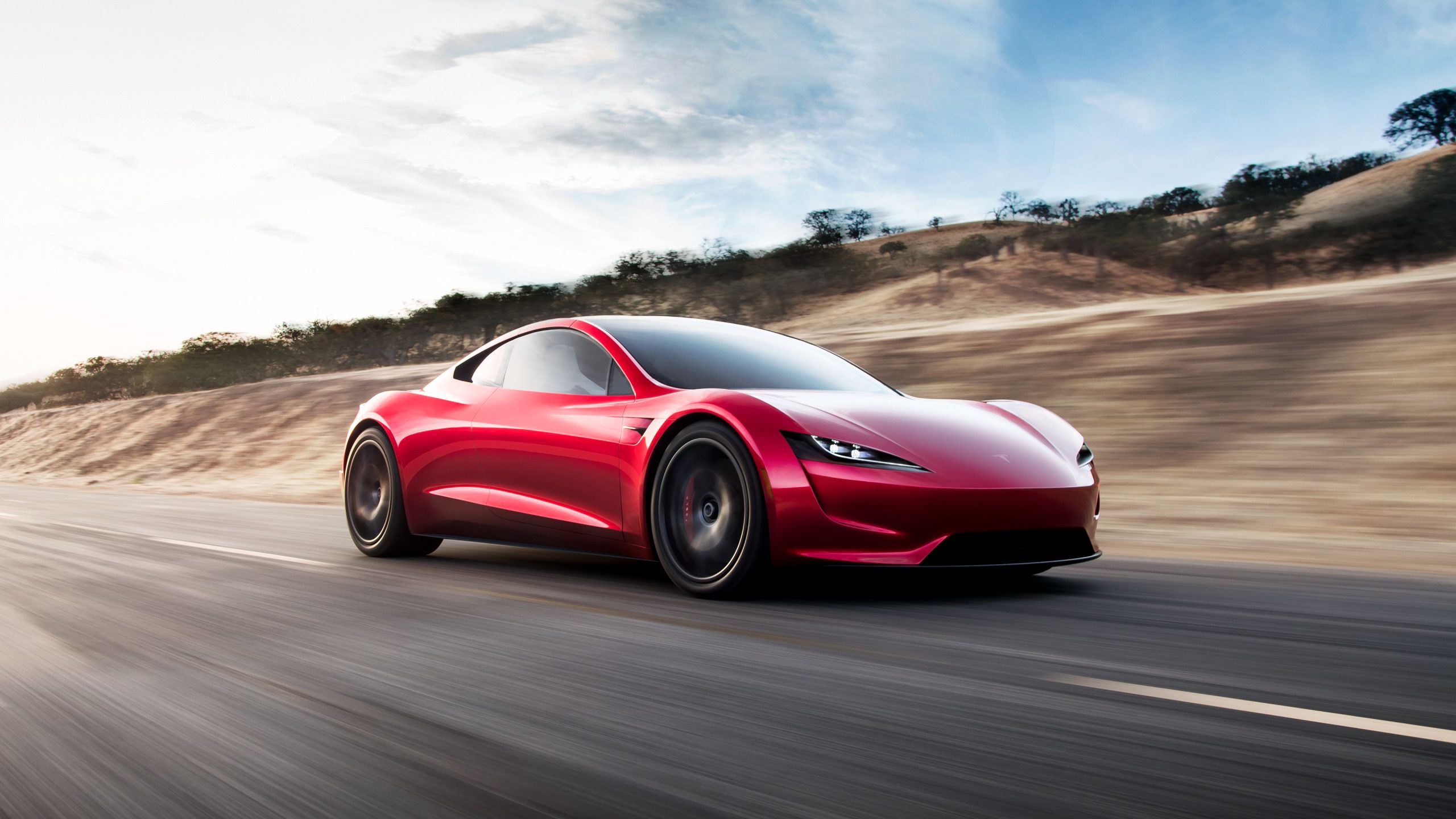
Tesla is delaying its event for the Roadster, moving it from this Thursday, October 1, to Thursday, October 15, due to unfavorable weather.
The company has said it has been tracking the weather for this Thursday closely with local meteorologists, and because the event can only be held outside, Tesla is making the call to delay it:
“We’ve been tracking the weather closely with local meteorologists, but given the severe conditions predicted & because this event can only be held outdoors, we’ve made the difficult decision to reschedule. New date is October 15. Additional details to follow.”
Roadster event update
We’ve been tracking the weather closely with local meteorologists, but given the severe conditions predicted & because this event can only be held outdoors, we’ve made the difficult decision to reschedule.
New date is October 15. Additional details to…
— Tesla (@Tesla) September 28, 2026
We are sure that this is bringing back PTSD for some Tesla fans, and we know it is not ideal, but this also reveals some things about the event. Tesla said that this can only be held outdoors, meaning it bodes well for the rumors that the vehicle could potentially hover.
Some believe that this was essentially confirmed by the FAA airspace restriction they were granted, but this could have been for a drone show or to keep drones from spying on the event.
Tesla Roadster is available for order once again following brief hold
The Roadster event has been long-awaited, and it is unfortunate that the weather is going to keep us all waiting a little bit longer.
The Tesla Roadster will be unveiled in Waco, Texas.
Elon Musk
SpaceX turned a heralding moment for Starship into its greatest
Starship reached orbit despite losing an engine, deployed 26 Starlink V3 satellites on Flight 14.

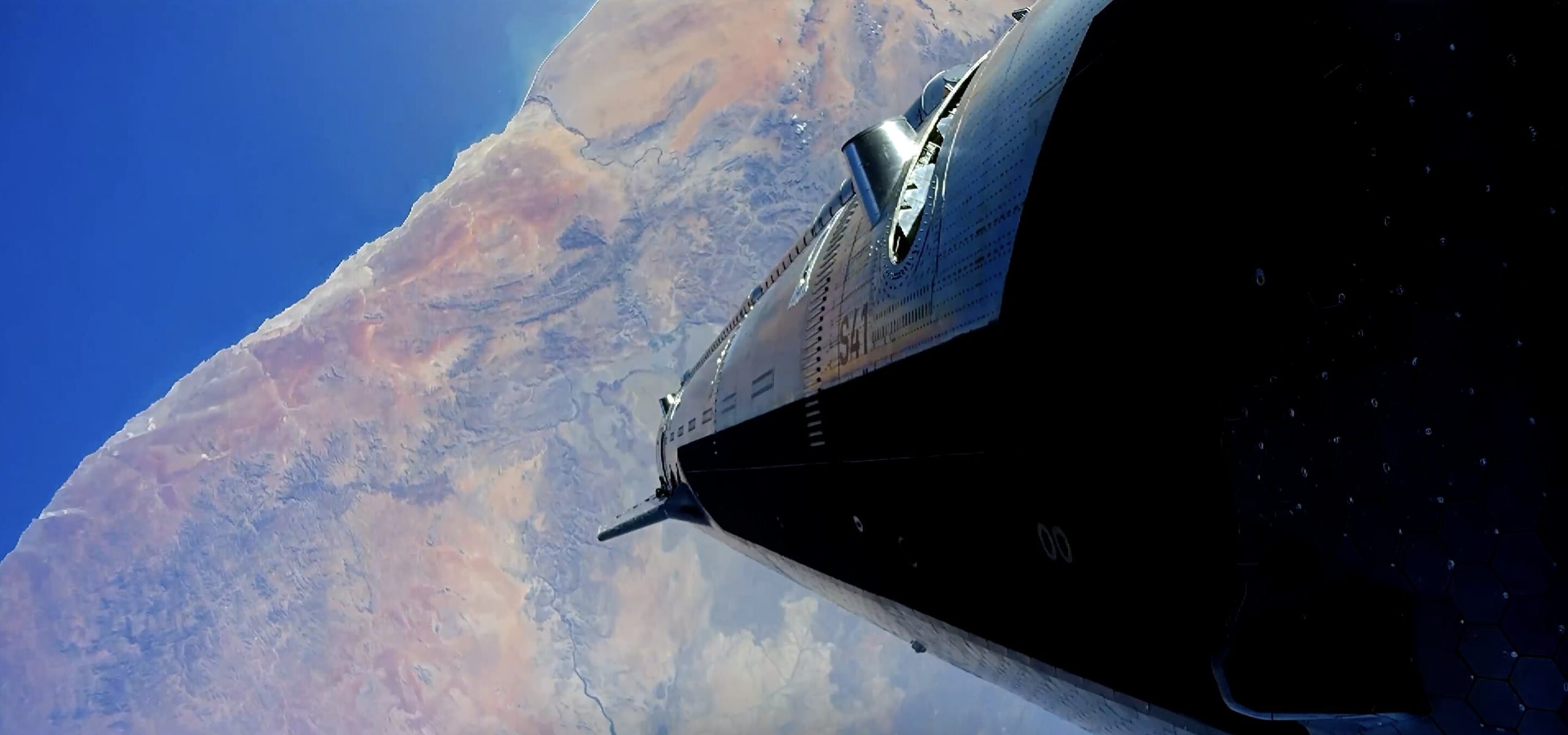
SpaceX’s Starship reached orbit for the first time on Monday, and for a few nail-biting minutes it looked like it wouldn’t. During ascent on Flight 14, one of Ship 41’s six Raptor engines shut down early, and SpaceX’s livestream host Dan Huot told viewers the team had decided not to commit to orbit. Minutes later, after what Huot described as a lot of conversation in the control room, the final poll came back in favor, and a roughly 19 second burn of a single Raptor pushed the ship into orbit about 170 miles up.
The reversal matters because SpaceX had written the exit ramp into the mission plan. The company said it would only fire the orbital insertion burn if flight controllers confirmed enough backup hardware remained for the deorbit burn, a condition Teslarati laid out ahead of the flight. Losing an engine was exactly the scenario that rule was built for.
Pressing forward fits Elon Musk’s history. Falcon 1 failed three straight times before its fourth launch reached orbit in 2008, with SpaceX nearly out of money, and Starship was developed by flying prototypes until they broke. What changed this year SpaceX going public, and with $SPCX sliding below its IPO price in July when Flight 13 slipped, the short interest climbed significantly, as Teslarati reported at the time. A Starship potentially lost today with revenue generating next-gen Starlink satellites aboard would have landed directly on shareholders.
Splashdown confirmed. Congratulations to the entire SpaceX team on the first orbital flight of Starship! pic.twitter.com/urjmiwnvNl
— SpaceX (@SpaceX) September 28, 2026
That pressure showed up after orbit. SpaceX cut a flight planned to last nearly 10 hours to about three, moving splashdown from west of Chile to the North Pacific near Hawaii. SpaceX gave no reason, though Musk said this month the company was being extremely cautious about debris risk. The single Raptor for deorbit worked, and Ship 41 completed its flip and landing burn before breaking apart in the water, an outcome SpaceX expected. Musk has structured SpaceX’s governance to shield long term bets from market pressure.
The payload is the bigger business story. Musk posted that all 26 Starlink V3 satellites deployed and are “operating nominally.” Each V3 is rated for about 1 Tbps of downlink and 160 Gbps of uplink, so this single launch adds roughly 26 Tbps, about 10 times what a Falcon 9 load of V2 Mini satellites adds. The V3 is too large for Falcon 9, making Starship the only vehicle that can build out the planned 100,000 satellite constellation, at up to 60 per flight once it reaches routine service. Unlike the 20 V3 units on Flight 13, which reentered on a suborbital path, these will raise their orbits and could begin serving customers within weeks and bring in hundreds of millions of additional dollars in projected Starlink revenue.
SpaceX has already begun winding down Falcon 9 Starlink launches from Florida in favor of Starship. Reported targets put Flight 15 as early as October 19, leaving about three weeks to diagnose Monday’s engine shutdown before the next orbital attempt.
Starship’s 14th flight is set to launch on Monday, Sept 28. The 75-minute launch window opens at 7:15 a.m. CT. Live coverage of the mission starts ~35 minutes before launch → https://t.co/uQKQvgaTmJ
— SpaceX (@SpaceX) September 27, 2026

Watch Tesla’s “guardian angel” FSD feature take over for collision evasion

Tesla Roadster event gets delayed due to unfavorable weather


