News
Tesla benefits from new incentive program that’s active after tax credit loss

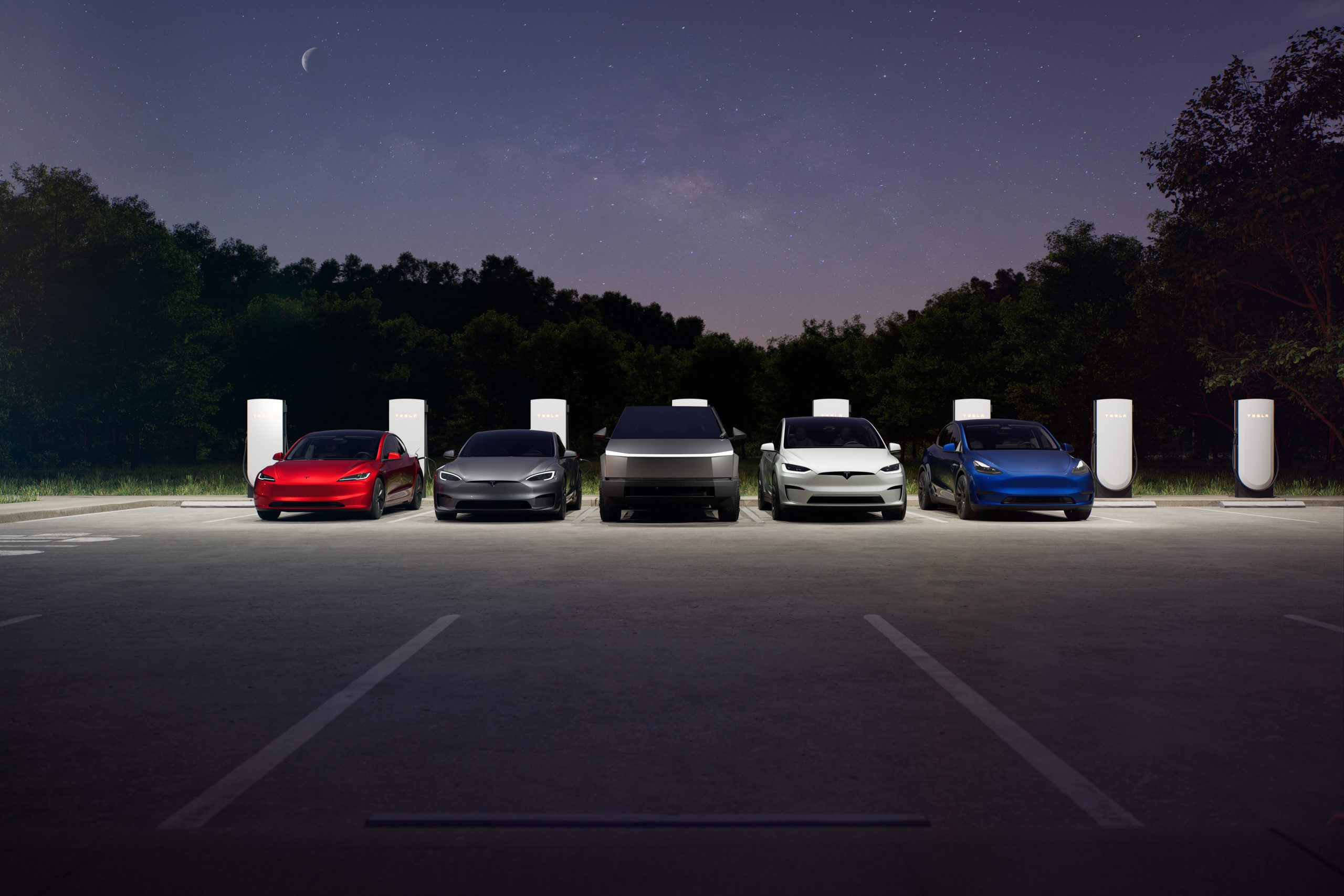
Tesla benefits from an incentive program in Texas that has become active following the loss of the $7,500 EV tax credit, which was a significant advantage for EV drivers.
In Texas, the State Commission on Environmental Quality has a grant program for light-duty motor vehicles that are either purchased or leased by consumers.
Referred to as the Light-Duty Motor Vehicle Purchase or Lease Incentive Program (LDPLIP), the program opened on October 13 and provides grants for consumers who want to buy new energy vehicles.
Will Tesla thrive without the EV tax credit? Five reasons why they might
The program allows for grants of up to $2,500 for electric or hydrogen fuel cell vehicles.
These are the eligibility criteria:
- Individuals or entities who purchase or lease an eligible vehicle on or after September 1, 2025, and who apply for or acquire title and registration of the vehicle in Texas
- Applicants must have taken possession of the vehicle before applying
- Applicants must commit to operating and registering the vehicle in Texas for at least one year
Additionally, the car must:
- Be included on the TCEQ Eligible Vehicle List
- Be new and must not have been the subject of any prior retail sale or lease
- Have a gross vehicle weight rating of 10,000 pounds or less
They are awarded on a first-come, first-served basis.
The good news is that Tesla’s entire vehicle lineup, as of October 7, qualifies. Here is what the LDPLIP’s list of qualifying vehicles shows for Tesla:
- Tesla Cybertruck AWD
- Tesla Cybertruck Beast
- Tesla Model S AWD
- Tesla Model S Plaid
- Tesla Model X AWD
- Tesla Model X Plaid
- Tesla Model Y Long Range RWD
- Tesla Model Y Long Range AWD
- Tesla Model Y Performance
- Tesla Model 3 Long Range RWD
- Tesla Model 3 Long Range AWD
- Tesla Model 3 Performance
This list was published during the day of October 7, which is coincidentally the same day Tesla launched its Tesla Model 3 ‘Standard’ and Tesla Model Y ‘Standard.’
We reached out to the program to confirm that these vehicles qualify for that grant, and we will update when we hear back.
With the loss of the Federal EV Tax Credit, local programs are still available to help with the cost of an EV. Although electric cars are affordable, there are benefits to choosing one, especially as these grant programs continue to become available.
The full list of vehicles that qualify for the grant is available here.


Elon Musk
Tesla eyes supply partners for Optimus mass production
Tesla certified three Chinese suppliers for Optimus mass production, signaling its robot timeline is accelerating.

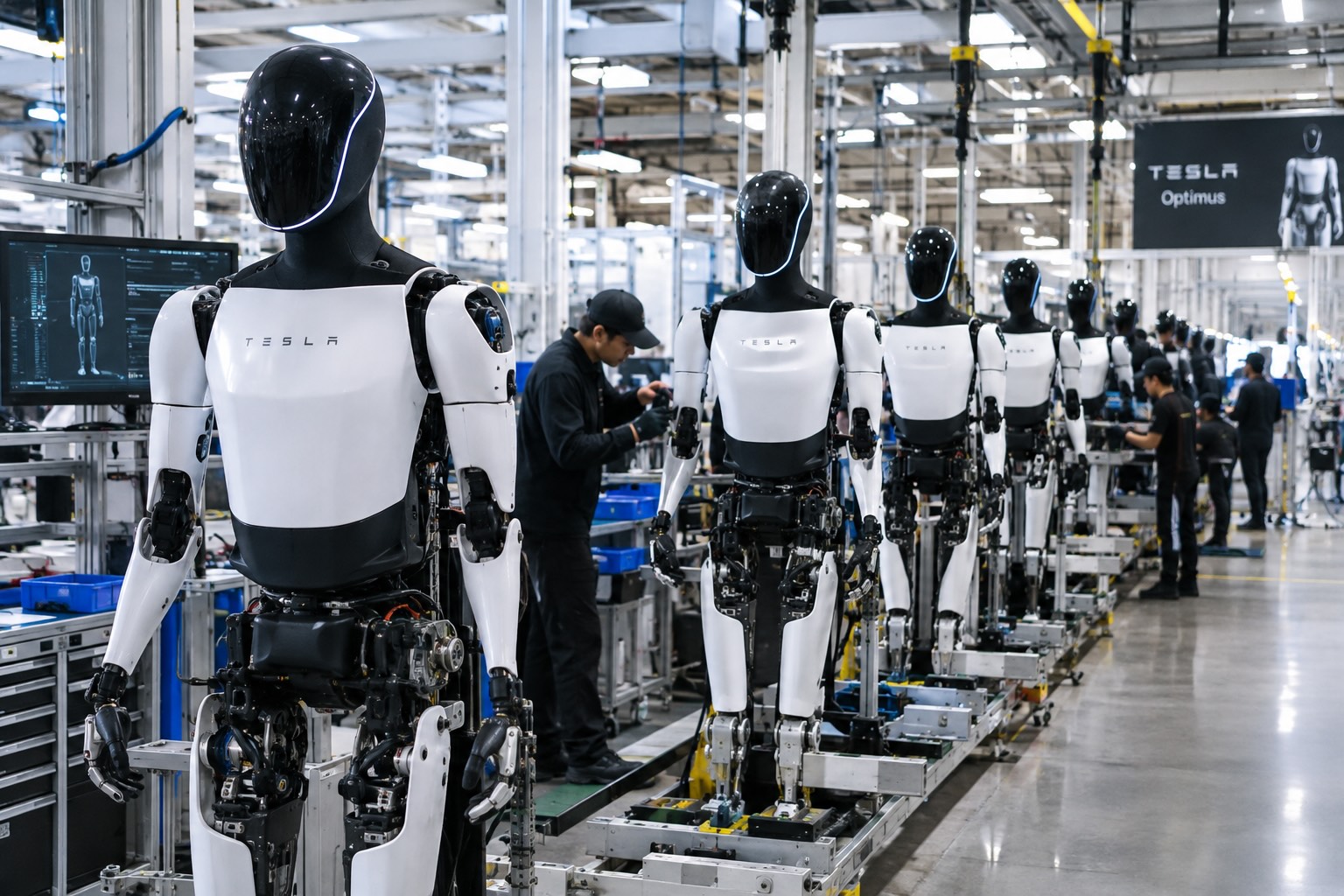
Tesla’s robotics team traveled to Ningbo, in China’s Zhejiang province, on September 16 and spent the following day auditing component suppliers for Optimus, according to a Bloomberg report cited by RobotAIGeek. The visit moved three manufacturers from provisional status to certified mass production partners: Tuopu Group, which handles actuators and chassis components, Ningbo Joyson Electronic, a sensor supplier, and Zhejiang Sanhua Intelligent Controls, which builds thermal management systems. All three already supply parts to Tesla’s electric vehicles, and the audit reportedly came with fresh orders that supply chain reports put at an initial batch of roughly 5,000 units.
Tuopu, Joyson, and Sanhua built their manufacturing base serving the automotive industry, where tolerances and volume requirements are already close to what a mass produced humanoid robot demands. Sanhua in particular has history here. Teslarati reported last October that the company had received a roughly $685 million order for linear actuators tied to Optimus, a volume industry watchers estimated could cover around 180,000 robots once production ramped.
Supply chain reports tied to this week’s audit put Tesla’s near term production goal at about 1,000 Optimus units a week by late September, rising to 2,000 to 2,500 units a week by the end of the year. That pace would put real weight behind the timeline Tesla has been building toward since May, when it wound down Model S and Model X production at Fremont to convert that floor space into a dedicated Optimus line targeting one million units annually. JPMorgan analysts who toured the factory in August confirmed the conversion took roughly four months, a pace Musk has called unprecedented for a facility that size.
New drone video shows Tesla’s Optimus Factory reaching a turning point
Fremont is only the first phase. A second, larger Optimus plant is rising at Gigafactory Texas, where drone footage shared by Joe Tegtmeyer last week showed the structural steel nearing completion on the north end of the building. Tesla has said that facility is meant to eventually support production of up to 10 million units a year, though volume output there is not expected before 2027.
Commercial sales of Optimus are still targeted for the second half of 2027, but production is expected to start well before then. JPMorgan analyst Rajat Gupta has said Tesla’s “Optimus Academy” program, which uses early units to collect real world training data inside Tesla’s own facilities, is expected to be running later this year. Bloomberg Intelligence analyst Ian Ma described the Ningbo audits as “a positive commercialization signal for China’s humanoid supply chain,” noting that sentiment could improve further if the visit leads to confirmed supplier nominations and larger orders. The Solactive China Humanoid Robotics Index rose about 1.4% on the news, though it remains down roughly 30% for the year.
Elon Musk
Elon Musk’s next Uranium in Uranus merch is Boring Company’s weirdest tease yet
Elon Musk teased a glowing new Boring Company merch idea, complete with a Geiger counter.
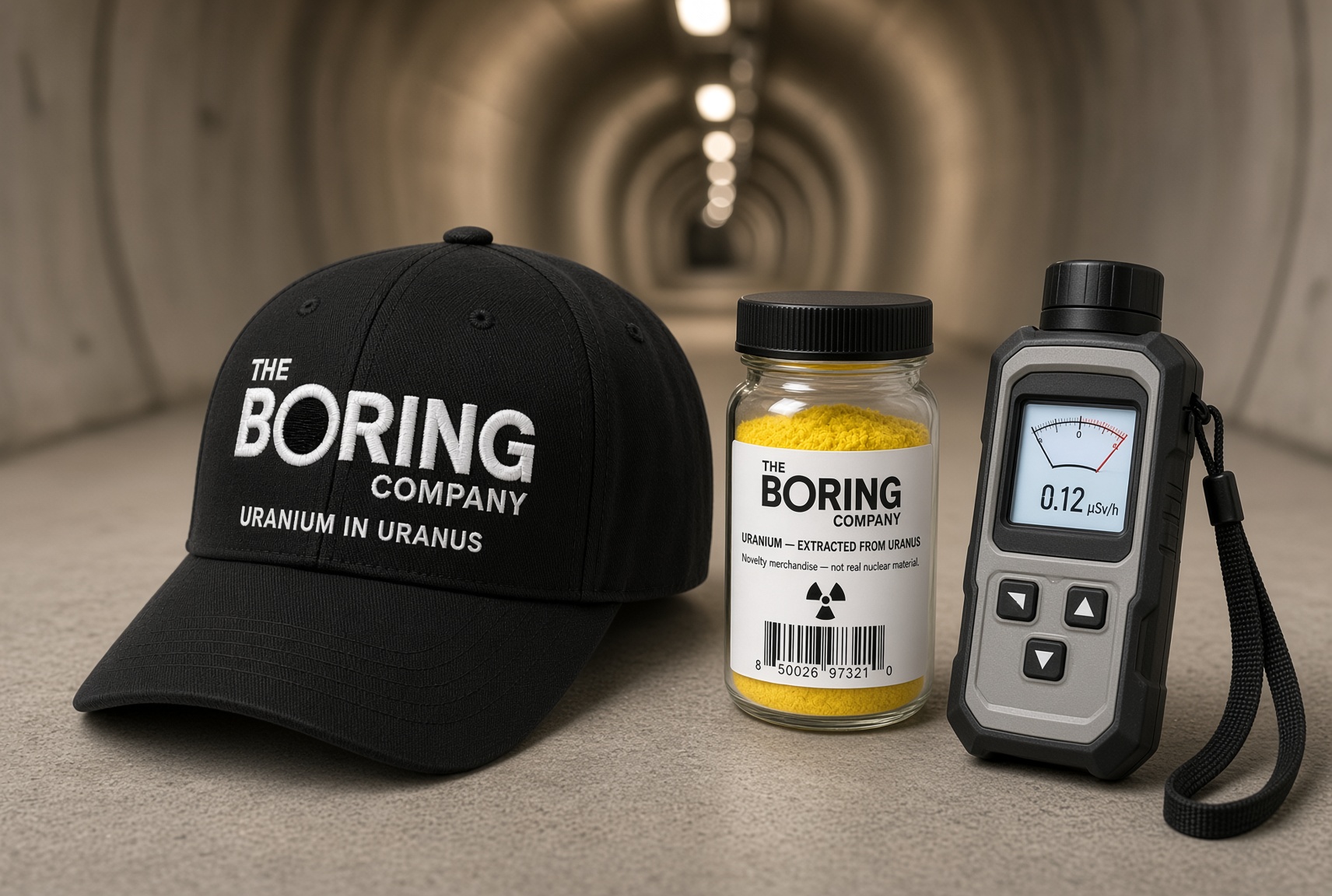
Elon Musk teased the next piece of Boring Company merchandise on X Saturday, and it is exactly as unserious as fans of the company’s product history have come to expect. “The next @boringcompany merch will put Uranium in Uranus,” Musk wrote in a thread posted early Saturday morning. He followed up by explaining that the item would glow in the dark, “because otherwise how could you find it,” and that a Geiger counter would be sold separately as “an optional strap-on.”
Musk closed the thread with a line that doubles as a mission statement for the tunneling company’s merchandise arm: “It’s not easy coming up with something that is both outrageously unsellable and yet extremely popular.”
The Boring Company has built a small but consistent side business out of novelty items that start as jokes and end up selling out. The company’s Not-a-Flamethrower raised roughly $10 million in a few days back in 2018, moving all 20,000 units it produced. Its Burnt Hair perfume, priced around $100 a bottle, sold out fast enough that scalpers were flipping units on eBay for ten times the retail price. Boring Bricks, made from tunneling spoil, followed the same playbook of teasing a product on X months before it became real.
Musk has not said what the actual item will be, only that it involves uranium and glows in the dark. Given the pattern, that vagueness is probably intentional. Past merch announcements have started as one-line jokes and taken weeks or months to turn into an actual product listing on the company’s site, and there is no guarantee this one follows through at all.
The timing lines up with a period of real momentum for the Boring Company outside of the joke merchandise. The company said last week it plans to double the number of operational stations on its Vegas Loop by the end of the year, a target tied to a hiring push for drivers and operations managers. Prufrock-5, one of the company’s tunnel boring machines, also just wrapped a test tunnel in Bastrop, Texas, and is expected to relaunch on its next assignment in November.
Whether the uranium joke turns into an actual product remains to be seen. Musk’s post did not include a price, a shipping date, or even a name for the item, which has historically meant a Boring Company website page goes up quietly, password protected, sometime before an announcement.
News
NASA taps SpaceX for more astronaut missions as Boeing Starliner remains grounded
NASA just gave SpaceX a $946 million contract for three more astronaut missions through 2030.
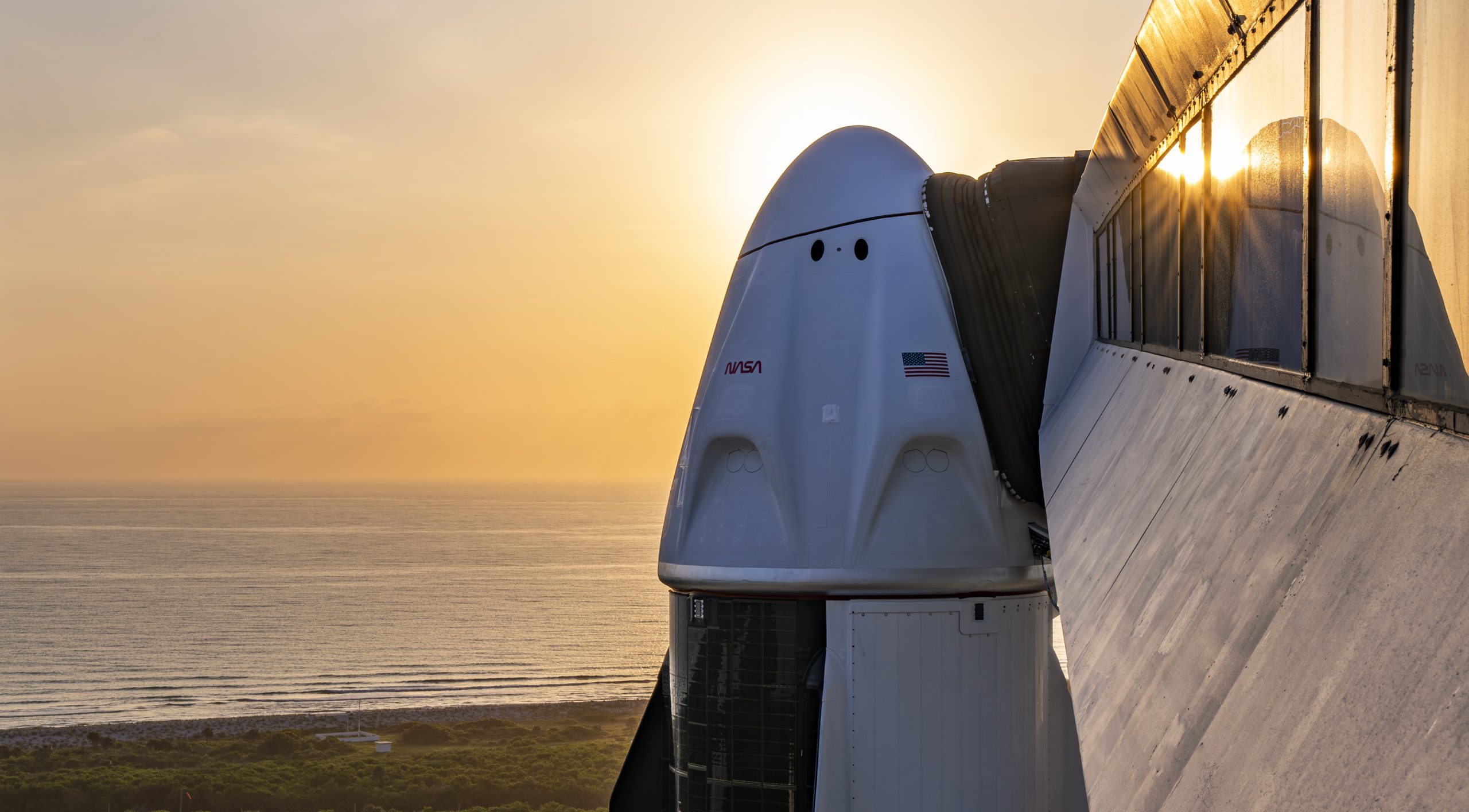
NASA has awarded SpaceX a $946 million contract modification covering three more astronaut missions to the International Space Station, according to an announcement the agency published Friday. The award adds Crew-15, Crew-16, and Crew-17 to SpaceX’s existing Commercial Crew Transportation Capability contract, bringing the agreement’s total value to $5.92 billion across 17 flights.
SpaceX confirmed the award on X, writing that it was excited for Falcon 9 and Dragon to launch NASA’s Crew-15, 16, and 17 missions to the Space Station from Florida. The new missions cover ground, launch, in orbit, and return operations, along with cargo transport and a lifeboat capability while docked at the station, and the period of performance runs through 2030.
We’re excited for Falcon 9 and Dragon to launch @NASA’s Crew-15, 16, and 17 missions to the @Space_Station from Florida https://t.co/Qm16vVK9F3 pic.twitter.com/drg3s7GtuM
— SpaceX (@SpaceX) September 18, 2026
The award follows a notice of intent NASA issued in May, when the agency first signaled it would purchase up to six additional post certification missions from SpaceX. Teslarati covered that filing at the time, noting NASA cited technical issues and schedule delays encountered by Boeing as a driving factor. Friday’s contract modification locks in three of those six missions, with the remaining three left open for NASA to award later, potentially to Boeing if Starliner clears certification.
Boeing’s CST-100 Starliner has still not flown an operational crew rotation mission for NASA. The spacecraft’s most recent crewed test flight in 2024 ended without the astronauts returning aboard Starliner, and the company has spent the time since working through thruster problems. SpaceX President Gwynne Shotwell said this week that SpaceX is not retiring Crew Dragon today, for sure, while stopping short of committing to fly it past 2030.
Crew-12 is currently docked at the space station, and NASA has said Crew-13 is targeting a launch in the coming weeks. The newly awarded Crew-15 through Crew-17 missions extend SpaceX’s role as NASA’s primary way of getting astronauts to and from orbit well into the back half of the decade, regardless of what happens with Starliner or Starship in the meantime.

Tesla eyes supply partners for Optimus mass production

Elon Musk’s next Uranium in Uranus merch is Boring Company’s weirdest tease yet


