Elon Musk
Tesla begins production of new Model Y trim at Giga Berlin
Tesla announced on Monday that its Model Y Standard configuration was officially being built at Giga Berlin, less than one month after the company officially announced the configuration early last month.

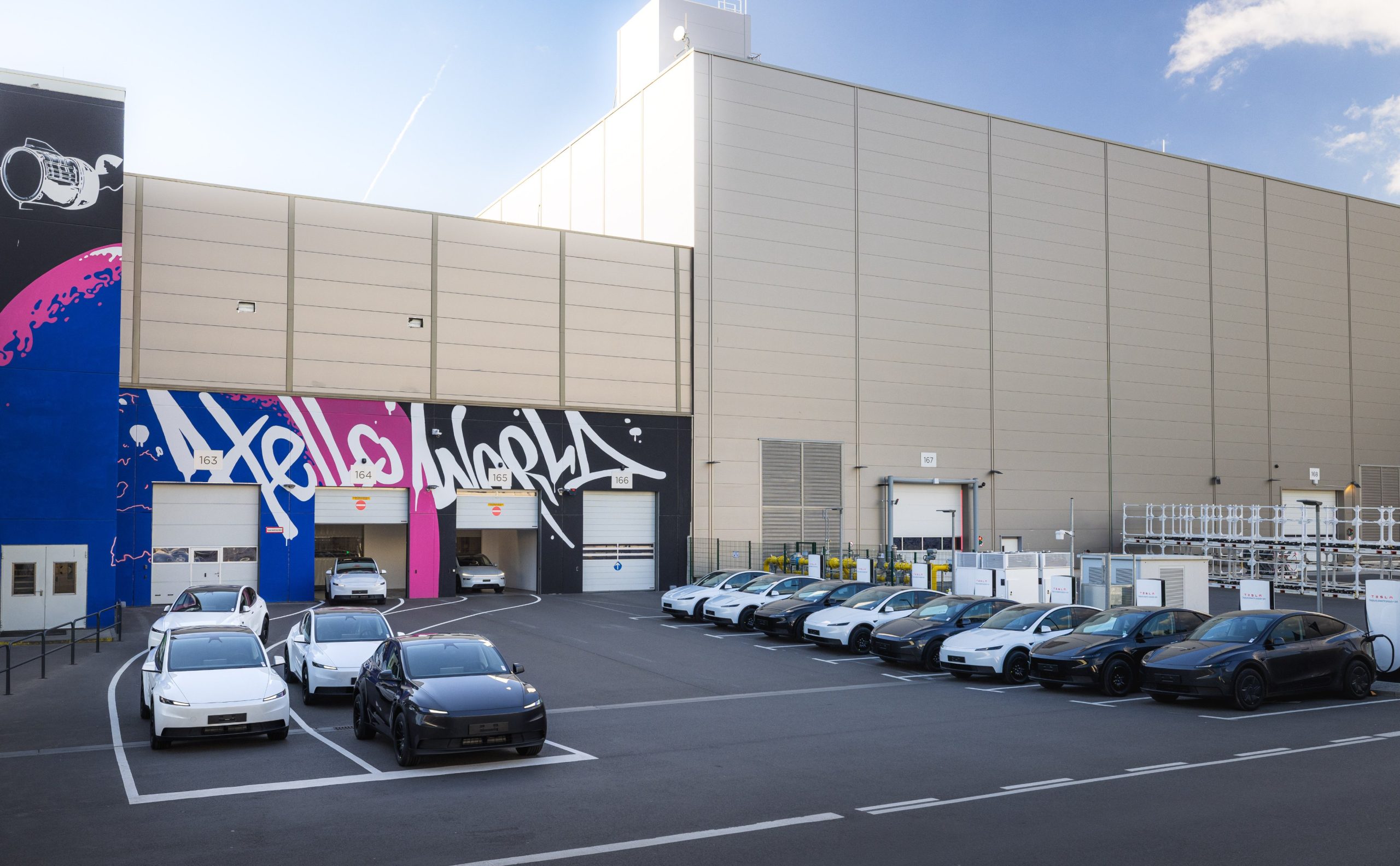
Tesla has begun production of the new Model Y trim at Gigafactory Berlin, the company’s production plant in Germany.
Tesla announced on Monday that its Model Y Standard configuration was officially being built at Giga Berlin, less than one month after the company officially announced the configuration early last month.
On October 7, Tesla announced the launch of the Model 3 and Model Y Standard trim levels, its answer to the call for affordable EVs within its lineup and its response to the loss of the $7,500 electric vehicle tax credit.
On October 3, Tesla started production of the vehicles in Germany:
Model Y Standard says „Hello World“ – Production at Giga Berlin has started today! pic.twitter.com/p37JIfJDIB
— Tesla Manufacturing (@gigafactories) November 3, 2025
The Standard iteration of the Model Y is void of many of the more premium features that are available in the Rear-Wheel-Drive, All-Wheel-Drive, and Performance trims of the vehicle are equipped with.
A few of the features of the Model Y Standard are:
- Single Motor configuration
- No rear touchscreen
- Textile seats with vegan leather, instead of all vegan leather
- 320-mile range
- No glass roof
The launch of the Model Y Standard was truly a move to help Tesla get vehicles into the sub-$40,000 price point, and although many consumers were hoping to see the company get closer to $30,000 with these cars, this is a great starting point.
Deliveries in the United States have already started, and it seems it will be a vehicle that will do one of two things: either push some consumers to finally make the jump to Tesla, or it will give car buyers another reason to buy the Premium trims, as they may feel the lack of features is not a good enough deal.
This is something we saw with the Cybertruck’s Rear-Wheel-Drive configuration, which launched last year and ended up being more of the latter option listed above.
The Tesla Model Y Standard is actually a great deal in Europe
It was only a $10,000 discount from the All-Wheel-Drive Cybertruck, but it also did not have adaptive air suspension, premium interiors, or the powered tonneau cover, which many people felt was too much of a sacrifice.
The Rear-Wheel-Drive Cybertruck was discontinued only a few months later.
It does not seem as if this is the case with the Model Y Standard, which already seems to be an attractive option to some buyers.


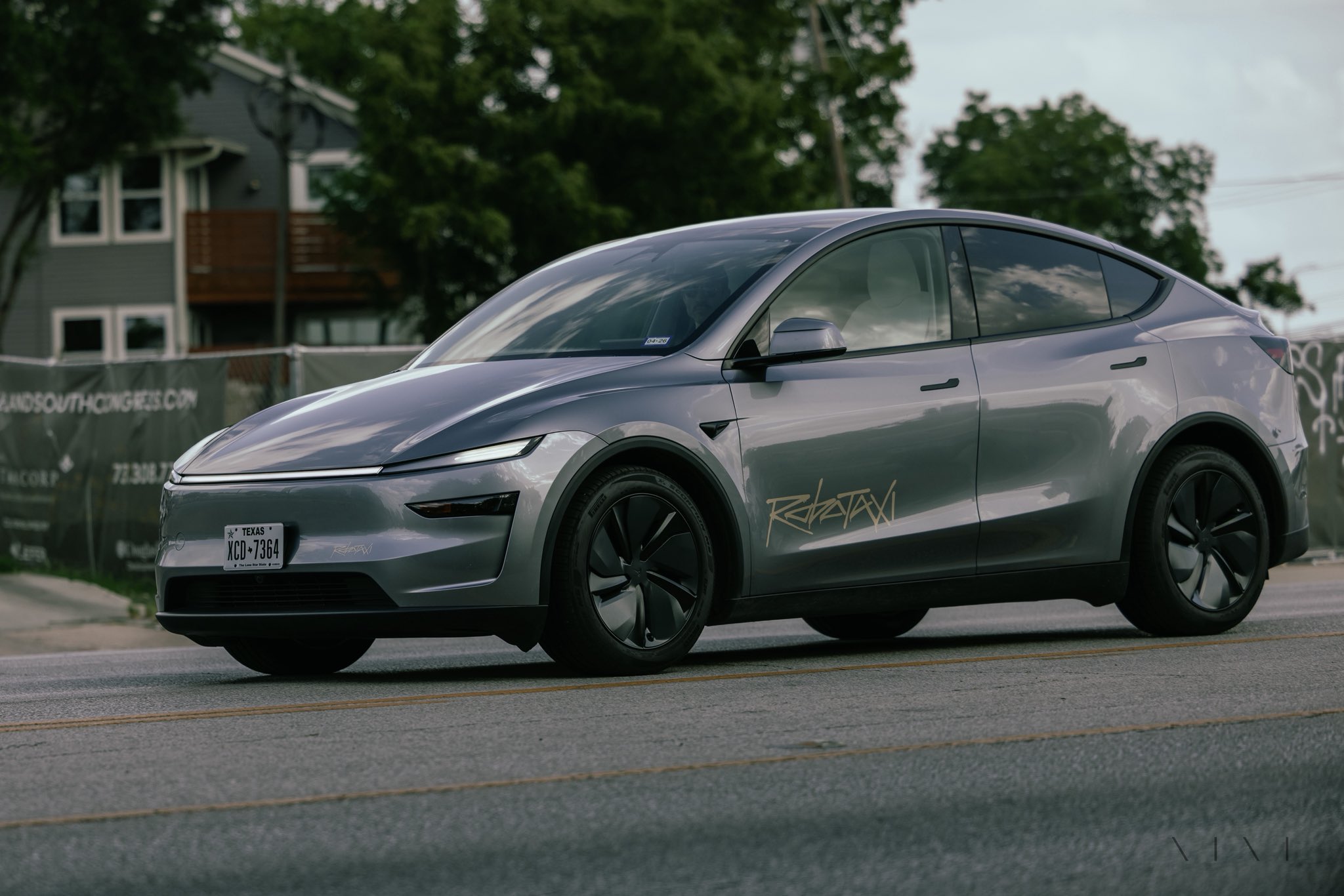
Elon Musk says that Tesla could test adding customer-owned vehicles to the Robotaxi platform as soon as December.
In a reply on X to an Austin-based Uber driver who uses a Model Y with Full Self-Driving and keeps only 49-63% of fares after the platform’s cut, Musk wrote:
“Coming soon. If things well, may start trials next month. Much better to manage a fleet of cars than have to drive just one car by yourself!”
@apostlejohn @WorldlyReviewer Coming soon. If things well, may start trials next month.
Much better to manage a fleet of cars than have to drive just one car by yourself!
— Elon Musk (@elonmusk) November 16, 2026
The exchange highlights the appeal of passive income from an autonomous vehicle versus actively driving for rideshare platforms.
This potential December start is technically earlier than prior company guidance, but it also aligns with the currently-projected first delivery of the Tesla Cybercab, a vehicle that has no manual controls.
Nevertheless, Tesla planned to bring customer vehicles into the fleet later on. During Tesla’s Q3 earnings call, AI leadership had pointed to roughly the second quarter of 2027 for customer vehicles joining the network. Musk’s comment suggests an accelerated pilot, most likely beginning in Austin, where Tesla’s Robotaxi service has operated longest and where new features typically roll out first.
December is also the target month for the first customer deliveries of the Cybercab. In mid-November, Tesla began inviting select buyers to purchase the purpose-built, two-seat vehicle for personal use at $29,990 plus a required $299 monthly Autonomy Subscription, with estimated deliveries in Austin.
Tesla Cybercab goes on sale for $29,990, slated for December deliveries
Those initial private Cybercabs are restricted to personal use within existing Robotaxi zones and do not automatically include commercial network participation; the large majority of Cybercabs are expected to remain Tesla-owned fleet vehicles.
The coincidence of the two December milestones underscores Tesla’s parallel paths. Customer Model Ys already on the road with FSD hardware could rapidly enlarge the vehicle pool for unsupervised trials, while the Cybercab, which is void of a steering wheel or pedals and equipped with only dedicated Robotaxi hardware, arrives as a purpose-built platform.
Hardware differences, such as additional cameras or cleaning systems on company Robotaxis, may constrain which Model Ys are eligible at the outset. Regulatory approvals, insurance arrangements, and software readiness will also determine whether the “if things go well” condition is met.
For owners, successful trials would fulfill a vision Musk first sketched in Tesla’s 2016 Master Plan: vehicles that earn money while their owners sleep or work.
Combined with the arrival of privately owned Cybercabs in the same month, December could mark the transition from Tesla-controlled Robotaxi operations to a broader ecosystem in which both company fleets and customer vehicles contribute to the company’s autonomous ride-hailing platform, which continues expanding.
Elon Musk
FAA turned down free Starlink offer before nationwide ground stop, Elon Musk says
Elon Musk says the FAA declined free Starlink terminals before last week’s nationwide ground stop.

Elon Musk says the Federal Aviation Administration could have had Starlink backing up its air traffic communications for free, and he is pointing to last week’s nationwide ground stop as proof it was needed. “As I was saying … Free Starlinks for FAA were offered to Sec Duffy, but he said they were not needed. As it turns out, they were,” Musk wrote on X Monday.
Musk was quoting his own post from February 2025, when he wrote that “the ancient system that is rapidly declining in capability was made L3Harris,” while a newer replacement system from Verizon was “not yet operational.” The Department of Transportation has not responded publicly to Musk’s account of the offer.
The outage behind the post began at about 3:30 p.m. ET on Friday, November 13. According to the FAA’s own account, its legacy equipment became unstable when data began flooding its FAA Telecommunications Infrastructure network at a rate of 1,000 connection attempts every four to five seconds. The agency traced the flood to two locations, a radar site in Amarillo, Texas, and a radio communications site in El Dorado, Arkansas, where L3Harris had been installing a new router.
Instability spread across 17 of the FAA’s 22 Air Route Traffic Control Centers. The agency grounded departures nationwide while about 3,500 aircraft already in the air landed safely, and lifted the stop at 8:15 p.m. ET. Operators canceled roughly 12,462 flights that day, though the FAA notes not all of those were directly caused by the ground stop. L3Harris blocked the two sites to stabilize the network, and the FAA disabled the same router function on about 60 similar units. Officials found no sign of a cyberattack.
Transportation Secretary Sean Duffy has blamed prior administrations and dated systems, and has called on Congress to fund a $50 billion overhaul of the system.
Musk’s history with the FAA network goes back to early 2025, when he was leading the Department of Government Efficiency. He claimed on X that the system was failing and putting air travelers at risk, initially blaming Verizon before correcting himself to name L3Harris. The FAA confirmed at the time it was testing Starlink terminals, one at its Atlantic City, New Jersey facility and two at “non-safety critical sites” in Alaska. SpaceX said it was providing the kits at no cost and had no intent to take over any existing FAA contract.
Duffy described Starlink then as “part of a solution” rather than a replacement. By July 2025, the FAA told lawmakers it was not considering replacing its L3Harris and Verizon telecommunications contracts with Starlink.
Whether Starlink would have prevented Friday’s disruption is not clear. The FAA described a fault inside its terrestrial network rather than a loss of connectivity, and Musk did not explain how satellite links would have been used. His post does put SpaceX back in the conversation as Washington debates how to pay for the next air traffic control system. SpaceX already supplies Starlink to commercial airlines for inflight connectivity, and United’s rollout required FAA certification for each aircraft type.
Elon Musk
Elon Musk is already planning a bigger Starship, and the Moon may be why
Elon Musk revealed Starship V4 specs that could reshape how fast SpaceX reaches the Moon.
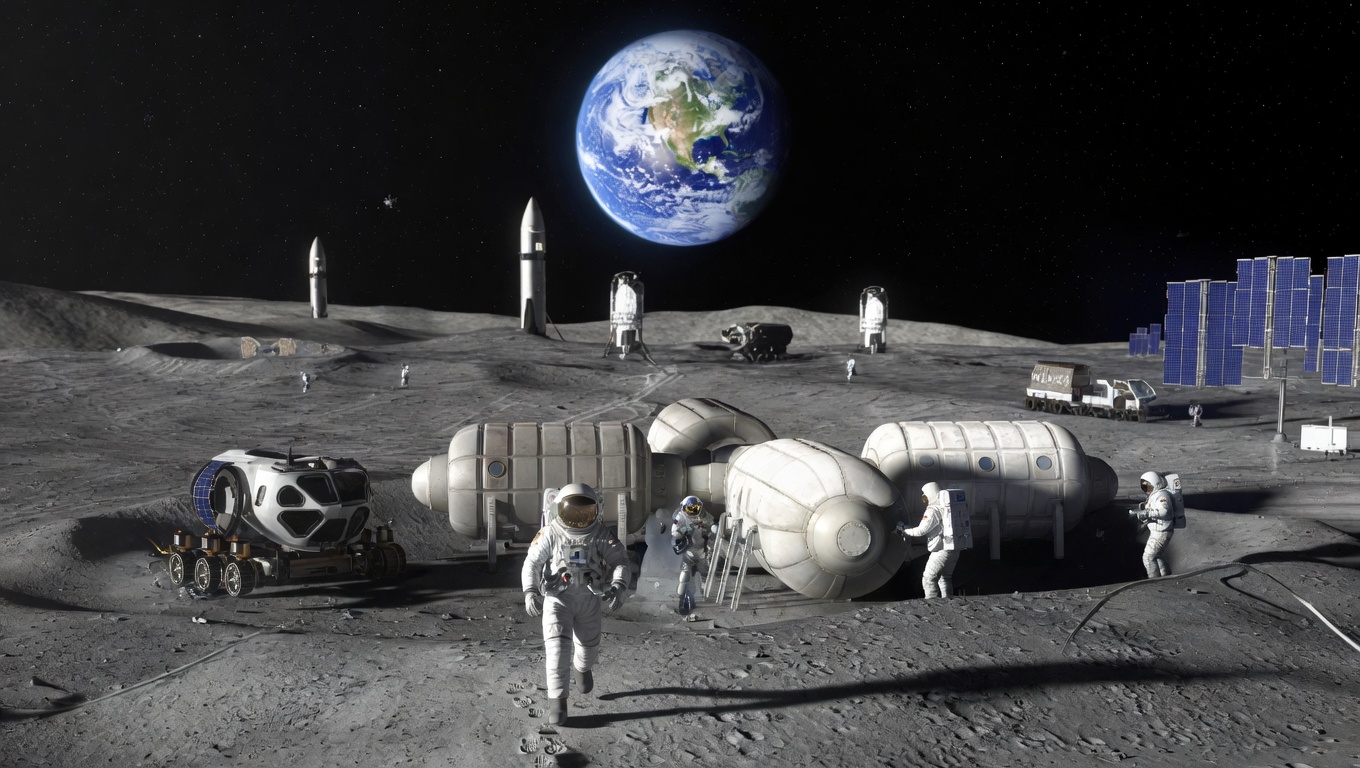
A day after SpaceX caught a Starship upper stage for the first time, Elon Musk laid out how much bigger the next version will get. “Starship V4 will be ~70m long, which is roughly a 40% length increase and allows >60% more propellant load,” Musk wrote on X Sunday evening. “Engine count will be raised to 9, with 3 more Raptor-Vacuum engines added, and these will be higher thrust V4 engines.”
The current V3 ship that flew on Flight 15 stands about 52 meters tall with six Raptors, three built for sea level and three for vacuum. V4 stretches the ship and doubles its vacuum engines. Musk first said in August 2025 that V4 would add three engines to “a significantly longer ship” and fly in 2027. Sunday’s post is the most specific look at the ship so far.
The payload jump is the headline for the rest of the industry. SpaceX said in its IPO prospectus that V3 is expected to carry about 100 metric tons to orbit, while future generations could reach 200 metric tons, potentially as soon as V4. For comparison, a reusable Falcon 9 carries roughly 17 metric tons to low Earth orbit.
The bigger impact may be on the Moon. Every Starship lunar mission depends on filling a propellant depot in orbit with a string of tanker flights before the lander departs. A NASA safety panel member put that number at around 22 flights last month, while Musk countered that it would be “more like 6 to 8,” as Teslarati reported. Much of that gap comes down to which ship is doing the hauling. Musk has said a V4 tanker could deliver more than 200 tons of propellant per flight, which by his math brings a lunar refill down to five or six launches.
Fewer tankers per landing means more landings per year. SpaceX already advertises cargo flights to the lunar surface starting no earlier than 2028 at $100 million per metric ton, with a Starship lander able to put up to 100 tons on the surface. In February, Musk said SpaceX had shifted its focus to “a self-growing city on the Moon,” which he believes could be done in under 10 years, as Teslarati covered. NASA’s Artemis IV landing is targeted for 2028, and the White House has called for work on a permanent lunar outpost to begin by 2030.
Starship V4 will be ~70m long, which is roughly a 40% length increase and allows >60% more propellant load. Engine count will be raised to 9, with 3 more Raptor-Vacuum engines added, and these will be higher thrust V4 engines. — Elon Musk (@elonmusk) November 16, 2026
None of that works without ships that fly more than once, which is where Ship 42 comes in. Musk spent part of Sunday at the pad inspecting the vehicle caught on Saturday. “I was going over the whole Starship heat shield earlier today. Overall, it looks great. The engines look great too. Ship 42 could probably be reflown with a few weeks of refurbishment,” he wrote. He added that “many small fixes are needed to achieve immediate reusability (like an airplane).”
SpaceX has never reflown a ship. Its two booster reflights each came months apart, so a Ship 42 return to flight within weeks would be a first for the program. Flight 15 already showed the ship can survive a full orbital mission and come home to the tower, as Teslarati reported Saturday.

Tesla may test customer-owned Robotaxis as early as next month, Musk says

FAA turned down free Starlink offer before nationwide ground stop, Elon Musk says


