Lifestyle
Elon Musk and SpaceX featured in Nat Geo MARS mini-series

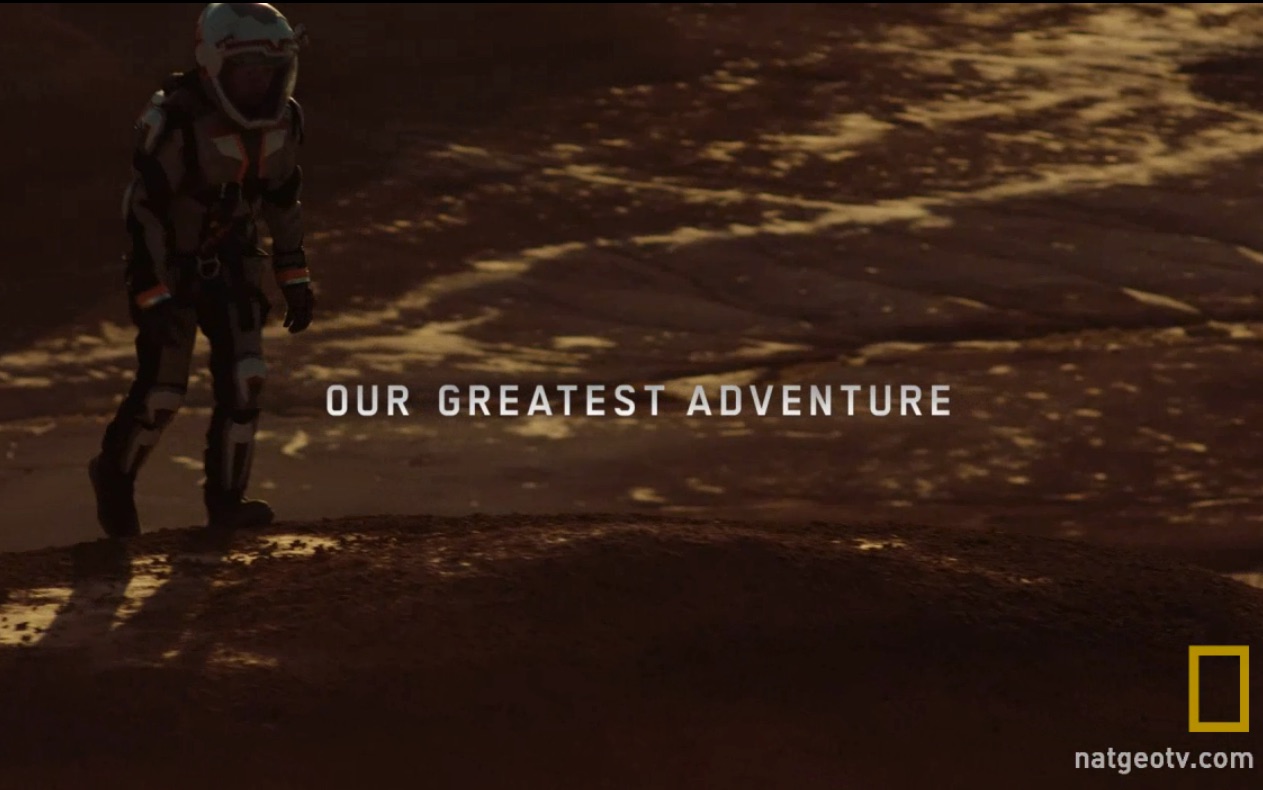
National Geographic (“NatGeo”) has launched their MARS mini-series to be aired every Monday evening for a total of six weeks. It’s a fictional drama set in the year 2033 imagining the first human mission to the surface of Mars with a huge focus on the scientific accomplishments necessary to make such a journey reality. Cut in with the drama are interviews with scientists explaining the complexities of the mission being imagined including, of course, our favorite Mars-bound-humanity-game-changer, Elon Musk.
Elon’s role in the first episode was to talk about the “big picture” challenges immediately apparent in a Mars mission:
- The risks of getting to Mars
- The adventure of it all
- The historical significance of launching from Pad 39A
- Why Mars is a goal to begin with
- Why landing on Mars is hard
- The importance of rocket reusability
- How fast we could establish a Mars colony
There’s been critique that the NatGeo series was essentially a big commercial for SpaceX and Elon. While the intention was (probably) not such, I can’t really argue that the impact (outcome?) wasn’t similar to a commercial. Elon wasn’t significantly over-featured versus others, but all of the modern-day rocket footage they used featured Falcon 9 and the SpaceX facilities.
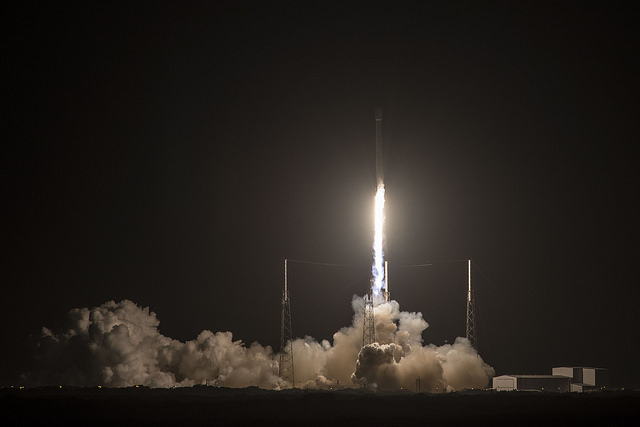
Falcon 9: A big star in NatGeo’s MARS series | Credit: SpaceX
Honestly though, when you’ve been both leading the charge and are arguably the biggest player (i.e., rocket company) in the Mars game, a realistic drama series featuring humanity’s first trip to the red planet is probably going to include you in a major way. And seriously, how awkward would it be pretending otherwise?
Prequels to the NatGeo MARS Series
In the weeks leading up to the premiere of their MARS series debut, NatGeo published plenty of relevant videos in order to keep curious minds, well, curious and in anticipation for the series. There were three videos that stood out most to me:
- “Before MARS”
Featuring twin girls that become significant players in the main MARS series, this video gave a short coming-of-age backstory wherein one of the sisters embraces her interest in space science via a ham radio/wise neighbor experience. I thought it was well done and a sweet tale, but kind of missed the “feels” it was supposed to inspire. Perhaps as the girls’ characters are fleshed out in the coming episodes, it will have more impact.
- “Is it okay to touch Mars?” by Vsauce1 (YouTube channel)
This video wasn’t published by NatGeo, but is was sponsored by them and host Michael Stevens promoted the MARS series throughout while discussing the science behind it. There were plenty of interesting Mars topics not generally discussed such as space “bugs” infecting the Earth and rover scientists living by “Mars time”. I found it to be a good primer for the series.
- “NatGeo Live | Sending Humans to Mars: How will we do it?”
This video featured a panel of three scientists answering questions about the challenges of a Mars mission after showing clips from the series. Automation, 3D printing, and terraforming were the primary featured topics after general discussion of mission requirements. There was disagreement on the topic of terraforming Mars that I thought was very interesting and recommend watching.
Fun Trivia
After watching and reading through most of the material published on this series, there were a few interesting things I noted and wanted to share for fun:

“Flight of Icarus” | Credit: Internet Archive Book Image
- The spaceship carrying the Mars astronauts in the series is called “Daedalus”, named after the Greek god who fathered the infamous waxed-wing god Icarus (great Iron Maiden song, too). In the 1986 movie “Space Camp” (starring Kate Capshaw and Leah Thompson), the space station whose oxygen tank reserves save the kids from certain death in space is also called “Daedalus”. Uh, sorry for the spoiler.
- Mars already has an unofficial flag: A tricolor rectangle of red, green, and blue. Each color represents the stages of terraforming the planet from its current red state, to green from vegetation, and finally to blue like Earth. The colors were also inspired by Kim Stanley Robinson’s trilogy Red Mars, Green Mars, and Blue Mars.
- In the “Before Mars” video, ham/amateur radio is a big feature, even allowing one of the girls to communicate with the International Space Station. It actually is possible to communicate with the ISS via ham radio. Astronauts reach out on their free time regularly.
Overall, I thought NatGeo did a great job on the series, intertwining drama with the science to give the viewer an understanding of where we are, where we are going, and why it’s so tough to do it. The series especially shines if you’re looking for a kind of “one-stop” place for all that information in an entertaining way. Unfortunately though, if you’ve been reading about the march towards Mars for some time now, there isn’t much added other than a different perspective and storyline to consider.
I’m looking forward to the coming episodes and, of course, seeing what else Elon has to say along the way. Next up on my playlist: NatGeo’s “Before the Flood” starring Leonardo DiCaprio and featuring our guy Elon.
Onwards.


Elon Musk
Tesla primes Cybercabs for 4K streaming and high bandwidth gaming with Starlink integration
Tesla is now shipping Cybercabs from Giga Texas with Starlink hardware built in as standard.

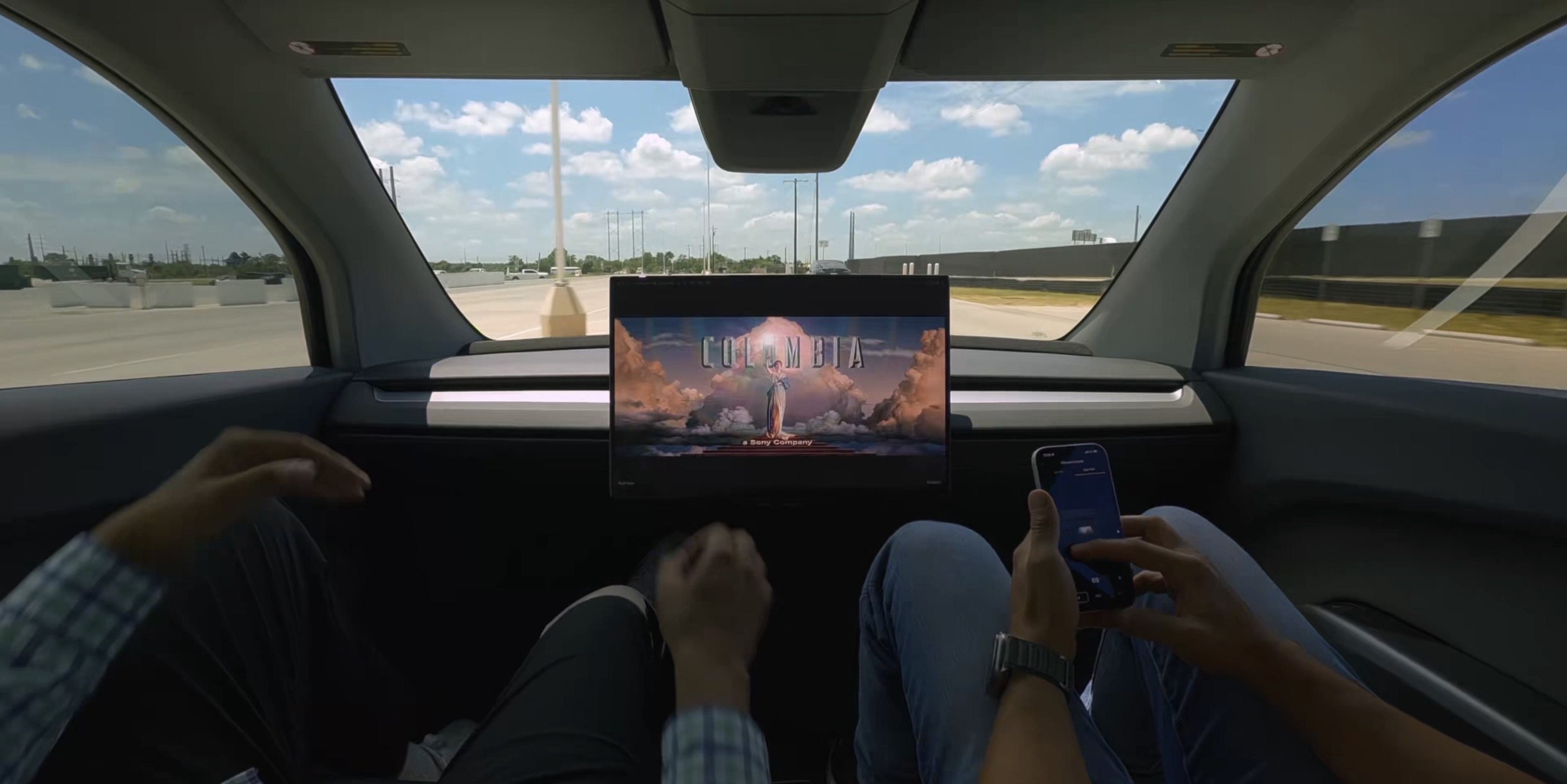
Tesla’s Cybercabs are now leaving Gigafactory Texas with Starlink hardware on the rear hatch in significant numbers, according to drone footage captured Tuesday by longtime Austin drone observer Joe Tegtmeyer. Production at the factory ramped back up after the Labor Day weekend, and his flyover of the outbound lot showed rows of gold Cybercabs alongside Model Y Long Wheelbase units, many carrying the satellite module for the first time as standard equipment rather than a one off retrofit.
Giga Texas today is busy with production coming back up following the long weekend. Of interest today in the outbound lot is the appearance of hundreds of Mode; YL’s and many more Cybercabs and for the 1st time equipped with the Starlink module one the hatch in big numbers.
At… pic.twitter.com/G9yl6s51m4
— Joe Tegtmeyer 🚀 🤠🛸😎 (@JoeTegtmeyer) September 8, 2026
Tesla first showed Starlink built into an actual Cybercab on August 10, when the Robotaxi account posted images of a single gold unit with the antenna integrated into the roofline above the taillights and called it the first Cybercab with Starlink integration. That followed a July reveal where Tesla and Starlink jointly posted a cutaway diagram of the antenna placement without a working vehicle to back it up. Ashok Elluswamy, Tesla’s VP of AI software, said at the time that the connection isn’t required for the car to drive itself. It exists mainly for navigation, customer service and keeping tabs on the fleet.
Musk has made a different case in public. During Tesla’s Q2 earnings call, he said the company can’t afford robotaxis stranded in what he called “Bermuda Triangles of lack of cellular connectivity,” and he separately claimed on X that Starlink will eventually reach every Tesla built, calling it the only way to deliver high bandwidth to billions of vehicles. He has also pitched the antenna as an entertainment upgrade, telling riders they would be able to stream 4K video or play games during a trip.
The rollout has moved fast since. Robotaxi service opened to the public in Austin on September 3, and Cybercabs had already been spotted with Starlink hardware in Houston and near Miami International Airport in the weeks before Tuesday’s factory footage showed the module shipping at volume rather than on scattered test units. Whether the satellite link earns its keep is still an open question. Tesla’s unsupervised service currently runs in dense metro geofences in Texas and Florida, markets where cellular coverage is already strong, which is not where the rural dead zones Musk describes tend to show up.
Lifestyle
Tesla Cybertruck targets job site crews with new Tailgate Utility Track and Bed Gear Box accessory
Tesla launched a $350 tailgate track and a $985 lockable Bed Gear Box for Cybertruck.
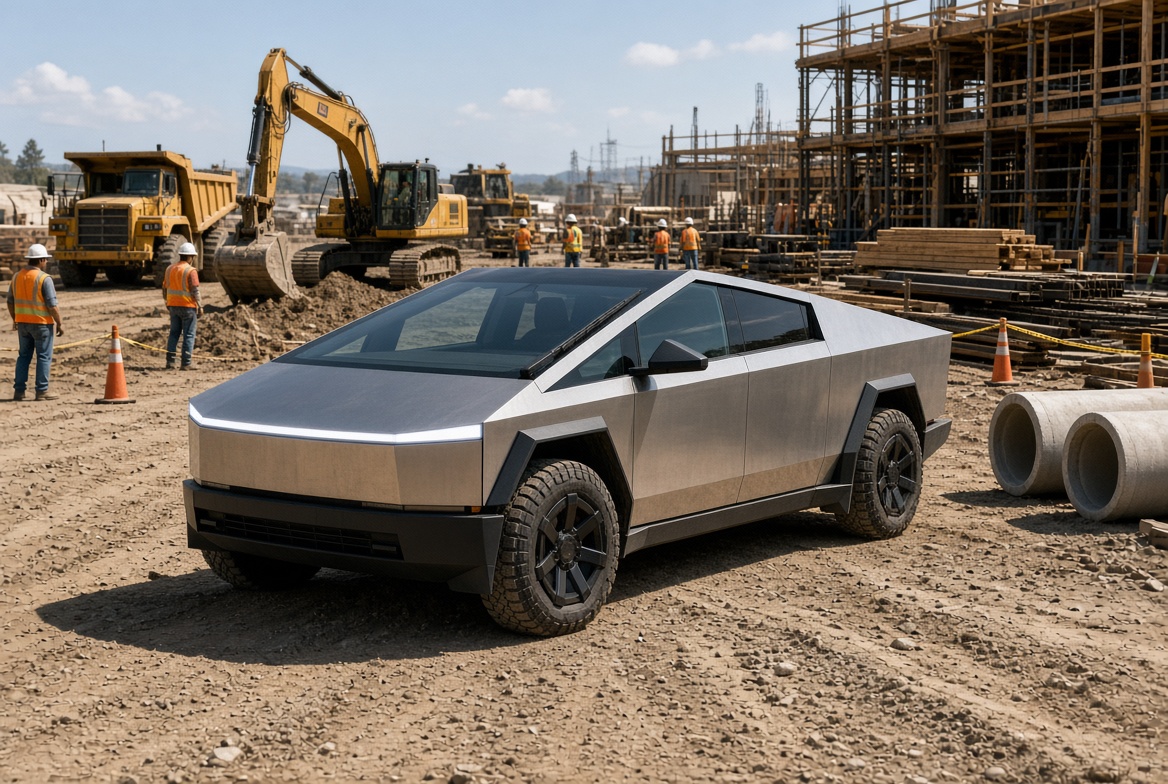
Tesla’s Cybertruck team added two more items to the Tesla Shop, targeting job site crews and owners who use the truck bed for actual work rather than just showing it off. The official Cybertruck X account posted the Tailgate Utility Track and the Bed Gear Box within minutes of each other, part of a five item batch that also included a reflective jacket, a spray paint hat and an updated reflective tee.
The Tailgate Utility Track runs $350 and turns the folded down tailgate into another mounting surface. It’s a single aluminum track with a T-slot for sliding accessories and two L-track attachment points, plus two load stops included in the box. The pitch is straightforward: strap down oversized cargo, like lumber or a cooler, that hangs off the back of the bed without it sliding out mid-drive. It bolts onto the existing tailgate and works on every Cybertruck trim.
Tailgate Utility Trackhttps://t.co/PCAYXlFBvS pic.twitter.com/sCV2NVxf1W
— Cybertruck (@cybertruck) September 3, 2026
The Bed Gear Box costs $985 and is a different kind of accessory. It’s a lockable aluminum storage box, 55.78 inches long, 19.8 inches wide and 7.79 inches tall, that mounts to the bed’s L-track rails and comes with two internal bins for smaller items. According to Tesla, at just over 57 pounds empty, it’s meant to stay in place rather than come in and out with each trip, giving owners a factory-fit alternative to loose totes for tools, recovery gear or emergency supplies. Tesla’s listing notes that Long Range and Dual Motor AWD Cybertrucks need the L-Tracks accessory installed separately before the Gear Box will mount, since L-tracks come standard only on certain configurations.
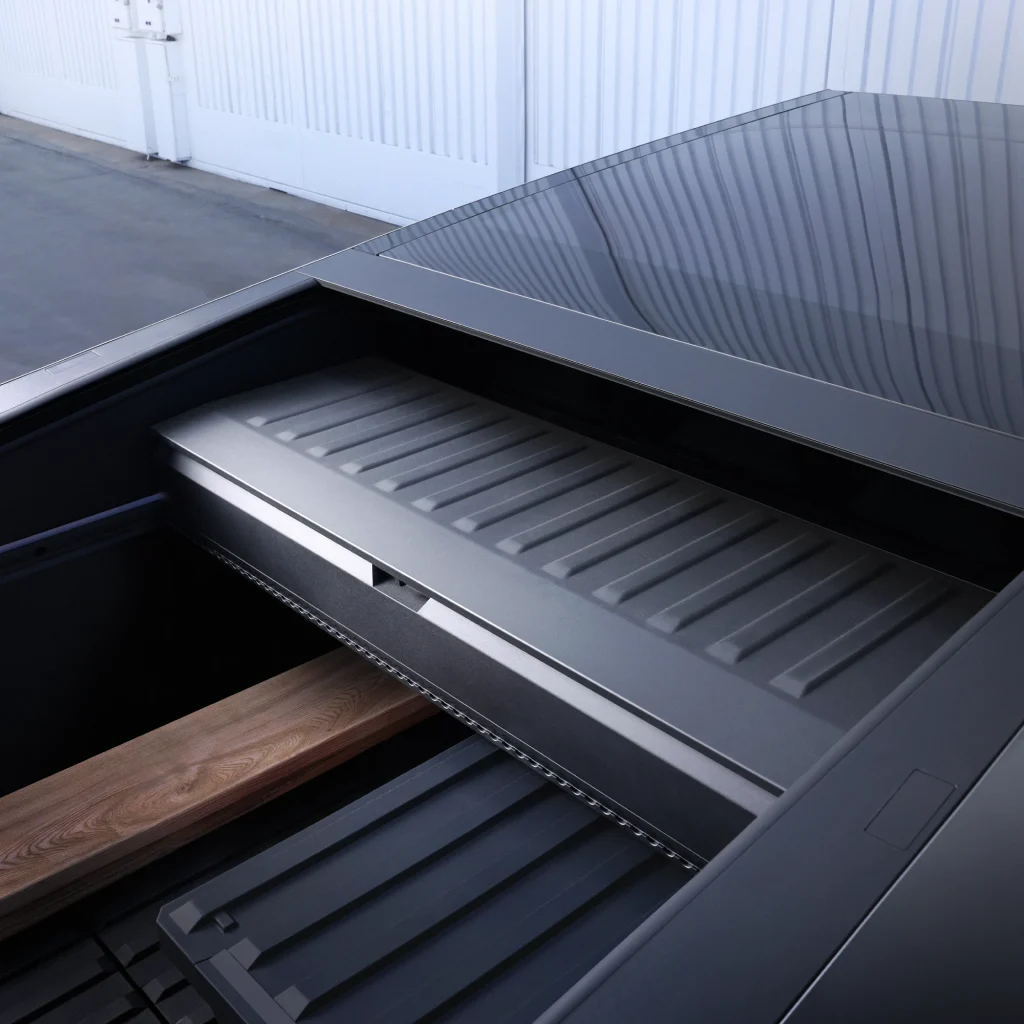
Tesla Cybertruck bed gear box accessory
Both accessories lean on the idea Tesla has been building toward since Elon Musk first described the Cybertruck’s third-party attachment strategy at the 2023 shareholder meeting, when he said the truck would ship with mounting points so outside companies, and Tesla itself, could keep adding gear without redesigning the bed. That’s the same L-track backbone underneath the tailgate shield and jumpseats Tesla launched last year, and the off-road armor package that arrived through the same X account in 2025.
Owners looking to round out the rest of the L-track ecosystem, cargo dividers, MOLLE panels, bed racks and similar gear, can find a wider range of options through our Cybertruck accessories collection.
Elon Musk
Elon Musk says he knows how to save Earth for a billion years
Elon Musk says sentient AI satellites launched from the Moon could keep Earth livable forever.
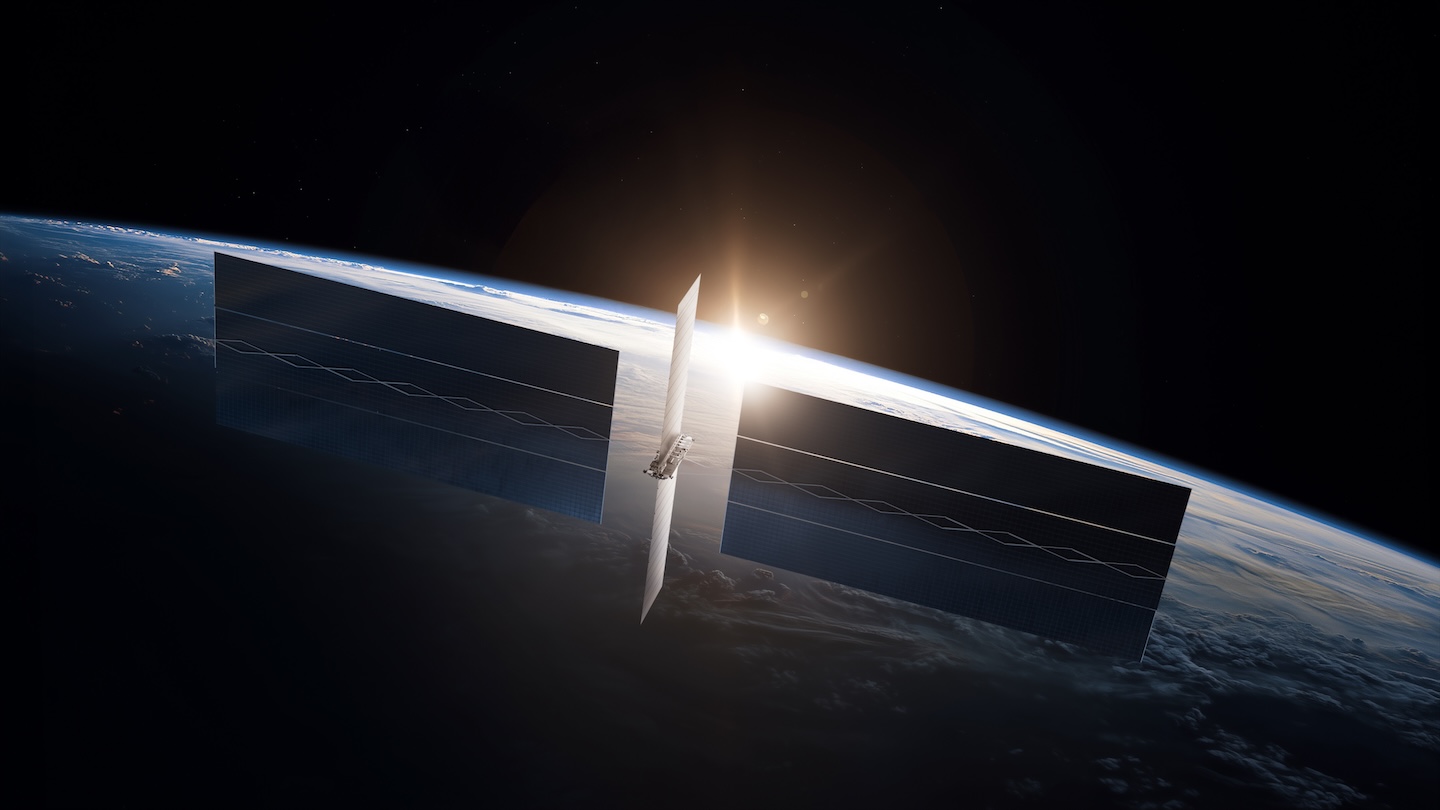
Elon Musk spent part of his weekend describing a plan to keep the planet livable for roughly a billion years, and it starts with satellites that can think for themselves.
In a post on X, Musk argued that swapping fossil fuels for solar and wind power will not be enough to protect humanity from what he called extremely severe extinction events, the kind that occur roughly every 100 million years. His fix is what he called sentient satellites, or solar-powered satellites, controlled by AI, that would sit in a fixed spot between Earth and the Sun after being launched off the Moon using a giant electromagnetic catapult instead of rockets.
The satellites’ onboard AI would make continuous, small adjustments rather than waiting on human instructions. The mass driver is Musk’s proposed way of getting the raw material there cheaply by using an electromagnetic launch track built on the Moon, where lower gravity and no atmosphere make it far easier to fling cargo into space than it is from Earth.
But we do need to act much faster than that if people still want to live where the beach is today. We have about 50 years or so to take action, which should be more than enough time for the space satellites to solve any heating problems. https://t.co/xhrVQALwQw
— Elon Musk (@elonmusk) August 30, 2026
Musk shared a Grok generated estimate suggesting roughly 5 percent of Florida’s land, or about 1.68 million acres, could face regular flooding by 2070 under a high sea level rise scenario, and said humanity has about 50 years to act before coastal living looks very different than it does today.
This is not the first time Musk has floated the idea. He raised a similar concept in November, describing a solar powered AI satellite constellation that could make tiny adjustments to incoming sunlight to fine tune Earth’s temperature. Musk has also tied planetary risk to his broader vision at SpaceX, where his compensation package is explicitly linked to establishing a self-sustaining Mars colony, one he has described as an insurance policy against the kind of extinction event he referenced this weekend, and where he has said humans could set foot within five to seven years.

NASA taps SpaceX for more astronaut missions as Boeing Starliner remains grounded

New drone video shows Tesla’s Optimus Factory reaching a turning point


