News
Tesla Model X pulls 250,000 pounds of muck from Boring Company tunnel

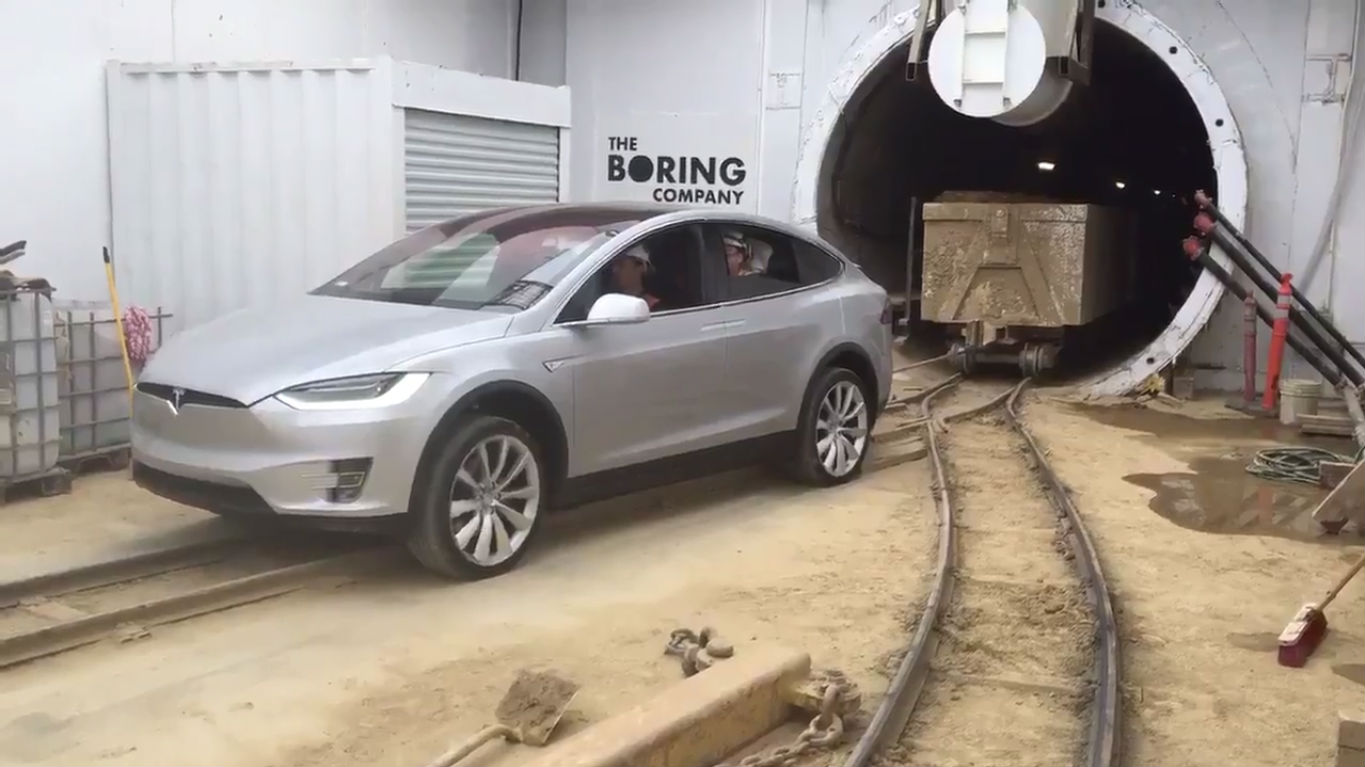
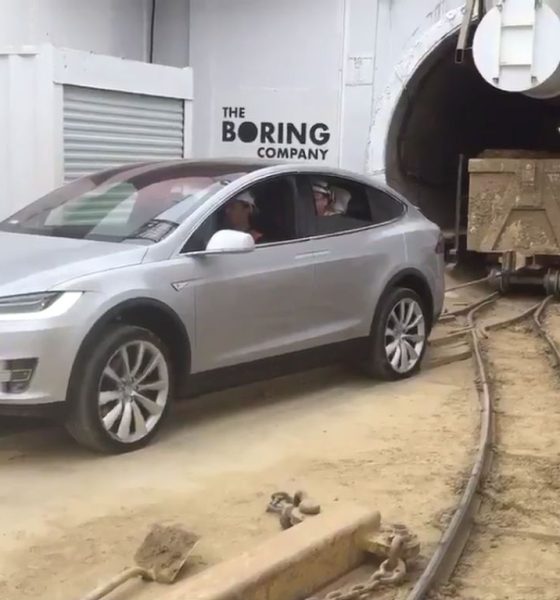
Tesla CEO Elon Musk just shared what could very well be the Model X’s most impressive and most insane feat yet — pulling roughly 250,000-pounds (125 tons) worth of muck and rail cars out of a Boring Co. tunnel. Musk’s video was a response to one of his followers who asked about the electric SUV’s towing limit.
What’s particularly impressive about Musk’s clip was just how effortless it seemed for the Model X to tow the 250,000-pound cargo. Quite unlike the usual tug-of-war videos featuring the Model X battling against ICE heavyweights such as the Hummer H2, the all-electric SUV in Musk’s Twitter video was not spinning its tires or attempting to accelerate quickly. Instead, it was pulling the rail cars out of The Boring Co. tunnel in a very regulated speed, allowing its tires to gain enough traction.
While the Model X’s feats of strength involving vehicles and cargo that are far heavier than its rated 3,500-5,000-pound towing capacity are incredibly impressive, much of it is due to physics. Light vehicles, after all, are capable of pulling heavy cargo provided that they have enough traction and momentum. Nevertheless, the instant torque produced by the Model X’s two electric motors definitely helped the SUV in Musk’s video tow its 250,000-pound cargo from The Boring Company tunnel.
No real surface is perfect, but it did pull about 250,000 lbs of muck rail cars out of a tunnel pic.twitter.com/wlKbLwd0f7
— Elon Musk (@elonmusk) March 22, 2018
Apart from the Model X’s impressive feat, Musk’s recent Twitter video also gave a good idea of the size of the Boring Company’s projects. Based on Musk’s recent video, the size of the startup’s tunnels are really compact. This is in line with Elon Musk’s concept for The Boring Co.’s tunnels, which are designed to be smaller than faster to dig than projects dug by larger, more conventional tunnel boring machines (TBMs).
Apart from being smaller and faster to construct, the Boring Company’s tunnels are also far more affordable than the industry standard. Currently, the average price of tunnels that are dug by conventional TBMs cost around $1 billion per mile. Since the Boring Company’s tunnels are roughly 50% smaller, however, Elon Musk expects to reduce the startup’s tunneling costs by a factor of four.
Despite its advanced tech and novel features such as its Falcon Wing Doors, the Tesla Model X is still an incredibly durable vehicle. As we noted in a report earlier this month, a Model X parked in a Philadelphia, PA office parking lot became the unfortunate victim of a falling tree. During the incident, the tree quite literally fell on the Model X, but despite this, the electric SUV came away from the incident relatively unharmed.
Of course, the Model X is also a formidable force in tug-of-war battles. During Musk’s Twitter session on Thursday, he shared our article about a Tesla Model X being challenged by a Chevy Camaro 350 IROC-Z in a tug-of-war match. The results of that battle are what could be called a classic, electric beatdown.


Elon Musk
SpaceX makes history, catching Starship from orbit for the first time
SpaceX caught Starship’s upper stage with its launch tower for the first time on Saturday.

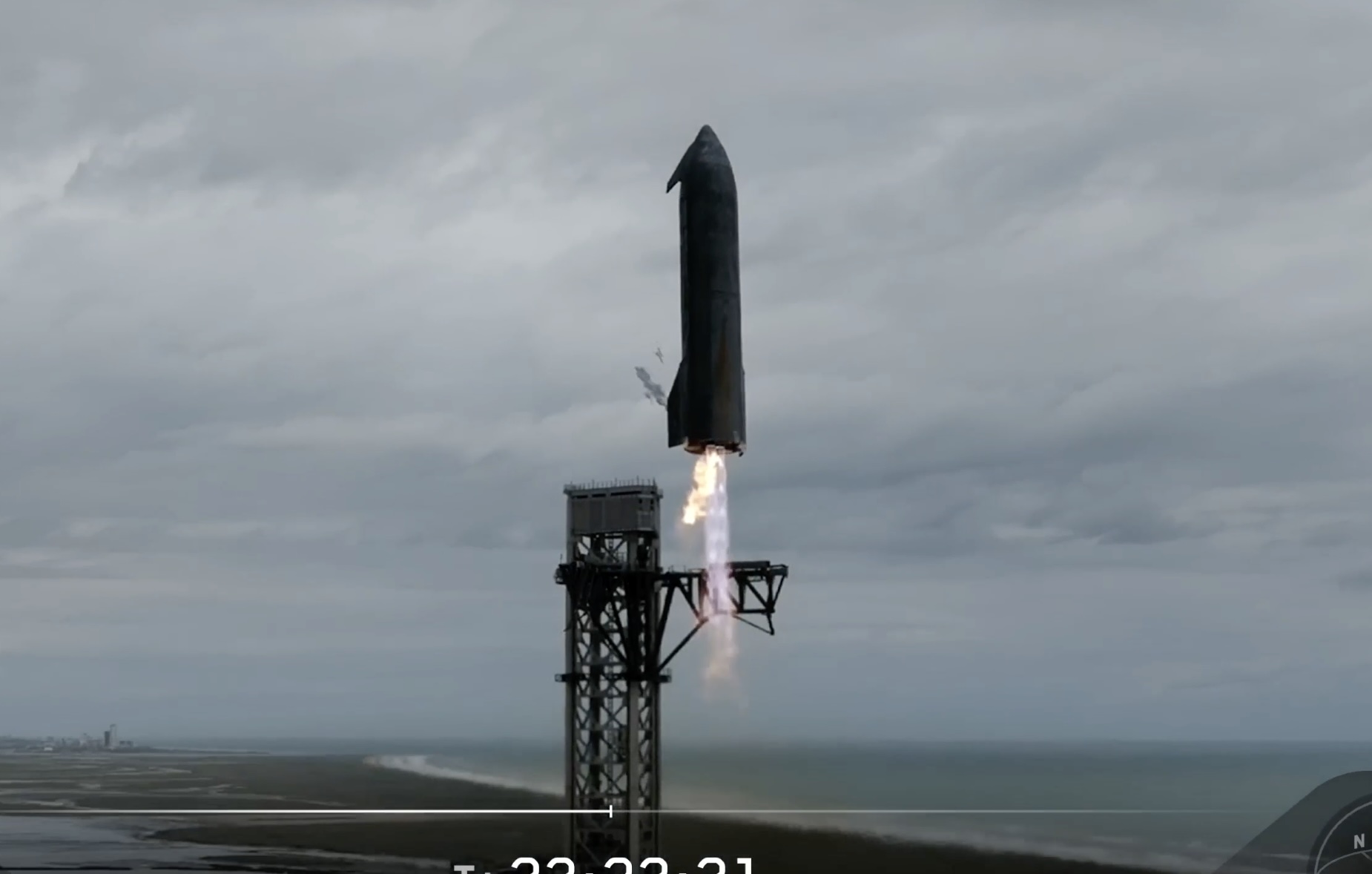
SpaceX caught a Starship upper stage with its launch tower for the first time on Saturday, bringing Ship 42 back to Starbase after roughly 22 and a half hours in orbit on Flight 15. No company has ever returned the upper stage of an orbital rocket to its launch site and caught it.
Ship 42 lifted off Friday evening on top of Booster 22, reached orbit and deployed all 26 of its Starlink V3 satellites. Three of those satellites carried cameras to photograph the ship’s heat shield, and SpaceX said the imagery showed it was in good shape for reentry, allowing controllers to pass on a backup splashdown option overnight. By Saturday morning, SpaceX posted on X that “Pad and tower systems are go for catch.” After about 14 orbits, the ship fired its engines to leave orbit, came back through the atmosphere and was caught by the tower’s chopstick arms.
IT HAPPENED https://t.co/KHITqHUWOf — TESLARATI (@Teslarati) November 14, 2026
The catch salvages a flight that started with a setback. Super Heavy did not make it back to the tower on Friday. “We were initially go for a catch, but in the later stages of the coast, the booster aborted itself for a GNC issue that it detected and that put it into its landing offshore,” SpaceX’s Dan Huot said. The booster hovered over the Gulf of Mexico before its flight termination system triggered and it came down in the water.
Elon Musk said Saturday that the booster ran short on propellant because its engines slightly underperformed. The fix, he wrote, is better engine consistency with Raptor V3.2 and a flight software change to cut the engines “about one second earlier” so enough fuel is left for the return. “This booster loss does not change our timeline to reach high volume, fully reusable Starship flights,” Musk added.
The ship is the harder half of that goal, and the one SpaceX had never recovered. Super Heavy has now been caught three times, most recently in March 2025, while every previous ship ended in the ocean or was lost. Falcon 9 lands its boosters routinely but throws its upper stage away on every launch. Musk described a full Starship recovery on SpaceX’s third quarter earnings call as a “profound technology milestone,” and Saturday’s catch shows the hardest piece of it can work.
That piece matters for nearly everything SpaceX is planning. Reusable ships are what make the economics of launching Starlink V3 satellites at scale work, along with the Starmind orbital compute constellation. NASA’s Artemis lunar lander also depends on refilling Starships in orbit with repeated tanker flights, which requires vehicles that can fly again quickly. Musk has said he expects Starship to reach a weekly launch cadence in the first half of 2027.
Flight 15 also improved on the last Starship mission in September, which reached orbit but ended after about three hours with a Pacific splashdown when some engines shut down. Before this flight, SpaceX had shown an animation of the ship catch during its earnings webcast, and Musk put the odds of pulling it off on the first try at “more likely than not,” as Teslarati reported.

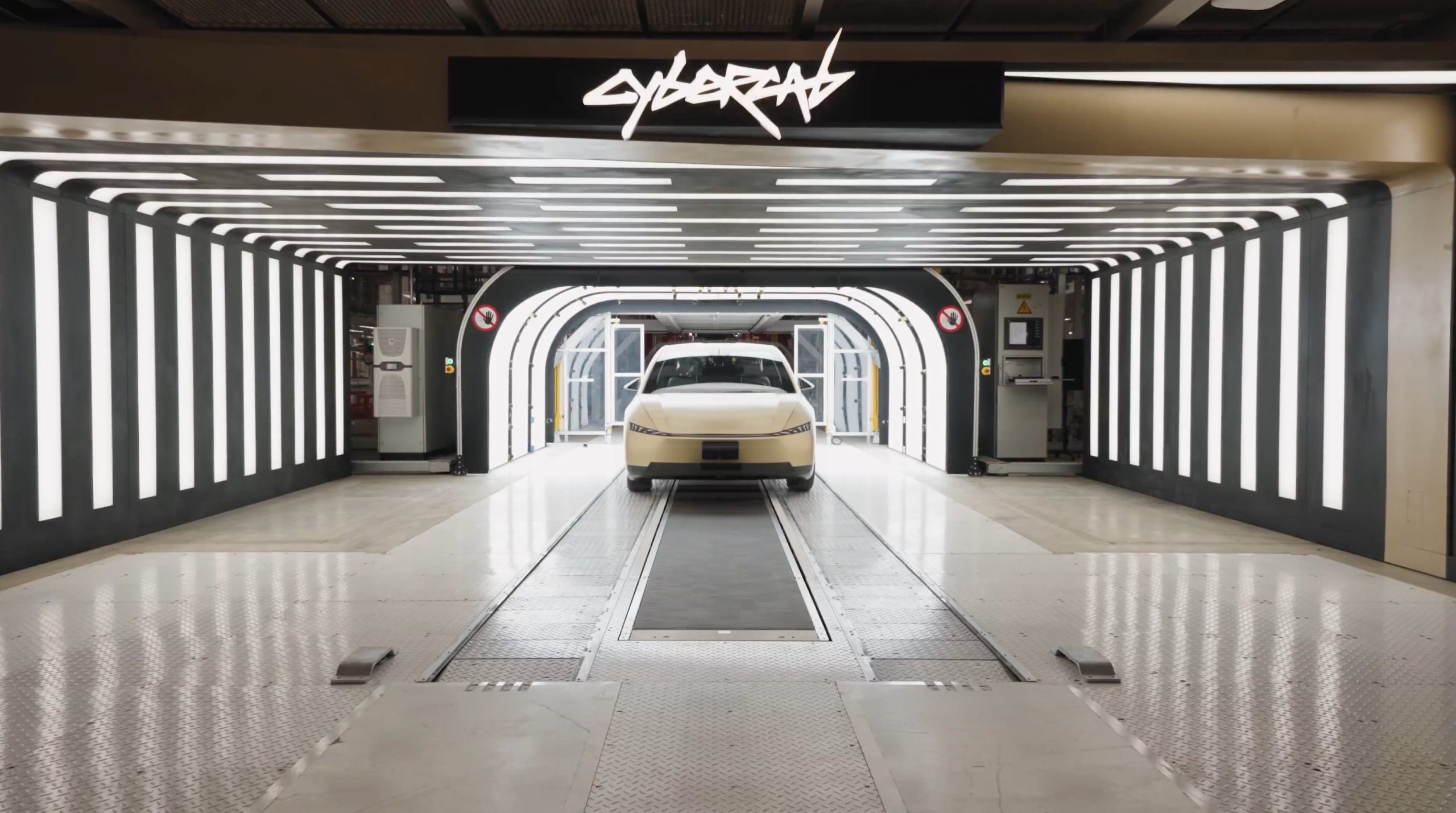
Tesla’s long-promised Cybercab is finally available for personal purchase, at least for a select few in the Austin area. But it’s far from a straightforward ownership experience.
The $29,990 price tag comes with a stack of restrictions that redefine what “owning” the vehicle actually means. The two-seat, steering-wheel-free Robotaxi, previously limited to Tesla’s own fleet, now carries contractual terms that limit where it can go, how it can be used, and whether it can even move without an active paid subscription.
Opening Night of Orders
Late on November 13, Tesla announced that select customers were being invited to order a Cybercab for personal use.
Tesla Cybercab goes on sale for $29,990, slated for December deliveries
The estimated purchase price is $29,990 before taxes, paired with a non-refundable $1,000 deposit and an estimated December 2026 delivery in Austin, Texas. The first month of the required :Autonomy Subscription,” priced at $299 per month is included.
After that, the vehicle needs an active subscription to operate at all. The announcement confirmed that customer sales had begun, albeit on an invite-only basis rather than a public order page.
The Fine Print for Buyers
BREAKING: Tesla’s Cybercab Autonomy Subscription terms are now live. A paid monthly subscription is required.
1/12 Tesla: “Your Cybercab will not operate without an active Autonomy Subscription. 🧵 https://t.co/umVk6DJE2x— Spencer (@scotsrule08) November 13, 2026
For those invited to order, the agreements (Cybercab Order Agreement, Terms of Use, and Autonomy Subscription Agreement) impose significant constraints. Major points include:
- A mandatory Autonomy Subscription (currently listed at $299 per month on the order screen, first month included) is required; without it, the Cybercab will not operate.
- Personal, non-commercial use only; ride-hailing, Robotaxi network participation, delivery, or rental requires separate written authorization or product enablement from Tesla.
- Operation restricted to Tesla-enabled Robotaxi geofences and supported service areas, which the company can expand, shrink, or alter; the vehicle may be technologically prevented from operating outside them.
- No unauthorized modifications (including wraps, window tint, or wheel changes) without Tesla or an authorized provider.
- Restricted resale and transfer: written permission required, with contractual damages of at least $50,000 (or full transaction value if higher) for unauthorized sales; Tesla also reserves repurchase rights at a company-determined fair market value, with the owner covering return costs.
- Safety or improper-use “strikeouts” (three or more) can trigger a one-week suspension of autonomous features without prorated refund.
- Owners remain responsible for insurance, registration, charging, parking, and general cleaning; the subscription covers certain maintenance items such as tires, windshields, filters, and camera cleaning, plus limited towing.
- Manual controls on the touchscreen allow only short-distance movement up to about 2 mph and require a valid driver’s license; they are not for public-road driving.
Why These Terms Might Exist
Tesla’s approach prioritizes control over a vehicle designed without traditional human controls and intended primarily as transport-as-a-service, something that Musk has hinted toward for some time now. Restricting commercial use and modifications could be as much of a software integrity, safety, and data collection effort as it is a safety effort.
Fleet consistency could also be in regulatory scrutiny early on in the Cybercab’s days of public operation.
The subscription model generates ongoing revenue beyond the low vehicle price and ensures the car remains connected and updatable, something that will keep the Cybercab as safe as possible as new updates roll out.
Buyback and resale limits reduce the risk of vehicles circulating outside Tesla’s operational and service ecosystem.
It apperas that personal ownership is secondary to the broader Robotaxi network strategy, as Musk has previously stated that the vast majority of Cybercabs would remain Tesla-owned.
Pickup Locations and Musk’s Pricing View
Initial deliveries are estimated for Austin, but personal vehicles are able to operate in any of Tesla’s Robotaxi geofences:
It’ll work unsupervised inside all the same geo locations as @robotaxi, just serving the owners’ needs.
— Ashok Elluswamy (@aelluswamy) November 14, 2026
Those who have been invited to order can also have their personal Cybercab delivered to numerous locations in Texas, including:
- Austin
- Dallas
- Houston
- San Antonio
- Fort Worth
Interesting that you can choose a delivery city https://t.co/SknDz9rFzo
— Whole Mars Catalog (@wholemars) November 14, 2026
As far as the monthly “Autonomy Subscription,” it appears Musk already wants it to be low. He acknowledged last night on X that the subscription price is too high. Along with detailing that the Cybercab will be available nationwide as regulatory approval is received, Musk said the monthly fee should match the cost of FSD and Premium Connectivity, which is about $115 per month.
The launch marks a milestone for unsupervised personal autonomous vehicles, but the fine print makes clear that buyers are purchasing a highly constrained asset whose usefulness is tightly bound to Tesla’s software, service network, and geographic approvals.
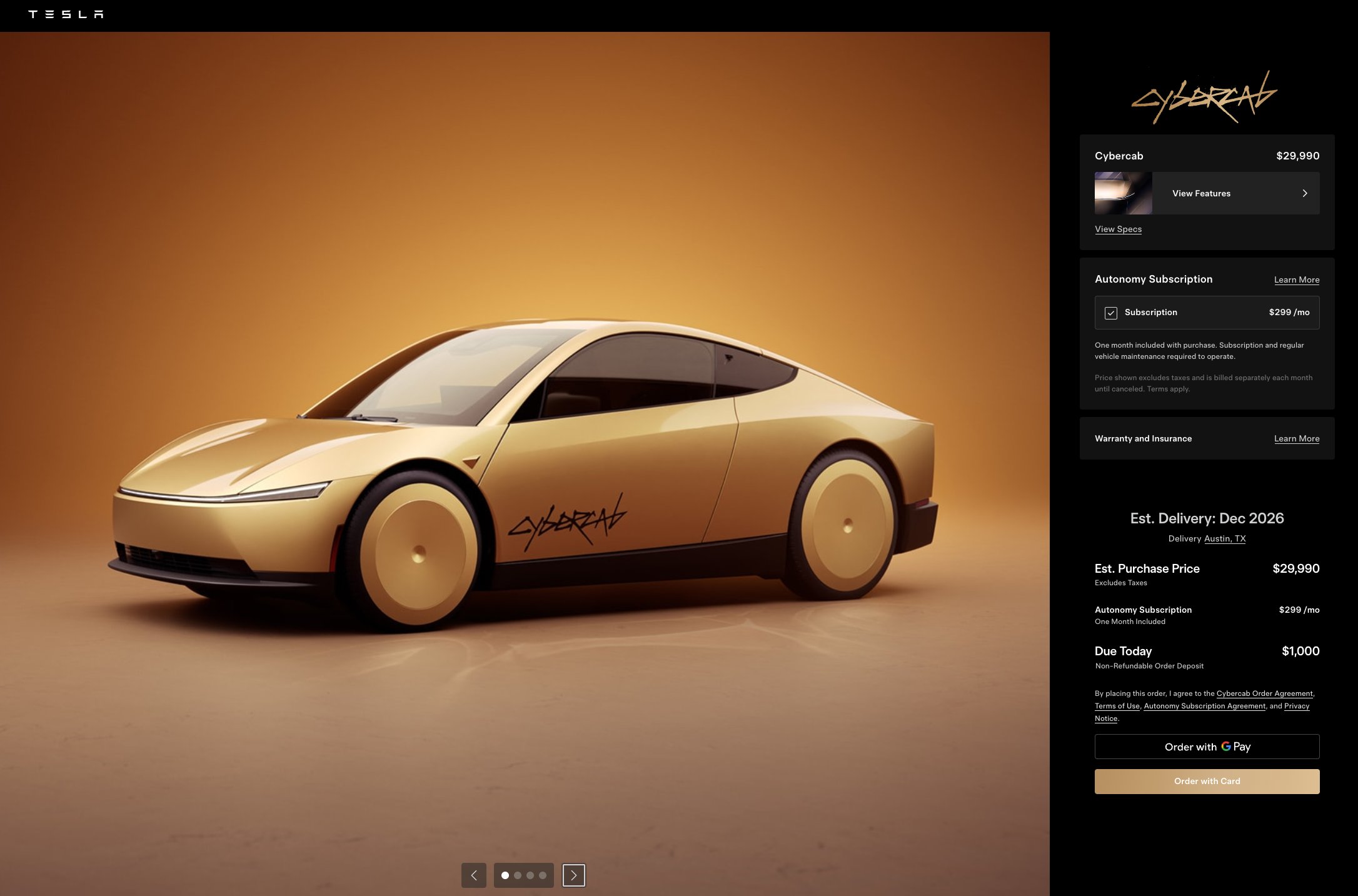
Tesla has officially put the Cybercab up for sale, revealing a bargain price and a $299 per month “Autonomy Subscription” that could hit customer hands as soon as December.
The offer requires a $299 monthly Autonomy Subscription, with the first month included in the purchase price, along with a $1,000 non-refundable order deposit. Tesla’s ordering interface shows deliveries targeted for Austin, Texas.
Tesla says that the Cybercab is making transportation more efficient, affordable and accessible than ever before, and that buyers can order their own Cybercab for personal use.
🚨🚨🚨 BREAKING: Tesla Cybercab is officially on sale for $29,990 with a $299/mo “Autonomy Subscription”
Delivery slotted for December! HUGE!
— TESLARATI (@Teslarati) November 13, 2026
The Cybercab is Tesla’s dedicated robotaxi, a gold-finished, two-passenger vehicle without a steering wheel or pedals, designed from the outset for unsupervised autonomous operation. It has been in limited Robotaxi service in Austin since September 2026, operating alongside Tesla’s larger fleet of Model Y vehicles.
Production takes place at Gigafactory Texas, which launched earlier this year. Tesla has stated for some time that it planned to put Cybercabs on sale by the end of the year, and it looks like they will come through on that promise if everything goes according to plan.
The Autonomy Subscription is mandatory for the vehicle to operate because it is void of a steering wheel and pedals. Tesla notes that the subscription and regular vehicle maintenance are required, indicating that personal owners will depend on the company’s software and service infrastructure rather than traditional ownership models.
One month of the subscription is included with purchase and subsequent months are billed separately until canceled.
This limited personal-sales opening marks a shift from Tesla’s earlier emphasis on fleet and transport-as-a-service operations. During the Q3 2026 Earnings Call, executives indicated that the vast majority of Cybercabs would remain Tesla-owned and used for rideshare service, while still aiming to place some vehicles with customers by year-end.
Elon Musk has previously targeted a price below $30,000, which was a huge point of emphasis for the Cybercab being the central point of Tesla’s “transportation-as-a-service” model.
Availability remains restricted to invited customers rather than a public order page, and the initial deliveries are expected only in the Austin area where unsupervised Robotaxi operations are already active. Buyers will need to accept the geographic and operational constraints of current autonomous deployment, as the vehicle cannot be driven manually outside supported zones.
The move gives a small number of early buyers the chance to own Tesla’s dedicated autonomous vehicle at the long-discussed sub-$30,000 price point, while the bulk of production continues to support the company’s expanding Robotaxi network.

SpaceX makes history, catching Starship from orbit for the first time

Tesla Cybercab ownership will come with plenty of strings attached


