Investor's Corner
Tesla’s mission is bearing fruit despite escalating attacks from critics

Elon Musk dubs Tesla as a company aiming to accelerate the world’s transition to sustainable transportation and energy. Since the company started with the original Roadster, Tesla has courted as many dedicated critics as it does supporters. A “Tesla Death Watch” was even published by an online publication back in 2008 as the traditional auto industry waited on what appeared to be the inevitable fall of Tesla.
As history would show, such as thing never came to pass. The Model S was released, followed by the Model X, and now, the Model 3. While the rollout of each of these vehicles was all but problem-free, the electric cars eventually made it to market, and once they did, they were received very well by Tesla’s consumer base. Tesla has grown significantly since the days of the original Roadster and the first-generation Model S, with the company recently manufacturing 5,000 Model 3 in a week during the end of Q2 2018.
In an interview with Bloomberg Businessweek, Tesla CEO Elon Musk stated that the Model 3 ramp was a “bet-the-company” situation, where the failure of the car would have resulted in the electric car company’s crash. During the same interview, Musk also noted that he believes the Model 3 ramp, which has left him with permanent mental scar tissue, is close to leaving production hell. With signs that the company is now attempting to sustain its capability to manufacture 6,000 Model 3 per week, such as more than 19,000 new VIN registrations during the first two weeks of July, Musk’s statements appear to be accurate.
The Tesla Model 3 Performance. [Credit: Tesla]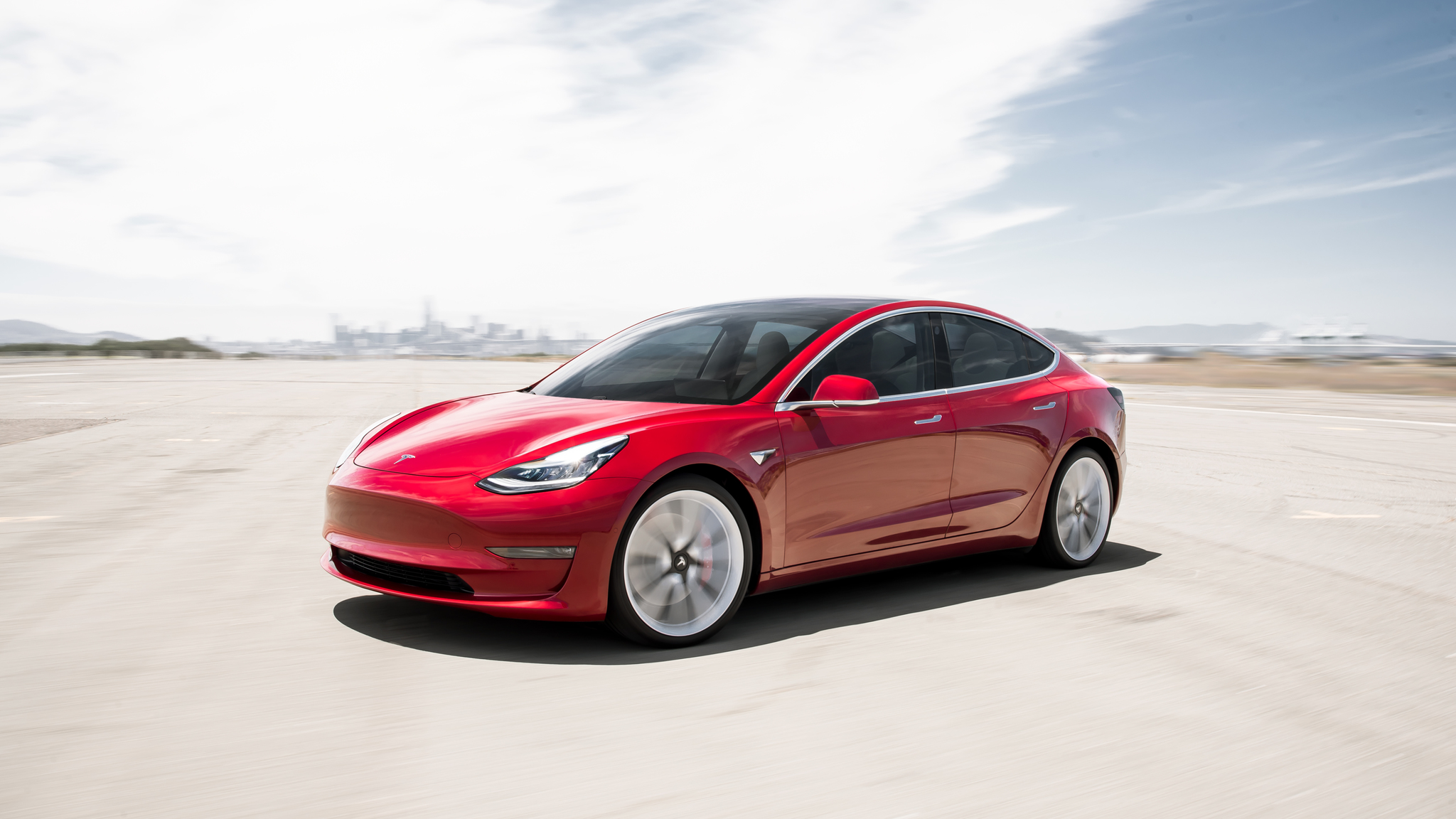
Despite these, Tesla has been met with continued criticism at every turn. A look at the company’s stock performance in July is indicative of just how divisive the company continues to be. Elon Musk has spent the last few months calling out what he believes is a bias in mainstream media about negative coverage on Tesla’s electric cars. This culminated in a period last May when the CEO openly clashed with journalists on Twitter after Musk suggested that he would start a website evaluating the credibility of news reporters, similar to how Yelp works with businesses. The aftermath of these clashes is still felt today, as proven by a New York Post article published last July 21 dubbing Musk as a complete “fraud.”
In social media, Tesla remains as divisive. Twitter alone is a platform where Tesla’s bulls and bears collide pretty much on an everyday basis. Since the departure of noted Tesla short-seller Montana Skeptic after Elon Musk allegedly called his boss to complain, efforts to undermine the company’s progress have escalated. Today, there is a group keeping the Burbank Airport, a lot used by Tesla to store its vehicles before delivering them to customers across the United States, under 24/7 surveillance. Latrilife, the person conducting the surveillance, claimed on Twitter that he has 350 employees and he deploys 2-person teams to document activity inside the airport lot. Critics of the company are under the impression that lots filled with Model 3 — the Burbank Airport being one of them — were proof that demand for the vehicle was decreasing and that customers are refusing delivery. The misinformation surrounding Tesla in social media has been so prevalent recently that even Vertical Research Group analyst Gordon L. Johnson ended up publishing an inaccurate note to clients about Tesla.
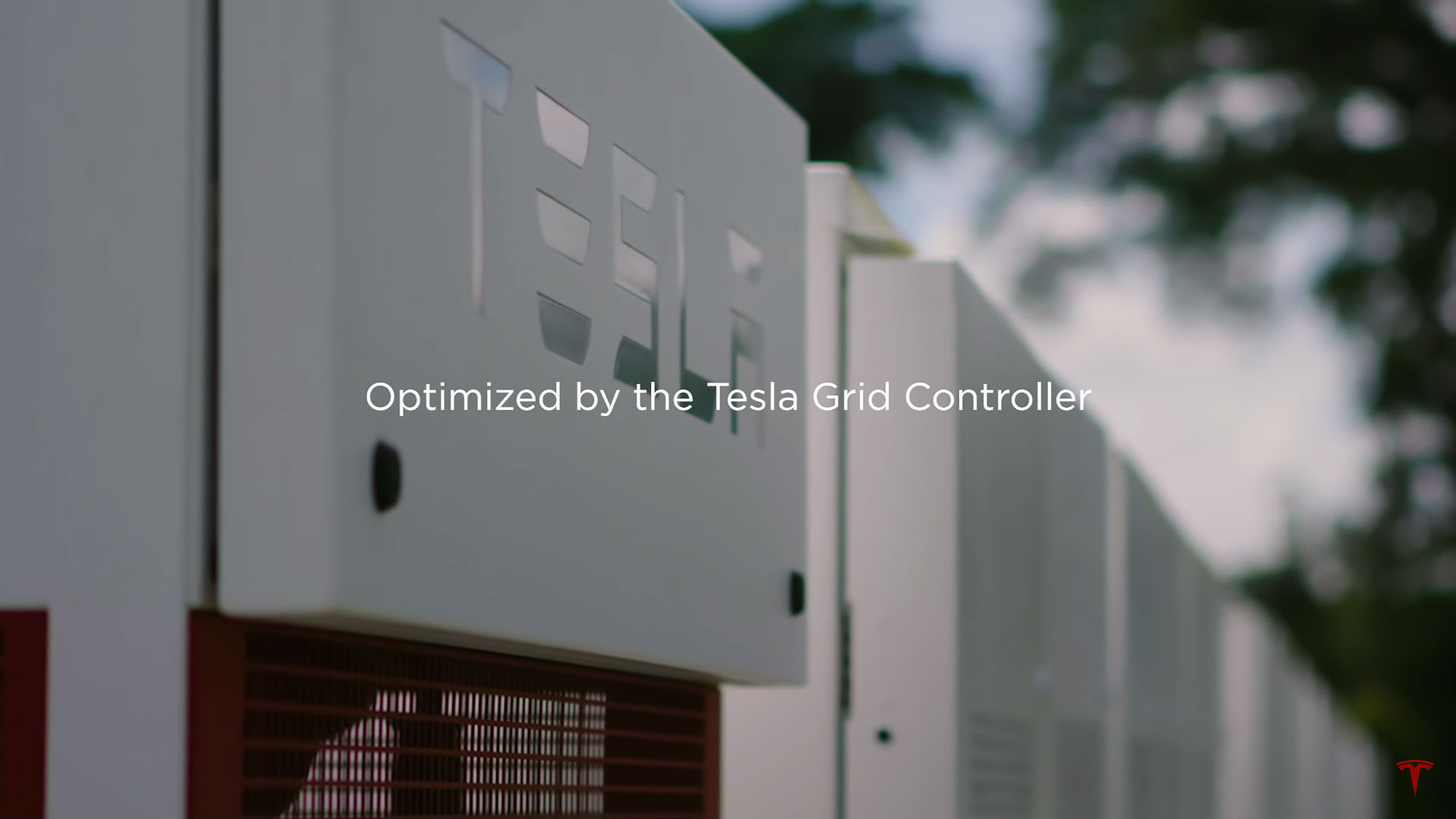
Amidst all this noise and the sensational headlines that Elon Musk triggers on Twitter, Tesla as a company has been quietly making progress in its goal to push the world closer to sustainability. Tesla Energy, a branch of the company that rarely makes the news, was lauded recently by Samoa for helping the island state reach its eventual goal of being powered 100% by renewable energy. During the 2018 Annual Shareholder Meeting, Elon Musk mentioned that another 1 GWh energy project would be announced in the near future. CTO JB Straubel also reaffirmed Tesla’s stance on the residential solar market, stating that the company is in no way stepping back from the residential energy industry.
Tesla’s vehicles are also starting to change the very perception of what cars can do. Jared Ewy, whose video of his family reacting to a surprise Model 3 became near-viral and attracted a Like from Elon Musk, noted in a blog post that he is in no way a “car guy.” Ewy wrote, however, that once he experienced a Tesla Model S, he knew that it was something different. That was why when the Model 3 became available; he opted to order the vehicle immediately. Professional auto journalists are giving Tesla’s vehicles their due as well, with the Model 3 Performance getting rave reviews from seasoned professionals. Among these is the Wall Street Journal‘s Dan Neil, who wrote a glowing review of the high-performance electric car (Neil eventually shut down his Twitter account amidst badgering from short-sellers and Tesla critics).
Even abroad, Tesla’s brand is becoming synonymous with forward-thinking companies that care about the future. In China, Tesla recently released its “Eagle Plan,” a role-playing program designed for children aged 5-12 that would enable kids to be familiar with the company’s products and sustainable energy solutions as a whole. According to information shared by Tesla owner @vincent13031925 on Twitter, the children’s program aims to educate and foster understanding of the company’s corporate mission, as well as its environmental protection significance. In South Australia, a plan is now underway to provide free solar panels and Powerwall 2 batteries to 50,000 low-income housing units as part of a virtual power plant, which could lower electricity bills in the region while providing backup power to the grid.



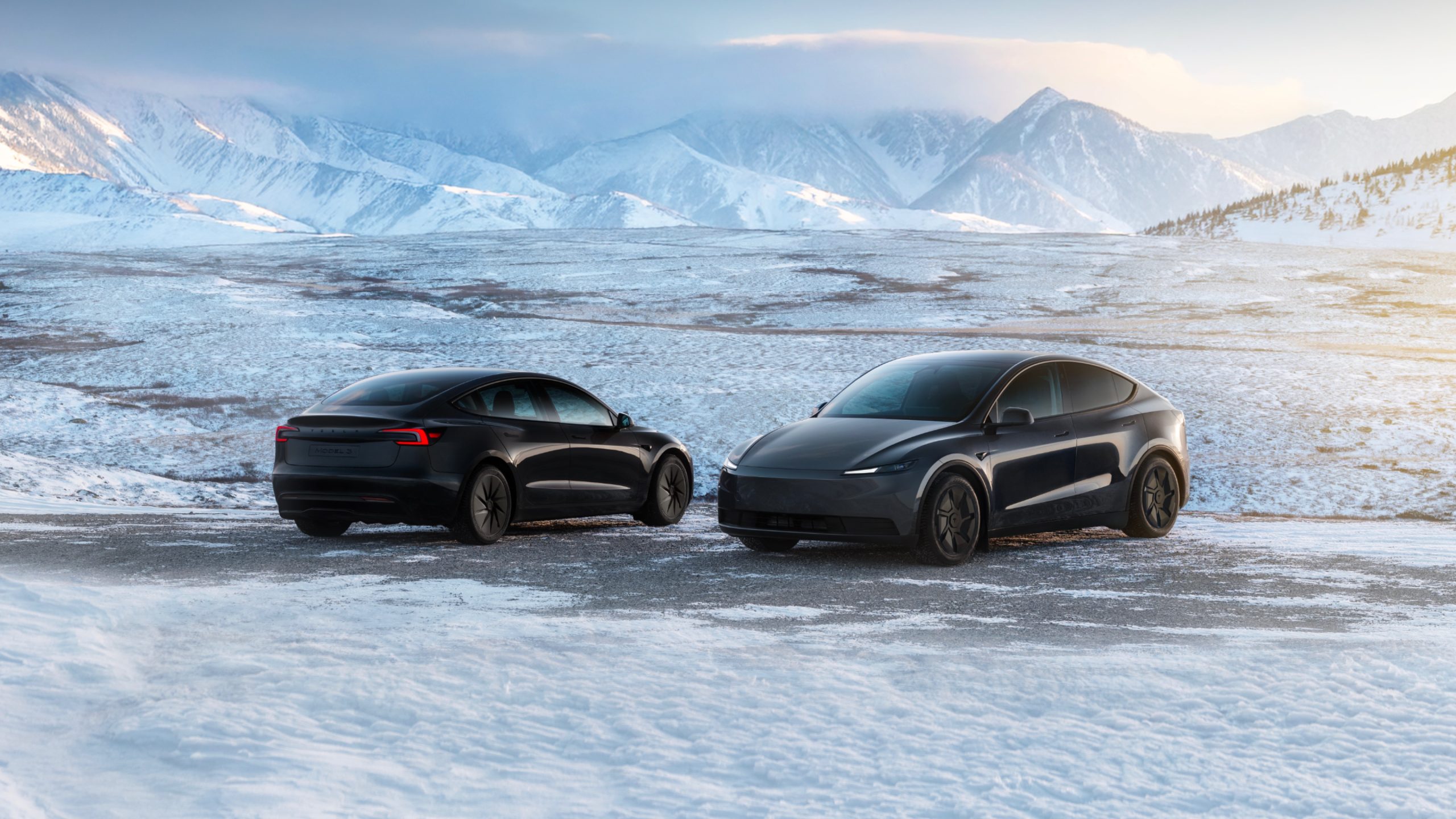
Tesla (NASDAQ: TSLA) reported strong delivery figures that beat Wall Street guesses, and they were revealed alongside the company’s second-best quarter in terms of energy deployments ever.
Tesla announced this morning that it delivered 486,532 cars in Q3, while producing 464,391, exceeding analyst consensus, which sat around 462,000 units.
Meanwhile, Tesla reported 13.7 GWh of energy storage deployed for the quarter. That’s the second-best quarter Tesla has ever reported on that side of things.
🚨 Tesla delivered 486,532 vehicles in Q3, beating expectations at 464,391.
Big Q from the Tesla team, also 13.7 GWh of energy was deployed. pic.twitter.com/olioLWgG7a
— TESLARATI (@Teslarati) October 2, 2026
Vehicle Deliveries
Deliveries were strong, and it was another quarter when Tesla had the opportunity to outshine the Wall Street pundits who are quick to criticize and slow to give credit. Tesla saw a slight decrease in deliveries compared to Q3 2025, but Tesla still had the $7,500 EV Tax Credit to use to help incentivize consumers to pick an EV.
A small decrease of 2.1 percent is pretty telling because it shows Tesla does not need massive federal credits to convince consumers to purchase its vehicles.
It was also the company’s third-best performance all-time in terms of deliveries, trailing that of Q3 2025 with 497,099 deliveries and Q4 2024, when the company handed over 495,570 cars.
We reported several days ago that Tesla Showrooms across the United States were completely bare of inventory or unclaimed units. Many locations also removed Demo Drive units, which had been bought by customers looking to take delivery sooner.
Tesla showrooms picked clean ahead of Q3 end as demand looks strong
Energy Generation
Tesla’s Energy Generation performance in Q3 was also very strong, as the company deployed 13.7 GWh of energy storage over the past three months. The only quarter when Tesla reported stronger energy deployment figures was Q4 2025, when 14.2 GWh of energy storage was deployed.
Tesla’s Q3 performance in energy generation has continued to grow each quarter, with the company increasing its deployments by ten-fold since Q3 2021, when just 1.3 GWh was deployed.
It is also nearly double what it was in Q3 2024, when the company reported 6.9 GWh. This is one of Tesla’s quickest-growing divisions, and it flies under the radar with fans and analysts, as many are focused on self-driving or the vehicles themselves.
Tesla Stock
Shares rose 5.07 percent to $372.06 at just after 10 a.m. on the East Coast. This is a rarity for Tesla after a strong delivery report, as positive news usually brings the stock down. Many quarters with extremely robust delivery reports have not been as kind to the Teslanaires of the world.
Elon Musk
Elon Musk and Trump are closer than ever, and Tesla could be the big winner
Elon Musk sat beside Trump as AI leaders signed a voluntary White House safety accord.

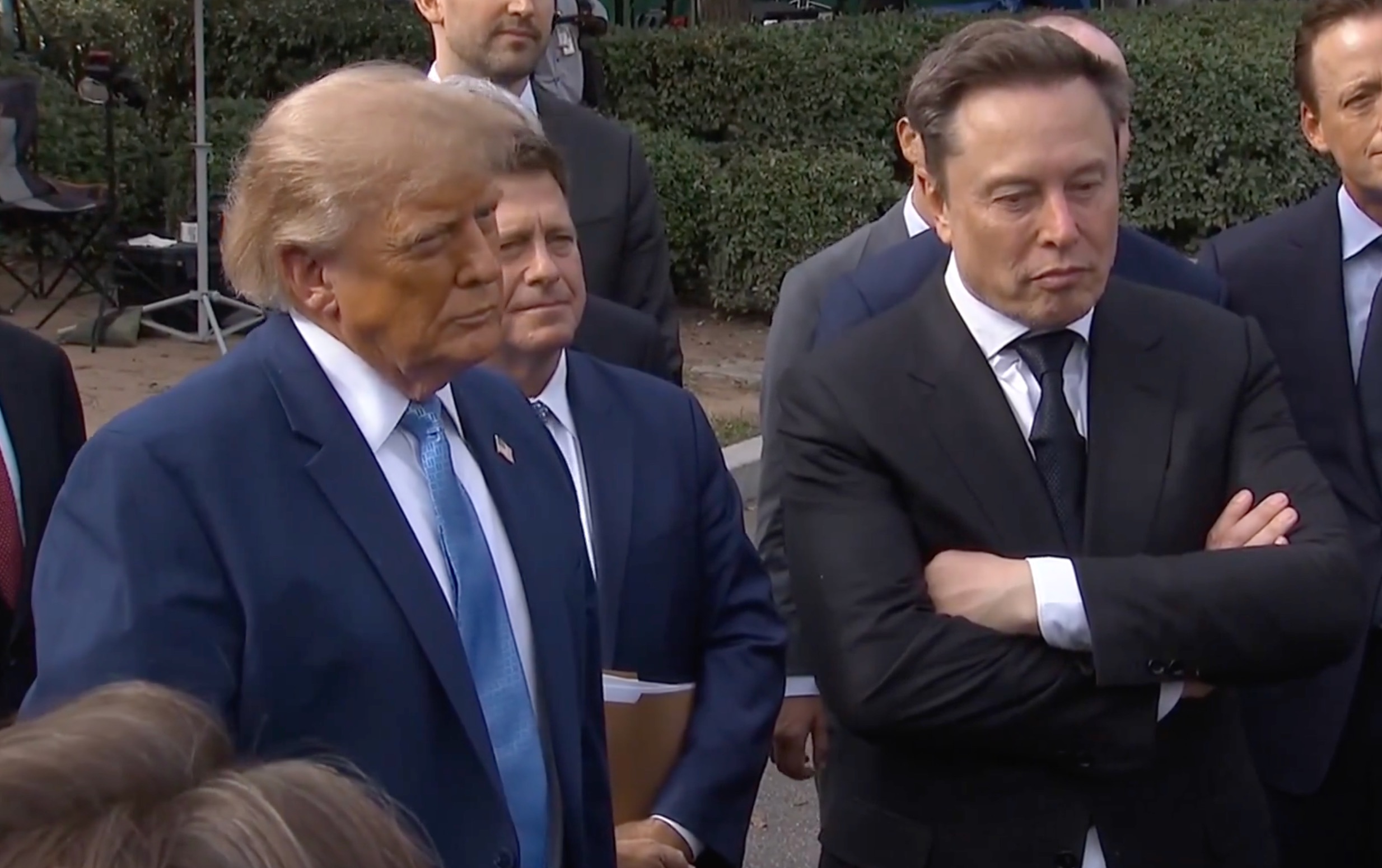
Elon Musk had the seat right next to President Donald Trump on Tuesday as the White House hosted the leaders of America’s biggest artificial intelligence companies for a lunch that ended with a voluntary industry accord on AI safety.
A seating chart Trump posted on Truth Social placed Musk at the president’s left in the East Room, with Nvidia CEO Jensen Huang on his right, according to an Associated Press reporter. Anthropic CEO Dario Amodei, OpenAI President Greg Brockman, Meta’s Mark Zuckerberg, Google’s Sundar Pichai, Microsoft’s Satya Nadella and Amazon founder Jeff Bezos also attended, along with Vice President JD Vance and House Speaker Mike Johnson.
🚨 Elon Musk is currently speaking to the media alongside President Trump after a meeting with AI Leaders in Washington today
Trump says AI is now being called “Super Intelligence” or SI pic.twitter.com/woJJqUVP9B
— TESLARATI (@Teslarati) September 29, 2026
After the lunch, Trump told reporters outside the West Wing that the executives had signed “The White House Accord on Superintelligence: A Joint Commitment on Frontier SI Responsibilities.” Johnson described it as a voluntary statement of principles built on “robust internal controls and layers of internal and external review,” while Zuckerberg said company boards would independently review reports from outside auditors. Trump called the document “morally binding,” said he would name a new AI czar within days, and signed an executive order formally renaming artificial intelligence “super intelligence,” CNBC reported.
Musk was not in the room for Tesla alone. Since SpaceX absorbed xAI, he runs the company behind Grok and one of the largest AI training operations anywhere. On September 25, he said another 220,000 Nvidia GB300 chips would come online at Colossus 2 within a week, with more expected in November and December.
“I think it is worth highlighting the positive benefits of A.I. … S.I., pardon me.”
“Thank you.”@elonmusk catches his own slip after calling the technology “A.I.” while speaking alongside President Trump and other tech leaders, quickly correcting himself to “super… pic.twitter.com/fH7CFileNb
— Fox News (@FoxNews) September 29, 2026
SpaceX confirms third massive compute deal at Colossus data center
Musk also used the trip to restate his energy ambitions. “SpaceX is aiming together with Tesla to do 200 gigawatts of solar production per year,” he said at an event in Washington. It is the same combined target he laid out that feeds directly into Terafab, the Tesla and SpaceX chip venture that will need enormous amounts of power.
The showing between Musk and Trump has come a long way, since the two had the very public split in mid 2025 after Musk opposed the “Big Beautiful Bill” and left DOGE. They reconciled at Charlie Kirk’s memorial that September, and Trump later called their relationship “good”. Since then, Musk has joined Trump’s China delegation in May and attended last week’s White House state dinner for Chinese President Xi Jinping.
For Tesla, that access to government official could pay dividends. As Teslarati noted in January, federal autonomy rules, NHTSA oversight and a single national standard for driverless vehicles all run through an administration Musk can more easily reach directly as Tesla works to scale Robotaxi and Cybercab beyond Texas.
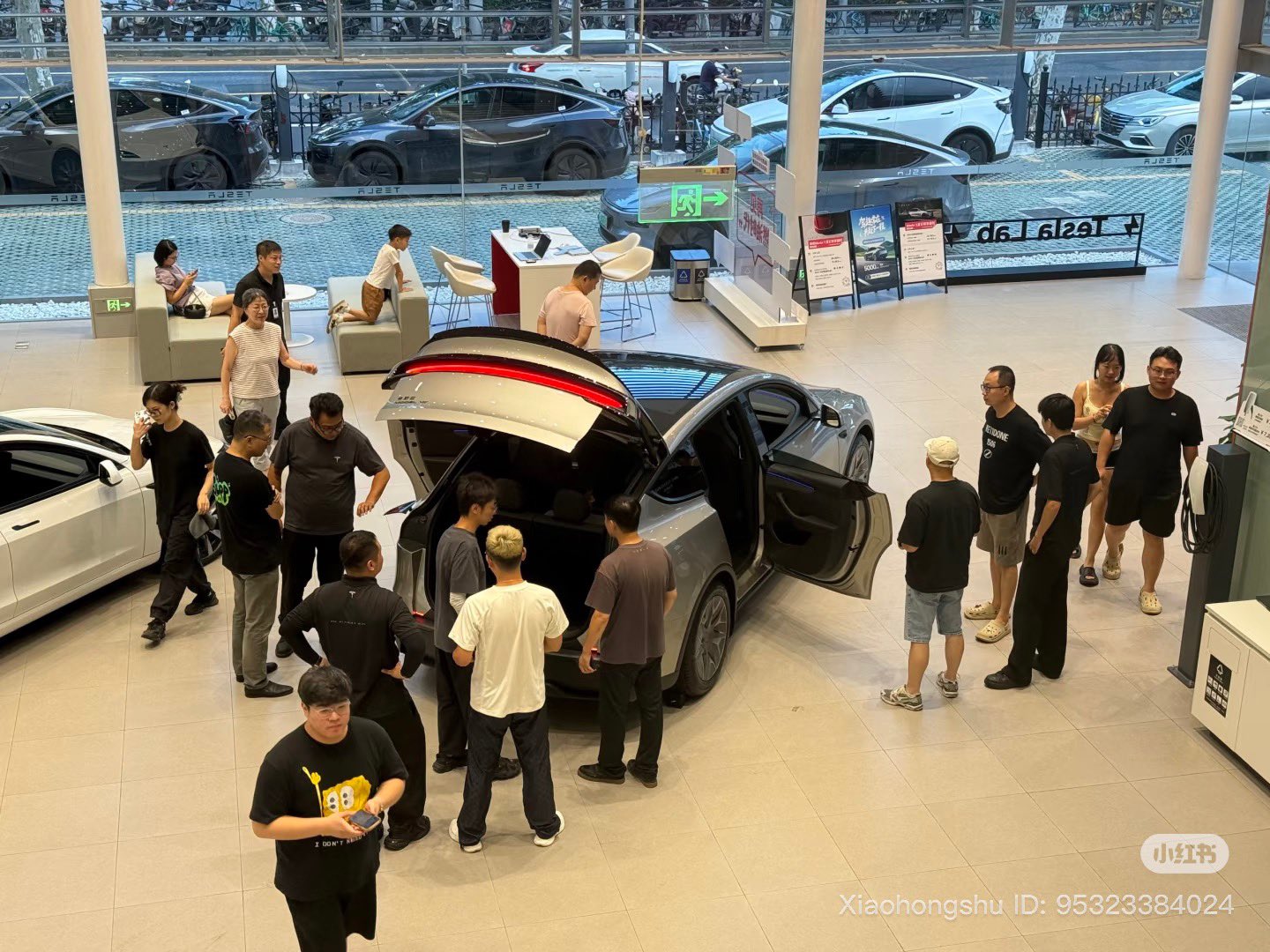
Tesla (NASDAQ: TSLA) showrooms have been picked clean ahead of the end of the third quarter of the year, as demand looks to be strong and delivery estimates for new vehicles are pushed into late 2026 and early 2027.
Tesla appears to have sold out of many of its Model 3 and Model Y trim levels in the United States, as only the Model Y RWD and Model Y All-Wheel-Drive are available for delivery before the end of the year.
Additionally, many showrooms are either completely empty or void of all but just one demo unit within the buildings themselves in an effort to bolster what could be one of Tesla’s best quarters in vehicle deliveries in recent memory.
I’m at Tesla right now and when I walked into their showroom I was shocked to see it basically empty.
I asked one of the people working there where all of the cars are “Gone – it’s the end of the quarter and we’ve sold out of everything… including the display vehicles”So… pic.twitter.com/rN7s3gE6sJ
— Devin Olsen (@DevinOlsenn) September 25, 2026
All the cars are gone from Tesla Century City!
All they have is Model Y L, a self-driving video playing on the background. I guess the best product is no product. Either that or they just sold the showroom cars. pic.twitter.com/mzCjWaXwww
— Whole Mars Catalog (@wholemars) September 26, 2026
Show room is empty. I asked and they have sold the demo cars too. Delivery numbers better be outstanding! pic.twitter.com/jq5N28Q6tZ
— Electric Brawl (@3lectricBrawl) September 22, 2026
Additionally, when I spoke to the guys at Tesla Mechanicsburg two weeks ago, when I returned the Model Y L, their third hauler of the week had just arrived, and every vehicle on it, along with every vehicle in their delivery lot, was accounted for and had a name attached to it for delivery.
Talking to the guys at the Mechanicsburg showroom on Friday, they couldn’t believe they had ANOTHER hauler coming in of cars for delivery—and each was accounted for
No car just sitting in inventory. They’re expecting a BIG quarter, and this is more than just the Y L https://t.co/ce801GkKVv
— TESLARATI (@Teslarati) September 21, 2026
Tesla saw a 25 percent increase in deliveries in Q2 compared to the same quarter the year before. The vast majority of the 480,126 units it delivered, 467,762 vehicles to be exact, were the Model 3 and Model Y.
In Q3 2025, Tesla delivered 497,099 vehicles, once again a figure that was dominated by the company’s two mass-market vehicles. Analysts have unusually wide predictions for this quarter, likely because so many firms missed the Q2 delivery figure by such a substantial margin; Wall Street predicted 408,000 cars, while Tesla delivered 480,000.
Goldman Sachs has Tesla slotted for 435,000 deliveries in Q3, while JPMorgan said it anticipates 482,000. The median guess is about 449,000 deliveries for Q3.
Interested in ordering a Tesla? Use my referral code for three free months of Full Self-Driving (Supervised) here.

Tesla says fixes on Full Self-Driving’s two biggest issues are on the way

SpaceX’s midnight spy satellite launch quietly set a new record


