News
Tesla-inspired door handles prohibited under China’s new safety standard
The rule effectively ends a design trend pioneered by Tesla and widely adopted across China’s electric vehicle market.

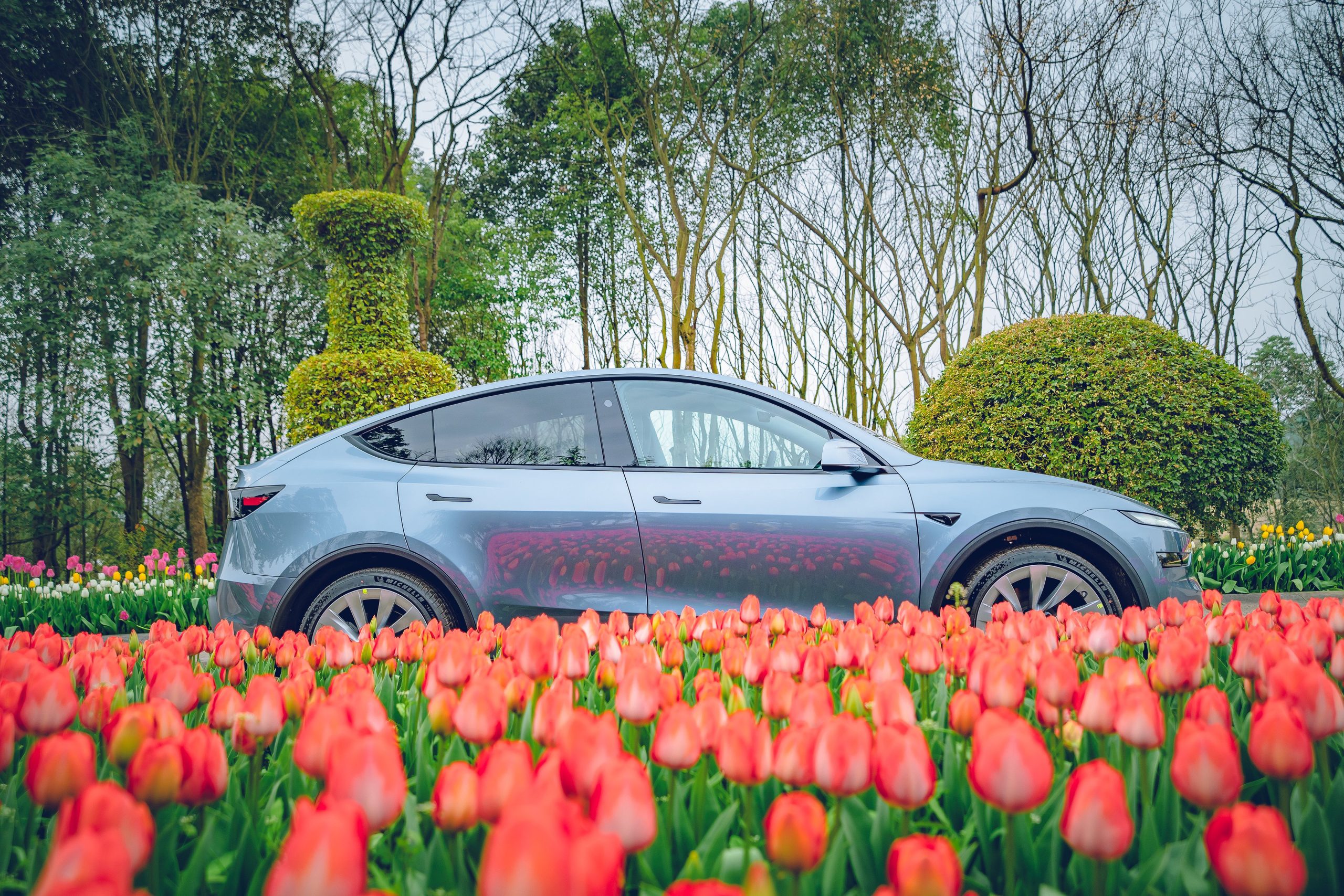
China will ban hidden door handles on electric vehicles starting 2027 under a new national safety standard, forcing automakers to equip their cars with mechanical exterior and interior handles.
The rule effectively ends a design trend pioneered by Tesla and widely adopted across China’s electric vehicle market.
China bans hidden door handles
China’s Ministry of Industry and Information Technology (MIIT) noted that the new mandatory national auto safety standard on EV door handles will take effect on January 1, 2027. For models that have already received approval and are scheduled for launch, automakers will be allowed to complete required design changes by January 2029.
Under the new rules, exterior door handles must remain operable even in scenarios involving irreversible restraint system failures or thermal runaway incidents in the battery pack. Doors must also be capable of opening even if the vehicle loses electrical power. Interior doors must include at least one independent mechanical release handle per door as well.
Safety concerns drive rollback
Hidden and electrically actuated door handles have become mainstream in recent years as EV makers pursued cleaner styling and improved aerodynamics. Tesla pioneered the hidden handle design, and it was adopted by most Chinese EV manufacturers in either fully hidden or semi-hidden forms, as noted in a CNEV Post report. Today, about 60% of top-selling EVs in China use the design.
Chinese regulators have stated that the designs pose safety risks, particularly in crashes or power failures where doors may not open from the inside or outside. Authorities cited multiple fatal incidents in which occupants or rescuers were unable to open vehicle doors after collisions.
One high-profile case occurred last October, when a Xiaomi SU7, a vehicle designed to be a competitor to the Tesla Model 3, caught fire following a crash in Chengdu in southwest China. The driver died after bystanders were unable to open the doors. The incident sparked intense scrutiny over the SU7’s Tesla-inspired door handles.


Elon Musk
Elon Musk’s Terafab project locks up massive new partner
Terafab, first revealed by Musk in March, is a massive joint-venture semiconductor complex planned for the North Campus of Giga Texas in Austin.

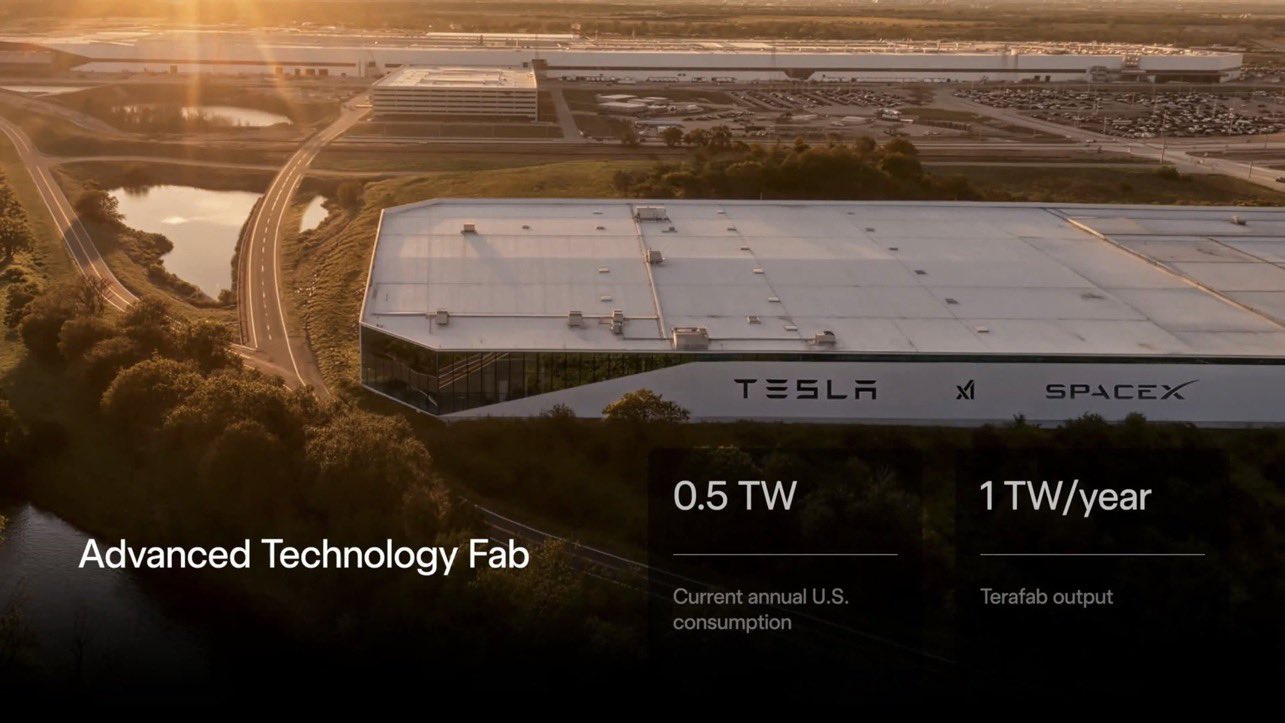
Elon Musk’s Terafab project just locked up a massive new partner, just weeks after the new project was announced by Tesla, SpaceX, and xAI, the three companies that will be direct benefactors from it.
In a landmark announcement on April 7, Intel joined Elon Musk’s Terafab project as a key partner alongside Tesla, SpaceX, and xAI. The collaboration focuses on refactoring silicon fabrication technology to deliver ultra-high-performance chips at unprecedented scale.
Intel CEO Lip-Bu Tan hosted Musk at Intel facilities the prior weekend, underscoring the partnership’s momentum with a public handshake.
Intel is proud to join the Terafab project with @SpaceX, @xAI, and @Tesla to help refactor silicon fab technology.
Our ability to design, fabricate, and package ultra-high-performance chips at scale will help accelerate Terafab’s aim to produce 1 TW/year of compute to power… pic.twitter.com/2vUmXn0YhH
— Intel (@intel) April 7, 2026
Terafab, first revealed by Musk in March, is a massive joint-venture semiconductor complex planned for the North Campus of Giga Texas in Austin. Valued at $20–25 billion, it aims to consolidate the entire chip-making pipeline, design, fabrication, memory production, and advanced packaging in a single location. It should eliminate a majority of Tesla’s dependence on third-party chip fab companies.
The facility will manufacture two primary chip types: energy-efficient edge-inference processors optimized for Tesla’s Full Self-Driving (FSD) systems, Cybercab and Robotaxi, and Optimus humanoid robots, and high-power, radiation-hardened variants for SpaceX satellites and xAI’s orbital data centers.
Elon Musk launches TERAFAB: The $25B Tesla-SpaceXAI chip factory that will rewire the AI industry
The project’s audacious goal is to produce 1 terawatt (TW) of annual compute capacity, roughly 50 times current global AI chip output.
Production is expected to begin modestly and scale rapidly, addressing Musk’s warning that chip supply could soon become the biggest constraint on Tesla, SpaceX, and xAI growth. By vertically integrating manufacturing tailored to their exact needs, Terafab eliminates supply-chain bottlenecks and accelerates iteration for AI training, inference at the edge, and space-based computing.
Intel’s participation is strategically vital. The company will contribute expertise in advanced process technology, high-volume fabrication, and packaging to help Terafab achieve its aggressive targets. For Intel, the deal strengthens its foundry business and positions it as a critical U.S. player in the AI hardware race.
For Musk’s ecosystem, it secures domestic, purpose-built silicon at a time when global capacity meets only a fraction of projected demand for hundreds of millions of robots and orbital AI infrastructure.
This is the latest chapter in Intel-Tesla ties. In November 2025, Musk publicly stated at Tesla’s shareholder meeting that partnering with Intel on AI5 chips was “worth having discussions,” amid concerns about TSMC and Samsung capacity.
Exploratory talks followed, with Intel eyeing custom-AI opportunities. The Terafab integration transforms those conversations into concrete collaboration.
The Intel-Terafab alliance carries broader implications. It bolsters U.S. semiconductor sovereignty, drives innovation in cost- and power-efficient AI silicon, and supports Musk’s vision of exponential progress in autonomy, robotics, and space.
As AI compute demand surges, this partnership could reshape the industry, delivering the silicon backbone for a new era of intelligent machines on Earth and beyond.
Investor's Corner
Tesla stock gets hit with shock move from Wall Street analysts
Despite Tesla not being an automotive company exclusively, the Wall Street firms and analysts covering its shares are widely dialed in on its performance regarding quarterly deliveries. While it holds some importance, Tesla, from an internal perspective, is more focused on end-to-end AI, Robotaxi, self-driving, and its Optimus robot.
Tesla price targets (NASDAQ: TSLA) have received several cuts over the past few days as Wall Street firms are adjusting their forecast for the company’s stock following a miss in quarterly delivery figures for the first quarter.
Despite Tesla not being an automotive company exclusively, the Wall Street firms and analysts covering its shares are widely dialed in on its performance regarding quarterly deliveries. While it holds some importance, Tesla, from an internal perspective, is more focused on end-to-end AI, Robotaxi, self-driving, and its Optimus robot.
In a notable shift underscoring mounting caution on Wall Street, three prominent investment banks slashed their price targets on Tesla Inc. shares over the past two weeks following the electric-vehicle giant’s disappointing first-quarter 2026 delivery numbers. The revisions highlight softening EV sales figures and, according to some, execution challenges.
Tesla delivered 358,023 vehicles in the January-to-March period, a 14 percent sequential decline and a miss versus consensus forecasts of roughly 365,000 to 370,000 units.
Production hit 408,000 vehicles, yet the delivery shortfall, paired with limited updates on autonomous-driving progress and new-model timelines, rattled investors. Shares fell about 8.7 percent since April 1.
Wall Street analysts are now adjusting their forecasts accordingly, as several firms have made adjustments to price targets.
Goldman Sachs
Goldman Sachs cut its target from $405 to $375 while maintaining a Hold rating. Analyst Mark Delaney pointed to soft EV sales trends and margin pressures.
Truist Financial followed on April 2, lowering its target from $438 to $400 (Hold unchanged), with analyst William Stein citing misses in both auto deliveries and energy-storage deployments, plus a lack of fresh details on AI initiatives and upcoming vehicles.
It is a strange drop if using AI initiatives and upcoming vehicles as a justification is the primary focus here. Tesla has one of the most optimistic outlooks in terms of AI, and CEO Elon Musk recently hinted that the company is developing something for the U.S. market that will be good for families.
Baird
Baird’s Ben Kallo made a very modest trim, reducing its target from $548 to $538, keeping and maintaining the ‘Outperform’ rating it holds on shares. Kallo said the price target adjustment was a prudent recalibration tied to near-term risks.
Truist
Truist analyst William Stein pointed to deliveries and energy storage missing expectations, and cut his price target to $400 from $438. He maintained the ‘Hold’ rating the firm held on the stock previously.
JPMorgan
Adding to the bearish tone on Monday, April 6, JPMorgan’s Ryan Brinkman reiterated an Underweight (Sell) rating and $145 price target, implying roughly 60 percent downside from recent levels.
Brinkman highlighted a “record surge in unsold vehicles” that adds to free-cash-flow woes, with inventory swelling to an estimated 164,000 units.
Tesla’s comfort level taking risks makes the stock a ‘must own,’ firm says
He lowered his Q1 2026 EPS estimate to $0.30 from $0.43 and full-year 2026 EPS to $1.80 from $2.00, both below consensus. Brinkman noted that expectations for Tesla’s performance have “collapsed” across financial and operating metrics through the end of the decade, yet the stock has risen 50 percent, and average price targets have increased 32 percent.
This disconnect, he argued, prices in an unrealistic sharp pivot to stronger results beyond the decade, while near-term realities remain materially weaker.
He advised investors to approach TSLA shares with a “high degree of caution,” citing elevated execution risk, competition, and valuation concerns in lower-price, higher-volume segments.
The revisions have pulled the overall consensus lower. Aggregators show the average 12-month price target now ranging from approximately $394 to $416 across roughly 32 analysts, with a prevailing Hold rating and a mixed split of Buy, Hold, and Sell recommendations.
Brinkman’s $145 target stands as a notable outlier on the bearish side.
Not Everyone Has Turned Bearish on Tesla Shares
Not all firms turned more pessimistic. Wedbush Securities held its bullish $600 target, stressing that AI and full self-driving technology represent the core value drivers, with current delivery softness viewed as temporary.
These moves reflect a broader Wall Street recalibration: near-term EV demand faces pressure from high interest rates, intensifying competition, especially from lower-cost Chinese rivals, and slower adoption.
At the same time, many analysts continue to see Tesla’s technology leadership in software-defined vehicles, autonomy, robotaxis, and energy storage as pathways to outsized long-term gains once macro conditions ease and new models launch.
With Tesla’s first-quarter earnings report due later this month, upcoming details on cost discipline, Cybertruck ramp-up, and AI roadmaps will likely shape whether these target adjustments prove prescient or overly cautious. Investors remain divided between immediate delivery realities and the company’s ambitious vision.
Tesla shares are trading at $348.82 at the time of publishing.
Elon Musk
Tesla Full Self-Driving feature probe closed by NHTSA
Actually Smart Summon allows owners to move their parked Tesla via a smartphone app remotely, directing the vehicle short distances in parking lots or private property while the driver supervises from the phone.
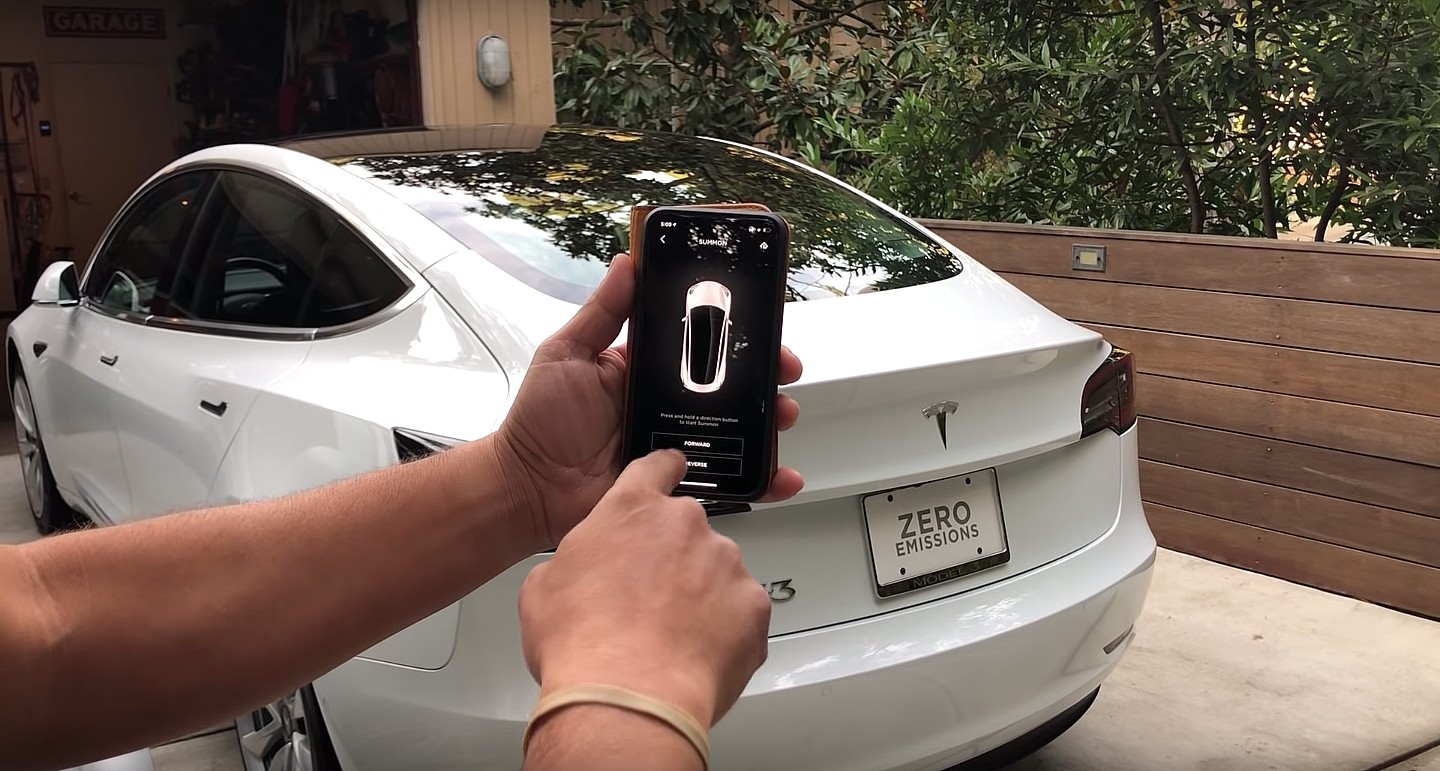
A probe into a popular Tesla self-driving feature has been closed by the National Highway Traffic Safety Administration (NHTSA) after over a year of scrutiny from the government agency.
The NHTSA has officially closed its investigation into Tesla’s Actually Smart Summon (ASS) feature, marking a regulatory win for the electric vehicle maker after more than a year of scrutiny.
Here’s our coverage on the launch of the probe:
Tesla’s Actually Smart Summon feature under investigation by NHTSA
The preliminary investigation, opened last January, examined roughly 2.59 million Tesla vehicles equipped with the feature across the Model S, Model X, Model 3, and Model Y lineups. ASS is not available for Cybertruck currently.
Actually Smart Summon allows owners to move their parked Tesla via a smartphone app remotely, directing the vehicle short distances in parking lots or private property while the driver supervises from the phone.
Here’s a clip of us using it:
Summon has had some good performances for me in the past
This was in October: https://t.co/w69Zp2bqeg pic.twitter.com/PVXSRj19E0
— TESLARATI (@Teslarati) April 5, 2026
Introduced as an upgrade to the original Smart Summon, the feature was designed to enhance convenience but drew attention after reports of low-speed incidents where vehicles bumped into stationary objects like posts, parked cars, or garage doors.
The NHTSA’s Office of Defects Investigation reviewed 159 incidents, including one formal Vehicle Owner’s Questionnaire complaint and media reports.
Notably, all events occurred at very low speeds, resulted only in minor property damage, and involved zero injuries or fatalities. The agency determined that the incidents were “extremely rare”, a fraction of one percent across millions of Summon sessions, and did not indicate a systemic safety-related defect.
A key factor in the closure was Tesla’s proactive response through over-the-air (OTA) software updates.
During the probe, Tesla deployed at least six updates that improved camera-based object detection, enhanced neural network performance for obstacle recognition, and refined the system’s response to potential hazards. These iterative improvements, delivered wirelessly to the entire fleet, addressed the primary concerns around detection reliability and operator reaction time.
Critics of Tesla’s autonomous features had initially pointed to the crashes as evidence of rushed deployment, especially given the feature’s reliance on the company’s vision-only Full Self-Driving (FSD) stack. However, NHTSA’s decision to close the case without seeking a recall underscores the low-severity nature of the events and the effectiveness of software-based fixes in modern vehicles.
It definitely has its flaws. I used ASS yesterday unsuccessfully:
It was pouring when I left the gym so I tried to Summon my Model Y
It turned the opposite way and drove out of range, stopping here and forcing me to walk even further across the lot in the rain for it 🤣
One day pic.twitter.com/iD10c8sriB
— TESLARATI (@Teslarati) April 5, 2026
However, improvements will come, and I’m confident in that.
The closure comes as Tesla continues to push boundaries with its autonomous driving ambitions, including unsupervised FSD rollouts and robotaxi initiatives. For owners, the ruling reinforces confidence in Actually Smart Summon as a convenient, low-risk tool rather than a hazardous experiment.
While broader NHTSA reviews of Tesla’s higher-speed FSD capabilities remain ongoing, this outcome highlights how data-driven analysis and rapid OTA remediation can satisfy regulators in the evolving landscape of automated driving technology.
Tesla has not issued an official statement on the closure, but the move is widely viewed as bullish for the company’s autonomy roadmap, reducing one layer of regulatory overhang and allowing focus on further refinements.

Elon Musk’s Terafab project locks up massive new partner

Tesla stock gets hit with shock move from Wall Street analysts


