News
China releases draft on door handle design following Tesla scrutiny

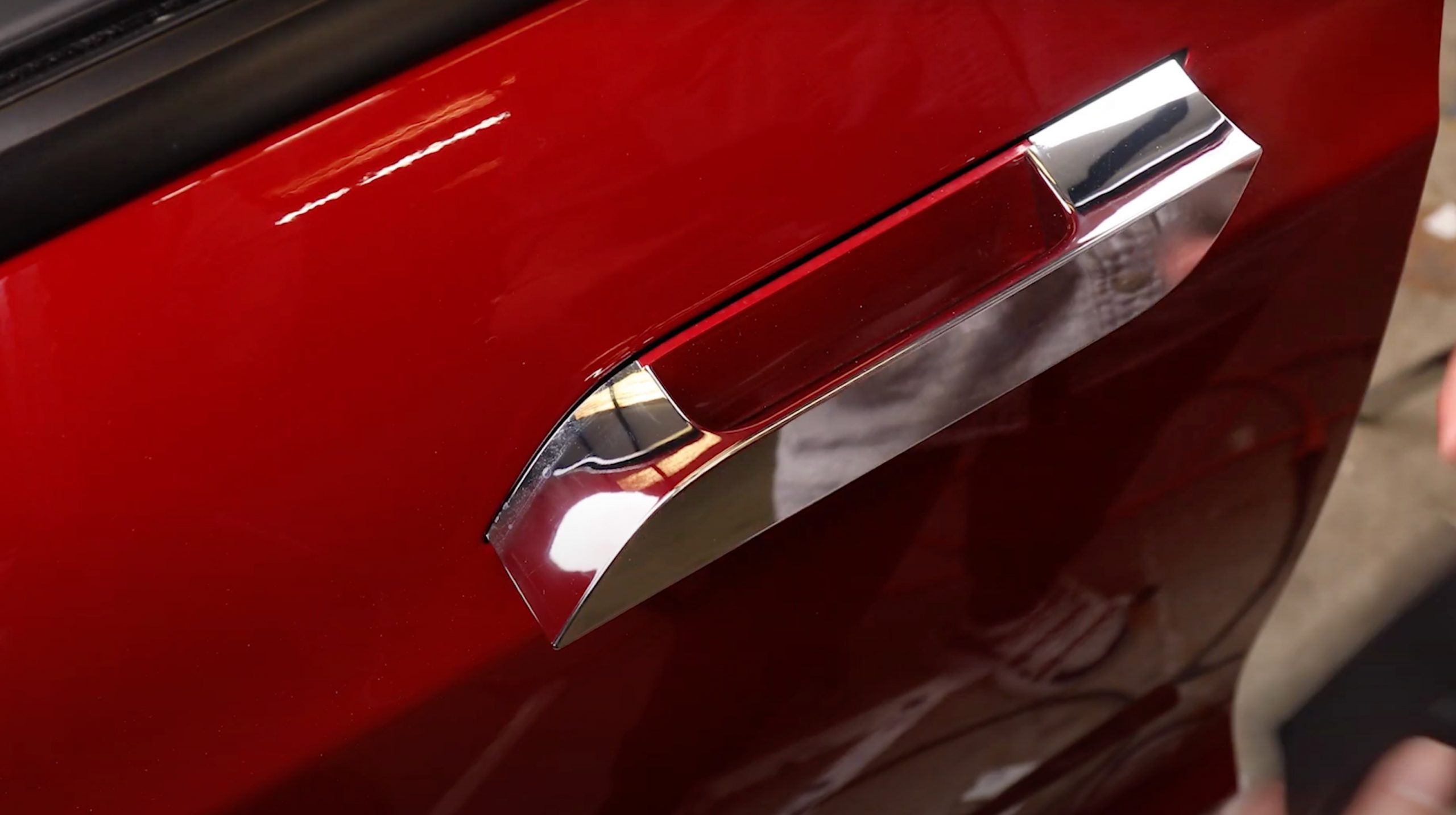
China’s regulatory agency handling automotive concerns has released a draft on what it is considering to be standard for door handle designs on vehicles, following some scrutiny it placed upon Tesla’s designs.
Over the past few weeks, we have reported on two different criticisms Tesla has faced with its door handle designs, one in China and one in the United States. Both will require the company to come up with solutions and potentially new engineering.
Chief Designer Franz von Holzhausen appeared on Bloomberg last week and said the company is already looking to implement something that will bring together the mechanical and electrical releases that the door handles depend on.
Tesla addresses door handle complaints with simple engineering fix
Some vehicles in the Tesla lineup already have mechanical latches on all four doors to enable them to open in the event of a dead battery. However, there are some additional measures that need to be taken.
The first guidelines are being released by the Chinese Ministry of Industry and Information Technology (MIIT), which composed a draft called “Technical Requirements for Automobile Door Handle Safety.”
🚨 It sounds like some changes will be coming to Tesla’s door handles in China
The MIIT wrote in a new case study that it’s requiring a change to prevent getting locked in the car:
“[The] operating space must be ≥60mm×20mm×25mm (roughly the space for a palm to maneuver).” https://t.co/IYkruyzogI
— TESLARATI (@Teslarati) September 24, 2025
There are a handful of new standards, including a required mechanical release for every door on the vehicle apart from the trunk. Additionally, there are some other requirements, such as the ability to open side doors from the external handles without the use of tools.
Here are the six guidelines that the MIIT are mulling as requirements (via CarNewsChina):
- Every door (excluding trunk lids) must feature an external handle with mechanical release functionality
- In case of accidents involving battery thermal events, non-collision side doors must be openable through external handles without tools
- External door handles must provide adequate hand operation space of at least 60mm×20mm×25mm, regardless of handle position
- Every door must include internal handles with mechanical release capability that can open doors without external tools
- If electric internal handles are installed, mechanical backup handles must also be provided
- Internal handles must be easily identifiable, clearly visible, positioned within 300mm of door edges, and located within specific zones relative to seating positions
These new standards were developed by the China Automotive Standardization Research Institute, and Deputy Director Rong Hui stated that the organization used 63 vehicle models from 20 different companies to establish these early requirements:
“With the development of automotive electrification, electric concealed door handles have been widely adopted, and the operation methods and structural types of door handle products on the market are increasingly diverse. These standards aim to respond to new technologies and safety requirements.”
The MIIT also did its own research, which utilized 230 different vehicle models’ door handle configurations. Validation testing was performed on more than 20 models.
Tesla’s Planned Adjustments
Based on what von Holzhausen said, Tesla plans to make some adjustments to its door handles, implementing simple fixes.
Tesla plans to combine both the mechanical and electrical releases to help reduce stress in “panic situations.” Franz said the company has a “really good solution for that.”
In regard to the mechanical release, he said, “it’s in the cars now…The idea of combining the electronic and the manual one together in one button, I think, makes a lot of sense.”


Elon Musk
Tesla Optimus Gen 3 is coming to the Tesla Diner with new ambitions
Tesla’s Optimus robot left the Hollywood Diner within months of opening. Now Musk is planning its return with a bigger role and a major Gen 3 upgrade underway.

![Tesla Optimus Gen 3 [Credit: Tesla]](https://www.teslarati.com/wp-content/uploads/2026/03/tesla-optimus-gen3-diner.jpg)
Tesla’s Optimus robot was one of the most talked-about features when the Tesla Diner opened on Santa Monica Boulevard in Hollywood on July 21, 2025. Dubbed “Poptimus” by Tesla fans, the Gen 2 robot stood upstairs at the retro-futuristic, drive-in theater and Tesla Supercharging station, scooping popcorn into bags and handing them to guests with a wave.
The diner itself had been years in the making. Elon Musk first floated the idea in 2018 with a tweet about building an “old-school drive-in, roller skates & rock restaurant” at a Hollywood Supercharger. What eventually opened was a unique two-story neon-lit space, with 80 EV charging stalls, and Optimus serving as a live demonstration of where Tesla’s ambitions were headed.
If our retro-futuristic diner turns out well, which I think it will, @Tesla will establish these in major cities around the world, as well as at Supercharger sites on long distance routes.
An island of good food, good vibes & entertainment, all while Supercharging! https://t.co/zmbv6GfqKf
— Elon Musk (@elonmusk) July 21, 2025
But Optimus did not stay long, and was gone by December 2025.
Now, the robot is set to return with a more demanding job. Musk has ambitions for Optimus to take on a food runner role in 2026, delivering meals directly to cars at the Supercharger stalls. While the latest Gen 3 Optimus is likely to initially take on its previous popcorn-serving role, it wouldn’t be out of the question for Optimus to see a quick promotion. With improved hand dexterity that features 50 total actuators and 22 degrees of freedom per hand, and significantly more powerful processing through Tesla’s latest AI5 chip that includes Grok-powered voice interaction, Musk described Optimus at the Abundance Summit on March 12, 2026, as “by far the most advanced robot in the world, Nothing’s even close.”
Back to work
See you at Tesla Diner tomorrow pic.twitter.com/H3tTajrUbu
— Tesla Optimus (@Tesla_Optimus) March 30, 2026
That confidence is backed by a major manufacturing shift. At the Q4 2025 earnings call in January, Musk announced Tesla would discontinue the Model S and Model X and convert those Fremont production lines to build Optimus. “It’s time to basically bring the Model S and X programs to an end,” he said, calling for a pivot that reflects where the Tesla’s future lies.
Elon Musk
Musk forces Judge’s exit from shareholder battles over viral social media slip-up
McCormick insisted in a court filing that she harbors no actual bias against Musk or the defendants. She claimed she either never clicked the “support” button, LinkedIn’s version of a “like,” or did so accidentally.
Many Tesla fans are familiar with the name Kathaleen McCormick, especially if they are investors in the company.
McCormick is a Delaware Chancery Court Judge who presided over Tesla CEO Elon Musk’s pay package lawsuit over the past few years, as well as his purchase of Twitter. However, she will no longer be sitting in on any issues related to Musk.
Elon Musk demands Delaware Judge recuse herself after ‘support’ post celebrating $2B court loss
In a rare admission of potential optics issues in one of America’s most powerful corporate courts, Delaware Chancery Court Chancellor Kathaleen McCormick stepped aside Monday from a cluster of shareholder lawsuits targeting Elon Musk and Tesla’s board.
The move came just days after Musk’s legal team highlighted her apparent “support” on LinkedIn for a post that mocked the billionaire over his 2022 tweets about the $44 billion Twitter acquisition.
McCormick insisted in a court filing that she harbors no actual bias against Musk or the defendants. She claimed she either never clicked the “support” button, LinkedIn’s version of a “like,” or did so accidentally.
She wrote in a newly published memo from the Delaware Chancery Court:
“The motion for recusal rests on a false premise — that I support a LinkedIn post about Mr. Musk, which I do not in fact support. I am not biased against the defendants in these actions.”
Yet she granted the reassignment anyway, acknowledging that the intense media scrutiny surrounding her involvement had become “detrimental to the administration of justice.”
The consolidated cases will now be handled by three of her colleagues on the Delaware Court of Chancery, the nation’s go-to venue for high-stakes corporate disputes. The lawsuits accuse Musk and Tesla directors of breaching fiduciary duties through lavish executive compensation and lax governance oversight.
One prominent claim, filed by a Detroit pension fund, challenges massive stock awards granted to board members, alleging the payouts harmed the company. The litigation also overlaps with issues stemming from Musk’s turbulent 2022 Twitter purchase.
McCormick’s history with Musk made her a lightning rod. In 2022, she presided over the fast-tracked lawsuit that ultimately forced Musk to complete the Twitter deal after he tried to back out.
Then in 2024, she struck down his record $56 billion Tesla compensation package, ruling the approval process was flawed and overly CEO-friendly. The Delaware Supreme Court later reinstated the pay on technical grounds, but the ruling fueled Musk’s long-standing criticism of the state’s judiciary.
Musk has repeatedly urged companies to reincorporate elsewhere, arguing Delaware courts have grown hostile to visionary leaders. Monday’s recusal hands him a symbolic victory and underscores how personal social-media activity can collide with judicial impartiality standards.
Delaware law requires judges to step aside if there’s even a “reasonable basis” to question their neutrality.
Court watchers say the episode highlights growing tensions in corporate America’s legal epicenter. While McCormick maintained her impartiality, the appearance of bias proved too costly to ignore. The cases will proceed without her, but the broader debate over Delaware’s dominance in business litigation is far from over.
Elon Musk
Elon Musk has generous TSA offer denied by the White House: here’s why
Musk stepped in on March 21 via a post on X, writing: “I would like to offer to pay the salaries of TSA personnel during this funding impasse that is negatively affecting the lives of so many Americans at airports throughout the country.”
Tesla and SpaceX CEO Elon Musk made a generous offer to pay the salaries of Transportation Security Administration (TSA) employees last week, but the offer was denied by the White House.
In a striking display of private-sector initiative clashing with federal bureaucracy, the White House has turned down an offer from Elon Musk to personally cover the salaries of TSA officers amid an ongoing partial government shutdown. The rejection, reported last Wednesday by multiple outlets, highlights the legal and political hurdles facing unconventional solutions to Washington’s funding gridlock.
The impasse began weeks ago when Congress failed to pass funding for the Department of Homeland Security (DHS), leaving TSA employees, essential workers who screen millions of travelers daily, without paychecks while still required to report for duty.
Frustrated travelers have endured record-long security lines at major airports, with reports of chaos and delays rippling across the country.
Musk stepped in on March 21 via a post on X, writing: “I would like to offer to pay the salaries of TSA personnel during this funding impasse that is negatively affecting the lives of so many Americans at airports throughout the country.”
I would like to offer to pay the salaries of TSA personnel during this funding impasse that is negatively affecting the lives of so many Americans at airports throughout the country
— Elon Musk (@elonmusk) March 21, 2026
But it was not for no reason.
White House spokesperson Abigail Jackson responded on behalf of the Trump administration, expressing appreciation for Musk’s gesture.
However, the legal obstacles, which would be insurmountable, would inhibit Musk from doing so. Jackson said:
“We greatly appreciate Elon’s generous offer. This would pose great legal challenges due to his involvement with federal government contracts.”
Musk’s companies hold significant federal contracts, including NASA launches through SpaceX and potential Defense Department work, raising concerns about conflicts of interest, ethics rules, and anti-bribery statutes that prohibit private payments to government employees. Administration officials also indicated they expect the shutdown to end soon, making external funding unnecessary.
The episode underscores deeper tensions in Washington. Musk, who has advised on government efficiency efforts and maintains a close relationship with President Trump, has frequently criticized wasteful spending and bureaucratic delays.
His offer came as airport security lines ballooned, drawing public frustration toward both parties. TSA officers, many of whom rely on paychecks to cover mortgages and family expenses, have continued working without compensation, a situation that has drawn bipartisan concern but little immediate resolution.
Critics of the rejection argue it prioritizes red tape over practical relief for frontline workers and travelers. Supporters of the White House position counter that allowing private funding sets a dangerous precedent and could undermine congressional authority over the budget.
The White House eventually came to terms with the TSA on Friday and started paying them once again, and lines at airports instantly shrank. The Department of Homeland Security (DHS) said that TSA staf would begin receiving paychecks “as early as” today.
![Tesla Optimus Gen 3 [Credit: Tesla]](https://www.teslarati.com/wp-content/uploads/2026/03/tesla-optimus-gen3-diner-80x80.jpg)
Tesla Optimus Gen 3 is coming to the Tesla Diner with new ambitions

Musk forces Judge’s exit from shareholder battles over viral social media slip-up

Elon Musk has generous TSA offer denied by the White House: here’s why

Elon Musk says Tesla is developing a new vehicle: ‘Way cooler than a minivan’

Elon Musk launches TERAFAB: The $25B Tesla-SpaceXAI chip factory that will rewire the AI industry


