News
Hacker Leaks Tesla’s Plan for a 100 kWh Battery
Well known hacker Jason Hughes thinks he has uncovered the impending release of a 100 kWh battery for the Model S and Model X. If so, can a P100D be far behind?

Jason Hughes white hat hacker extraordinaire has uncovered signs that Tesla may be revealing a 100 kWh battery in the near future. By analyzing a series of alphanumeric characters found embedded within Tesla’s most recent firmware 7.1, Hughes was able to find a cryptographic message that would ultimately reveal that Tesla had a “P100D” in mind.
In a tweet addressed to Tesla CEO Elon Musk, Hughes let’s the cat out of the bag by revealing the encrypted message pointing to presumably an upcoming performance version of the Model S or Model X with a 100 kWh battery.
@elonmusk @teslamotors #tesla I know your secret. SHA256 of best part: 5fc38436ec295b0049f186651ebba5fd55e8d7b81eb61cbd00d3f1bf18dd9c81
— Jason Hughes (@wk057) March 4, 2016
The community at TMC quickly went to work to decrypt Hughes message. LuckyLuke of The Netherlands validated the SHA-256 encrypted message as reading “P100D”.

“With the latest 2.13.77 update [Tesla] included the badges for the P100D”
Hughes was quick to applaud the detective work by others with this tweet:
You guys are great. Fun to get home and find people have cracked some SHA256 I posted 😉 Nice work. #P100D #Tesla pic.twitter.com/46iqA74ghB
— Jason Hughes (@wk057) March 4, 2016
We spoke with Hughes to find out why the P100D discovery might be very credible. According to Hughes,
“there have been configuration options in the firmware as early as about two months ago. With the latest 2.13.77 update [Tesla] included the badges for the P100D, among other things. I’m very confident that it’s a real thing based on what I’ve seen of other things in previous versions of the firmware. For example, the ’90’ was in the firmware for some time prior to release looking at historic versions of the firmware acquired from other salvage [center displays]”
It wouldn’t come as a surprise that Tesla would be working towards a 100 kWh battery. Musk has repeatedly indicated that battery capacity will increase by approximately 5% a year. Though a jump from 90 kWh to 100 kWh is more than double that prediction, the goal of achieving a 300 mile battery has long been in the sights for the company. With the recent phase out of its 85 kWh battery, a 100 kWh battery would make for a compelling upgrade for buyers looking to maximize performance while increasing range by over 10% above the current largest battery offering.
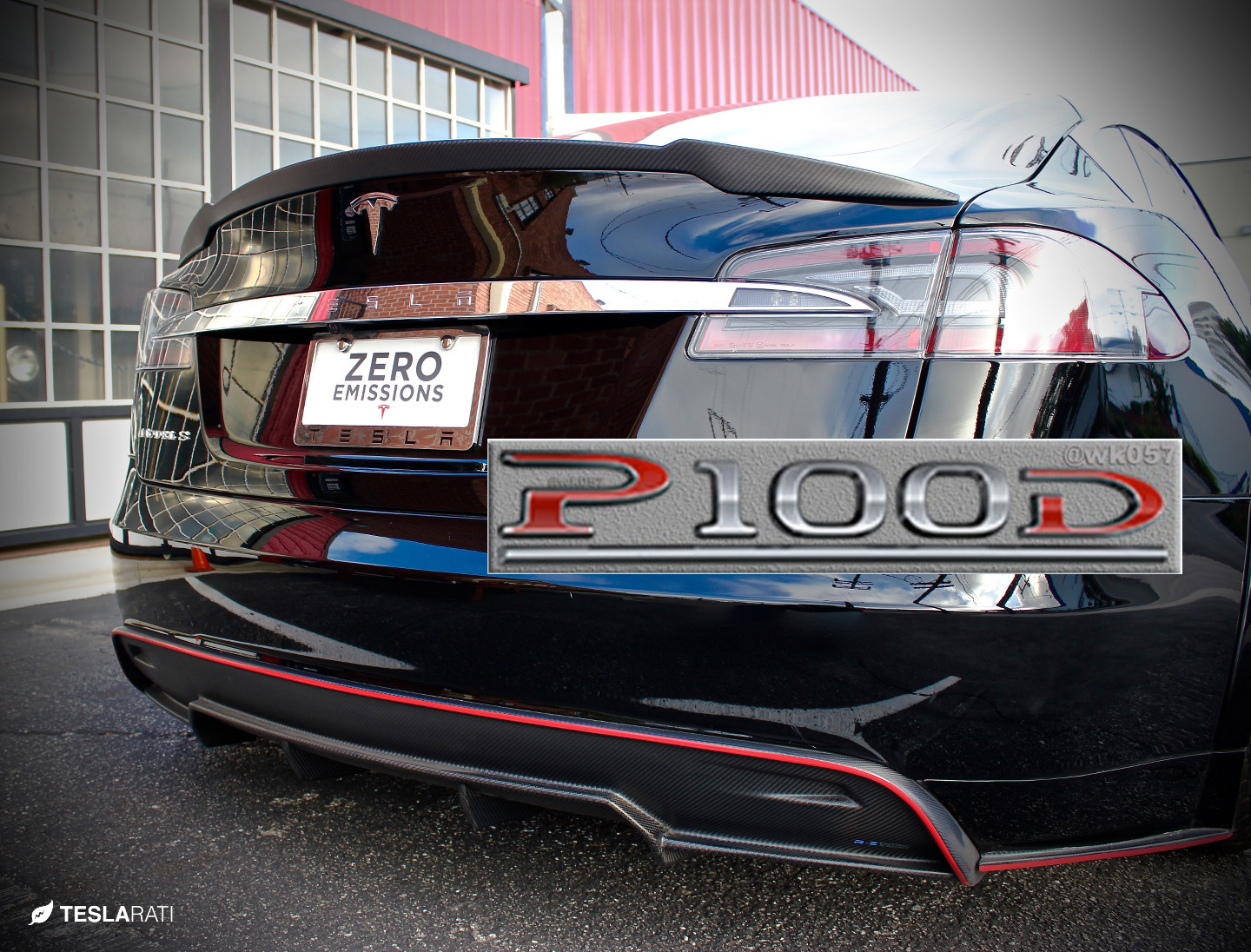
Feature image produced from an overlay of Jason Hughes “P100D” graphic
Related News
- Musk responds to reveal of Tesla P100D, “Hacking is a gift”
- Why we won’t see a 500 mile Tesla battery anytime soon
- [Podcast] What a Tesla P100D could mean for its fleet of vehicles
- What happens when you completely run out of battery in your Tesla?
- Tesla Roadster 3.0 battery upgrade details announced


News
Tesla hints at Starlink integration with recent patent
“By employing polymer blends, some examples enable RF transmission from all the modules to satellites and other communication devices both inside and outside the vehicle.”

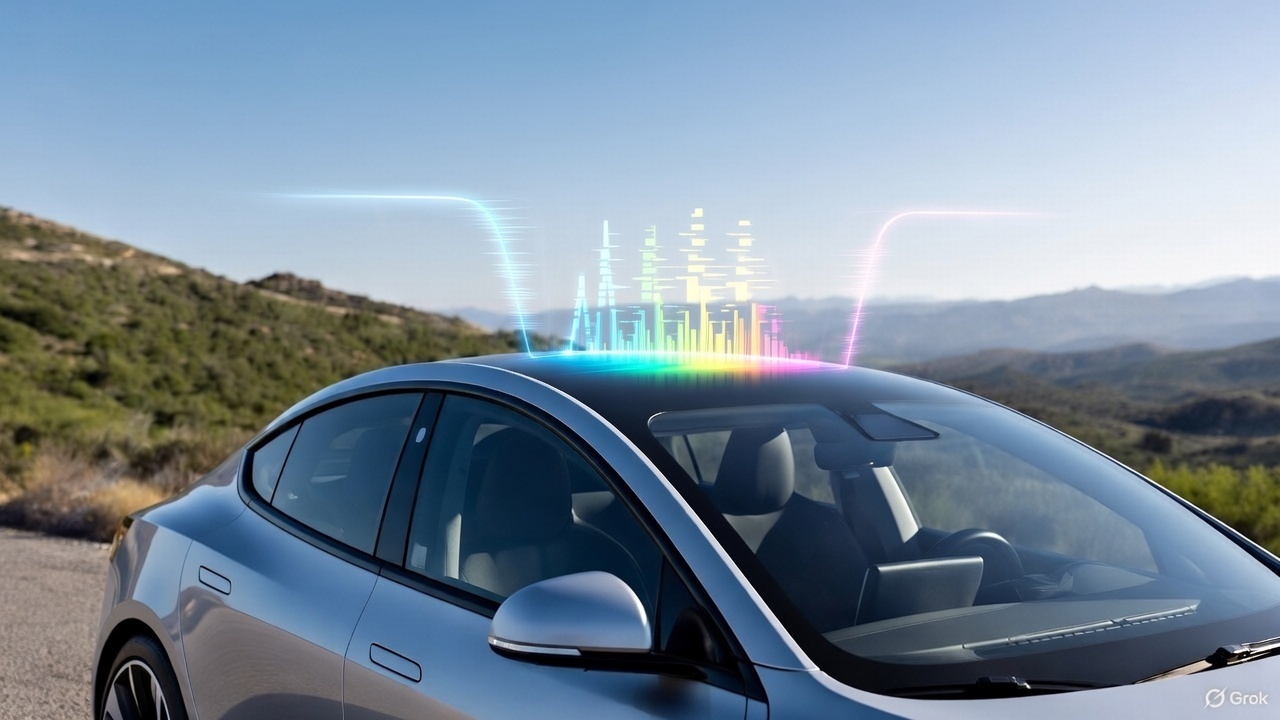
Tesla hinted at a potential Starlink internet terminal integration within its vehicles in a recent patent, which describes a vehicle roof assembly with integrated radio frequency (RF) transparency.
The patent, which is Pub. No U.S. 2025/0368267 describes a new vehicle roof that is made of RF-transparent polymer materials, allowing and “facilitating clear communication with external devices and satellites.”
Tesla believes that a new vehicle roof design, comprised of different materials than the standard metallic or glass elements used in cars today, would allow the company to integrate modern vehicular technologies, “particularly those requiring radio frequency transmission and reception.
Tesla has recently filed a US patent application on integrating RF transparent materials into the roof structure.
“facilitating clear communication with external devices and satellites”
Tesla fleet is getting @Starlink connectivity integration soon. LFG @Tesla @elonmusk… pic.twitter.com/bLa8YtPLd1
— Chansoo Byeon (@Chansoo) December 9, 2025
Instead of glass or metallic materials, Tesla says vehicles may benefit from high-strength polymer blends, such as Polycarbonate, Acrylonitrile Butadiene Styrene, or Acrylonitrile Styrene Acrylate.
These materials still provide ideal strength metrics for crashworthiness, stiffness for noise, vibration, and harshness control, and are compliant with head impact regulations.
They would also enable better performance with modern technologies, like internet terminals, which need an uninterrupted signal to satellites for maximum reception. Tesla writes in the patent:
“By employing polymer blends, some examples enable RF transmission from all the modules to satellites and other communication devices both inside and outside the vehicle.”
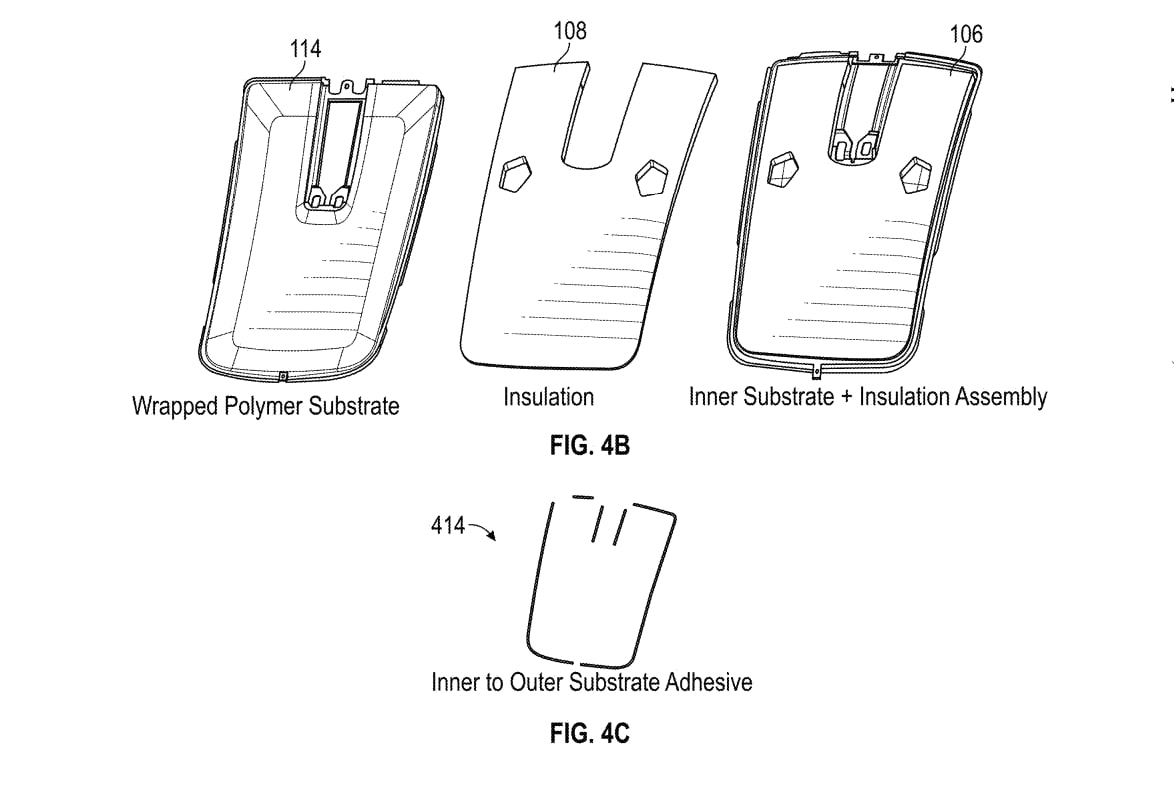
One of the challenges Tesla seems to be aware of with this type of roof design is the fact that it will still have to enable safety and keep that at the forefront of the design. As you can see in the illustration above, Tesla plans to use four layers to increase safety and rigidity, while also combating noise and vibration.
It notes in the patent that disclosed examples still meet the safety requirements outlined in the Federal Motor Vehicle Safety Standards (FMVSS).
Starlink integrated directly into Tesla vehicles would be a considerable advantage for owners. It would come with a handful of distinct advantages.
Initially, the inclusion of Starlink would completely eliminate cellular dead zones, something that is an issue, especially in rural areas. Starlink would provide connectivity in these remote regions and would ensure uninterrupted service during road trips and off-grid adventures.
It could also be a critical addition for Robotaxi, as it is crucial to have solid and reliable connectivity for remote monitoring and fleet management.
Starlink’s growing constellation, thanks to SpaceX’s routine and frequent launch schedule, will provide secure, stable, and reliable internet connectivity for Tesla vehicles.
Although many owners have already mounted Starlink Mini dishes under their glass roofs for a similar experience, it may be integrated directly into Teslas in the coming years, either as an upgrade or a standard feature.
News
Tesla supplements Holiday Update by sneaking in new Full Self-Driving version
It seems Tesla was waiting for the Hardware 4 rollout, as it wanted to also deploy a new Full Self-Driving version to those owners, as it appeared in the release notes for the Holiday Update last night.
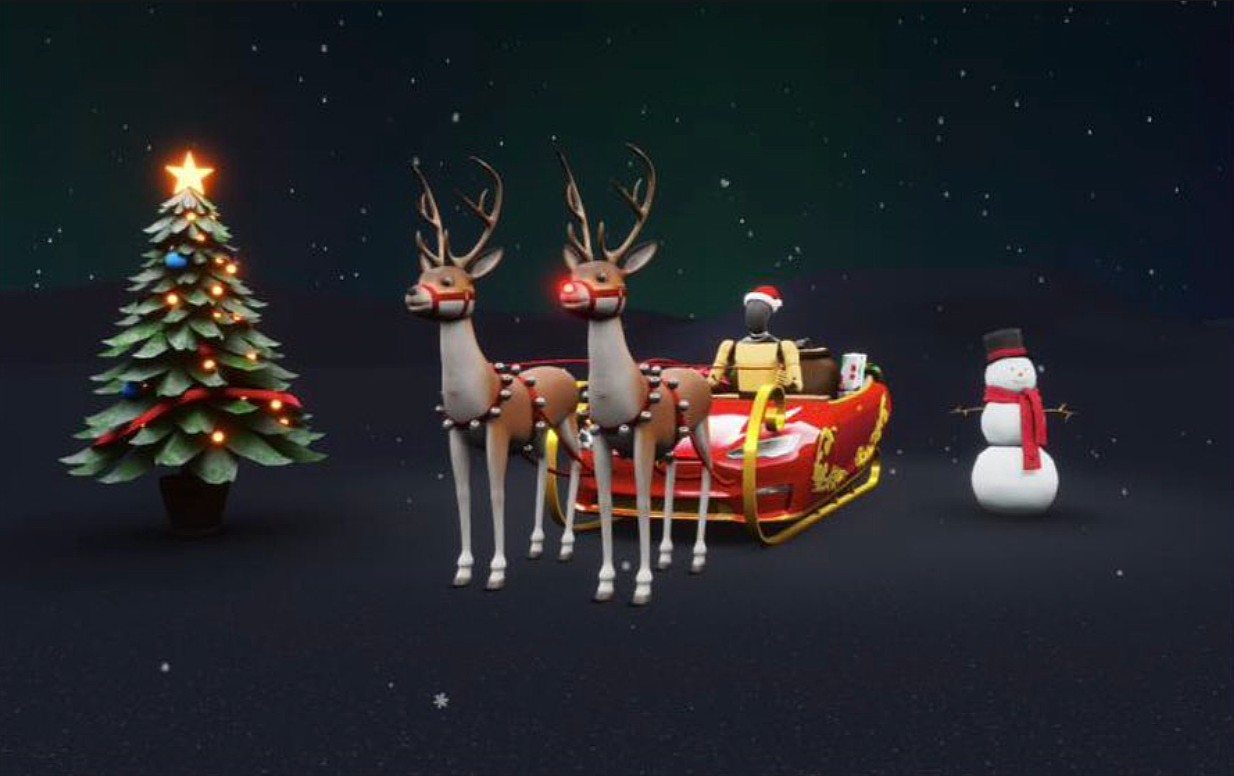
Tesla has surprised some owners by sneaking in a new Full Self-Driving version with the wide release of the Holiday Update, which started rolling out to Hardware 4 owners on Friday night.
Tesla has issued a controlled and very slow release pattern with the Holiday Update, which rolls out with Software Version 2025.44.25.5.
For the past two weeks, as it has rolled out to Hardware 3 and older Tesla owners, the company has kept its deployment of the new Software Version relatively controlled.
It seems Tesla was waiting for the Hardware 4 rollout, as it wanted to also deploy a new Full Self-Driving version to those owners, as it appeared in the release notes for the Holiday Update last night.
Tesla Full Self-Driving v14.2.1.25 made its first appearance last night to Hardware 4 owners who are members of the Early Access Program (EAP). It appears to be a slight refinement from FSD v14.2.1, which has been out for a couple of weeks.
Tesla v2025.44.25.5 Holiday update incoming
Also Full Self-Driving v14.2.1.25!!! pic.twitter.com/74D7S0UGXz
— TESLARATI (@Teslarati) December 13, 2025
Many owners welcome the new FSD version, us included, because we’ve been less than impressed with v14.2.1. We have experienced some minor regressions with v14.2.1, especially with Speed Limit recognition, Speed Profile tinkering, and parking performance.
As it stands, Full Self-Driving is still particularly impressive, but Tesla is evidently having an issue with some of the adjustments, as it is still refining some of the performance aspects of the suite. This is expected and normal with some updates, as not all of them are an improvement in all areas; we routinely see some things backtrack every once in a while.
This new FSD version is likely to take care of those things, but it also includes all of the awesome Holiday Update features, which include:
- Grok with Navigation Commands (Beta) – Grok will now add and edit destinations.
- Tesla Photobooth – Take pictures inside your car using the cabin-facing camera
- Dog Mode Live Activity – Check on your four-legged friend on your phone through periodic snapshots taken of the cabin
- Dashcam Viewer Update – Includes new metrics, like steering wheel angle, speed, and more
- Santa Mode – New graphics, trees, and a lock chime
- Light Show Update – Addition of Jingle Rush light show
- Custom Wraps and License Plates – Colorizer now allows you to customize your vehicle even further, with custom patterns, license plates, and tint
- Navigation Improvements – Easier layout and setup
- Supercharger Site Map – Starting at 18 pilot locations, a 3D view of the Supercharger you’re visiting will be available
- Automatic Carpool Lane Routing – Navigation will utilize carpool lanes if enabled
- Phone Left Behind Chime – Your car will now tell you if you left a phone inside
- Charge Limit Per Location – Set a charge limit for each location
- ISS Docking Simulator – New game
- Additional Improvements – Turn off wireless charging pad, Spotify improvements, Rainbow Rave Cave, Lock Sound TRON addition
Tesla also added two other things that were undocumented, like Charging Passport and information on USB drive storage to help with Dashcam.
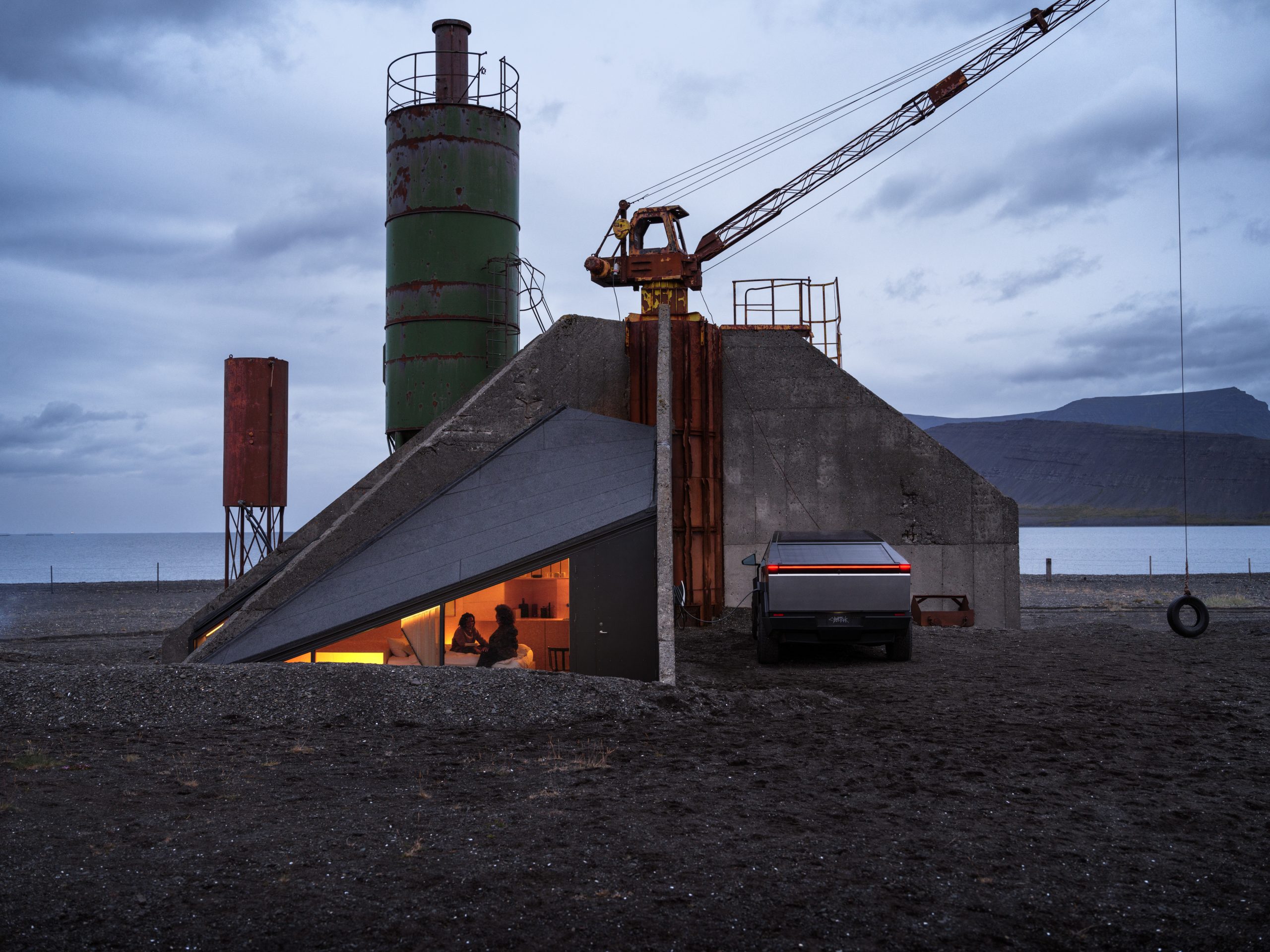
Tesla is updating Cybertruck owners on its timeline of a massive feature that has yet to ship: Powershare with Powerwall.
Powershare is a bidirectional charging feature exclusive to Cybertruck, which allows the vehicle’s battery to act as a portable power source for homes, appliances, tools, other EVs, and more. It was announced in late 2023 as part of Tesla’s push into vehicle-to-everything energy sharing, and acting as a giant portable charger is the main advantage, as it can provide backup power during outages.
Cybertruck’s Powershare system supports both vehicle-to-load (V2L) and vehicle-to-home (V2H), making it flexible and well-rounded for a variety of applications.
However, even though the feature was promised with Cybertruck, it has yet to be shipped to vehicles. Tesla communicated with owners through email recently regarding Powershare with Powerwall, which essentially has the pickup act as an extended battery.
Powerwall discharge would be prioritized before tapping into the truck’s larger pack.
However, Tesla is still working on getting the feature out to owners, an email said:
“We’re writing to let you know that the Powershare with Powerwall feature is still in development and is now scheduled for release in mid-2026.
This new release date gives us additional time to design and test this feature, ensuring its ability to communicate and optimize energy sharing between your vehicle and many configurations and generations of Powerwall. We are also using this time to develop additional Powershare features that will help us continue to accelerate the world’s transition to sustainable energy.”
Owners have expressed some real disappointment in Tesla’s continuous delays in releasing the feature, as it was expected to be released by late 2024, but now has been pushed back several times to mid-2026, according to the email.
Foundation Series Cybertruck buyers paid extra, expecting the feature to be rolled out with their vehicle upon pickup.
Cybertruck’s Lead Engineer, Wes Morrill, even commented on the holdup:
As a Cybertruck owner who also has Powerwall, I empathize with the disappointed comments.
To their credit, the team has delivered powershare functionality to Cybertruck customers who otherwise have no backup with development of the powershare gateway. As well as those with solar…
— Wes (@wmorrill3) December 12, 2025
He said that “it turned out to be much harder than anticipated to make powershare work seamlessly with existing Powerwalls through existing wall connectors. Two grid-forming devices need to negotiate who will form and who will follow, depending on the state of charge of each, and they need to do this without a network and through multiple generations of hardware, and test and validate this process through rigorous certifications to ensure grid safety.”
It’s nice to see the transparency, but it is justified for some Cybertruck owners to feel like they’ve been bait-and-switched.

Tesla hints at Starlink integration with recent patent

Tesla supplements Holiday Update by sneaking in new Full Self-Driving version


