Investor's Corner
Honda pushes to secure EV battery metals supply by partnering with Hanwa

Honda Motor Company has partnered with Hanwa Co. to secure a stable supply of electric vehicle battery materials as the Japanese automaker prepares for a push to transition to EVs.
On Tuesday, Honda said it had entered a partnership with Hanwa and will have a steady supply of nickel, cobalt, and lithium, three metals commonly utilized in electric vehicle batteries.
“Honda will ensure stable procurement in the medium to long term,” the company said, “positioning the mined resources secured by Hanwa at the core.”
Honda’s statement detailed that the partnership also will help the company realize carbon neutrality by 2050. “Honda is striving to make battery-electric vehicles (EVs) and fuel cell electric vehicles (FCVs) represent 100% of its global vehicle sales by 2040. Toward this target, Honda is planning to launch 30 EV models globally by 2030 with a production volume of more than 2 million units annually,” it said.
Honda has not made huge advances in EVs compared to other companies. However, the Japanese automaker has established several strategic partnerships over the past year that have indicated a refined and calculated strategic push toward eventual electrification.
Honda and Sony have agreed to a partnership in electric vehicle development, with first deliveries expected to occur in 2025. Honda also has a partnership in place with General Motors, which will develop a lineup of affordable EVs that will make the powertrains more affordable.
Internally, Honda is developing the Prologue, an all-electric SUV that is set to be released in 2024. Honda plans to sell 500,000 EVs annually in North America by 2030, and is making changes in other parts of the business, like updating dealerships and requiring them to have EV chargers at every location.
 -
-
EV companies have struggled to establish stable and dependable material supply chains over the past two years due to the pandemic. Automakers have started to establish contractual obligations with both mining and cell manufacturers to alleviate these potential bottlenecks, which can delay production by months or even years.
I’d love to hear from you! If you have any comments, concerns, or questions, please email me at joey@teslarati.com. You can also reach me on Twitter @KlenderJoey, or if you have news tips, you can email us at tips@teslarati.com.


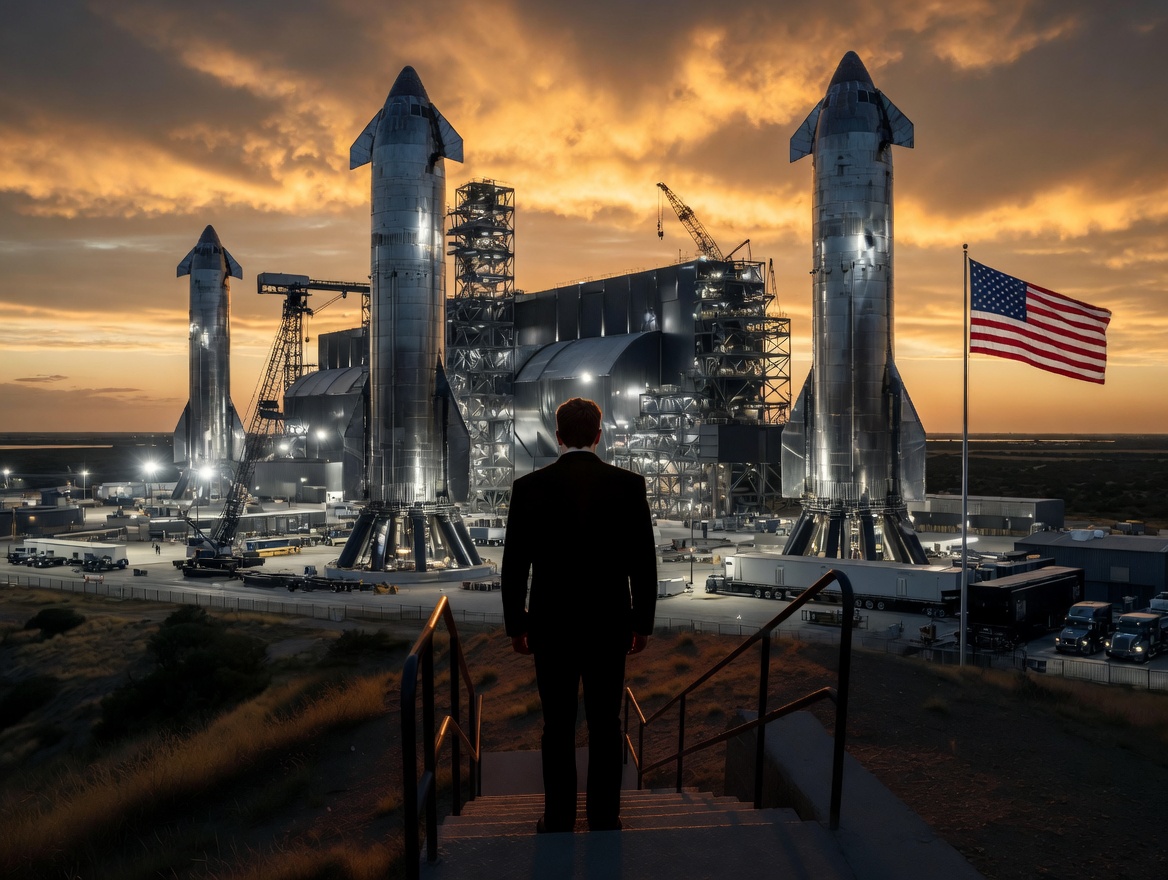
SpaceX stock did the opposite of what most of Wall Street expected this week, when the day designed to be its most dangerous turned into a rally, and the rally kept going.
Thursday marked the first major lockup expiration since SpaceX’s June IPO, making roughly 911.5 million insider held shares eligible to trade for the first time, more than doubling the company’s public float. Analysts and short sellers had spent weeks bracing for a flood of selling, especially after the stock fell 13 percent following its first earnings report as a public company on Tuesday. Instead, shares rose 6.1 percent Thursday to close at $114.92, and by Friday they were trading near $129, up more than another 12 percent on the day.
SpaceX shorts get warned by Musk ally, echoing Tesla’s early struggles
The setup made the outcome notable. Short interest had climbed to roughly 34 percent of the float heading into earnings, among the highest of any large cap stock, with about 95 percent of available shares to borrow already on loan. CEO Elon Musk warned short sellers twice in the weeks before the lockup, writing on X that “the survival probability of firms who maintain a significant short position in SpaceX over time is very low,” then following up on the morning of earnings with “I try to warn them, but they just double down.”
When the newly unlocked shares hit the market and the selloff never showed up, some of that short position appears to have started unwinding. TipRanks reported that options activity shifted toward bullish strategies like put selling and risk reversals following the rally, with roughly $600 million in options premium trading Thursday alone. Retail buyers also stepped in during the earnings dip, according to Vanda Research.
The fundamentals behind the stock have not changed much in a week. SpaceX’s revenue nearly doubled year over year to $7.8 billion, with Starlink subscribers doubling to 12 million and the company’s AI segment growing 247 percent. What spooked investors on Tuesday was the spending side. Capital expenditures jumped to more than $18 billion for the quarter, up from $2.8 billion a year earlier, with AI investment alone rising from $749 million to $15.8 billion. Wall Street remains split on whether that spending is building infrastructure SpaceX needs or outrunning what the business can currently support, a debate Teslarati has tracked since shares first came under pressure.
None of that resolves the bigger question hanging over the stock. Thursday’s release was only the first of nine staggered lockup tranches, with roughly $800 billion worth of additional shares scheduled to become eligible through October, and Musk’s own stake stays locked until next June. If this week is any indication, the market is treating that supply as something it can absorb rather than something to fear, at least for now.
-
Cybertruck
Tesla Cybertruck production snaps back after ugly supplier fight
Cybertrucks are piling up again at Giga Texas after Tesla’s court win against a parts supplier.

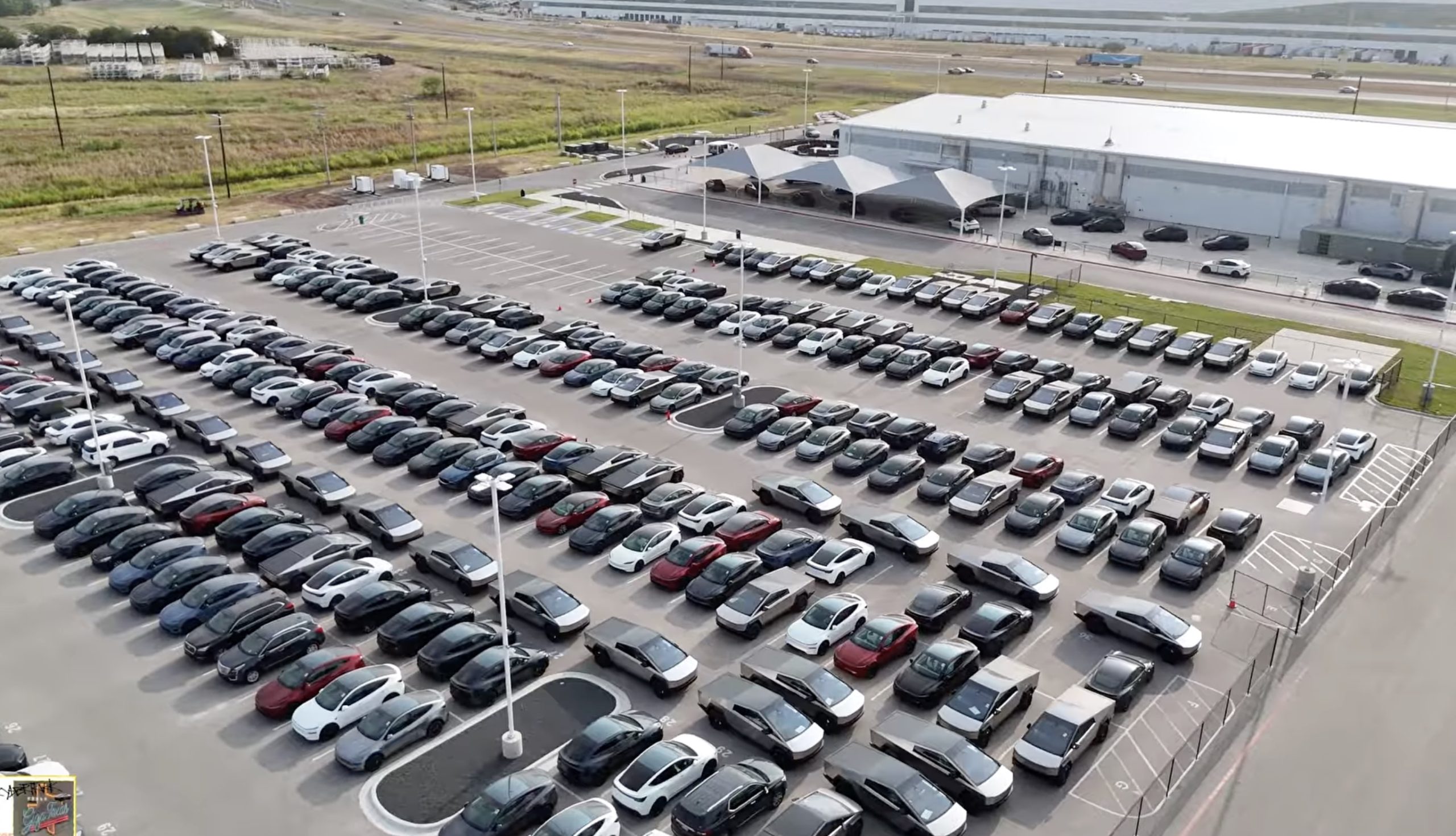
Cybertruck production at Giga Texas is showing its first visible recovery since Tesla sued a supplier last month over withheld manufacturing tooling.
Aerial observer Joe Tegtmeyer flew over the Austin factory Wednesday morning and counted roughly 100 or more Cybertrucks filling the outbound lot, a sharp jump from the thin numbers seen in recent weeks. The flyover came a day after a judge granted Tesla a temporary restraining order against Angstrom Automotive Group, the parts supplier at the center of the dispute.
Tesla filed an emergency lawsuit in late July after Angstrom told the automaker it planned to close the Troy, Texas facility where Tesla’s die-cast tools, trim dies and other Cybertruck stamping equipment were housed. According to Tesla’s complaint, a shipment of 700 finished parts never left the building, and when Tesla sent representatives to retrieve its equipment, accompanied by law enforcement, they were turned away. Angstrom allegedly then asked for an extra $250,000 a week to keep operating, which Tesla’s filing described as holding its own property for ransom.
TESLA: U.S. District Judge Christopher R. Wolfe of the U.S. District Court for the Western District of Texas, Waco Division granted Tesla a Temporary Restraining Order and Writ of Replevin in its dispute with Angstrom Automotive (Case No. 6:26-cv-00477).
The order authorizes… https://t.co/E1DKcQSxMn pic.twitter.com/LR8aAiV2Og
— S.E. Robinson, Jr. (@SERobinsonJr) August 5, 2026
-
The restraining order gives Tesla immediate right of entry to Angstrom’s facility to recover the tooling. It is temporary, with a fuller hearing still to come, but the speed of Wednesday’s rebound suggests the Angstrom shortage was indeed the main bottleneck limiting Cybertruck output. Outbound lot counts are an imperfect measure of actual production, since finished trucks can sit for days before shipping, but a lot that full after a lean stretch is a meaningful signal.
Cybertruck output at Giga Texas has fluctuated all year as Tesla worked through supply issues and introduced new trims, including a cheaper Dual Motor AWD version that drew strong early demand.
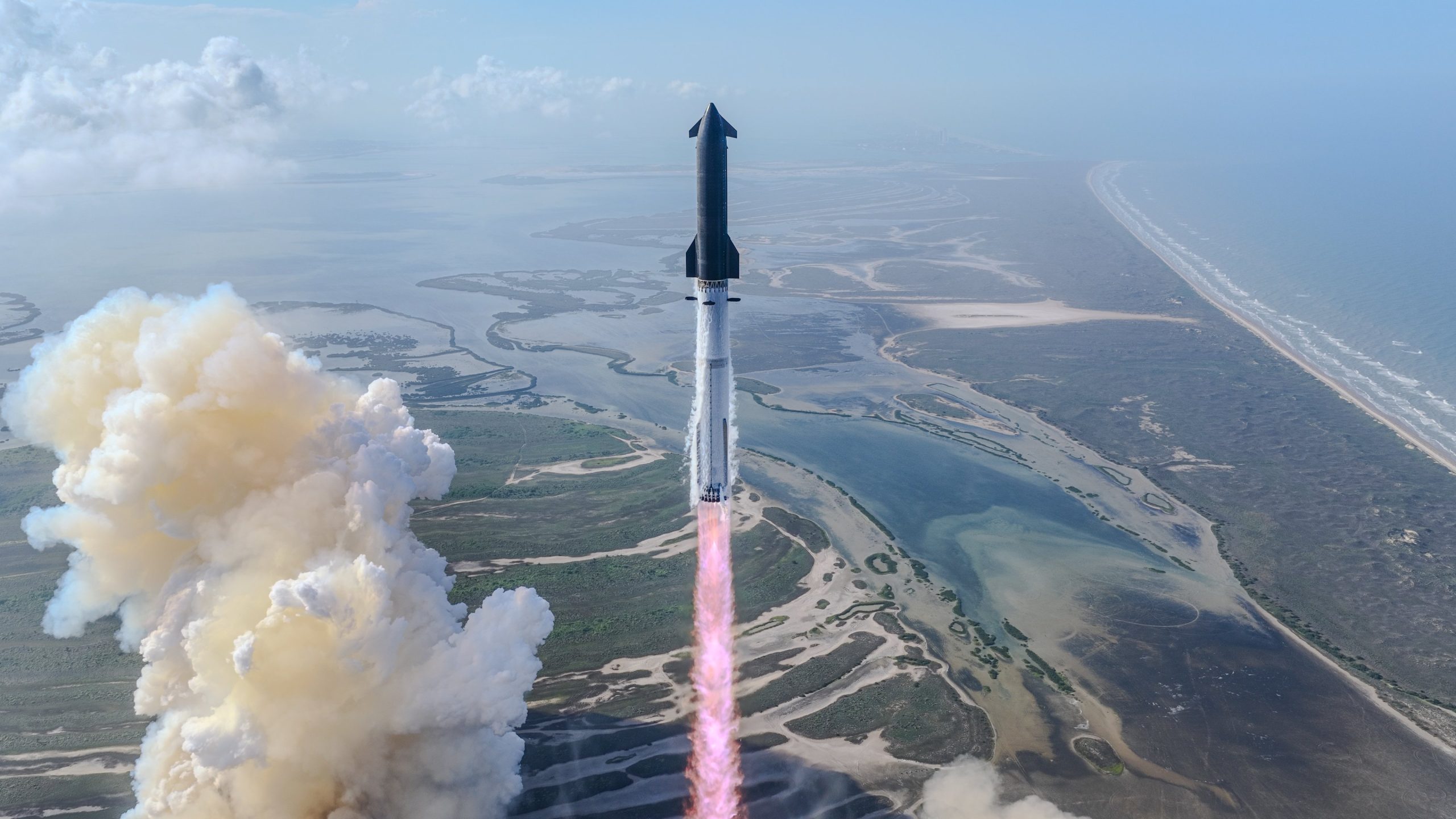
Venture capitalist Chamath Palihapitiya has cautioned investors shorting SpaceX shares, drawing a direct parallel to the intense short-selling pressure Tesla faced in its early public years.
Responding to reports of elevated short interest in the newly public rocket, satellite, and AI company, Palihapitiya noted that similar dynamics played out with Tesla, where aggressive short sellers ultimately “went broke.”
SpaceX (NASDAQ: SPCX) went public on June 12, 2026, in the largest IPO on record, pricing at $135 per share. Shares quickly surged to an all-time high of $225.64 just days later, briefly implying a valuation exceeding $2 trillion. The stock has since retreated sharply amid valuation concerns, lockup expiration fears, and broader market dynamics.
By early August, it traded near $108–$125, representing a roughly 50 percent decline from the peak and bringing the market capitalization closer to the $1.5–1.7 trillion range. On August 4, shares closed up more than 9 percent at $125.33 ahead of earnings before facing pressure in after-hours and premarket trading.
Short interest has climbed dramatically. According to S3 Partners data widely cited in market reports, short positions reached approximately 219.3 million shares by late July, about 34 percent of the limited public float of roughly 640 million shares, and represented a notional value of around $24.6 billion.
Utilization of shares available to borrow hit 95 percent, with borrow fees rising. This level of shorting exceeded the dollar value of short bets against Tesla at the time and built rapidly ahead of two catalysts: the company’s first post-IPO earnings and an August 6 lockup expiration that could free up to 911.5 million additional shares.
-
CEO Elon Musk has issued warnings of his own. In mid-July, as short interest approached one-third of the float, he posted that “the survival probability of firms who maintain a significant short position in SpaceX over time is very low,” reiterating his view that the company could ultimately be worth more than Earth if it achieves its goals.
On August 4, just before earnings, Musk responded to the latest short-interest data by saying, “I try to warn them, but they just double down.”
SpaceX delivered its first quarterly results as a public company after the close on August 4. Second-quarter revenue rose 92 percent year-over-year to $7.8 billion, beating consensus estimates near $6.8–6.9 billion.
The net loss narrowed to $541 million, or 9 cents per share, better than the roughly 23–24 cent loss expected. Starlink/connectivity contributed about $4.3 billion (up 66 percent), while the AI business generated $2.6 billion (up roughly 250 percent). Capital expenditures were heavy at $18.4 billion, largely tied to AI infrastructure. Management projected a $100 billion annualized revenue run rate by year-end 2026 and outlined a path toward $1 trillion in annual revenue by 2030.
The combination of Chamath’s historical reminder, Musk’s repeated alerts, and the company’s ambitious growth targets underscores the high-stakes debate surrounding SPCX. Short sellers are positioned for near-term supply pressure from the lockup, while long-term bulls point to Starlink scale, Starship progress, and AI compute expansion as reasons the bears may ultimately face the same fate as many early Tesla skeptics.

Inside Tesla’s secretive $10 Billion “Project Crystal Sun” filing

The Boring Company’s newest tunnel vehicle runs on Tesla parts and no one is driving it


