Investor's Corner
Lordstown Motors and Foxconn finalize sale of manufacturing facility

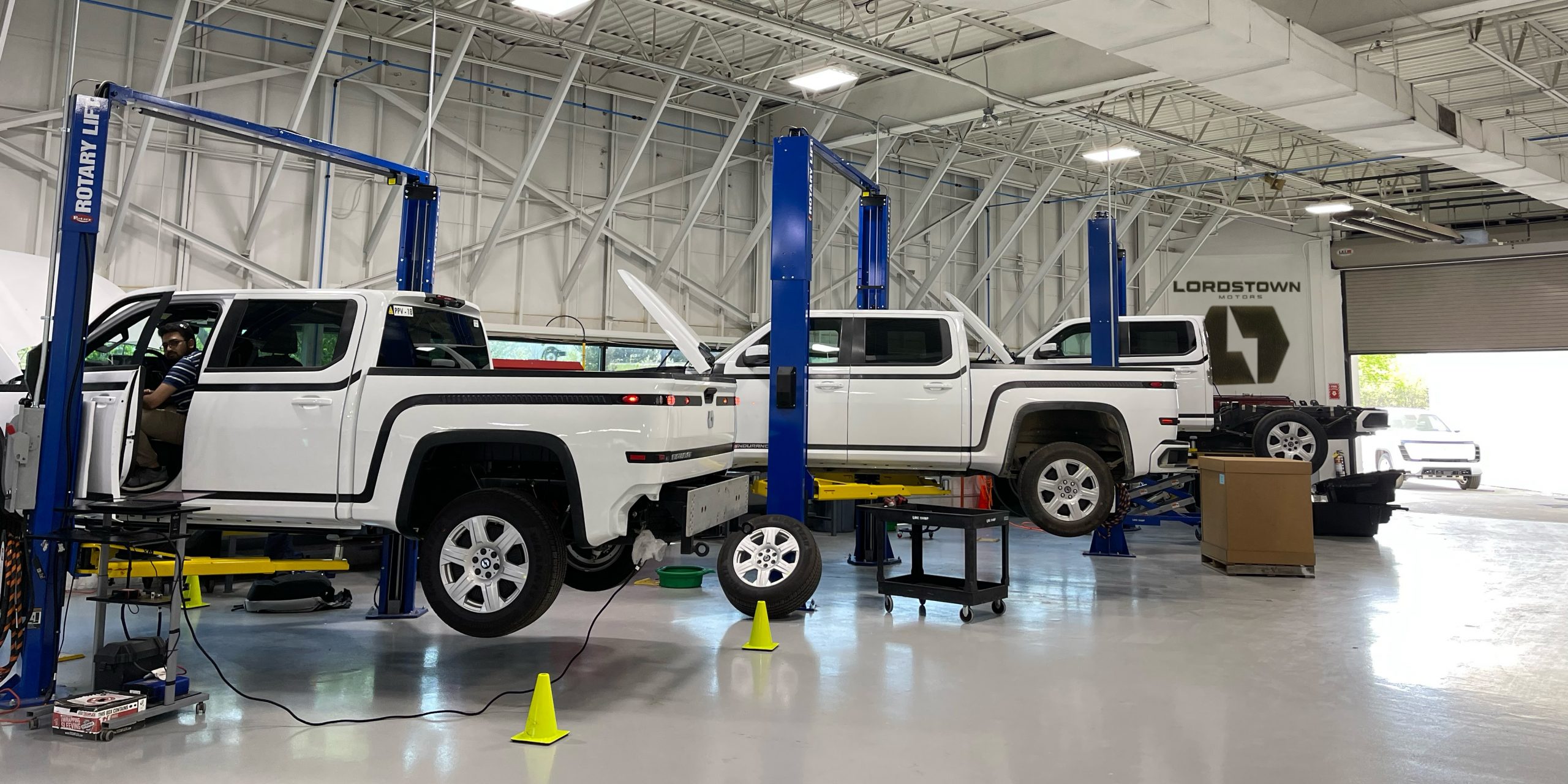
Lordstown Motors announced last night it has closed the sale of its manufacturing facility in Ohio to Foxconn after the two companies signed a contract manufacturing agreement and joint venture agreement for product development.
After several years of delays and challenges that prevented the launch of its Endurance all-electric pickup truck, Lordstown announced in early October 2021 that it would be selling its Lordstown, Ohio factory to Hon Hai Technology Group, more commonly known as Foxconn.
We have completed our Contract Manufacturing and Joint Venture Agreements with Foxconn. #RIDE
$100 million incremental investment!
RELEASE: https://t.co/06b7Z40x7t pic.twitter.com/KwkuqLgcfH
— Lordstown Motors (@LordstownMotors) May 11, 2022
Lordstown described significant cash flow issues that would likely not allow the company to operate through the end of June 2022, it said in a filing late last year. It stated its ability to stay open through 2022 would be “dependent on its ability to complete the development of its electric vehicles, obtain regulatory approval, begin commercial-scale production and launch the sale of such vehicles.” The deal with Foxconn to jointly develop electric vehicles and the decision to sacrifice some of its assets to stay open has finally been completed after several delays.
Earlier this week, Lordstown announce it would delay the sale of the Ohio manufacturing plant, extending the deadline date by just four days. Lordstown also stated it would need an additional $150 million in capital to begin boosting production of the Endurance pickup, which had been set aside for tooling improvements. Without the tooling upgrades, the cost of producing an Endurance pickup would have been higher than the sale price of the vehicle.
Lordstown Motors delays Endurance truck, sells Ohio factory to Foxconn
Yesterday, on May 11, Lordstown and Foxconn completed the transactions that were a part of the Asset Purchase Agreement, which was submitted on November 10, 2021:
“Total proceeds to LMC were $230 million, plus the reimbursement of approximately $27 million in operating and expansion costs. In addition, Foxconn had previously purchased $50 million of LMC Class A common stock directly from the company. Concurrently with the closing, Foxconn and Lordstown Motors entered into a manufacturing supply agreement for the Endurance.”
Production of the Endurance pickup is still targeted for the third quarter, with initial commercial deliveries slated for the fourth quarter.
“The closing of the Foxconn APA and the completion of a joint venture agreement for the development of new electric vehicles using Foxconn’s MIH platform are important milestones for LMC,” Lordstown CEO Dan Ninivaggi said. “Our strategic partnership with Foxconn provides LMC with a flexible and less capital-intensive business model, access to broad supply chain and software capabilities and an effective vehicle development platform to bring EVs to market faster and more efficiently. I have always been a strong believer in what Foxconn is doing to accelerate the adoption of electric vehicles and we are proud to be their partner.”
Disclosure: Joey Klender is not a Lordstown shareholder.
I’d love to hear from you! If you have any comments, concerns, or questions, please email me at joey@teslarati.com. You can also reach me on Twitter @KlenderJoey, or if you have news tips, you can email us at tips@teslarati.com.


Elon Musk
Tesla confirmed HW3 can’t do Unsupervised FSD but there’s more to the story
Tesla confirmed HW3 vehicles cannot run unsupervised FSD, replacing its free upgrade promise with a discounted trade-in.

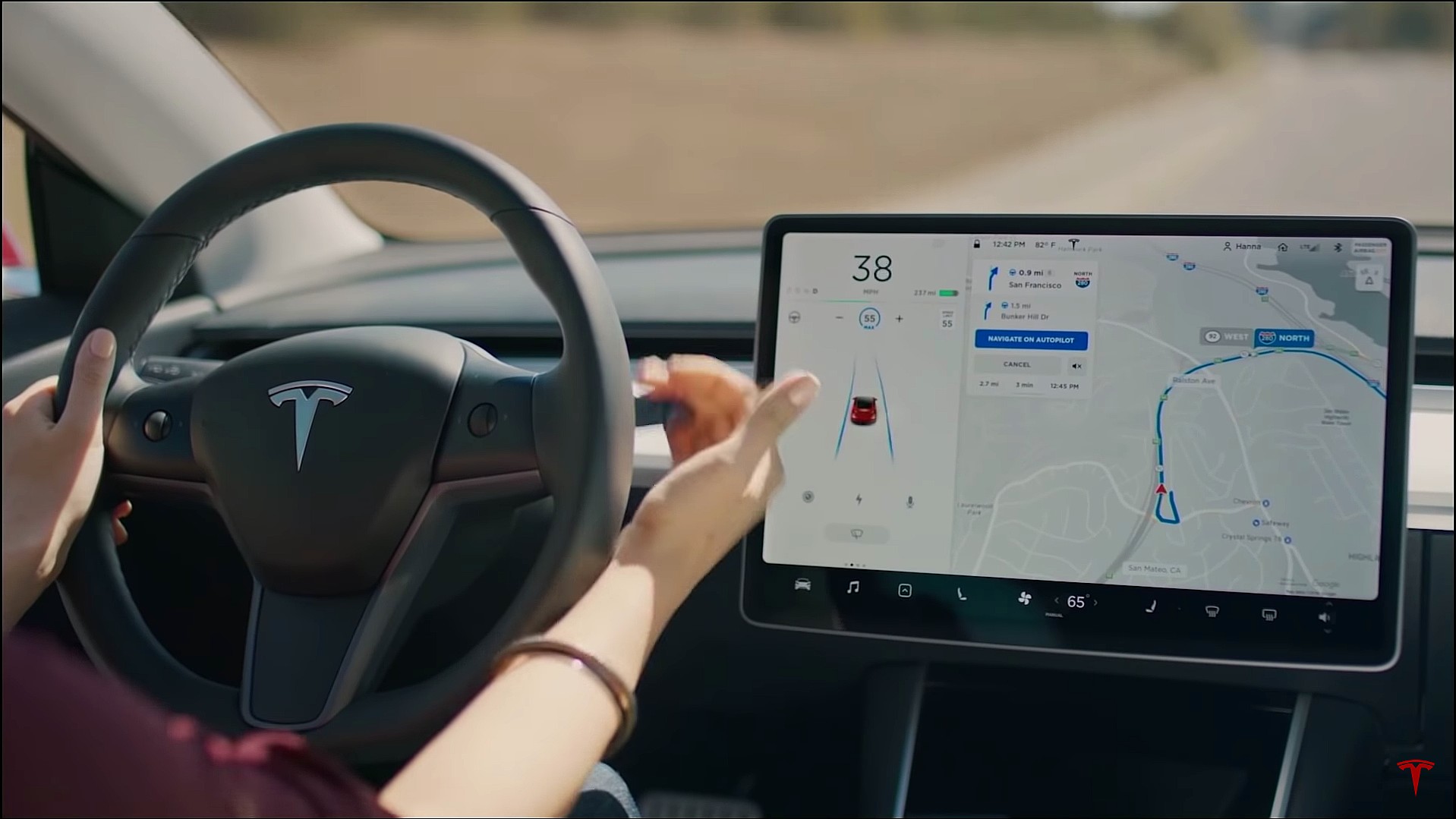
Tesla has officially confirmed that early vehicles with its Autopilot Hardware 3 (HW3) will not be capable of unsupervised Full Self-Driving, while extending a path forward for legacy owners through a discounted trade-in program. The announcement came by way of Elon Musk in today’s Tesla Q1 2026 earnings call.
🚨 Our LIVE updates on the Tesla Earnings Call will take place here in a thread 🧵
Follow along below: pic.twitter.com/hzJeBitzJU
— TESLARATI (@Teslarati) April 22, 2026
The history here matters. HW3 launched in April 2019, and Tesla sold Full Self-Driving packages to owners on the understanding that the hardware was sufficient for full autonomy. Some owners paid between $8,000 and $15,000 for FSD during that period. For years, as FSD’s AI models grew more demanding, HW3 vehicles fell progressively further behind, eventually landing on FSD v12.6 in January 2025 while AI4 vehicles moved to v13 and then v14. When Musk acknowledged in January 2025 that HW3 simply could not reach unsupervised operation, and alluded to a difficult hardware retrofit.
The near-term offering is more concrete. Tesla’s head of Autopilot Ashok Elluswamy confirmed on today’s call that a V14-lite will be coming to HW3 vehicles in late June, bringing all the V14 features currently running on AI4 hardware. That is a meaningful software update for owners who have been frozen at v12.6 for over a year, and it represents genuine effort to keep older hardware relevant. Unsupervised FSD for vehicles is now targeted for Q4 2026 at the earliest, with Musk describing it as a gradual, geography-limited rollout.
For HW3 owners, the over-the-air V14-lite update is welcomed, and the discounted trade-in path at least acknowledges an old obligation. What happens next with the trade-in pricing will define how this chapter ultimately gets written. If Tesla prices the hardware path fairly, acknowledges what early adopters are owed, and delivers V14-lite on the June timeline it committed to today, it has a real opportunity to convert one of the longest-running sore subjects among early adopters into a loyalty story.
Tesla (NASDAQ: TSLA) reported its earnings for the first quarter of 2026 on Wednesday afternoon. Here’s what the company reported compared to what Wall Street analysts expected.
The earnings results come after Tesla reported a miss on vehicle deliveries for the first quarter, delivering 358,023 vehicles and building 408,386 cars during the three-month span.
As Tesla transitions more toward AI and sees itself as less of a car company, expectations for deliveries will begin to become less of a central point in the consensus of how the quarter is perceived.
Nevertheless, Tesla is leaning on its strong foundation as a car company to carry forward its AI ambitions. The first quarter is a good ground layer for the rest of the year.
Tesla Q1 2026 Earnings Results
Tesla’s Earnings Results are as follows:
- Non-GAAP EPS – $0.41 Reported vs. $0.36 Expected
- Revenues – $22.387 billion vs. $22.35 billion Expected
- Free Cash Flow – $1.444 billion
- Profit – $4.72 billion
Tesla beat analyst expectations, so it will be interesting to see how the stock responds. IN the past, we’ve seen Tesla beat analyst expectations considerably, followed by a sharp drop in stock price.
On the same token, we’ve seen Tesla miss and the stock price go up the following trading session.
Tesla will hold its Q1 2026 Earnings Call in about 90 minutes at 5:30 p.m. on the East Coast. Remarks will be made by CEO Elon Musk and other executives, who will shed some light on the investor questions that we covered earlier this week.
You can stream it below. Additionally, we will be doing our Live Blog on X and Facebook.
Q1 2026 Earnings Call at 4:30pm CT https://t.co/pkYIaGJ32y
— Tesla (@Tesla) April 22, 2026
Elon Musk
Tesla Earnings: financial expectations and what we should to hear about
In terms of discussions, Tesla earnings calls are usually a great time to get some clarification on the company’s outlook for its current and future projects.
Tesla (NASDAQ: TSLA) will report its earnings for the first quarter of 2026 this evening after the market closes, and analysts have already put out their expectations from a financial standpoint for the company’s first three months of the year.
Additionally, there will be plenty of things that will be discussed, including the recent expansion of the Robotaxi program, the Roadster unveiling, and Full Self-Driving (Supervised) approvals across the globe.
Financial Expectations
Wall Street consensus expectations put Tesla’s Earnings Per Share (EPS) at $0.36, while revenues are expected to come in around $22.35 billion.
This would compare to an EPS of $0.27 and $19.34 billion compared to Tesla’s Q1 2025. Last quarter, EPS came in at $0.50 on $29.4 billion of revenue.
Tesla beat analyst expectations last quarter, but the next trading day, the stock fell nearly 3.5 percent. We never quite can gauge how the market will respond to Tesla’s earnings; we’ve seen shares rise on a miss and fall on a beat.
It really goes on the news, and investor consensus, it seems.
What to Expect
In terms of discussions, Tesla earnings calls are usually a great time to get some clarification on the company’s outlook for its current and future projects. Right now, the big focus of investors is the Robotaxi program, the Roadster unveiling, and what the outlook for Full Self-Driving’s expansion throughout Europe and the rest of the world looks like.
Robotaxi
Tesla just recently expanded its unsupervised Robotaxi program to Dallas and Houston, joining Austin as the first cities in the U.S. to have access to the company’s ride-hailing suite.
Tesla expands Unsupervised Robotaxi service to two new cities
Some saw this move as a quick effort to turn attention away from a delivery miss and an anticipated miss on earnings. However, we’ve seen Tesla be more than deliberate with its expansion of the Robotaxi suite, so it’s hard to believe the company would make this move if it were not truly ready to do so.
The company is also working to expand its U.S. ride-hailing service outside of Texas and California, and recently filed paperwork to build a Robotaxi-exclusive Supercharger stall.
Expansion is planned for Florida, Nevada, and Arizona at some point this year, with more states to follow.
Roadster Unveiling
The Roadster unveiling was slated for April 1, and then pushed back (once again) to “probably late April,” according to Elon Musk.
It does not appear that the Roadster unveiling will happen within that time frame, at least not to our knowledge. Nobody has received media or press invites for a Roadster unveiling, and given the lofty expectations set for the vehicle by Musk and Co., it seems like something they’d want to show off to the public.
The Roadster has become a truly frustrating project for Tesla and its fans; evidently, there is something that is not up to the expectations Musk and others have. Meanwhile, fans are essentially waiting for something that is six years late.
At this point, also given the company’s focus on autonomy, it almost seems more worth it to just cancel it, remove any and all timelines and expectations, and surprise people with something crazy down the line, maybe in two or three years. There should be no talk of it.
Full Self-Driving Global Expansion
We expect Musk and Co. to shed some details on where it stands with other European government bodies, as it recently was able to roll out FSD (Supervised) to customers in the Netherlands.
Spain is also working with Tesla to assess FSD’s viability as a publicly available option for owners.
With that being said, there should be some additional information for investors as they listen to the call; no talk of it would be a pretty big letdown.
Optimus
There will likely be a date set for the Gen 3 Optimus unveiling, and we’re hopeful Tesla can keep that date set in stone and meet it. Not reaching timelines is a relatively minor issue, but a company can only do this for so long before its fans and investors start to lose trust and disregard any talk about dates.
It seems this is happening already.
Optimus has been pegged as Tesla’s big money maker for the future. The goals and expectations are high, but it is a privilege to have that sort of pressure when investors know the company’s capability.

Tesla pulls back the curtain on Cybercab mass production

Elon Musk talks Tesla Roadster’s future


