News
Nikola continues dramatic turnaround with EV battery pack production plans

Nikola Motor Corp. is continuing its dramatic turnaround just eleven months after its founder and CEO was indicted on three counts of fraud. The company announced plans to manufacture its own battery packs by 2024, but only if market conditions and sourcing was openly available to Nikola, CFO Kim Brady said.
“If in-sourcing opportunity is available to us, and if we decide to explore that, that will likely be in 2024,” Brady said at the Deutsche Bank Global Auto Industry Conference today. The company’s production plans for battery packs would increase volume and reduce costs, a common struggle of new automotive startups. The option will “ultimately” need to provide those advantages for Nikola. Reuters reported the story initially.
To start, it is a pretty incredible turnaround from where Nikola was twelve months ago. Last June, Milton was no longer at the helm and hadn’t been for several months. Nikola stated in February 2021 that Milton misled investors with lies and even fabricated some of the capabilities of its all-electric semi-truck, the Nikola Tre. Nikola was already under fire after a report from Hindenburg Research made various claims about the company’s foggy past. It eventually led to Milton stepping down.
In July, Milton surrendered to authorities and the Southern District of New York indicted him on three fraud counts. Since then, Nikola has attempted to put the past behind them, moving on from its past and putting all developments on the shoulders of new CEO Mark Russell, who has done nothing but put the company on the right path, it seems.
Nikola founder Trevor Milton indicted on three counts of fraud
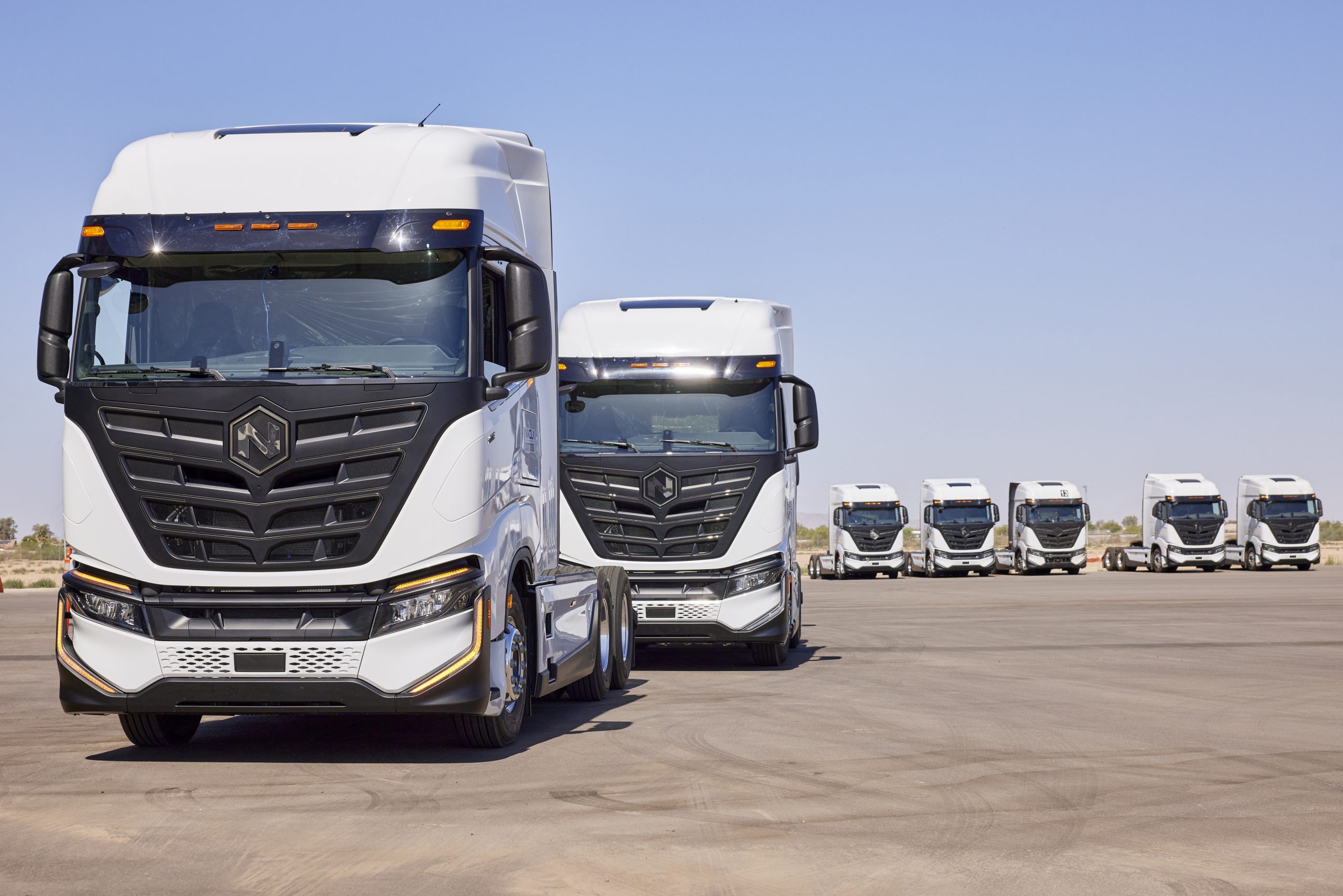
Nikola announced that it had started production of the Tre in March and started deliveries in late April.
“We began production of the Tre BEV on March 21 here in Coolidge and today we’re celebrating this milestone and the initial shipments of trucks to our customers,” company CEO Mark Russell said. “In 2022, we’re moving forward with every aspect of our business. Next year, fuel-cell electric vehicles (FCEV) are planned to be added to the manufacturing mix. We are focused on delivering vehicles and generating revenue.”
With ramping vehicle manufacturing plans and a product line that consists of heavy-duty EVs, Nikola’s products are already going to cost a substantial amount. The excessive number of cells a vehicle of this size needs in order to operate effectively makes ramping production difficult. Tesla has delayed its Semi on numerous occasions, citing battery cell shortages. Tesla also builds its own cells, including the new 4680 battery.
Nikola’s plans currently are to produce between 300 and 500 Tre units this year, but supply chain issues are a concern, Brady said.
Updated: “Cell” was changed to “packs” in the headline and first and second paragraphs.
I’d love to hear from you! If you have any comments, concerns, or questions, please email me at joey@teslarati.com. You can also reach me on Twitter @KlenderJoey, or if you have news tips, you can email us at tips@teslarati.com.


Elon Musk
Tesla Full Self-Driving feature probe closed by NHTSA
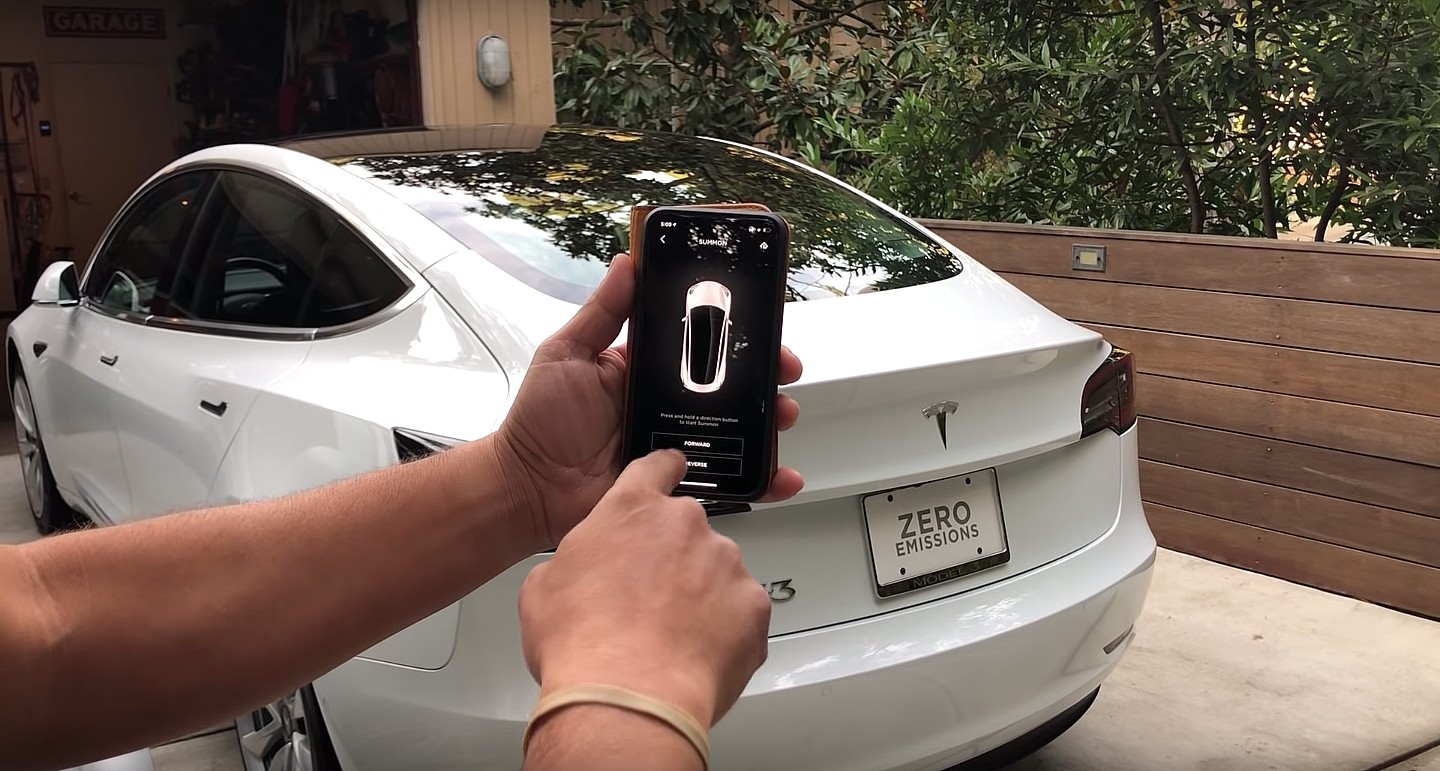
Actually Smart Summon allows owners to move their parked Tesla via a smartphone app remotely, directing the vehicle short distances in parking lots or private property while the driver supervises from the phone.
A probe into a popular Tesla self-driving feature has been closed by the National Highway Traffic Safety Administration (NHTSA) after over a year of scrutiny from the government agency.
The NHTSA has officially closed its investigation into Tesla’s Actually Smart Summon (ASS) feature, marking a regulatory win for the electric vehicle maker after more than a year of scrutiny.
Here’s our coverage on the launch of the probe:
Tesla’s Actually Smart Summon feature under investigation by NHTSA
The preliminary investigation, opened last January, examined roughly 2.59 million Tesla vehicles equipped with the feature across the Model S, Model X, Model 3, and Model Y lineups. ASS is not available for Cybertruck currently.
Actually Smart Summon allows owners to move their parked Tesla via a smartphone app remotely, directing the vehicle short distances in parking lots or private property while the driver supervises from the phone.
Here’s a clip of us using it:
Summon has had some good performances for me in the past
This was in October: https://t.co/w69Zp2bqeg pic.twitter.com/PVXSRj19E0
— TESLARATI (@Teslarati) April 5, 2026
Introduced as an upgrade to the original Smart Summon, the feature was designed to enhance convenience but drew attention after reports of low-speed incidents where vehicles bumped into stationary objects like posts, parked cars, or garage doors.
The NHTSA’s Office of Defects Investigation reviewed 159 incidents, including one formal Vehicle Owner’s Questionnaire complaint and media reports.
Notably, all events occurred at very low speeds, resulted only in minor property damage, and involved zero injuries or fatalities. The agency determined that the incidents were “extremely rare”, a fraction of one percent across millions of Summon sessions, and did not indicate a systemic safety-related defect.
A key factor in the closure was Tesla’s proactive response through over-the-air (OTA) software updates.
During the probe, Tesla deployed at least six updates that improved camera-based object detection, enhanced neural network performance for obstacle recognition, and refined the system’s response to potential hazards. These iterative improvements, delivered wirelessly to the entire fleet, addressed the primary concerns around detection reliability and operator reaction time.
Critics of Tesla’s autonomous features had initially pointed to the crashes as evidence of rushed deployment, especially given the feature’s reliance on the company’s vision-only Full Self-Driving (FSD) stack. However, NHTSA’s decision to close the case without seeking a recall underscores the low-severity nature of the events and the effectiveness of software-based fixes in modern vehicles.
It definitely has its flaws. I used ASS yesterday unsuccessfully:
It was pouring when I left the gym so I tried to Summon my Model Y
It turned the opposite way and drove out of range, stopping here and forcing me to walk even further across the lot in the rain for it 🤣
One day pic.twitter.com/iD10c8sriB
— TESLARATI (@Teslarati) April 5, 2026
However, improvements will come, and I’m confident in that.
The closure comes as Tesla continues to push boundaries with its autonomous driving ambitions, including unsupervised FSD rollouts and robotaxi initiatives. For owners, the ruling reinforces confidence in Actually Smart Summon as a convenient, low-risk tool rather than a hazardous experiment.
While broader NHTSA reviews of Tesla’s higher-speed FSD capabilities remain ongoing, this outcome highlights how data-driven analysis and rapid OTA remediation can satisfy regulators in the evolving landscape of automated driving technology.
Tesla has not issued an official statement on the closure, but the move is widely viewed as bullish for the company’s autonomy roadmap, reducing one layer of regulatory overhang and allowing focus on further refinements.
Elon Musk
Tesla uses Model S and X ‘sentimental’ value to enforce massive pricing move
By slashing production and creating immediate scarcity, the company has transformed these remaining vehicles into limited-edition relics. The price hike is not driven by rising material costs or new features.
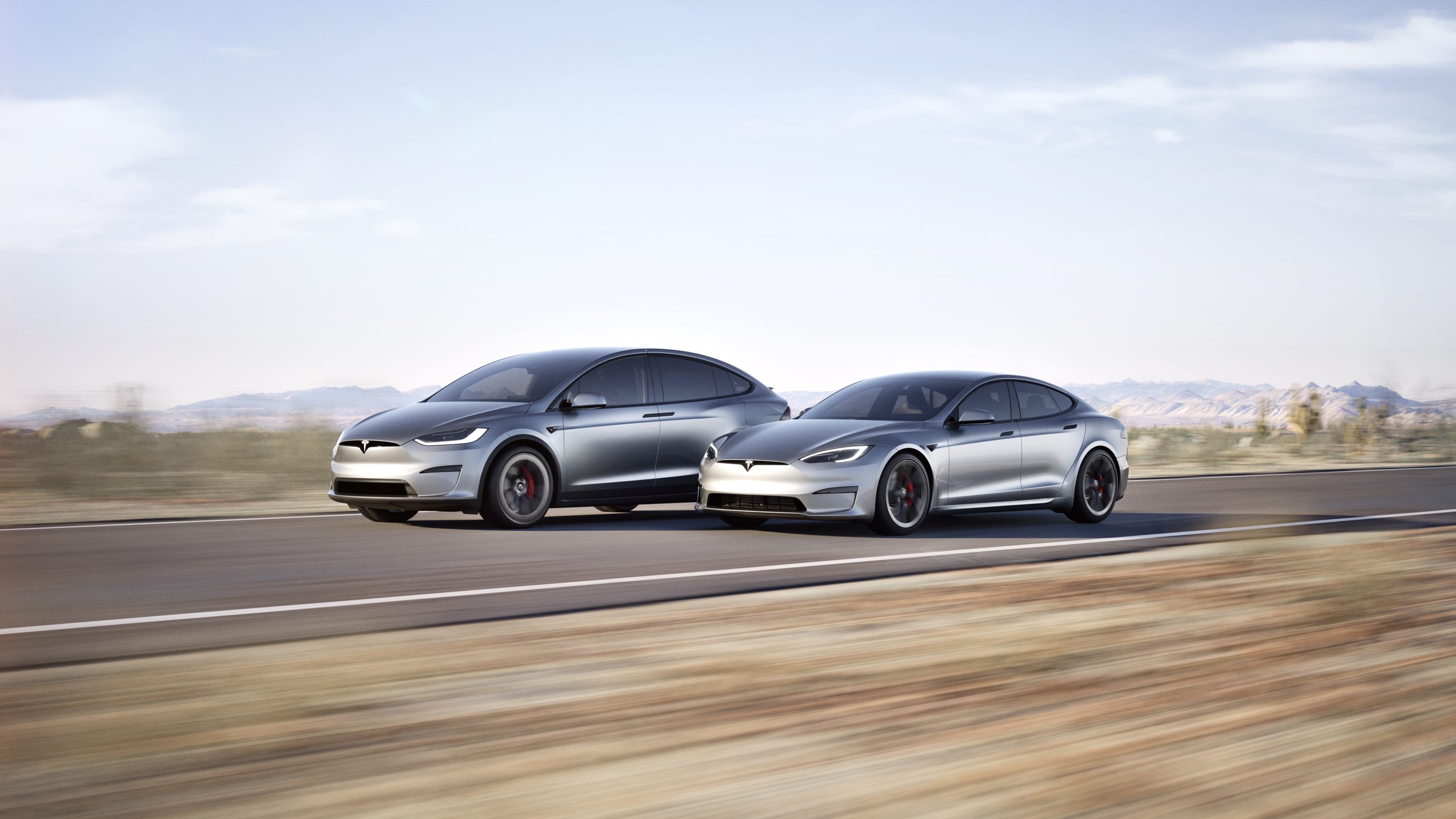
Tesla is using the “sentimental” value that CEO Elon Musk talked about with the Model S and Model X to enforce one of the most massive pricing moves it has ever applied as it begins to phase out the flagship vehicles.
Tesla quietly executed one of its most calculated pricing plays yet. After officially ending production of the Model S and Model X, the company raised prices on every remaining new and demo unit by roughly $15,000.
The refreshed starting prices now sit at:
- $109,990 for the Model S AWD
- $124,900 for the Model S Plaid
- $114,900 for the Model X AWD
- $129,900 for the Model X Plaid
NEWS: Tesla has raised the price on all remaining new (and demo) Model S and Model X vehicles left in inventory by $15,000.
New starting prices:
• Model S AWD: $109,990
• Model S Plaid: $124,900
• Model X AWD: $114,900
• Model X Plaid: $129,900 pic.twitter.com/qBEhsYAfXr— Sawyer Merritt (@SawyerMerritt) April 5, 2026
Every vehicle comes fully loaded with the Luxe Package, Full Self-Driving Supervised, four years of premium connectivity and service, and lifetime free Supercharging. What looks like a simple inventory adjustment is, in reality, a masterclass in monetizing nostalgia.
These are not ordinary cars. For many owners, the Model S and Model X represent the purest expression of Tesla’s original promise—the sleek, over-engineered flagships that proved electric vehicles could be faster, quieter, and more desirable than their gasoline counterparts.
Tesla removes Model S and X custom orders as sunset officially begins
They are the vehicles that carried Elon Musk’s vision from Silicon Valley startup to global automaker.
The final units rolling off the line carry an emotional weight that numbers alone cannot capture. Buyers are not simply purchasing transportation; they are acquiring a piece of Tesla history, the last examples of the very models that defined the brand’s first decade.
Tesla, with this move, understands this sentiment deeply.
By slashing production and creating immediate scarcity, the company has transformed these remaining vehicles into limited-edition relics. The price hike is not driven by rising material costs or new features.
It is driven by the knowledge that a certain segment of buyers, loyalists, collectors, and enthusiasts, will pay a premium precisely because these cars are about to disappear. The strategy converts emotional attachment into margin.
Where other automakers might discount outgoing models to clear lots, Tesla is betting that sentiment is worth more than volume.
The move also quietly rewards existing owners. Scarcity instantly boosts resale values for the hundreds of thousands of Model S and X already on the road, reinforcing brand loyalty among the very people who helped build Tesla’s reputation.
In the end, Tesla’s pricing decision reveals a sophisticated understanding of its audience. As the company pivots toward next-generation platforms, it has found a way to extract one final, lucrative chapter from its heritage.
For buyers willing to pay the new prices, the premium is not just for the car; it is for the feeling of owning the last true originals. Tesla has turned sentiment into strategy, and in the process, reminded everyone that even in the EV era, emotion remains a powerful line on the balance sheet.
News
Tesla broadens most-wanted Model Y to eight new markets
This rollout targets Asia’s booming EV adoption, driven by family buyers seeking practicality without sacrificing performance or luxury. It positions Tesla against rising local competitors offering affordable three-row options.
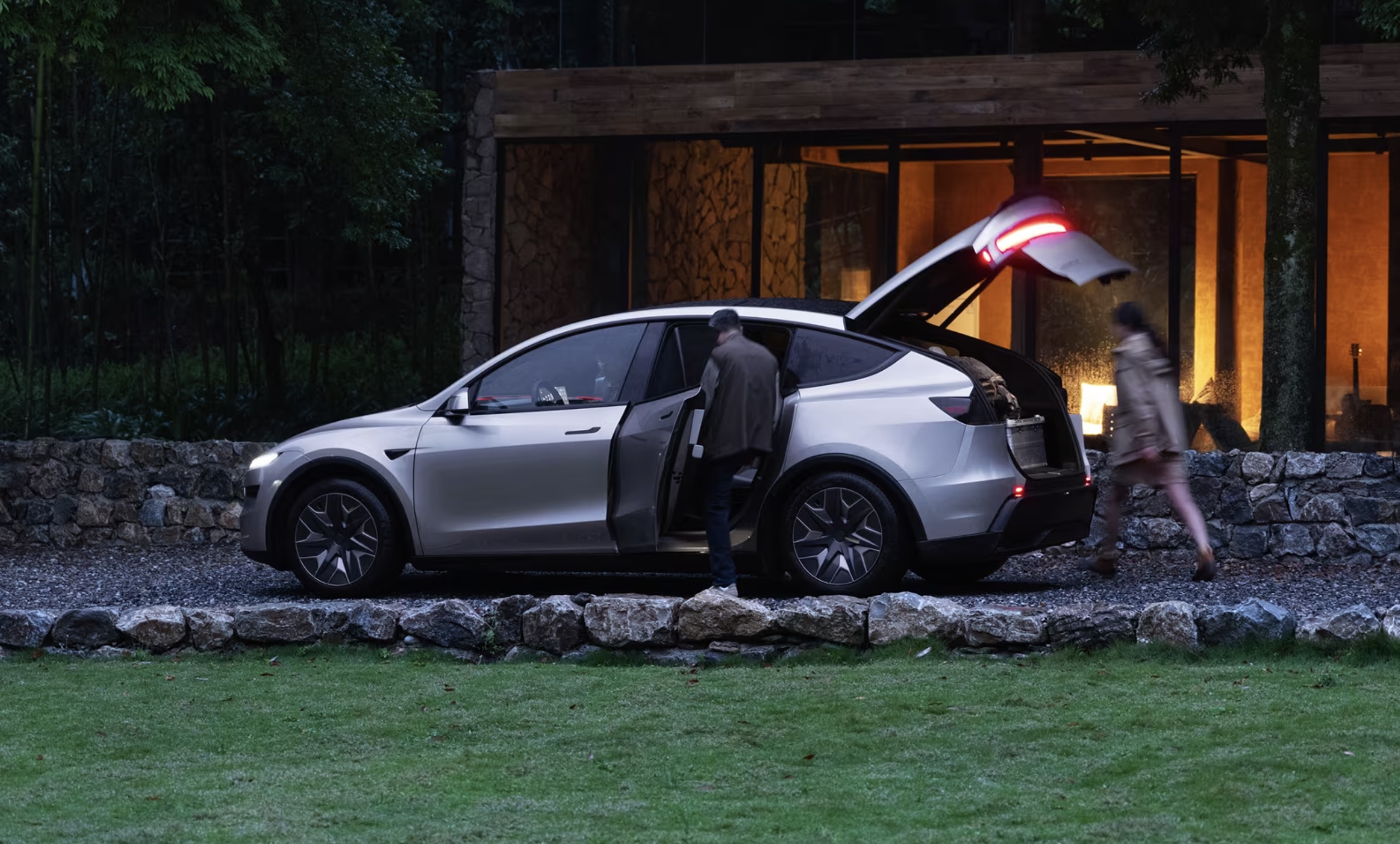
Tesla has broadened the availability of the most-wanted Model Y trim to eight new Asian markets, expanding the footprint of what is one of the most highly requested vehicle configurations in the U.S.
Tesla has officially launched ordering for the Model Y L, its long-wheelbase six-seater electric SUV, across eight key Asian territories: Japan, South Korea, Hong Kong, Macau, Singapore, Thailand, Malaysia, and the Philippines.
The announcement signals a major expansion for the family-oriented variant first introduced in China in August 2025. In Thailand, Malaysia, and the Philippines, the vehicle had already been previewed at several motor shows, so fans in the area were familiar with the Model Y L and its distinct differences to the standard-sized trims.
🚨 Tesla has launched the Model Y L for order in eight new Asian territories:
– Japan
– South Korea
– Hong Kong
– Macau
– Singapore
– Thailand (previously unveiled at the Bangkok International Motor Show)
– Malaysia (previously unveiled)
– Philippines (previously unveiled) pic.twitter.com/PidNwRxuEU— TESLARATI (@Teslarati) April 3, 2026
Local pricing reflects taxes, incentives, and import duties. Malaysia estimates RM260,000 with Q2 2026 deliveries; Singapore lists S$248,999 (including COE); Macau prices at 398,750 patacas. Similar competitive positioning is expected in Japan, South Korea, Hong Kong, Thailand, and the Philippines, where the Model Y L undercuts many traditional three-row SUVs while offering full EV benefits.
This rollout targets Asia’s booming EV adoption, driven by family buyers seeking practicality without sacrificing performance or luxury. It positions Tesla against rising local competitors offering affordable three-row options.
Notably, the Model Y L remains unavailable in the U.S. market, where demand for a stretched Model Y has been high. Although CEO Elon Musk said that something “way cooler than a minivan” is on the way in the U.S., the dimensions of the Model Y L simply fit the needs of many American families.
Elon Musk says Tesla is developing a new vehicle: ‘Way cooler than a minivan’
The Model Y L stands out with its stretched dimensions: 4,976 mm long and a 3,040 mm wheelbase—179 mm and 150 mm longer, respectively, than the standard Model Y. Height increases slightly to 1,668 mm, creating a true three-row, 2+2+2 layout with individual captain’s chairs in the second row for easier third-row access.
Maximum cargo capacity reaches 2,539 liters with seats folded, making it ideal for growing families or those needing versatile space in dense urban environments. But it’s not just a grocery-getter or a kid-hauler: The performance matches Tesla’s reputation.
Dual-motor all-wheel drive delivers 0-100 km/h acceleration in about 5.0 seconds (or 4.5 seconds in some market specs), with a top speed of 201 km/h. The vehicle boasts a WLTP-rated range of up to 681 km, supported by an approximately 88-97 kWh battery pack (market-dependent) and 250 kW DC fast charging.
With deliveries slated for Q2 2026 and strong early interest mirroring China’s rapid pre-orders, the Model Y L could become a bestseller in these dynamic markets. Tesla’s targeted expansion essentially generalizes its commitment to tailoring vehicles to regional needs while advancing sustainable mobility across Asia.

Tesla Full Self-Driving feature probe closed by NHTSA

Tesla uses Model S and X ‘sentimental’ value to enforce massive pricing move


