Lifestyle
S in the City: Model S Owner Experience in the Big City

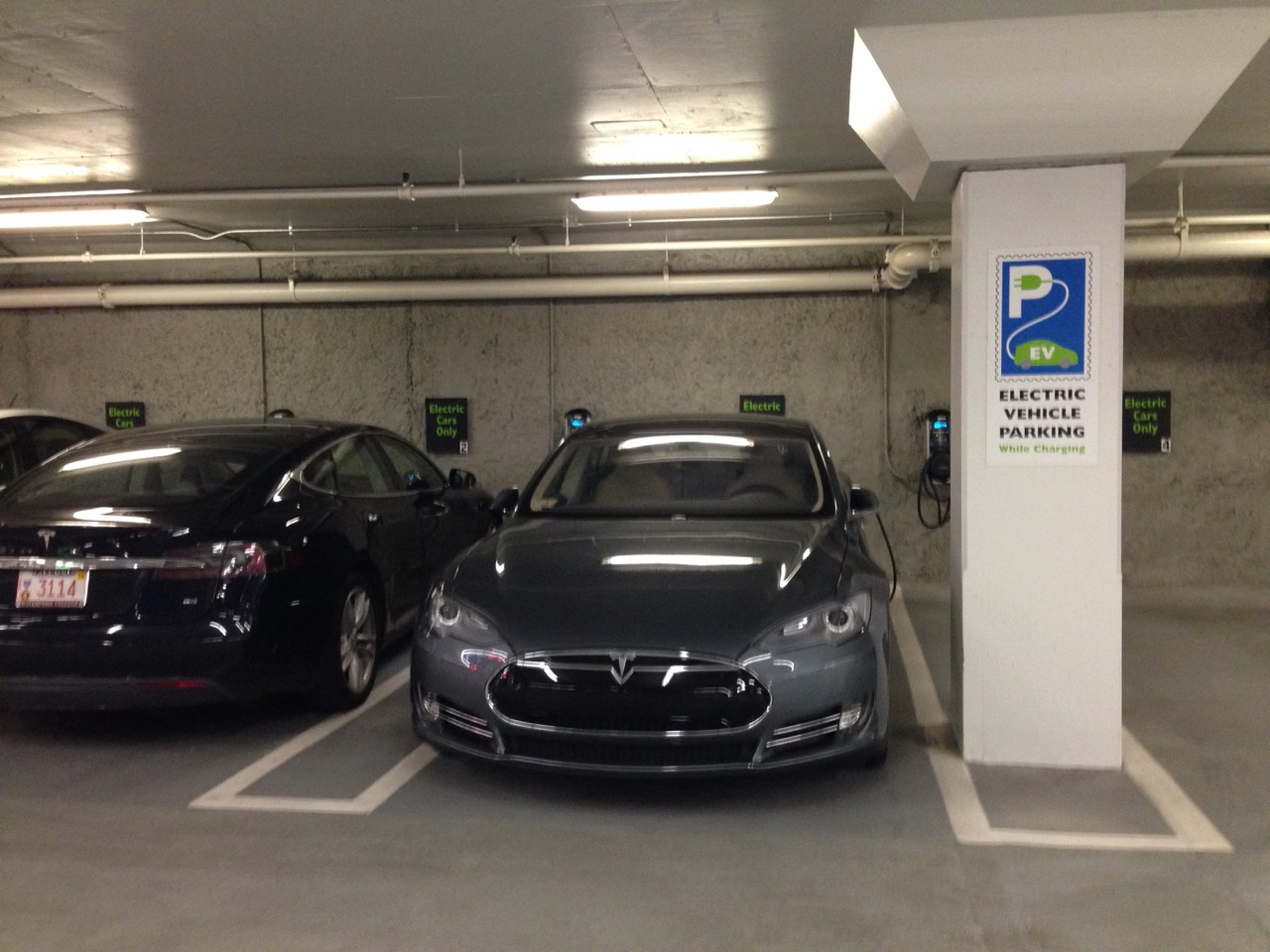
Whether you live or work in the city, or drive in for entertainment, there are notable nuances with driving a Tesla Model S into a busy metropolitan area. Finding parking, navigating tight streets, locating public charging stations and learning etiquettes with charging overnight are areas that I’m quickly adjusting to.
Driving into the City
 I drive my Model S as much as humanly possible and under most circumstances. Whether it’s taking long road trips or navigating through narrow city streets, there hasn’t been many situation which I’ve shied away from. Driving into the city (Boston) for dinner was no different.
Since I didn’t know the city streets very well, I posted to the local New England forum on TMC and asked for help. TMC is a great resource for Tesla owners that are looking for advice from other Tesla owners. My quest to find a “Tesla owner approved” local parking spot directed me to a garage not too far from the restaurant – Boston’s Post Office Square.
Parking was tight, as expected, but I managed to find comfort knowing that I parked next to another Model S owner. I plugged the car into a ChargePoint unit, went off to my long dinner and came back to an extra 60 miles of range. Best of all this was all free since Massachusetts law prohibits re-sale of electricity.
I didn’t need the extra 60 miles of extra range to get home, but because there were several open EV spots available, I didn’t feel as bad using one for a longer duration of time. It’s important to note that this wouldn’t be the case during the day when charging stalls are a more sought after commodity. Keep this in mind and don’t occupy an EV charging stall when there’s only one available and you’re not in need of a charge.
Overnight in the City
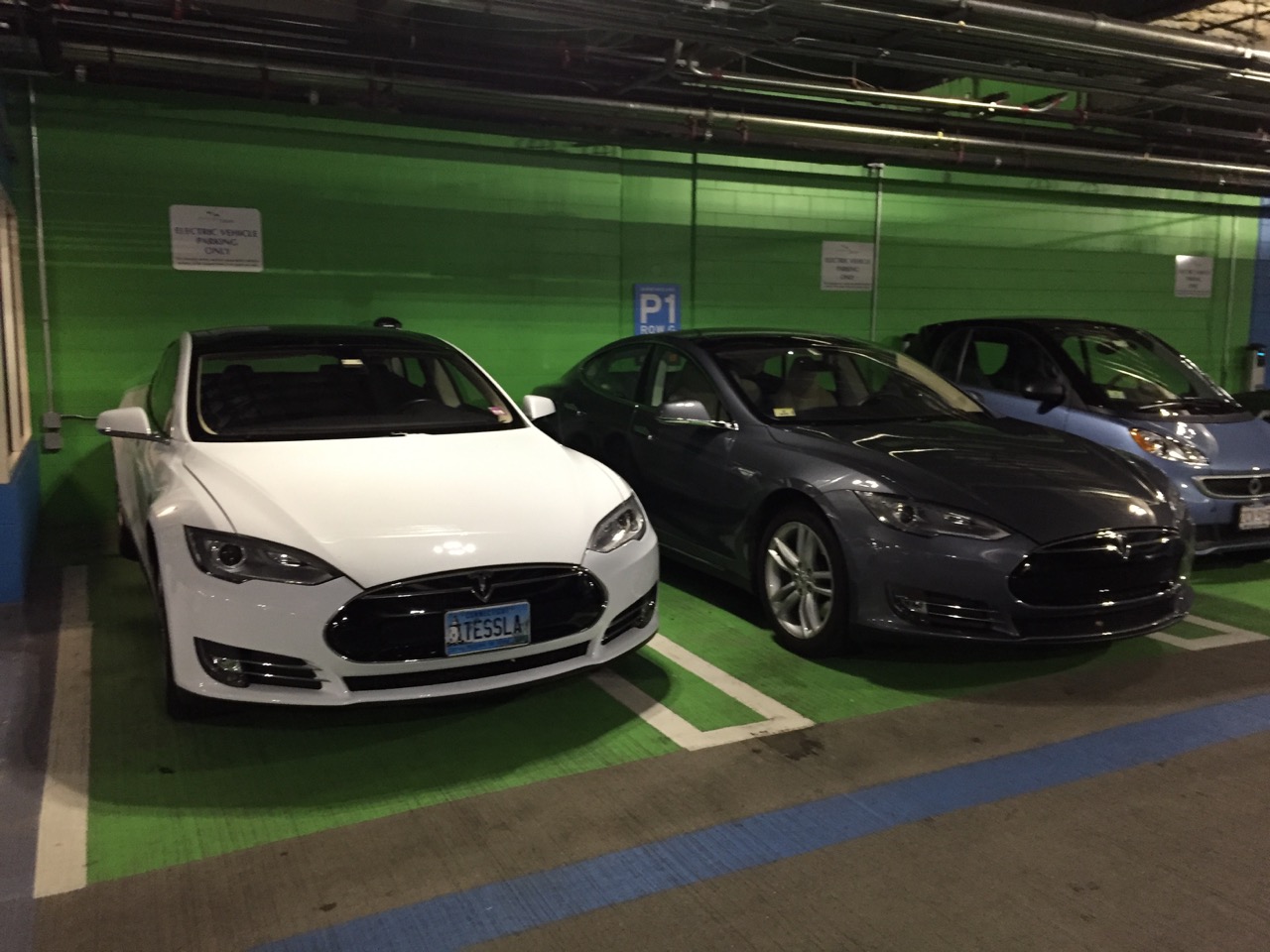 My second experience with the Model S in the city came by way of a conference held at the Boston Seaport Hotel. The conference required me to stay overnight so I did my own research via Plugshare and found a charging location with five J1772 chargers. It turned out there were only three Chargepoint systems installed for the five EV parking spots. Parking was extremely tight but I was able to take my time, as there was no other cars around, and get the Model S placed perfectly into the parking spot.
I couldn’t help but wonder why there were three ChargePoint systems but five EV specific parking spaces. The ChargePoint system claimed to have two chargers on each post. There was clearly a J1772 plug on each of the systems but they were all in use.
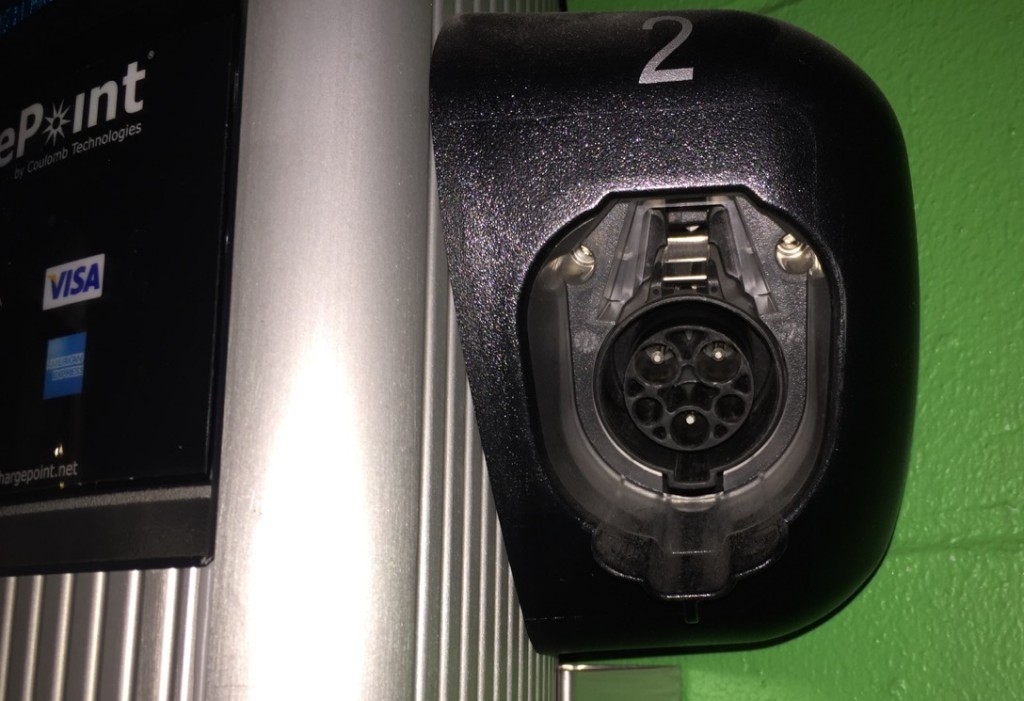
Upon further inspection I could see a label for “Charger #2” but unfortunately I had no adapter that would work for it. I later realized that this was just the receiving end for the J1772 plug and meant to be a holder for the plug. I poked around a bit more and swiped my ChargePoint card on the scanner for “Charger #1”. A secret door popped open and provided a standard NEMA 5-15 outlet (standard US wall charger).
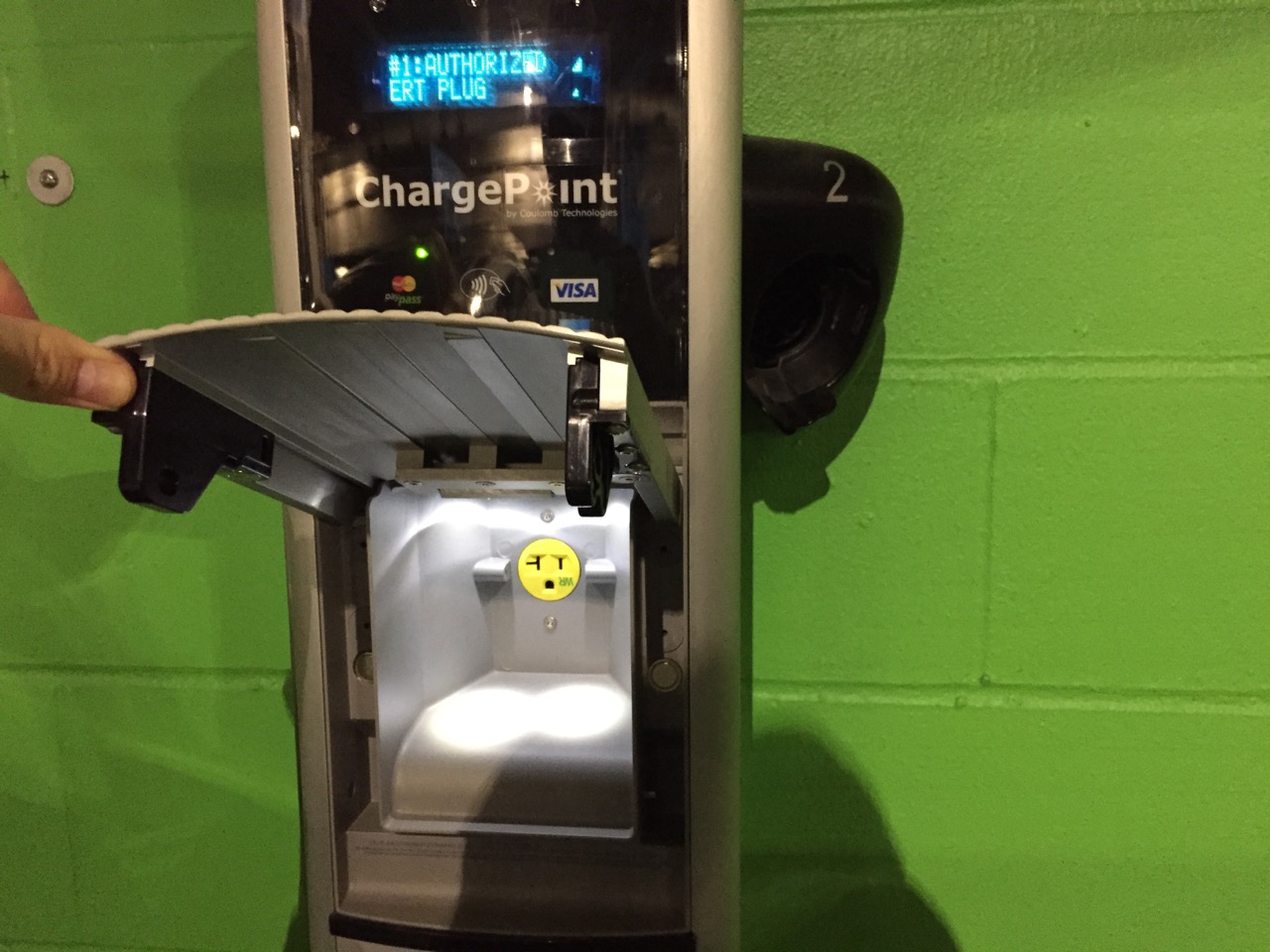
Fortunately I came prepared with an extra UMC. I didn’t have much of a choice with my charging options so I decided to plug into the very slow charging NEMA 5-15 and leave it overnight. I’m not quite sure why ChargePoint decided to name the higher power charging solution “Charger #2”, or why the NEMA 5-15 is hidden, but having a sticker or signage explaining these details could go a long way.
 -
-
Lessons Learned
Driving into the city with a Model S comes with a few lessons learned as follows:
- ChargePoint seems to be the prevailing charging network provider (at least for much of Boston).
- Charging can be free depending on local laws governing re-sale of electricity.
- EV parking spaces are generally placed at very premium locations and reside on the floor your entering the parking garage from.
- City parking spots are tight to begin with so the additional size and width of the Model S makes it even more difficult to maneuver. Be careful when parking!
- City parking structures are usually underground so cell phone service is generally inaccessible. Don’t rely on keyless entry when parking in the city.
Do you have your own strategy when taking the Model S into the city? I’d love to hear it in the comments below.



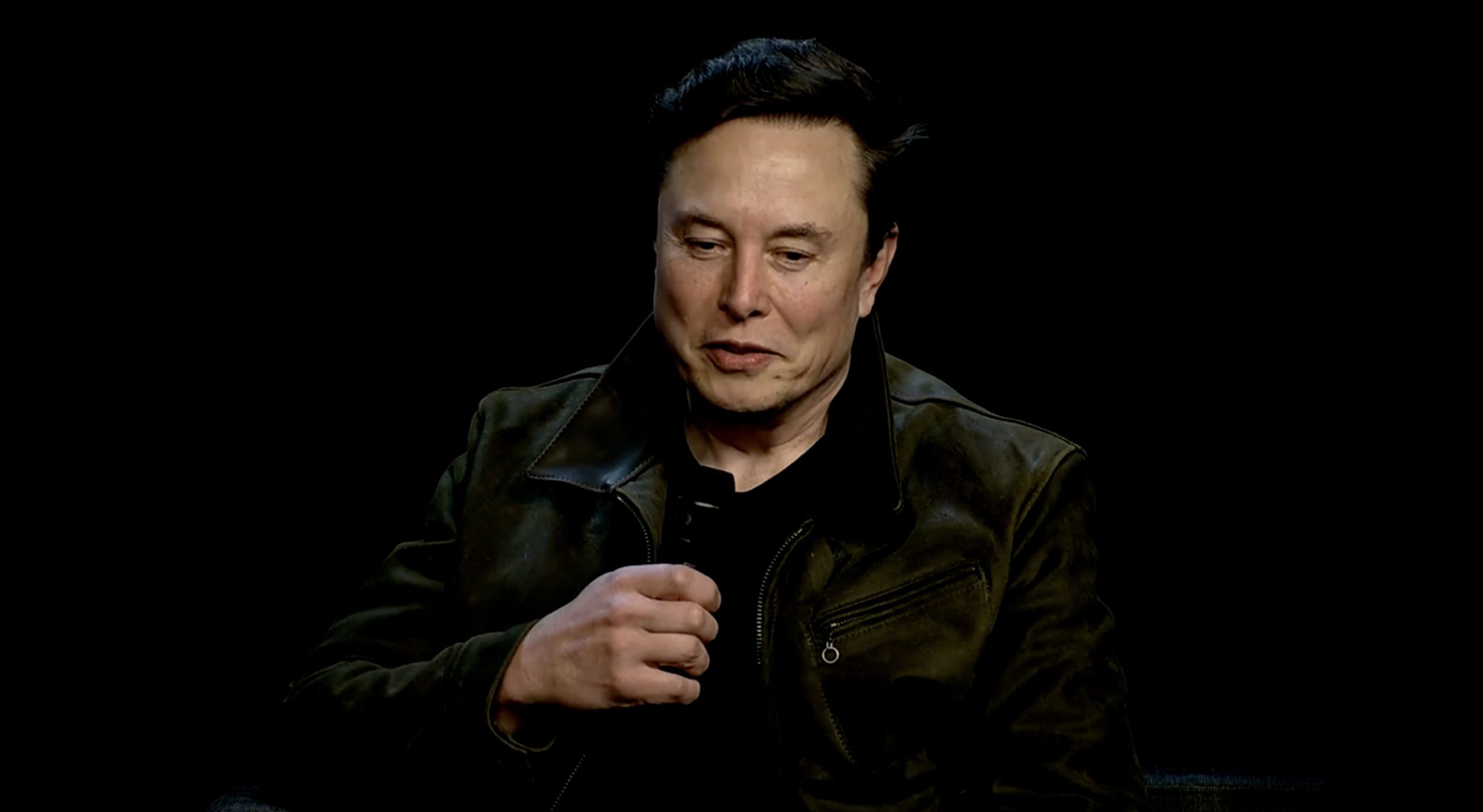
Elon Musk escalated his monthslong feud with Christopher Nolan’s The Odyssey this week, pledging that his own AI video tool will produce a competing version before the year is out. Responding to a fan-made, AI-generated clip of the ancient epic, Musk wrote on X, “Before this year ends, Grok Imagine will make a full-length movie of The Odyssey that is historically accurate and true to the art of Homer.”
In June, Musk quoted an xAI-shared trailer built entirely with Grok Imagine Video 1.5, a two-minute-plus reimagining of The Odyssey styled after a 1970s classical Hollywood epic, and predicted “full movies by the end of the year,” as Teslarati reported at the time. That trailer, built from 36 consistent shots by a single creator, was Musk’s proof of concept. This week’s pledge turns that prediction into a specific commitment, tied directly to Homer’s text rather than a generic demo.
Before this year ends, Grok Imagine will make a full-length movie of The Odyssey that is historically accurate and true to the art of Homer https://t.co/bVHzUmY9WN
— Elon Musk (@elonmusk) July 22, 2026
When a fan separately proposed that Musk fund a live-action alternative, to “give Mel Gibson $100 million to film an Odyssey adaptation with painstakingly historically accurate ships, armour, weapons, and casting, with all dialogue taken straight from the original poem and delivered in Homeric Greek,” Musk replied with two words: “I’m down.”
The Grok Imagine pledge lands as the tool’s underlying infrastructure has changed hands. Grok is no longer a standalone product, it folded into SpaceXAI after SpaceX’s acquisition of xAI closed in February, meaning the compute behind any Odyssey production traces back to the same Colossus supercomputers now bundled into SpaceX’s pitch to investors. Musk has separately said SpaceX’s own engineering data is being fed into the next major Grok training run, a two trillion parameter model he’s called the “2T run.”
Whether Grok Imagine can sustain a feature length narrative, rather than a series of impressive individual shots, remains the open question.
-
Cybertruck
Tesla Mobile App gets a new feature that wrap fans are going to love
Tesla’s Summer Update removes the USB drive step from customizing your car’s digital wrap design.

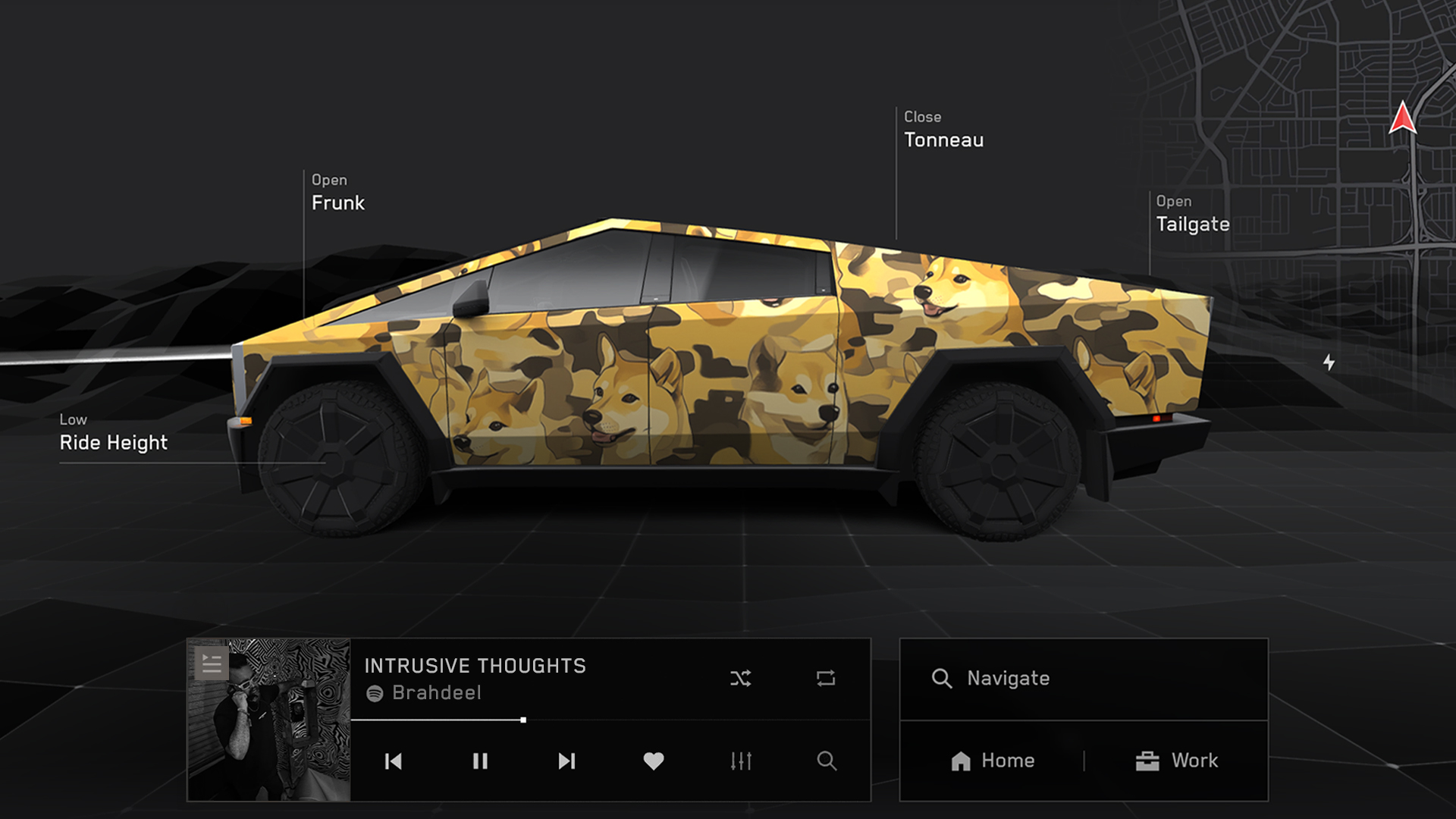
Tesla’s latest 2026 Summer Update quietly closes out one of the more tedious steps in personalizing a Tesla’s digital appearance. Uploading a custom wrap design used to require a USB drive. Now it doesn’t.
The feature is listed in Tesla’s release notes as “Send Custom Wraps from Mobile App.” The company described it plainly: “Skip the USB drive and upload a custom wrap of your car from the mobile app. Instructions for creating a custom wrap here: github.com/teslamotors/custom-wraps.”
The digital wrap tool has been around since Tesla’s 2024 Holiday Update, when it launched for Cybertruck owners first, as Teslarati reported at the time. Getting a design onto the car meant formatting a USB drive, creating a folder named exactly “Wraps,” dropping in PNG files sized between 512×512 and 1024×1024 pixels and under 1 MB each, then plugging the drive in and applying the wrap through Toybox. Tesla expanded the tool to other models and renamed it from “Colorizer” to “Paint Shop” with the 2025 Holiday Update, while also adding license plate and window tint customization alongside the wraps.
Custom wraps via mobile app https://t.co/5OydZ26g9p pic.twitter.com/uexU0ZePxu
— Tesla (@Tesla) July 22, 2026
The latest Summer Update removes the USB step from that process. Owners will be able to pull a design from wherever they saved it, whether that’s a download from social media or something built from Tesla’s own GitHub templates, and push it to the car directly through the app.
Tesla reveals 2026 Summer Update with crazy fixes to Nav and more
-
It’s a small fix relative to the rest of this latest release, which also included expanded Grok voice commands, automatic navigation that learns regular routes, and self-driving stats inside the mobile app, all detailed in our rundown of the full Summer Update. The USB requirement was one of the more common complaints about Paint Shop since it launched. Tesla did not say when the wrap upload change would reach individual vehicles, only that the broader update is rolling out now in waves.
Elon Musk
Tesla Diner is throwing a birthday party with a Franz-signed special treat
Tesla Diner turns one on July 21 with Optimus, roller skates, and a Franz-signed hat.
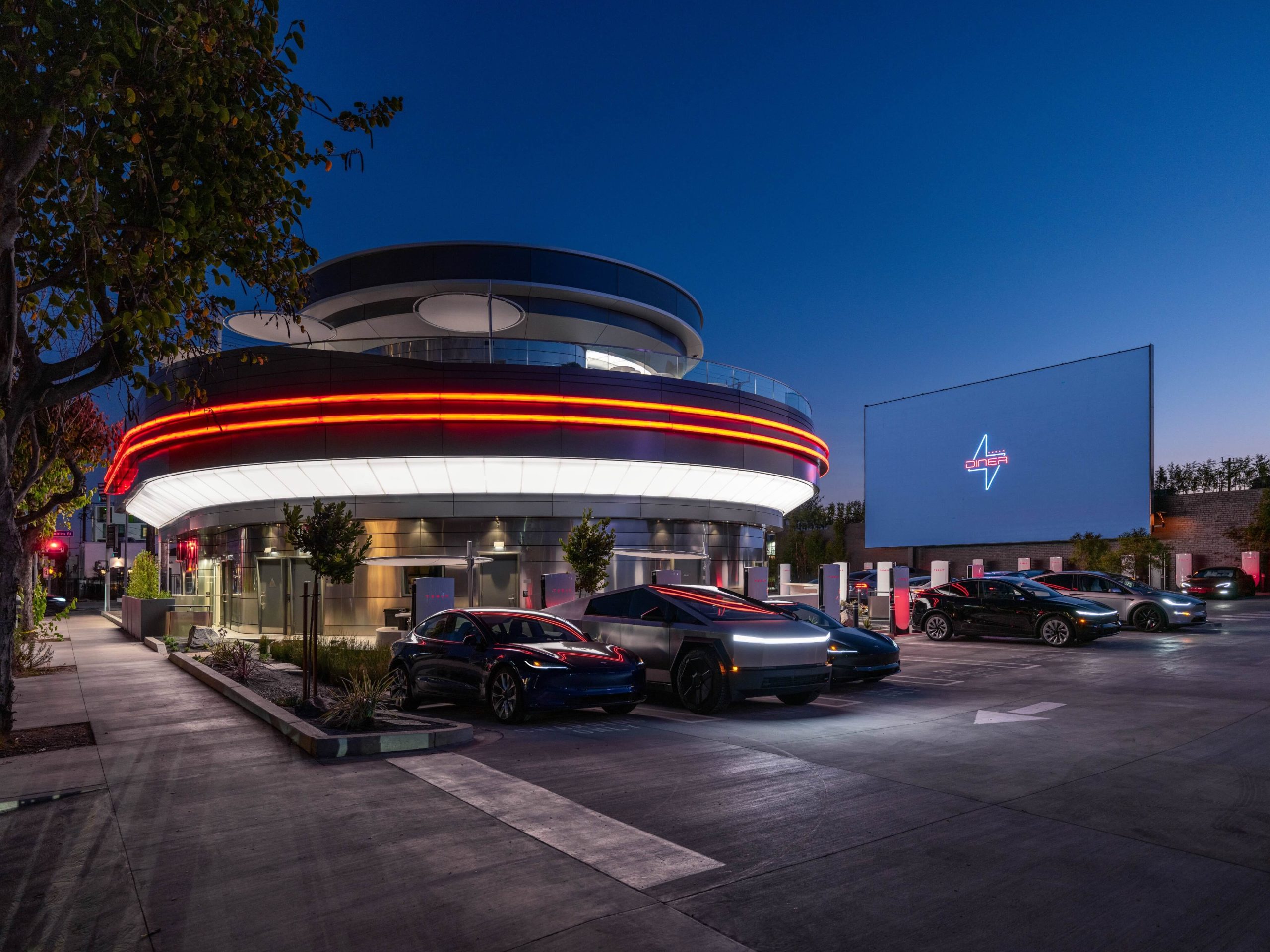
Tesla is throwing its Hollywood Diner a first birthday party on July 21 and the celebration comes with a guest list of unique items, including a limited run of Tesla Diner birthday hats personally signed by Tesla Chief Designer Franz von Holzhausen for the first 50 customers who place an in-car order at midnight.
One year after lines wrapped around the block on Santa Monica Boulevard for a diner that most of the restaurant industry did not take seriously, Tesla is making the case that the concept was worth the years it took to build. The concept had been in Musk’s head since at least 2018, when he floated the idea of “an old school drive-in, roller skates and rock restaurant” on X, describing it years later as “‘Grease’ meets ‘The Jetsons’ with Supercharging.”
Tesla Optimus Gen 3 is coming to the Tesla Diner with new ambitions
What made the diner genuinely different from any restaurant that came before it was not the menu or the nostalgia. It was the ordering model. Tesla owners could place food orders directly from their vehicle’s touchscreen before arriving, a small feature that hints at something much larger on the horizon. As the Cybercab and unsupervised FSD expand across major cities, the diner model becomes a template for an entirely new kind of commerce. A robotaxi pulling in to charge does not need a human to walk up to a counter. The vehicle places the order, the food is ready on arrival, and the passenger never interrupts the experience of being driven somewhere else. It is the first glimpse of what drive-through commerce looks like when the car is doing the driving.
As Teslarati has reported, Musk signaled immediately after opening that the Hollywood location was only the beginning, posting that Tesla would expand the concept to major cities worldwide and along Supercharger corridors on long-distance routes if the first location proved successful. One year in, the birthday celebration on July 21 makes a strong case that it has. Tesla announced a full day of events including a Cybercab on display, a birthday menu, Optimus in attendance, face painting, a photo booth, roller skating servers, a light show, a Skypad DJ, and complimentary collectibles.
If Musk’s ambition holds, the Hollywood diner is year one of something much bigger. The birthday party is the proof of concept. The robotaxi fleet is the business model waiting behind it.
-
Tesla Diner is turning 1 on July 21st, so we’re throwing a party
Come swing by for a day full of fun:
– Cybercab on display
– Birthday menu
– @Tesla_Optimus
– Face painting for kids & adults
– Photo booth
– Servers on roller skates delivering your order
– Light show
– Skypad DJ… pic.twitter.com/TD8pOjihYs— Tesla North America (@tesla_na) July 18, 2026

Tesla Summer Update begins rolling out: a look at the new features

Tesla briefly offered this Robotaxi part for your personal car


