SpaceX
SpaceX to livestream Falcon Heavy Block 5 launch debut at 6:15pm ET today

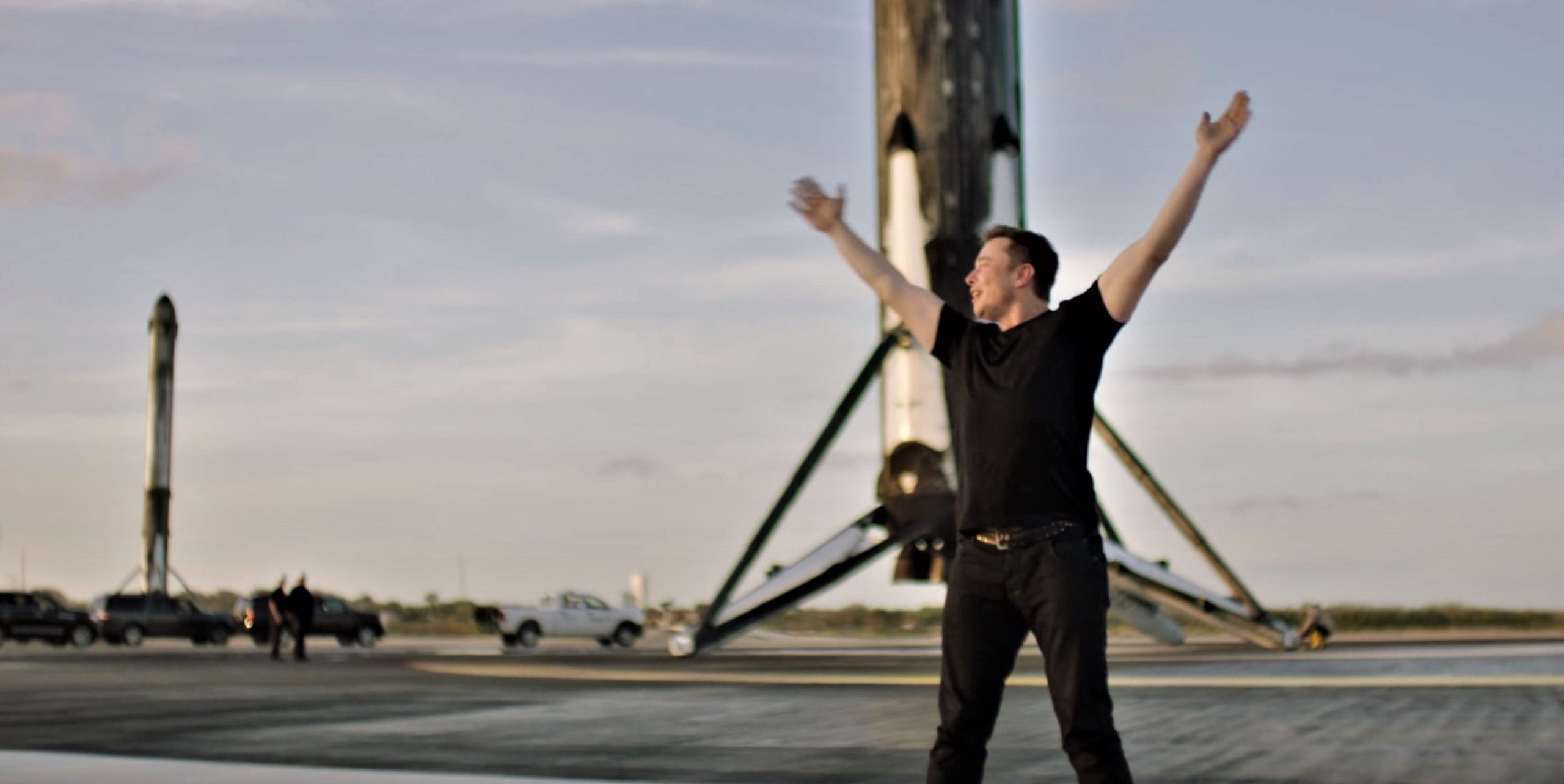
SpaceX is half a day away from the planned launch debut of Falcon Heavy Block 5, a milestone that will also be the rocket’s second launch ever and first mission with a commercial payload.
First and foremost, Falcon Heavy’s job is to safely place the Saudi Arabian communications satellite Arabsat 6A into a high-energy geostationary transfer orbit (GTO) more than 35,000 km (~22,000 mi) above Earth’s surface. Despite the satellite w
This time around, Falcon Heavy will be made entirely out of Block 5 hardware, including three new boosters (likely B1052, B1053, and B1055), a Block 5 upper stage with a Merlin Vacuum engine, and a recovery-optimized “Version 2” payload fairing. Altogether, Falcon Heavy likely weighs upwards of 80,000 kg (175,000 lb) empty and more than 1,420 metric tons (3,125,000 lb) when fully fueled. At liftoff, the Falcon Heavy Block 5 rocket’s 27 Merlin 1D engines are expected to produce no less than 5.1 million pounds (~2300 mT/23,000 kN) of thrust at full throttle, but that figure could rise as high as 5.6 million pounds (2550 mT/25,500 kN) of thrust depending on how one interprets rather vague official numbers from CEO Elon Musk.
Regardless, both Falcon Heavy side boosters will attempt to repeat the iconic side-by-side landings that are now a signature of the rocket’s 2018 launch debut, while the center core – traveling much faster at the point of stage separation – will travel nearly 1000 km (620 mi) downrange for a landing aboard drone ship 
Falcon Heavy Flight 2 is made even more exciting by the fact that both of its Block 5 side boosters will be instrumental to a planned third launch of the SpaceX rocket as few as two months later. According to the US Air Force, an agreement was reached with SpaceX to use the opportunity – an intentionally low-risk mission known as Space Test Program 2 (STP-2) – to gain a much higher-fidelity understanding of how SpaceX launches, lands, refurbishes, and relaunches Falcon boosters. Aside from being the last major source of data for the ultimate certification of Falcon Heavy for high-value military launches, the USAF hopes that STP-2 will be a critical step towards opening the doors of launch contract competitions to flight-proven rockets like Falcon 9 and – eventually – Blue Origin’s New Glenn.
SpaceX’s launch webcast will go live approximately 20 minutes before liftoff, with the window stretching from 6:35 pm to 8:31 pm EDT (22:35-00:31 UTC). Weather is expected to be decent and is currently holding around 80% “go” for launch.
Check out Teslarati’s Marketplace! We offer Tesla accessories, including for the Tesla Cybertruck and Tesla Model 3.


Investor's Corner
Elon Musk drops a Thanksgiving hint about Starship’s biggest test yet
Elon Musk says Starship Flight 15 will try to catch the ship itself, a first.

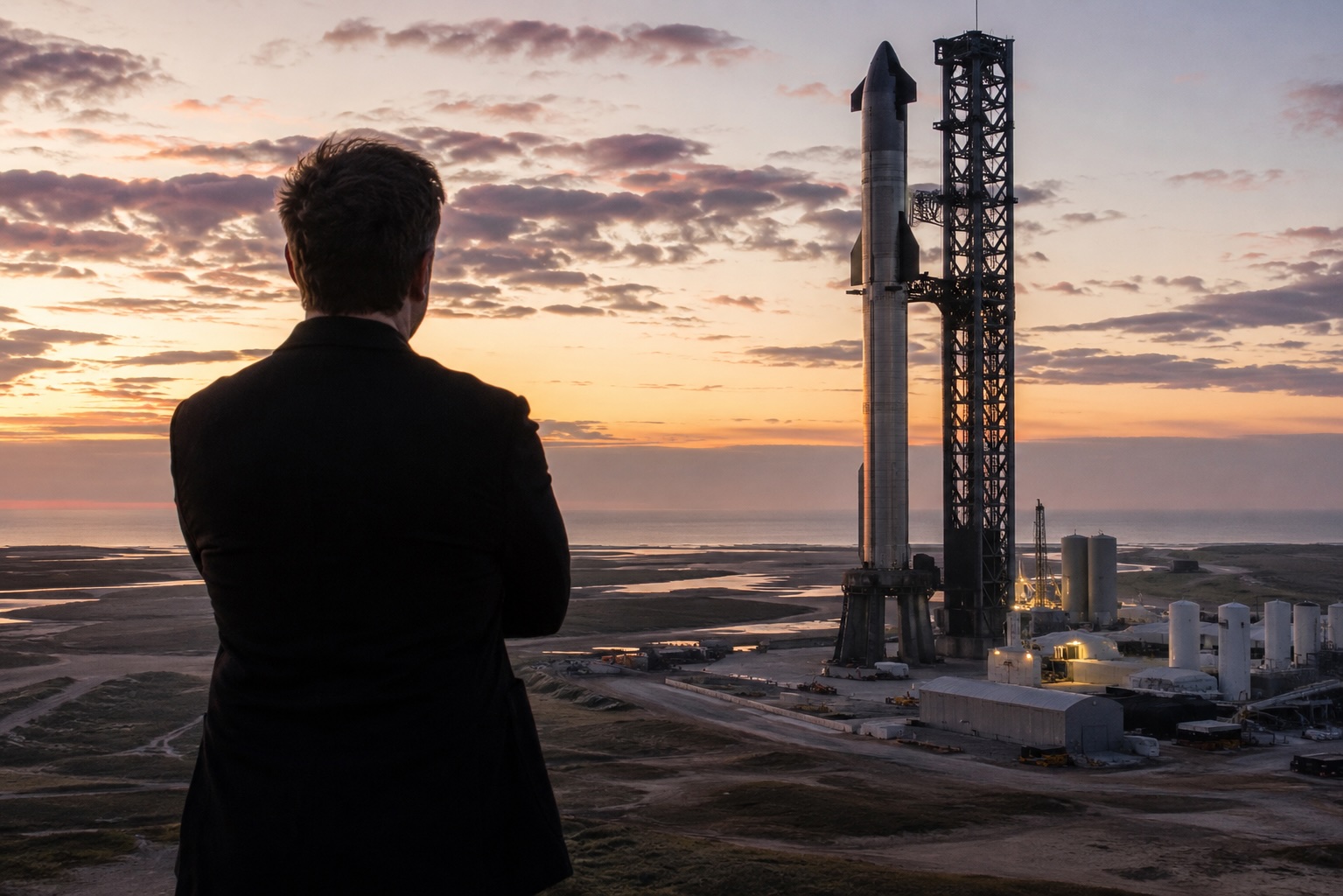
Elon Musk says SpaceX’s next Starship flight will try something nobody has done before, by catching the ship itself. Speaking to roughly 2,000 people at the X Takeover event at Giga Texas on Saturday, Musk said Flight 15 is about four to six weeks away and “probably launches a little bit before Thanksgiving, is my guess.”
That is a slip from earlier reporting, which had pointed to a launch as early as October 19. Musk explained why the date keeps moving. “We’re making a bunch of improvements to the rocket between every flight,” he said, adding that there are often hundreds, sometimes thousands, of small changes. This time the list is short, “but some of them take a fair bit of work and we’ve got to go inside the tank to make some of these changes.”
“We’re going to try to catch the ship, which is a super big deal,” Musk said. “If we do so, that’ll be the first time that there’s been full recovery of an orbital class rocket.” SpaceX has already caught the Super Heavy booster with the tower’s mechanical arms, and has talked about catching the ship since late 2025, but the upper stage has never been caught.
Musk also laid out what comes after. “The next big milestone would be to refly both the booster and the ship,” he said, describing a Flight 16 where “all parts of an orbital rocket are reflown.”
The reason SpaceX wants this comes down to cost and cadence. Every Starship ship so far has ended its flight in the ocean, and SpaceX expects most of those water landings to end in fireballs. A ship that returns to Starbase intact can be inspected and flown again. SpaceX’s IPO filing, says Starship V3 is designed to deliver 100 metric tons to orbit in a fully reusable configuration, that SpaceX aims to cut the cost to reach orbit by 99% or more versus the historical average, and that tower catches should allow “multiple launches per day.”
The payoff goes beyond cheaper launches. The next generation Starlink V3 satellites are too large for Falcon 9 and can only fly on Starship, which can carry up to 60 per flight. Flight 14 on September 28 deployed the first 26 of them after Starship reached orbit despite an early engine shutdown, as Teslarati reported. Musk blamed engine computer software, and said the heat shield “was extremely robust,” which he claimed in August had solved Starship’s biggest challenge.
NASA’s Moon plans depend on the same capability. NASA’s inspector general has described a lander mission that needs a propellant depot in low Earth orbit and more than 10 tanker flights, with SpaceX targeting one tanker launch every six days. That schedule only works if ships and boosters come back fast and fly again. Also, ship to ship propellant transfer has not been attempted yet.
One interesting hurdle yet to be explored is bringing the ship back to the launch site, with reentry over land, which will undoubtedly come with a lot of aviation safety reviews.
Elon Musk
Elon Musk’s surprise addition to the X Takeover lineup has fans talking
Elon Musk will join Saturday’s X Takeover at Giga Texas for a live virtual interview.
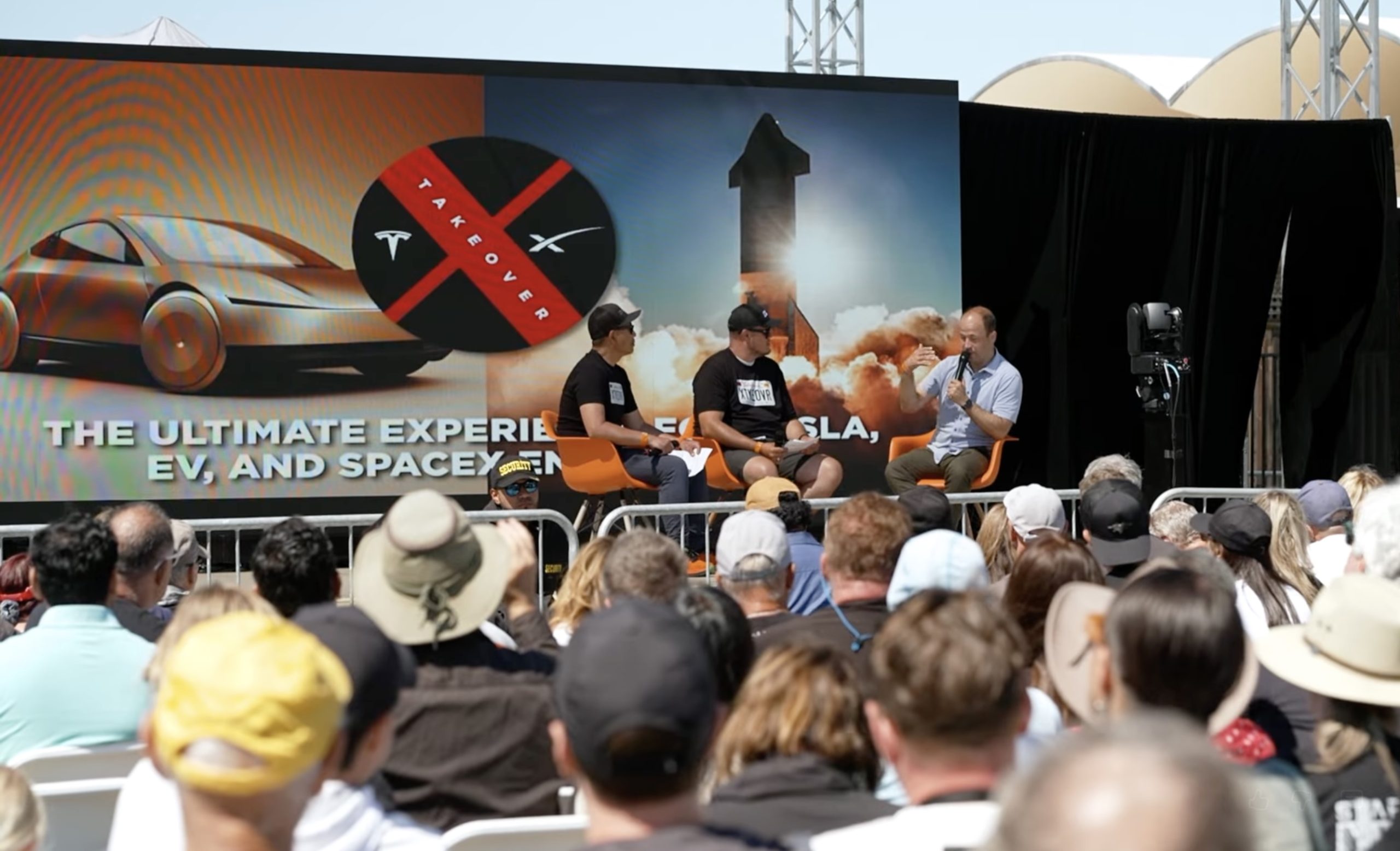
Elon Musk will join X Takeover at Giga Texas on Saturday for a live virtual interview, according to Sawyer Merritt, who shared the news late Thursday. Musk will not be on stage in Austin. The conversation is set to stream for free on the @teslaownersSV account on X.
Organizers had kept expectations in check. In a September update, Tesla Owners Silicon Valley said Musk had appeared at the event twice before but was not promising a third appearance, even as fans hoped he would walk the Giga Texas grounds in person. A virtual spot matches 2024, when Musk gave a surprise interview of about an hour to the crowd in San Luis Obispo, as Teslarati reported at the time.
Wasn’t expecting this 🫡
— Tesla Owners Silicon Valley (@teslaownersSV) October 9, 2026
This year’s edition is a first in several ways. It is the first X Takeover held outside California and the first at a Tesla facility, with tickets selling out in eight days. Tesla provides the venue, but the event is produced independently by Tesla Owners Silicon Valley. The main event runs from 10 a.m. to 6 p.m. CT, followed by a drone and light show at 9 p.m. Maye Musk is the keynote speaker, Franz von Holzhausen is set for a virtual keynote, and Nicki Minaj is the special guest. Joe Tegtmeyer, whose drone footage Teslarati used to track the Optimus factory steel frame at Giga Texas, is also on the speaker list.
Musk’s interview topics have not been revealed, but the backdrop is busy. Tesla doubled its Cybercab fleet in Austin in late September, and last week Musk explained why Robotaxi hours only moved from 10 p.m. to 11 p.m.. Merritt also reported Thursday that Texas DMV records now show 319 registered Cybercabs, up from 169. NHTSA’s deadline for Tesla’s sworn answers on Cybercab certification is October 30, and Tesla reports third quarter earnings on October 21.
Fans who cannot make it to Austin can watch the livestream on X. Musk tends to say more in unscripted settings than he does in prepared remarks, which is the reason this one is worth having open on Saturday.
News
SpaceX brings four astronauts home after 8 months in space, and the return was flawless
SpaceX Crew Dragon Freedom returned four Crew-12 astronauts home after 237 days aboard the station.
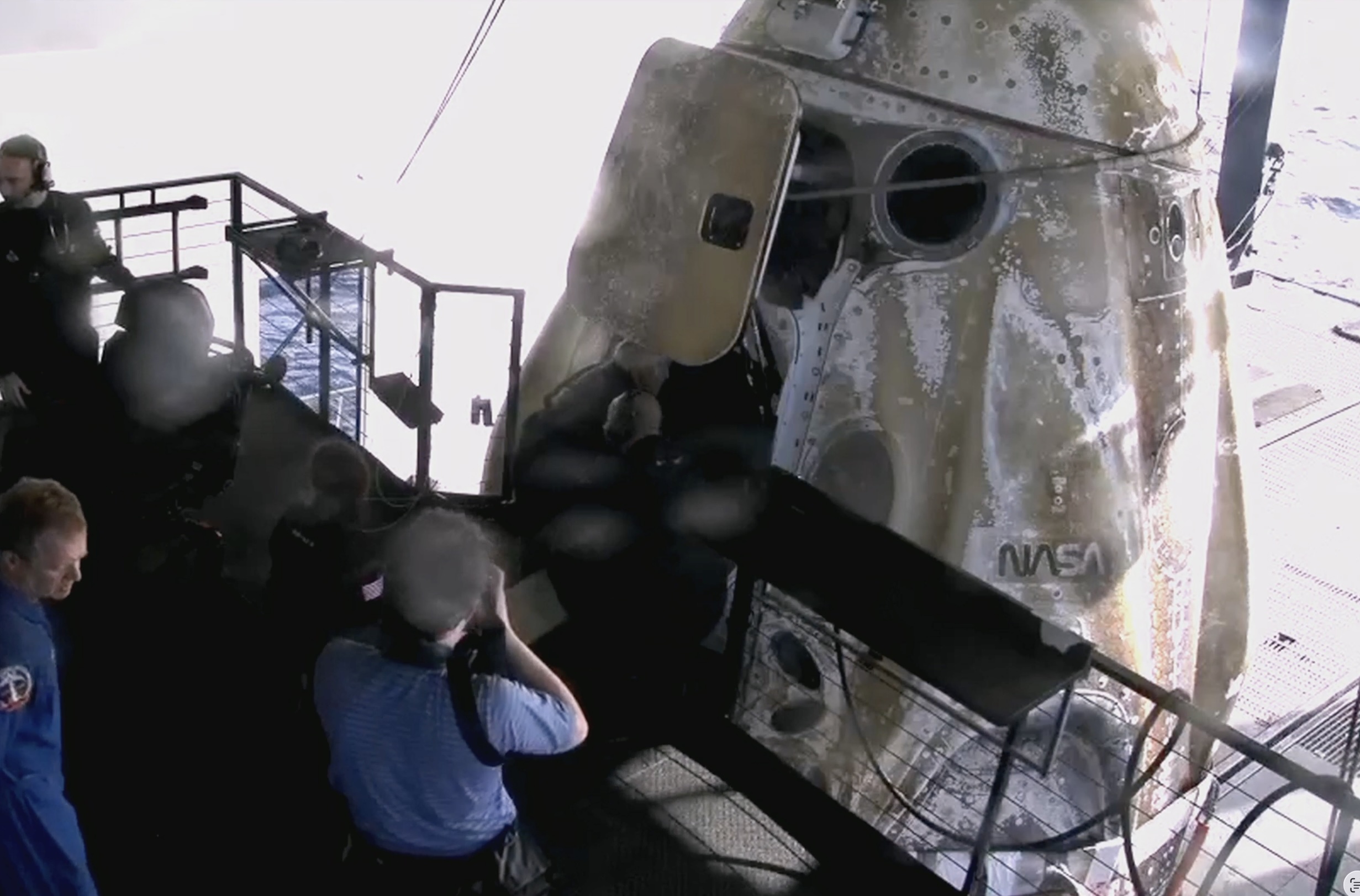
Four Crew-12 members are back on Earth after 237 days at the International Space Station. SpaceX’s Crew Dragon Freedom splashed down in the Pacific Ocean about 50 miles west of Los Angeles at 11:34 a.m. ET on Thursday.
NASA astronauts Jessica Meir and Jack Hathaway, ESA astronaut Sophie Adenot, and Roscosmos cosmonaut Andrey Fedyaev landed one day after undocking from the station’s Harmony module at 8:05 a.m. ET on Wednesday. NASA confirmed the splashdown minutes later. SpaceX had flagged the 27.5 hour trip home on X while Dragon was still firing its departure burns away from the station.
The descent ran on schedule when Freedom started a nine minute deorbit burn at 10:46 a.m. ET, then hit the thicker atmosphere about 36 minutes later at nearly five miles per second. Chutes deployed at around 18,000 feet, and four main parachutes brought the capsule down to roughly 15 mph at splashdown.
SpaceX fast boats secured Dragon before the recovery ship Shannon hoisted it onto the deck with the crew still inside. Flight surgeons on board ran initial medical checks. All four crew members will be flown ashore by helicopter and then head to NASA’s Johnson Space Center in Houston for rehabilitation.
Splashdown of Dragon confirmed! https://t.co/P2o7A3Gytf
— SpaceX (@SpaceX) October 8, 2026
Crew-12 launched on February 13 from Space Launch Complex 40 at Cape Canaveral, a flight that also marked the first Falcon 9 booster landing at SpaceX’s new LZ-40 pad. Over the mission, the crew completed 3,792 orbits, covered nearly 101 million miles, and carried out four spacewalks to maintain and upgrade the station.
Meir now has 440 cumulative days in space, which places her in NASA’s top 10. This was the first spaceflight for Hathaway and for Adenot, a French Air Force colonel and former helicopter pilot. Fedyaev, who spent 186 days in orbit on Crew-6 in 2023, has now flown two long duration Dragon missions.
The return closes out a busy stretch of Dragon traffic. Crew-13 arrived on October 1 aboard Crew Dragon Grace, which docked just 7 hours and 55 minutes after liftoff, the fastest launch to docking of any U.S. spacecraft in ISS history. Commander Jessica Watkins, pilot Luke Delaney, Canadian Space Agency astronaut Joshua Kutryk, and cosmonaut Sergey Teteryatnikov remain aboard alongside the three person Soyuz MS-29 crew.
With Crew-12 gone, the port is clear for CRS-35, a cargo Dragon carrying the final pair of ISS Roll-Out Solar Arrays. NASA is holding a post-splashdown teleconference at 1:15 p.m. ET covering both the crew’s return and the upcoming cargo launch.

Tesla Cybercab and Robotaxi’s real advantage won’t be the ride service

Why Elon Musk’s target date for buying an Optimus robot is harder than it sounds

Elon Musk drops a Thanksgiving hint about Starship’s biggest test yet

The Pentagon taps Elon Musk to design the battlefield of the future

Tesla Roadster’s new patent preps white-knuckle speeds, keeping it grounded


