News
Tesla rolls out FSD Beta 11.3.1 for wide release

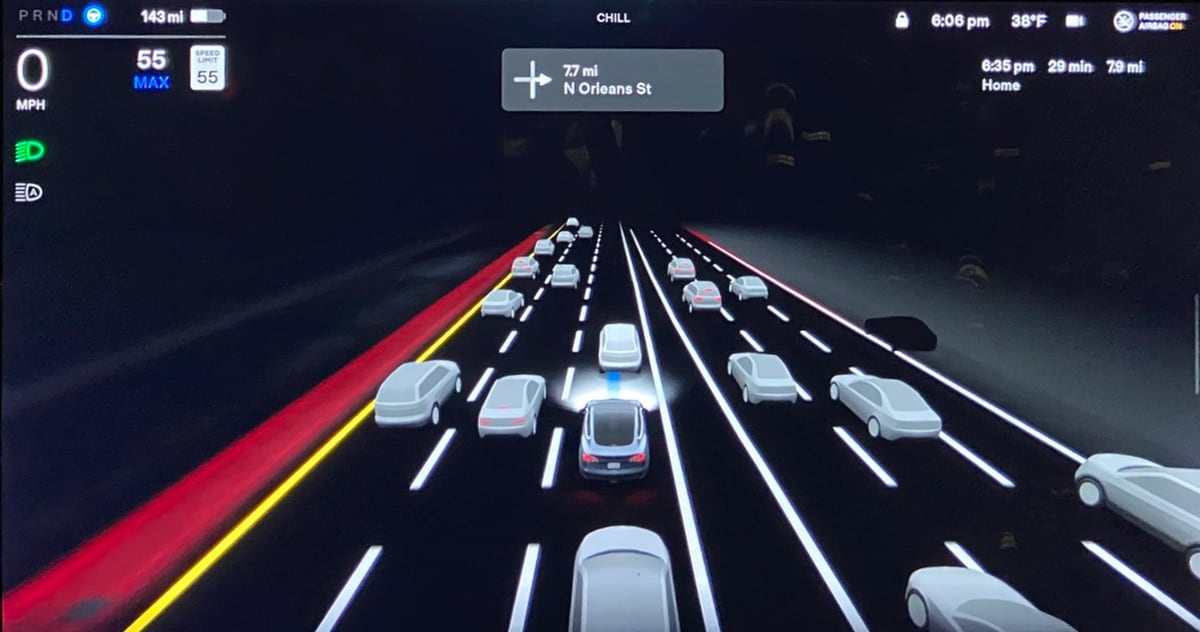
Tesla started rolling out Full Self-Driving (FSD) Beta version 11.3.1 to non-Tesla employees.
One of the first owners to report the latest FSD update was Zack or @BLKMDL3 on Twitter. Zack has a 2019 Model 3 Performance. Thus far, only a few other Tesla owners have reported receiving the update.
Tesla FSD version 11.3 went into limited beta in early February 2023. The rollout reached a few beta testers. At the time, Musk also stated that Tesla might release version 11.3.2 to testers before a V.11 wide release in North America.
Some opinions of FSD Beta V.11.3 have been shared online already. One tester remarked that the version’s real-world roads were impressive, but Autopark needs more work. Last month, Tesla applied for a set of patents that would significantly improve the virtualization and recognition of FSD.
Are you an FSD Beta tester? I’d like to hear you review of V.11.3.1. Contact me at maria@teslarati.com or via Twitter @Writer_01001101.


Elon Musk
SpaceX Starship is going for a catch that could change spaceflight forever
SpaceX will try to catch both Starship stages today, a first for any orbital rocket.

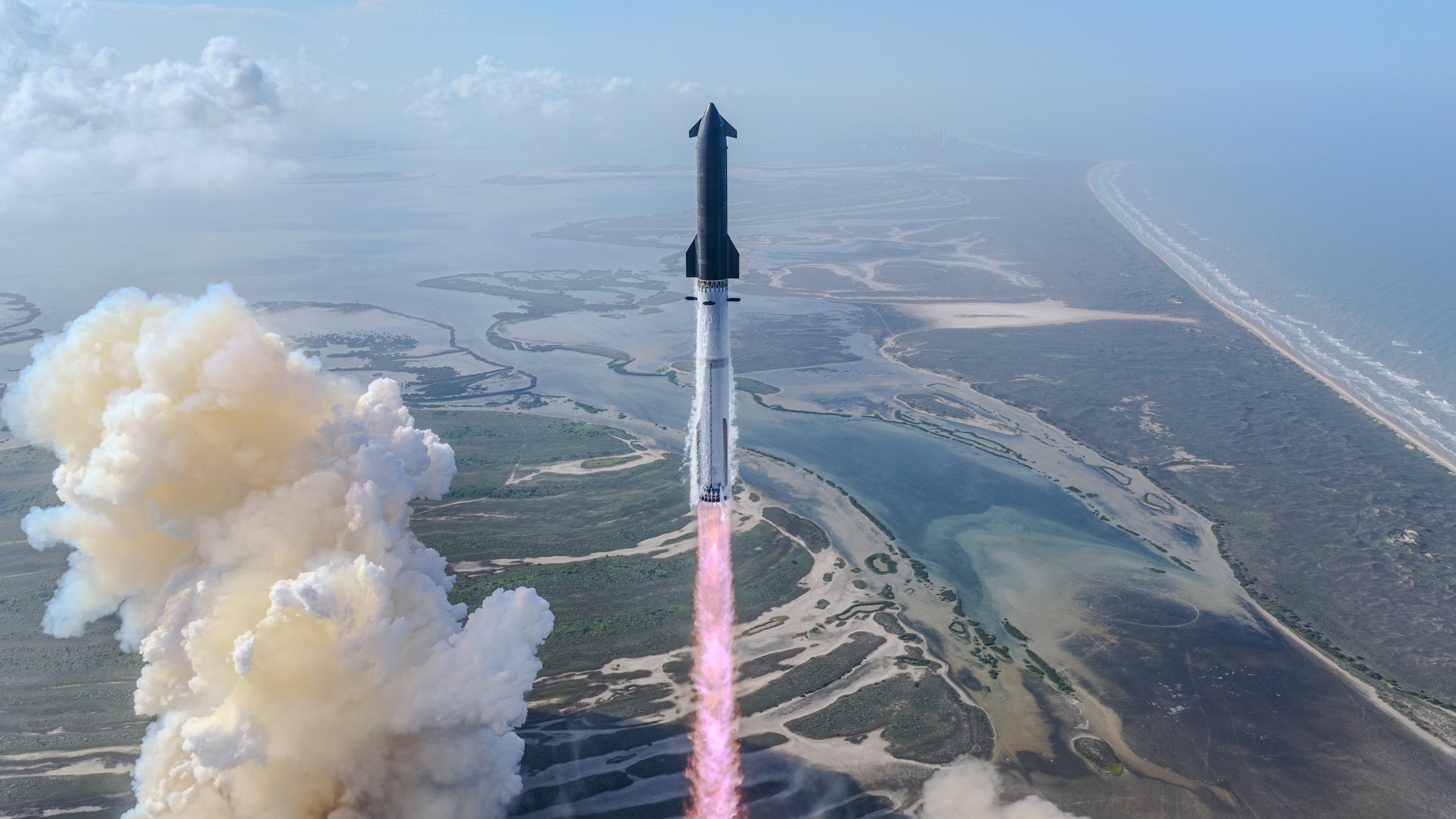
SpaceX is set to launch Starship Flight 15 from Starbase on Friday afternoon, and if both stages make it back to the tower, the mission will go down as the first time an orbital rocket has ever been fully recovered. The 75 minute launch window opens at 4:45 p.m. CT from Pad 2, a day after SpaceX rolled Ship 42 out to the pad and shared photos of the move on X.
The first catch comes quickly. About six and a half minutes after liftoff, Booster 22 is scheduled to fly back to Starbase and settle into the launch tower’s chopstick arms, the first catch attempt for SpaceX’s V3 Super Heavy. SpaceX has caught the booster three times before most recently in March 2025.
Ship 42 moves to the Starbase pad ahead of launch https://t.co/pMUFTHneJQ — SpaceX (@SpaceX) November 13, 2026
The second catch is the one that has never been done. Ship 42 will climb to an orbit about 275 kilometers up, deploy 26 Starlink V3 satellites and complete about 14 orbits. Three of those satellites carry cameras to inspect the ship’s heat shield before it commits to coming home. If its reentry, landing burn and tower approach systems pass their checks, the ship will fire its engines to leave orbit, fall through the atmosphere in its belly flop position, flip vertical and drop into the tower about 22 and a half hours after launch, on Saturday afternoon. SpaceX gave a preview of that maneuver in an animation during its third quarter earnings webcast.
Elon Musk described a successful double catch on that call as “the first time that an orbital launch vehicle has been fully recovered” and a “profound technology milestone,” putting the odds of catching the ship at “more likely than not.” SpaceX has called it a potential “breakthrough moment in making Starship a reliable, rapidly reusable rocket,”
Reuse is where the economics change. Falcon 9 lands its boosters routinely, but its upper stage is thrown away on every flight. Starship is designed so both stages can be refueled and flown again, which is key to cutting launch costs. That matters for Starlink, where each V3 satellite is expected to carry roughly 10 times the download capacity of the V2 Mini satellites flying today, and for Starmind, SpaceX’s planned constellation of AI compute satellites.
It matters for NASA too. Starship is the lunar lander for the Artemis program, and reaching the Moon requires refilling a ship in orbit using several tanker flights. That plan only works if Starships can fly again and again. Musk has said he expects Starship to reach a weekly launch cadence in the first half of 2027.
Investors are paying attention. Morgan Stanley’s Adam Jonas wrote this week that a catch of both stages would likely be “a material positive” for SpaceX stock.
The last Starship flight in September reached orbit for the first time but ended after about three hours with a splashdown in the Pacific, short of its planned 10 hours, after some engines shut down. Since then, Booster 22 has completed a full 33 engine static fire and Ship 42 a six engine firing, as Teslarati previously reported. As of Friday morning, SpaceX was still waiting on the FAA to approve a license change covering the ship’s return over land.
Elon Musk
Tesla and SpaceX merger talks hit a new stage, and one hurdle remains
Tesla and SpaceX merger talks are reportedly advancing, and a deal could arrive by December.
Tesla and SpaceX are moving closer to a combination, with a deal announcement possible as soon as December, Bloomberg reported on Thursday, citing people familiar with the matter. The companies have also discussed a scenario in which the announcement slips into early 2027.
Boards and advisers on both sides are now working through the terms of the deal and the governance structure of the combined company, according to the report. One open item is how many SpaceX shares Tesla investors would receive. Bloomberg had previously reported that the two companies were aiming to announce a deal in the first half of next year and close it before the end of President Donald Trump’s term, so a December announcement would pull that schedule forward by months.
Tesla shares rose as much as 1.9% to $398.35 after the report, while SpaceX gained 0.6% to $140.63. SpaceX carries a market value of about $1.9 trillion following its June IPO, and Tesla is valued at about $1.55 trillion, which would make a combination the largest corporate deal on record. Neither company responded to requests for comment.
The talks became official on October 20, when Elon Musk said on SpaceX’s third quarter earnings call that both companies had formed special committees of independent directors to study a merger, as Teslarati reported. Musk said he could not take part because he is “a conflicted party” and called the process “an odd kabuki dance.” He also noted that Tesla would need approval from 50 percent of all outstanding shares, a bar the company missed in 2025 when a board declassification proposal won support from only 39.4 percent.
China remains the biggest structural problem. Bloomberg’s sources said the companies still need to work out how to isolate Tesla’s large and profitable manufacturing business in China from SpaceX’s U.S. government and defense contracts. JPMorgan analyst Rajat Gupta described those two factors last month as “key dynamics that are at odds with each other” for regulatory and shareholder approval. Musk has repeatedly said Tesla has no plans to separate its China business, a position he restated in August after ARK Invest predicted a merger announcement before the end of the year.
Washington adds another layer. Democrats took control of Congress in this month’s midterms and have pledged to investigate Musk’s business and political activities, which could bring added scrutiny to a deal involving one of the Pentagon’s most important launch and satellite contractors.
The report also lands three weeks before Tesla’s December 3 annual meeting at Giga Texas. That ballot has only three items, led by the re-election of Musk, board chair Robyn Denholm and JB Straubel, and includes no merger proposal. Any deal announced in December would likely require a separate special meeting for Tesla shareholders to vote on it.
The two companies already share a growing list of projects, including the Terafab semiconductor plant in Texas. Tesla’s next generation Roadster, which uses cold gas thrusters built on SpaceX hardware, turned up on display at SpaceX headquarters last month and has become one of the clearest public examples of that overlap.
News
SpaceX hid behind another name in the Arizona desert, and now it’s going big
SpaceX puts a $50 billion price on its Arizona supercompute campus ahead of December’s hearing.
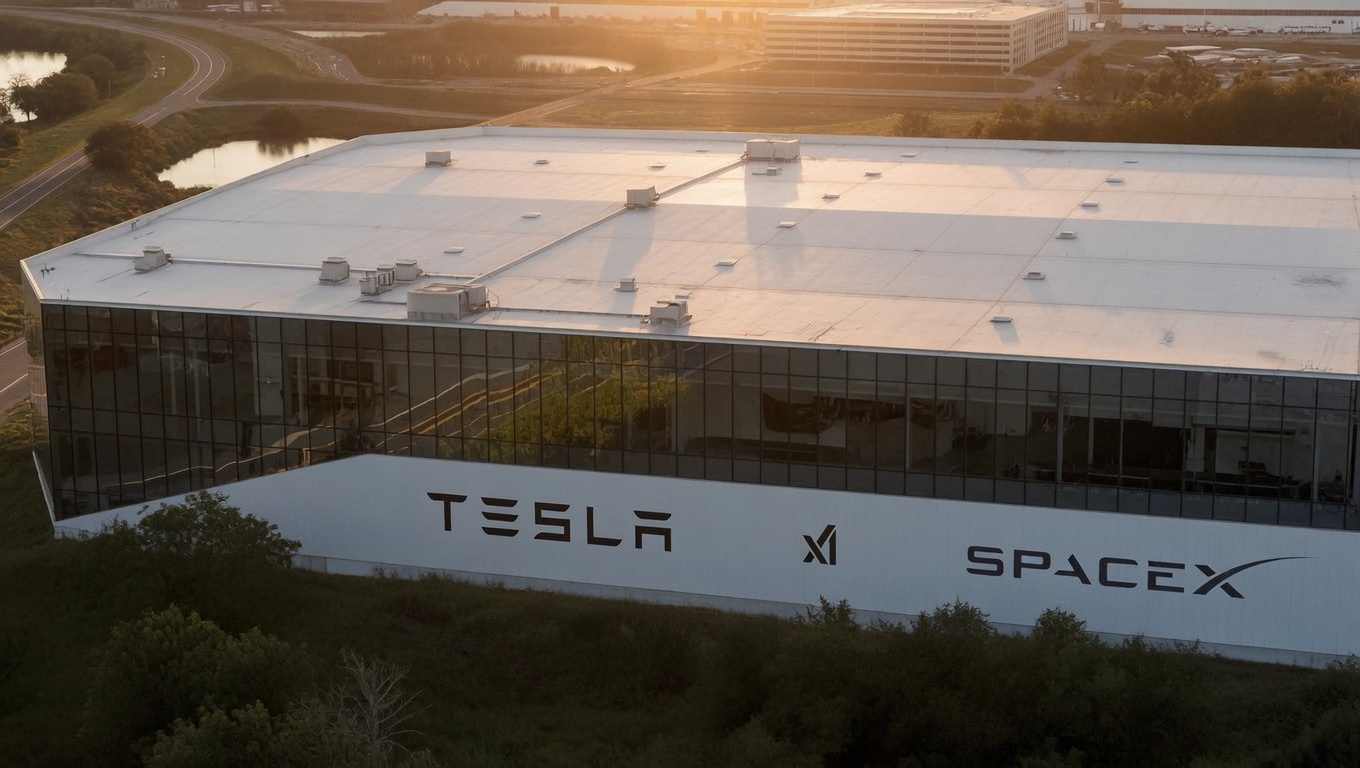
SpaceX has put a price tag on the supercomputer campus it wants to build in the southern Arizona desert. In a statement Thursday, the company said it is pursuing a roughly $50 billion supercompute campus in Cochise County, about 80 miles east of Tucson. Together with a separate facility planned at Starbase, Texas, the two projects add up to more than $74 billion in planned investment.
The Arizona figure had not been disclosed before. SpaceX’s involvement only became public on November 4, when company representatives hosted a packed town hall at Cochise Elementary School for an application filed under the name Tombstone Resources LLC. A SpaceX representative told residents the filing used another name because putting SpaceX on it “draws attention” from outside the county, local station KVOA reported.
The application describes a 747-acre site near the Willcox Playa with up to nine buildings of about 493,000 square feet each. SpaceX plans to bring the campus online in four phases of roughly 1.5 GW, reaching 6 GW at full build, backed by a 24 GWh battery system and about $3.6 billion in grid upgrades. At that size, it would draw about 2.5 times more power than every data center in Maricopa County combined, according to an Arizona Republic analysis.
SpaceX says the project will create about 5,500 construction jobs and 1,000 permanent jobs, and that it could cut electricity bills for members of the local cooperatives by up to 20 percent. The campus would use dry cooling with no industrial groundwater use. Its application estimates ongoing water needs of 7 to 10 acre-feet a year, roughly what 20 to 30 homes consume.
Power is the bigger question. The site sits next to the Apache Generating Station, a coal and natural gas plant with about 1 GW of capacity that had been slated to retire by 2028. SpaceX told residents its investment could expand the station to more than 6 GW.
Local opposition is organized. A petition asking the county to deny the permit has gathered about 2,400 signatures, and the nearby playa is a landing spot for federally protected sandhill cranes, which SpaceX says its design accounts for. The Cochise County Planning and Zoning Commission will hold a public hearing on December 9 in Bisbee, with written comments due November 27. If approved, construction could start in March 2027.
The Texas project faces a vote the same day. The Starbase City Commission will consider a property tax abatement for SpaceX’s $24 billion gas plant and supercompute facility at its own December 9 hearing, as Teslarati reported. SpaceX said Thursday the Starbase site has already generated more than 3,000 construction jobs, and it committed $220 million to Brownsville’s water and wastewater systems, $40 million of which has been paid.
Both campuses would expand a footprint still centered on the Memphis area, where SpaceX’s Colossus data centers run largely on gas turbines and the company won a permit for a power plant in Southaven, Mississippi earlier this year. SpaceX ended the third quarter with 1.7 GW of nameplate compute. The Arizona campus alone, at full build, would be more than three times that size.

SpaceX Starship is going for a catch that could change spaceflight forever

Tesla and SpaceX merger talks hit a new stage, and one hurdle remains


