News
Tesla Full Self-Driving gets huge breakthrough on European expansion
All documentation for UN R-171 approval and Article 39 exemptions has been submitted, with RDW now conducting its internal review. Approval in the Netherlands is expected on April 10, shifted from the original March 20 target, following 18 months of rigorous collaboration.

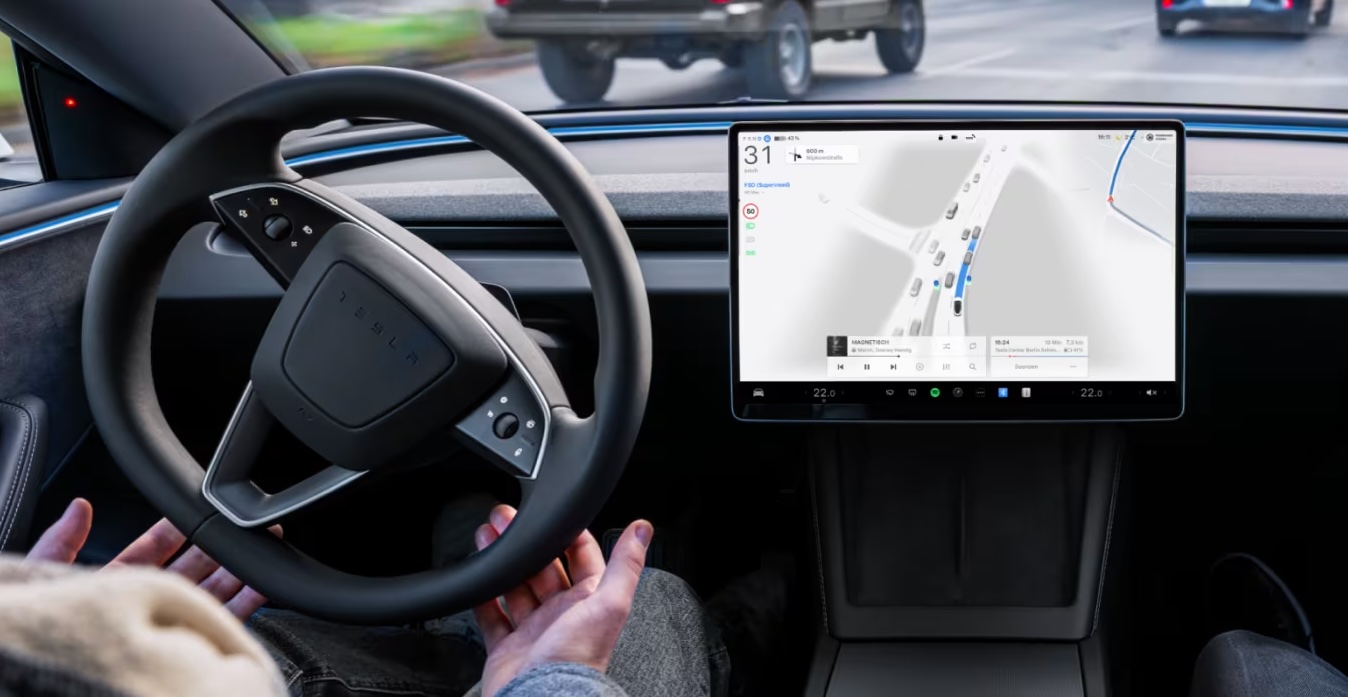
Tesla Full Self-Driving has gotten a huge breakthrough as the company is still planning big things for its European expansion, hoping to bring the impressive platform into the continent after years of attempts.
Tesla Europe has announced a major breakthrough: the company has officially completed the final vehicle testing phase for Full Self-Driving (Supervised) in partnership with the Dutch vehicle authority RDW.
All documentation for UN R-171 approval and Article 39 exemptions has been submitted, with RDW now conducting its internal review. Approval in the Netherlands is expected on April 10, shifted from the original March 20 target, following 18 months of rigorous collaboration.
Together with RDW, we have officially completed the final vehicle testing phase for Full Self-Driving (Supervised) and have submitted all documentation required for the UN R-171 approval + Article 39 exemptions. The RDW team is now reviewing the documentation and test results…
— Tesla Europe, Middle East & Africa (@teslaeurope) March 20, 2026
The process has been exhaustive. Tesla said it has logged more than 1.6 million kilometers of FSD (Supervised) testing on European roads, conducted over 13,000 customer ride-alongs, executed 4,500+ track test scenarios, produced thousands of pages of documentation covering 400+ compliance requirements, and completed dozens of independent safety studies.
The company expressed pride in the partnership and anticipation of bringing the feature to “patient EU customers” soon after approval.
Europe’s regulatory landscape has presented steep challenges for Tesla’s advanced driver-assistance systems. The EU enforces some of the world’s strictest safety standards under the United Nations Economic Commission for Europe framework, particularly UN Regulation 171 on Driver Control Assistance Systems.
Unlike the more permissive U.S. environment, European rules historically limited system-initiated maneuvers, required constant driver supervision, and demanded country-by-country or bloc-wide exemptions. Tesla faced repeated delays, with initial February 2026 targets pushed back amid RDW’s insistence that safety, not public or corporate pressure, would govern timelines.
Tesla Europe builds momentum with expanding FSD demos and regional launches
A former Tesla executive warned in 2024 that certain regulatory elements could slip to 2028, highlighting bureaucratic hurdles, extensive audits, and the need for harmonized data privacy and liability frameworks across fragmented member states.
Yet progress is accelerating. Amendments to UN R-171 adopted in 2025 now permit hands-free highway lane changes and other automated features, clearing technical barriers. Once the Netherlands grants national approval, mutual recognition allows other EU countries to adopt it immediately, potentially leading to an EU-wide rollout by summer 2026.
This European breakthrough is part of Tesla’s broader push into foreign markets. Full Self-Driving (Supervised) is already live in the United States and expanding rapidly.
In China, where partial approvals exist, CEO Elon Musk has targeted full rollout around the same February–March 2026 window, despite lingering data-security reviews.
Additional markets, including the UAE, are slated for early 2026 launches. These expansions are critical as Tesla seeks to monetize software amid softening EV demand globally.
For European Tesla owners, the wait appears nearly over. Approval would unlock advanced autonomy features that have long been available elsewhere, marking a pivotal step in Tesla’s global autonomy ambitions and reinforcing its commitment to navigating complex international regulations.


Elon Musk
SpaceX is keeping the Space Station alive again this weekend
SpaceX’s Falcon 9 launches Northrop Grumman’s Cygnus NG-24 to the ISS with 11,000 pounds of cargo Saturday.

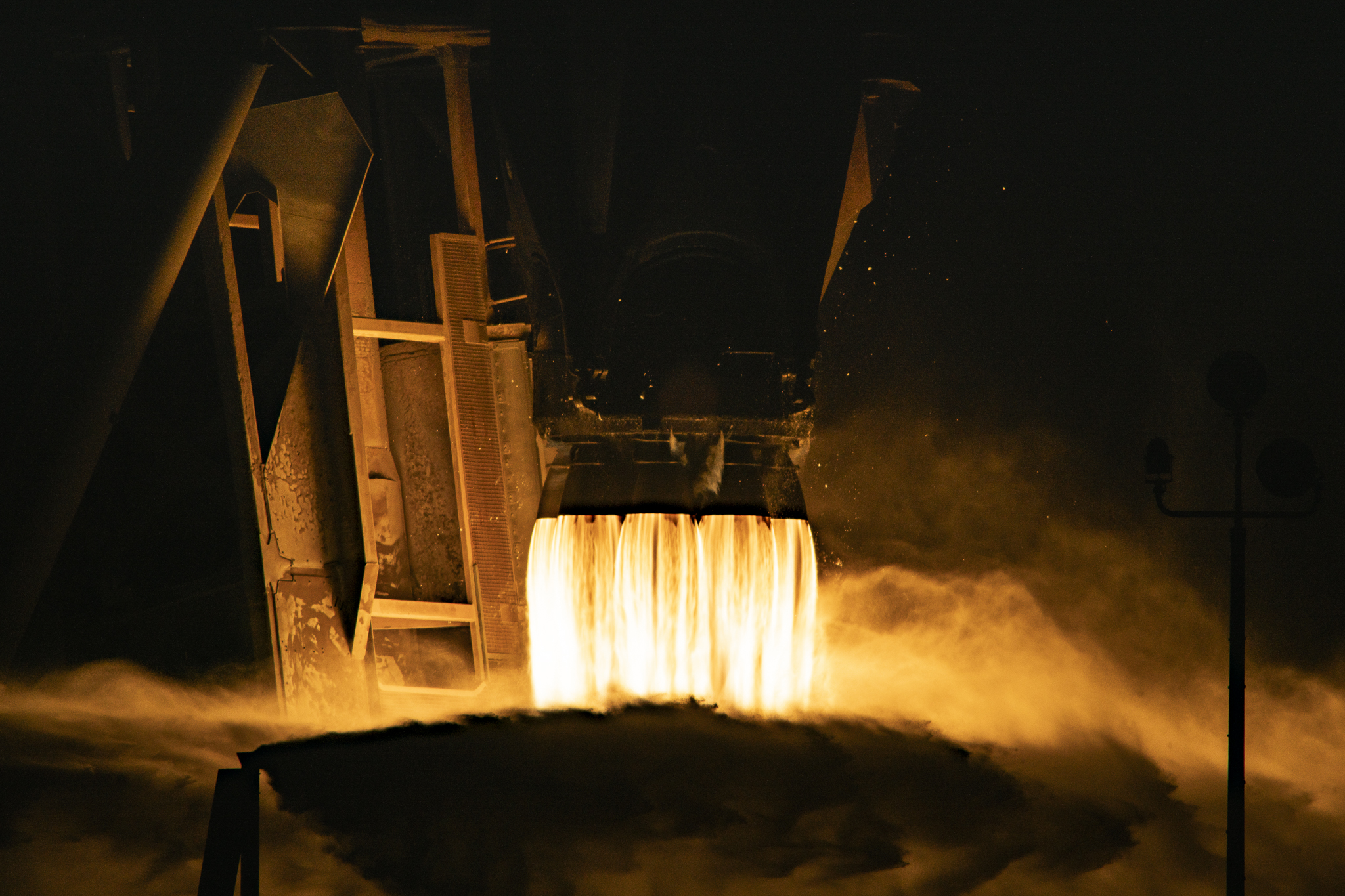
SpaceX is targeting April 11 for the launch of Northrop Grumman’s Cygnus XL cargo spacecraft to the International Space Station, carrying over 11,000 pounds of supplies, science hardware, and equipment for the Expedition 73 crew aboard. Liftoff is set for 7:41 a.m. ET from Space Launch Complex 40 at Cape Canaveral Space Force Station, with a backup window available April 12 at 7:18 a.m. ET.
The mission, officially designated NG-24 under NASA’s Commercial Resupply Services program, names its spacecraft the S.S. Steven R. Nagel in honor of the NASA astronaut who flew four Space Shuttle missions and logged over 723 hours in space before his death in 2014. Unlike SpaceX’s own Dragon capsule, which docks autonomously, Cygnus relies on NASA astronauts to capture it using a robotic arm before it is berthed to the space station’s module for unloading. When the mission wraps up around October, the Cygnus will depart loaded with station trash and burn up on reentry.
Countdown: America is going back to the Moon and SpaceX holds the key to what comes after
This is the second flight of the Cygnus XL configuration, which debuted on NG-23 in September 2025 and offers a roughly 20% increase in cargo capacity over the previous design. Northrop Grumman switched to Falcon 9 launches after its own Antares 230+ rocket was retired in 2023 following supply chain disruptions from the war in Ukraine.
The upcoming cargo includes a new module to advance quantum research, and an investigation studying blood stem cell production in microgravity with potential therapeutic applications on Earth.
The NG-24 mission is one piece of a much larger picture for SpaceX and the U.S. government. As Teslarati reported, SpaceX has become an indispensable launch provider for U.S. national security missions, picking up a $178.5 million Space Force contract in April 2026 to launch missile tracking satellites, while also holding roughly $4 billion in NASA contracts tied to the Artemis lunar program.
At a time when no other American rocket can match the Falcon 9’s combination of reliability, cost, and launch cadence, Saturday’s mission is a straightforward reminder of how much the U.S. government now depends on a single commercial provider to keep its astronauts supplied and its satellites flying.
News
Tesla hits FSD hackers with surprise move
In recent weeks, the company has begun remotely disabling FSD capabilities on affected vehicles, and in some instances, permanently revoking access even for owners who paid thousands of dollars for the feature.
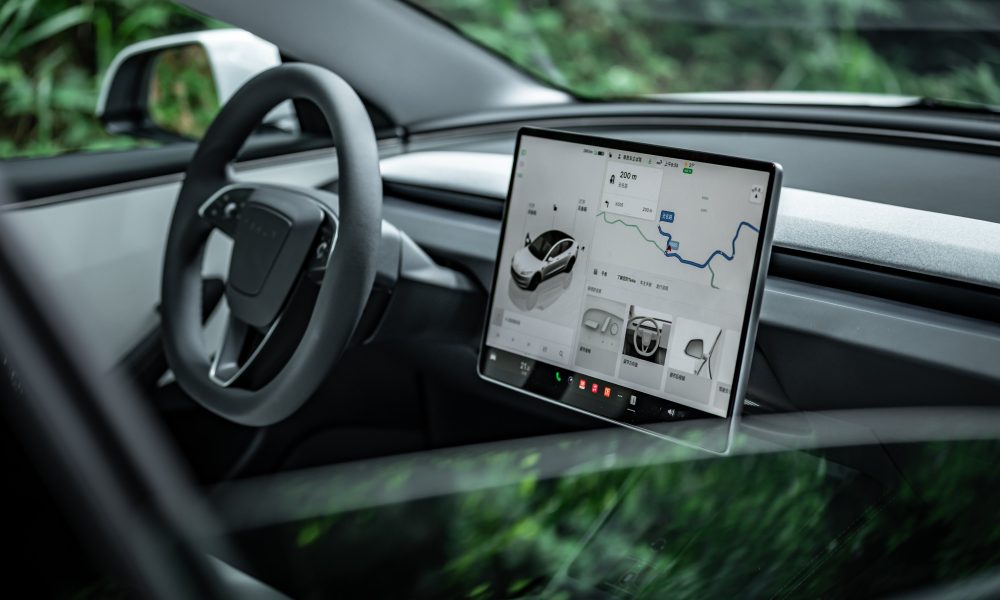
Tesla is cracking down on hackers who have figured out a way to utilize third-party programs to activate Full Self-Driving (FSD) in their vehicles — despite the suite not being approved for use in their country.
Tesla has launched a sweeping enforcement campaign against owners using third-party hardware hacks to activate FSD software in countries where the advanced driver-assistance system remains unregulated or unapproved.
In recent weeks, the company has begun remotely disabling FSD capabilities on affected vehicles, and in some instances, permanently revoking access even for owners who paid thousands of dollars for the feature.
Tesla has started remotely disabling Full Self-Driving on cars fitted with third-party CAN bus hacks in countries where the software is not yet approved.
This crackdown began after the hacks started spreading widely last month. 👇 pic.twitter.com/wL8VqZuTlK
— PiunikaWeb – helpful, and breaking tech news (@PiunikaWeb) April 9, 2026
Reports of the crackdown have surfaced across Europe, China, Japan, South Korea, and the UK, marking a significant escalation in Tesla’s efforts to enforce regional software restrictions.
FSD is Tesla’s flagship supervised autonomy package, which is available in several countries across the world. Currently limited by regulatory hurdles, it has not received full approval in most markets outside of the United States due to various things, such as safety standards, data privacy, and local traffic laws.
However, the company is working to expand its availability globally. Nevertheless, Tesla has installed the necessary hardware on vehicles globally, but locks the features based on geographic location.
Some owners have taken accessing FSD into their own hands, using jailbreak or bypass devices.
These “jailbreak” tools, typically €500 USB-style modules that plug into the vehicle’s Controller Area Network (CAN) bus, intercept signals to spoof approvals and unlock FSD, including advanced navigation, Autopark, and Summon features.
Hackers in Poland, Ukraine, and elsewhere have distributed the devices, with some claiming they work on HW3 and HW4 vehicles and can be unplugged to restore stock settings. In China alone, over 100,000 owners reportedly installed such modifications.
Tesla’s response has been swift and uncompromising. Recently, the company began sending in-car notifications and emails warning owners that unauthorized modifications violate terms of service, compromise vehicle safety systems, and expose cars to cybersecurity risks.
The email communication read:
“Your vehicle has detected an unauthorized third-party device. As a precaution, some driver assistance functions have been disabled for safety reasons. A software update will be available soon. Once you install the update, some features may be enabled again.”
Vehicles detected using the hacks have had FSD capabilities remotely disabled without refund. In some cases, owners report permanent bans, even if they had legitimately purchased the software package.
Tesla’s hardline stance underscores its commitment to regulatory compliance and safety.
Tesla has long argued that unsupervised FSD requires rigorous validation, and premature activation could endanger drivers and bystanders.
The crackdown sends a clear-cut message to those who are bypassing the FSD safeguards, but there are greater implications for Tesla if something were to go wrong. This is an understandable way to protect the company’s reputation for its FSD suite.
News
Tesla developing small, affordable SUV, report claims
This latest rumor deserves heavy scrutiny. Tesla has already walked away from a mass-market $25,000 EV once before.
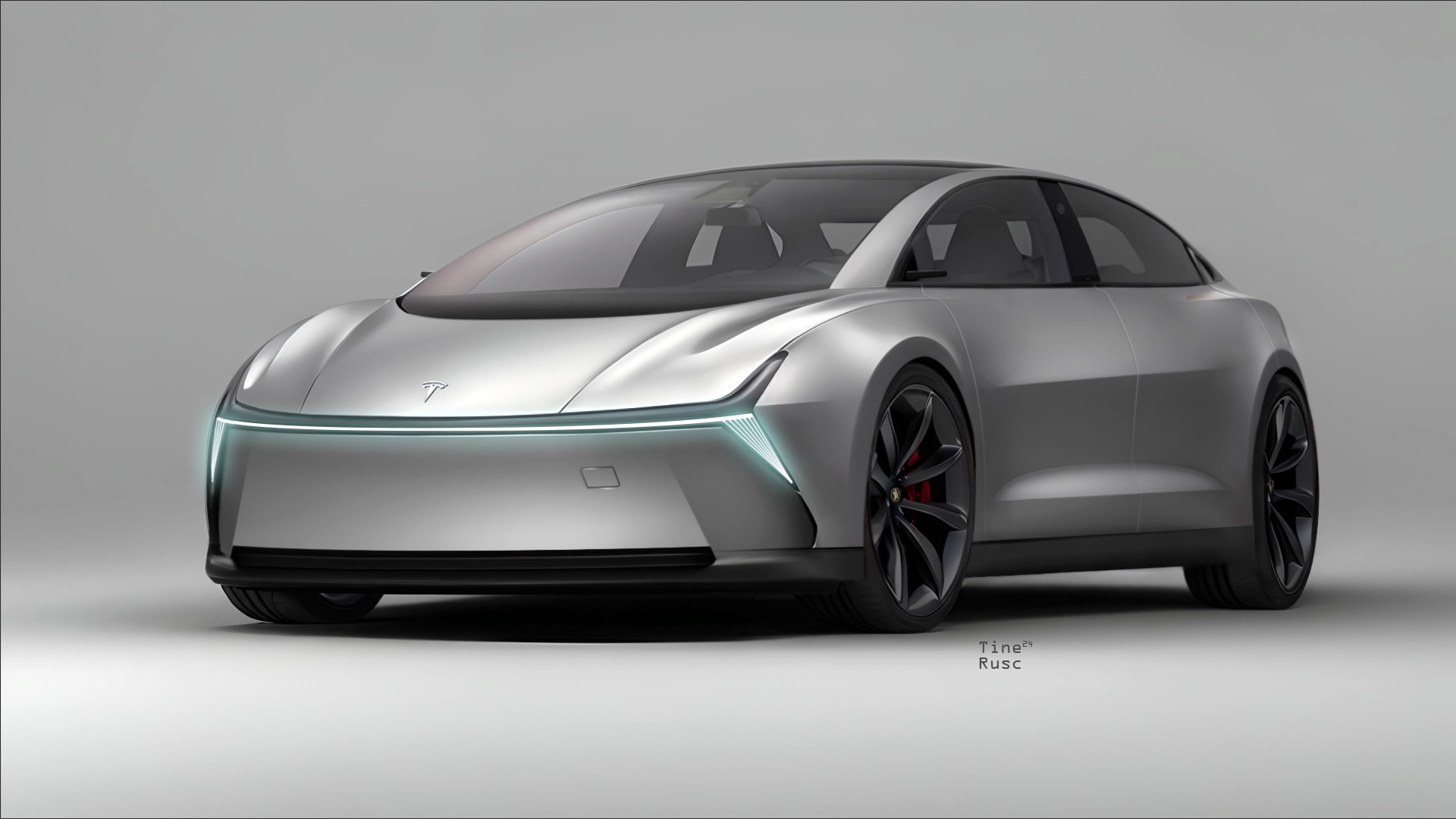
Tesla is developing a small, affordable SUV, a new report claims, speculating that the automaker is planning to add yet another vehicle to its lineup at a price point similar to the Model 3 and Model Y, but smaller and more compact.
But it does not make a whole lot of sense, especially considering a handful of things CEO Elon Musk said and the overall plan for Tesla’s future.
Reuters reported that Tesla is in the early stages of developing an all-new, smaller, cheaper electric SUV. Citing four sources familiar with the matter, the story claims the vehicle would be shorter than the Model Y, built in China, and represent a fresh platform rather than a variant of the Model 3 or Y.
Suppliers have reportedly been contacted to discuss details, though Tesla has not commented. The move appears aimed at broadening affordability amid slowing EV demand and intensifying competition, particularly from Chinese rivals.
This latest rumor deserves heavy scrutiny. Tesla has already walked away from a mass-market $25,000 EV once before.
In 2024, the company scrapped its long-teased “Redwood” project for a budget-friendly car. Elon Musk explained the decision bluntly during an earnings call: a conventional low-cost model would be “pointless” and “completely at odds with what we believe.”
It’s sort of hard to believe this report: 3/Y are already relatively affordable, Elon said a $25k wouldn’t make sense, consumers want something larger than the Y with X going away, and Musk said what’s coming is “cooler than a minivan.”
Have to think the car is at least an SUV. https://t.co/4CQUV9ZNA5
— TESLARATI (@Teslarati) April 9, 2026
In other words, chasing a bare-bones cheap EV runs counter to Tesla’s core mission of accelerating sustainable energy through cutting-edge technology and autonomy rather than volume-driven price wars.
Musk’s own recent statements reinforce skepticism about a compact SUV pivot. Just two weeks ago, on March 25, he responded to fan requests for a minivan by posting on X: “Something way cooler than a minivan is coming.”
Elon Musk says Tesla is developing a new vehicle: ‘Way cooler than a minivan’
The remark came in the context of family-hauling needs, with Musk highlighting the Cybertruck’s ability to seat multiple child seats. It signals Tesla’s focus is shifting toward more spacious, innovative people-movers—not shrinking its lineup.
U.S. demand data echoes this logic.
The long-wheelbase Model Y L—a six-seat, stretched variant offering extra room for families—has generated massive interest wherever offered. Fans in the U.S. have basically begged for the Model Y L to make its way to the States, or for the company to develop a full-size SUV.
The Model Y L is selling well in China, where it is manufactured.
Delivery wait times for the Model Y L stretched into February 2026 as orders poured in. Tesla recently expanded the trim to eight new Asian markets, yet it remains unavailable in the United States, where consumer appetite for a larger, more practical SUV is reportedly strong.
American buyers have consistently favored bigger vehicles; the Model Y already outsells most competitors precisely because it delivers crossover utility without compromise. A compact model shorter than today’s bestseller would likely miss this mark entirely.
Tesla’s product strategy has long emphasized differentiation through autonomy, range, and desirability rather than racing to the bottom on price. Stripped-down variants of the Model 3 and Y have already struggled to ignite broad demand.
A new compact SUV built in China might sound logical on paper for cost-sensitive buyers, but it risks repeating past missteps—diluting brand cachet while ignoring clear signals from Musk and the market.
History suggests Tesla talks about affordable cars more often than it delivers them. Whether this Reuters scoop evolves into metal or joins the $25k project on the scrap heap remains to be seen.
For now, the smart money is on Tesla doubling down on “way cooler” vehicles that actually fit American families—and Tesla’s ambitious vision—rather than a smaller SUV that feels like yesterday’s news.

SpaceX is keeping the Space Station alive again this weekend

Tesla hits FSD hackers with surprise move


