News
Tesla lands EU funding for V4 Supercharger installations and expansions

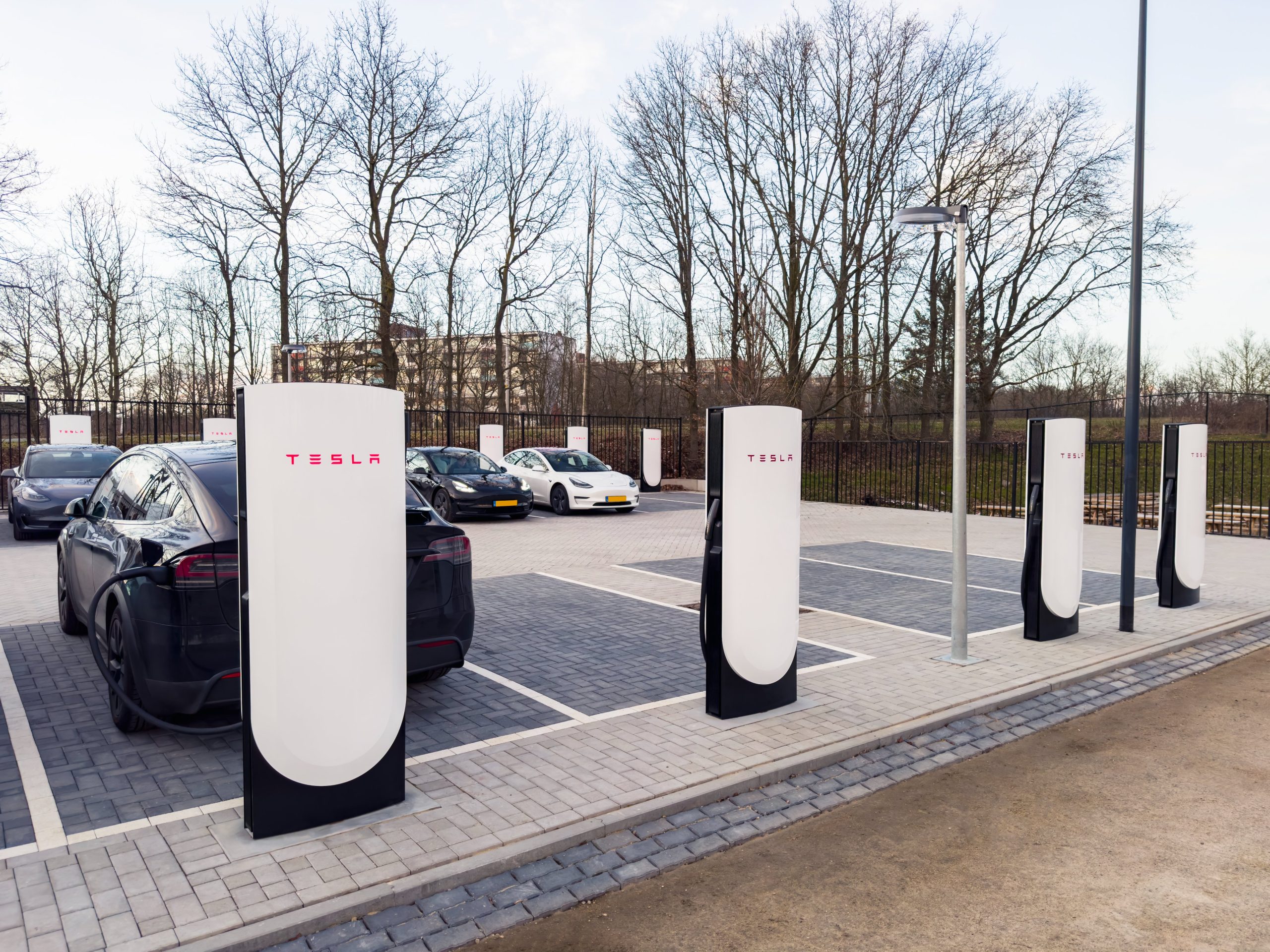
Tesla has landed nearly €149 million in funding from the European Union to support the update and expansion of its Supercharger network in Europe.
It appears the funding will be used to install or upgrade over 7,000 Superchargers to the new V4.
As a part of an ambitious plan to grow sustainability projects across Europe stemming from the EU Green Deal, the European Union has announced it will provide €352 million to fund 26 total infrastructure projects.
These projects have been selected under the Connecting Europe Facility, or CEF. Proposals were submitted by April 13, 2023, and the EU has finally announced which projects will receive the funding.
Credit: fritsvanens | Twitter
Tesla was selected for two Supercharger projects: One under Tesla Italy and one for Tesla Poland, totaling €148,720,000 (~$149,836,671).
The list of approved projects was first noticed by Electrive.
Tesla may have applied for these projects directly from subsidiaries in these two countries, but the projects will expand well outside the countries’ boundaries.
For example, the project that was applied for by Tesla Italy, which was awarded €133,780,000, has the following description:
“The project aims at deploying 6,458 recharging points (250 kW) for LDV in 613 locations in 16 countries (AT, BE, BG, DE, ES, FI, FR, IE, IT, LV, LT, LU, NL, RO, SK, SE) along the Core and Comprehensive Network. The project foresees both the deployment of new recharging stations and the replacement of existing outdated recharging points not satisfying the requirement of the call in terms of recharging capacity and open-accessibility.”
Judging by that description, Tesla seems to be eager to upgrade old Superchargers to new equipment, presumably the V4, which launched earlier this year on the continent.
The project Tesla Poland applied for was awarded €14,940,000, and plans for the deployment of new Supercharger equipment in six countries:
“The project aims to deploy 740 recharging points (250 kW) for LDV in 74 locations in 6 countries (CZ, EL, HR, HU, PL, SI) along the Core and Comprehensive Network. The project foresees both the deployment of new recharging stations and the replacement of existing outdated recharging points not satisfying the requirement of the call in terms of recharging capacity and open-accessibility.”
The language used in the descriptions of these projects hints toward the replacement of old Supercharger stalls with the V4 based on the use of the term “open-accessibility.” The new V4 Supercharger was designed by Tesla to charge any EV and even includes a longer charging cable to enable more accessibility for non-Tesla EVs.
Tesla has also enabled other features in its European Superchargers. Recently, we showed the first V4 stall in the United Kingdom, which was also the first to equip contactless payment.
Tesla opens V4 Supercharger in U.K., the first with contactless payment
I’d love to hear from you! If you have any comments, concerns, or questions, please email me at joey@teslarati.com. You can also reach me on Twitter @KlenderJoey, or if you have news tips, you can email us at tips@teslarati.com.


Elon Musk
Elon Musk is already planning a bigger Starship, and the Moon may be why
Elon Musk revealed Starship V4 specs that could reshape how fast SpaceX reaches the Moon.

A day after SpaceX caught a Starship upper stage for the first time, Elon Musk laid out how much bigger the next version will get. “Starship V4 will be ~70m long, which is roughly a 40% length increase and allows >60% more propellant load,” Musk wrote on X Sunday evening. “Engine count will be raised to 9, with 3 more Raptor-Vacuum engines added, and these will be higher thrust V4 engines.”
The current V3 ship that flew on Flight 15 stands about 52 meters tall with six Raptors, three built for sea level and three for vacuum. V4 stretches the ship and doubles its vacuum engines. Musk first said in August 2025 that V4 would add three engines to “a significantly longer ship” and fly in 2027. Sunday’s post is the most specific look at the ship so far.
The payload jump is the headline for the rest of the industry. SpaceX said in its IPO prospectus that V3 is expected to carry about 100 metric tons to orbit, while future generations could reach 200 metric tons, potentially as soon as V4. For comparison, a reusable Falcon 9 carries roughly 17 metric tons to low Earth orbit.
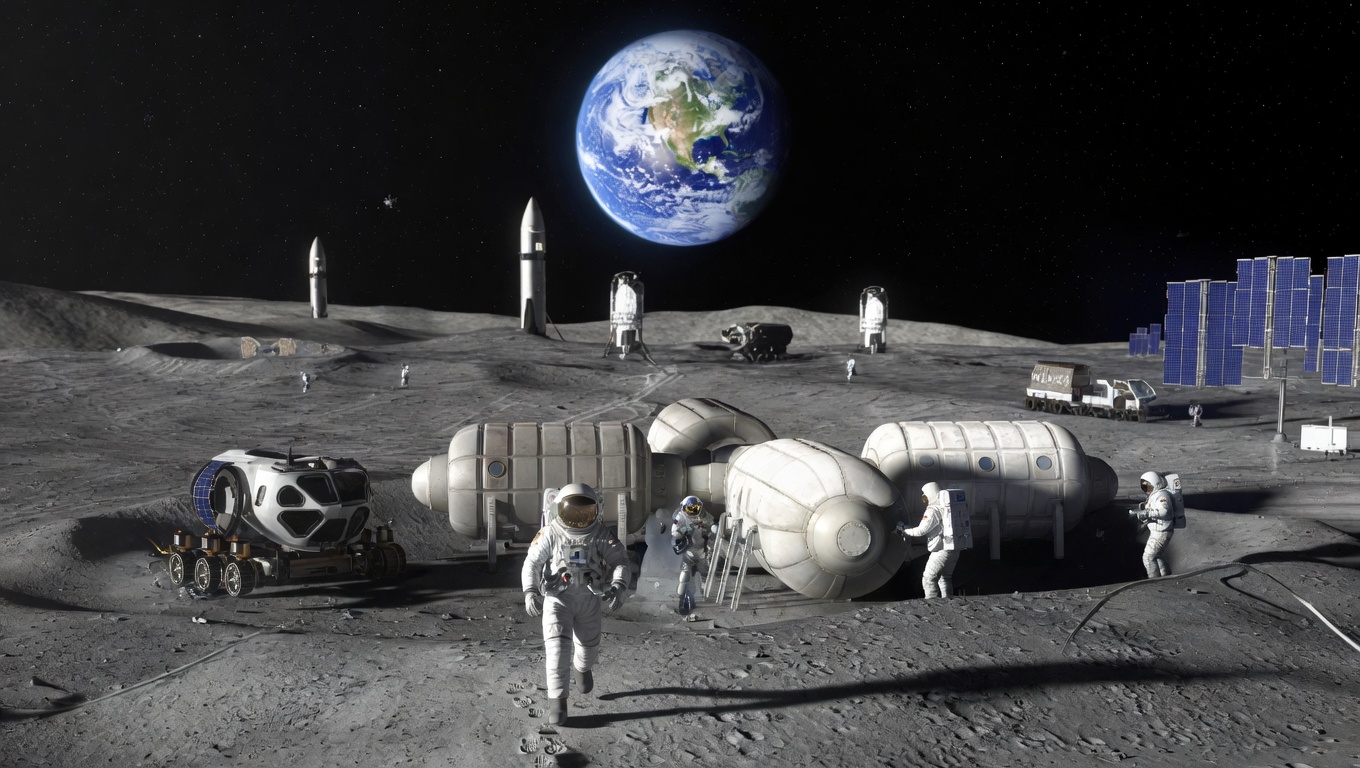
The bigger impact may be on the Moon. Every Starship lunar mission depends on filling a propellant depot in orbit with a string of tanker flights before the lander departs. A NASA safety panel member put that number at around 22 flights last month, while Musk countered that it would be “more like 6 to 8,” as Teslarati reported. Much of that gap comes down to which ship is doing the hauling. Musk has said a V4 tanker could deliver more than 200 tons of propellant per flight, which by his math brings a lunar refill down to five or six launches.
Fewer tankers per landing means more landings per year. SpaceX already advertises cargo flights to the lunar surface starting no earlier than 2028 at $100 million per metric ton, with a Starship lander able to put up to 100 tons on the surface. In February, Musk said SpaceX had shifted its focus to “a self-growing city on the Moon,” which he believes could be done in under 10 years, as Teslarati covered. NASA’s Artemis IV landing is targeted for 2028, and the White House has called for work on a permanent lunar outpost to begin by 2030.
Starship V4 will be ~70m long, which is roughly a 40% length increase and allows >60% more propellant load. Engine count will be raised to 9, with 3 more Raptor-Vacuum engines added, and these will be higher thrust V4 engines. — Elon Musk (@elonmusk) November 16, 2026
None of that works without ships that fly more than once, which is where Ship 42 comes in. Musk spent part of Sunday at the pad inspecting the vehicle caught on Saturday. “I was going over the whole Starship heat shield earlier today. Overall, it looks great. The engines look great too. Ship 42 could probably be reflown with a few weeks of refurbishment,” he wrote. He added that “many small fixes are needed to achieve immediate reusability (like an airplane).”
SpaceX has never reflown a ship. Its two booster reflights each came months apart, so a Ship 42 return to flight within weeks would be a first for the program. Flight 15 already showed the ship can survive a full orbital mission and come home to the tower, as Teslarati reported Saturday.
Elon Musk
MKBHD just ordered the Tesla Cybercab with his hair on the line
MKBHD ordered a Tesla Cybercab, two years after betting his hair Tesla couldn’t sell one.
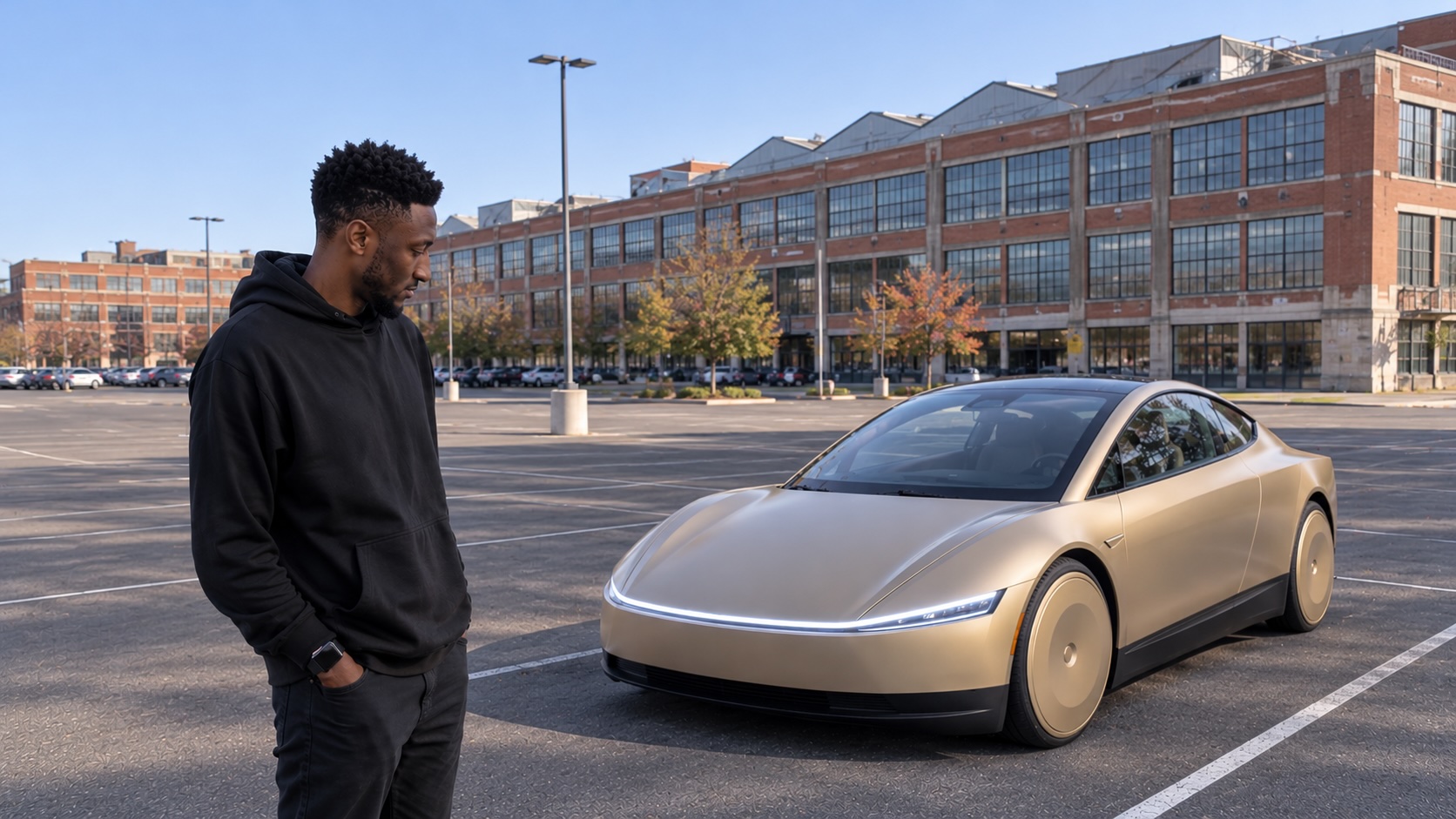
Marques Brownlee spent two years betting his hair that Tesla would never sell a Cybercab to regular buyers for under $30,000 before 2027. On Friday, he posted on X that he had been invited to buy one. “Alright chat I’m in,” the YouTuber known as MKBHD wrote, before sharing a screenshot that read “Your Cybercab Order is Confirmed.”
The bet dates back to Tesla’s We, Robot event in October 2024, when Elon Musk unveiled the two seat Cybercab and said customers would be able to buy one for less than $30,000, with production starting “before 2027.” Days later, in a video titled “The Tesla Robotaxi is Confusing,” Brownlee called the timeline “notorious Elon stuff” and said that if Tesla pulled it off, he would “shave my head on camera because I’m that confident.”
Musk accepted the challenge in February, when the first production Cybercab rolled off the Giga Texas line. Asked on X whether Tesla would sell a Cybercab to a customer for $30,000 or less before 2027, he answered “Yes,” and added “Gonna happen,” as Teslarati reported at the time. Brownlee narrowed the terms in a September video, saying the bet was that a “golden robotaxi with two seats and no driver and no steering wheel and no pedals” would not ship “to regular people like you and me for $30,000 before the end of this year.”
Tesla’s invite only order page now lists the Cybercab at $29,990, ten dollars under that line, with estimated deliveries in December. Buyers put down a $1,000 non-refundable deposit, must take delivery in Austin, Dallas, Fort Worth, Houston or San Antonio, and are limited to one vehicle each. A $299 per month Autonomy Subscription is required for the car to operate.
Brownlee is not conceding. “My hair is safe for several reasons,” he wrote, pointing out that no Cybercabs have been delivered and that orders are invite only rather than publicly available. He also noted that the car is limited to personal use inside Tesla’s existing Robotaxi geofences, calling it “a paperweight if I take this thing home,” though he acknowledged that point was never part of the bet. He then asked Grok to set a timer for 48 days, which lands on December 31.
I’m tryna see something https://t.co/bKxMtfSbxm — Marques Brownlee (@MKBHD) November 14, 2026
Musk responded directly. Replying to Brownlee’s breakdown of the order page, he said the Cybercab “will be available nationwide, as we receive regulatory approval,” and agreed that “the monthly fee is too high”. He said it should match the cost of FSD and connectivity on Tesla’s other models, “more like ~$115/month.” In a separate reply about Brownlee’s hair, Musk wrote, “He’s a chicken.”
Where Brownlee’s car would go is unclear. He lives in New Jersey, far outside any Robotaxi service area, and Tesla’s agreements restrict where owners can operate the vehicle and how they can resell it, as Teslarati detailed.
Elon Musk
SpaceX makes history, catching Starship from orbit for the first time
SpaceX caught Starship’s upper stage with its launch tower for the first time on Saturday.
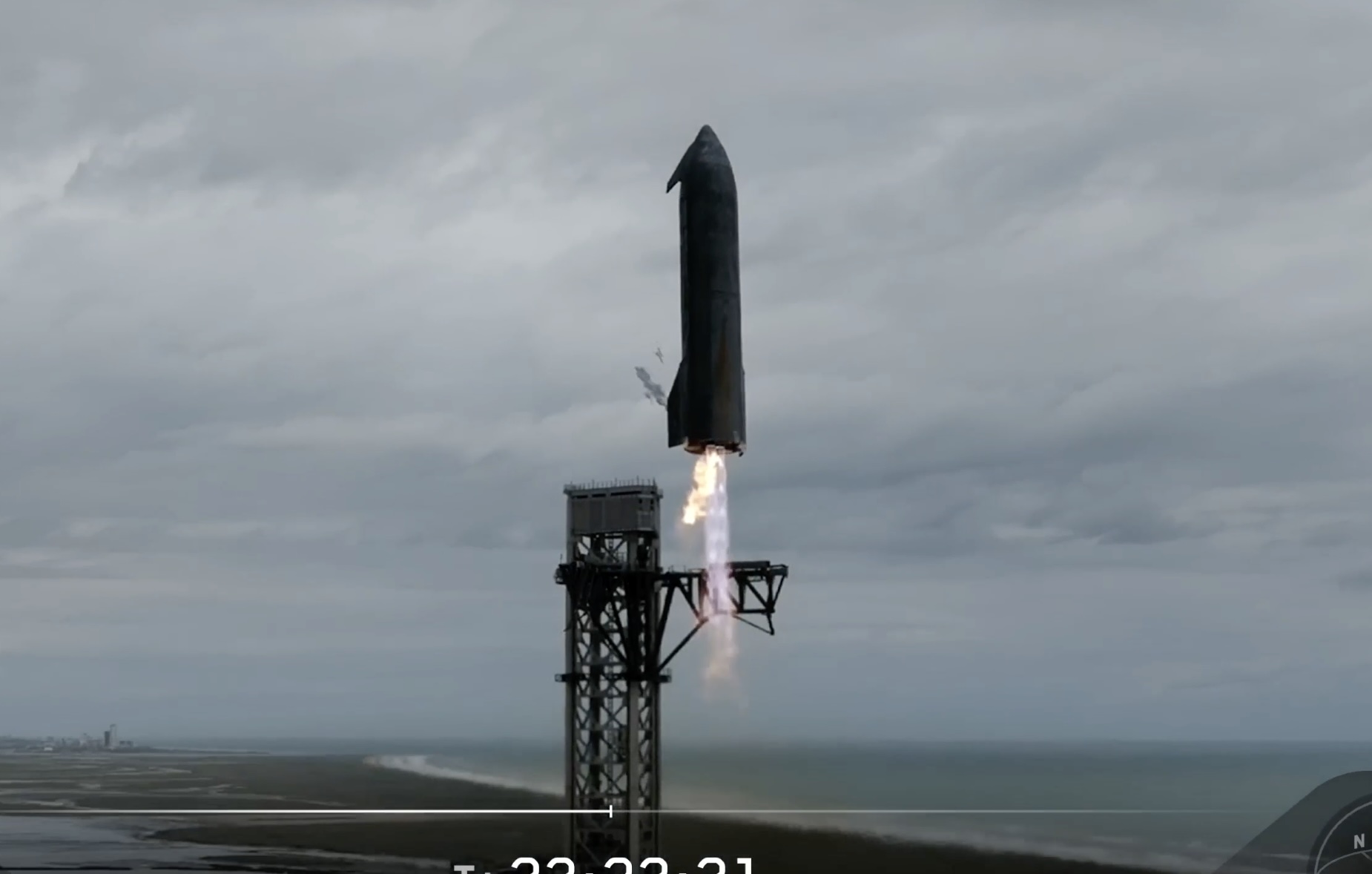
SpaceX caught a Starship upper stage with its launch tower for the first time on Saturday, bringing Ship 42 back to Starbase after roughly 22 and a half hours in orbit on Flight 15. No company has ever returned the upper stage of an orbital rocket to its launch site and caught it.
Ship 42 lifted off Friday evening on top of Booster 22, reached orbit and deployed all 26 of its Starlink V3 satellites. Three of those satellites carried cameras to photograph the ship’s heat shield, and SpaceX said the imagery showed it was in good shape for reentry, allowing controllers to pass on a backup splashdown option overnight. By Saturday morning, SpaceX posted on X that “Pad and tower systems are go for catch.” After about 14 orbits, the ship fired its engines to leave orbit, came back through the atmosphere and was caught by the tower’s chopstick arms.
IT HAPPENED https://t.co/KHITqHUWOf — TESLARATI (@Teslarati) November 14, 2026
The catch salvages a flight that started with a setback. Super Heavy did not make it back to the tower on Friday. “We were initially go for a catch, but in the later stages of the coast, the booster aborted itself for a GNC issue that it detected and that put it into its landing offshore,” SpaceX’s Dan Huot said. The booster hovered over the Gulf of Mexico before its flight termination system triggered and it came down in the water.
Elon Musk said Saturday that the booster ran short on propellant because its engines slightly underperformed. The fix, he wrote, is better engine consistency with Raptor V3.2 and a flight software change to cut the engines “about one second earlier” so enough fuel is left for the return. “This booster loss does not change our timeline to reach high volume, fully reusable Starship flights,” Musk added.
The ship is the harder half of that goal, and the one SpaceX had never recovered. Super Heavy has now been caught three times, most recently in March 2025, while every previous ship ended in the ocean or was lost. Falcon 9 lands its boosters routinely but throws its upper stage away on every launch. Musk described a full Starship recovery on SpaceX’s third quarter earnings call as a “profound technology milestone,” and Saturday’s catch shows the hardest piece of it can work.
That piece matters for nearly everything SpaceX is planning. Reusable ships are what make the economics of launching Starlink V3 satellites at scale work, along with the Starmind orbital compute constellation. NASA’s Artemis lunar lander also depends on refilling Starships in orbit with repeated tanker flights, which requires vehicles that can fly again quickly. Musk has said he expects Starship to reach a weekly launch cadence in the first half of 2027.
Flight 15 also improved on the last Starship mission in September, which reached orbit but ended after about three hours with a Pacific splashdown when some engines shut down. Before this flight, SpaceX had shown an animation of the ship catch during its earnings webcast, and Musk put the odds of pulling it off on the first try at “more likely than not,” as Teslarati reported.

Elon Musk is already planning a bigger Starship, and the Moon may be why

MKBHD just ordered the Tesla Cybercab with his hair on the line


