Lifestyle
Tesla Model 3 wireless charger: Factory-look and it’s fast

A big thanks to Nomad for providing me with this Model 3 wireless phone charger. This isn’t a mandatory glowing review – you can find those on YouTube. Rather, this was an opportunity for me, a product person, to inspect the design of a product that I needed/wanted and photograph it. I like photos. A lot.
The Tesla Model 3 is full of forward-thinking technology and amazing performance stats, but if I’m being honest, its built-in elements for phone charging have some room for improvement.
In a car that requires neither gas nor keys to operate, wireless phone charging seems like a natural fit, but it isn’t a factory option (yet anyhow). Thankfully, a company called Nomad has recognized the void in charger options and now offers a product specifically designed for the Model 3.
I got a hold of one and had a look for myself.

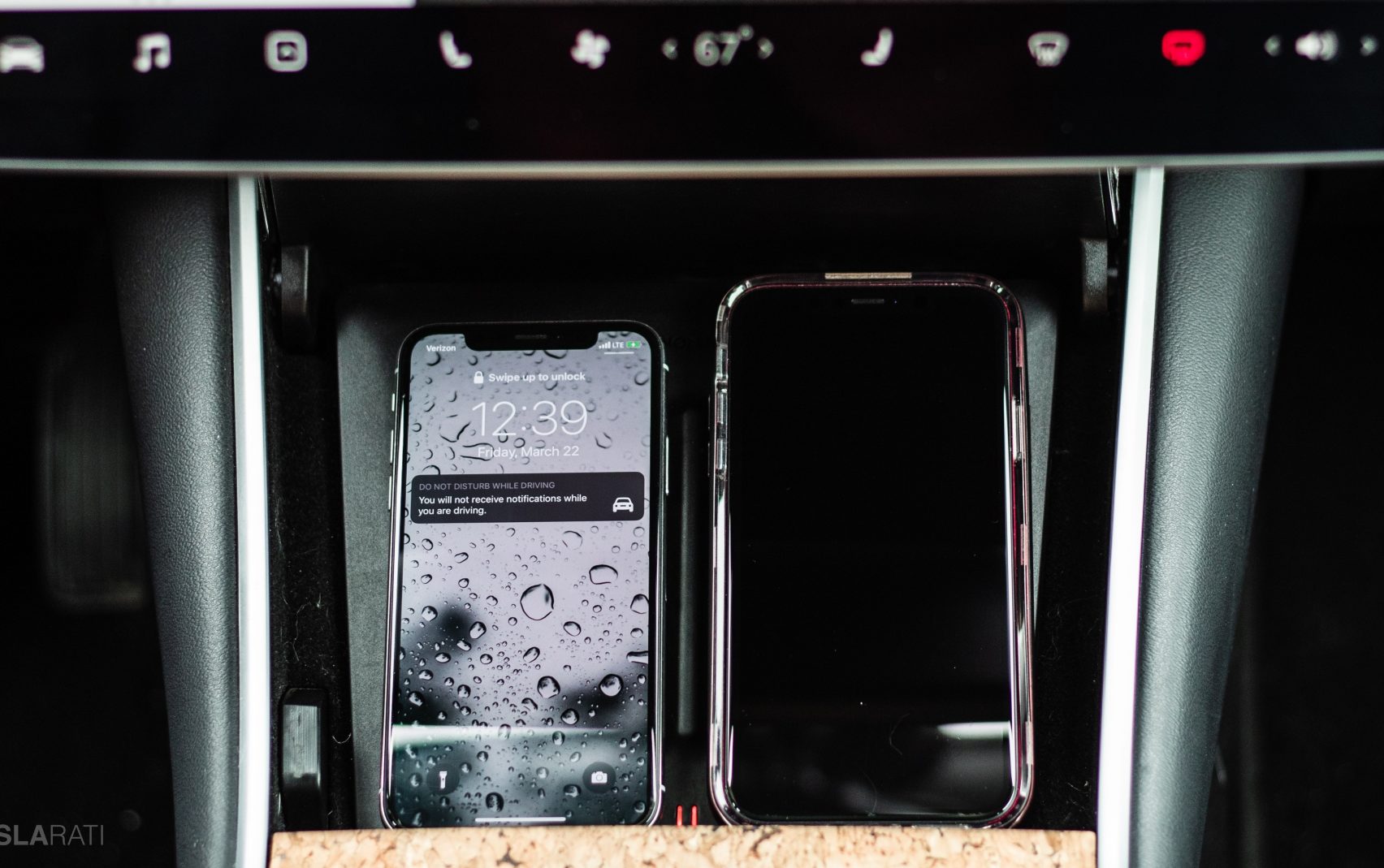
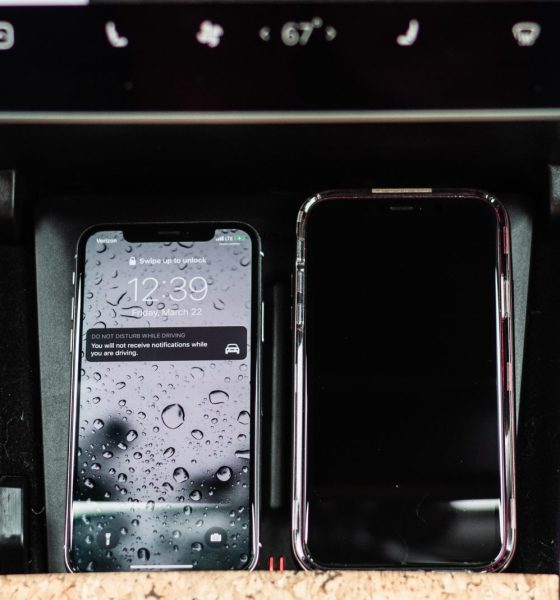
The Nomad Wireless Phone Charger for the Tesla Model 3 is basically what it sounds like – a pad for charging your compatible iPhone or Android device (7.5 W charge output or Qi-enabled) simply by setting it down in your car’s center console. An LED indicator confirms the process is working: amber while charging, and white when fully charged. Since Nomad’s charger supports two phones, your passenger can enjoy the same wire-free perks that you do. My passenger definitely appreciated it when I was trying the device out.
Even though I was looking for an improvement to my Model 3’s factory phone charging options, I’m still a huge fan of the Tesla aesthetic and wince at the idea of interfering with the look and feel of my car. That said, I was really pleased with how Nomad’s charger matched my Model 3’s design. It’s actually one of the core reasons I chose their charger over the many other wireless chargers that I saw were available on Amazon.

Photo by me.
Since there’s obviously a lot of motion involved while driving, Nomad’s pad has a matte black, soft rubber coating to keep your phone from sliding around. For small phones, spacers are included for extra stability which is a pretty cool compatibility consideration in my opinion. The specs of the charger say that some larger phones won’t fit into the charging space with their cases on, but my iPhone fits perfectly.
I did look at other wireless pads on the market that utilize a horizontal charging position, but personally didn’t like that look, and found Nomad’s upright mount to simulate more of the Tesla look and feel that’s similar to the Model S and Model X. Also, this is a minor detail to some, but it’s worth noting that I finally reached out to Nomad for a charger after seeing online reviews indicating that their charging was faster than the competition.
In terms of installation? Easy peasy. Open the top center console; remove the non-slip pad and USB cables inside Nomad’s Apple-like packaging; feed Nomad’s wires through the cable hole and plug into the Model 3’s USB ports. Not much to write about beyond that.
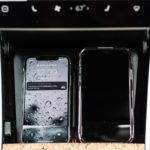
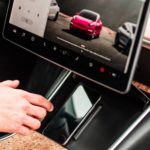
Photos by me.
While the standard setup of the Nomad charger worked great for my needs now, I also liked that there’s flexibility with the product in case my needs change in the future. For example, two USB splitters are included in the box if I have an audio device that requires a USB port or I want to record video from my dashcam.
Overall, I’m pretty satisfied with Nomad’s wireless phone charger in my Tesla Model 3. If you’re in the market for a factory-looking wireless charger, that charges quickly and has a solid, premium build, I recommend giving this phone charger a go. Full specs and pricing details can be found on Nomad’s website.
Thanks for listening and happy charging!


Elon Musk
Elon Musk’s $10 Trillion robot: Inside Tesla’s push to mass produce Optimus
Tesla’s surging Optimus job listings reveal a company sprinting from prototype to one million robot production.

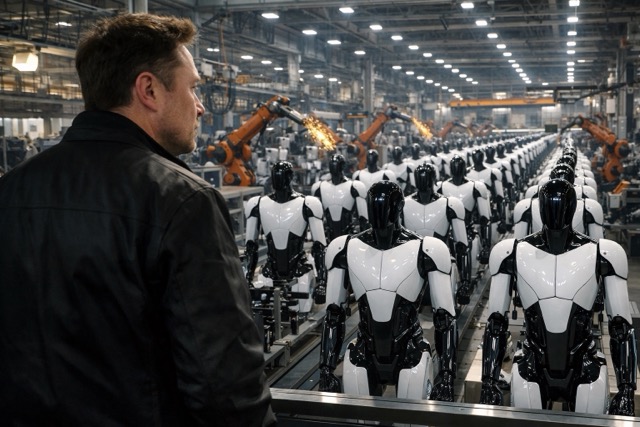
Tesla is accelerating its push to bring the Optimus humanoid robot to high volume production, and its recent job listings tells the story as clearly as any earnings call.
With well over 100 Optimus related job openings now posted across its U.S. facilities, Tesla is signaling a critical pivot for the program, moving it from a captivating tech demo to a serious manufacturing endeavor. Roles span the full spectrum of the product lifecycle, from Robotics Software Engineers and Manufacturing Engineers to Mechanical Integration Engineers and AI Engineers focused on world modeling and video generation. One active listing for a Software Engineer on the Optimus team asks candidates to build scalable and reliable data pipelines for Optimus manufacturing lines and develop automation tools that accelerate analysis and visualization for mass manufacturing.
Tesla is racing toward a one million unit annual production target. The clearest signal yet that Tesla is treating Optimus as its primary business came on January 28, 2026, during the company’s Q4 2025 earnings call. Musk announced that Tesla is ending production of the Model S and Model X, and will repurpose those lines at its Fremont, California factory to build Optimus humanoid robots.
A production intent prototype of Optimus Version 3 is planned to be ready in early 2026, after which Tesla intends to build a one million unit production line with a targeted production start by the end of 2026. To support that ramp, Tesla broke ground on a massive new Optimus manufacturing facility at Gigafactory Texas in late 2025, with ambitions to eventually reach 10 million units per year.
Tesla Giga Texas to feature massive Optimus V4 production line
The business case for scaling this aggressively is rooted in labor economics. Musk has stated that “Optimus has the potential to be the biggest product of all time,” reasoning that if Tesla can produce capable humanoid robots at scale and reasonable cost, every task currently performed by human labor becomes a potential application. In a separate statement, Musk framed Optimus’s long term importance even more bluntly, saying it could surpass Tesla’s vehicle business in scale with the potential to generate $10 trillion in revenue.
The industries Tesla is targeting first are those most burdened by repetitive physical labor. Early applications include manufacturing assembly, material handling and quality inspection, as well as logistics tasks like loading, unloading, sorting, and transporting goods in warehouses and distribution centers. Longer term, Tesla’s vision is for Optimus to penetrate household, medical, and logistics scenarios at the scale of a smartphone rollout.
Elon Musk
Elon Musk’s Boring Co. Tunnel Vision Challenge ends with a surprise for Louisiana, Maryland and Dallas
The Boring Company stunned three cities today, awarding New Orleans, Baltimore, and Dallas free underground Loop tunnels.
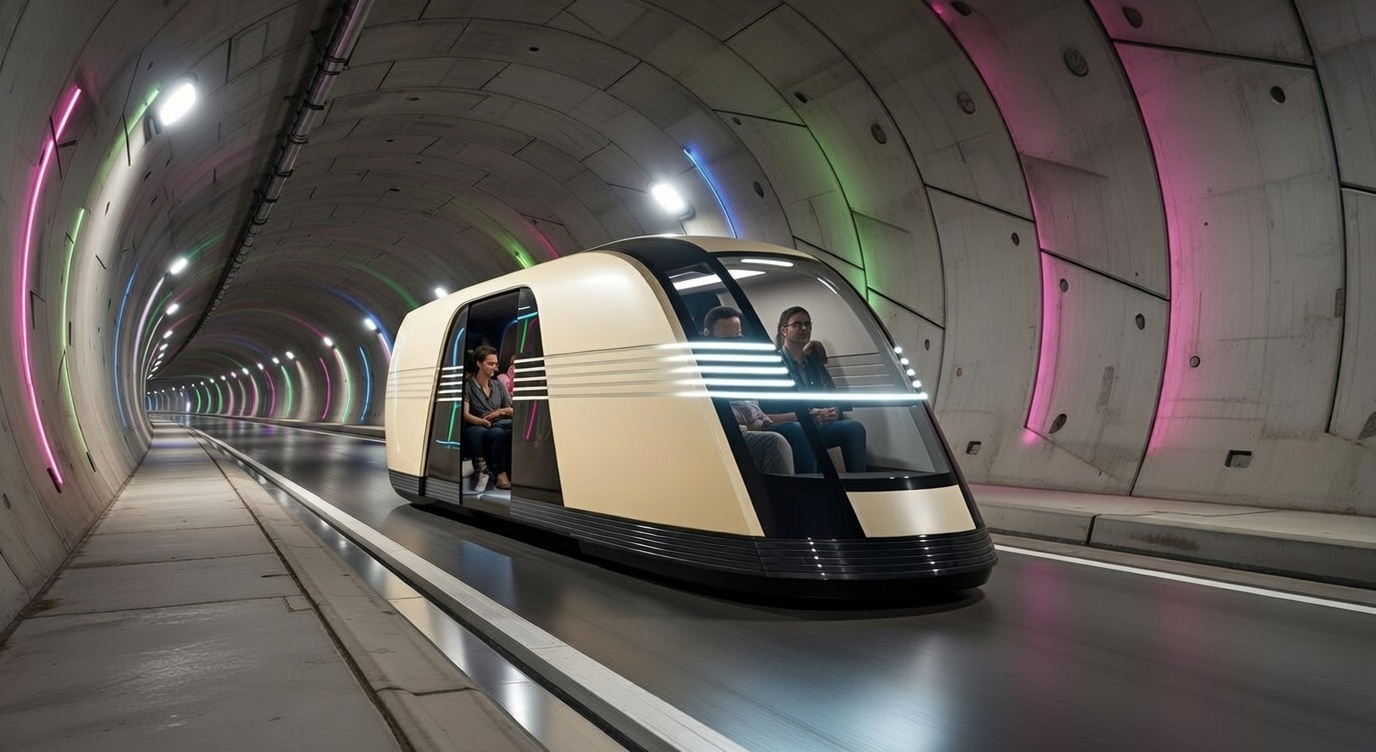
Elon Musk’s The Boring Company (TBC) announced today that it is building free underground Loop tunnels in three American cities: New Orleans, Louisiana; Baltimore, Maryland; and Dallas, Texas. The company had promised one winner when it launched the Tunnel Vision Challenge in January. After receiving 487 submissions, it selected three, committing to fund and construct all of them pending a feasibility review, entirely at its own expense. For a company that has faced years of skepticism over the gap between its promises and its delivered projects, choosing to expand its commitment rather than narrow it is a notable shift in both scale and accountability.
All three projects will now enter a rigorous, fully funded diligence phase that includes meetings with elected officials, regulators, community and business leaders, geotechnical borings, and a complete investigation of subsurface utilities and infrastructure. TBC confirmed that all costs associated with this diligence process are 100% funded by the company. If all three projects pass feasibility, all three get built. If only one clears the bar, that one gets built. The company’s willingness to fund the due diligence regardless of outcome removes one of the most common early-stage barriers that kills promising infrastructure proposals before they leave a spreadsheet.
Beyond the three winners, TBC announced it will continue working with two additional entrants it found compelling enough to pursue independently: the Hendersonville Utility Tunnel in Hendersonville, Tennessee, and the Morgan’s Wonderland Tunnel in San Antonio, Texas, which would notably serve one of the nation’s premier theme parks built specifically for guests with special needs.
The challenge also coincides with TBC’s most active construction period to date. The company recently began drilling on the Music City Loop near the Tennessee State Capitol in Nashville, and in February it broke ground on a Loop in Dubai. Musk has long argued that the fundamental problem with urban infrastructure is cost and bureaucratic inertia, not engineering. “The key to solving traffic is making going 3D either up or down,” he said in 2018, a conviction now reflected in a company structure built to absorb the financial risk that typically stalls public projects for years.
Music City Loop could highlight The Boring Company’s real disruption
The Tunnel Vision Challenge’s most underappreciated element may be what it produced beyond three winners. Submissions came from individuals, companies, and governments across states including Alaska, Arkansas, Colorado, Kansas, Louisiana, Maryland, New York, and Texas, as well as from international entrants. Musk captured the underlying logic years ago when he said, “Traffic is driving me nuts. I’m going to build a tunnel boring machine and just start digging.” Today, three American cities are counting on exactly that.
Tunnel Vision Challenge results!
We’ve been overwhelmed with the amazing submissions…so we are announcing three winners!
The Thrilling Three are:
– NOLA Loop (New Orleans, LA)
– Ravens Loop (Baltimore, MD)
– University Hills Loop (Dallas, TX)What happens next? TBC and the… https://t.co/cY2ULftfiK
— The Boring Company (@boringcompany) March 24, 2026
Elon Musk
Elon Musk offers to pay TSA salaries as government shutdown leaves agents without paychecks
Elon Musk offered to personally cover TSA salaries as the DHS shutdown deepens travel chaos nationwide.
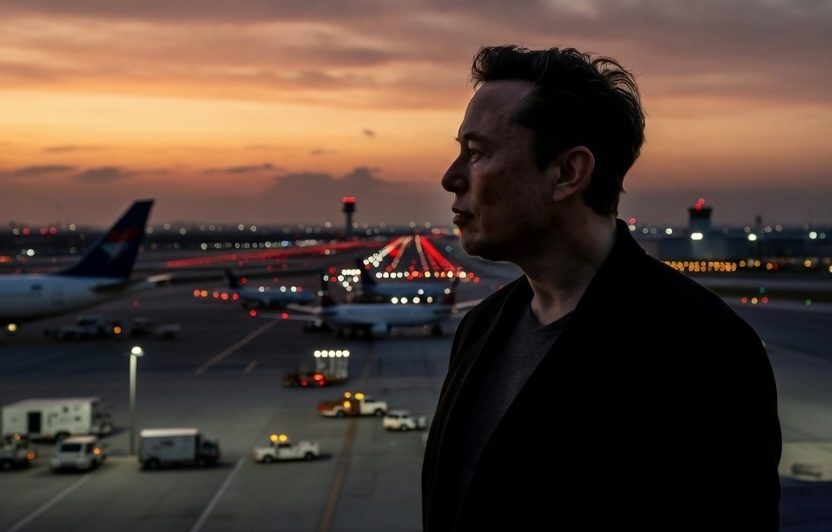
Elon Musk says that he is willing to personally cover the salaries of Transportation Security Administration (TSA) workers caught in the crossfire of a partial government shutdown that has now dragged on for over a month. “I would like to offer to pay the salaries of TSA personnel during this funding impasse that is negatively affecting the lives of so many Americans at airports throughout the country,” Musk wrote.
I would like to offer to pay the salaries of TSA personnel during this funding impasse that is negatively affecting the lives of so many Americans at airports throughout the country
— Elon Musk (@elonmusk) March 21, 2026
The offer arrives as Congress let funding expire for the Department of Homeland Security on February 14, amid a disagreement over immigration enforcement, leaving most TSA employees classified as essential and on duty but working without pay. The timing could not be more disruptive, as the shutdown is colliding directly with spring break travel season when millions of Americans are in the air.
This is not the first time TSA workers have endured this kind of hardship. TSA agents are being asked to work without pay until congressional action unblocks their paychecks, having previously held out through the longest government shutdown in U.S. history at 43 days. The pattern reveals a systemic failure in how Congress funds critical security infrastructure, and Musk’s offer shines a spotlight on that recurring failure at a moment when the public is directly feeling its effects through long lines and terminal closures.
Whether Musk can legally follow through remains unclear, as federal law generally prohibits government employees from receiving outside compensation related to their official duties.

Tesla Cybercab spotted next to Model Y shows size comparison

Elon Musk says Tesla is developing a new vehicle: ‘Way cooler than a minivan’

Elon Musk’s $10 Trillion robot: Inside Tesla’s push to mass produce Optimus

What is Digital Optimus? The new Tesla and xAI project explained

Elon Musk’s Boring Co. Tunnel Vision Challenge ends with a surprise for Louisiana, Maryland and Dallas


