News
Tesla Model Y L has two distinct features for luxurious comfort
This is not to say the other interior additions are not factors in the Model Y becoming a more luxurious and premium vehicle, but the two mentioned in this article are particularly pertinent in that conversation.

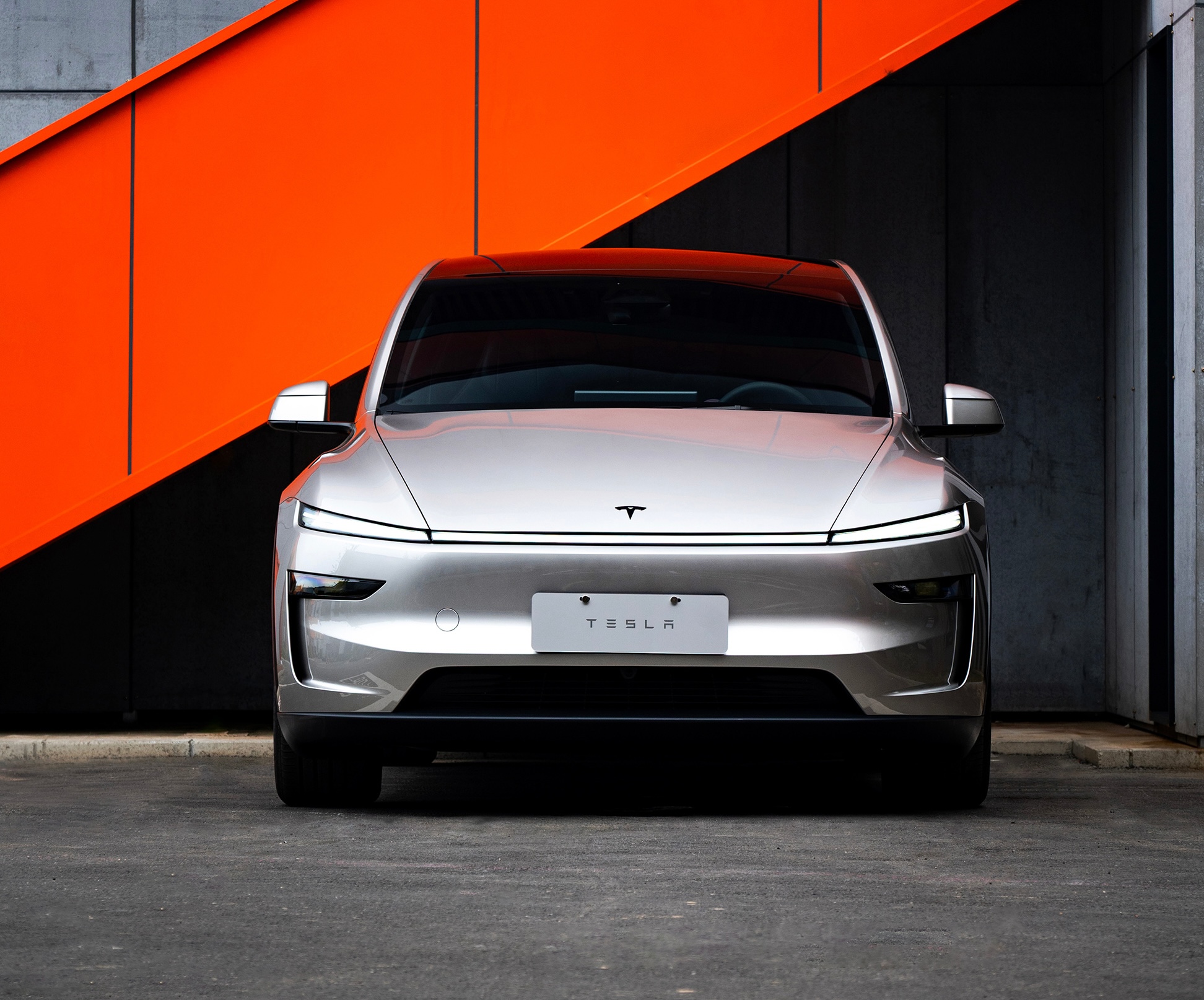
Tesla’s new Model Y L has two distinct features that are geared toward giving occupants a taste of luxury with guaranteed comfort.
These two features should definitely be part of the company’s future lineup, and they could prove to be massive upgrades to the Model Y’s interior, which is certainly premium but is missing some things that truly tailor to a “luxury” feel of an automobile.
This is not to say the other interior additions are not factors in the Model Y becoming a more luxurious and premium vehicle, but the two mentioned in this article are particularly pertinent in that conversation.
Tesla Model Y L might not come to the U.S., and it’s a missed opportunity
Power-Adjustable Thigh Supports
In the front seats of the Model Y L, there are power-adjustable thigh supports that will enable some additional comfort on the legs:
The Tesla Model Y L features power-adjustable thigh supports for the front seats pic.twitter.com/1tBQG0KznK
— The Tesla Newswire (@TeslaNewswire) August 19, 2025
Most might think that these thigh supports are simply a feature that makes the ride more comfortable, which is true. However, they have benefits for the ride and after you exit the car.
Providing proper lift on the legs and thighs can be beneficial for people with back problems or posture issues. The lower back takes an increased amount of stress during long car rides, especially as the legs are fixed in the chosen seating position.
Tesla Model Y L officially launched: price, features, and more
Adding some support to the thighs can help reduce pressure on the lower back and hips, and distribute weight more evenly, taking stress off pressure points.
It can also contribute to better spinal alignment. They also have safety benefits, as some riders could have an improved seatbelt position thanks to the thighs being in this position.
Second-Row Mechanical Armrest
Tesla also added mechanical, one-touch armrests to the Model Y L’s second row, a nice and premium touch for the riders in the middle of the vehicle:
The Model Y’s second-row armrests are pretty satisfying to watch.
They’re touch operated, so they should be very convenient to use.pic.twitter.com/iGlGiJXGNR
— TESLARATI (@Teslarati) August 19, 2025
Add the additional space the Model Y L provides to riders, and it already gets more comfortable. However, the addition of the mechanical armrests gives a good option of comfort for those who are seated in the second row.
They can also be retracted with the touch of a button, allowing for those in the third row to exit the vehicle easily.
One con to the mechanical portion of these armrests is that it is another moving part, and, of course, that puts it at risk of having issues.
However, it is certainly more premium than a manual armrest, and the flashy carbuyers will appreciate this small but mighty addition.


Elon Musk
Tesla launches 200mph Model S “Gold” Signature in invite-only purchase
Tesla’s final 350-unit Signature Edition closes the book on two cars that changed everything.

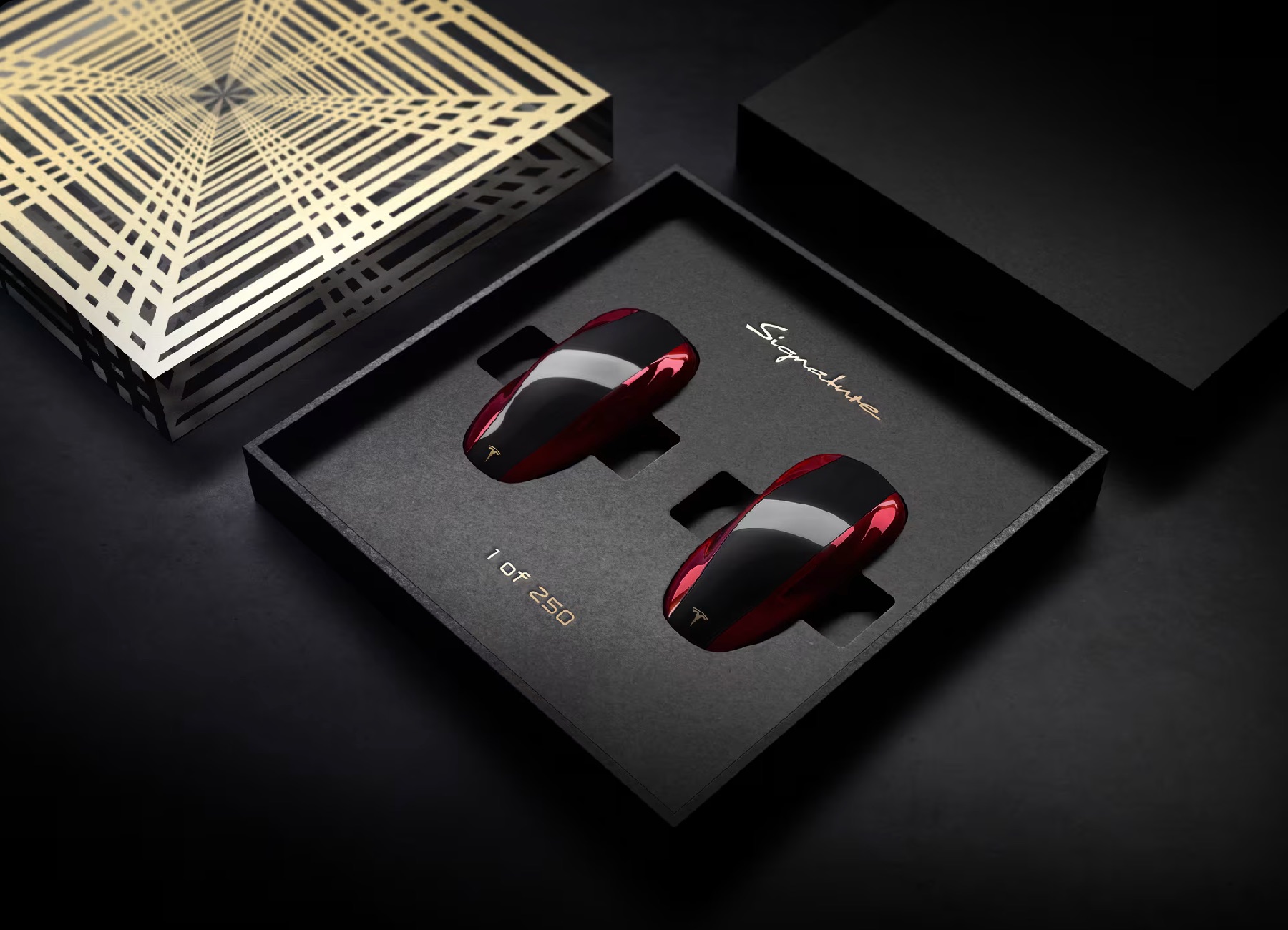
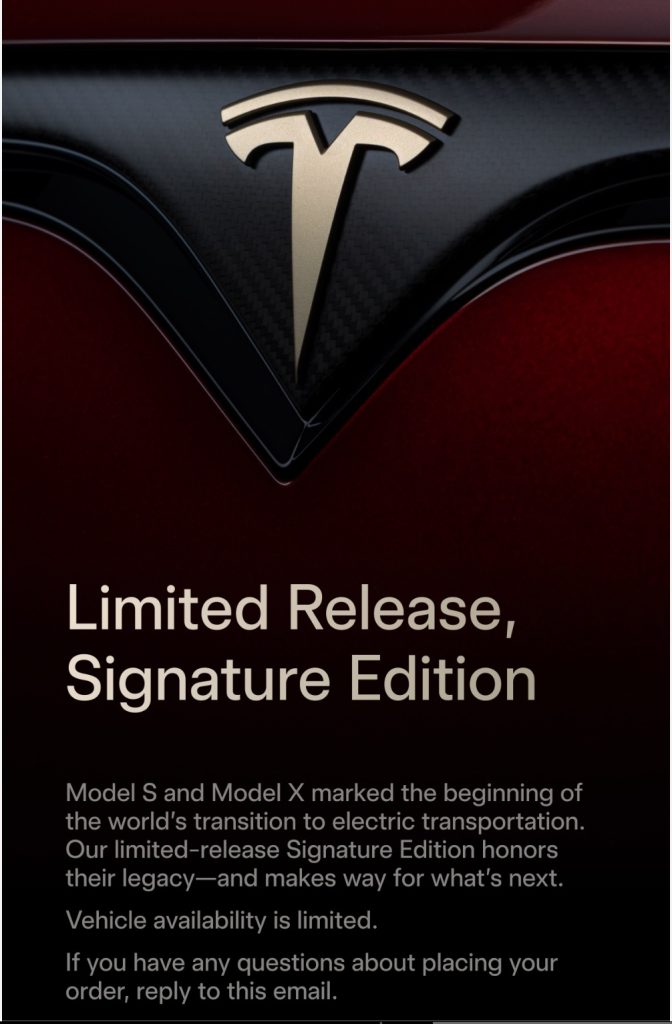
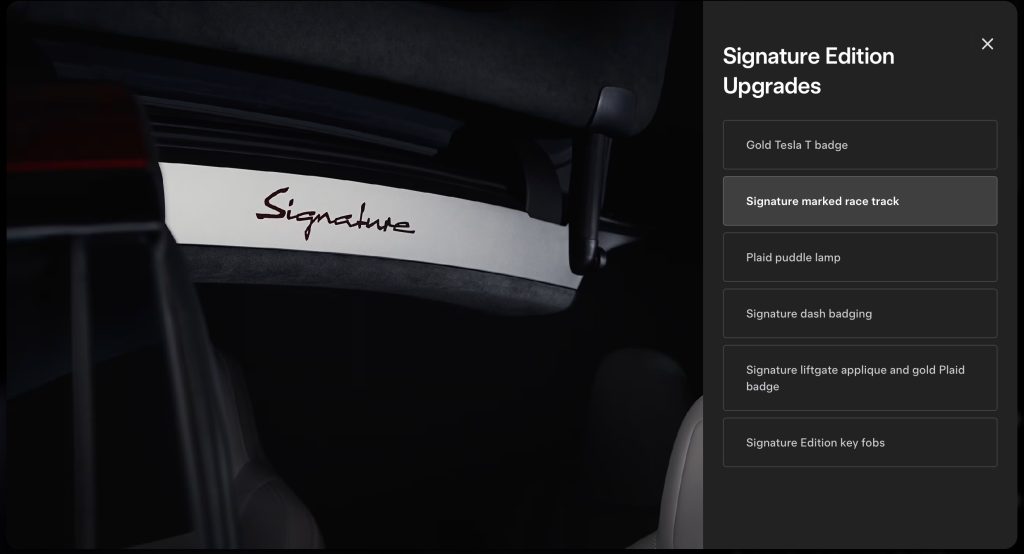
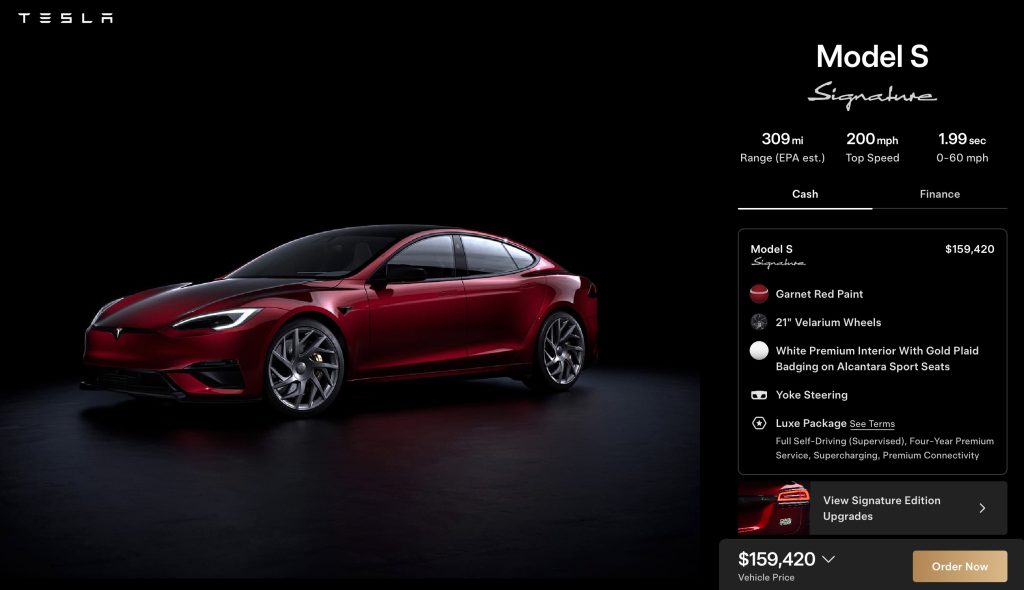
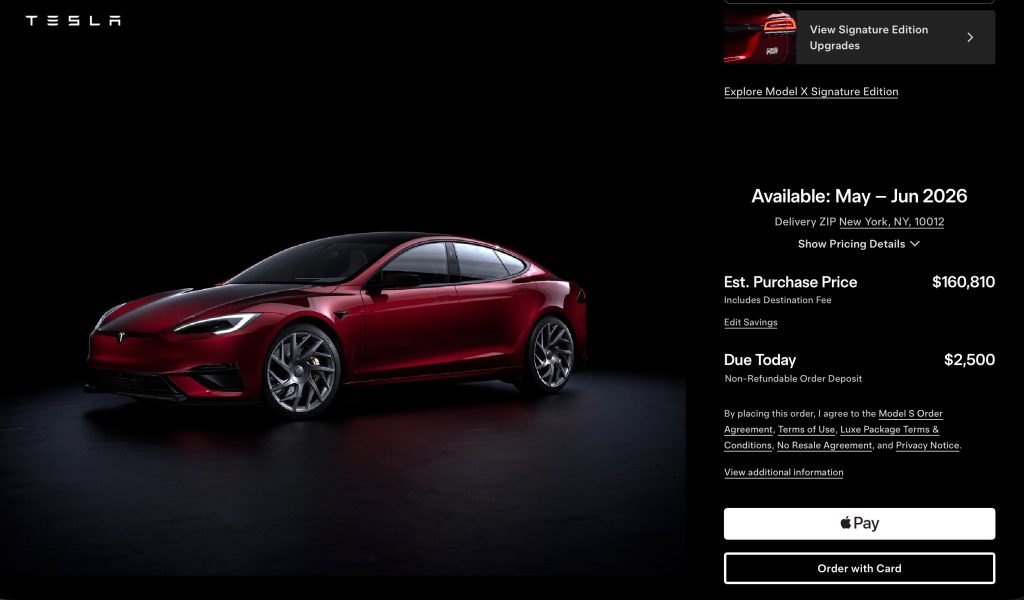
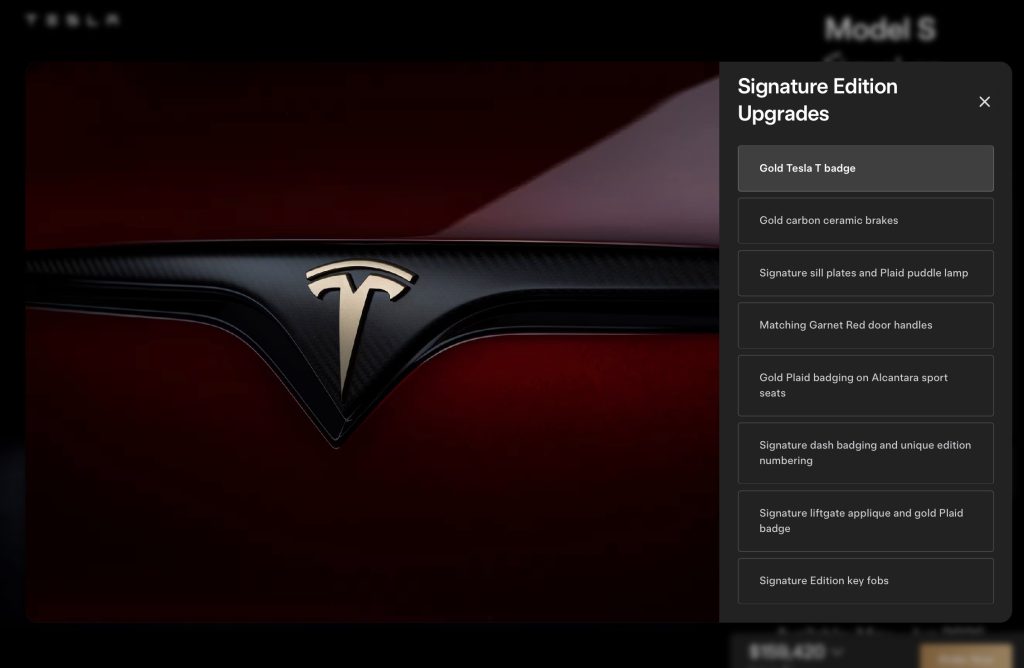
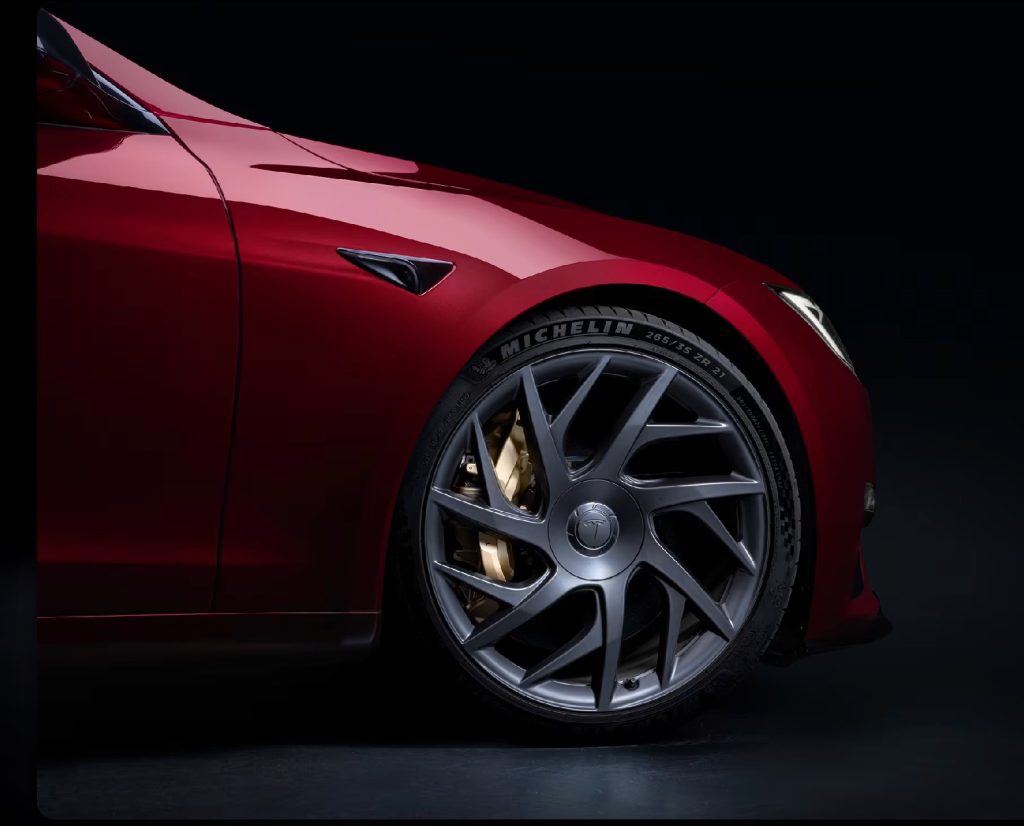
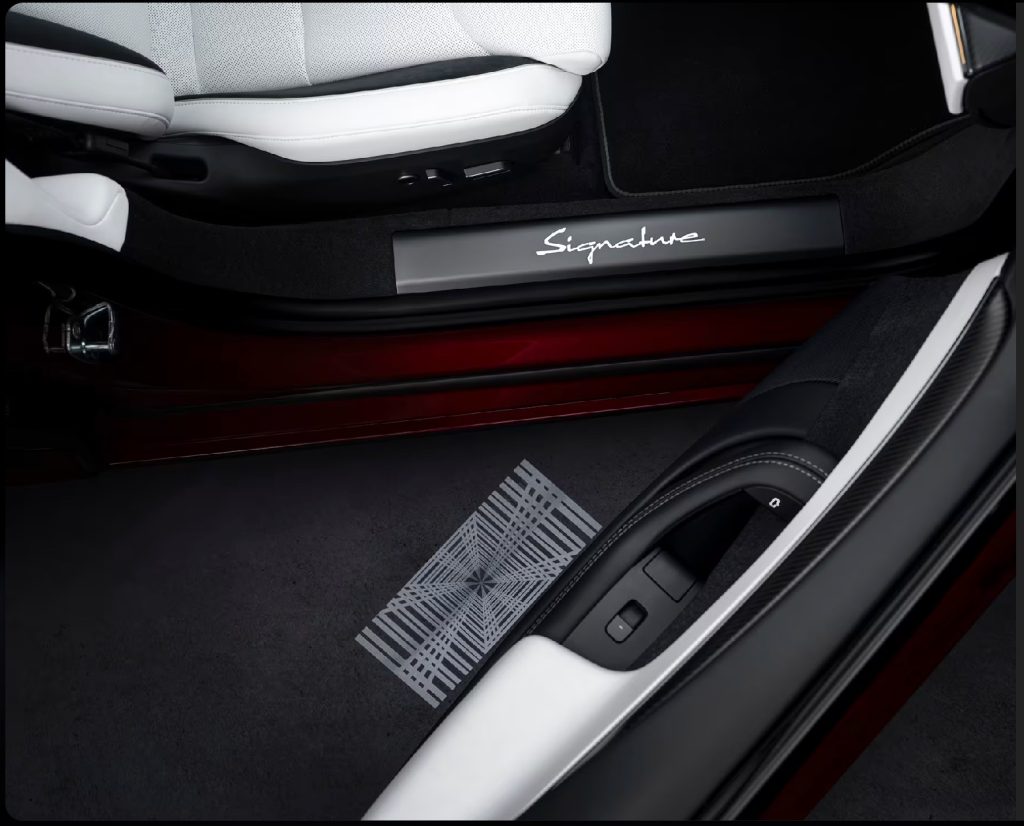
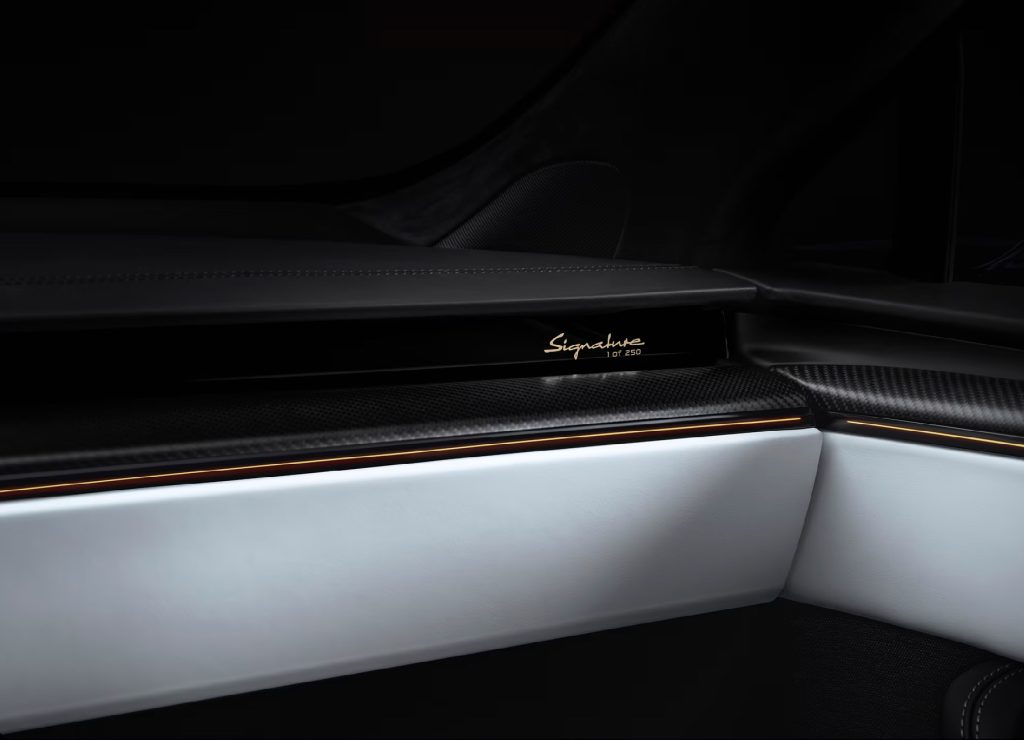
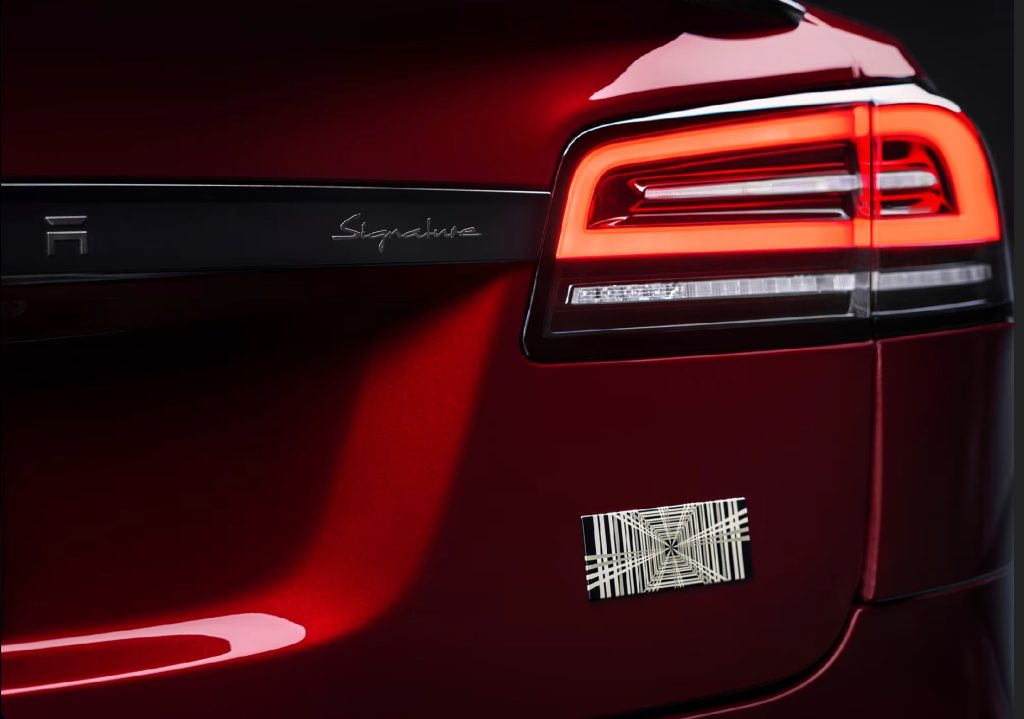
Tesla has announced a super limited Signature Edition run of 250 Model S Plaid and 100 Model X Plaid units as an invite only purchase in a bid to give its original flagship vehicles a proper send-off.
When the Model S first launched in 2012, the first 1,000 units sold were “Signature” editions that required a $40,000 deposit and cost nearly $100,000 each. Those early buyers were Tesla’s first real believers. This new Signature Edition deliberately echoes that moment, bookending a 14-year run with numbered collector hardware.
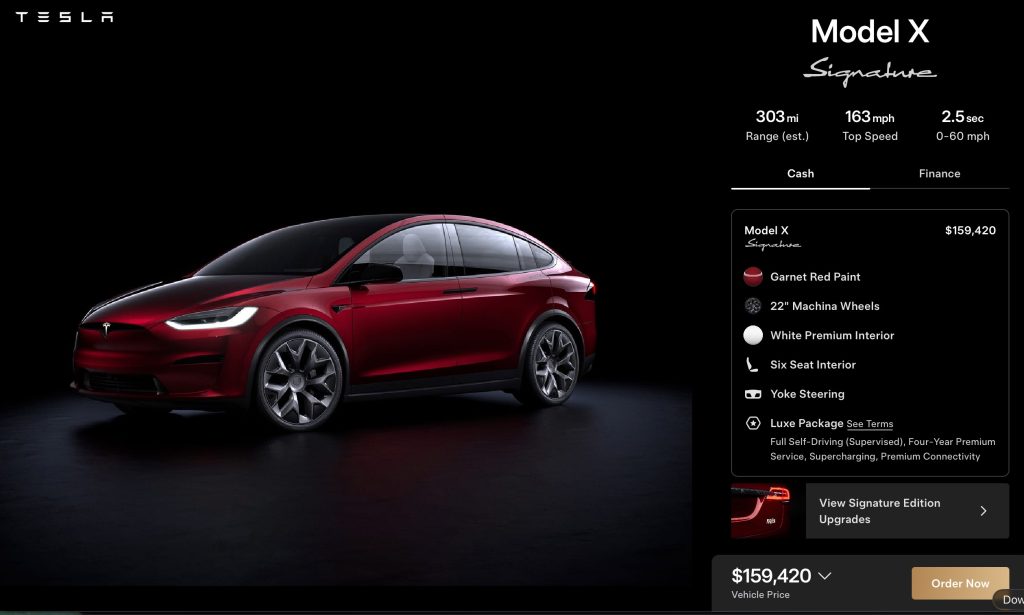
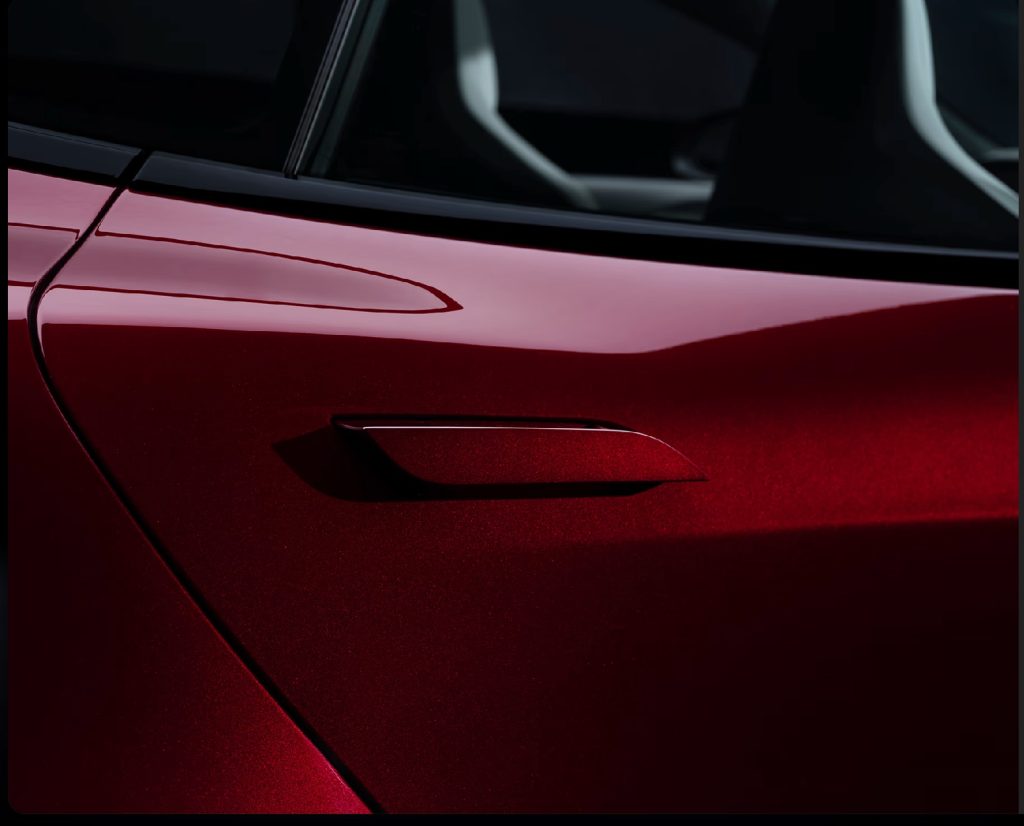
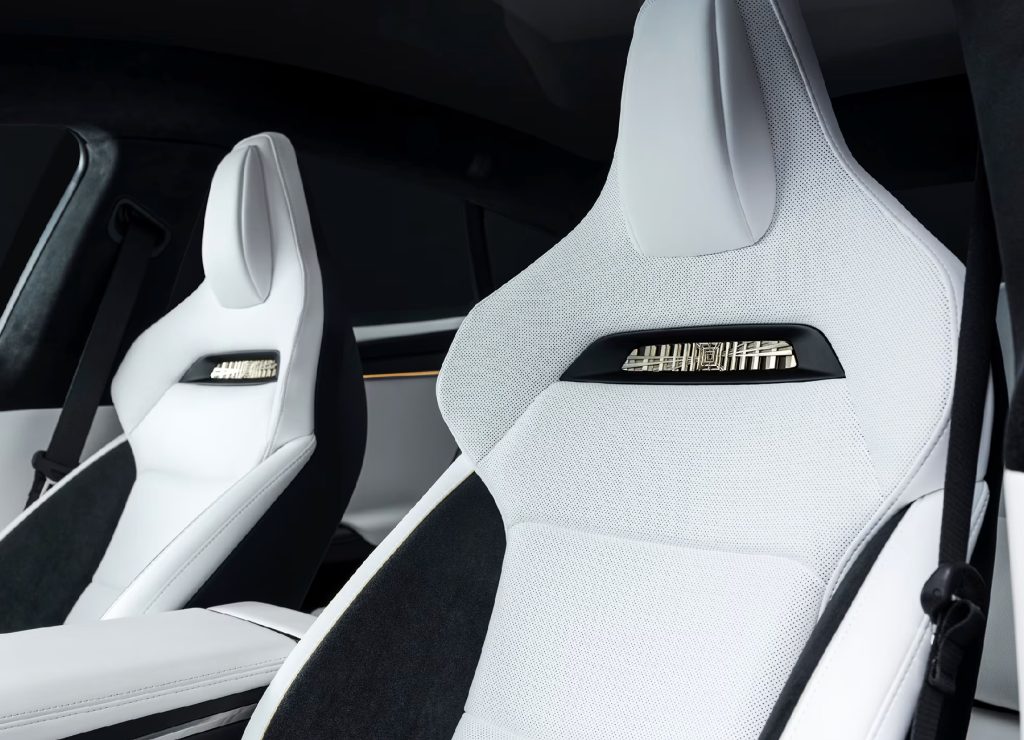
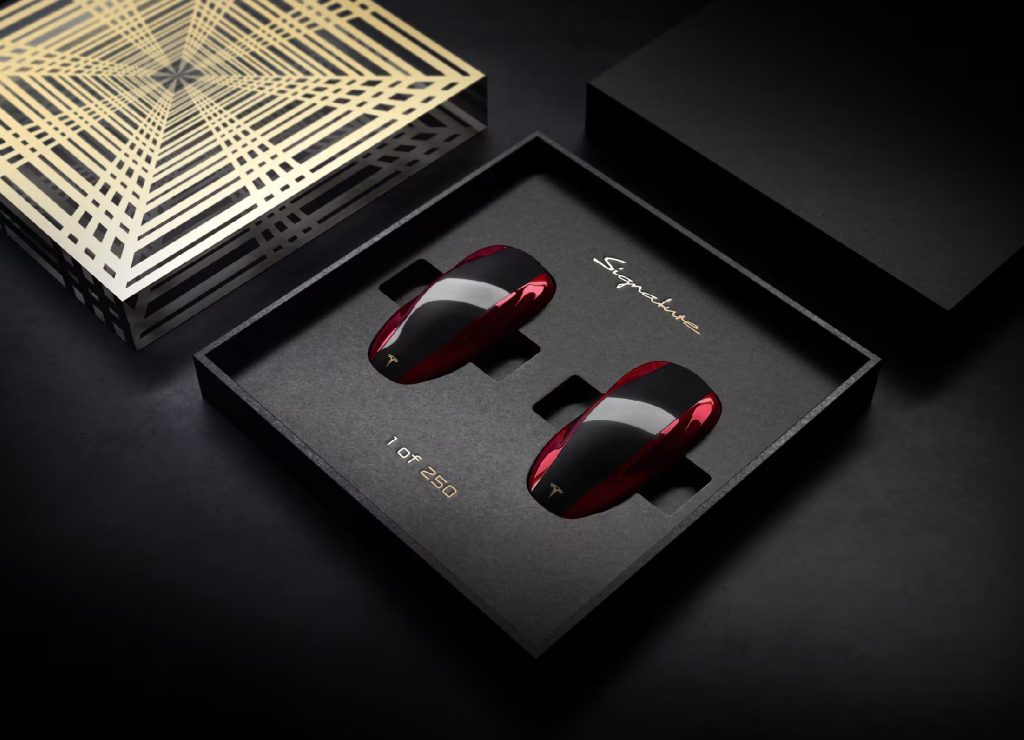
Both models are finished in an exclusive Garnet Red paint not available on any current Tesla production vehicle, with gold Tesla T badges up front, a gold Plaid badge and Signature badge at the rear, and a white Alcantara interior featuring gold Plaid seat badges, gold piping, Signature-marked door sills, and a numbered dash plate. The Model S adds carbon ceramic brakes with gold calipers. Every unit ships with Tesla’s Luxe Package, bundling Full Self-Driving (Supervised), four years of Premium Service, free lifetime Supercharging, and a Signature Edition key fob. Both are priced at $159,420, a roughly $35,000 premium over standard Plaid inventory.
The discontinuation is part of a broader strategic shift. At Tesla’s Q4 2025 earnings call, Musk described the decision as “slightly sad” but necessary, saying: “It’s time to basically bring the Model S and X programs to an end with an honorable discharge, because we’re really moving into a future that is based on autonomy.”
The Fremont factory floor that built these cars is being converted to manufacture Optimus humanoid robots, with a target of one million units annually.
Elon Musk
Tesla FSD in Europe vs. US: It’s not what you think
Tesla FSD is approved in the Netherlands, but the European version differs from what US drivers use.
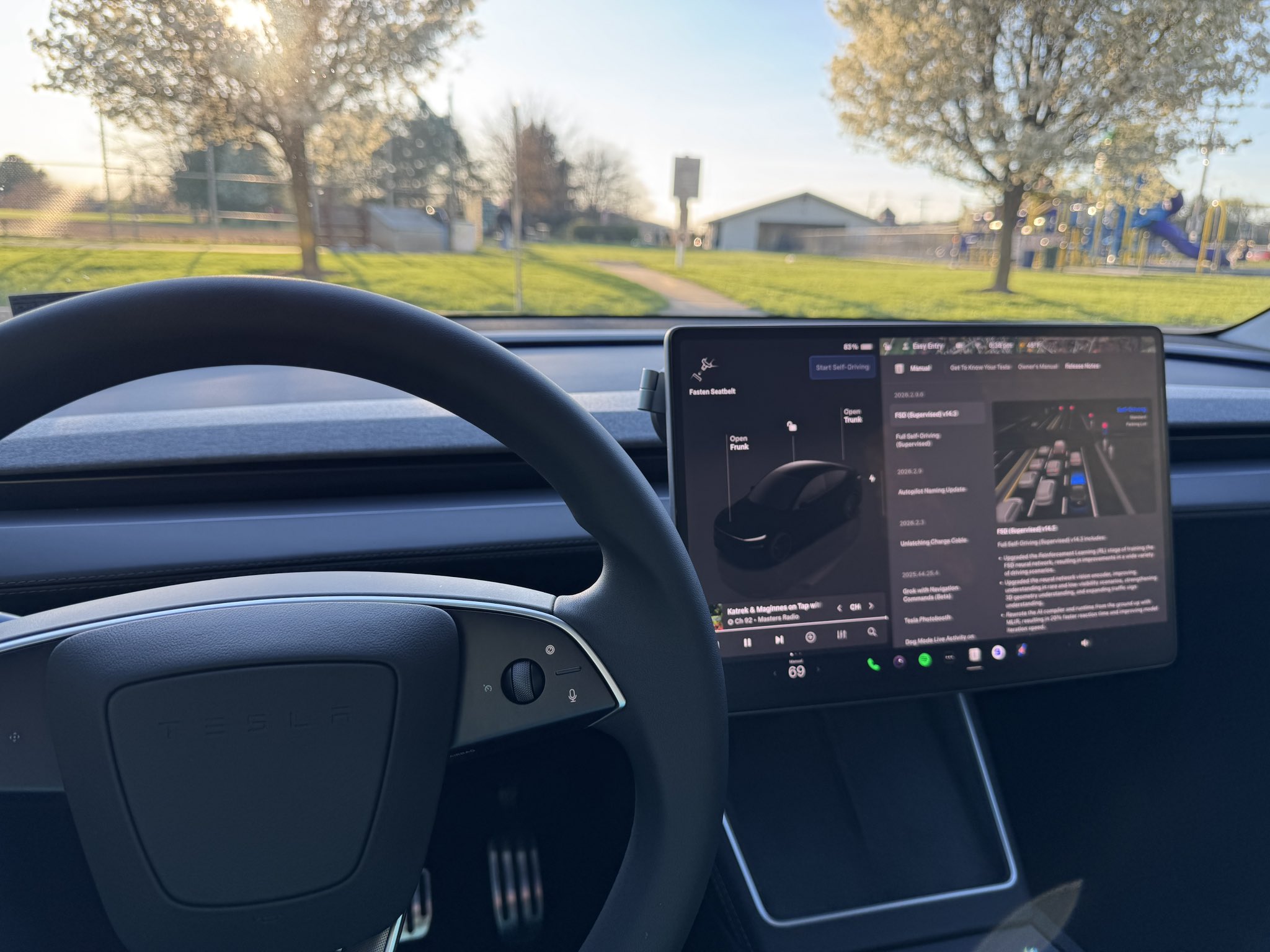
On April 10, 2026, the Dutch vehicle authority RDW granted Tesla the first European type approval for Full Self-Driving Supervised, making the Netherlands the first country on the continent to authorize Tesla’s semi-autonomous system for customer use on public roads.
As Teslarati reported, the RDW approval followed 18 months of testing, more than 1.6 million kilometers driven on EU roads, 13,000 customer ride-alongs, and documentation covering over 400 compliance requirements. Tesla Europe had been running public demo drives through cities like Amsterdam and Eindhoven since early 2026, giving passengers their first experience of the system on European streets.
The European version of FSD is not the same software US drivers use. The RDW’s own statement is direct, noting that the software versions and functionalities in the US and Europe “are therefore not comparable one-to-one.” We’ve compile a table below that captures the most significant differences between US-based Tesla FSD vs. European Tesla FSD that’s based on what regulators and Tesla have publicly confirmed.
| Feature | FSD US | FSD Europe (Netherlands) |
| Regulatory framework | Self-certification, post-market oversight | Pre-market type approval required (UN R-171 + Article 39) |
| Hands requirement | Hands-off permitted on highway | Hands must be available to take over immediately |
| Auto turning from stop lights | Available — navigates intersections, turns, and traffic signals autonomously | Available in EU build — confirmed in Amsterdam demo footage handling unprotected turns and signalized intersections |
| Driving modes | Multiple profiles including a more aggressive “Mad Max” mode | EU build is more conservative by default and errs on the side of restraint when it cannot confirm the limit |
| Summon | Available — Smart Summon navigates parking lots to driver | Status unclear — not confirmed as part of the RDW-approved feature set; urban FSD approval targeted separately for 2027 |
| Driver monitoring | Camera-based eye tracking | Stricter continuous monitoring with more frequent intervention alerts |
| Software version | FSD v14.3 | EU-specific builds that must be separately validated by RDW |
| Geographic restriction | US, Canada, China, Mexico, Australia, NZ, South Korea | Netherlands only; EU-wide vote pending summer 2026 |
| Subscription price | $99/month | €99/month |
| Full urban FSD scope | Available | Partial — separate urban application planned for 2027 |
The approval comes as Tesla is under real pressure to grow FSD subscriptions globally. Musk’s 2025 CEO compensation package, approved by shareholders, includes a milestone requiring 10 million active FSD subscriptions as one condition for his stock awards to vest. Tesla hit one million subscriptions during its Q4 2025 earnings call, which is a meaningful start, but still a long way from the target. Opening Europe as a market for subscriptions, rather than just hardware sales, directly accelerates that number.
Tesla has said it anticipates EU-wide recognition of the Dutch approval during summer 2026, which would extend FSD access to Germany, France, and other major markets through a mutual recognition process without each country repeating the full 18-month review. That timeline is Tesla’s projection, not a confirmed regulatory outcome. As Musk acknowledged at Davos in January 2026, “We hope to get Supervised Full Self-Driving approval in Europe, hopefully next month.”
News
Tesla’s troublesome Auto Wipers get a major upgrade
Tesla has quietly deployed a major over-the-air (OTA) update across its entire fleet, implementing a new patent that could finally solve one of the most complained-about features in its vehicles: the Auto Wipers.
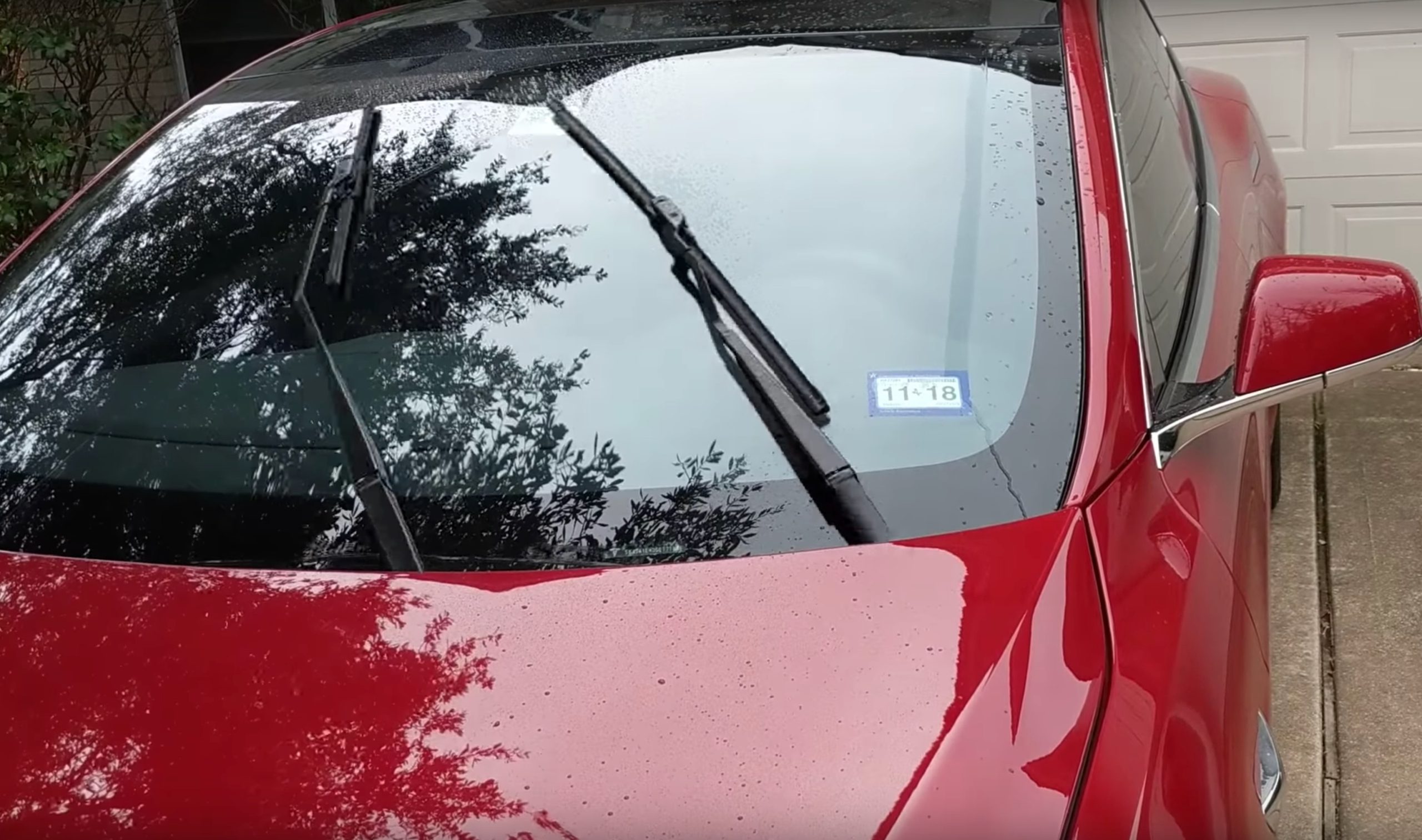
One of Tesla’s most complained-about features is that of the Auto Wipers, but they have recently received a major upgrade that impacts every vehicle in the company’s fleet, a company executive confirmed.
Tesla has quietly deployed a major over-the-air (OTA) update across its entire fleet, implementing a new patent that could finally solve one of the most complained-about features in its vehicles: the Auto Wipers.
Confirmed by senior Tesla AI engineer Yun-Ta Tsai on April 10, the improvement is based on patent US 20260097742 A1. It introduces an “energy balance model” that adds a tactile, physics-driven layer to the existing camera-based system—without requiring any new hardware.
🚨 Tesla has already implemented a new patent that improves the accuracy of the Auto Wiper system https://t.co/QjjKHKxSNv pic.twitter.com/mEbd04oJAu
— TESLARATI (@Teslarati) April 10, 2026
Tesla drivers have griped about auto wipers since the company ditched traditional rain sensors in favor of Tesla Vision around 2018.
Owners routinely report the wipers failing to activate in light drizzle or mist, leaving windshields streaked and visibility dangerously reduced. Just as often, they formerly blasted into high-speed mode on dry, sunny days, screeching across glass and risking scratches or premature blade wear.
This is a rare occurrence anymore, but many owners still report the feature having the wipers perform at the incorrect speed or frequency when precipitation is falling.
Tesla has tried repeatedly to fix the problem through software alone.
Early “Deep Rain” initiatives and the 2023 Autowiper v4 update used multi-camera video and refined neural networks, with Elon Musk promising “super good” performance. The 2024.14 update added manual sensitivity boosts, and later FSD versions claimed further gains. Yet complaints persisted.
Elon Musk apologizes for Tesla’s quirky auto wipers, hints at improvements
Vision systems struggle with edge cases—glare, bugs, reflections, or faint mist—because they rely purely on visual inference rather than physical detection
The new patent takes a different approach. The car’s computer constantly measures electrical power delivered to the wiper motor. It subtracts predictable losses—internal motor friction, linkage drag, and aerodynamic resistance—leaving only the friction force between the rubber blade and windshield glass.
Water lubricates the glass, sharply reducing friction; dry or icy surfaces increase it dramatically. This real-time “tactile” data acts as an independent check on the camera’s visual cues, instantly shutting down false triggers on dry glass and fine-tuning speed for actual rain.
The system can also detect ice and auto-activate defrost heaters, while long-term friction trends alert drivers when blades need replacing.
By fusing vision with precise motor-load physics, Tesla has created a hybrid sensor that is both elegant and cost-free. Owners have waited years for reliable auto wipers; this OTA rollout may finally deliver them.

Tesla launches 200mph Model S “Gold” Signature in invite-only purchase

Tesla FSD in Europe vs. US: It’s not what you think


