Lifestyle
Tesla owner spreads ‘pawsitive’ vibes, transports animals from high-kill shelters to forever homes

It is no secret that Tesla commands a dedicated community of supporters, many of whom are willing to pay it forward. Among the members of the Tesla community, there are those who are passionate about certain causes, and many use Tesla’s electric cars as their vehicles of choice when engaging in activities they care about.
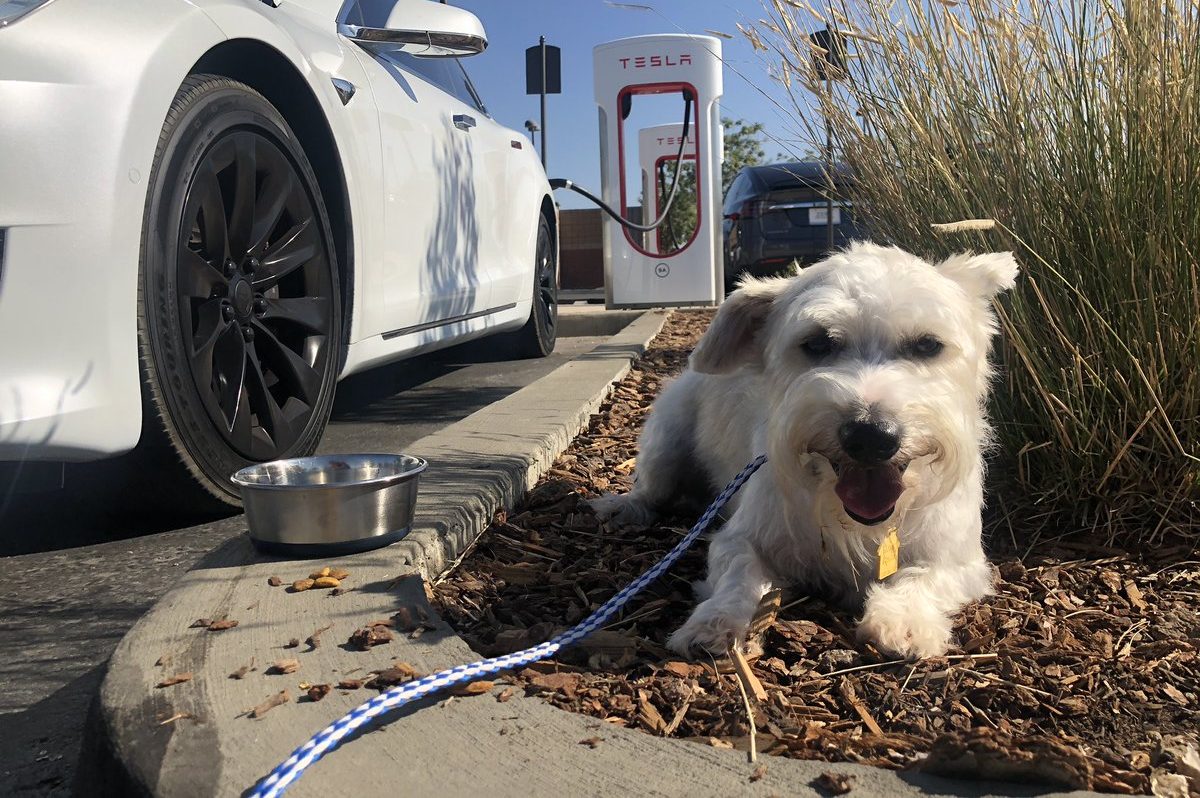
One of these Tesla owners is Margaret, who goes by the handle of @Manic_Marge on Twitter. Margaret manages the @dogsoftesla account, where she shares what she dubs as “pawsitive” news to the online community. While pets and fast cars are pretty much a surefire way to get a lot of traction on the internet, Margaret’s Dogs of Tesla account is also there to promote and support a good cause.
The Tesla owner uses her Model S to help transport rescue dogs from high-kill shelters, which are facilities that are more likely to euthanize rescue animals to avoid overcrowding. High-kill shelters are a controversial topic in the animal rescue industry, particularly since some facilities have a tendency to refuse animals even if they legitimately need help.
https://twitter.com/dogsoftesla/status/1060269940588965888
As a way to help animals that could not be supported by these shelters, Margaret works to find good homes for rescue pets. And when she does, she uses her Tesla Model S to transport the animal to its forever home. In a statement to Inverse, Margaret notes that her rescue activities were inspired by a friend and fellow Tesla owner, who uses a Model X SUV to transport rescue dogs.
“I help transport rescue dogs from high kill shelters in my Tesla and document this here (in the Dogs of Tesla social media accounts) in hopes of encouraging others to do the same. My friend Nalyne Lunati who I met on Tesla K9 Facebook group inspired me, as she regularly transports rescue dogs in her Model X,” Margaret said.
Dogs of Tesla actually started as a far more casual page for the Model S owner, who initially set up the account to share photos of Frankie, her French Bulldog. Over time, though, she also began sharing pet pictures from other members of the Tesla community, particularly those from the emerging #FrunkPuppy trend.
https://twitter.com/dogsoftesla/status/1060285374159704064
For now, the Tesla owner continues to use her Tesla Model S to transport rescue pets to their forever homes. And considering that even a Model S with 400,000 miles on it performs perfectly without any issues, there is a good chance that Margaret’s electric car could end up transporting many more rescue animals in the future. Of course, pictures from these ever-special rescue trips would most likely make their way to Dogs of Tesla’s social media accounts.
Being a company whose mission is to accelerate the adoption of renewable energy and transportation, Tesla is bound to be polarizing. Over the years, the company has attracted an equal number of dedicated supporters and aggressive critics. Behind the debates between Tesla bulls and bears every day in social media, though, lies electric car owners who continue to use their vehicles to make a difference.


Elon Musk
Elon Musk’s Boring Co. Tunnel Vision Challenge ends with a surprise for Louisiana, Maryland and Dallas
The Boring Company stunned three cities today, awarding New Orleans, Baltimore, and Dallas free underground Loop tunnels.

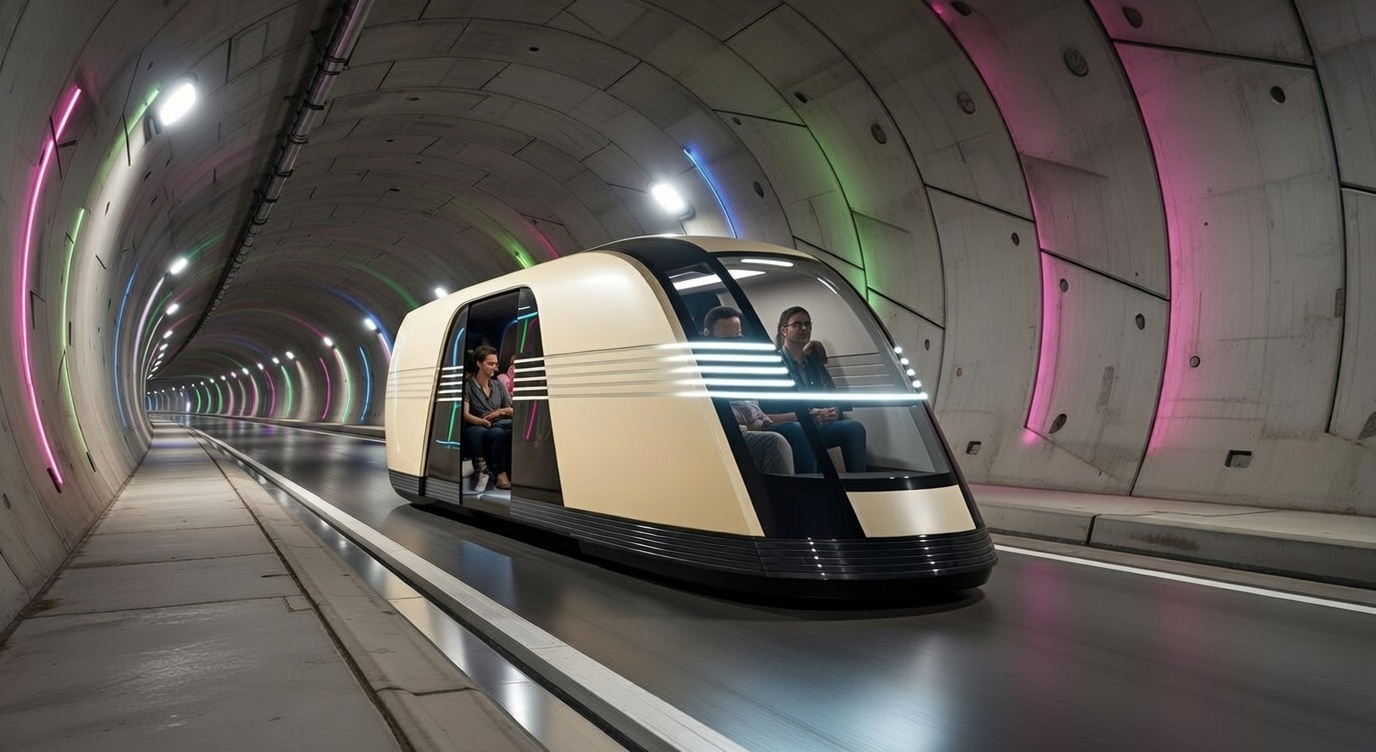
Elon Musk’s The Boring Company (TBC) announced today that it is building free underground Loop tunnels in three American cities: New Orleans, Louisiana; Baltimore, Maryland; and Dallas, Texas. The company had promised one winner when it launched the Tunnel Vision Challenge in January. After receiving 487 submissions, it selected three, committing to fund and construct all of them pending a feasibility review, entirely at its own expense. For a company that has faced years of skepticism over the gap between its promises and its delivered projects, choosing to expand its commitment rather than narrow it is a notable shift in both scale and accountability.
All three projects will now enter a rigorous, fully funded diligence phase that includes meetings with elected officials, regulators, community and business leaders, geotechnical borings, and a complete investigation of subsurface utilities and infrastructure. TBC confirmed that all costs associated with this diligence process are 100% funded by the company. If all three projects pass feasibility, all three get built. If only one clears the bar, that one gets built. The company’s willingness to fund the due diligence regardless of outcome removes one of the most common early-stage barriers that kills promising infrastructure proposals before they leave a spreadsheet.
Beyond the three winners, TBC announced it will continue working with two additional entrants it found compelling enough to pursue independently: the Hendersonville Utility Tunnel in Hendersonville, Tennessee, and the Morgan’s Wonderland Tunnel in San Antonio, Texas, which would notably serve one of the nation’s premier theme parks built specifically for guests with special needs.
The challenge also coincides with TBC’s most active construction period to date. The company recently began drilling on the Music City Loop near the Tennessee State Capitol in Nashville, and in February it broke ground on a Loop in Dubai. Musk has long argued that the fundamental problem with urban infrastructure is cost and bureaucratic inertia, not engineering. “The key to solving traffic is making going 3D either up or down,” he said in 2018, a conviction now reflected in a company structure built to absorb the financial risk that typically stalls public projects for years.
Music City Loop could highlight The Boring Company’s real disruption
The Tunnel Vision Challenge’s most underappreciated element may be what it produced beyond three winners. Submissions came from individuals, companies, and governments across states including Alaska, Arkansas, Colorado, Kansas, Louisiana, Maryland, New York, and Texas, as well as from international entrants. Musk captured the underlying logic years ago when he said, “Traffic is driving me nuts. I’m going to build a tunnel boring machine and just start digging.” Today, three American cities are counting on exactly that.
Tunnel Vision Challenge results!
We’ve been overwhelmed with the amazing submissions…so we are announcing three winners!
The Thrilling Three are:
– NOLA Loop (New Orleans, LA)
– Ravens Loop (Baltimore, MD)
– University Hills Loop (Dallas, TX)What happens next? TBC and the… https://t.co/cY2ULftfiK
— The Boring Company (@boringcompany) March 24, 2026
Elon Musk
Elon Musk offers to pay TSA salaries as government shutdown leaves agents without paychecks
Elon Musk offered to personally cover TSA salaries as the DHS shutdown deepens travel chaos nationwide.
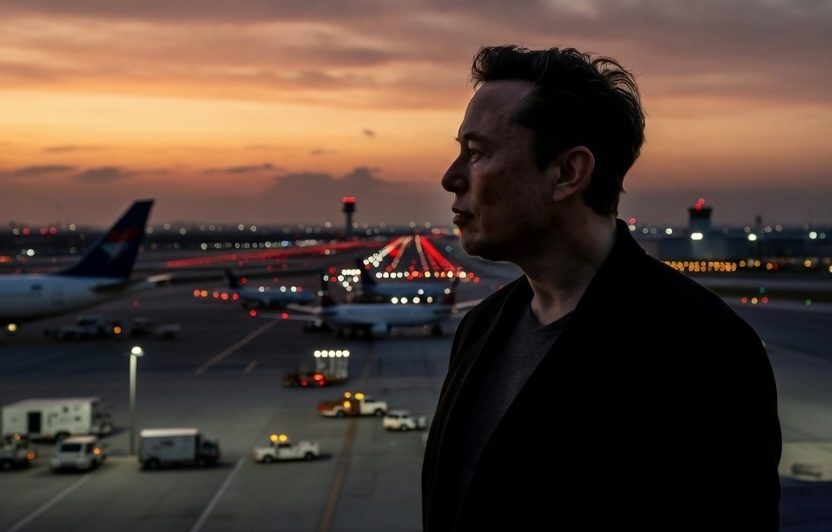
Elon Musk says that he is willing to personally cover the salaries of Transportation Security Administration (TSA) workers caught in the crossfire of a partial government shutdown that has now dragged on for over a month. “I would like to offer to pay the salaries of TSA personnel during this funding impasse that is negatively affecting the lives of so many Americans at airports throughout the country,” Musk wrote.
I would like to offer to pay the salaries of TSA personnel during this funding impasse that is negatively affecting the lives of so many Americans at airports throughout the country
— Elon Musk (@elonmusk) March 21, 2026
The offer arrives as Congress let funding expire for the Department of Homeland Security on February 14, amid a disagreement over immigration enforcement, leaving most TSA employees classified as essential and on duty but working without pay. The timing could not be more disruptive, as the shutdown is colliding directly with spring break travel season when millions of Americans are in the air.
This is not the first time TSA workers have endured this kind of hardship. TSA agents are being asked to work without pay until congressional action unblocks their paychecks, having previously held out through the longest government shutdown in U.S. history at 43 days. The pattern reveals a systemic failure in how Congress funds critical security infrastructure, and Musk’s offer shines a spotlight on that recurring failure at a moment when the public is directly feeling its effects through long lines and terminal closures.
Whether Musk can legally follow through remains unclear, as federal law generally prohibits government employees from receiving outside compensation related to their official duties.
Elon Musk
Elon Musk launches TERAFAB: The $25B Tesla-SpaceXAI chip factory that will rewire the AI industry
Tesla, SpaceX, and xAI unveiled TERAFAB, a $25B chip factory targeting one terawatt of AI compute annually.
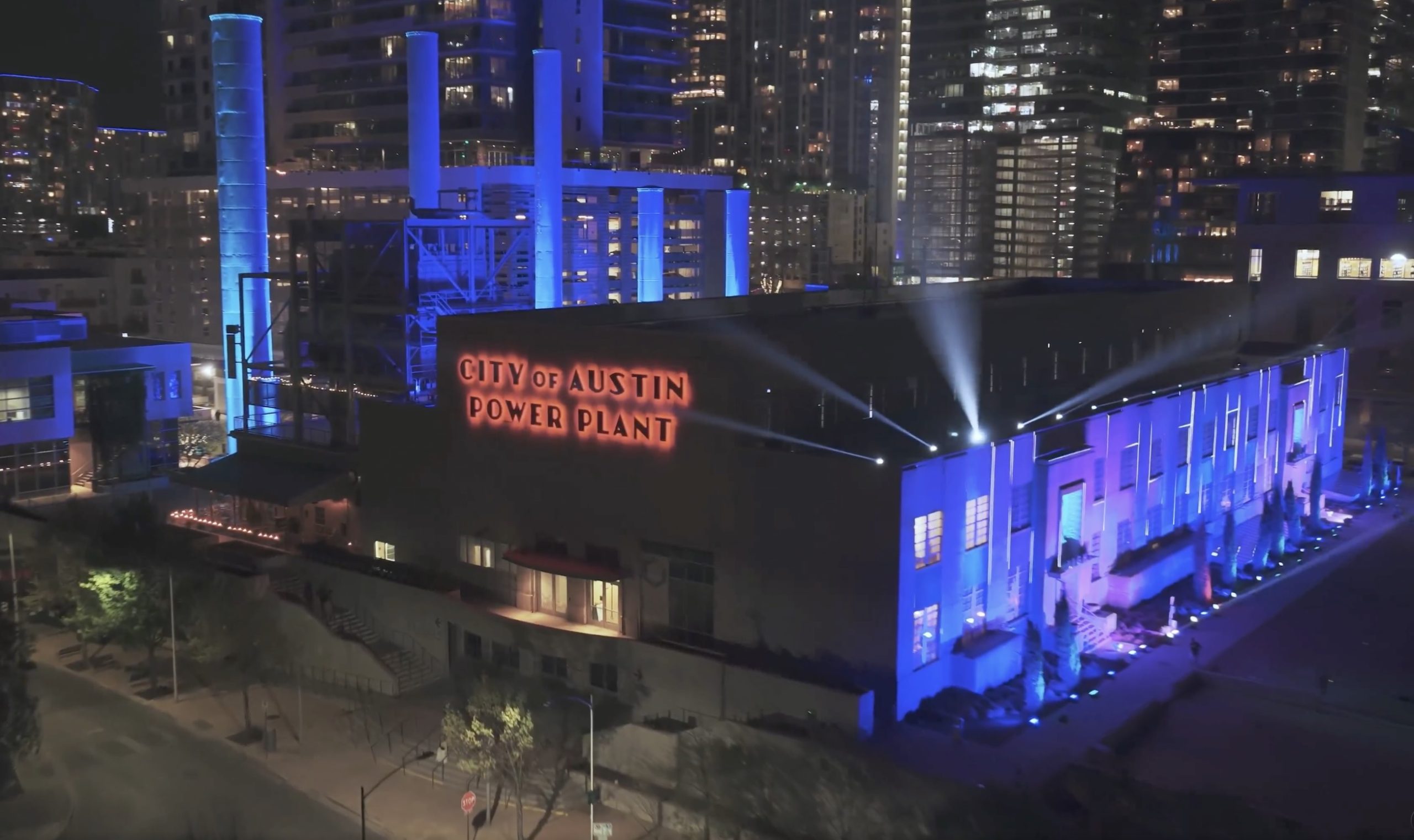
Elon Musk took the stage over the weekend at the defunct Seaholm Power Plant in Austin, Texas, to officially unveil TERAFAB, a $20-25 billion joint venture between Tesla, SpaceX, and xAI that he described as “the most epic chip building exercise in history by far.” The announcement marks the most ambitious infrastructure bet Musk has made since Gigafactory 1 in Sparks, Nevada, and it fuses three of his companies into a single, vertically integrated AI hardware machine for the first time.
TERAFAB is designed to consolidate every stage of semiconductor production under one roof, including chip design, lithography, fabrication, memory production, advanced packaging, and testing. At full capacity, the facility would scale to roughly 70% of the global output from the current world’s largest semiconductor foundry from Taiwan Semiconductor Manufacturing Company (TSMC).
Elon Musk’s stated goal is one terawatt of computing power annually, split between Tesla’s AI5 inference chips for vehicles and Optimus robots, and D3 chips built specifically for SpaceXAI’s orbital satellite constellation.
Tesla Terafab set for launch: Inside the $20B AI chip factory that will reshape the auto industry
The logic behind the merger of these three entities is rooted in a supply chain crisis Musk has been signaling for over a year. At Tesla’s Q4 2025 earnings call, he warned investors that external chip capacity from TSMC, Samsung, and Micron would hit a ceiling within three to four years. “We’re very grateful to our existing supply chain, to Samsung, TSMC, Micron and others,” Musk acknowledged at the Terafab event, “but there’s a maximum rate at which they’re comfortable expanding.” Building in-house was, in his framing, not a strategic option, but a necessity.
The space angle is where the announcement becomes genuinely unprecedented. Musk said 80% of Terafab’s compute output would be directed toward space-based orbital AI satellites, arguing that solar irradiance in space is roughly 5x greater than at Earth’s surface, and that heat rejection in vacuum makes thermal scaling viable. This directly feeds the SpaceXAI vision, which is betting that within two to three years, running AI workloads in orbit will be cheaper than doing so on the ground. The satellites, powered by constant solar energy, would effectively turn low Earth orbit into the world’s largest data center.
Will Tesla join the fold? Predicting a triple merger with SpaceX and xAI
Historically, this announcement threads together every major Musk initiative of the past two years: the xAI-SpaceX merger, Tesla’s $2.9 billion solar equipment talks with Chinese suppliers, the 100 GW domestic solar manufacturing push, the Optimus humanoid robot program, and Starship’s development. TERAFAB is the capstone that ties them into a single coherent architecture — chips made on Earth, launched by SpaceX, powered by Tesla solar, run by xAI, and ultimately extended to the Moon.
“I want us to live long enough to see the mass driver on the moon, because that’s going to be incredibly epic,”Musk said during the presentation.
Announcing TERAFAB: the next step towards becoming a galactic civilization https://t.co/IDKey07mJa
— Tesla (@Tesla) March 22, 2026

Tesla shows off mysterious vehicle at Giga Texas

Tesla Cybertruck just won a rare and elusive crash safety honor


