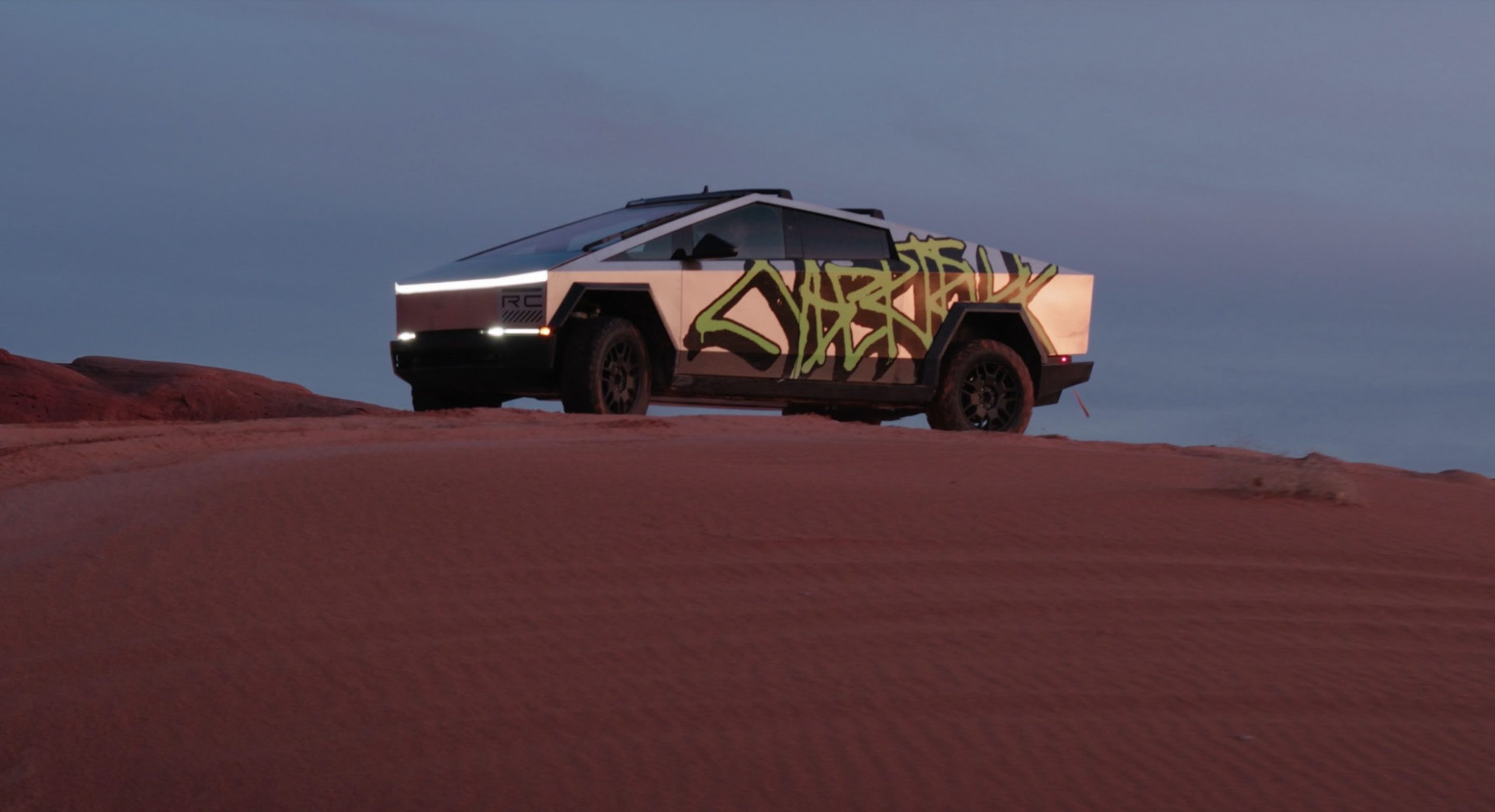
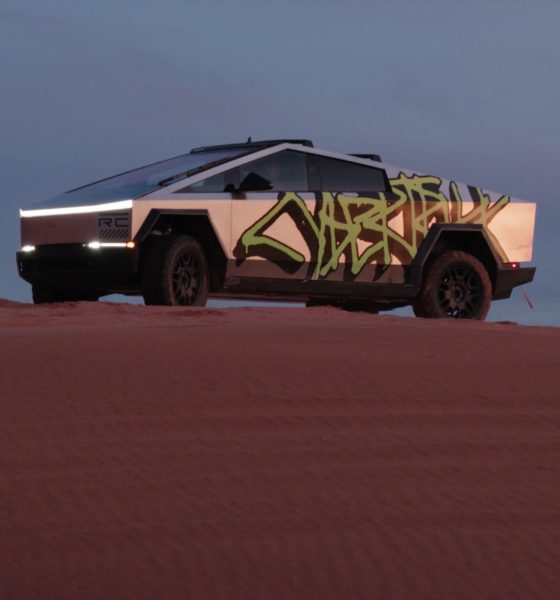

Tesla’s Cybertruck team definitely seems like they are serious about providing owners of the all-electric pickup truck as much information about their vehicles as possible. This was highlighted by the electric vehicle maker recently as it released a dedicated off-road guide for the Cybertruck.
A look at Tesla’s Cybertruck off-road guide shows that the document provides a close look at the all-electric pickup truck’s off-road capabilities. It features explainers for the vehicle’s different driving modes, as well as useful tips for off-roading. It even includes information for beginners such as an off-road checklist and a guide for spotting, both of which are quite invaluable.
A particularly useful portion of Tesla’s Cybertruck off-road guide is its section on vehicle modifications, which emphasizes that physical changes or additions to the vehicle would have effects on some of the truck’s performance or range. This may seem like common sense, but considering the negative range observations from motoring channels like YouTube’s Donut Media, which used a modified Cybertruck for its review, such reminders are evidently needed.
As noted by Cybertruck Lead Engineer Wes Morrill in a post on X, Tesla put together the Cybertruck off-road guide as a deep dive into all the functionality of the all-electric pickup truck, as well as why and how to use them. Morrill also noted that the guide is intended to make off-roading approachable for drivers who have never really considered it until they got the Cybertruck.
Roads? Where we're going, we don't need roads
We put together this detailed guide for two reasons:
1. Deep dive into all the functionality, how and why to use it
2. Make off-roading approachable for those who had never considered it until getting their truck https://t.co/7oAirlraQE— Wes (@wmorrill3) April 30, 2024
Such a document would definitely be useful for numerous Cybertruck drivers, especially those who are not well-versed in off-road driving. After all, the Cybertruck seems to be a vehicle that attracts mainstream customers, including those who are only familiar with driving on smooth, paved roads. This could be seen in videos of Cybertrucks getting stuck in snow or other terrain that have gone viral over the past months.
As per EV watchers, a good number of the viral “cyberstuck” videos that made mainstream headlines were mostly due to driver inexperience. With the Cybertruck off-road guide in place, drivers of the vehicle would hopefully be able to operate the all-electric pickup truck in a more proficient manner.
Tesla’s off-road guide for the Cybertruck can be viewed below.
Don’t hesitate to contact us with news tips. Just send a message to simon@teslarati.com to give us a heads up.



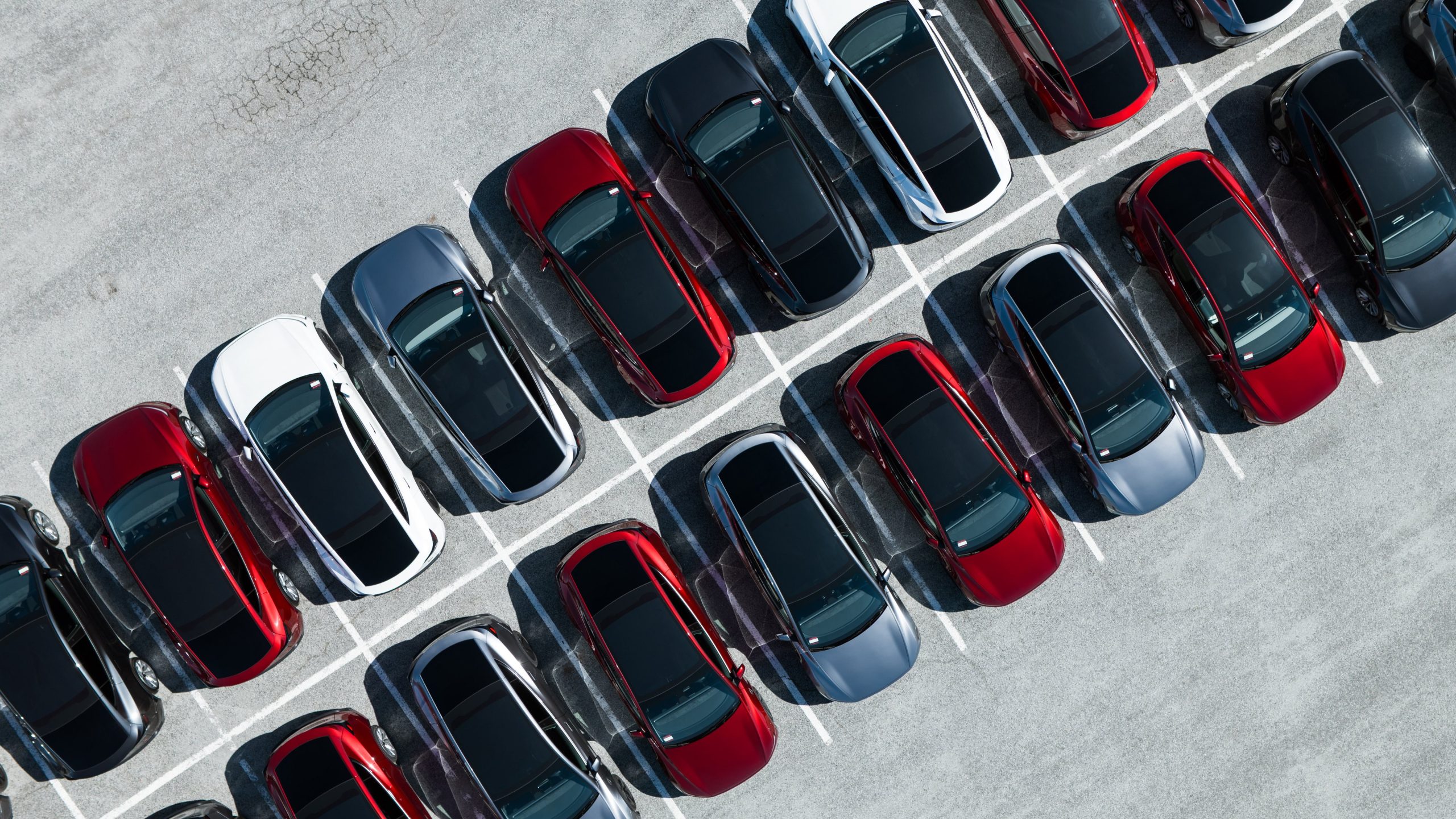
Tesla shocked with its quarterly delivery report yesterday by reporting it delivered 480,126 vehicles in the second quarter of 2026, a 25 percent year-over-year jump that crushed Wall Street estimates of roughly 400,000–408,000 units. Production reached 451,758, with Model 3 and Model Y accounting for the vast majority.
The result ended two years of annual delivery declines and drew down inventory, signaling demand that outpaced earlier production.
Tesla bears had long warned that the expiration of the U.S. federal EV tax credit would hammer demand. Without the $7,500 incentive, they argued, American buyers would balk at higher effective prices, leading to a sharp slowdown.
Will Tesla thrive without the EV tax credit? Five reasons why they might
That narrative has not played out as predicted. While U.S. EV sales faced broader headwinds, Tesla’s global numbers held firm, underscoring the company’s ability to offset domestic pressure through other levers.
There are several plausible factors that explain Tesla’s strength during this quarter. Let’s take a look at them:
Rising Gas Prices
Rising gas prices provided a powerful tailwind, especially in the U.S.
Geopolitical tensions tied to the Iran conflict pushed fuel costs higher earlier in the year, amplifying the lifetime savings of electric vehicles. Even as oil prices later moderated, the psychological and financial impact lingered, encouraging fleet operators and private buyers to accelerate EV purchases. European sales rebounded sharply, helping drive the quarter’s outperformance.
Full Self-Driving Adoption
Advances in Full Self-Driving (FSD) supervised software also appear to have boosted appeal. Tesla expanded FSD availability in select European markets and continued refining the system.
No complaints from me because I finally got to enjoy this drive on FSD; I usually like to manually drive down this mountain https://t.co/RBFniRPSR0 pic.twitter.com/XQ5sOpN1Yg
— TESLARATI (@Teslarati) June 26, 2026
For tech-oriented buyers, the promise of future autonomy and enhanced driver-assistance features adds perceived value beyond the car itself. This differentiation helps Tesla stand out in a crowded market where competitors focus primarily on hardware and basic range.
Pricing Strategy, Affordable Configurations
Tesla’s offerings and its pricing strategy during Q2 further stimulated demand. Tesla introduced lower-cost versions of the Model 3 and Model Y, widening accessibility without sacrificing core margins.
These moves countered affordability concerns and attracted buyers who had been waiting on the sidelines. Combined with attractive financing and leasing options, the pricing strategy converted interest into actual orders more effectively than many analysts expected.
Broad European Recovery
Supported by government incentives, corporate fleet electrification, and easing political headwinds around CEO Elon Musk, Tesla was supplied additional momentum through stronger registration numbers throughout Europe.
Strong exports from the Shanghai Gigafactory and a production ramp at Giga Berlin ensured supply met this resurgent demand. Corporate buyers, in particular, accelerated transitions to EVs to meet sustainability targets, providing a steady volume base.
These elements created a virtuous cycle that delivered the strong deliveries report. While bears correctly flagged the loss of the U.S. tax credit as a risk, Tesla’s diversified playbook demonstrated that it could remain resilient against those headwinds. The Q2 beat suggests the company remains adept at navigating shifting market conditions, even as competition intensifies.
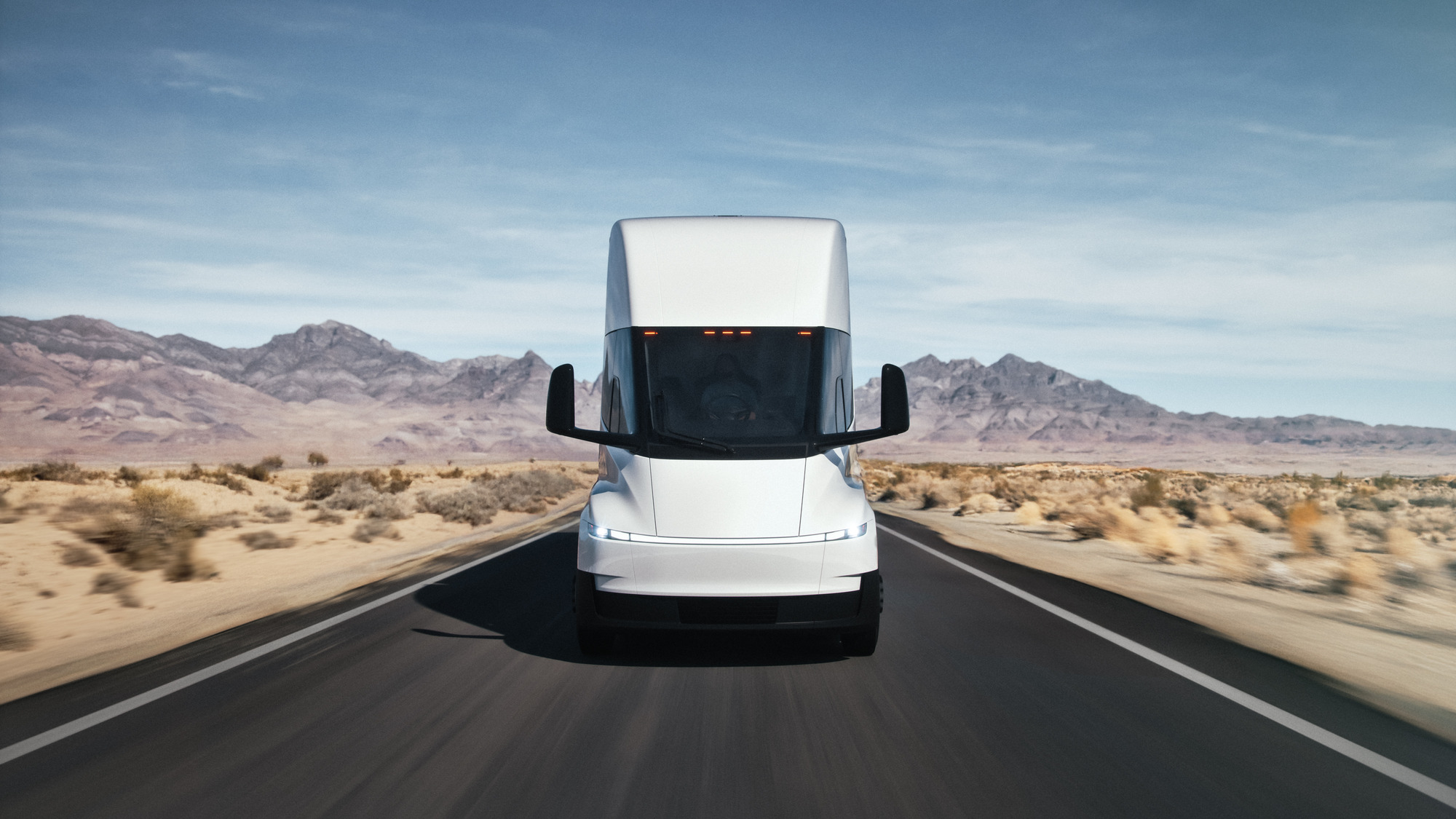
A Tesla Semi was involved in a fatal collision on U.S. Highway 50 in Dayton, Nevada, on Sunday, June 28, 2026, marking the first known fatal crash involving the electric Class 8 truck. The incident occurred around 7:20 a.m. at the intersection with Traditions Parkway, approximately 40 miles east of Reno and close to Tesla’s Gigafactory Nevada.
According to the Lyon County Sheriff’s Office and the Nevada State Police Highway Patrol, a semi-truck struck two passenger vehicles stopped at a traffic signal. The truck hit the vehicles from behind. Two people were pronounced dead at the scene, and a third person suffered life-threatening injuries and was flown to a hospital, Forbes reported.
Preliminary statements gathered at the scene by the Lyon County Sheriff’s Office suggested the truck driver may have fallen asleep at the wheel. However, the Nevada Highway Patrol, which is leading the investigation, stated that the official cause has not yet been determined.
Additional information is expected to be released early the following week. The truck was seized for evidence as part of the ongoing probe.
Responders at the scene included deputies from the Lyon County Sheriff’s Office, personnel from the Nevada Highway Patrol, Central Lyon County Fire Department, and the Nevada Department of Transportation. The crash led to the temporary closure of U.S. 50 in both directions.
The Tesla Semi is Tesla’s battery-electric heavy-duty truck, produced at the nearby Gigafactory in Nevada. Authorities initially described the vehicle as a semi-truck; its make was subsequently confirmed through reporting and scene identification; an interesting bit of information here, as the Semi is not yet available publicly and many do not know that Tesla builds electric trucks.
The investigation remains active, with no further official details on contributing factors or vehicle systems released as of early July 2026.
This incident highlights ongoing scrutiny of commercial vehicle safety on Nevada highways, particularly involving fatigue. Law enforcement continues to gather evidence and witness statements.
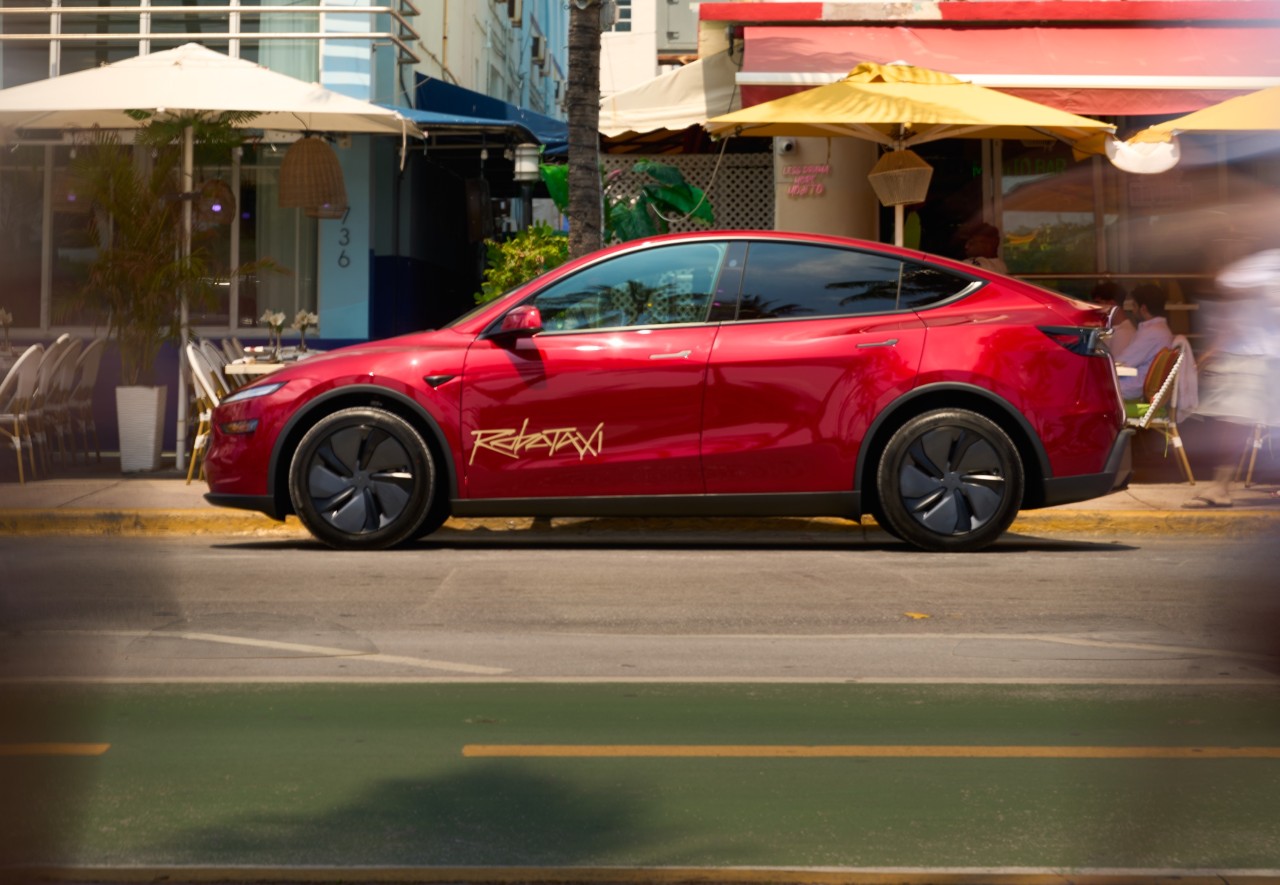
Tesla has expanded its Robotaxi program to Miami, Florida, marking the third state the autonomous ride-hailing platform has made its way to since launching last Summer.
Tesla announced today that the Robotaxi suite would now officially launch rides in a geofence in Miami:
🚨 Tesla’s “Long Weekend” continues with a HUGE announcement regarding Robotaxi!
It’s now in Miami!
Miami joins Austin, Dallas, Houston, and the Bay Area! https://t.co/ujjYjJT3Im pic.twitter.com/yPe1ZdSQIE
— TESLARATI (@Teslarati) July 3, 2026
The first geofence in Miami covers approximately 10 to 14 square miles. The area appears to be focused on western and central Miami, including Miami International Airport (MIA). It also includes popular routes like SR 826 (Palmetto Expressway), US 41 (Tamiami Trail), and connectors such as SR 968, 953, 959, and 972.
This is Tesla’s initial Miami launch zone, smaller and more targeted than some competitors’ areas (for example, Waymo’s initial rollout was broader in eastern neighborhoods). It prioritizes high-traffic, airport-linked routes before wider expansion.
The expansion is a huge signal for Tesla that it is now operating in Florida, a heavy-traffic state with many tourist areas, including Fort Lauderdale, Palm Beach, and the Boynton area, all of which are coastal and will attract perhaps millions of tourists in any given year.
¿Qué lo que Miami?
Robotaxi now available in Miami pic.twitter.com/P1m283seZU
— Tesla Robotaxi (@robotaxi) July 3, 2026
The Tesla Robotaxi network launched last year on June 22, in Austin, Texas, beginning limited commercial operations in that city. It expanded shortly thereafter into the San Francisco Bay Area of California in late July 2025, marking entry into a second state with service covering key areas such as San Francisco, San Jose, and Berkeley.
Full commercial service was achieved in Austin by November 18, 2025, strengthening its presence within Texas before further growth.
In 2026, the network continued expanding across Texas with the addition of Dallas and Houston on April 18, significantly broadening its footprint in the state. This new launch into Miami marks Tesla entering a new state and bringing active locations to include Austin, Dallas, Houston, San Antonio in Texas, and the Bay Area in California.
These sequential expansions have steadily increased the network’s reach across major metropolitan areas in Texas, California, and Florida, focusing on scaling operations city by city and state by state since the initial Austin debut.

Tesla’s strong Q2 deliveries: Four key drivers behind the surprise

Tesla Semi involved in first known fatal crash in Nevada


