News
Tesla reveals it is spending drastically more money on R&D

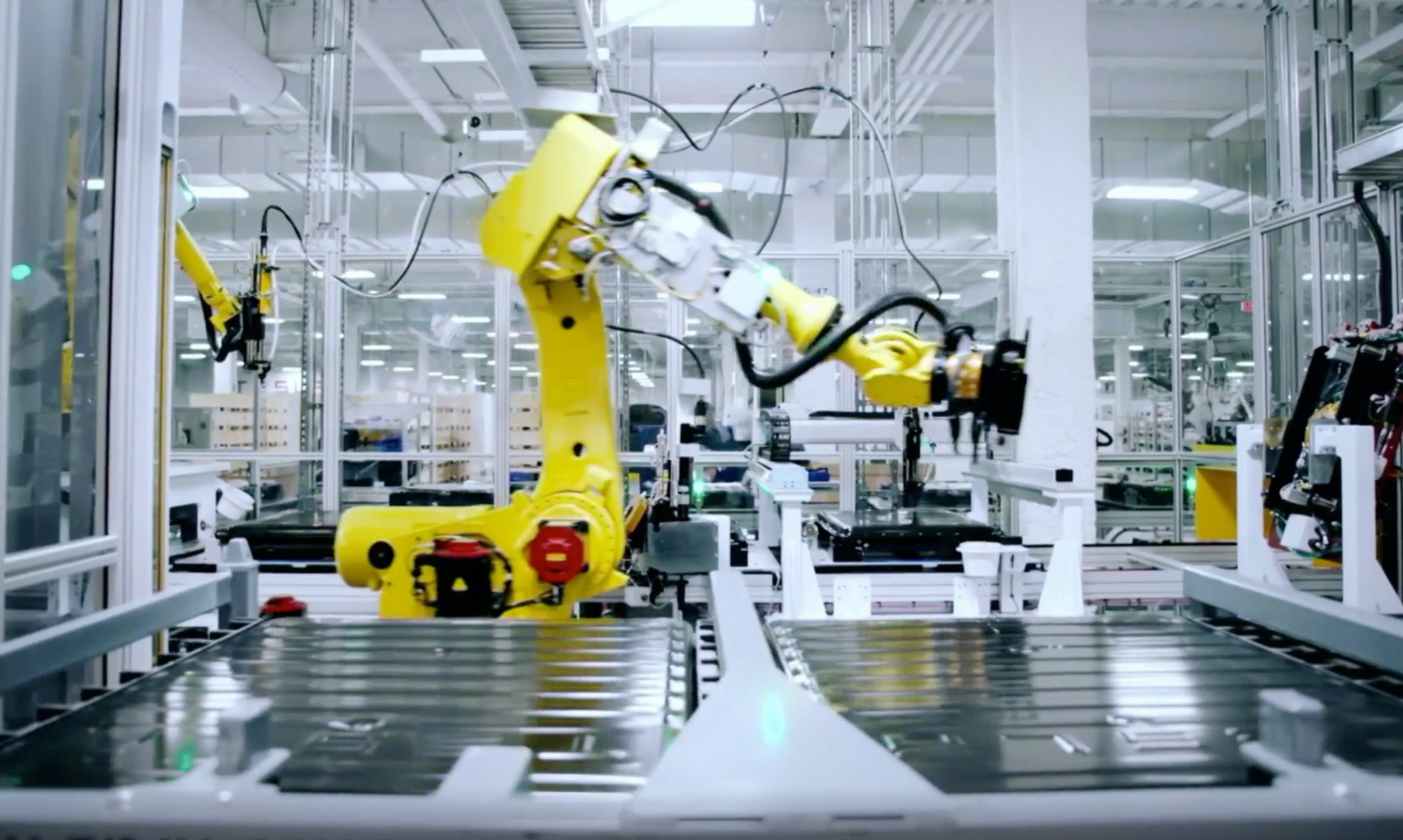
Tesla is spending drastically more money on Research and Development for its vehicles and other technologies like battery cell development, it revealed in a 10-Q filing with the SEC. However, the most expensive portion of the increase in R&D expenditures came from drastic growth in employee and labor-related expenses as Tesla’s workforce continues to grow. Still, the redesign of the Model S and X, along with the development of proprietary battery cells, also contributed to the exponential growth in money spent.
Tesla is one of the fastest-growing companies in the world. It is already the most valuable car company in existence, and as the electric automaker expands its footprint to other countries and regions, it is hiring a vast number of new people to handle any responsibility. From executives to production workers, Tesla is hiring in nearly every facet of its business, and its expenses are growing as a result.
Expenses in R&D increased $342 million, or 106% in Q1 2021 compared to Q1 2020. Tesla attributes the increase in R&D costs to a growth in the employee workforce, including anything from more people working at the company to an appreciation of the stock price.
Tesla wrote:
“R&D expenses increased $342 million, or 106%, in the three months ended March 31, 2021, as compared to the three months ended March 31, 2020. The increase was primarily due to a $147 million increase in employee and labor related expenses due to an increase in headcount and increased payroll taxes related to appreciation of our stock price.”
Earlier this month, we reported that Tesla’s workforce had grown considerably, according to the 10-K filing it released with the SEC. The workforce increased by 22,651 total full-time employees in 2020 compared to 2019, and the number continues to expand as Tesla opens more factories, service centers, and showroom locations globally.
Tesla’s Fremont factory workforce is growing and the automaker is preparing for it
Past the increased workforce and overall company growth, a significant amount of money was pumped into expensed materials. These expenditures contributed to the “expanding product roadmap,” which included the redesigned and refreshed Model S and Model X, along with the 4680 battery cell project that Tesla has been working on.
Tesla recorded “a $122 million increase in R&D expensed materials and outside services and a $60 million increase in stock-based compensation expense. These increases were to support our expanding product roadmap, such as the new versions of Model S and Model X and technologies including our proprietary battery cells.”
The percentage of expenses due to the increased revenue increased from 5 to 6% Year-over-Year, but the increased expenditures were offset by “an increase in total revenues from expanding sales,” Tesla said.
Tesla has shown it funnels plenty of money into its products and aims to improve product functionality through internal expenditures. For years, Elon Musk has stood by his strategy not to hold a budget for advertising but instead funnel that money into the product itself. “Other companies spend money on advertising & manipulating public opinion, Tesla focuses on the product,” Musk said.


News
Tesla FSD fleet is nearing 7 billion total miles, including 2.5 billion city miles
As can be seen on Tesla’s official FSD webpage, vehicles equipped with the system have now navigated over 6.99 billion miles.

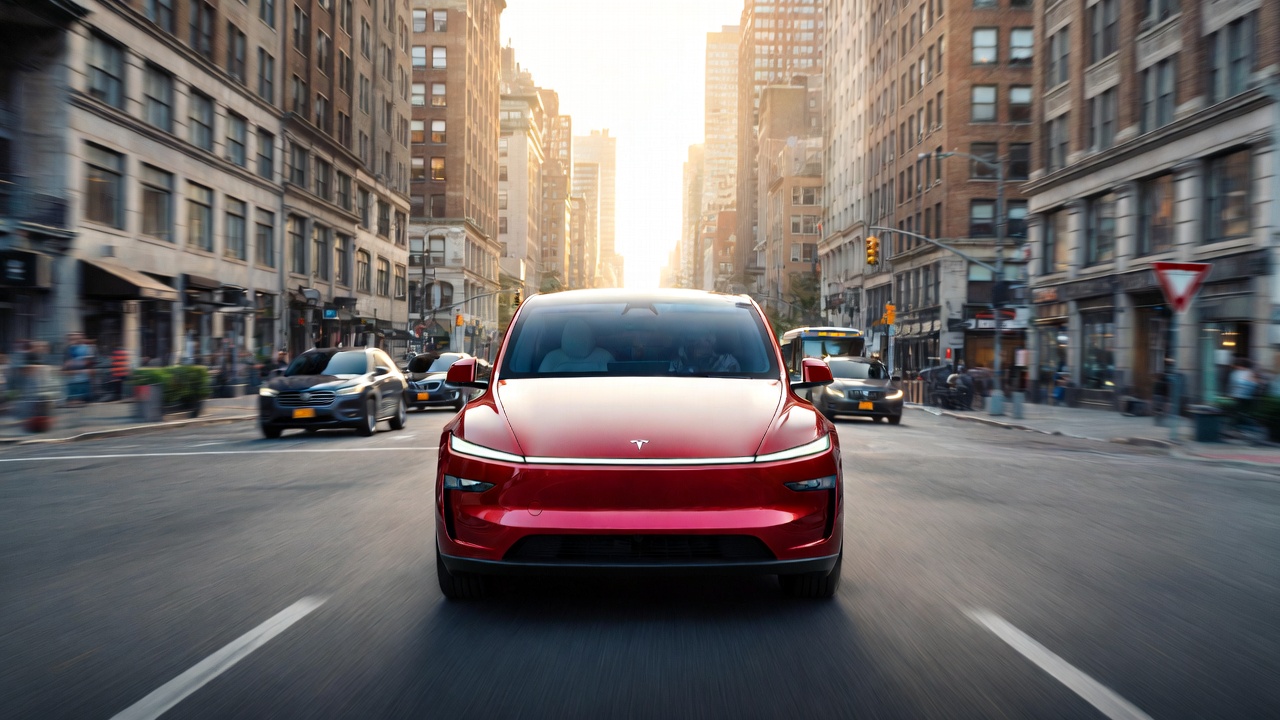
Tesla’s Full Self-Driving (Supervised) fleet is closing in on almost 7 billion total miles driven, as per data posted by the company on its official FSD webpage.
These figures hint at the massive scale of data fueling Tesla’s rapid FSD improvements, which have been quite notable as of late.
FSD mileage milestones
As can be seen on Tesla’s official FSD webpage, vehicles equipped with the system have now navigated over 6.99 billion miles. Tesla owner and avid FSD tester Whole Mars Catalog also shared a screenshot indicating that from the nearly 7 billion miles traveled by the FSD fleet, more than 2.5 billion miles were driven inside cities.
City miles are particularly valuable for complex urban scenarios like unprotected turns, pedestrian interactions, and traffic lights. This is also the difference-maker for FSD, as only complex solutions, such as Waymo’s self-driving taxis, operate similarly on inner-city streets. And even then, incidents such as the San Francisco blackouts have proven challenging for sensor-rich vehicles like Waymos.
Tesla’s data edge
Tesla has a number of advantages in the autonomous vehicle sector, one of which is the size of its fleet and the number of vehicles training FSD on real-world roads. Tesla’s nearly 7 billion FSD miles then allow the company to roll out updates that make its vehicles behave like they are being driven by experienced drivers, even if they are operating on their own.
So notable are Tesla’s improvements to FSD that NVIDIA Director of Robotics Jim Fan, after experiencing FSD v14, noted that the system is the first AI that passes what he described as a “Physical Turing Test.”
“Despite knowing exactly how robot learning works, I still find it magical watching the steering wheel turn by itself. First it feels surreal, next it becomes routine. Then, like the smartphone, taking it away actively hurts. This is how humanity gets rewired and glued to god-like technologies,” Fan wrote in a post on X.
News
Tesla starts showing how FSD will change lives in Europe
Local officials tested the system on narrow country roads and were impressed by FSD’s smooth, human-like driving, with some calling the service a game-changer for everyday life in areas that are far from urban centers.
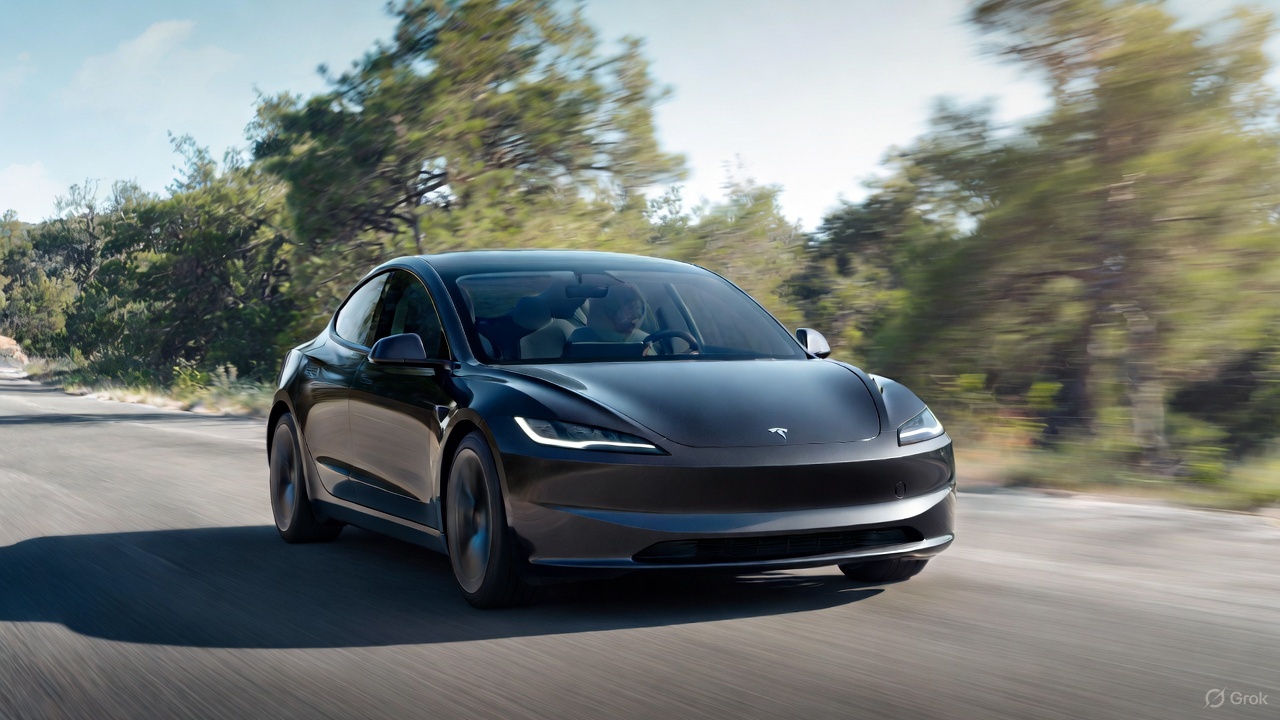
Tesla has launched Europe’s first public shuttle service using Full Self-Driving (Supervised) in the rural Eifelkreis Bitburg-Prüm region of Germany, demonstrating how the technology can restore independence and mobility for people who struggle with limited transport options.
Local officials tested the system on narrow country roads and were impressed by FSD’s smooth, human-like driving, with some calling the service a game-changer for everyday life in areas that are far from urban centers.
Officials see real impact on rural residents
Arzfeld Mayor Johannes Kuhl and District Administrator Andreas Kruppert personally tested the Tesla shuttle service. This allowed them to see just how well FSD navigated winding lanes and rural roads confidently. Kruppert said, “Autonomous driving sounds like science fiction to many, but we simply see here that it works totally well in rural regions too.” Kuhl, for his part, also noted that FSD “feels like a very experienced driver.”
The pilot complements the area’s “Citizen Bus” program, which provides on-demand rides for elderly residents who can no longer drive themselves. Tesla Europe shared a video of a demonstration of the service, highlighting how FSD gives people their freedom back, even in places where public transport is not as prevalent.
What the Ministry for Economic Affairs and Transport says
Rhineland-Palatinate’s Minister Daniela Schmitt supported the project, praising the collaboration that made this “first of its kind in Europe” possible. As per the ministry, the rural rollout for the service shows FSD’s potential beyond major cities, and it delivers tangible benefits like grocery runs, doctor visits, and social connections for isolated residents.
“Reliable and flexible mobility is especially vital in rural areas. With the launch of a shuttle service using self-driving vehicles (FSD supervised) by Tesla in the Eifelkreis Bitburg-Prüm, an innovative pilot project is now getting underway that complements local community bus services. It is the first project of its kind in Europe.
“The result is a real gain for rural mobility: greater accessibility, more flexibility and tangible benefits for everyday life. A strong signal for innovation, cooperation and future-oriented mobility beyond urban centers,” the ministry wrote in a LinkedIn post.
News
Tesla China quietly posts Robotaxi-related job listing
Tesla China is currently seeking a Low Voltage Electrical Engineer to work on circuit board design for the company’s autonomous vehicles.
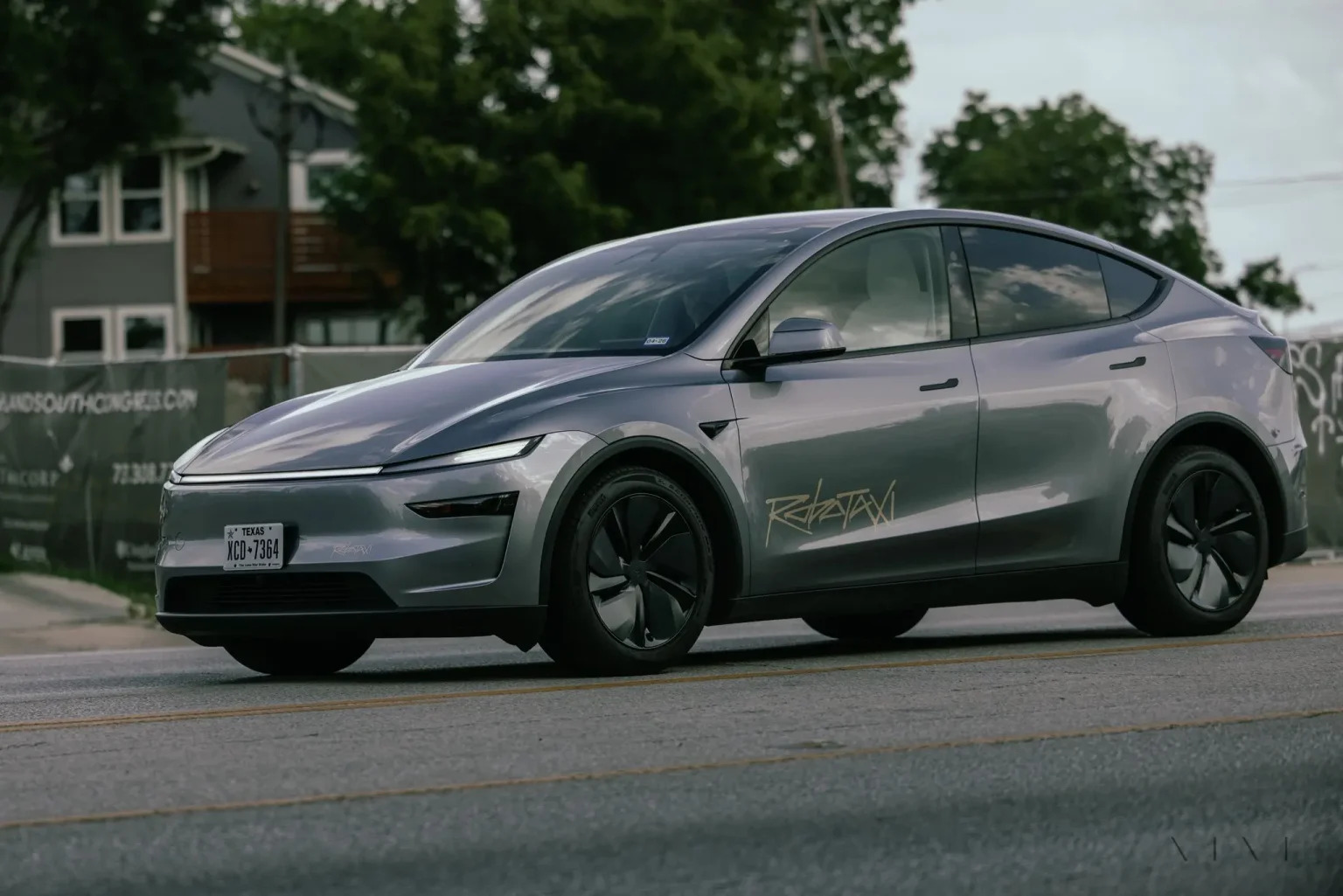
Tesla has posted a new job listing in Shanghai explicitly tied to its Robotaxi program, fueling speculation that the company is preparing to launch its dedicated autonomous ride-hailing service in China.
As noted in the listing, Tesla China is currently seeking a Low Voltage Electrical Engineer to work on circuit board design for the company’s autonomous vehicles.
Robotaxi-specific role
The listing, which was shared on social media platform X by industry watcher @tslaming, suggested that Tesla China is looking to fill the role urgently. The job listing itself specifically mentions that the person hired for the role will be working on the Low Voltage Hardware team, which would design the circuit boards that would serve as the nervous system of the Robotaxi.
Key tasks for the role, as indicated in the job listing, include collaboration with PCB layout, firmware, mechanical, program management, and validation teams, among other responsibilities. The role is based in Shanghai.
China Robotaxi launch
China represents a massive potential market for robotaxis, with its dense urban centers and supportive policies in select cities. Tesla has limited permission to roll out FSD in the country, though despite this, its vehicles have been hailed as among the best in the market when it comes to autonomous features. So far, at least, it appears that China supports Tesla’s FSD and Robotaxi rollout.
This was hinted at in November, when Tesla brought the Cybercab to the 8th China International Import Expo (CIIE) in Shanghai, marking the first time that the autonomous two-seater was brought to the Asia-Pacific region. The vehicle, despite not having a release date in China, received a significant amount of interest among the event’s attendees.

Tesla FSD fleet is nearing 7 billion total miles, including 2.5 billion city miles

Tesla starts showing how FSD will change lives in Europe


