News
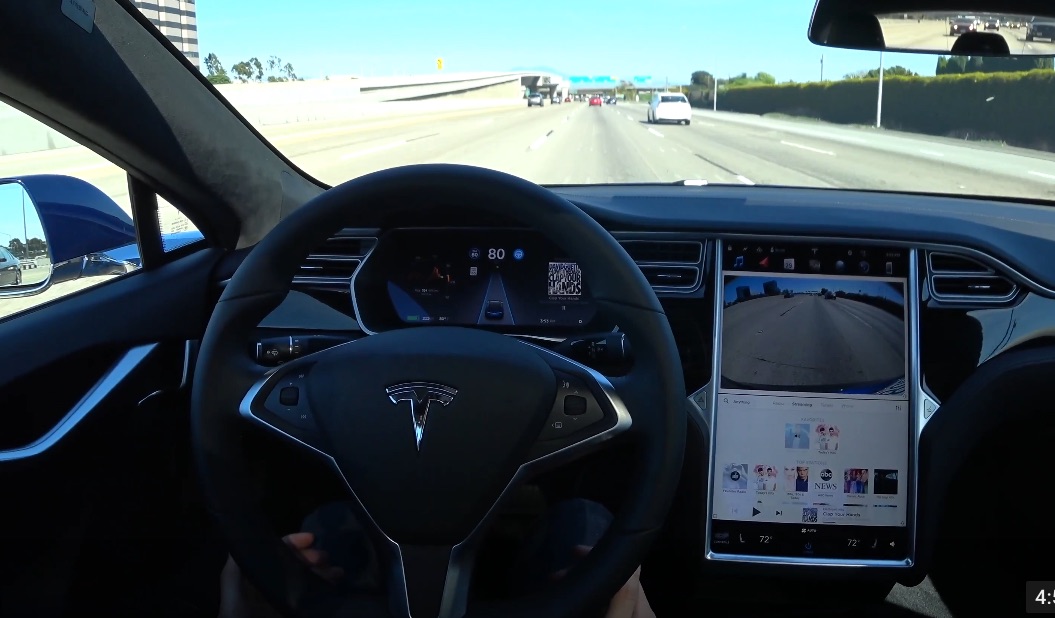
Timeframe for Tesla’s Full Self-driving capability could get a boost under proposed legislation

A new piece of legislation being drafted by House Republicans could squash the stranglehold that states currently have on autonomous vehicles. Federal regulators could be blocked from demanding pre-market approval for self-driving vehicle technology that currently bar states from governing design and testing of self-driving cars, according to Reuters.
If passed, which is a far in the future possibility, this would be a major triumph for autonomous vehicle-makers such as Tesla, General Motors and Alphabet’s Waymo. States such as California and New York are considering limiting the deployment of self-driving vehicles, something that this draft would stop.
The legislation is a 45-page draft package that includes 14 bills. A cornerstone of the package is that the U.S. National Highway Traffic Safety Administration would be the head agency regulating autonomous vehicles, removing that duty from the state and local levels.
If passed, states would still set insurance and registration rules, but those could not be used to regulate autonomous vehicle technologies.
One of the bills in the massive proposal would allow the Department of Transportation to exempt up to 100,000 vehicles annually from federal vehicle safety rules, which currently prevent selling self-driving vehicles that do not have pedals, steering wheels and other traditional human controls.
U.S. Representative Bob Latta said Republicans want “to continue working with all parties in a bipartisan manner as we refine language and move toward a consensus package.” Latta, who chairs a panel overseeing automobile regulation, called the package “An important step in establishing a framework to allow innovators to safely develop and test autonomous vehicles.”
This is line with recent Republican rhetoric on the issue of autonomous vehicles, with Secretary of Transportation Elaine Chao saying, “We don’t want rules that impede future technological advances.”
This message of progression has been echoed by industry members as well.
Mitch Bainwol, head of the auto trade group Alliance of Automobile Manufacturers, told Congress on Wednesday it should eliminate state and local laws that could “unduly burden or restrict the use of self-driving vehicles in the future.”
This post first appeared on NextMobility.co


Elon Musk
Elon Musk launches TERAFAB: The $25B Tesla-SpaceXAI chip factory that will rewire the AI industry
Tesla, SpaceX, and xAI unveiled TERAFAB, a $25B chip factory targeting one terawatt of AI compute annually.

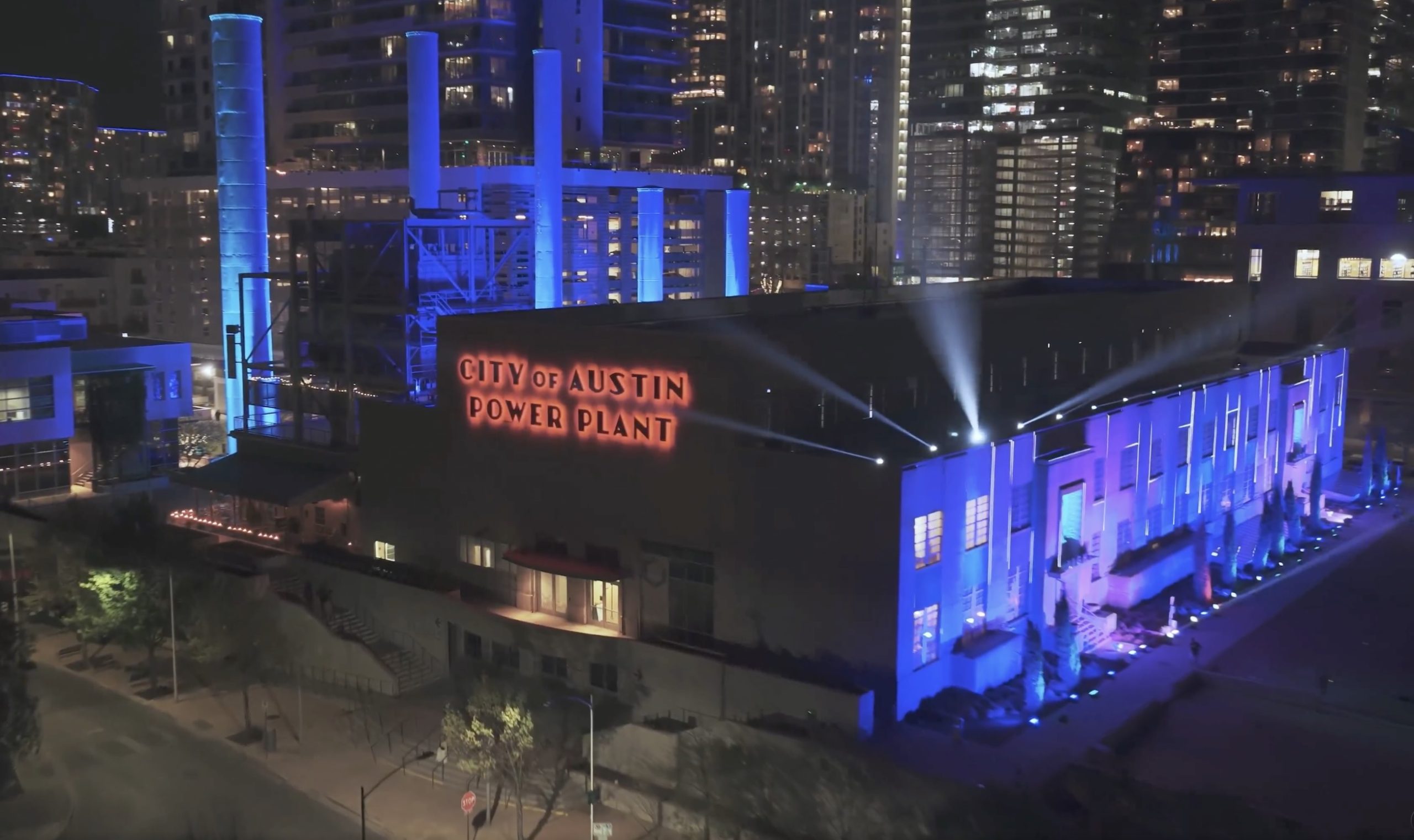
Elon Musk took the stage over the weekend at the defunct Seaholm Power Plant in Austin, Texas, to officially unveil TERAFAB, a $20-25 billion joint venture between Tesla, SpaceX, and xAI that he described as “the most epic chip building exercise in history by far.” The announcement marks the most ambitious infrastructure bet Musk has made since Gigafactory 1 in Sparks, Nevada, and it fuses three of his companies into a single, vertically integrated AI hardware machine for the first time.
TERAFAB is designed to consolidate every stage of semiconductor production under one roof, including chip design, lithography, fabrication, memory production, advanced packaging, and testing. At full capacity, the facility would scale to roughly 70% of the global output from the current world’s largest semiconductor foundry from Taiwan Semiconductor Manufacturing Company (TSMC).
Elon Musk’s stated goal is one terawatt of computing power annually, split between Tesla’s AI5 inference chips for vehicles and Optimus robots, and D3 chips built specifically for SpaceXAI’s orbital satellite constellation.
Tesla Terafab set for launch: Inside the $20B AI chip factory that will reshape the auto industry
The logic behind the merger of these three entities is rooted in a supply chain crisis Musk has been signaling for over a year. At Tesla’s Q4 2025 earnings call, he warned investors that external chip capacity from TSMC, Samsung, and Micron would hit a ceiling within three to four years. “We’re very grateful to our existing supply chain, to Samsung, TSMC, Micron and others,” Musk acknowledged at the Terafab event, “but there’s a maximum rate at which they’re comfortable expanding.” Building in-house was, in his framing, not a strategic option, but a necessity.
The space angle is where the announcement becomes genuinely unprecedented. Musk said 80% of Terafab’s compute output would be directed toward space-based orbital AI satellites, arguing that solar irradiance in space is roughly 5x greater than at Earth’s surface, and that heat rejection in vacuum makes thermal scaling viable. This directly feeds the SpaceXAI vision, which is betting that within two to three years, running AI workloads in orbit will be cheaper than doing so on the ground. The satellites, powered by constant solar energy, would effectively turn low Earth orbit into the world’s largest data center.
Will Tesla join the fold? Predicting a triple merger with SpaceX and xAI
Historically, this announcement threads together every major Musk initiative of the past two years: the xAI-SpaceX merger, Tesla’s $2.9 billion solar equipment talks with Chinese suppliers, the 100 GW domestic solar manufacturing push, the Optimus humanoid robot program, and Starship’s development. TERAFAB is the capstone that ties them into a single coherent architecture — chips made on Earth, launched by SpaceX, powered by Tesla solar, run by xAI, and ultimately extended to the Moon.
“I want us to live long enough to see the mass driver on the moon, because that’s going to be incredibly epic,”Musk said during the presentation.
Announcing TERAFAB: the next step towards becoming a galactic civilization https://t.co/IDKey07mJa
— Tesla (@Tesla) March 22, 2026
News
Rolls-Royce makes shocking move on its EV future
When Rolls-Royce unveiled its first all-electric model, the Spectre, in 2022, former CEO Torsten Müller-Ötvös declared the brand would cease production of internal combustion engine vehicles by the end of the decade.

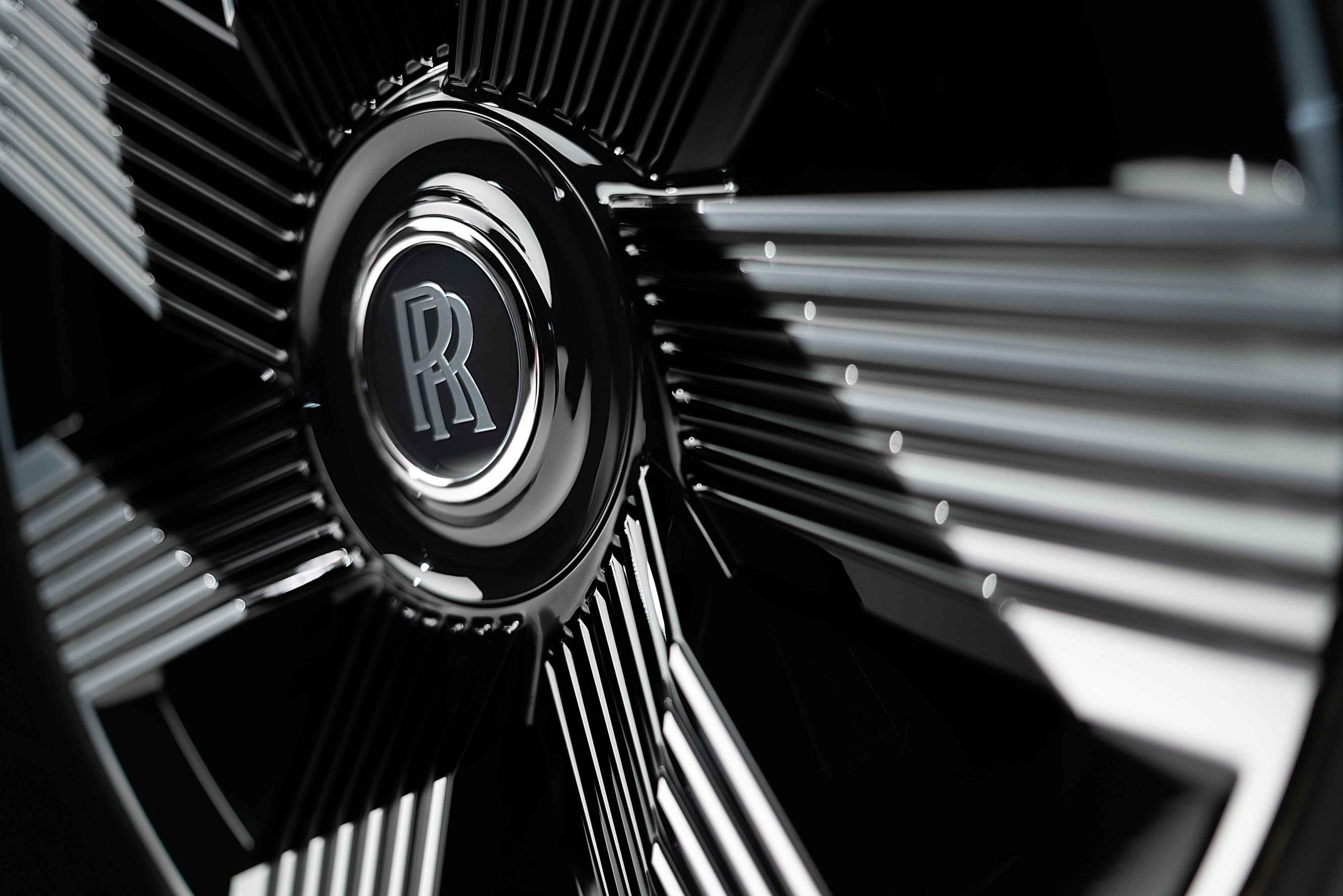
Rolls-Royce made a shocking move on its EV future after planning to go all-electric by the end of the decade. Now, the company is tempering its expectations for electric vehicles, and its CEO is aiming to lean on its legacy of high-powered combustion engines to lead it into the future.
In a significant reversal, Rolls-Royce Motor Cars has scrapped its ambitious plan to become an all-electric manufacturer by 2030. The luxury British marque announced the decision amid sustained customer demand for traditional combustion engines and shifting regulatory landscapes.
When Rolls-Royce unveiled its first all-electric model, the Spectre, in 2022, former CEO Torsten Müller-Ötvös declared the brand would cease production of internal combustion engine vehicles by the end of the decade.
The move aligned with the industry’s broader push toward electrification, promising silent, effortless power befitting the “Rolls-Royce of cars.”
However, new CEO Chris Brownridge, who assumed the role in late 2023, has reversed course. “We can respond to our client demand … we build what is ordered,” Brownridge stated.
The company will continue offering its iconic V12 engines, which remain a cornerstone of its heritage and appeal to discerning buyers who appreciate the distinctive sound and character. He noted the original pledge was “right at the time,” but “the legislation has changed.”
While not abandoning electric vehicles entirely, the Spectre remains in production, with an electric Cullinan option forthcoming; the decision marks the end of a strict all-EV timeline. Relaxed emissions regulations and slowing EV demand, evidenced by a 47 percent drop in Spectre sales to 1,002 units in 2025, forced the reconsideration.
It was a sign that perhaps Rolls-Royce owners were not inclined to believe that the company’s all-EV future was the right move.
Rolls-Royce joins a growing roster of automakers reevaluating aggressive electrification targets.
Fellow luxury brand Bentley has pushed its full electrification from 2030 to 2035, while continuing to offer hybrids and ICE models. Mercedes-Benz walked back its 2030 all-EV goal, now aiming for about 50% electrified sales while keeping combustion engines into the 2030s. Porsche has abandoned its 80% EV sales target by 2030, delaying models and extending hybrids.
Mainstream giants are following suit. Honda canceled its U.S. EV plans, including the 0-Series and Acura RSX, facing a $15.7 billion hit as it doubles down on hybrids. Ford and General Motors have incurred tens of billions in writedowns, canceling models and pivoting to hybrids amid an industry total exceeding $70 billion in charges.
This trend reflects a pragmatic shift driven by infrastructure gaps, consumer preferences, and policy changes. In the ultra-luxury segment, where emotional connection reigns, automakers are prioritizing flexibility over rigid deadlines, ensuring brands like Rolls-Royce evolve without alienating their core clientele.
News
Elon Musk teases expectations for Tesla’s AI6 self-driving chip
This optimistic timeline for tape-out—the stage where chip design is finalized before manufacturing—signals Tesla’s push to rapidly advance its silicon capabilities.
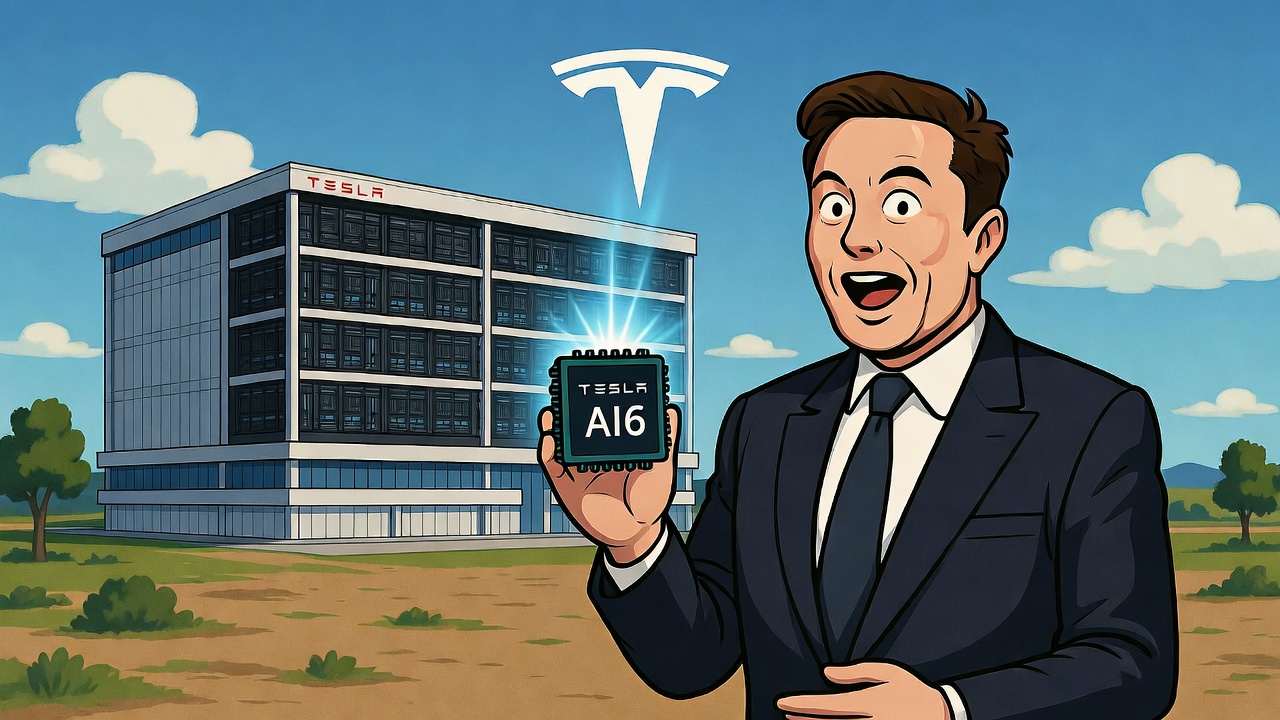
Tesla CEO Elon Musk is outlining expectations for the AI6 self-driving chip, which is still two generations away. Despite this, it is already in the plans of the company and its serial entrepreneur CEO, who has high expectations for it.
Musk provided fresh details on the company’s aggressive AI hardware roadmap, spotlighting the upcoming AI6 chip designed to supercharge Tesla’s self-driving tech, humanoid robots, and data center operations.
In a post on X dated March 19, Musk stated, “With some luck and acceleration using AI, we might be able to tape out AI6 in December.”
With some luck and acceleration using AI, we might be able to tape out AI6 in December
— Elon Musk (@elonmusk) March 19, 2026
This optimistic timeline for tape-out—the stage where chip design is finalized before manufacturing—signals Tesla’s push to rapidly advance its silicon capabilities.
The announcement builds on progress with the predecessor AI5. Earlier in January, Musk announced that the AI5 design was “in good shape” and “almost done,” describing it as an “existential” project for the company that demanded his personal attention on weekends.
He characterized AI5 as roughly equivalent to Nvidia’s Hopper class performance in a single system-on-chip (SoC) and Blackwell-level as a dual configuration, but at significantly lower cost and power usage.
Elon Musk is setting high expectations for Tesla AI5 and AI6 chips
Musk highlighted that AI5 “will punch far above its weight” thanks to Tesla’s co-designed AI software and hardware stack, making maximal use of every circuit. While capable of data center training tasks, it is primarily optimized for edge computing in Optimus robots and Robotaxi vehicles.
For AI6, Musk envisions substantial gains. “In the same half reticle and same process node, we think a single AI6 chip has the potential to match a dual SoC AI5,” he explained.
The company is targeting ambitious nine-month development cycles for future chips, allowing rapid iteration to AI7, AI8, and beyond. AI5/AI6 engineering remains Musk’s top time allocation at Tesla, with the CEO calling AI5 “good” and AI6 “great.”
Samsung is expected to manufacture the AI6 chips, following deals worth billions, while AI5 will leverage TSMC and Samsung production. These chips will form the backbone of Tesla’s Full Self-Driving system, enabling safer and more capable autonomy, alongside powering dexterous movements in Optimus bots and efficient inference in expanding data centers.
Tesla to discuss expansion of Samsung AI6 production plans: report
Musk has also restarted work on the Dojo 3 supercomputer project now that AI5 is progressing. Long-term plans include in-house manufacturing via the Terafab facility.
By accelerating chip development with AI tools, Tesla aims to reduce dependence on third-party GPUs and deliver high-performance, energy-efficient solutions tailored to its ecosystem. Success with AI6 could mark a major milestone in Tesla’s journey toward full autonomy and robotics leadership, though timelines remain subject to manufacturing realities.

Elon Musk launches TERAFAB: The $25B Tesla-SpaceXAI chip factory that will rewire the AI industry

Rolls-Royce makes shocking move on its EV future


