Investor's Corner
Toyota sells remaining stake in Tesla and ends EV collaboration

Toyota Motor Corp announced on Saturday that it had sold off its remaining stake in Tesla last year, as the Japanese automaker began to launch its own electric car program.
Toyota initially invested $50 million in 2010 for a 3% stake in the upstart electric car builder that also involved Tesla’s purchase of the Toyota / General Motors NUMMI factory in Fremont. That same factory now employs over 10,000 workers and is expected to produce 500,000 vehicles as early as next year. Toyota divested some of its shares in 2014 with the remainder being sold in 2016 according to Bloomberg.
Japan’s largest carmaker had initially leveraged its ownership stake in Tesla to partner in the development of the battery and powertrain components for its RAV4 EV. Daimler similarly tapped its financial ties to Tesla for the electric powertrain used on the company’s Mercedes B-Class Electric Drive / B250e. The electrified B-Class was similar to the retrofitted Toyota RAV4 EV in that they were both originally built as internal combustion vehicles, but made electric.
Toyota ultimately stopped production of the limited-run RAV4 EV after receiving low demand for the compact SUV. Given the vehicle’s high price point and limited availability, and RAV4 EV sales understandably suffered.
Toyota was known as a leader in green cars, having an early lead in hybrid technology that was driven largely by the success of the Prius. But the company has been slow to bring any significant next generation green vehicles to market for nearly a decade. The Prius has evolved incrementally, but looks increasingly antiquated when placed head-to-head against the recently launched all-electric Chevrolet Bolt and Tesla’s upcoming Model 3. The company also invested its R&D efforts in hydrogen fuel cell vehicles which it debuted in the Toyota Mirai.
More recently, the automaker has backpedaled plans for hydrogen powered vehicles and shifted its focus onto battery electric cars.


Elon Musk
SpaceX just filed for the IPO everyone was waiting for
SpaceX filed its public S-1, revealing $18.7 billion in revenue and billions in losses.

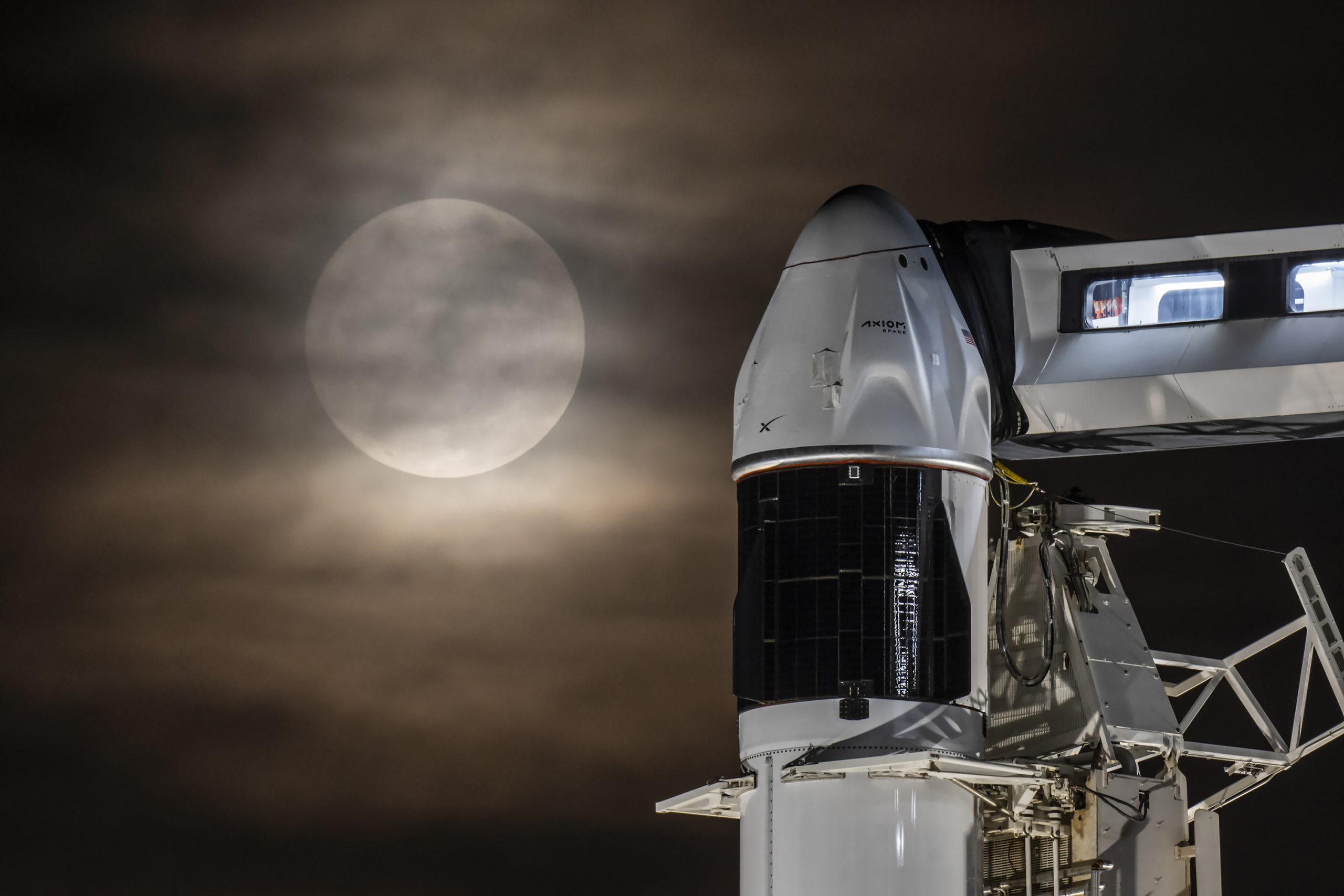
SpaceX publicly filed its S-1 registration statement with the Securities and Exchange Commission on May 20, 2026, making its financial details available to the public for the first time ahead of what could be the largest IPO in history.
An S-1 is the formal document a company must submit to the SEC before going public. It includes audited financials, risk factors, business descriptions, and how the company plans to use the money it raises. Companies are required to file one before selling shares to the public, and it must be published at least 15 days before the investor roadshow begins. SpaceX had already submitted a confidential draft to the SEC in April, which allowed regulators to review the filing privately before it went public.
The S-1 reveals that SpaceX generated $18.7 billion in consolidated revenue in 2025, driven largely by its Starlink satellite internet division, which posted $11.4 billion in revenue, growing nearly 50% year over year. Despite that growth, the company lost about $4.9 billion in 2025 and has burned through more than $37 billion since its founding.
SpaceX just forced Verizon, AT&T and T-Mobile to team up for the first time in history
A significant portion of those losses trace back to xAI, Elon Musk’s artificial intelligence company, which was recently merged into SpaceX. SpaceX directed roughly 60% of its capital spending in 2025 to its AI division, totaling around $20 billion, yet that division lost billions and grew revenue by only about 22%.
SpaceX plans to list its Class A common stock on Nasdaq under the ticker SPCX, with Goldman Sachs, Morgan Stanley, and Bank of America leading the offering. The dual-class share structure means going public will not meaningfully reduce Musk’s control, as Class B shares he holds carry 10 votes per share compared to one vote for public Class A shares.
The company is targeting a raise of around $75 billion at a valuation of roughly $1.75 trillion, which would make it the largest IPO ever. The investor roadshow is reportedly planned for June 5.
Elon Musk
Tesla ditches India after years of broken promises
Tesla has ditched its plans to build a factory in India after years of failed negotiations.
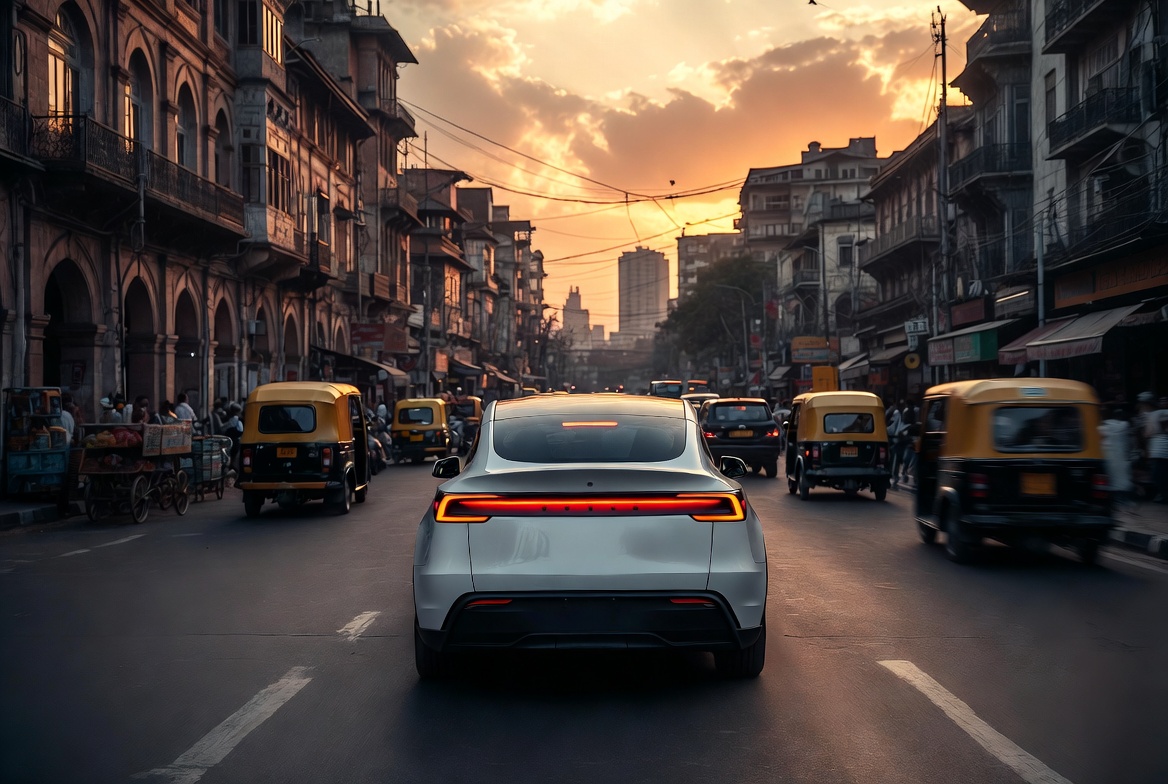
Tesla’s long-running effort to establish a manufacturing presence in India is officially over. India’s Minister of Heavy Industries H.D. Kumaraswamy confirmed on May 19, 2026 that Tesla has informed authorities it will not proceed with a manufacturing facility in the country.
Tesla first signaled serious interest in India around 2021, when it began hiring local staff and lobbying the Indian government for lower import tariffs. The ask was straightforward: reduce duties enough for Tesla to test the market with imported vehicles before committing capital to a local factory. India’s position was equally firm, with an ask of Tesla to commit to manufacturing first, then receive tariff relief. Neither side moved, and the talks quietly collapsed.
Tesla to open first India experience center in Mumbai on July 15
India had offered a policy that would reduce import duties from 110% down to 15% on EVs priced above $35,000, provided companies committed at least $500 million toward local manufacturing investment within three years. Tesla declined to participate. The tariff standoff was only part of the problem. Analysts pointed to significant gaps in India’s local supply chain, inadequate industrial infrastructure, and a mismatch between Tesla’s premium pricing and the purchasing power of India’s automotive market as additional factors that made the investment difficult to justify.
First signs of an unraveling relationship came in April 2024, when Musk abruptly cancelled a planned trip to India where he was set to meet Prime Minister Modi and announce Tesla’s market entry. By July 2024, Fortune reported that Tesla executives had stopped contacting Indian government officials entirely. The government at that point understood Tesla had capital constraints and no plans to invest.
The more fundamental issue is that Tesla’s existing factories are currently operating at approximately 60% capacity, making a commitment to building new manufacturing capacity in a new market difficult to defend to investors. Tesla will continue selling imported Model Y vehicles through its existing showrooms in Mumbai, Delhi, Gurugram, and Bengaluru, but local production is no longer part of the plan.
Elon Musk
SpaceX just forced Verizon, AT&T and T-Mobile to team up for the first time in history
AT&T, T-Mobile, and Verizon just joined forces for one reason: Starlink is winning.
America’s three largest wireless carriers, AT&T, T-Mobile, and Verizon, announced on On May 14, 2026 that they had agreed in principle to form a joint venture aimed at pooling their spectrum resources to expand satellite-based direct-to-device (D2D) connectivity across the United States in what can be seen as a direct response to SpaceX’s Starlink initiative. D2D, in plain terms, is technology that lets a standard smartphone connect directly to a satellite in orbit, the same way it connects to a cell tower, with no extra hardware required.
The alliance is widely seen as a means to slow Starlink’s rapid expansion in the satellite internet and mobile markets. SpaceX’s Starlink Mobile service launched commercially in July 2025 through a partnership with T-Mobile, starting with messaging before expanding to broadband data. SpaceX secured access to valuable wireless spectrum through its $17 billion deal with EchoStar, paving the way for significantly faster satellite-to-phone speeds.
SpaceX was not shy about its reaction. SpaceX president and COO Gwynne Shotwell responded on X: “Weeeelllll, I guess Starlink Mobile is doing something right! It’s David and Goliath (X3) all over again — I’m bettin’ on David.” SpaceX’s VP of Satellite Policy David Goldman went further, flagging potential antitrust concerns and asking whether the DOJ would even allow three dominant competitors to coordinate in a market where a new rival is actively entering.
Weeeelllll, I guess @Starlink Mobile is doing something right! It’s David and Goliath (X3) all over again — I’m bettin’ on David 🙂 https://t.co/5GzS752mxL
— Gwynne Shotwell (@Gwynne_Shotwell) May 14, 2026
Financial analysts at LightShed Partners were blunt, saying the announcement showed the three carriers are “nervous,” and pointed to the timing: “You announce an agreement in principle when the point is the announcement, not the deal. The timing, weeks ahead of the SpaceX roadshow, was the point.”
As Teslarati reported, SpaceX’s next generation Starlink V2 satellites will deliver up to 100 times the data density of the current system, with custom silicon and phased array antennas enabling around 20 times the throughput of the first generation. The carriers’ JV, which has no definitive agreement, no financial structure, and no deployment timeline yet, will need to move quickly to matter.
Elon Musk’s SpaceX is targeting a Nasdaq listing as early as June 12, aiming for what would be the largest IPO in history. With Starlink now serving over 9 million subscribers across 155 countries, holding 59 carrier partnerships globally, and now powering Air Force One, the carriers’ joint venture announcement landed at exactly the wrong time to look like anything other than a defensive move.

SpaceX just filed for the IPO everyone was waiting for

Tesla scales back driver monitoring with latest Full Self-Driving release


