News
Two driverless Waymo cars collide at Phoenix Sky Harbor Airport
Two Waymo vehicles collided at Phoenix Sky Harbor Airport in Arizona

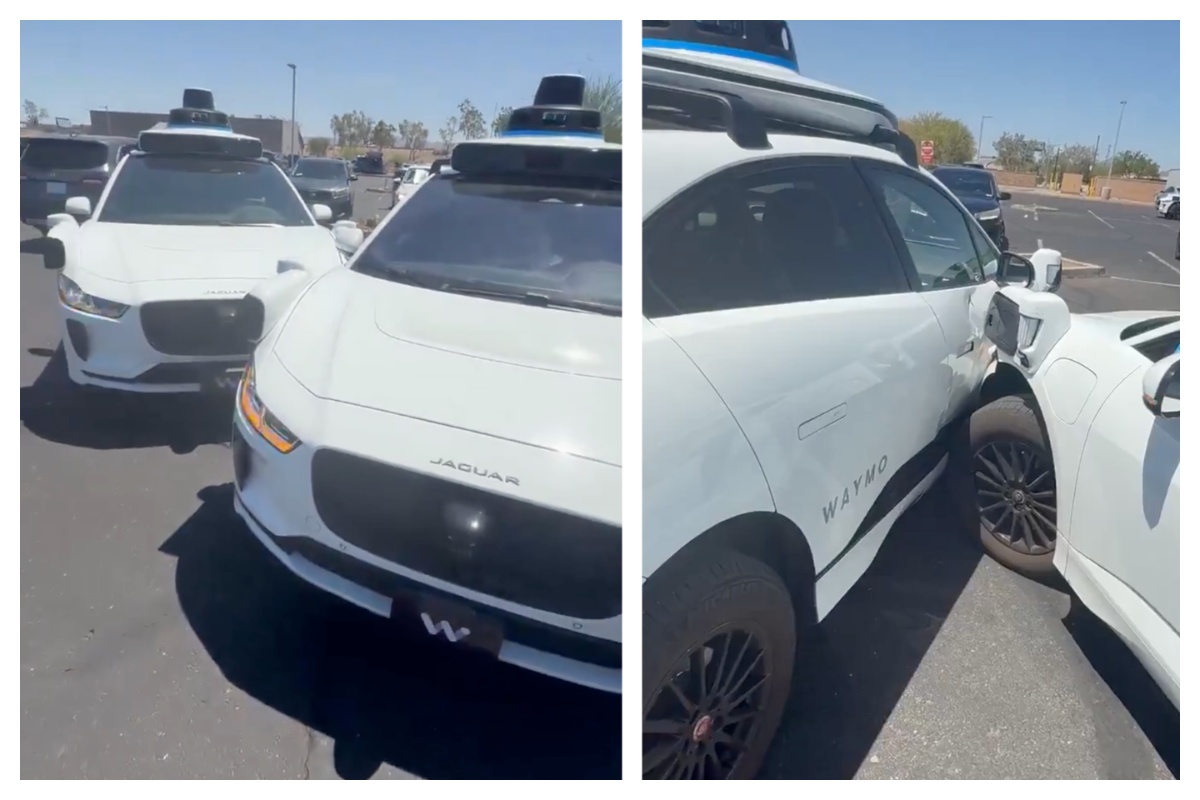
Two driverless Waymo cars collided at Phoenix Sky Harbor Airport on Wednesday, but details are incredibly slim as the accident has barely been mentioned on many social media platforms.
The video of the two Waymo vehicles was shared on Reddit’s r/SelfDrivingCars subreddit by u/HIGH_PRESSURE_TOILET (an interesting username), showing the two Jaguar I-PACE EVs at a standstill.
They were still making contact in the video, with one front driver-side quarter panel still in contact with the other’s front passenger door:
🚨 Waymo accident in Arizona at Sky Harbor Airport in Phoenix: https://t.co/UjyWvu3ZGF pic.twitter.com/Z5ASKMEuXw
— TESLARATI (@Teslarati) July 30, 2025
There are relatively no details on the matter, but we reached out to Waymo earlier today, and an employee was able to share the following information.
Waymo told Teslarati that the accident occurred at a low speed, which is evident based on the lack of major damage done to either vehicle. Waymo did not reveal a specific speed at which the accident occurred, but they did mention it was a low speed.
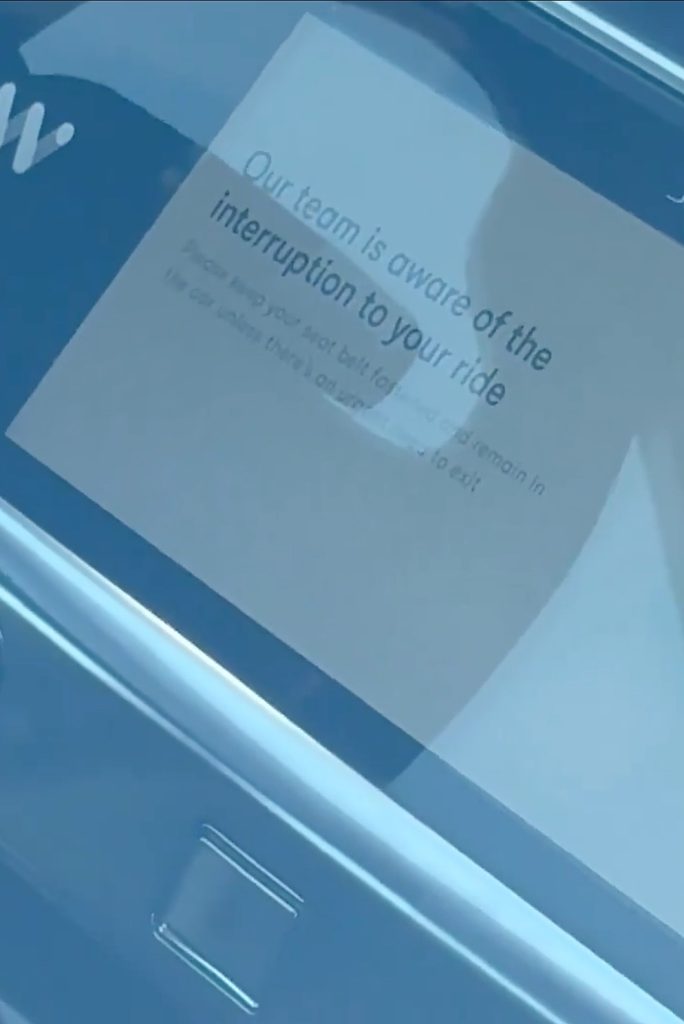
The message Waymo’s vehicles showed after the accident in Phoenix. (Credit: Reddit | u/HIGH_PRESSURE_TOILET)
Additionally, there were no passengers inside either vehicle at the time of the crash. The cause of the accident is still unknown, but the company is currently investigating any potential causes and aims to have more answers in the coming days.
This is an expected growing pain of driverless vehicles, as autonomous rides are still in their very early phases. We have seen Waymo vehicles encounter a variety of challenges over the past several years, including getting stuck at construction zones in other cities.
Here’s one example of one nearly driving into a trench:
Waymo self driving car almost drives into a trench at construction site
Waymo is in direct competition with Tesla Robotaxi, which is operating in both Austin, Texas, and the San Francisco Bay Area. Waymo operates in both of these areas.
As Waymo updates us with more details, we will share them here and update the article.


News
Tesla removes Model S and X custom orders as sunset officially begins
In a significant development that marks the beginning of the end for two of its longest-running models, Tesla has removed the custom order configurator for the Model S sedan and Model X SUV from its website.
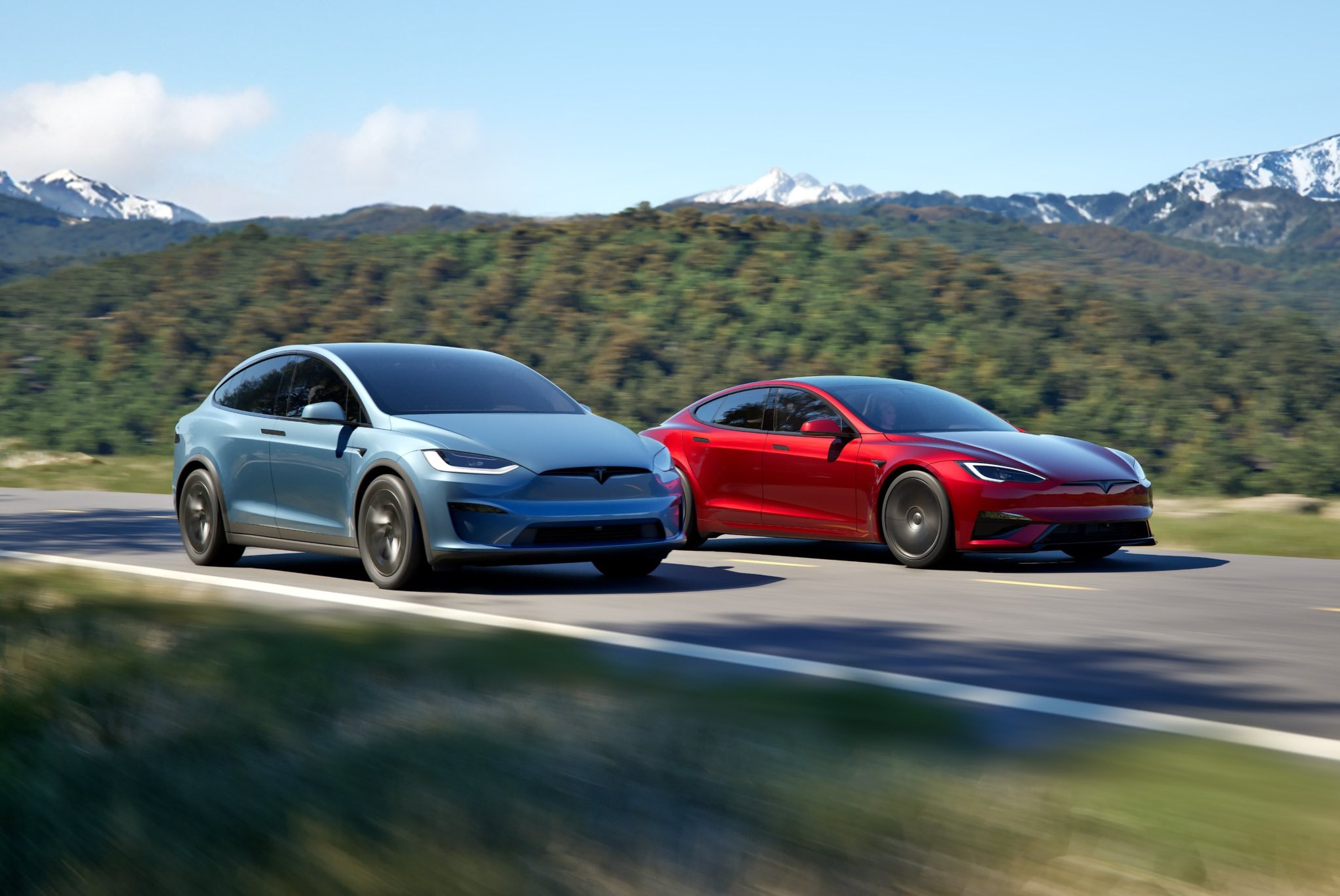
Tesla has officially started the “honorable discharge” of the Model S and Model X with a massive move, removing the two vehicles from Custom Orders and only offering inventory options.
It is the latest move Tesla has made to pull the Model S and Model X from its lineup, a decision CEO Elon Musk announced during its last quarterly earnings call.
Tesla brings closure to flagship ‘sentimental’ models, Musk confirms
In a significant development that marks the beginning of the end for two of its longest-running models, Tesla has removed the custom order configurator for the Model S sedan and Model X SUV from its website.
As of April 1, visitors to tesla.com/model-s and tesla.com/modelx are now redirected exclusively to limited inventory listings rather than a design studio, allowing buyers to select paint, wheels, interior options, or performance upgrades. Only pre-built vehicles currently in stock are available for purchase or lease.
Tesla CEO Elon Musk confirmed the change directly on X, posting: “Custom orders of the Tesla Model S & X have come to an end. All that’s left are some in inventory.”
Custom orders of the Tesla Model S & X have come to an end. All that’s left are some in inventory.
We will have an official ceremony to mark the ending of an era. I love those cars.
This was me at production launch 14 years ago: pic.twitter.com/6kvCf9HTHc
— Elon Musk (@elonmusk) April 1, 2026
We will have an official ceremony to mark the end of an era.” Accompanying the statement was a throwback photo from the Model S production launch in 2012, underscoring the emotional weight of the decision.
Musk had first signaled the phase-out during the company’s Q4 2025 earnings call in January, describing it as time for an “honorable discharge” of the programs to free up resources at the Fremont factory for Optimus humanoid robot production and autonomous vehicle initiatives.
The Model S, introduced in 2012, and the Model X, which followed in 2015, were instrumental in establishing Tesla as a premium electric vehicle leader.
The sedan offered class-leading range and acceleration, while the SUV’s signature falcon-wing doors became an iconic feature. Together, they proved EVs could compete in the luxury segment. Yet sales volumes have dwindled in recent years as Tesla prioritized higher-volume Model 3 and Model Y vehicles.
The flagships now represent a tiny fraction of overall deliveries, making continued custom production inefficient as the company accelerates toward robotaxis and next-generation platforms.
Prospective buyers are urged to act quickly. Remaining U.S. inventory vehicles—some nearly new—may include incentives such as lifetime free Supercharging, Full Self-Driving (Supervised) capability, and premium connectivity, depending on configuration.
Leasing options start around $1,699 per month for select Model X units, though exact pricing and availability fluctuate. International markets, including Europe and China, have already seen similar restrictions in recent months.
The move aligns with Tesla’s broader strategy to streamline its lineup and redirect manufacturing capacity toward autonomy and AI-driven products. While some enthusiasts lament the loss of personalization, the company views the transition as necessary progress.
Tesla has indicated that once the current inventory sells out, new Model S and Model X vehicles will no longer be offered.
For loyal owners and fans, the promised “official ceremony” may provide a fitting send-off. In the meantime, the website change serves as a clear signal: the era of bespoke flagship Teslas has quietly concluded, and the focus has fully shifted to the future.
Elon Musk
SpaceX files confidentially for IPO that will rewrite the record books
SpaceX files confidentially for a record-breaking IPO targeting a $1.75T valuation and $80B raise, driven by Starlink growth and its xAI merger.

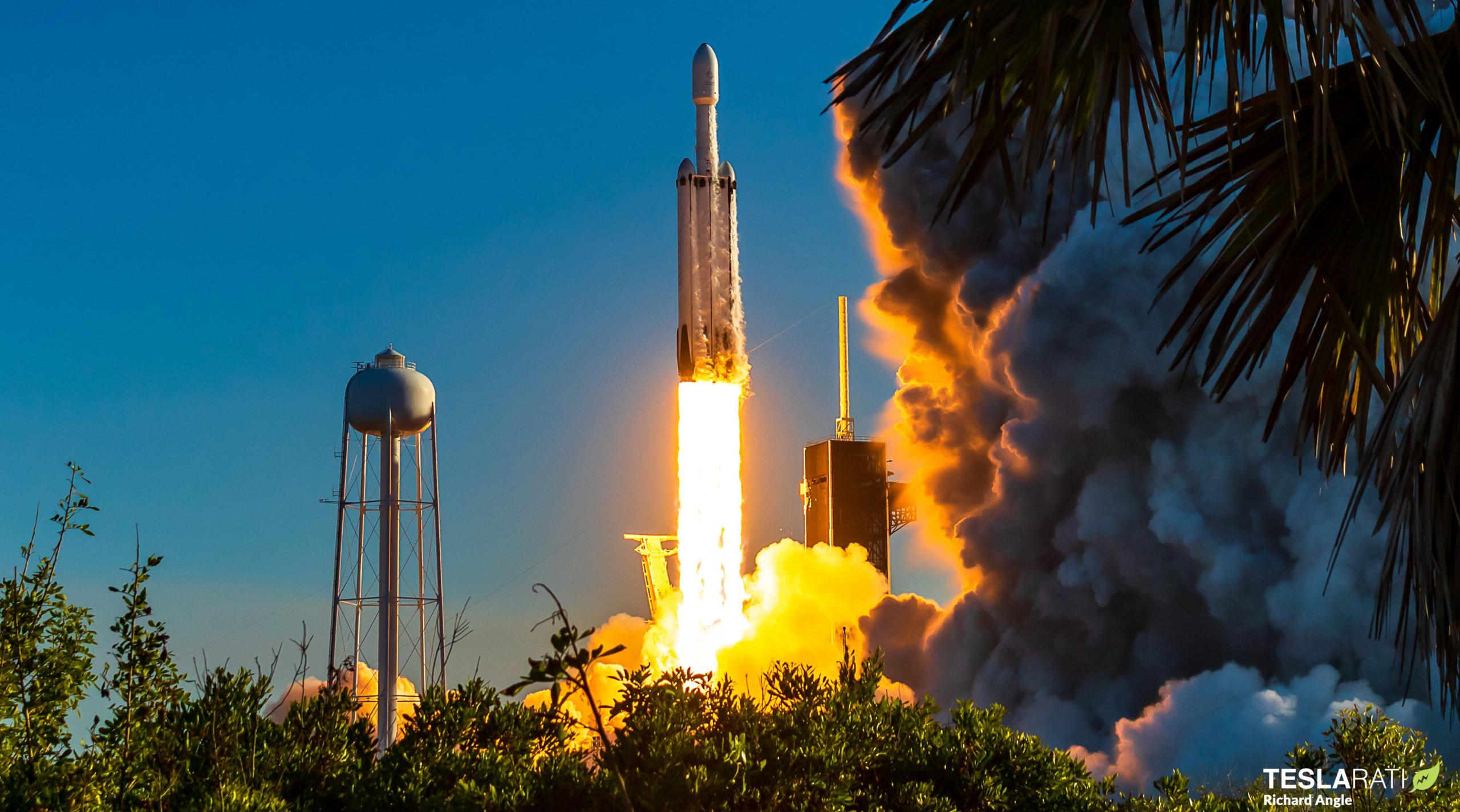
Elon Musk’s rocket and satellite company submitted its draft registration to the U.S. Securities and Exchange Commission today for an initial public offering, targeting June at a $1.75 trillion valuation. This would be the largest in history.
SpaceX has filed confidentially with the SEC, first reported by Bloomberg. SpaceX would be valued above every S&P 500 company except Nvidia, Apple, Alphabet, Microsoft, and Amazon.
The filing uses a confidential process that allows companies to work through SEC disclosures privately before initiating a public roadshow. With a June target, official details through a formal prospectus is expected to go public in April or early May, after which SpaceX must wait at least 15 days before beginning investor marketing.
While SpaceX is best known for its Falcon 9 and Starship rockets, the $1.75 trillion valuation is anchored by Starlink, its satellite internet service. Starlink ended 2025 with 9.2 million subscribers and over $10 billion in revenue, which is a figure analysts project could reach a staggering $24 billion by the end of 2026. A February all-stock merger with xAI, Musk’s artificial intelligence venture, further boosted the valuation.
SpaceX officially acquires xAI, merging rockets with AI expertise
Bank of America, Goldman Sachs, JPMorgan Chase, and Morgan Stanley are lined up as senior underwriters. SpaceX is also considering a dual-class share structure to preserve insider voting control, and plans to allocate up to 30% of shares to retail investors, which is roughly three times the typical norm.
Elon Musk
Elon Musk hints at “official ceremony” with throwback photo to close Tesla Model S, Model X chapter
Elon Musk promises an official ceremony to mark the end of Tesla Model S and Model X production.
Tesla has officially begun winding down production of the Model S and Model X, sending farewell emails to U.S. customers on March 27 and updating the website to reflect the end of the line. Shoppers visiting Tesla.com now find only a limited set of Model S and Model X inventory units available for purchase, with no option to configure a new factory build. The move formalizes what CEO Elon Musk announced on the company’s Q4 2025 earnings call in January, when he said it was “time to basically bring the Model S and X programs to an end with an honorable discharge.”
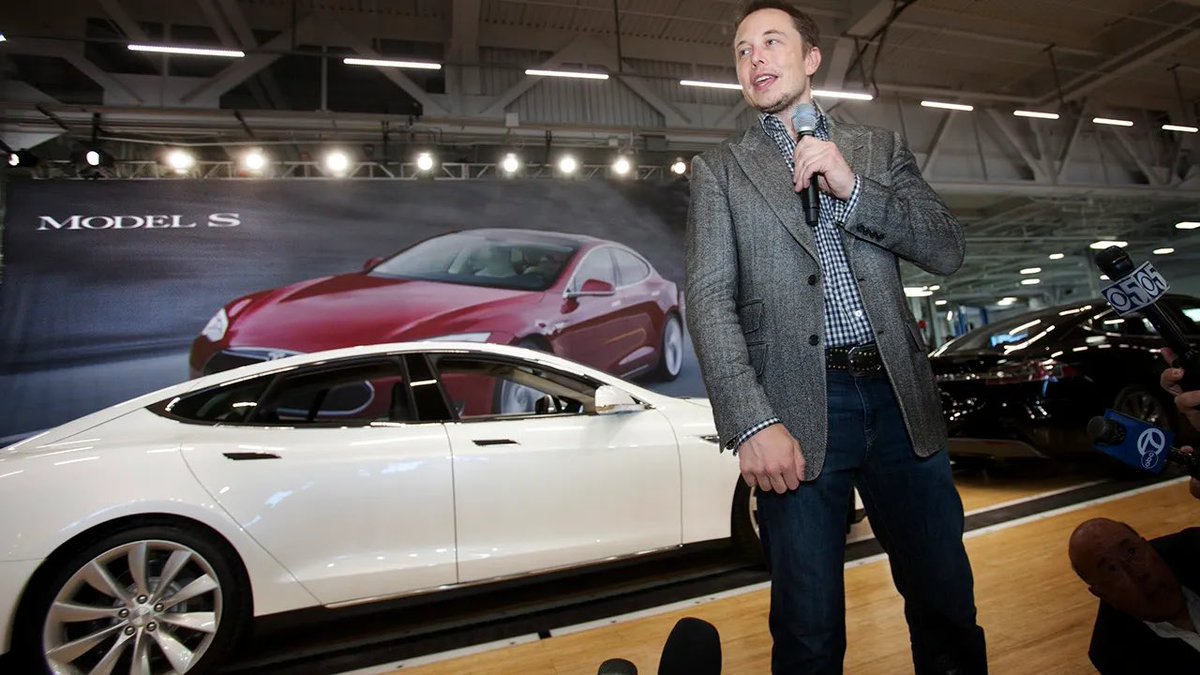
Musk posted on X a throwback photo of himself speaking at the Model S production launch in 2012, and noting “We will have an official ceremony to mark the ending of an era. I love those cars.”
The mention of an official ceremony is notable. Tesla has not held a formal farewell event for a vehicle before, and Musk’s wording suggests this will be something deliberate rather than a quiet line shutdown. Given that Musk’s X post shows a photo of him on stage with a microphone in front of an audience at the Fremont factory, it wouldn’t be too far-fetched to expect a closing ceremony to take place at the same location. Perhaps? Whether it becomes a public event, a private gathering for employees, or a livestreamed moment on X remains to be seen.
Custom orders of the Tesla Model S & X have come to an end. All that’s left are some in inventory.
We will have an official ceremony to mark the ending of an era. I love those cars.
This was me at production launch 14 years ago: pic.twitter.com/6kvCf9HTHc
— Elon Musk (@elonmusk) April 1, 2026
The Model S first went on sale nearly fifteen years ago and was Tesla’s first fully in-house designed vehicle, proving that an electric car could be fast, desirable, and capable of long distance on a single charge. The Model X followed in 2015, turning heads with its unmistakable and distinctive falcon-wing doors, while becoming one of the first all-electric SUVs on the market. Tesla’s two flagship vehicles would ultimately push legacy automakers to take all-electric transportation seriously and help fund development of the more affordable Model 3 and Model Y.
By 2025, however, both models had been reduced to a rounding error in Tesla’s sales figures. Musk was direct about what comes next, stating “We are going to convert that production space to an Optimus factory. It’s part of our overall shift to an autonomous future.”
Elon Musk’s $10 Trillion robot: Inside Tesla’s push to mass produce Optimus
That shift is already underway. Tesla officially started Optimus Gen 3 production at its Fremont factory in January 2026, with the line targeting a run rate of one million units per year. The Gen 3 robot features 22 degrees of freedom per hand, runs on Tesla’s AI5 chip, and shares the same neural network architecture as Full Self-Driving. A dedicated Optimus factory at Gigafactory Texas is also under construction, with a planned annual capacity of 10 million units. The production lines that once built the Model S and Model X are being converted to support that ramp.
Tesla confirmed it will continue to support existing owners with service, software updates, and parts for as long as people own the vehicles. For buyers still interested in a new example, remaining U.S. inventory is discounted and the window is closing fast.

Tesla removes Model S and X custom orders as sunset officially begins

SpaceX files confidentially for IPO that will rewrite the record books

Elon Musk hints at “official ceremony” with throwback photo to close Tesla Model S, Model X chapter

Elon Musk says Tesla is developing a new vehicle: ‘Way cooler than a minivan’

Elon Musk launches TERAFAB: The $25B Tesla-SpaceXAI chip factory that will rewire the AI industry


