Lifestyle
Verne Troyer just got a Tesla Model S for Kids and says it’s a beast

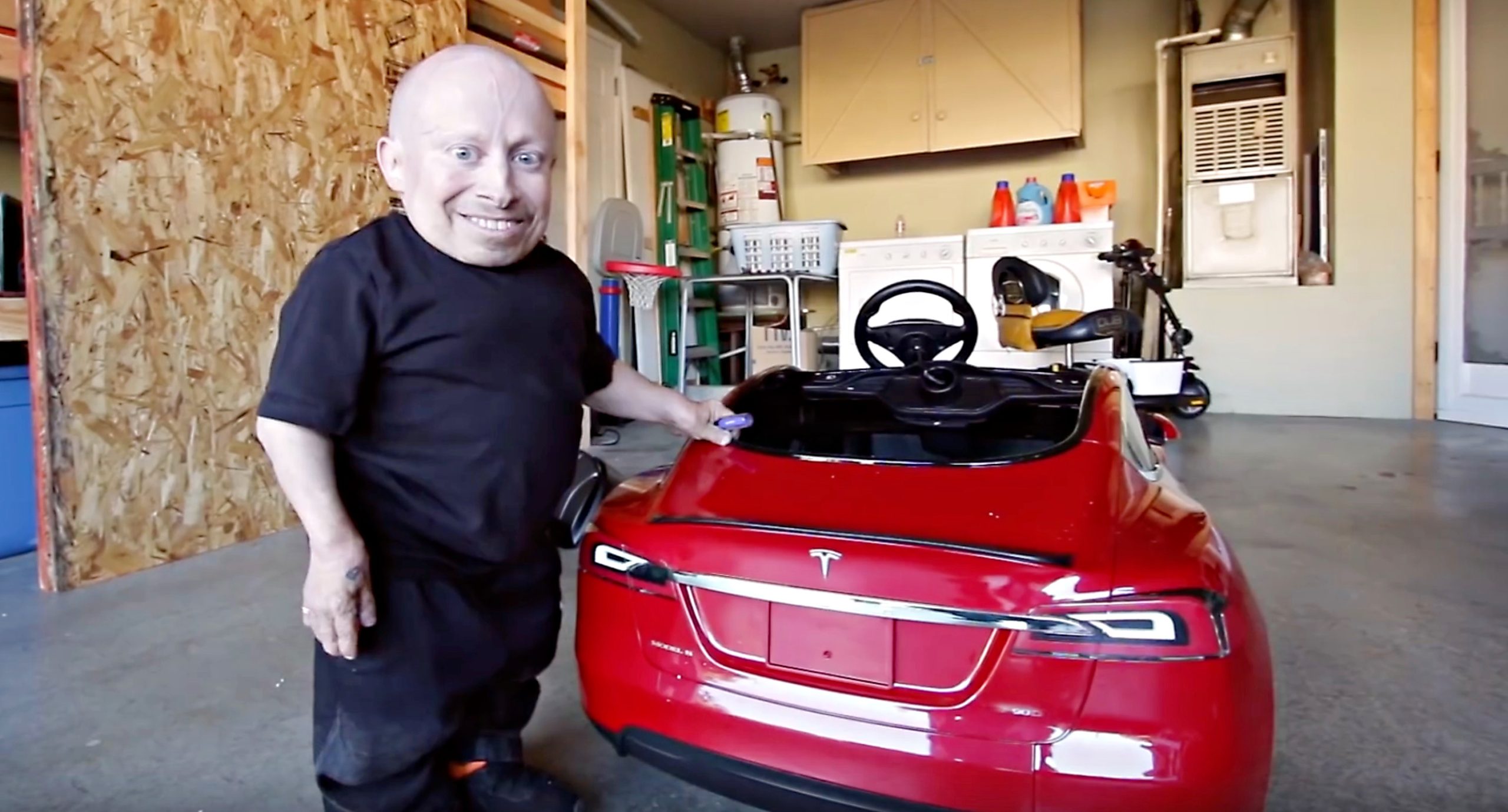
Among the Tesla-related merchandise that has been released over the years, very few could compete with Radio Flyer’s Tesla Model S for Kids. The electric miniature vehicle has been a hit among Tesla enthusiasts, mainly due to its features and its similarity to the actual Model S. Just recently, Verne Troyer, one of Hollywood and YouTube’s beloved stars, shared a video of himself unboxing and test driving the ridiculously cool miniature car. Needless to say, it was pretty epic.
Verne Troyer has made a name for himself by starring in several successful film franchises such as “Austin Powers,” where he played the part of Mini-Me in “The Spy Who Shagged Me.” He also played Griphook the Goblin in the blockbuster film “Harry Potter and the Sorcerer’s Stone.” Troyer has since appeared in many movies and TV shows, though currently, the Hollywood star has been busy maintaining his YouTube channel for his almost 400,000 subscribers, where his trademark wit and humor became his brand.
Troyer’s recent Model S for Kids video featured all of the humorous antics his social media followers have come to expect from the Hollywood veteran. At the start of the video, Troyer, who stands at 2-feet-8-inches, remarked that the miniature EV’s box was far too huge and heavy for him to move. Not long after, Troyer began his “unboxing” of the Model S for Kids, where he gave a surprisingly complete rundown of the miniature vehicle’s features.
During the course of the video, Troyer showed off the miniature car’s frunk, Tesla-branded charger, and its battery pack. The Austin Powers star also took special notice of the Model S for Kids’ dual power mode, which allows users to select between a low-speed setting that goes 2.5 – 3.0 mph and a high-speed mode that manages 5.5 – 6.0 mph.
True to his witty nature, Troyer selected the miniature vehicle’s high-speed mode, telling the camera that he was a “Speed Demon.” He then began a quick demonstration of the car’s performance, showing off its acceleration and drifting capabilities. By the end of the video, Troyer could be seen driving away on his miniature Tesla, giving the cameraman the same salute he gave as Mini-Me way back in “Austin Powers: The Spy Who Shagged Me.”
Overall, Troyer’s recent YouTube video has been a huge hit, gaining thousands of likes and hundreds of positive comments soon after it was uploaded. In the r/TeslaMotors subreddit alone, hundreds of Tesla enthusiasts thanked the Hollywood star for his light-hearted, feel-good YouTube video. Some even encouraged Troyer to put several modifications to his miniature car, such as rubber wheels and an upgraded electric motor.
The Tesla Model S for Kids is arguably one of the most interesting pieces of merchandise that are affiliated with the iconic electric car maker. The miniature vehicle is fully featured with functioning lights, an audio aux system, a functioning frunk, and a charging system that is an impeccable replica of the one found in the full-sized Model S. Recently, Radio Flyer, the company which manufactures the vehicle, even released an updated version of the mini electric car, featuring the Model S’ facelifted design.
The Model S for Kids is currently available at Tesla’s online store for a pretty reasonable price of $499.00.


Elon Musk
Elon Musk’s last manually driven Tesla will do something no other production car will do
Elon Musk confirmed the Roadster as Tesla’s last manually driven car, with a debut coming soon.

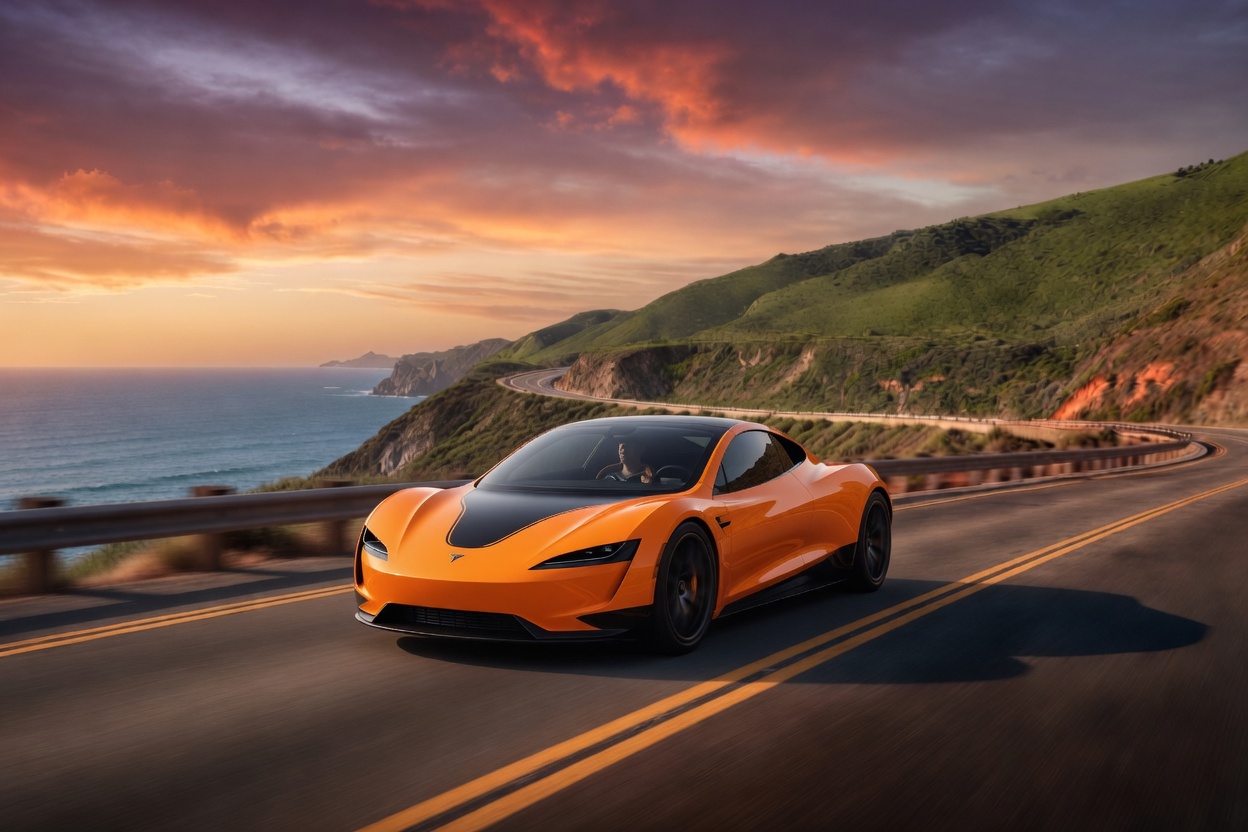
During Tesla’s Q1 2026 earnings call on April 22, Elon Musk made a brief but notable comment about the long-awaited next generation Roadster while describing Tesla’s future vehicle lineup. “Long term, the only manually driven car will be the new Tesla Roadster,” he said. “Speaking of which, we may be able to debut that in a month or so. It requires a lot of testing and validation before we can actually have a demo and not have something go wrong with the demo.”
That single statement is the entire Roadster update from yesterday’s call, and while it represents another timeline shift, it comes as no surprise with Tesla heads-down-at-work on the mass rollout of its Robotaxi service across US cities, and the industrial scale production of the humanoid Optimus.
The fact that Musk specifically framed the Roadster as the last manually driven Tesla is significant on its own. As the rest of the lineup moves toward full autonomy, the Roadster becomes something rare in the Tesla-sphere by keeping the driver in control. Driving enthusiasts who buy a $200,000 supercar are not doing so to be passengers. They want the physical connection to the road, the feel of acceleration under their own input, and the experience of controlling something with that level of performance. FSD, however capable it becomes, removes that entirely. The Roadster signals that Tesla understands this distinction and is building a car specifically for the people who consider driving itself the point.
Tesla isn’t joking about building Optimus at an industrial scale: Here we go
The specs for the Roadster Musk has teased over the years are genuinely unlike anything in production. The base model targets 0 to 60 mph in 1.9 seconds, a top speed above 250 mph, and up to 620 miles of range from a 200 kWh battery. The optional SpaceX package takes it further, rumored to add roughly ten cold gas thrusters operating at 10,000 psi, borrowed directly from Falcon 9 rocket technology. With thrusters, Musk has claimed 0 to 60 mph in as little as 1.1 seconds. In a 2021 Joe Rogan interview he went further, stating “I want it to hover. We got to figure out how to make it hover without killing people.” Tesla filed a patent for ground effect technology in August 2025, suggesting the hover concept has not been abandoned. The starting price remains $200,000, with the Founders Series requiring a $250,000 full deposit. Some reservation holders placed those deposits in 2017 and are approaching a full decade of waiting.
With production now targeted for 2027 or 2028 at the earliest, the Roadster remains Tesla’s most audacious promise and its longest-running delay. But if what Musk is testing lives up to even half of what he has described, the demo alone should be worth waiting for.
Elon Musk says the Tesla Roadster unveiling could be done “maybe in a month or so.”
He said it should be an extraordinary unveiling event. pic.twitter.com/6V9P7zmvEm
— TESLARATI (@Teslarati) April 22, 2026
Elon Musk
Tesla isn’t joking about building Optimus at an industrial scale: Here we go
Tesla’s Optimus factory in Texas targets 10 million robots yearly, with 5.2 million square feet under construction.
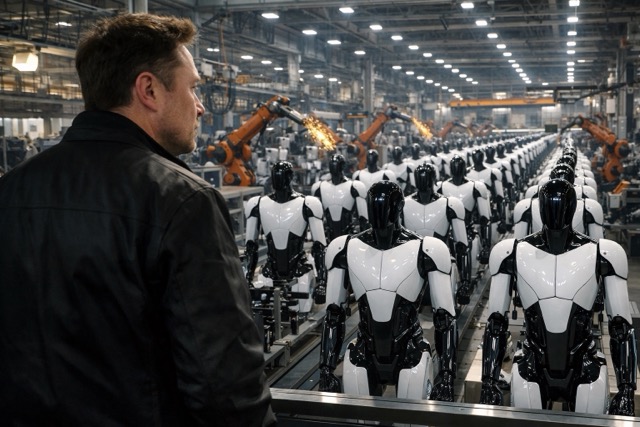
Tesla’s Q1 2026 Update Letter, released today, confirms that first generation Optimus production lines are now well underway at its Fremont, California factory, with a pilot line targeting one million robots per year to start. Of bigger note is a shared aerial image of a large piece of land adjacent to Gigafactory Texas, that Tesla has prominently labeled “Optimus factory site preparation.”
Permit documents show Tesla is seeking to add over 5.2 million square feet of new building space to the Giga Texas North Campus by the end of 2026, at an estimated construction investment of $5 billion to $10 billion. The longer term production target for that facility is 10 million Optimus units per year. Giga Texas already sits on 2,500 acres with over 10 million square feet of existing factory floor, and the North Campus expansion is being built to support multiple projects, including the dedicated Optimus factory, the Terafab chip fabrication facility (a joint Tesla/SpaceX/xAI venture), a Cybercab test track, road infrastructure, and supporting facilities.
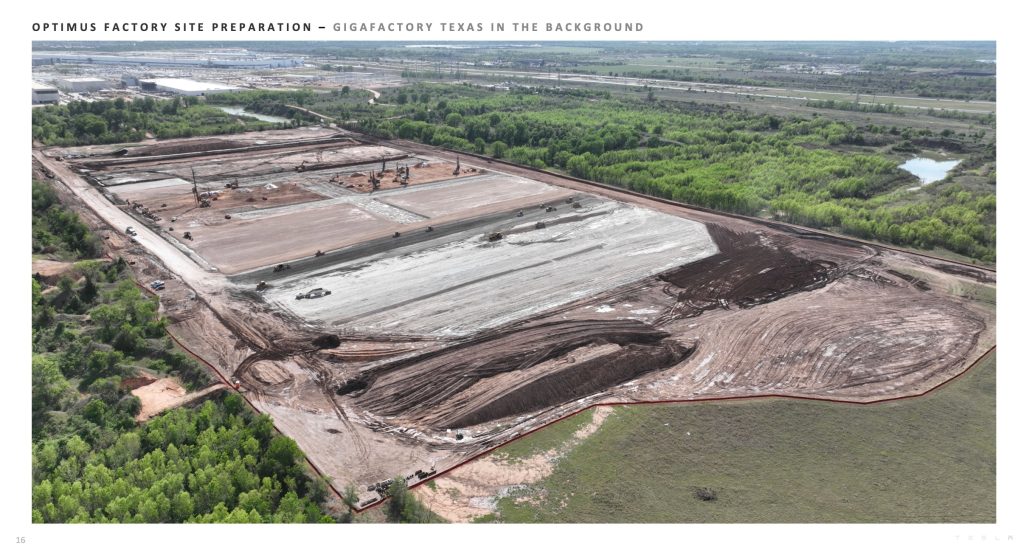
Credit: TESLA
Texas makes strategic sense beyond the existing infrastructure. The state’s tax structure, lower labor costs relative to California, and the proximity to Tesla’s AI training cluster Cortex 1 and 2, both located at Giga Texas and now totaling over 230,000 H100 equivalent GPUs, means the Optimus software stack and the factory producing the hardware will share the same campus. Tesla’s Q1 report also confirmed completion of the AI5 chip tape out in April, the inference processor designed specifically to power Optimus units in the field.
As Teslarati reported, the Texas facility is intended to house Optimus V4 production at full scale. Musk told the World Economic Forum in January that Tesla plans to sell Optimus to the public by end of 2027 at a price between $20,000 and $30,000, stating, “I think everyone on earth is going to have one and want one.” He has previously pegged long term demand for general purpose humanoid robots at over 20 billion units globally, citing both consumer and industrial use cases.
Elon Musk
Why SpaceX just made a $60 billion bet on AI coding ahead of historic IPO
SpaceX has secured an option to acquire Cursor AI for $60 billion ahead of its historic IPO.
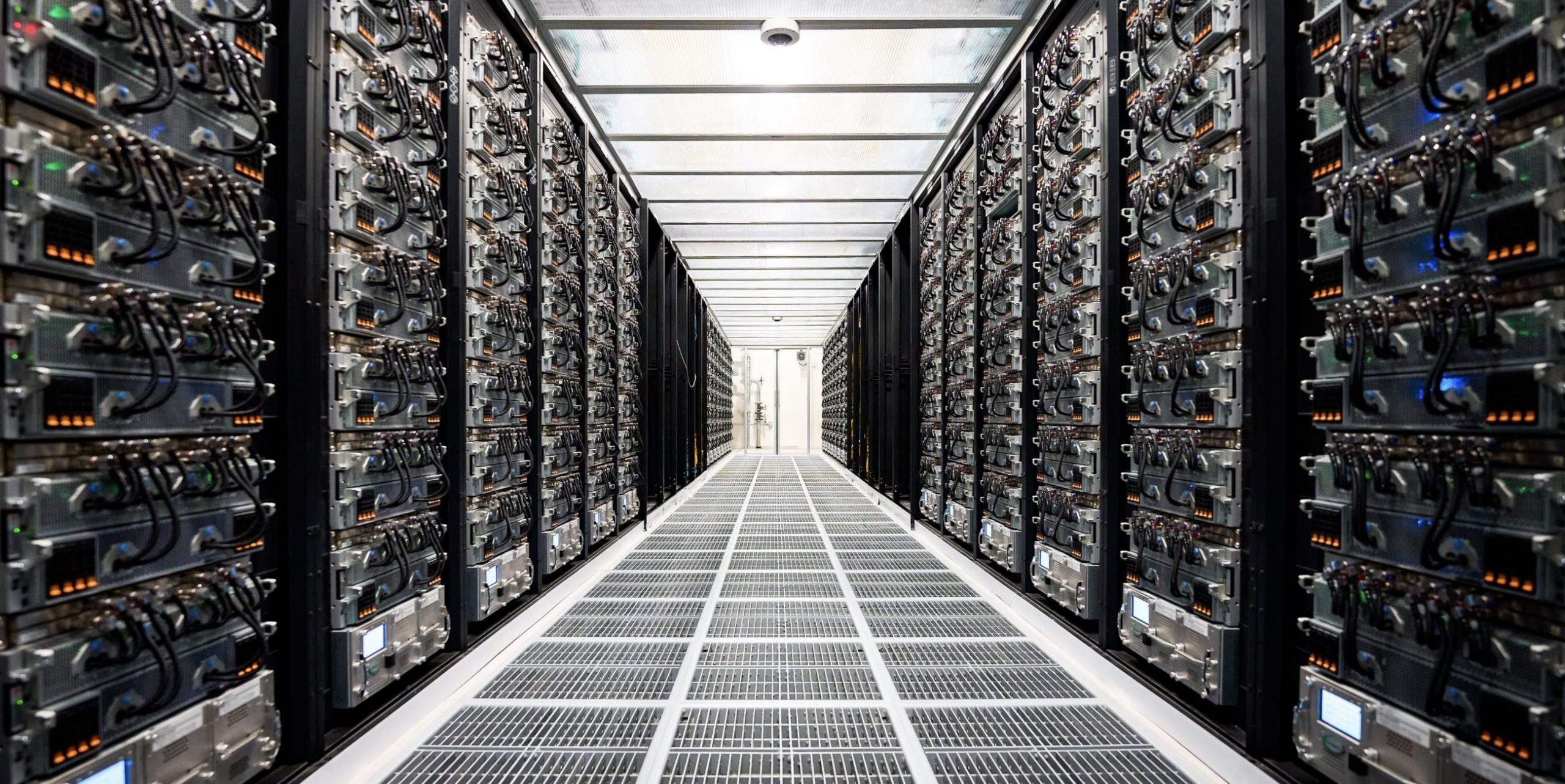
SpaceX announced today it has struck a deal with AI coding startup Cursor, securing the option to acquire the company outright for $60 billion later this year, while committing $10 billion for joint development work in the interim. The announcement described the partnership as building “the world’s best coding and knowledge work AI,” and comes just days after Cursor was separately reported to be raising $2 billion at a valuation above $50 billion.
The move makes strategic sense given where each company currently stands. Cursor currently pays retail prices to Anthropic and OpenAI to the same companies competing directly against it with Claude Code and Codex. That means every dollar of revenue Cursor earns partially funds its own competition. With SpaceX bringing computational infrastructure to the Cursor platform, that could reduce Cursor’s dependence on OpenAI and Anthropic’s Claude AI as its providers. Access to SpaceX’s Colossus supercomputer, with compute equivalent to one million Nvidia H100 chips, gives Cursor the infrastructure to run and train its own models at a scale it could never afford independently. That one change restructures the entire unit economics of the business.
Elon Musk teases crazy outlook for xAI against its competitors
Cursor’s $2 billion in annualized revenue and enterprise reach across more than half of Fortune 500 companies gives SpaceX something its xAI subsidiary currently lacks, which is a proven, fast-growing software business with real enterprise distribution.
For Cursor, SpaceX’s $10 billion in joint development funding is transformational. Cursor raised $3.3 billion across all of 2025 to reach that $2 billion in revenue. A single $10 billion commitment from SpaceX, even as a development payment rather than an acquisition, dwarfs everything Cursor has raised in its entire existence. That capital accelerates product development, enterprise sales infrastructure, and proprietary model training simultaneously.
The timing is deliberate. SpaceX filed confidentially with the SEC on April 1, 2026, targeting a June listing at a $1.75 trillion valuation, in what would be the largest public offering in history. The company is expected to begin its roadshow the week of June 8, with Bank of America, Goldman Sachs, JPMorgan, and Morgan Stanley serving as underwriters. Adding Cursor to the portfolio before that roadshow gives IPO investors a concrete enterprise software revenue story to price in, alongside rockets and satellite internet.
The deal also addresses a weakness that became visible after February’s xAI merger. Several xAI co-founders departed following that acquisition, and SpaceX had already hired two Cursor engineers, signaling where its AI talent strategy was heading. Cursor, for its part, faces a pricing disadvantage competing against Anthropic’s Claude Code.
Whether SpaceX exercises the full acquisition option before its IPO or after remains the open question. Either way, this deal reshapes what investors will be buying into when SpaceX goes public.

Elon Musk’s last manually driven Tesla will do something no other production car will do

Tesla confirmed HW3 can’t do Unsupervised FSD but there’s more to the story


