News
Former VW boss Herbert Diess elected as chairman of chipmaker Infineon

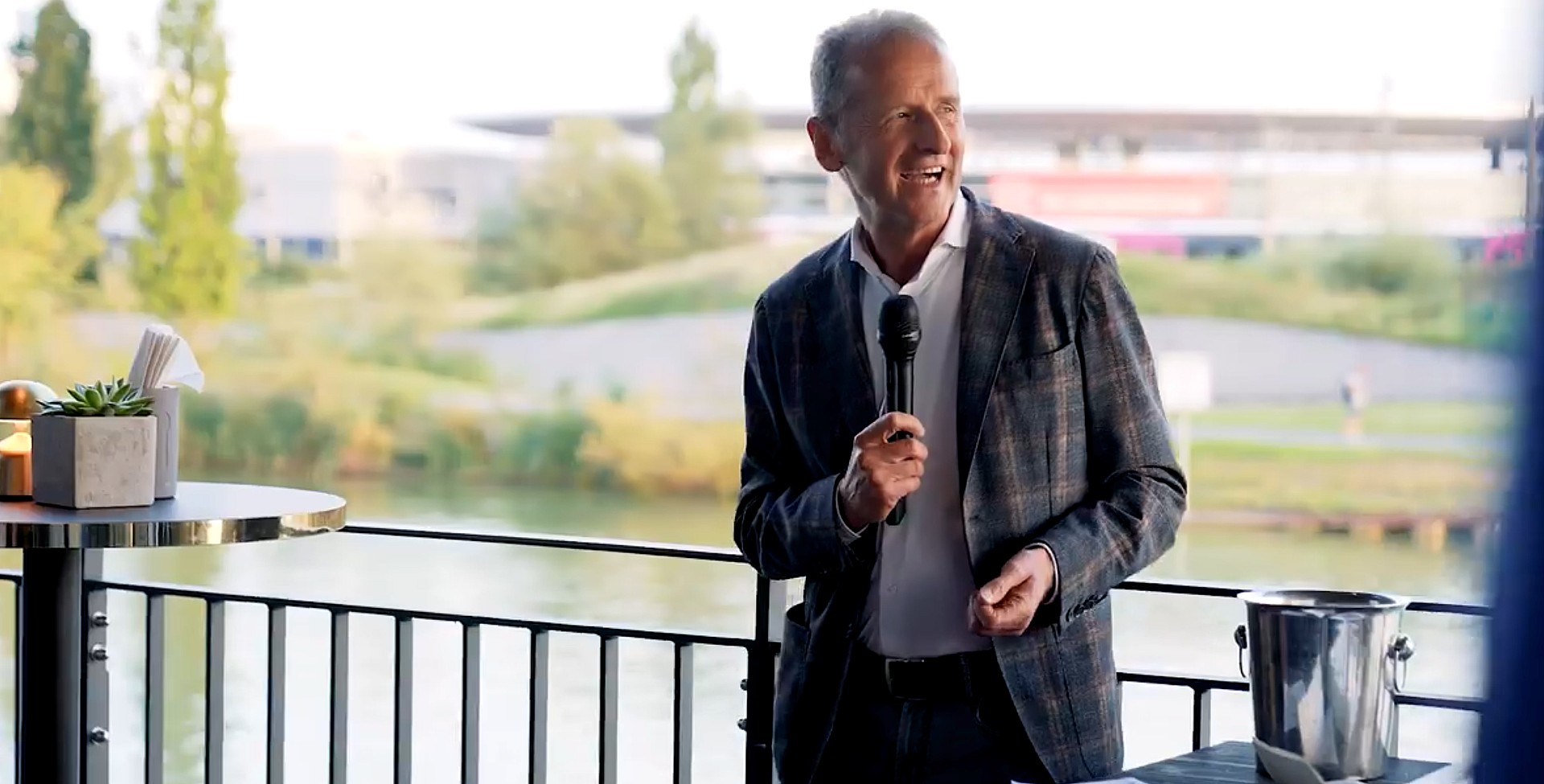
Infineon will elect Volkswagen’s former CEO Herbert Diess as the chairman of its supervisory board on February 16, 2023.
Infineon was the semiconductor arm of the German company Siemens. Diess was part of Infineon’s supervisory board from 2015 to 2020. So the ex-VW head has inside knowledge about Infineon.
The Munich-based chipmaker purchased U.S. chipmaker Cypress Semiconductor in 2020. Infineon claims that it is one of the work’s top 10 chipmakers. Its primary clients come from the auto industry, which Diess is also intimately familiar with, making him a good candidate for chairman.
“[Infineon] increasingly plays a role as facilitator of the solutions for major, global tasks,” said Diess. “Accompanying Infineon on this journey is a tremendous motivation for me.”
Infineon offers products related to power, ASIC, Battery Management ICs, Clock & Time Solutions, ESD and Surge Protection, HiRel, Memories, Microcontrollers, RF, Sensor, Security & Smart Card Solutions, Small Signal Transistors & Diodes, Transceivers, Universal Serial Bus (USB), Wireless Connectivity, and Software.
Just two of its products already make Infineon a strong contender in today’s auto industry, which is just starting to embrace technologically advanced electric vehicles.
Infineon offers a 32-bit-microcontroller specifically for applications related to performance, connectivity, safety and security.
“Infineon’s broad portfolio of microcontrollers offers scalable and high-performance solutions for a range of applications for automotive, industrial, and consumer markets,” it stated.
The German chipmaker also offers solutions for cell monitoring and balancing. Its battery management systems can be applied to electric vehicles, grid and industrial power infrastructure, and other consumer products that require a battery, like ebikes.
If you have any tips, contact me at maria@teslarati.com or via Twitter @Writer_01001101.



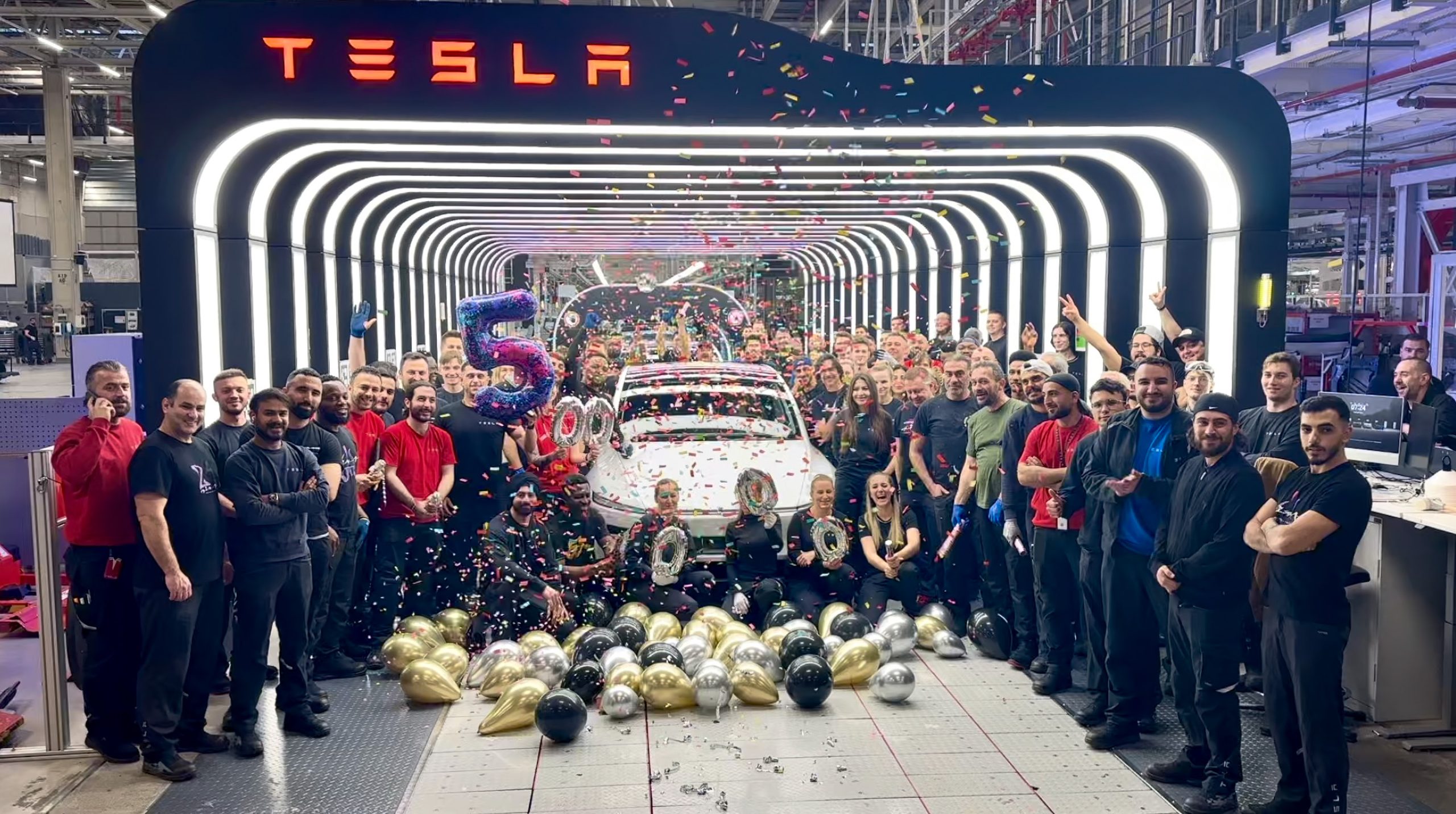
Tesla’s new vehicle registrations in Germany rose sharply in October, nearly quadrupling from the same month a year earlier. That’s according to data from the KBA, Germany’s federal motor transport authority.
The KBA reported 2,932 Tesla vehicles registered in October, a 290.9 percent year-over-year- increase. For the first ten months of the year, Tesla’s cumulative registrations reached 47,742 units. This number is up 206.1 percent compared with the January-October period of 2025. These gains occurred against a backdrop of strong overall growth in the BEV sector as a whole.
Germany registered 94,086 new BEVs in October, a 79.5 percent rise that brought the BEV share of the passenger car market to 37 percent of the 254,492 total cars registered that month.
🇩🇪 Tesla’s new registrations in Germany nearly quadrupled in October, according to KBA data.
October: 2,932 units, +290.9% YoY Jan–Oct: 47,742 units, +206.1%
Germany’s overall BEV market grew 79.5% to 94,086 units last month. https://t.co/GMwNqsFAOC
— TESLARATI (@Teslarati) November 4, 2026
Despite the percentage surge, Tesla’s absolute numbers left it with a 1.2 percent share of all new car registrations for October. Chinese competitors did record higher volumes, as BYD registered 5,173 vehicles, a 2 percent share, Leapmotor with 3,661 cars, which equates to 1.4 percent, and Xpeng had a 0.5 percent share.
Year-to-date through October, BYD edged ahead of Tesla with 47,961 registrations versus Tesla’s 47,742.
The October results follow a notably strong September for Tesla in Germany, when it registered 12,552 vehicles, an increase of roughly 269 percent year-over-year and one of its strongest monthly totals on record in the country. That month, the Model Y led all EVs and ranked among the top-selling vehicles of any powertrain.
The figures form part of a broader recovery in Tesla’s European registrations after an extended period of softer demand. While monthly volumes remain subject to typical quarter-end patterns and competitive pressure from both established European brands and rapidly expanding Chinese manufacturers, the year-to-date growth indicates improved traction in Europe’s largest car market.
Tesla’s Gigafactory Berlin-Brandenburg continues to supply the region, positioning the company to capture a share of the expanding German BEV market as overall EV adoptions looks to be accelerating.
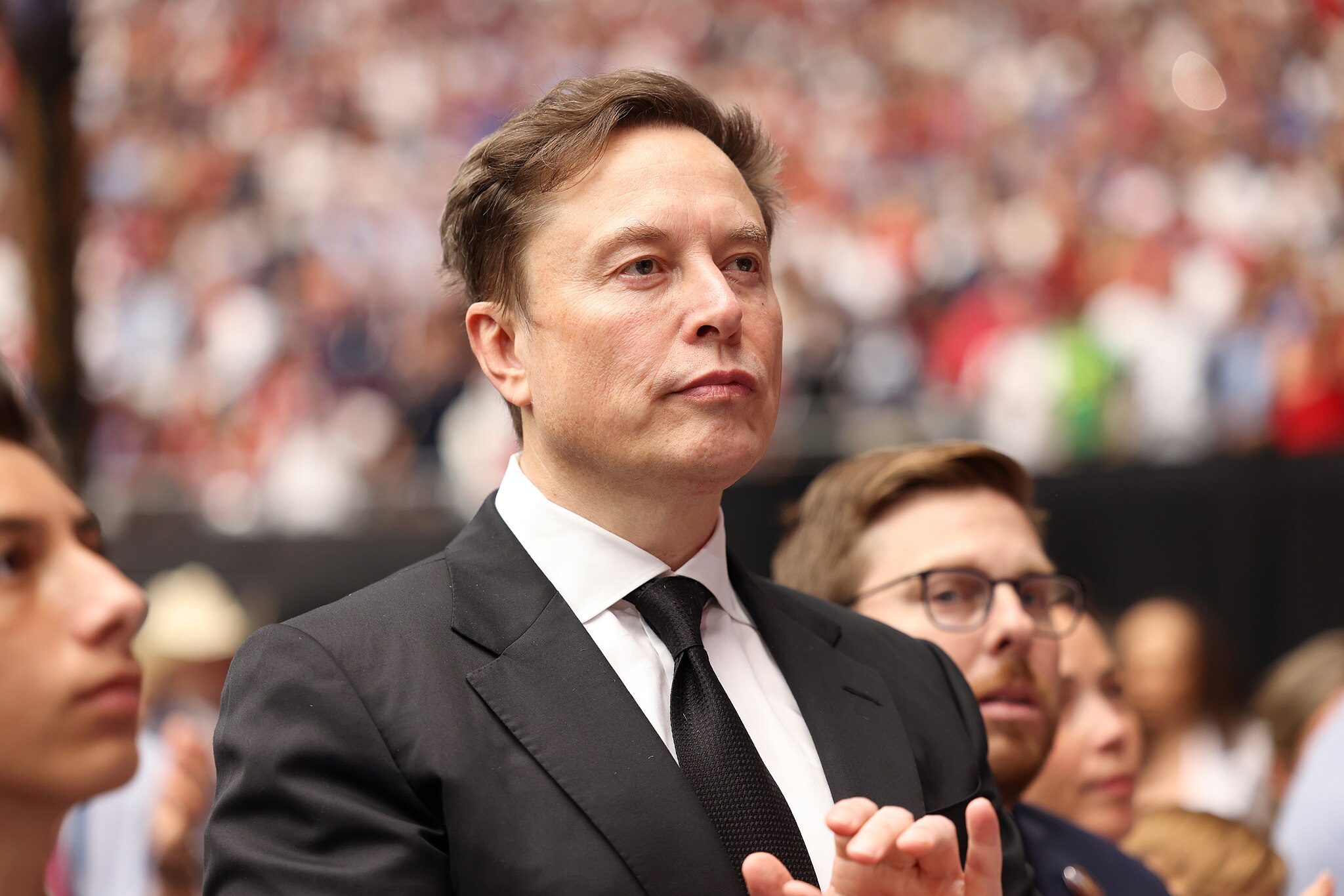
In the early hours of Wednesday following the 2026 midterm elections, Elon Musk took to X with a characteristically irreverent reaction to the results.
“Guess my election-interfering space lasers didn’t work this time,” the Tesla and SpaceX CEO posted, generating hundreds of thousands of likes and widespread attention.
The quip landed after Democrats secured control of both the House and Senate in a sweeping victory. Musk, the largest individual donor of the cycle, had directed an estimated $440–474 million toward Republican candidates and aligned groups—more than any non-candidate in modern history.
Much of the spending targeted Texas, where Musk’s companies have significant operations. There, Democrat Gina Hinojosa defeated incumbent Gov. Greg Abbott, and James Talarico ousted Ken Paxton in the Senate race.
Musk’s “space lasers” joke playfully referenced conspiracy theories that have circulated since the 2024 election, falsely claiming he used Starlink satellites or other technology to influence vote totals. By leaning into the accusation with a shrug emoji, he turned potential criticism into self-deprecating humor:
St. Clair says Musk told her he knew the 2024 election’s outcome erlier in the day — claiming he had “lasers in space” and had unleashed an “anomaly in the matrix.”
(She says she didn’t press for details, worried she’d later be deposed about it.)
(2/7)
— Matt Rivera (@rivera) September 16, 2026
According to .@nytimes reporting by .@KirstenGrind and .@mega2e, after appearing on stage with Trump on Oct 5, Musk texted someone close to him:
“I’m feeling more optimistic after tonight. Tomorrow we unleash the anomaly in the matrix.”
Then, an hour later:
“This isn’t something on the chessboard, so they’ll be quite surprised. ‘Lasers’ from space.”Important to remember that Musk just admitted to winning the election for Trump, that the House would be blue, and the Senate would be 51–49 for the Democrats.
It’s also important to remember that just days before the election Musk activated 265 low Earth orbit (LEO) V2 Mini satellites, each equipped with Direct-to-Cell (DTC) technology capable of processing, routing, and manipulating real-time data, including voting data, through his satellite network.
Now Trump is forcing countries to sign Starlink contracts in exchange for tariff relief. Do Democrats understand where this is heading? Does anyone in Congress tune in to .@jimstewartson? This isn’t just policy—it’s Musk and Thiel’s global heist of democracy. And Dems are out here sending texts asking people to chip in for midterms?
What midterms? A vote-flipping algorithm just WON the 2024 election. We have the data.
We have constitutional avenues to remove this entire illegitimate administration. Stealing an election is an act of rebellion against the Constitution—and nearly every individual currently serving has previously sworn an oath to uphold and defend it. Do you see where I’m going here?
See Starlink op-ed, attached.
This is not HUMAN generated data..@AmyMcGrathKY .@YourAnonCentral .@ellenbarkin .@JasonBassler1 .@SenDuckworth
— This Will Hold (@This_Will_Hold) June 8, 2025
He followed up with another post observing that “Data centers in space looking pretty appealing right now,” a pointed nod to possible regulatory and infrastructure challenges for data-center projects in Texas under the new Democratic leadership.
Critics quickly highlighted the scale of the spending relative to the outcome. One reply noted that Musk had “dropped half a fucking BILLION on this shit and got dog walked,” underscoring the disconnect between financial outlay and electoral returns. Musk later shared a vintage-style “technical difficulties” image, extending the humorous tone.
The posts arrived as markets reacted: shares of Tesla and SpaceX-related entities dipped in premarket trading amid concerns over heightened scrutiny and shifting state-level politics. Democrats had previously signaled plans to examine Musk’s government ties, DOGE involvement, and business conflicts if they regained congressional majorities.
Musk’s response stands out for its light touch amid high-stakes political setbacks. Rather than offering a detailed defense of his spending or a sober analysis of voter sentiment, he chose sarcasm—consistent with his long-standing style of public communication.
Whether the comments signal a retreat from large-scale political donations ahead of 2028 or simply a momentary shrug remains unclear, but they captured the attention of millions in the immediate aftermath of election night.
SpaceX has selected Qualcomm Technologies to supply core infrastructure for Starlink Mobile’s planned nationwide terrestrial 5G network in the United States.
Announced on November 4, the multi-year agreement covers radios, baseband units, and commercial-grade Layer 1 software based on Qualcomm’s Dragonwing Cellular Infrastructure platforms, specifically the QRU100 and QDU100:
🚀 SpaceX has picked Qualcomm to supply radios, baseband units and Layer 1 software for Starlink Mobile’s nationwide terrestrial 5G network.
Deployment across tens of thousands of U.S. cell sites starts in 2027. Qualcomm calls it its biggest 5G deal yet. https://t.co/YKLRakuJjB
— TESLARATI (@Teslarati) November 4, 2026
These will power Massive MIMO radio units featuring 64 transmit and 64 receive paths (64T64R), designed to boost coverage, capacity, and spectral efficiency at scale. Qualcomm has described the pact as its largest 5G deal to date, with deployment across tens of thousands of U.S. cell sites scheduled to begin in 2027.
The terrestrial build-out is meant to complement, not replace, Starlink’s satellite direct-to-cell capabilities. SpaceX has assembled substantial spectrum holdings for this purpose: roughly 65 MHz of mid-band frequencies acquired from EchoStar (including AWS-4 and related bands) and up to 14 MHz of low-band 800 MHz spectrum from Grain Management.
The low-band airwaves improve indoor penetration and range, while mid-band supports higher capacity. SpaceX executives, including President Gwynne Shotwell, have outlined a hybrid architecture in which satellites eliminate outdoor dead zones and terrestrial nodes add capacity where demand is highest.
Earlier comments suggested small cells or femtocells potentially co-located with existing Starlink user terminals on roofs, though later filings also reference more conventional antennas on towers and structures.
The big picture is SpaceX’s bid to become a full-fledged U.S. mobile carrier rather than a satellite partner or dead-zone filler. AT&T, Verizon, and T-Mobile together generate hundreds of billions in annual wireless revenue; Shotwell has said SpaceX expects to win customers by offering superior coverage, including during disasters, through seamless satellite-terrestrial handoff.
Verizon, AT&T and T-Mobile are trying to shut Starlink out before FCC vote
Starlink already represents a major share of SpaceX’s revenue and profit following the company’s 2026 IPO. By vertically integrating spectrum, satellite manufacturing, launch capacity, and now ground radio equipment, SpaceX aims to control more of the connectivity stack.
Qualcomm’s involvement also positions the network for future evolution toward AI-native 6G infrastructure, with energy-efficient processing that could improve deployment economics.
Challenges remain: spectrum depth still lags the Big Three, capital costs for tens of thousands of sites will be substantial, and regulatory approvals continue, but the Qualcomm deal marks a concrete step from spectrum accumulation toward operational network build-out.
In short, the partnership accelerates Starlink Mobile’s shift from orbital broadband specialist to hybrid mobile competitor, testing whether a space-based company can reshape terrestrial wireless economics and coverage in the world’s largest market.

Tesla registrations in Germany nearly quadruple in October

Elon Musk hilariously comments on Midterm election results


