News
Tesla is becoming the company of choice for next-generation auto workers

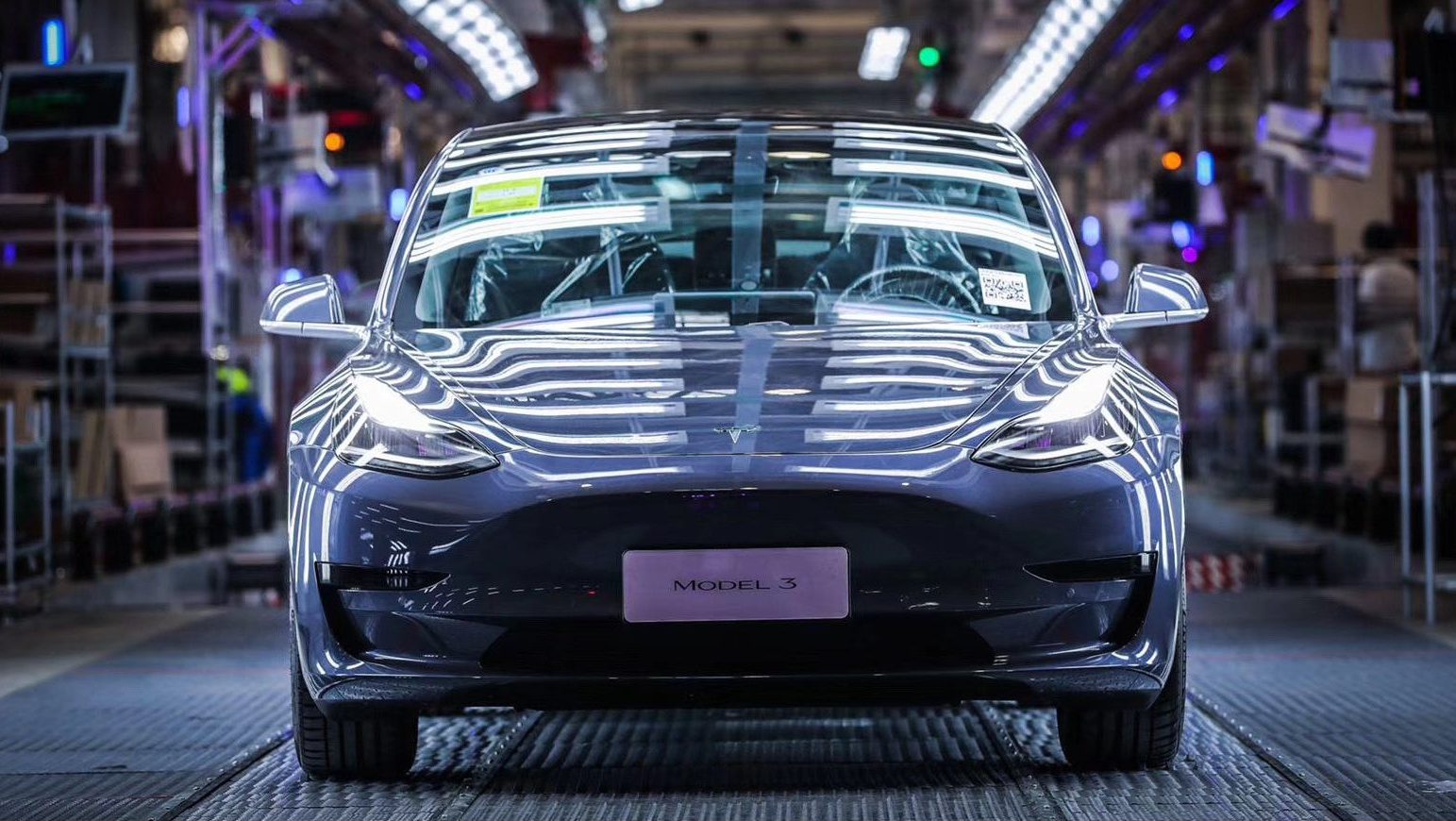
Tesla’s first handover ceremony for its Made-in-China Model 3 in Gigafactory 3 was memorable for a variety of reasons. For one, it proved that Tesla could meet or even exceed the already-ambitious goals of CEO Elon Musk. It was also an event that was made extra special when a young GF3 worker decided to propose to his partner with his blue MIC Model 3.
The scene is representative of a trend that seems to be present in Tesla’s ranks: the company is becoming the de facto carmaker of choice for the next generation of auto workers. Gigafactory 3’s workers who were present at the handover ceremony were mostly young. This extends to the company’s executives as well. Unlike conventional executives from legacy auto, who are populated by veterans who have been in the business for decades, Tesla’s executives are young, aggressive, and even a tad bit ambitious.
This observation was mentioned by Tesla owner-enthusiast @Ray4Tesla in a tweet following the handover event in Shanghai. Several executives from Tesla attended the MIC Model 3 delivery event, and all of them were in their 30s and 40s. They were articulate, energetic, and seemingly very motivated. In a way, the energy exuded by Tesla China’s executives was fitting for a company whose mission is literally to accelerate the advent of sustainability.
Tesla’s allure for young professionals is not just limited to China. Recent comments from Jorg Steinbach, the Economics Minister of Brandenburg, suggested that Germany may be looking to Tesla to attract young talent as well. “I am optimistic that young people from all over Germany and far beyond want to take part in this project,” he said, adding that the arrival of the electric car maker could allow the region’s workers to future-proof their jobs.
Perhaps it’s Tesla’s disruptive nature, or its startup nature, but the company continues to rank high among young job seekers. Working at Tesla is notoriously challenging, filled with long hours and hyper-ambitious targets. It’s essentially a Silicon Valley startup, but instead of a mobile app or an internet-based service, the company’s product happens to be electric cars and battery storage devices. Stories from former workers at Tesla tell of intense work environments and sudden changes of pace. Yet, it is also one that the best and brightest find very difficult to pass up.
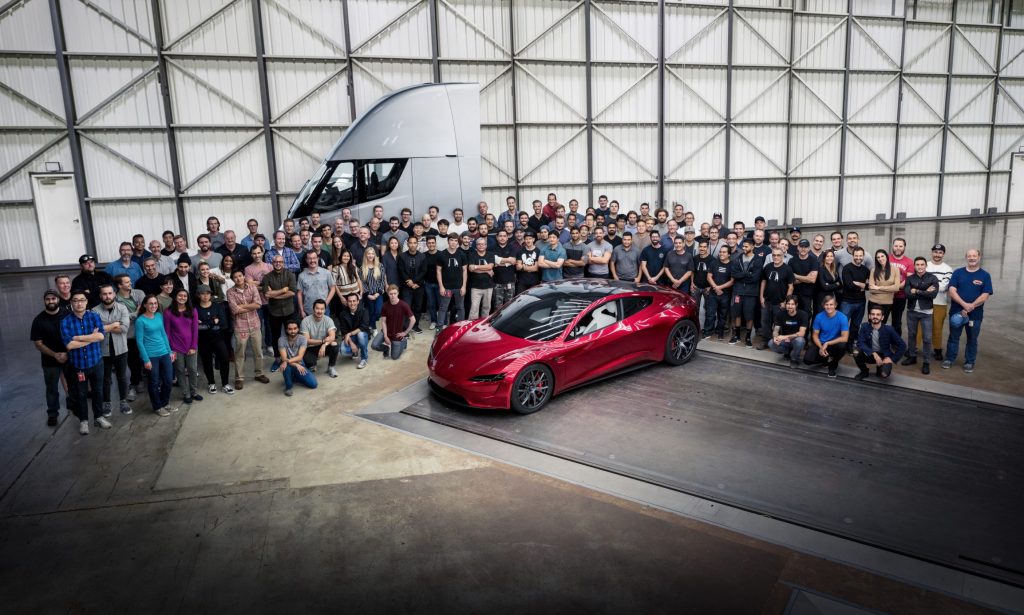
Employer branding specialist Universum’s 2019 survey found that Tesla and SpaceX, two of CEO Elon Musk’s companies, are perceived by engineering students as the best employers in the country. For many young workers, particularly those whose idealism is still intact, there are few companies in the world worth working for, and one of them happens to be Tesla. Overall, it appears that for many of these young workers, the challenges that come with a job at Tesla are well worth it.
Another reason for this is likely Tesla CEO Elon Musk. Bold and daring, Musk has been compared by the media to billionaire-genius-superhero Tony Stark/Iron Man. Just like the fictional Stark, Musk barrels through his projects with an intensity that’s near-obsessive, and at times, with seemingly little regard for his personal safety. While conventional auto CEOs are thought to spend their days behind a desk and at meetings, Musk is out on the roads testing the limits of Autopilot and Full Self-Driving on his personal vehicle. Musk is also known to get his hands dirty when needed, with the CEO being spotted torquing bolts with Tesla’s workers during the buildout of Tesla’s GA4 line for the Model 3 in the Fremont factory.
Ultimately, it is quite inspiring to work for a company whose goal is not just to make money every quarter, but one that fights a far more important battle. It is also inspiring to work under a leader who puts himself in the front lines. This certainly seems to be the case, with a survey from job search marketplace Hired indicating that Musk is currently perceived by job seekers as the most inspiring leader in tech. This is something that has been noticed by veteran Shark Tank judge Kevin O’Leary, better known by his tongue-in-cheek nickname, Mr. Wonderful, as well.
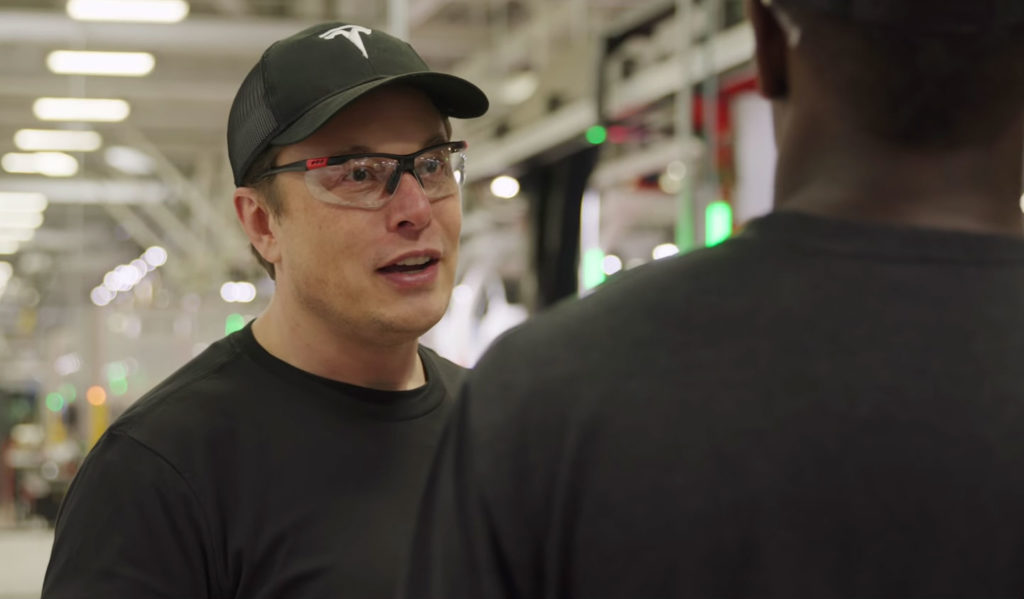
Prior to being a TSLA investor, O’Leary had been critical of the electric car maker. But one of the tipping points for the investing veteran came after watching electric vehicle races that involve engineering students from various schools. Automakers would usually send their HR teams to these races, in an effort to attract up-and-coming talent. But after each race, the Shark Tank judge realized that the winning teams all head over to one company: Tesla. This, according to O’Leary, is a big advantage for the electric car maker.
“Every one of these engineers, the smoking hot kids that sit with their cars, the men and women that sleep with them for 24 hours a day; it’s an unusual culture I’ve never seen before. They all want to work at Tesla. Why? Because the teams are six to eight people. If they go to a legacy car company, they get drowned out in the back somewhere. These smart, young, men and women make a big difference as interns. I can’t believe the access to talent they have,” O ‘Leary said.
With this in mind, it appears that Tesla’s future as an electric car maker is secured, at least with regards to its talent pool. Provided that the company maintains its course, and its leadership remains as motivated, there is very little doubt that the disruptor from Silicon Valley could attract the best and brightest workers when needed.


News
NASA taps SpaceX for more astronaut missions as Boeing Starliner remains grounded
NASA just gave SpaceX a $946 million contract for three more astronaut missions through 2030.

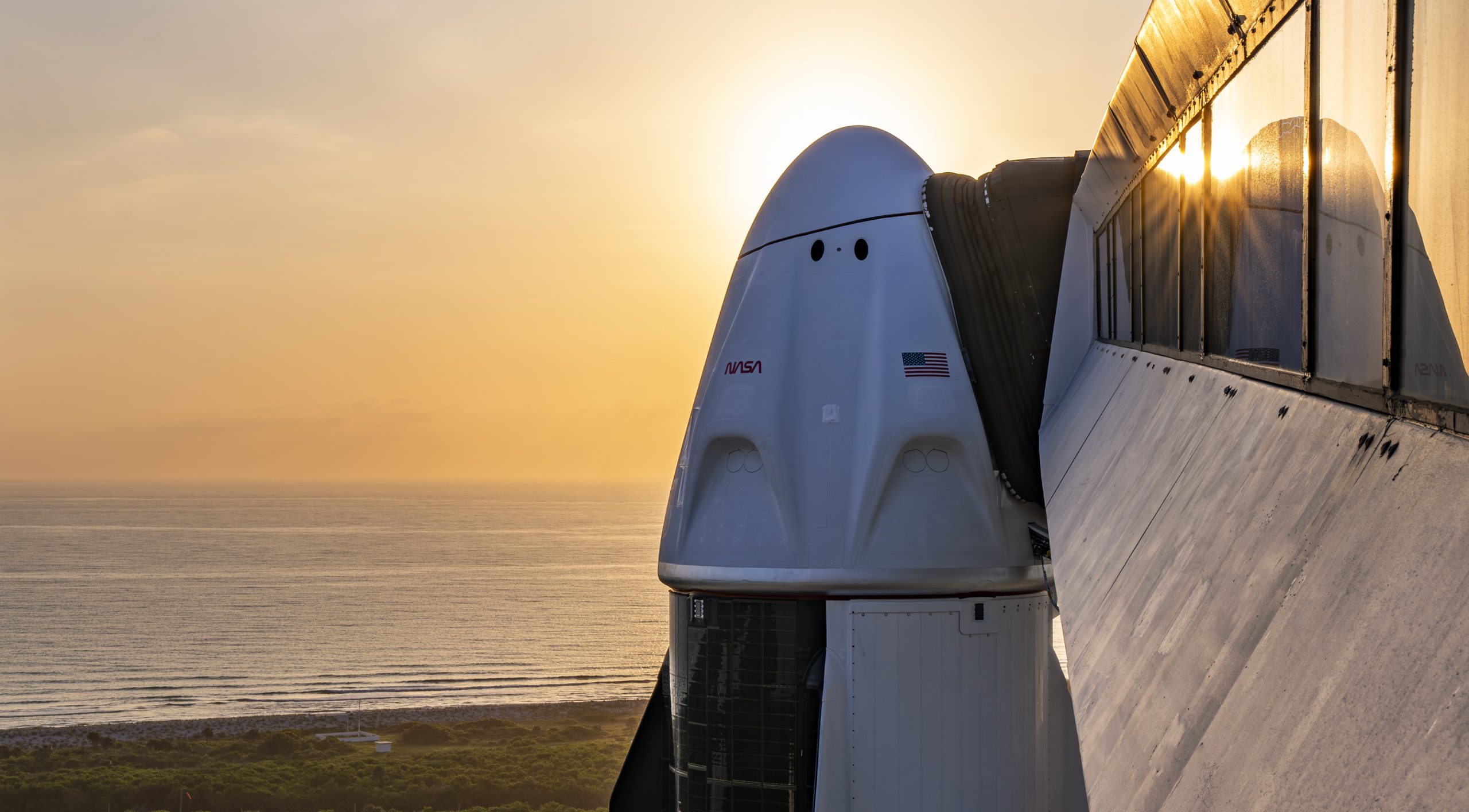
NASA has awarded SpaceX a $946 million contract modification covering three more astronaut missions to the International Space Station, according to an announcement the agency published Friday. The award adds Crew-15, Crew-16, and Crew-17 to SpaceX’s existing Commercial Crew Transportation Capability contract, bringing the agreement’s total value to $5.92 billion across 17 flights.
SpaceX confirmed the award on X, writing that it was excited for Falcon 9 and Dragon to launch NASA’s Crew-15, 16, and 17 missions to the Space Station from Florida. The new missions cover ground, launch, in orbit, and return operations, along with cargo transport and a lifeboat capability while docked at the station, and the period of performance runs through 2030.
We’re excited for Falcon 9 and Dragon to launch @NASA’s Crew-15, 16, and 17 missions to the @Space_Station from Florida https://t.co/Qm16vVK9F3 pic.twitter.com/drg3s7GtuM
— SpaceX (@SpaceX) September 18, 2026
The award follows a notice of intent NASA issued in May, when the agency first signaled it would purchase up to six additional post certification missions from SpaceX. Teslarati covered that filing at the time, noting NASA cited technical issues and schedule delays encountered by Boeing as a driving factor. Friday’s contract modification locks in three of those six missions, with the remaining three left open for NASA to award later, potentially to Boeing if Starliner clears certification.
Boeing’s CST-100 Starliner has still not flown an operational crew rotation mission for NASA. The spacecraft’s most recent crewed test flight in 2024 ended without the astronauts returning aboard Starliner, and the company has spent the time since working through thruster problems. SpaceX President Gwynne Shotwell said this week that SpaceX is not retiring Crew Dragon today, for sure, while stopping short of committing to fly it past 2030.
Crew-12 is currently docked at the space station, and NASA has said Crew-13 is targeting a launch in the coming weeks. The newly awarded Crew-15 through Crew-17 missions extend SpaceX’s role as NASA’s primary way of getting astronauts to and from orbit well into the back half of the decade, regardless of what happens with Starliner or Starship in the meantime.
Investor's Corner
New drone video shows Tesla’s Optimus Factory reaching a turning point
New drone footage shows Tesla’s dedicated Optimus factory steel frame nearing completion at Giga Texas.
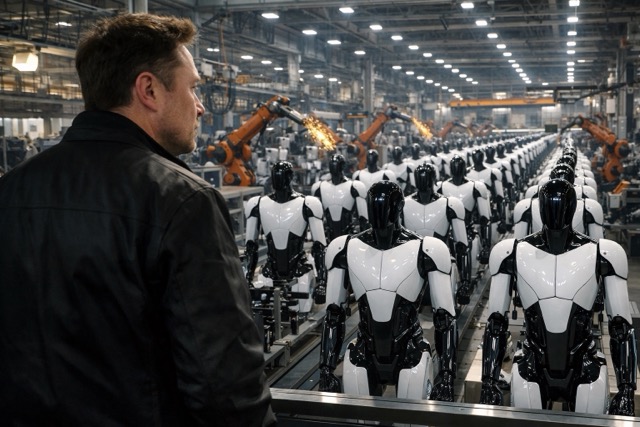
Tesla’s dedicated Optimus factory at Gigafactory Texas is closing in on a finished steel frame, according to drone footage posted Thursday afternoon by longtime site observer Joe Tegtmeyer. In the video, Tegtmeyer said structural steel assembly is now about five column grids away from reaching the building’s north perimeter beam, putting the primary skeleton in its final stretch roughly six months after Tesla broke ground on the North Campus site in late March.
The Giga Texas Optimus Factory latest update … construction keeps moving fast!
Steel assembly is now only about 5 column grids from the north perimeter beam. Concrete is going in on the three upper floors, rebar is still being laid for more pours, and footing / grade-beam work… pic.twitter.com/qvFPvwnYzW
— Joe Tegtmeyer 🚀 🤠🛸😎 (@JoeTegtmeyer) September 17, 2026
Tegtmeyer’s footage shows concrete already going in on three upper floors while crews continue laying rebar and pouring grade beam footings at ground level. That kind of parallel work, steel rising at one end of the site while concrete sets at the other, is a scheduling approach Tesla used at the original Giga Texas building and appears to be repeating here to save time before the plant’s targeted 2027 production start.
Teslarati has tracked the building’s progress since Tesla confirmed construction was officially underway in May, when the first steel structure went up on what was then bare, reclaimed land. The facility is part of a more than 5.2 million square foot expansion of Giga Texas’s North Campus that Tesla has said will eventually run nearly the length of the existing vehicle factory, over 4,000 feet, while sitting somewhat narrower. Musk has pegged the long term output target at 10 million Optimus units a year once the line is running at full capacity, a volume that would dwarf the one million unit pilot line Tesla is standing up separately at its Fremont, California factory.
Tesla Giga Texas to feature massive Optimus V4 production line
The Texas facility sits alongside another major buildout on the same campus. Terafab, the joint Tesla and SpaceX chip fabrication plant that will eventually supply the silicon running Optimus units in the field. Housing robot assembly and chip production on the same grounds is a deliberate supply chain decision, cutting down on the shipping and lead time that would otherwise sit between the two.
Tesla has not given an updated timeline beyond its previously stated goal of bringing high volume Optimus production online at the site in the summer of 2027. Fremont’s smaller pilot line began mass producing the current Gen 3 robot in January, with that plant expected to build tens of thousands of units this year primarily to generate the real world data Tesla needs to refine the robot’s software before Giga Texas ramps up. Six months of visible construction progress, tracked almost entirely through Tegtmeyer’s recurring drone flights, gives the clearest outside look yet at how seriously Tesla is treating that 2027 deadline.
Investor's Corner
Tesla and SpaceX take “Terafab” Trademark fight to Federal Court
Tesla and SpaceX sue a small Illinois firm after cease and desist letters over Terafab.

Tesla and SpaceX are asking a federal judge to rule that their planned Terafab chip factory does not infringe a small Illinois company’s trademark, a request that arrives only after months of quiet negotiation broke down this summer.
The dispute traces to May 18, when Tesla filed three U.S. trademark applications for “Terafab” and “Tesla Terafab,” covering semiconductor chips and related chip making services. TERA-print LLC, a nanotechnology company that has held a federal trademark for “Tera-Fab” since 2021, responded five days later with a cease and desist letter. According to the lawsuit, first reported by Reuters, TERA-print argued that Tesla and SpaceX’s use of “Terafab” would confuse consumers familiar with its own trademark, which covers a desktop photolithography printer sold to researchers for sensor and bioengineering work.
What stands out in the filing is the timing of TERA-print’s own paperwork. One day before sending that cease and desist letter, on May 22, TERA-print applied to expand its existing registration to cover semiconductor materials, silicon chips, nanoelectronic devices and AI design services, categories it had not previously claimed. Tesla and SpaceX call that filing opportunistic in their complaint, noting it arrived two months after Tesla’s public Terafab announcement and just days after Tesla’s own trademark applications went in.
Elon Musk launches TERAFAB: The $25B Tesla-SpaceXAI chip factory that will rewire the AI industry
By June 10, TERA-print was threatening to sue for federal trademark infringement, false designation of origin and unfair competition, the complaint states. Rather than wait to be sued, Tesla, SpaceX and SpaceXAI met with TERA-print six separate times between June and August trying to resolve the dispute directly. Those talks collapsed, and the companies filed for declaratory judgment this week in the U.S. District Court for the Western District of Texas, asking a judge to find that “Terafab” does not infringe TERA-print’s mark before TERA-print can file a claim of its own.
TERA-print isn’t backing down. The company told PCMag it discussed a settlement with Tesla as recently as September 2 and feels misled by what it called Tesla’s professed interest in settling. Its CTO, Andrey Ivankin, said TERA-print holds a Defense Department contract to fabricate semiconductors and partially owns Mattiq Inc., an AI company built on TERA-print’s products, and that the company will vigorously defend its rights.
Tesla and SpaceX argue the overlap is superficial. Terafab is planned as a $16.8 billion complex spanning roughly 100 million square feet at the Grimes County site SpaceX confirmed last month, built to produce chips for Optimus robots, Tesla’s AI computing needs and SpaceX’s orbital data center ambitions, a scale and purpose the companies say no reasonable consumer would confuse with a tabletop lab printer. TERA-print’s product line has stayed focused on lithography tools for biological and sensor research since it registered its mark in 2021.
The trademark fight is the second legal dispute tied to the Terafab project in the past week, following a separate SpaceX suit aimed at keeping company records about the facility out of public view, as KBTX reported. Whether construction proceeds under the Terafab name now depends on a federal judge in Austin.

NASA taps SpaceX for more astronaut missions as Boeing Starliner remains grounded

New drone video shows Tesla’s Optimus Factory reaching a turning point


