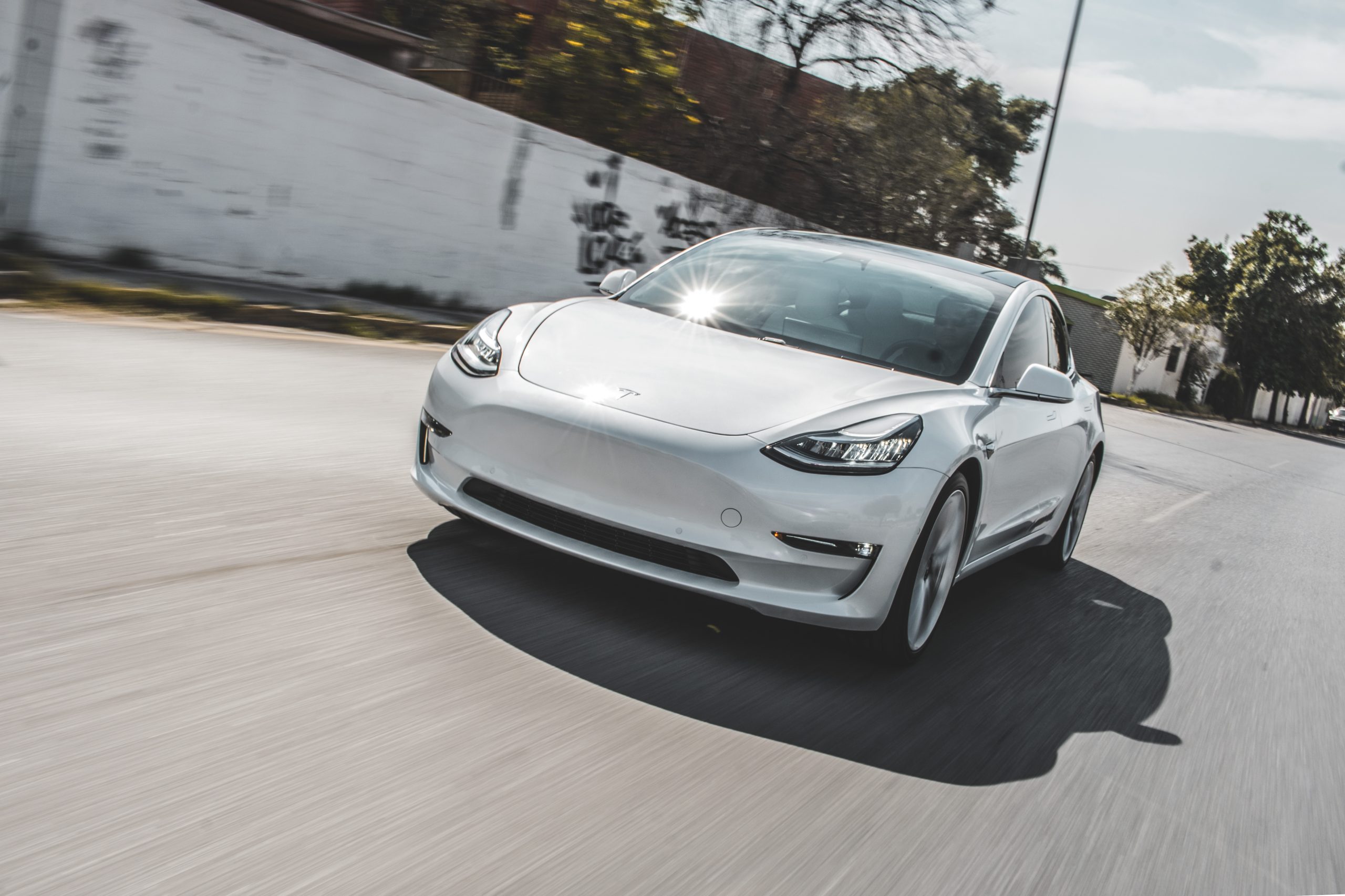

The Tesla Model 3 was the best selling electric vehicle in the United Kingdom in June and was also ranked as the ninth most popular car in the region during the month.
Figures from the Society of Motor Manufacturers and Traders (SMMT) showed the Tesla Model 3 sold 2,517 total units in the United Kingdom in June. The number of units was enough to give Tesla’s most affordable vehicle the label as the best selling electric car in the UK during the sixth month of the year.
As an industry, the COVID-19 pandemic has undoubtedly harmed automotive sales and registration. Registrations fell 34.9% in June 2020 compared to the same month in 2019, but it was an improvement from the 89% drop in new car registrations that was experienced from May 2020 in comparison to May 2019.
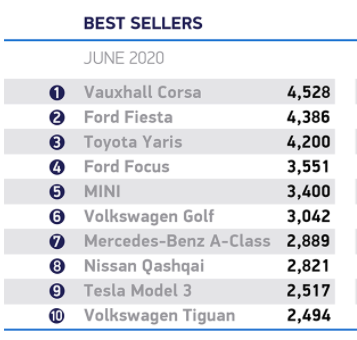
SMMT does state, however, that dealerships in Wales and Scotland remained closed for a majority of June. This fact undoubtedly negatively affected sales figures.
However, the Model 3’s popularity in the UK has been somewhat of a catalyst for the growing EV market in the region.
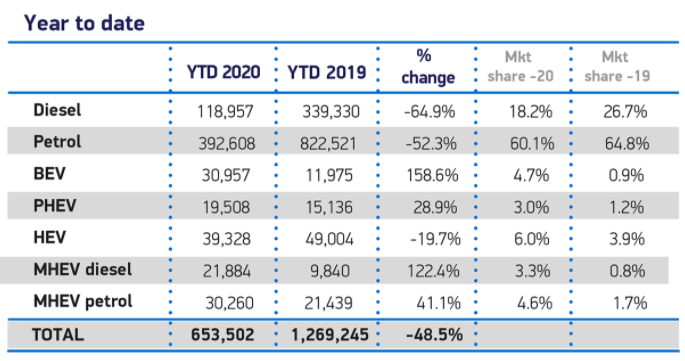
In 2020 so far, 30,957 battery electric vehicles have been sold in the UK. This is a 158.6% increase compared to 2019’s figures, which saw only 11,975 units sold through the first half of the year, SMMT reported.
Based on vehicle types, only Battery Electric Vehicles (BEV), Plug-in Hybrid Electric Vehicles (PHEV), and Mild Hybrid Electric Vehicles (MHEV) saw increases in sales figures within the first six months of 2020 compared to the same time frame in 2019. BEV’s recorded the most drastic increase with its 158.6% growth in sales.
The increase in electric vehicle demand in Europe is a vital indicator of the growing market for sustainable transportation. Tesla is currently building a new production facility in Brandenburg, Germany, which will supply Europe with around 500,000 vehicles annually when production begins in July 2021.
Tesla’s popularity goes past the UK, however. In China, the electric automaker managed to take 23% of the total EV market, and Model 3 sales rose 35% compared to in June compared to May.
Currently, Tesla produces only the Model 3 in China at its Giga Shanghai facility. However, the company will begin the production of the Model Y crossover when the second phase of the Shanghai production plant is completed later this year.
Deliveries of the Model Y are expected to begin in China in early 2021.
International markets were surely effected in Q2 by the Fremont facility’s closure during the first month of the quarter. However, Tesla rebounded by delivering 90,650 units, according to the company’s Q2 2020 Delivery and Production numbers that were released last week.


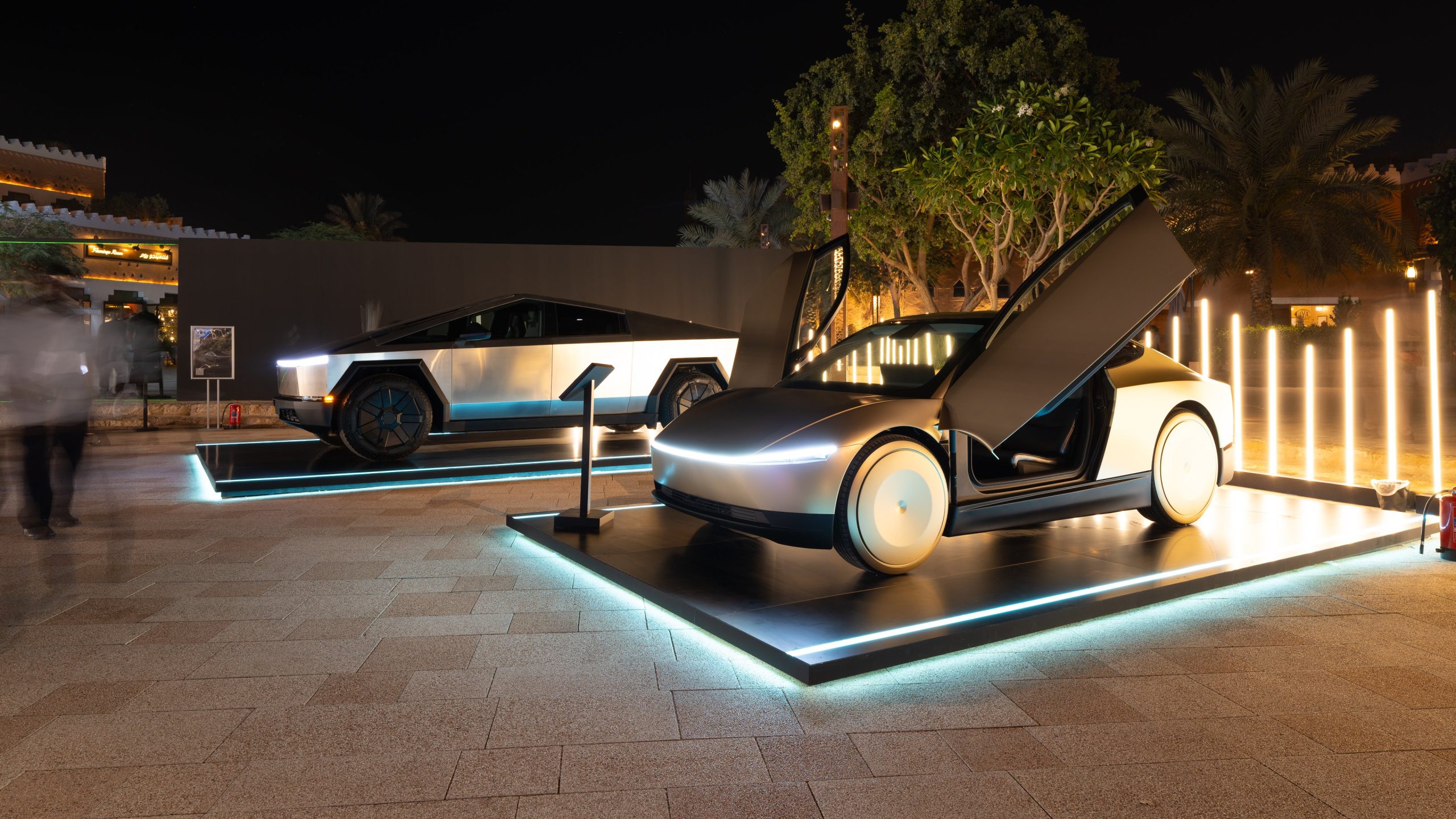
Tesla Cybercab might have just rolled out to the public as it entered the company’s Robotaxi suite in Austin this past week. However, the vehicle might already be on its way to becoming even better, as the company is asking riders to describe what they’d like to see improved with the Cybercab.
Tesla sent a rider experience survey to Cybercab passengers only days after paid rides began in Austin. The questionnaire asks how satisfied riders were with the overall trip. Then it requests star ratings for availability and wait time, door functionality, vehicle touchscreen, mobile app experience, seat comfort, interior space, ride comfort, cleanliness, and cargo space.
A later section asks which features riders would most like to have and allows selection of up to three items from a list that includes heated seats, ventilated seats, fully reclining seats, a tray table, a wireless phone charger, a better sound system, and more storage. Respondents may also choose none of these or write in another idea. The survey closes with a recommendation score from zero to ten.
Tesla just sent out a Cybercab rider experience survey so you can give feedback to the team. pic.twitter.com/YsU5OYdAjW
— Sawyer Merritt (@SawyerMerritt) September 8, 2026
This rapid request for input illustrates Tesla’s habit of treating early users as collaborators rather than mere customers. The company has long refined vehicles through software updates and hardware changes informed by real-world use across its passenger cars.
Collecting structured opinions so soon after commercial service started shows the same mindset applied to a purpose-built autonomous taxi. The questions themselves reveal an openness to cabin changes even after the first vehicles reached public streets, which is no surprise.
Tesla has always hoped to cater a great experience to anyone in its vehicles, which is why so many fan-requested features have made it into its vehicles.
Replies already circulating online favor reclining seats, tray tables, wireless charging, improved audio, and extra room when seats fold back.
Tesla Cybercabs narrowly miss deadly Amazon cargo plane crash
Those preferences point toward comfort upgrades that Tesla can implement in later production batches or through cabin revisions. Because the Cybercab is designed around software first principles, many requested amenities can arrive faster than in traditional automakers.
Tesla’s willingness to survey riders immediately after launch therefore makes near-term cabin and experience improvements likely as the team reviews responses and iterates toward a more refined robotaxi people will choose daily.
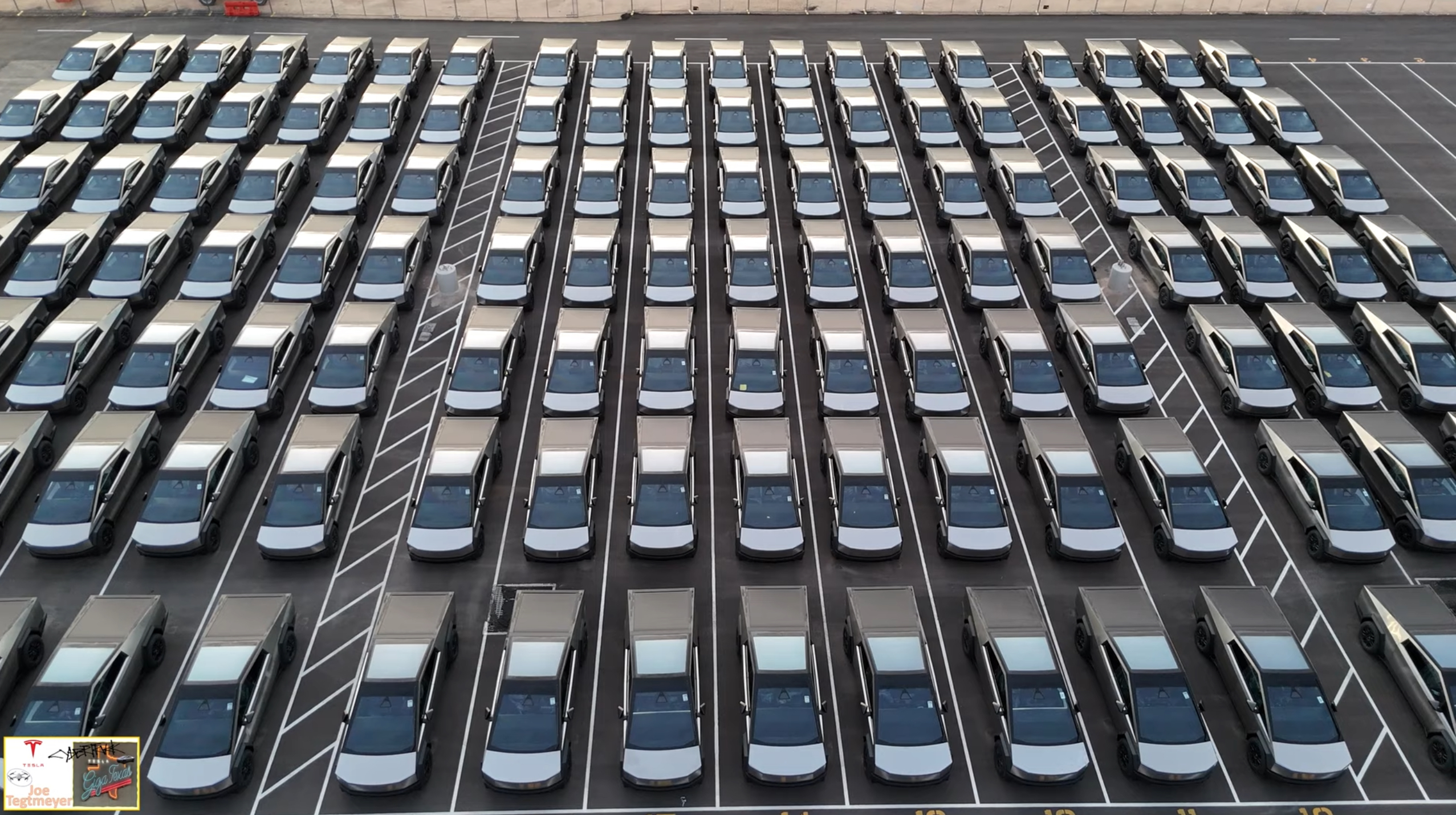
Tesla Cybertruck Lead Engineer Wes Morrill revealed the company has made several changes to the all-electric pickup, which he calls a “living thing, constantly evolving and improving.”
Cybertruck is manufactured at Tesla’s Gigafactory Texas just outside of Austin, and over the past few years, Tesla has continued to make small changes to the pickup to improve everything from cost, reliability, serviceablility, and manufacturability.
“The finish line isn’t getting to production. A product is a living thing, constantly evolving and improving,” Morrill added.
RELATED:
Tesla Cybertruck AWD is a steal at $60k, is it still at $75k? Full Review
Some of those changes are yet to be revealed, but perhaps the most notable one was the change Tesla made to the aero shield that sits underneath the truck. In the past, it was aluminum, but now the Cybertruck is using a self-reinforcing polypropylene.
Morrill said that the polypropylene is “stretched into fibers and then laminated into the form,” and is much more durable, much lighter, and significantly cheaper than aluminum when it is manufactured this way.
It also enabled some improvements in the geometry of the Cybertruck, improving the manufacturing around the bolts and edges, in addition to minor form changes. These all benefitted the Cybertruck in more ways than one: specifically with durability and improved drag.
I was surprised by how interested people were to find out we made a relatively benign change to the Cybertruck aero shield, a part of the car most people never even see. So I’ll share some more details.
Here are two photos, the left is one of the latest trucks off the… pic.twitter.com/F5cZo2CZKf
— Wes (@wmorrill3) September 7, 2026
Typically, Teslas are not necessarily identified by model year because these changes are fluid and occur when the company sees fit to implement them. It is not like other automotive companies, which usually make sweeping manufacturing changes when building a new model year.
Instead, Teslas are recognized by their “generation” or “era.” For example, those with a newer Model Y might refer to their car as a “Juniper.” This is the same with Model 3, as many refer to the new body style as the “Highland.”
Tesla’s manufacturing changes are proof of the company’s constant need to improve its products and move things forward with its vehicles. There is no need to drag one’s feet and wait until next year if the product can be made better right now, and that’s precisely what Tesla did with the Cybertruck.
Elon Musk
Tesla Cybercabs narrowly miss deadly Amazon cargo plane crash
An Amazon cargo plane crash near Miami’s airport stopped feet from dozens of Tesla Cybercabs.

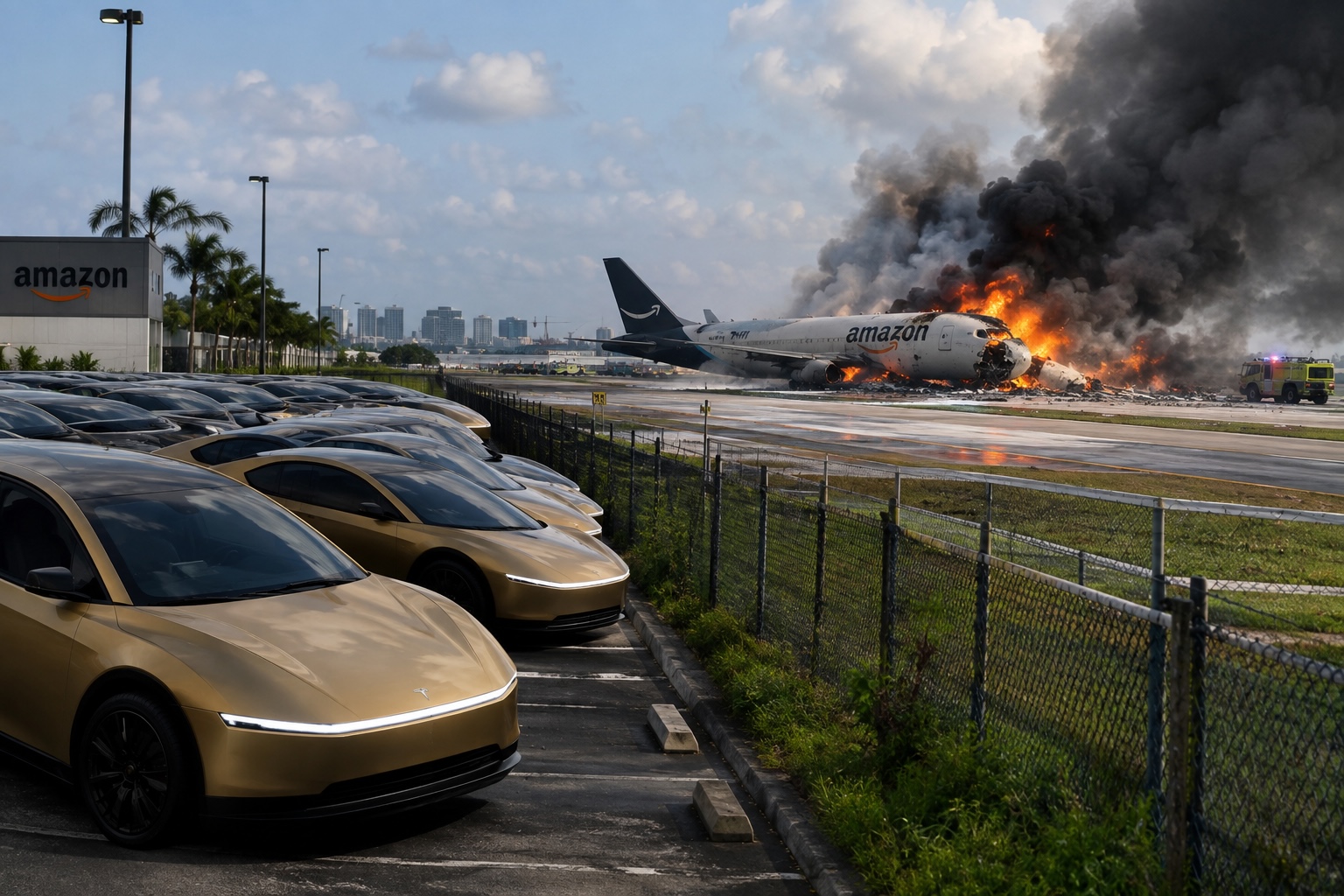
An Amazon Prime Air Boeing 767 cargo jet overran the runway at Miami International Airport on Sunday afternoon, killing five people and injuring five more. The jet, operated by North Carolina based carrier 21 Air as Flight 7598, touched down around 2 p.m. after arriving from San Juan, Puerto Rico, then crossed the airport perimeter, plowed across NW 67th Avenue and struck multiple vehicles before catching fire, according to the Associated Press.
Photos and video from the scene show the aircraft’s nose stopped within meters of a fenced staging lot holding dozens of gold painted Tesla Cybercabs, the steering wheel free robotaxi Tesla began putting on public roads in Austin last week. Miami-Dade Fire Rescue has confirmed the plane struck “multiple vehicles” but has not said whether any Cybercabs were among them, and neither Tesla nor airport officials have addressed the fleet directly.
The Cybercabs had not yet entered commercial service in Miami. Tesla’s existing Robotaxi operation there runs on modified Model Y vehicles and has been unsupervised since Ashok Elluswamy confirmed the detail on X in July.
Footage of the plane crash from earlier today | #ONLYinDADE pic.twitter.com/iGoOtnd6cD
— ONLY in DADE (@ONLYinDADE) September 6, 2026
Elon Musk offered the briefest of reactions. Replying to a Zero Hedge post about the Cybercabs sitting so close to the wreckage, he wrote a single word: “Weird.” He has not commented further, and Tesla has not issued a statement.
The timing puts Tesla’s newest vehicle near an unrelated but highly visible tragedy just days after its Austin debut, a launch that had already drawn scrutiny from federal regulators. The National Highway Traffic Safety Administration opened an audit how Tesla certified the Cybercab as compliant with federal vehicle safety standards, a process Teslarati covered after the vehicle’s September 3 launch event. That inquiry concerns the car’s lack of a steering wheel and pedals, not the Miami crash.
Investigators from the FAA and NTSB are focused on the plane, not the parking lot beside it. Flight data reviewed by outlets including Simple Flying show the 767 touched down around 170 knots, well above the 135 to 140 knot range typical for the aircraft, though investigators have not determined a cause. Amazon said it is working with authorities and that its priority is the safety of everyone affected.
Whether any Cybercabs were damaged, and what Tesla plans for the fleet parked near one of the country’s busiest airports, remain open questions.

Tesla Cybercab improvements are already on the minds of company engineers

Tesla Cybertruck engineer reveals new changes in ‘constantly evolving’ pickup


